
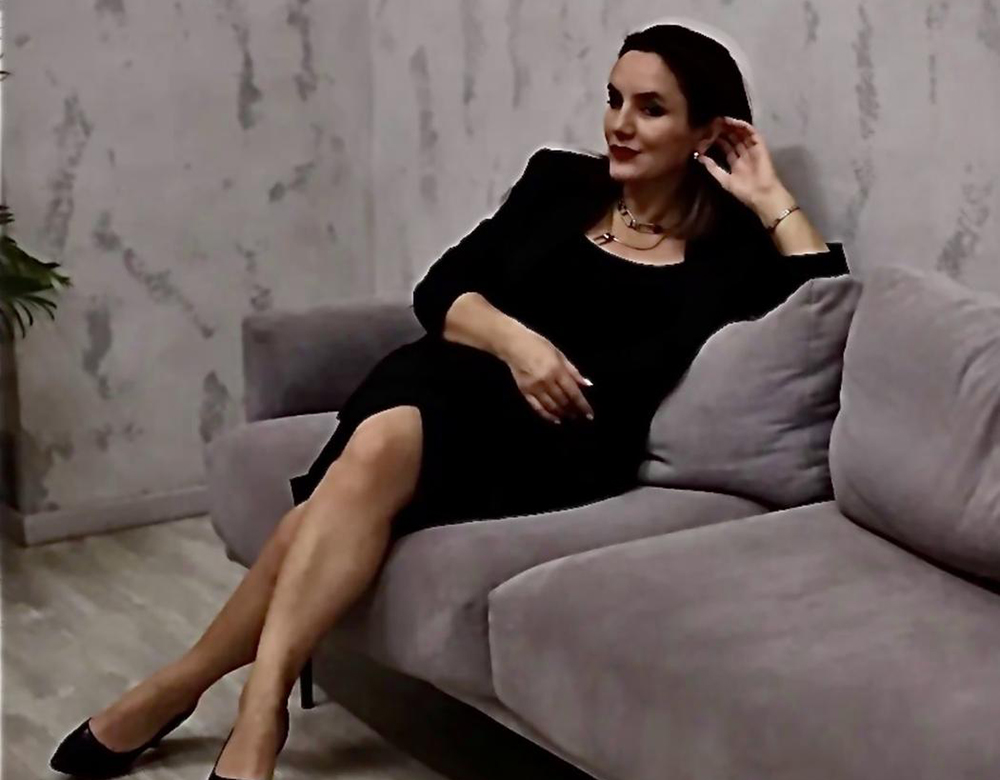
Lia Gioti
How did you begin painting, and what made it an important part of your life?
I wanted to build a guesthouse—and ended up building an entire story.
Two years ago, I took on a project whose ambition could have earned it the “Most Beautiful Failure of the Year” award: I decided to build a guesthouse in another region, relying on a budget better suited to a small renovation than a construction project. The cost estimates were frightening, the walls were rising slowly, and I increasingly caught myself wondering, “Is this really what I should be doing?”
To keep myself from going crazy over numbers and unfinished corners, I came up with the perfect escape: I would paint pictures and decorate my future mini-hotel with them. In my dreams, it all looked wonderfully cinematic: me in a linen dress, palette in hand, enthusiastically waving a brush, surrounded by comfort, the aroma of freshly brewed coffee, and happy guests.
Reality, however, looked a little different. In the art supply store, I stood there looking like someone who had seen paints for the first time and suspected they might be dangerous. Then a sales assistant appeared—like an angel in an apron, sent by fate itself. She looked at me with the calm confidence that experienced people have when they see beginners who are still about to fall in love with their craft. “If it’s forever, go with oils,” she said with such conviction that I immediately imagined my paintings hanging in the hotel for decades, delighting the guests. She also patiently explained the differences between canvases and selected a set of brushes as though she were preparing me for a solo exhibition at the Tretyakov Gallery rather than my first tentative brushstrokes.
Now I understand: oils really are “forever”—especially when you consider how long they take to dry. But back then, I simply believed her. I bought everything she recommended and began learning how to hold a brush, mix colours, and avoid panicking when another study looked as though it had been painted by a cat that had accidentally run across the palette.
I never finished the house. It is now up for sale. And you know, I don’t call that a defeat. It was more of a plot twist: instead of a mini-hotel, I ended up with a mini-studio.
Of course, I later painted over my first paintings—literally putting new subjects over the old ones, as though erasing the rough drafts of a story. And you know, there was even something symbolic about that: instead of throwing away what hadn’t worked, I turned it into something new. Three months of trial and error, and studies that made you want to say, “Well, at least the colour turned out interesting.”
Then one day, while scrolling through my feed online, I came across an international art competition—one of those moments when your hand automatically reaches for “Apply” while an inner voice whispers, “What if?” I submitted my painting “Substance”—and some time later, I saw the words: third place among amateurs in my genre.
I remember rereading the email several times, as though I were afraid the number “3” might suddenly turn into a “0.” Third place! Not first, of course, but to me, it spoke louder than any grand prize: it meant someone had looked at my work and said, “There’s something alive here.”
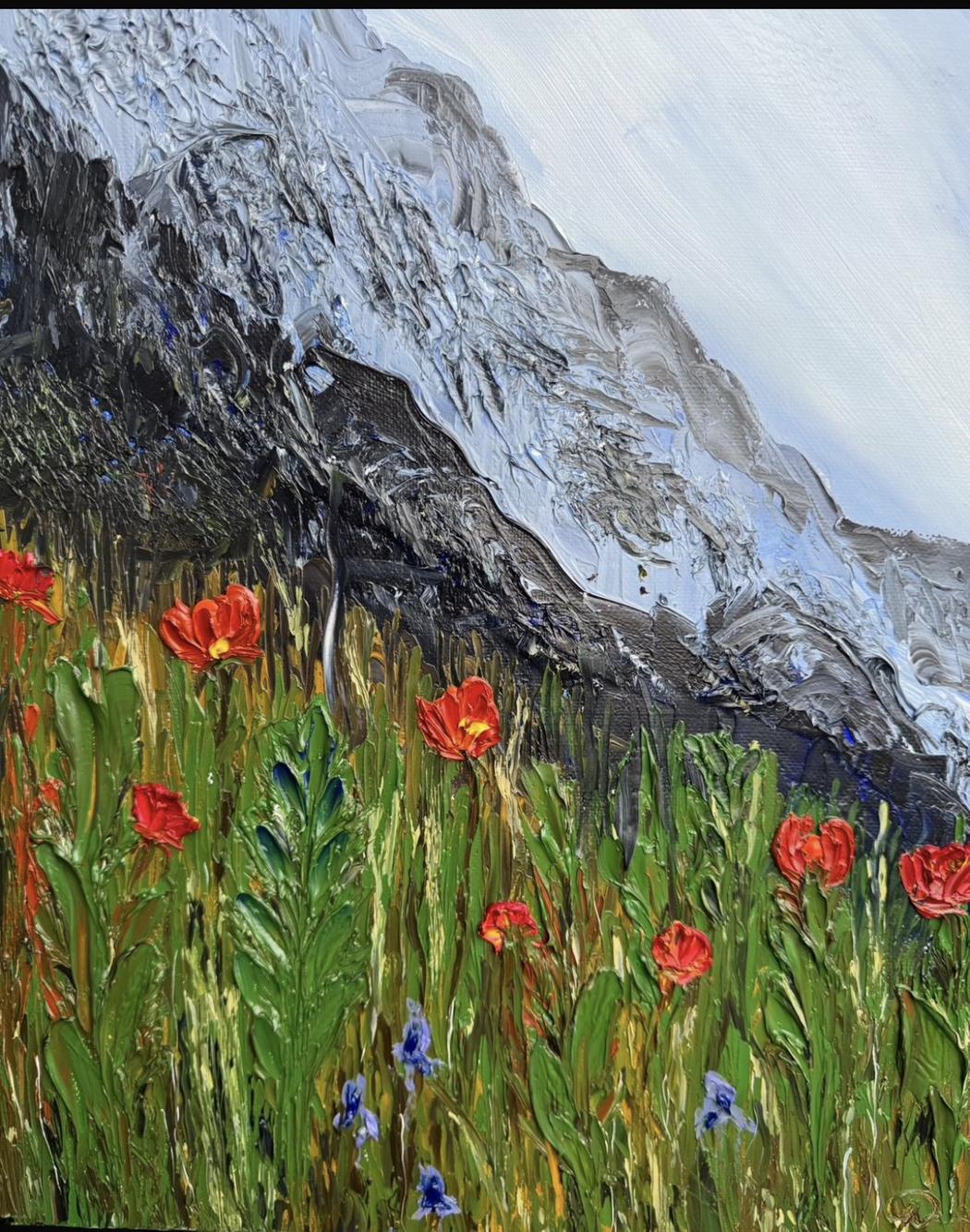
What draws you to oil paint, and how did you discover the impasto technique?
When I started painting, I had no studio, no skills, and not even a hint of tidiness—and oil paints seem to have been created to spread themselves around the entire house in the most spectacular way possible. I tried to combine art with my main job, so I painted in brief snatches: between tasks, late in the evening, or early in the morning when no one was watching. At one point, my brushes spent a month and a half simply drying out in proud solitude—and eventually, I had to say goodbye to them, like a romance that hadn’t worked out.
But it was precisely amid this chaos that I discovered the palette knife—and life immediately became a little easier. Then an outright rebellious thought occurred to me: why struggle with brushes when you can squeeze paint straight onto the canvas and mould it into shapes and colours like modelling clay? That was how I painted a picture with my fingers (I later learned that the technique is called impasto)—and for the first time in my life, I didn’t want to change anything. It was a strange but very pleasant feeling of freedom, as though I had told myself, “Let it be this way!”
Later, I began exploring other materials, but quickly realised that only oils met my creative needs. Their brightness, sheen, and malleability are a love all of their own. I like being able to layer colours and add details whenever it suits me—whether at night or during my lunch break. I think oils are the best medium for people who create according to the call of their soul rather than a schedule. And, of course, whatever free time they have left.
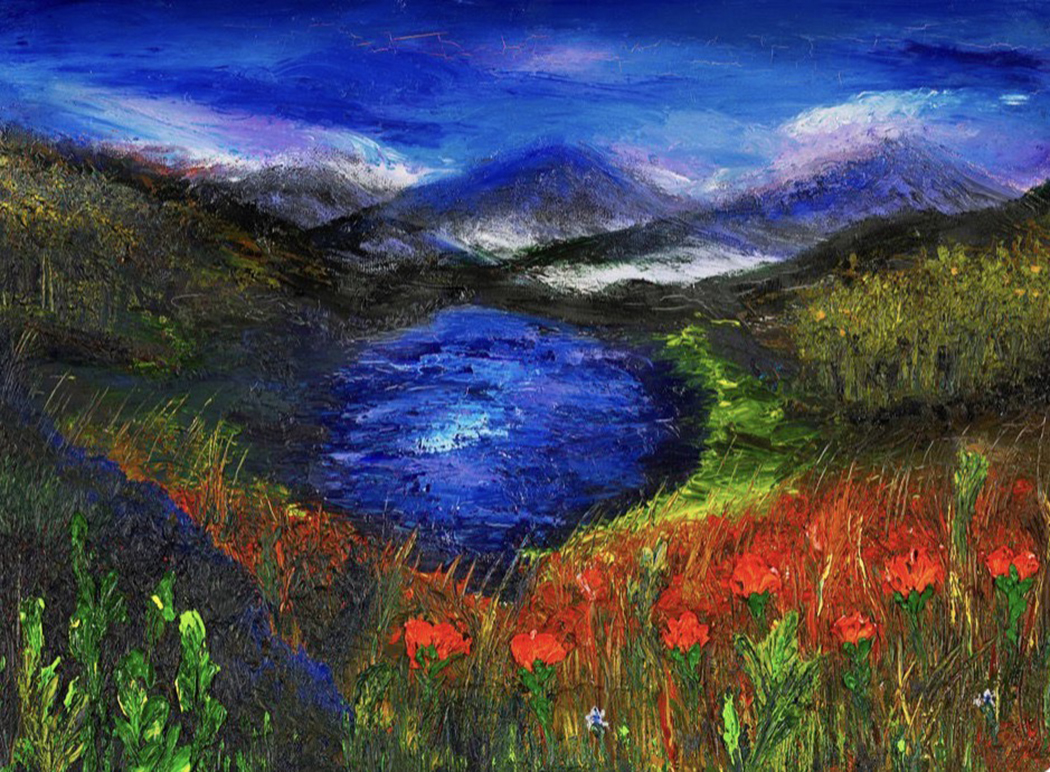
In your paintings, texture is almost as noticeable as the subject itself. What does the physical thickness of paint allow you to express?
My paintings turn out textured—perhaps because I’m a person with plenty of texture and character myself: no softened corners or perfectly straight lines.
I have never tried to imitate anyone. After all, people have spent decades refining their techniques—and in that time, I have managed to master little more than the art of painting between other tasks. Besides, why repeat someone else’s artistic handwriting when you can create your own, even if it is a little “uneven”? There are so many wonderful artists in the world—let them preserve the classics, while I do what resonates with me first and foremost. It may not follow the rules, but it comes from the heart.
And you know, it turns out that this sincerity resonates with other people too: my paintings find their viewers. I made my first sale—and it felt as though someone had not simply bought a canvas, but taken a piece of my emotions home with them. As for the people close to me, I happily give them my work as gifts: the best compliment is when a painting finds a place not in a corner, but in someone’s home and heart.
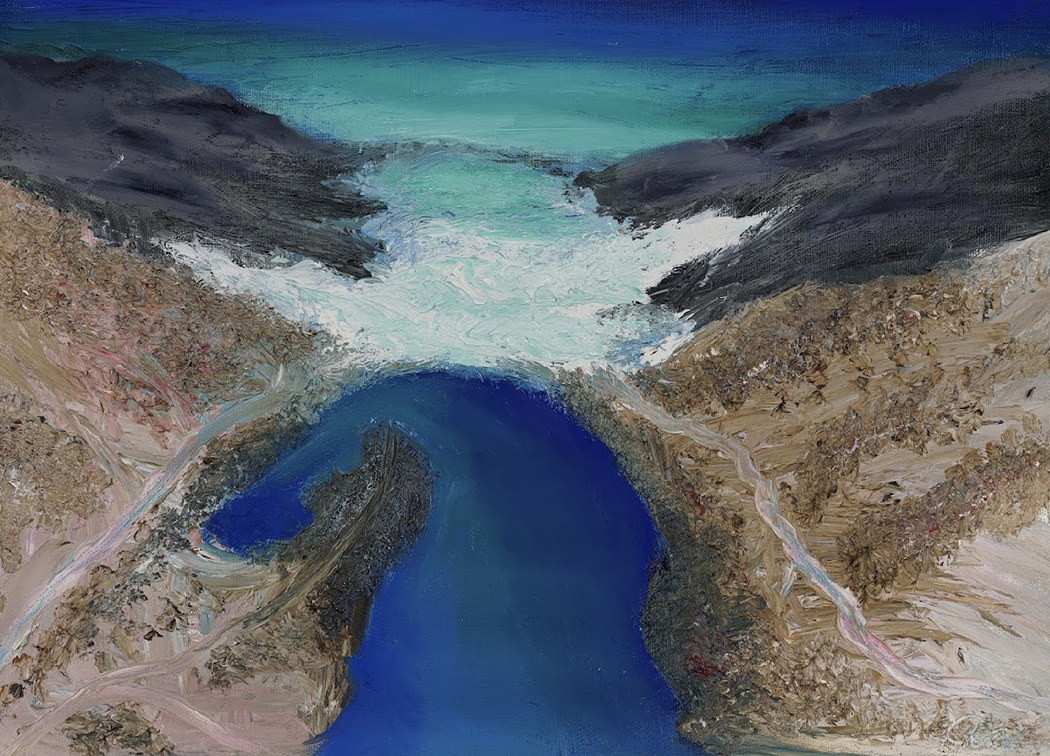
Your process images show you using different tools, including a spoon. How do you choose your tools, and what unexpected effects have you discovered through experimentation?
When I began working with texture, I quickly realised that you can create with anything—the main thing is to keep the idea from cooling off before the paint does. I simply didn’t have time to run to the art supply store every time and choose the perfect tools. Besides, my finances had long since taken a different path—all my money had gone into the construction project, where I had already gone well over budget. But that did nothing to diminish my desire to paint—on the contrary, it only grew stronger: as though the more difficult the circumstances, the more you want to grab a brush (or whatever happens to be at hand) and create.
I couldn’t quite get the rounded shape right: my fingers made it uneven, while the palette knife seemed to cut the idea into pieces. I rushed around the house for a while, trying all sorts of things, and suddenly it dawned on me: a spoon was exactly what I needed! That was how a new “professional” tool appeared in my studio. Now, all the spoons in the house are more than just kitchen utensils—they proudly bear traces of oil paint and have taken on “creative positions,” gradually making their way from the kitchen to the easel.
And you know, there is even a certain aesthetic to it: when art doesn’t wait for ideal conditions, but takes what is available and turns it into beauty.
Mountains, water lilies, forests, and waves appear in your work. What attracts you to these subjects, and do they come from places you have visited, memories, or imagination?
Over the course of a year, my paintings turned out so different that you might think I had deliberately put together a palette of every possible mood. But the explanation is simple: because of financial limitations, my dream of travelling and having new experiences remained just a dream for the time being. So I began travelling through my own emotions—and transferring them onto canvas. That was how the subjects emerged: not according to a plan, but in response to something within.
Online, I keep coming across articles in which artists lament that they have no inspiration and don’t know what subject to choose. I find that a little strange. After all, each of us has an entire world of experiences inside: quiet joys, difficult days, moments when it feels as though everything is going wrong, and those happy moments that make you want to stop and remember every detail. Isn’t that enough for a painting?
In my view, inspiration is not a rare visitor that arrives on schedule, but more of a habit of noticing. Simply take your thoughts and feelings and put them onto canvas—and suddenly, you realise that the subject has been inside you all along. Perhaps there is a little magic in that: when you don’t wait for ideal conditions, but take what is available and turn it into art.
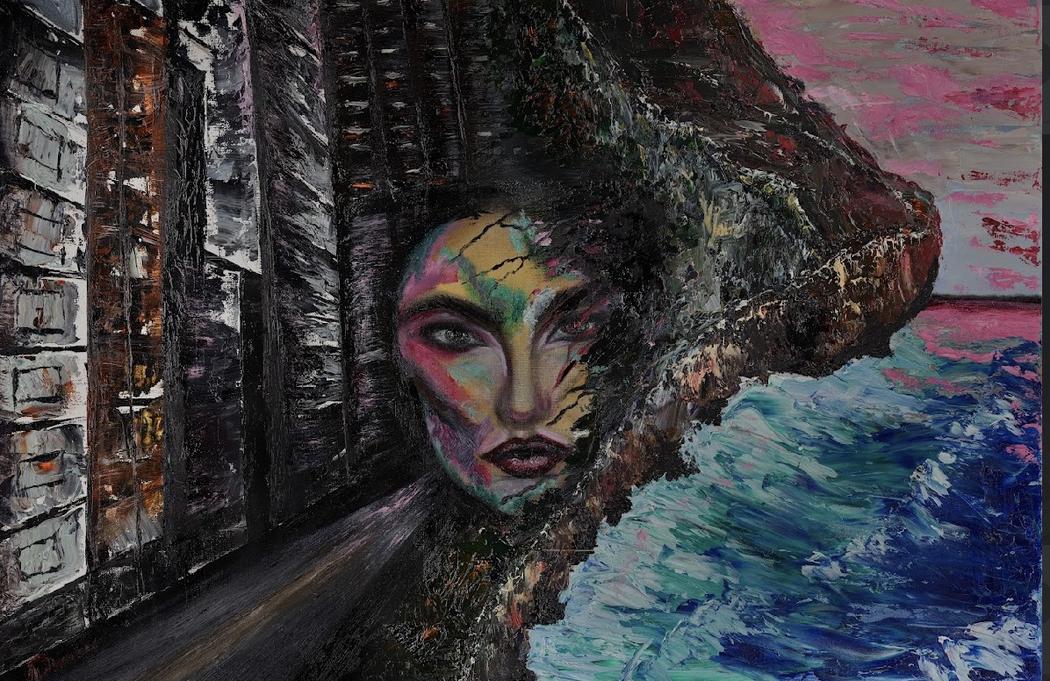
You sometimes use vivid pinks, purples, and reds in landscapes. How do you choose your palette, and what role does your mood play in those decisions?
I may disappoint you a little, but in my opinion, artists don’t have “pink periods” or “blue periods”—there is only the paint that happens to be at hand right now. And there simply isn’t any other paint available at that moment: perhaps it has run out, or perhaps it was bought by mistake in the first place. The result is vivid—sometimes even more vivid than intended.
There is already enough mediocrity in life—it seems to make a deliberate effort to go unnoticed and blend into the background. A painting, in my view, should not blend in, but make itself heard. Even if it does so through a single loud colour. It should carry emotions—the kind that make the viewer pause and suddenly realise, “Yes, this is about me.” And that emotion may be imperfect, a little bold, and entirely outside the “textbook”—but at least it is real.
Your paintings include both natural landscapes and urban scenes. How does your approach change when you move from mountains or water to the energy of a city?
I was born in the mountains, and now I live in a metropolis. My life has not been easy—it has been so varied that it seems to have contained several different lives at once. It is hardly surprising that I now want to put so much onto canvas: memories, sensations, and entire stories. I wanted to write a book, but fate had other plans—instead of words, I picked up a brush and began painting. And you know, there is even a certain logic to it: sometimes, feelings are easier to express through colour and form than through finding the exact words.
Now, paintings with very profound, sometimes truly sad stories are emerging in my studio. They are so poignant that they would probably not suit an ordinary interior—there is too much grief in them for them simply to decorate walls. Perhaps one day, I will decide to give them to a museum: let these works live somewhere they will be treated as important testimonies to human experience.
For now, I am simply waiting to see what other surprises life has in store for me—because, for an artist, every new story can become a new canvas.