
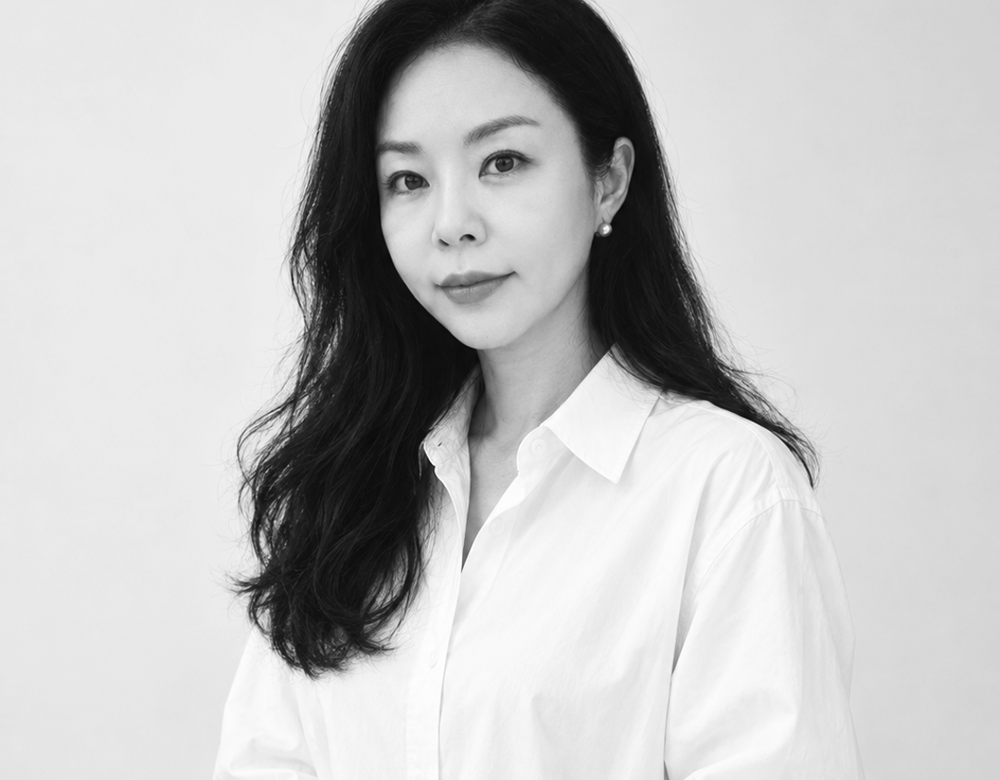
Jiu Baek
How has your personal artistic practice evolved alongside your career as a creative director, and how has art allowed you to express what commercial design cannot?
Having spent decades serving as a senior creative director overseeing brand identity and retail spaces, commercial design has always operated within the framework of clear objectives, specific targets, and business value. In contrast, my personal practice as a digital artist serves as an expansion and a liberating escape—allowing me to explore unconstrained inner sensibilities and pure plastic language.
While commercial design is a language of structure and logic used to persuade audiences, art possesses the power to immediately touch the subconscious and emotions that lie beyond logic. The rigorous visual craftsmanship I accumulated as a designer strongly supports my artistic expression, while my artistic pursuits, in turn, infuse my commercial work with a profound depth and original inspiration that is otherwise easily lost.
Drawing on over 20 years of experience in branding, how do you approach composition, color, and visual storytelling in your work? What design principles do you maintain, and what challenges are you currently exploring?
Over 20 years of experience in branding has gifted me with the ability to intuitively orchestrate visual structures. In my artwork, composition, color, and storytelling are meticulously calculated around the rhythm and emotional flow I want the viewer to experience within the visual space.
My core design principles are “minimal depth”—achieving profound meaning through simplicity—and precise balance. I consistently strip away unnecessary elements and fill that space with high-density sensibility. Currently, my greatest challenge is bridging traditional Korean heritage and motifs—such as Minhwa (folk art)—with digital media as a cutting-edge tool, thereby reinterpreting them into timeless, universal resonance and visual freshness.
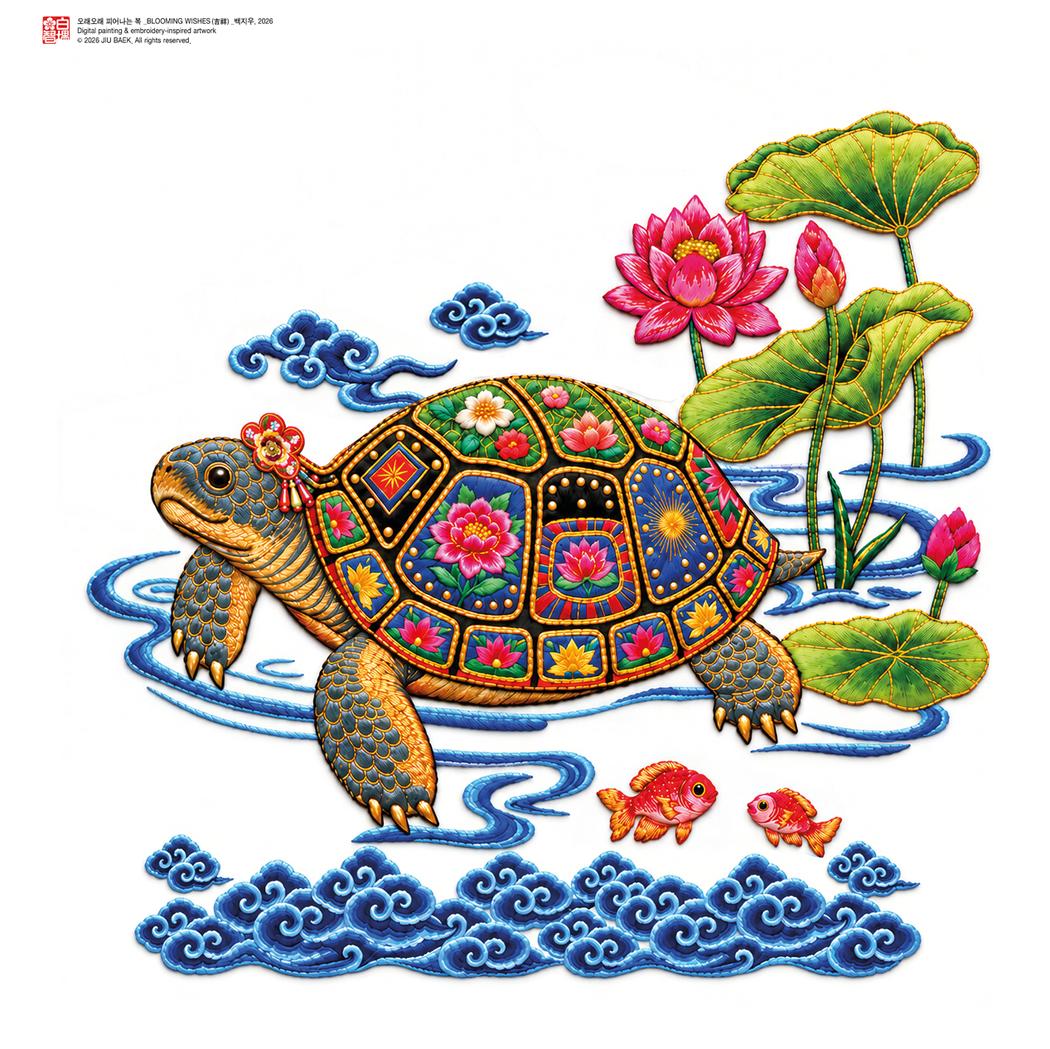 Jiu Baek | Blooming Wish Turtle | 2026
What inspired the “Blooming Wish” series, and how did you arrive at the idea of creating modern visual talismans?
The “Blooming Wish” series originated from a desire to create a visual sanctuary where individuals navigating the fast-paced modern society can pause, catch their breath, and find inner peace and positive energy in their daily lives.
Just as our ancestors kept talismans or folk paintings close by to pray for well-being and blessings, I felt that modern people also need a “visual talisman” that fosters inner comfort and holds their aspirations. I intended for the vibrant forms and colors blooming across digital screens and everyday objects to serve as a contemporary spell and comfort, delivering luck and healing energy to the viewers.
What is your personal connection to minhwa (Korean folk art)? Are there specific paintings, traditions, or memories that continue to influence your interpretation of this cultural heritage?
Minhwa is not an authoritarian or museum-bound art form; rather, it is the most deeply human art, raw with the humble aspirations of ordinary people, a fierce attachment to life, and a profound reverence for nature.
Rather than a single specific piece, my subconscious is deeply rooted in memories of the unpretentious color harmonies and humorous vitality I encountered through traditional life experiences in my youth. The inherent plastic qualities of Minhwa—simultaneously vibrant yet unpretentious, carrying earnest prayers yet remaining flexible—resonate perfectly with the warm healing and communicative message I aim to express through digital art.
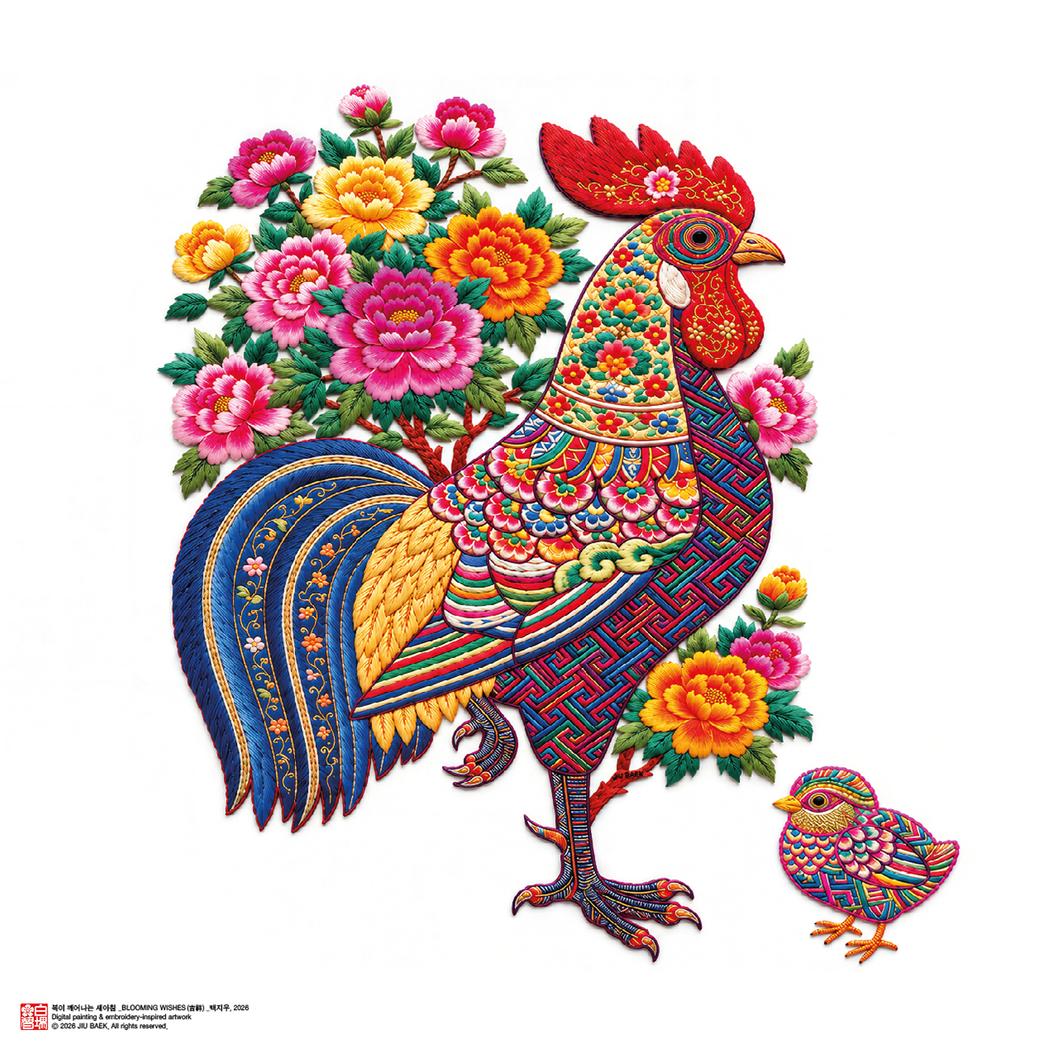 Jiu Baek | Blooming Wish Rooster | 2026
Your work is described as offering comfort and healing. How do you use color, space, and detail to create an emotional atmosphere?
When composing a space, I prioritize harmonious tones and the aesthetics of negative space rather than stark, stimulating contrasts. The color palette organically combines neutral tones that calm the mind and relieve visual fatigue with subtle, deep off-whites and accent colors symbolizing softly budding vitality.
Rather than being ostentatious, the details are expressed through microscopic shifts in texture or the gentle flow of curves. This allows viewers encountering the work to naturally experience the psychological stability and emotional immersion of stepping into a cozy, welcoming sanctuary.
Your work extends into digital media and fashion products. How does the movement between formats change how you develop images and imagine your relationship with the viewer?
When sophisticated visual art that once resided within digital screens expands into fashion products or offline mediums, the artwork transcends its role as merely something to “observe” and becomes a medium for experiencing life side-by-side.
The process of contemplating how the materiality and texture of an image shift across different formats brings me immense joy. When viewers (and consumers) go beyond gazing at digital art through a screen and instead wear it or hold it close through fashion items and everyday objects, the boundaries between art and life dissolve, fostering a much more intimate and multi-dimensional relationship.
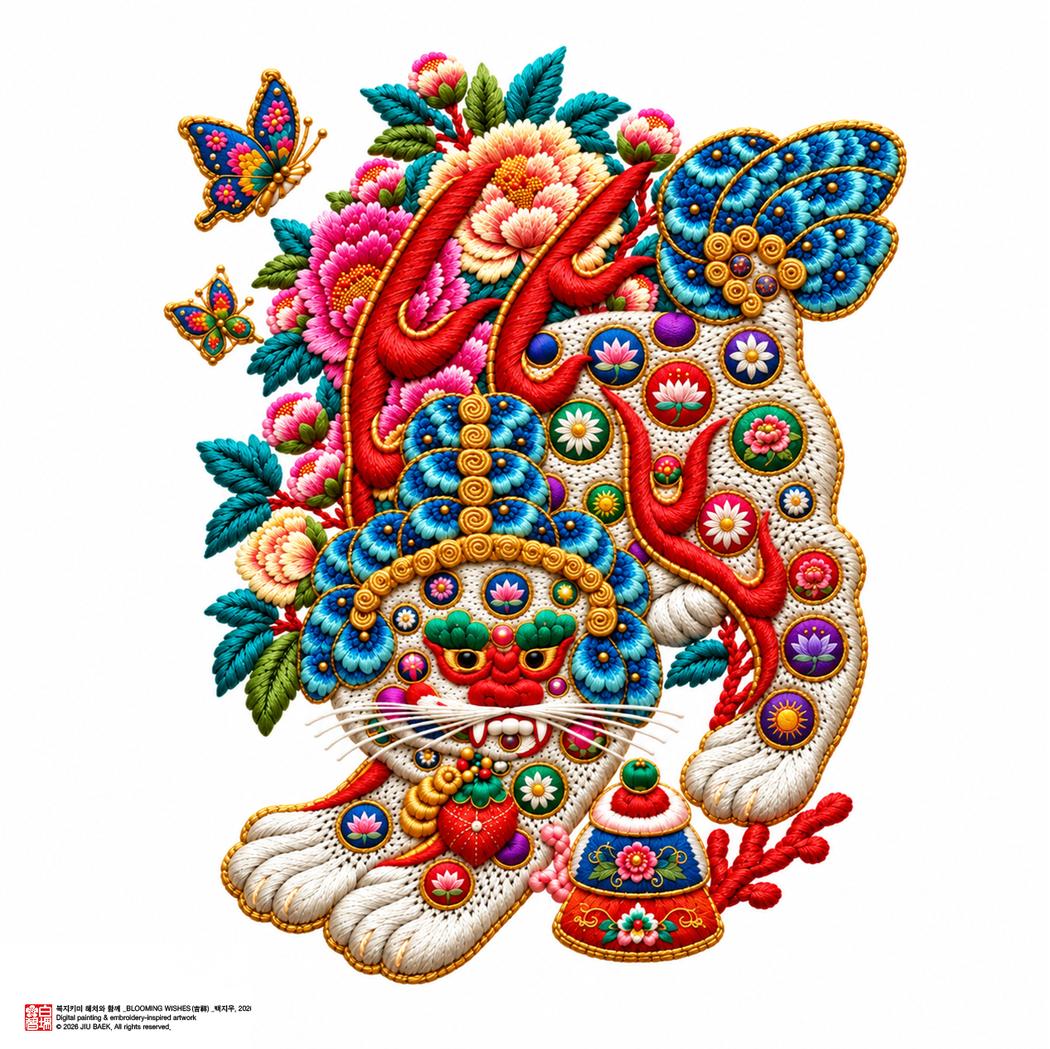 Jiu Baek | Blooming Wish Haechi | 2026
When presenting your work internationally, how do you approach audiences unfamiliar with minhwa? What do you want them to experience before learning about the symbolism?
Even without a concrete understanding of cultural backgrounds or traditional symbolism, I believe that the comfort provided by beautiful harmonies, the rhythm generated by organic forms, and the warm energy radiating throughout the work speak intuitively across borders.
Before diving into complex traditional symbols, I hope audiences first experience the emotional resonance—the visual stability, inner comfort, and a subtle sense of excitement—that washes over them when they stand before the piece. I trust that this positive sensory experience will naturally lead to a genuine curiosity about the Korean cultural roots and stories embedded within the work.