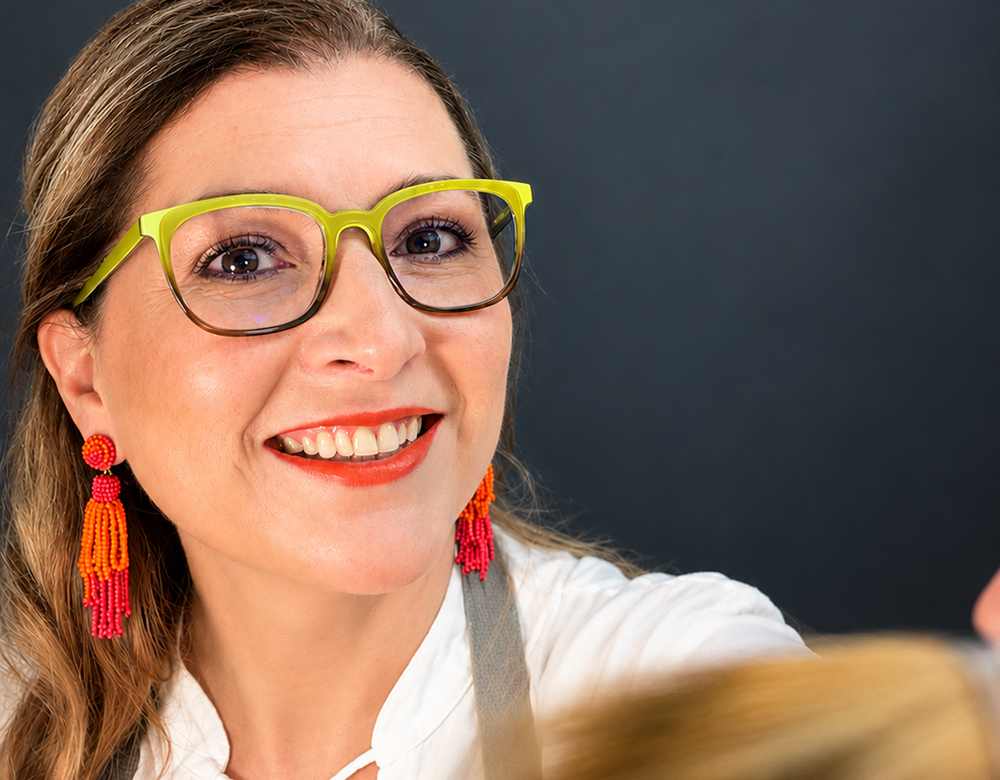
Robelis Rodriguez
You studied translation before pursuing further education in art. How did your artistic journey begin, and when did art become a central part of your life?
My artistic journey actually began in childhood. I knew that my grandfather painted, but I was especially fascinated by the work of one of my uncles, who was an art professor. Art and making things were always present around me.
As a child, I had a collection of twelve Spanish-language volumes from Usborne’s The Knowhow Books series. I loved them and returned to them again and again. They covered everything from experiments and moving puppets to making toys from paper and constructing working machines. My brother, who is also a photographer and artistically gifted, and I spent hours trying things out together and bringing our own little creatures and inventions to life.
I also had art classes in primary school. Looking back, I think I have experimented with almost every technique at some point: collage, clay, sewing, knitting, crochet, sculpture and combinations of different materials. I simply cannot seem to stop creating and experimenting. During my university studies, however, art moved into the background. I studied Translation and later specialized in Public Management, while continuing to sew, craft and explore new techniques whenever I had the opportunity.
A turning point came in 2015, after an operation that unfortunately resulted in serious complications. During my recovery, I immersed myself in artistic activities. Creating gave me the calm and relaxation my body needed at that time. It was such a powerful personal experience that I wanted to share the potential of creativity with others. I therefore trained as a Life Coach with a focus on art therapy.
But I soon realized that I could no longer ignore my own need to create. I began my Atelierista training, followed by further education in Art Education. There was no turning back. I started producing more and more work, applying for exhibitions and being accepted. From there, one opportunity led to another. Art gradually became an essential part of my life—not only as something I make, but as a way of thinking, exploring and connecting with others.
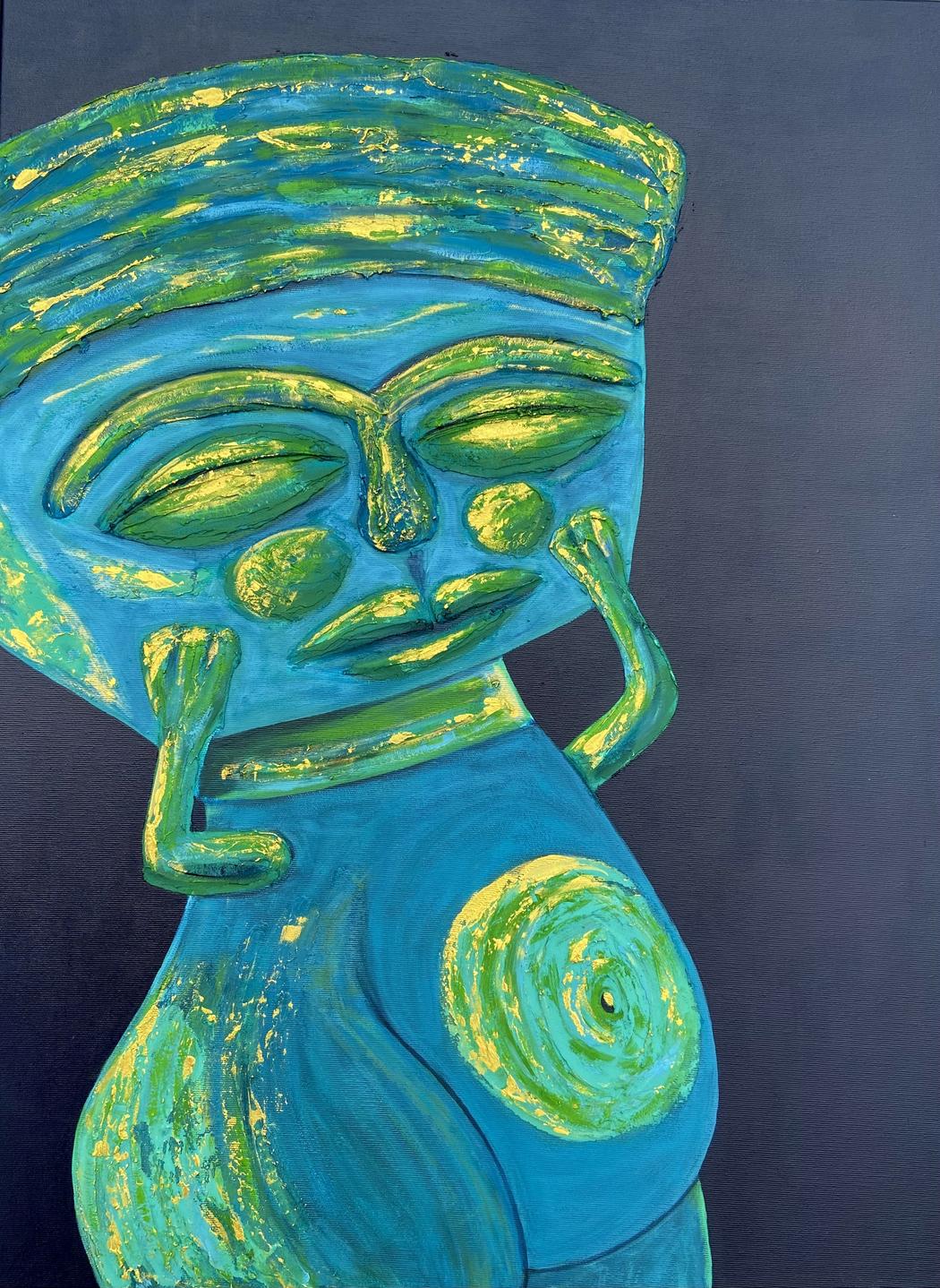 Robelis Rodriguez | Tacari | 2022
How has moving from Venezuela to Germany influenced your sense of identity and belonging, and how do these experiences enter your work?
Moving from Venezuela to Germany has deeply influenced the way I think about identity and belonging. I have lived in Germany since 2004, but Venezuela remains an essential part of who I am. I don’t experience these two identities as opposites. Instead, I see myself as someone shaped by both worlds.
Migration creates a space in between. You carry memories, traditions, images, smells, stories and ways of seeing the world from one place while building a new life somewhere else. Over time, that “in-between” becomes part of who you are.
This is reflected in my work. I am interested in identity, migration and femininity, but also in nature and the underwater world, which connect me strongly to my childhood and to my memories of the Caribbean.
My art has become a place where these different parts of my life can coexist. Rather than choosing where I belong, I allow both worlds to meet within the same work.
You work across languages as well as cultures. Has your background in translation influenced the way you communicate ideas through images?
Absolutely. Translation taught me that communication is never simply about replacing one word with another. You have to understand context, culture, intention and everything that exists between the words.
I approach images in much the same way. A symbol can carry completely different meanings depending on the cultural background of the person looking at it. Something that feels familiar to me because of my Venezuelan background may be completely new to another viewer. In that sense, I still think like a translator. I transform memories, emotions, cultural references and questions into visual language.
But I don’t want to provide a single “correct translation.” I prefer to leave room for the viewer’s own experience. A work can begin with something very personal to me and take on a completely different meaning in someone else’s eyes.
Perhaps that is also why I am drawn to mixed media: different materials, textures and symbols can communicate simultaneously, almost like several languages speaking to one another.
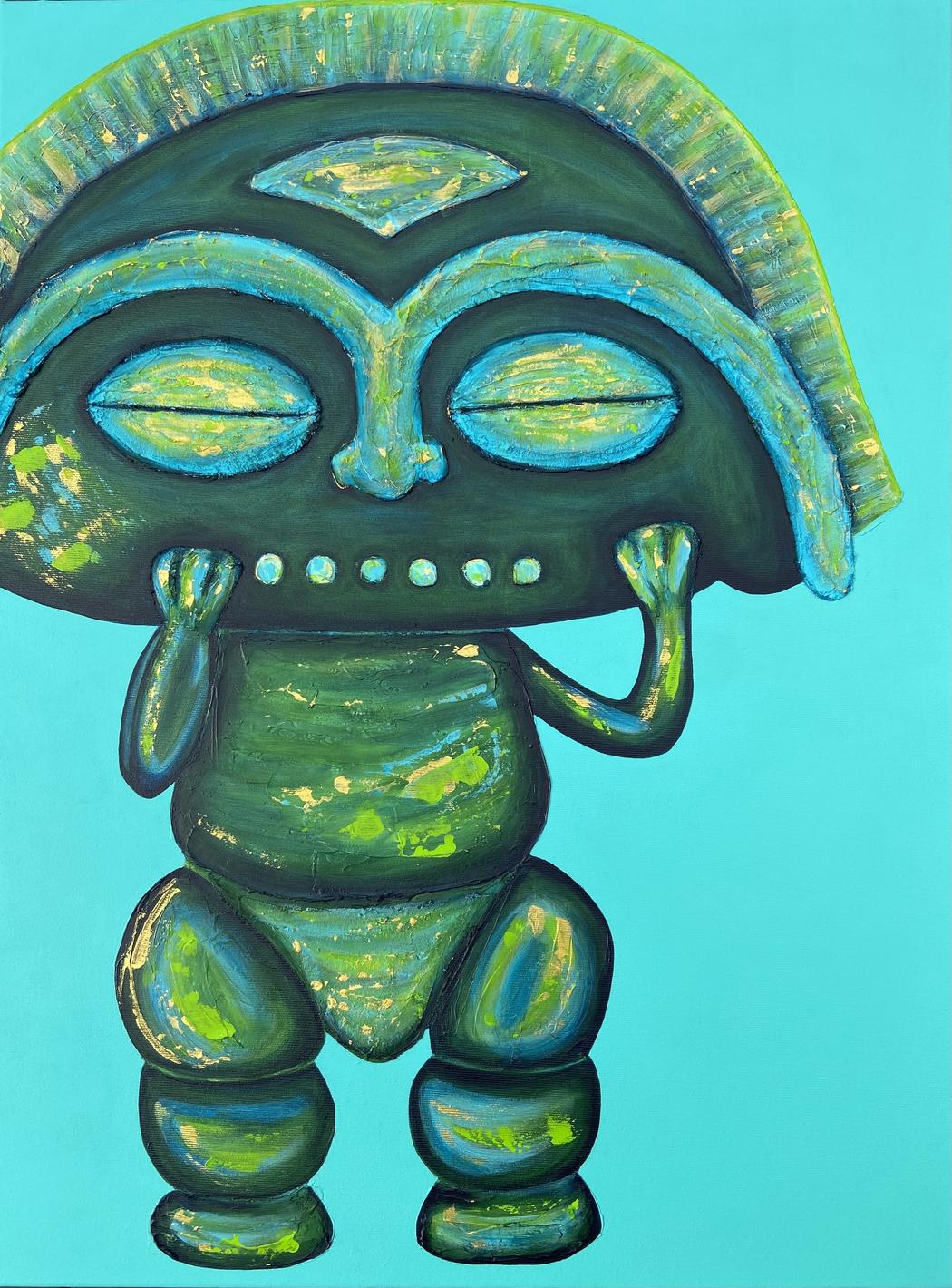 Robelis Rodriguez | Uacari | 2022
You describe your artistic process as “a dialogue with the unforeseen”. Could you share an example of a work that developed in a completely unexpected direction?
One of the strongest examples is the evolution of my work around women.
Respect and justice are important values for me. Through coaching women’s groups, conversations with friends and my own experiences, I became increasingly aware of how often women face additional obstacles in life—particularly mothers, whose caring responsibilities can have a lasting impact on their professional opportunities and independence.
At some point, I saw a photograph of a building illuminated in orange and learned about the Orange Days, the United Nations campaign raising awareness of violence against women. I began reading the statistics, and I felt that I had to respond somehow through my art.
My first works on the subject portrayed women as victims: vulnerable, threatened and in need of protection. But as I continued, I became increasingly uncomfortable with that representation. I didn’t want to reinforce the image of women as powerless.
Something shifted.
I began portraying women as superheroes—with enormous strength, energy and powers. That completely changed the direction of my work.
I then wondered whether Venezuela had its own female figures that could become part of this new visual world. That question led me to the Venus figures of Tacarigua, which I had previously only known from photographs.
So the unexpected development was not simply a new technique or material. It was a change in perspective. I began by wanting to address violence against women and ended up exploring female strength, cultural heritage and empowerment.
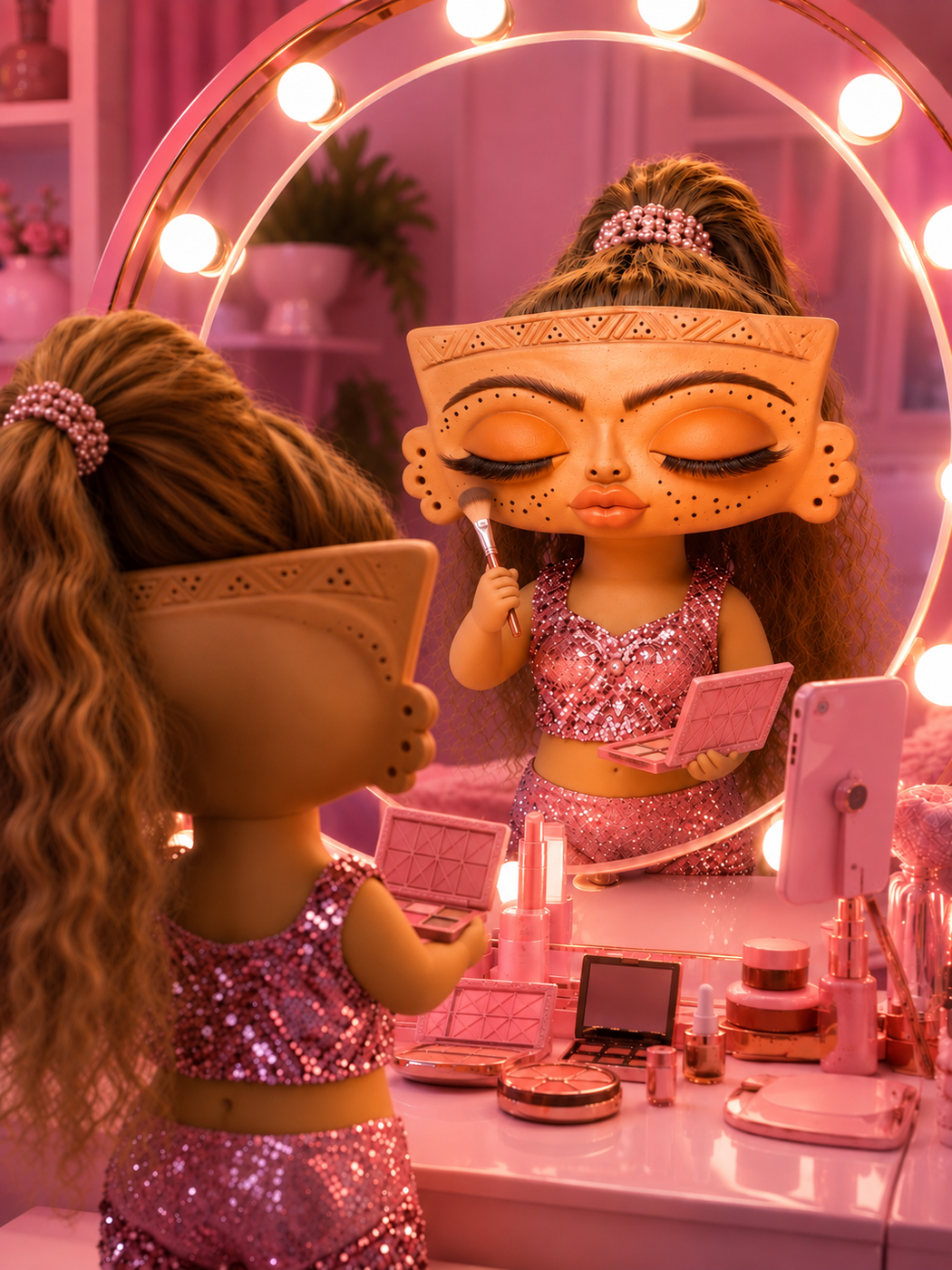 Robelis Rodriguez | Beauty Babe | 2026
Raised textures give many of your painted figures a sculptural presence. How do you choose your materials, and what does working with texture allow you to express?
Sometimes I choose the material, and sometimes the material chooses me.
I have used recycled plastic balls from children’s play pools, zippers, bands, old frames, old toys and many other materials that might otherwise have been discarded. Sometimes I begin with a very clear idea and search for the material that will help me realize it. At other times, I discover a material and let it suggest what the work could become.
I generally prefer textured surfaces to completely smooth paintings. I love the physicality of a work—the way light catches a raised surface and the way different materials create depth.
Texture also gives a painting a sculptural quality and a sense of physical presence. I even encourage visitors, when appropriate, to experience some of my works with their fingers. Touch creates another relationship with an artwork; it turns looking into a more embodied experience.
And materials can surprise me. They don’t always behave exactly as planned, which is part of what makes the process exciting.
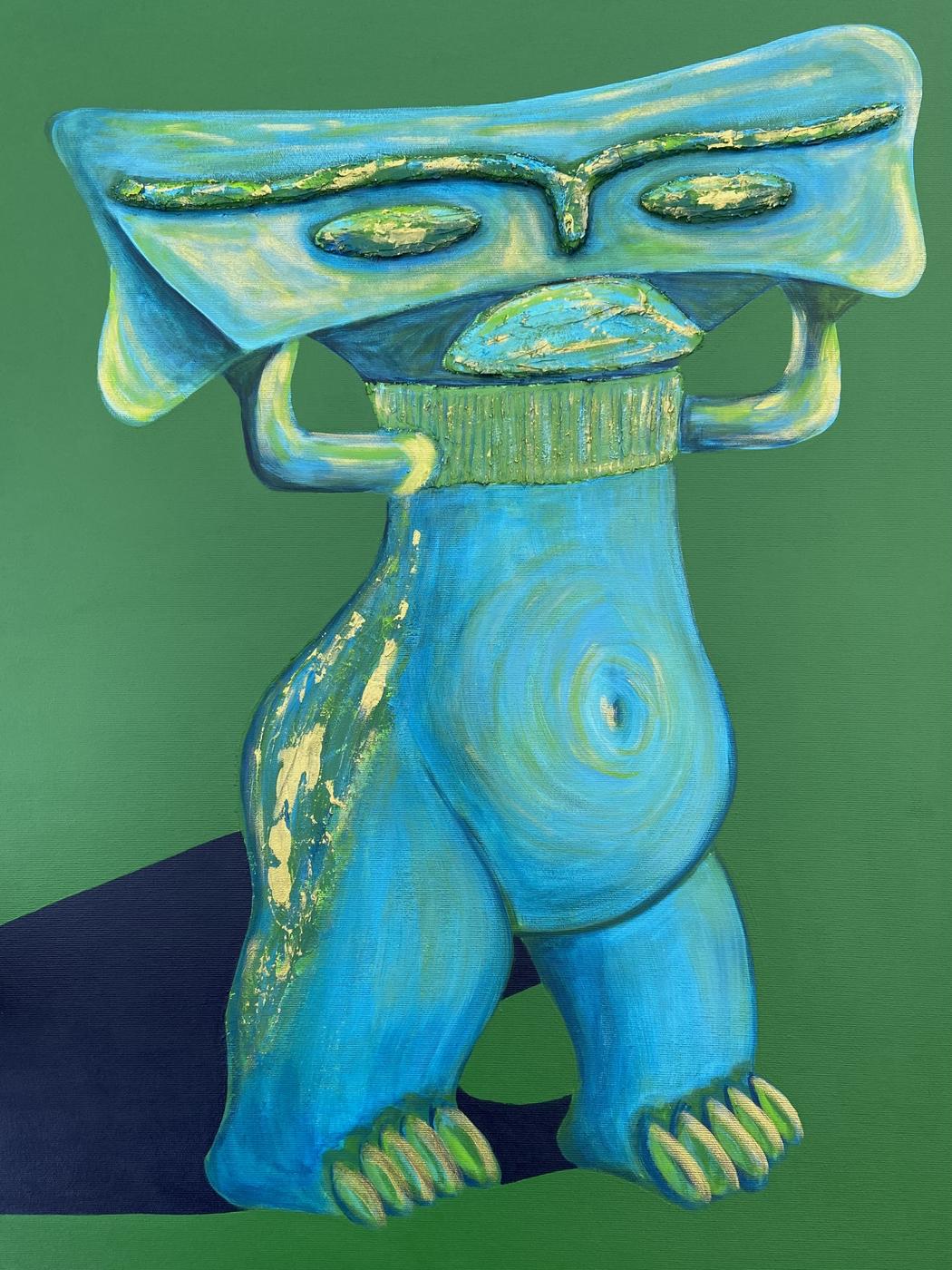 Robelis Rodriguez | Carigua | 2026
What first drew you to ancient Venezuelan female figures, and what personal significance do they hold for you?
My interest in the Venus figures of Tacarigua grew out of my search for strong female figures connected to my Venezuelan heritage. I had known them mainly from photographs, but when I began looking more closely at them, I was fascinated by the contrast between their small physical size and their enormous symbolic significance.
They are associated with fertility, motherhood, creative power and protection. I was particularly drawn to the idea of femininity being represented not as something passive or decorative, but as a source of strength.
Last year, something happened that gave the Venus an even more personal meaning for me. A publisher contacted me because they wanted to use one of my Venus paintings as the cover of a book. They sent me the manuscript, and while reading it I felt as if I had been transported back to my childhood in Venezuela. Images, smells, traditions and objects that had been hidden somewhere in my memory suddenly came alive again.
The Venus figures have a special role in the story and are described by the author. In the end, my work Carigua became the cover of the book.
That made me incredibly proud, but more than that, it gave me a profound feeling of connection to the country where I grew up. It was as though something from my past had unexpectedly found its way back into my present.
For me, the Venus has therefore become much more than an archaeological figure. She is a bridge between generations, between Venezuela and Germany, and between personal memory and artistic expression. Through her, I can reconnect with a part of my heritage while giving it a contemporary voice.
