
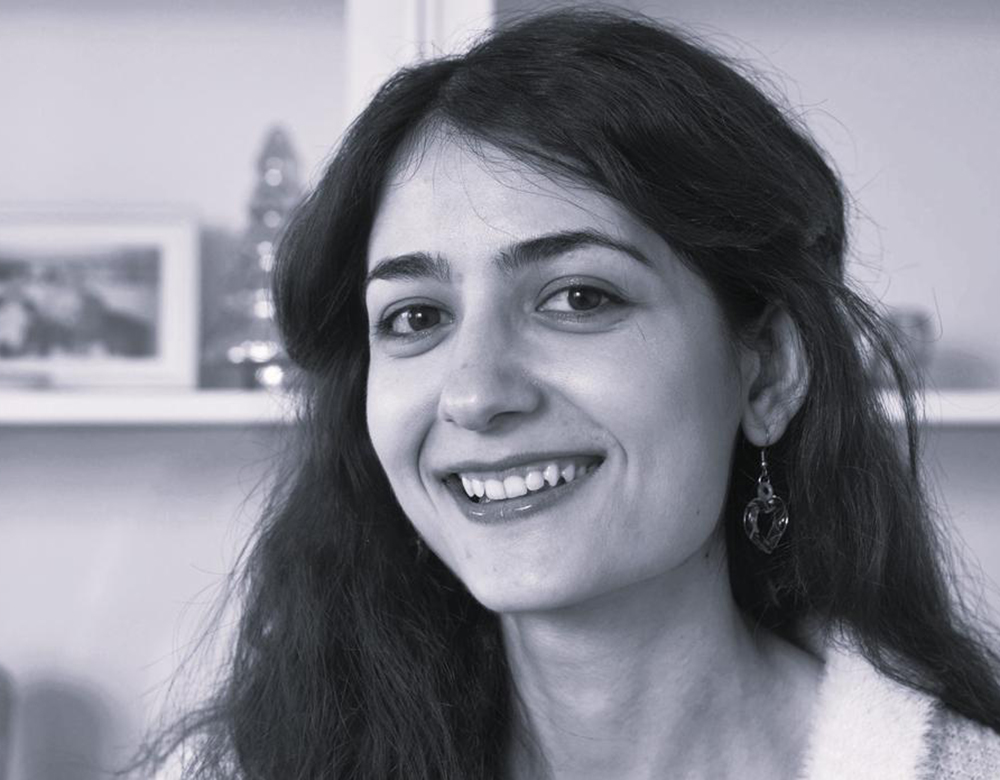
Lilit Vahradyan
You describe your art as an “unobserved reality”. What makes a reality unobserved – is it something hidden within us, something overlooked in everyday life, or a world that comes into existence only through art?
There are many things that could be considered “unobserved reality”, though this seems like a new term that I have made to refer to a place within me that stays hidden, a far away location within myself that I can escape to. It is a place that doesn’t necessarily fit our ordinary world, and clearly translate to something people could immediately observe, even though I may have used real life as a reference in many instances to create the idea for my art. Much of our reality stays unexpected, no matter how much we decide to plan it. The unobserved reality is a place of choice, where once you enter, are engulfed by it entirely. This is where I enter. It is as if it is hard to explain things that I see, for what they really are. I could see for instance, an everyday object that I will entirely change and somehow incorporate, for example this could be a janitor’s cart or a hair braid, and this will somehow end up in my drawing. A person’s face may become combined with an animal tail. A line drawing may take on its own face with a Santa’s hat. I work in the moment, and mix my imagination with something I see in real life, or use imagination entirely. Many times I make works that can change if you leave them for a while and come back to work on it again.
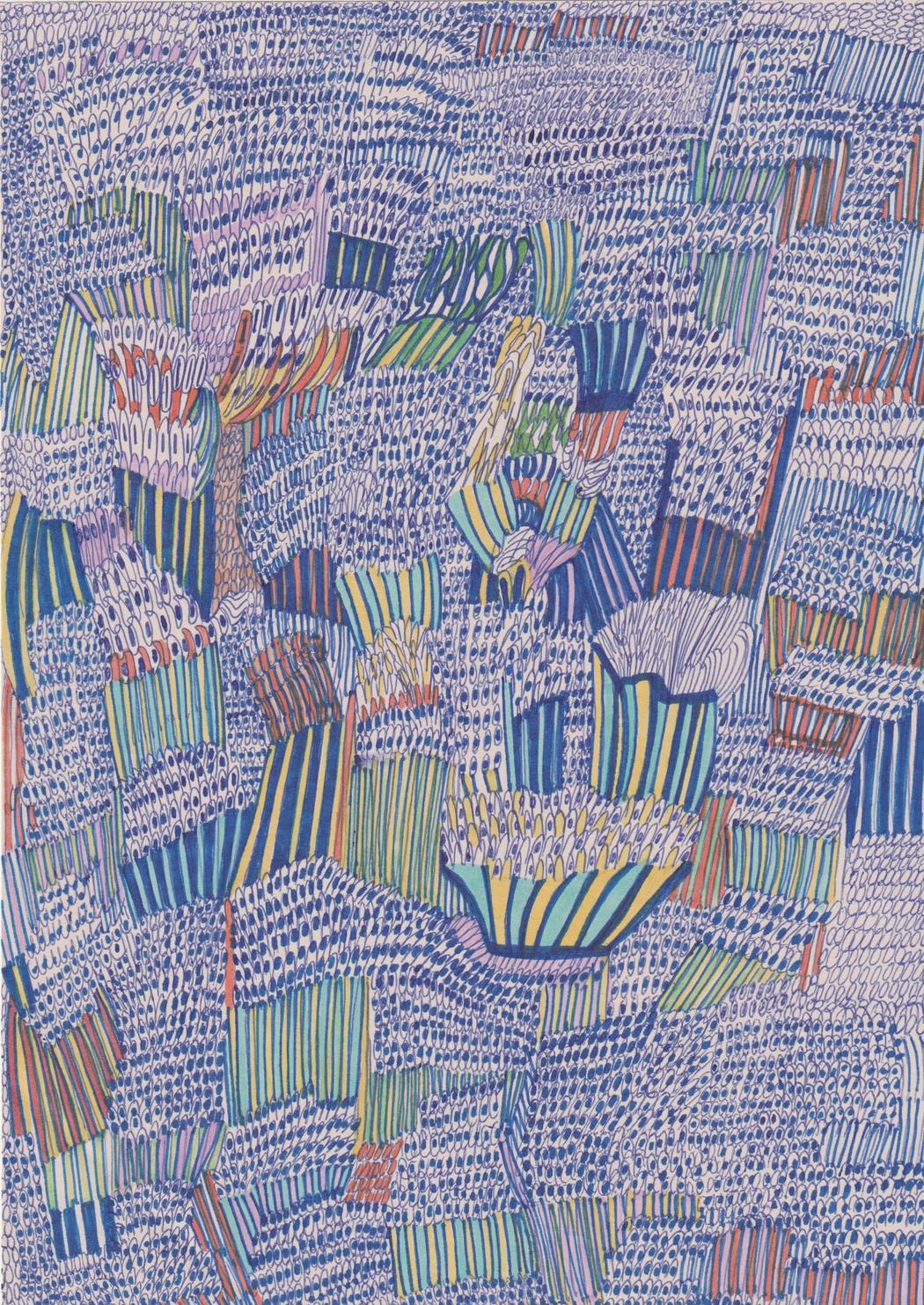 Lilit Vahradyan | Barnyard | 2024
Your work combines spontaneous emotion with meticulous, repetitive line work. How do you decide when to surrender to impulse and when to impose order? Does your choice of material affect this balance?
My moods change frequently, and I try to capture the depth that I feel. It is hard to gather all of my racing thoughts, as they may collect gradually or sporadically. Pieces that I create with marker and pen have a certain order, whereas my works on canvas are much more free and in the moment. I experiment more on canvas, because I am more likely walking around while creating, and find it hard to sit still. I will not leave my paintings halfway and go somewhere! The piece will change. My obsessive nature plays a part as well. My drawings seem to contain more of a collection between shapes, reading a more cohesive approach. For example, with watercolor you are naturally driven to explore, unexpected in where it takes you. Many times it is hard for me to impose order and control in my own life, and I can attain this through my works. I collect feelings, and store all of my feelings in my pieces.
You have mentioned a childhood nightmare involving an endless chain of multicolored rhombuses. How has this image evolved within your visual language, and do you still recognize traces of it in your recent work?
When I was young, I remember seeing a scary dream of rhombuses hanging vertically in a straight line on a chain, continuing and growing closer. I remember the chain that was so structured and in rhythm with each other. I think the dream was a part of my unconscious hinting at a sort of beginning and trigger to my future of art and lines. The strange part, when I grew older, in college in one of my classes, the same dream appeared in a video that one of my professor’s played, and it seemed like a coincidence or a sign that seemed so shocking. Up until today, I still have very vivid dreams. They may guide me into future moments and disclose certain locations, numbers, or conversations that have yet to happen.
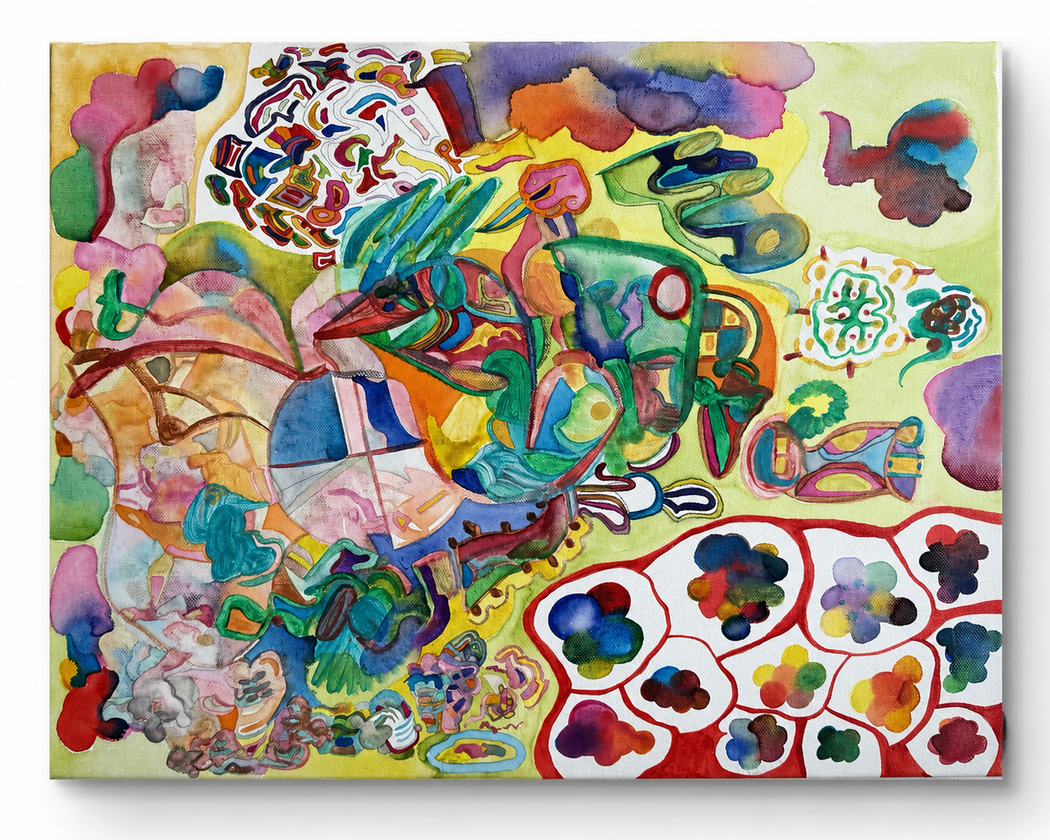 Lilit Vahradyan | Cluster Conversations | 2025
Faces and face-like forms recur throughout your work, sometimes appearing clearly and sometimes remaining partially hidden. Who or what do these faces represent for you?
I would say yes, faces can be seen in my art, either I outwardly make them stand out or they appear in a kind of unwritten manner. Sometimes I may unconsciously outline a face through lines without knowing. These are people that I have yet to meet, have accidentally passed by, or know in my personal life. They can be interpretations of family members, friends or different acquaintances. What is exciting to think about is who will appear next.
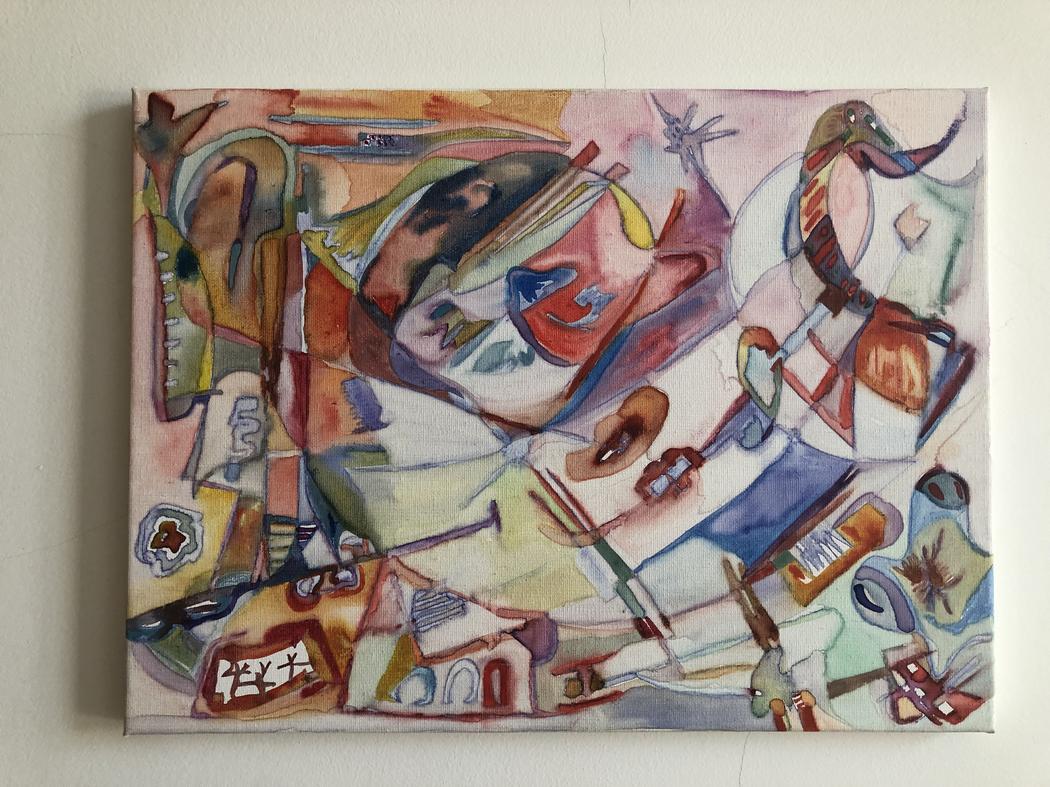 Lilit Vahradyan | Immediate Findings | 2022
You cite sounds as one of your sources of inspiration. How do you translate something auditory into color, rhythm, movement, or line? Is music part of your working process?
Sounds for me are always present, as I am very sensitive to stimuli, and I am always checking for changes or frequencies in my environment. It may be a form of inspiration, though I would say I am just hyper-aware and choose to concentrate on specific minor sensitivities that others probably would dismiss in their day to day lives. At times, people’s voices or conversations integrate into my linework, staying hidden taking on different paths and routes. The type of music I listen to may affect my spontaneity, pace and technique. The speed at which I form or join lines together may also then become different. I can use music to regulate my system and concentrate. In many instances, music for me is reminiscent of current or past emotions, I feel them very intensely. I trace back these memories and re-experience them again through a certain song.
Having studied at the School of Visual Arts and exhibited in both New York City and Armenia, how have these different cultural and artistic environments shaped your visual language and your sense of identity as an Armenian-American artist?
As an Armenian, having lived most of my life in New York City, currently living in Yerevan, I find myself influenced by both cultures. In the Armenian culture, people gravitate towards vibrancy and vivid color, nature, religion and language, which marks a part of our tradition that can be found across many art forms. I recently noticed that the color and ornamental forms can sometimes be found in my pieces. In the United States, I have felt particularly influenced by a vast variety of art, architecture and diversity of people. In general, I have always liked artists who depict a sort of melancholy or realism. Studying at the School of Visual Arts, I learnt to embrace my solitude, voice and freedom as an abstractionist. During my years there, I really experimented across different categories of artmaking. I also found a great interest and gravitation towards biology research, psychology and philosophy.
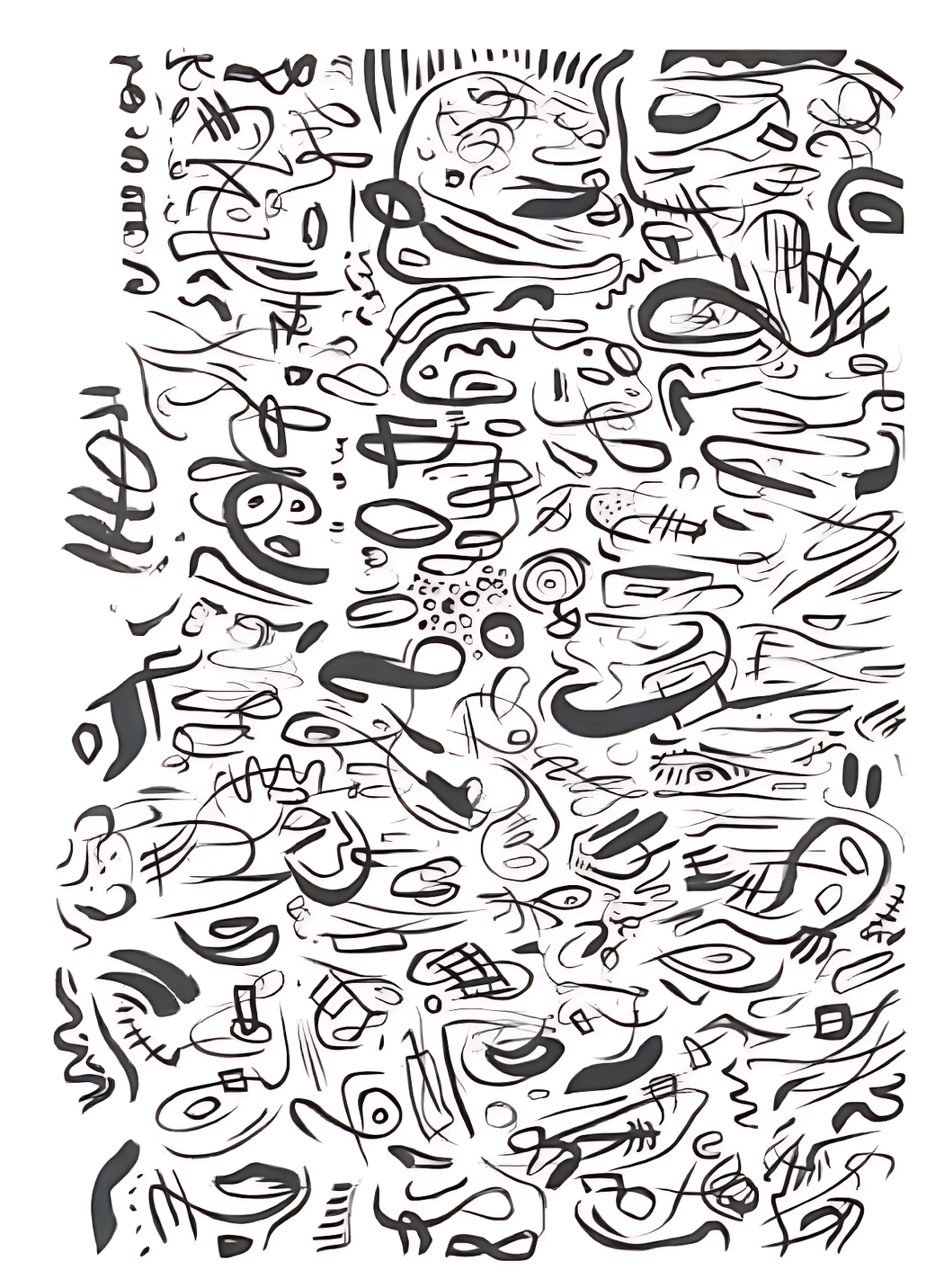 Lilit Vahradyan | Lost | 2017
Your compositions invite prolonged looking and often allow for multiple interpretations. Is there a particular meaning or emotion you hope viewers will discover, or would you prefer each person to encounter their own “unobserved reality”?
I feel as though I would encourage people to find their own “unobserved reality” while looking at my pieces. An opportunity to feel in their unique ways, to transport and reconnect with their own perceptions. The message I would to emit through my pieces would probably be for people to experience a sense of mystery and joy. Perhaps, through the playful nature of balance through colors of emotion, indecision, control and chaos.
‘Hold a moment as firmly as you hold your brush. But do not hold the brush too tightly, or else you will hurt your fingers.’