
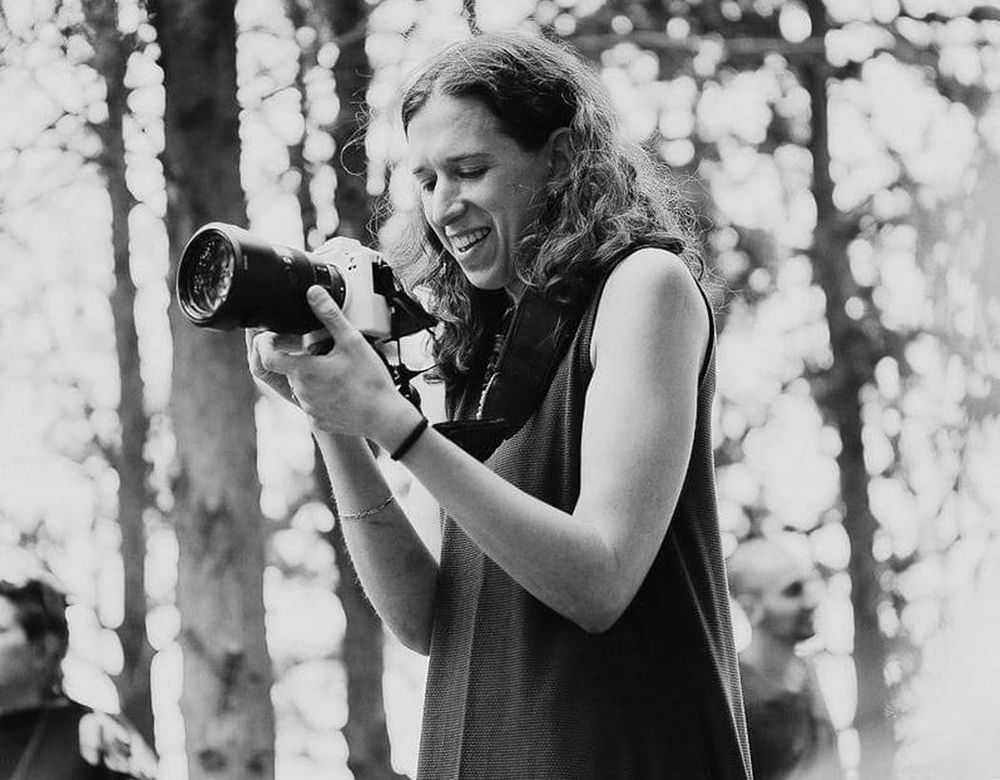
Lael Reiss
The title Flowering Void brings together ideas of growth and absence. What does it mean for emptiness to “flower”, and how did this paradox become the conceptual starting point of the project?
Flowering Void started as an attempt to put words to something I felt physically in my body. During a major depressive episode, the emptiness inside my mind felt like it was growing stronger day by day. That internal process felt like a plant germinating, emptiness taking root and developing inside the psyche.
I could only articulate this phrase after the acute phase passed, once I had enough distance to look back. Even as those internal feelings still bubbled up with a certain intensity, this idea took shape: take that feeling a step further into the visual dimension and ask myself, theoretically, of course, what would happen to my physical body if that internal emptiness kept growing infinitely.
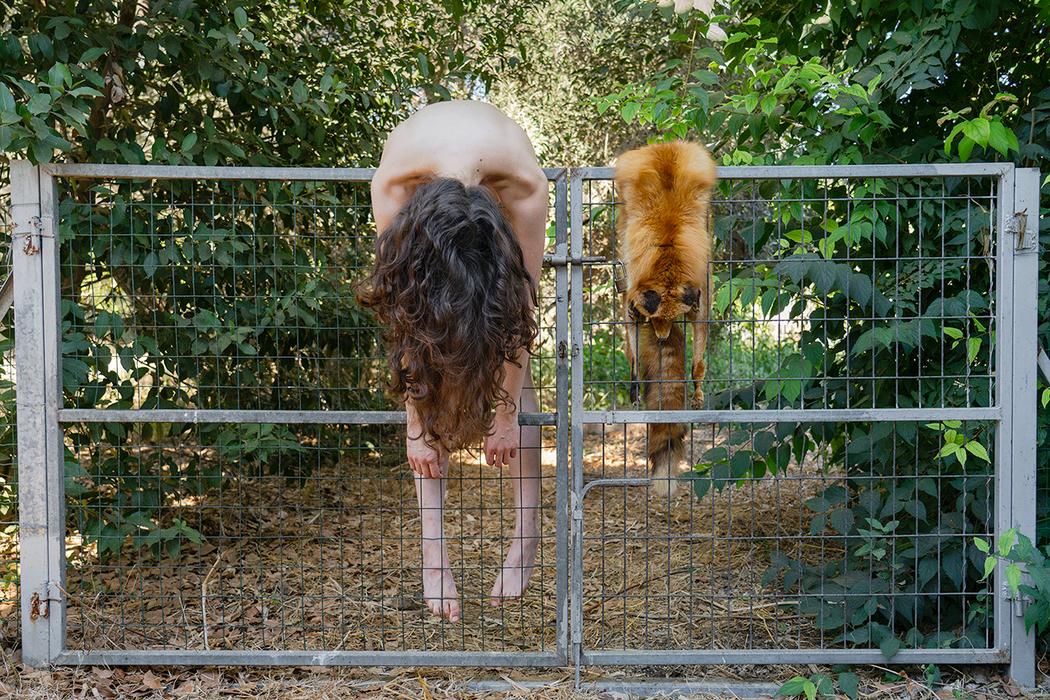 Lael Reiss | Fox | 2023
You describe the body as being filled with bags of air that burst and deepen the sense of isolation. Did this metaphor emerge from a particular physical or emotional experience, and how did you translate it into visual form?
This metaphor comes straight from intuitive writing, which is often the first step in my creative process. I write to unload what is overwhelming me in the moment, without tying it directly to an artwork. Sometimes, a specific phrase, word, or passage triggers a creative spark and makes me want to act on it.
That passage translated into visual form across several works rather than one defining piece. The core idea, that my body is filled with air bags, became the foundation for the belly, where those air pockets allowed a germination-like growth to push against the skin’s surface. It also appears in pieces like an air-filled nylon bag covered in tights hanging on a tree, an earlier shoulder-pad piece, and later works, such as printing photographs of my skin onto fabric and stuffing them with air bags.
In your work, skin appears both as a protective shell and as a porous boundary. Do you see it primarily as a source of protection, vulnerability, or transformation?
I see it as several things at once. I definitely see it as a source of protection, but at times I couldn’t trust it to hold up and not collapse under everything churning inside the psyche. So, I saw it as both a shield and a living partition where things from the environment soak in and push outward at the same time, both transparent and rigid. Today, I think its role is primarily to protect and guard.
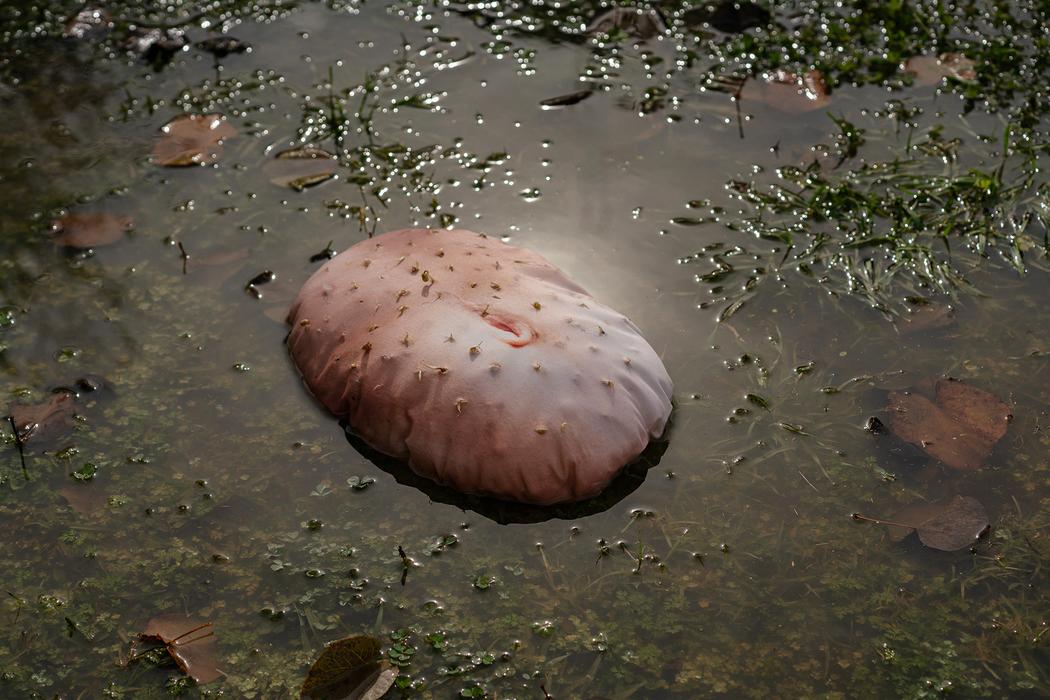 Lael Reiss | Belly | 2024
Your creative process moves between bodily sensation, sculptural construction, staged photography, and digital or material treatment. Could you describe how a work usually develops from its initial idea to the final image?
My works usually start from an intuitive, emotional place, or from a research question that interests me. Sometimes, the very first step involves reading and researching before I even step into the studio. It can also begin with a physical sensation or a material that catches my interest, which I bring to the studio to start “playing” with in front of the camera, or it can spark from a phrase, word, or note in my journal that curiosity pulls me to explore visually.
Once that happens, I gather materials that feel right or spark a desire to connect with the idea, and trial and error begins. I work in the studio with the physical materials, construct an object or take photographs, and then step back to evaluate what works and what doesn’t. From there, I keep moving forward. This process can be relatively fast—just a few weeks—or it can take several months for a piece to fully realise its potential.
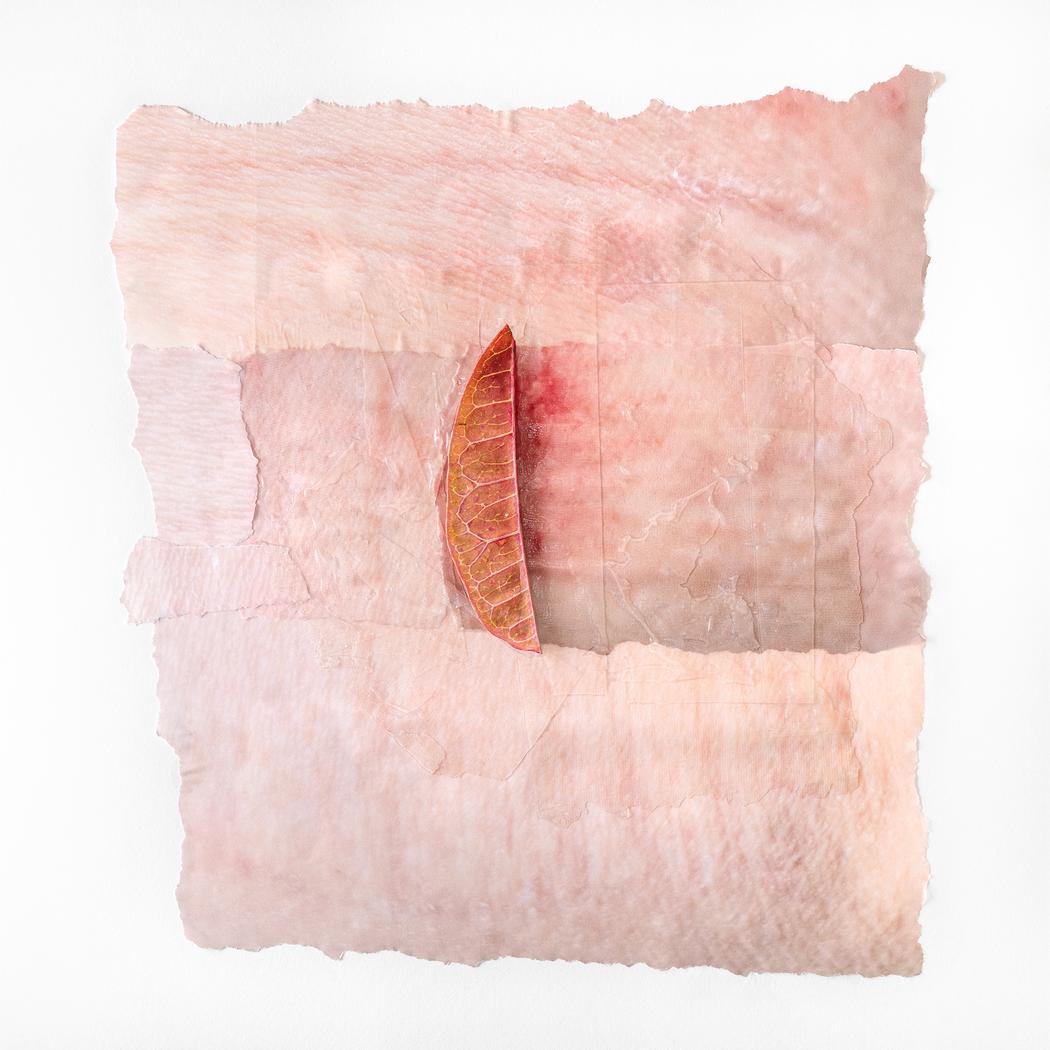 Lael Reiss | Pink Square | 2024
How do you choose the materials that imitate, extend, or replace the body? Are you guided more by their physical properties, their symbolic associations, or the way they respond to the camera?
It is a combination of all these factors. I am guided by the material’s physical properties, its visual response to the camera, and its symbolic associations, though the weight of each criterion shifts depending on the specific work.
Other aspects also play a big role: whether the material is organic or synthetic, and how much control I have over it. Sometimes, practical considerations dictate the choice as well—like opting for a material that is cheaper or simply easier to work with in the studio.
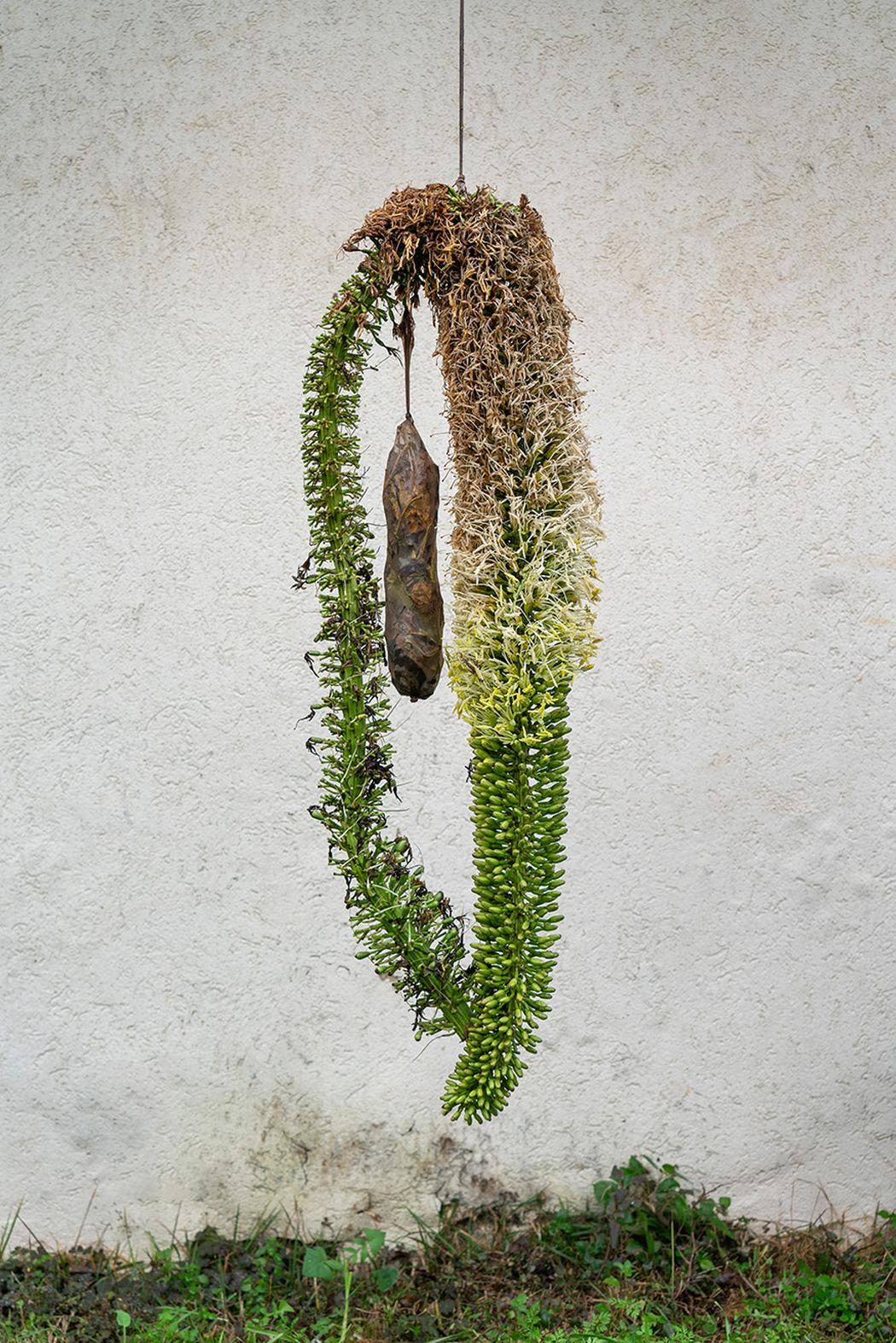 Lael Reiss | Stem | 2024
Your photographs can feel visually delicate and seductive while also creating discomfort or estrangement. How do you use colour, light, texture, and composition to maintain this tension?
Just as humour often helps us cope with difficult conversations in life, I believe a certain aesthetic can allow us to touch and make bleeding wounds accessible to the world.
I mostly use a colour palette drawn from my own skin and body, combined with relatively soft lighting and clean, simple compositions. This approach keeps the focus on the object within the frame or space, letting it speak for itself.
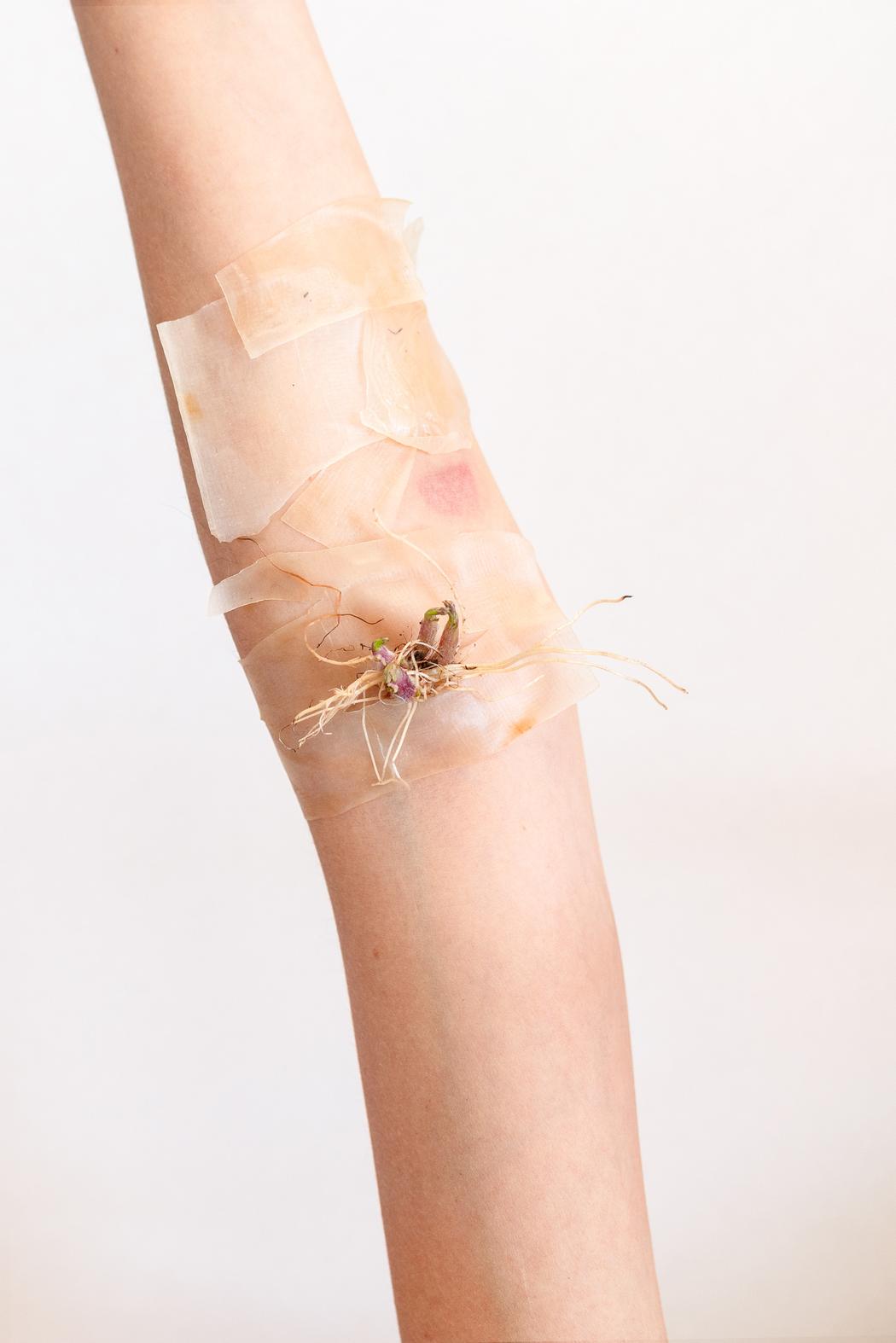 Lael Reiss | Sprout | 2024
How have your experiences in Israel and London, as well as your studies at the Royal College of Art, shaped the way you move between photography, sculpture, and material experimentation? Where do you see this practice developing next?
My creative process always begins with photography. Even when the final result is a sculpture, it begins as an image. This way of thinking was shaped by my studies. During my BFA in Israel, I focused heavily on classic photography during the early years, until my final project, where the medium began to evolve—moving back and forth between image and object.
At the RCA, I wanted to challenge myself and take that evolution a step further into sculptural installations and expanded photography. Thanks to the university’s workshops and facilities, which encouraged open exploration, I pushed that boundary and finished my degree with complex installations.
Looking ahead, I see myself continuing to explore materials and their intersection with photography. I am particularly interested in delving into BioArt—working with organic materials and connecting them back to the body and the camera.