
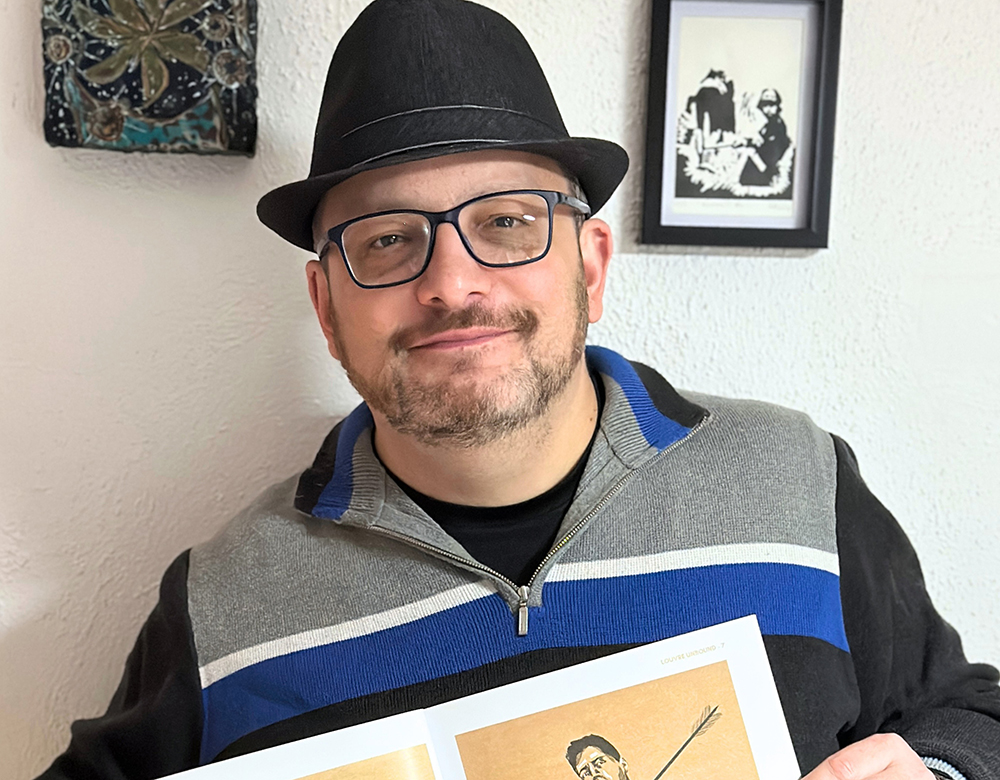
Cesar Vianna
The works submitted for this interview were all created in 2026. Do they represent a new stage in your practice, and what has changed in the way you approach the human figure?
Yes, I see these works as a new stage, although they are also the continuation of a research process that I have been developing for several years. The human figure has been central to my work since around 2018, but my approach has gradually shifted from trying to represent the body in its entirety towards asking how little I actually need to show for a body to remain present.
I have always been interested in classical ideas of proportion and anatomical balance. I look at the body almost architecturally: the relationship between the head, torso and limbs, the distribution of weight, and the way a pose occupies space. My background in design and architecture certainly contributes to this need for structure and precision. At the same time, I am interested in the idealised male figure and in the confidence with which artists such as Tom of Finland represented it. His work has been an important reference for me, particularly in the attention he gives to the male body and in the certainty of his lines.
What has changed most in these 2026 works is that I am increasingly removing rather than adding information. I work primarily with shadows and body hair, the hair, beard, eyebrows, chest hair, and allow large areas of the body to disappear into the background. There is often no conventional outline defining the figure. The viewer understands the anatomy through fragments: a shadow beneath a muscle, the direction of cross-hatching, the shape of the hair, or simply the empty space between two marks. This minimalist approach has become fundamental to the way I represent the body.
For me, this creates an interesting contradiction. I remain very concerned with correct form and proportion, almost in a classical sense, but I no longer feel that I need to describe everything. The anatomy must be convincing underneath the drawing, even when most of that anatomy is invisible. In that sense, the blank paper or the watercolor background has become as important as the lines themselves. The viewer’s eye completes what I deliberately leave unfinished.
So I would describe this new stage as a search for precision through reduction. Earlier, I was interested in demonstrating what I could represent; now I am increasingly interested in discovering what I can remove without losing the body, its sensuality, its movement, or its presence.
You describe the body as both form and presence. At what point does the observation of a physical body give way to psychological or symbolic interpretation?
For me, it happens quite naturally during the process of drawing. I usually begin with observation: proportions, anatomy, posture, the direction of the light, the distribution of shadows. At that stage, the body is primarily form. My background in design has made me very attentive to structure, and I still want the anatomy to be convincing even when I eventually remove much of the visual information.
But a body is never only anatomy. A slight inclination of the head, the position of the hands, the tension of an arm or the direction of the gaze can completely change how we perceive a figure. I have always been interested in these small gestures because body language can communicate emotions that are immediately recognisable, regardless of the cultural background of the person represented.
This becomes particularly important in my current work because I deliberately provide less information. By representing primarily shadows, hair and selected details, I leave much of the figure physically absent. The empty areas are not simply unfinished spaces; they allow the viewer to reconstruct the body mentally and, at the same time, to project something of themselves onto it. The transition from physical observation to psychological interpretation therefore occurs partly in my drawing and partly in the viewer’s imagination.
The symbolic dimension can also emerge from the pose itself. Saint Sebastian is an obvious example. A contemporary male body can immediately enter into dialogue with centuries of representations of martyrdom, beauty, suffering, sensuality and desire simply through a particular posture or gesture. I have explored Saint Sebastian before precisely because this figure can exist simultaneously as a religious image, a wounded body and an important reference within homoerotic visual culture.
I am interested in that ambiguity. I do not want to dictate exactly what the figure is feeling or what the viewer should understand. In fact, I prefer not to explain an artwork too completely, because interpretation is part of the experience I want to preserve. The physical body gives me the structure, but presence begins when that structure suggests something beyond what is actually drawn.
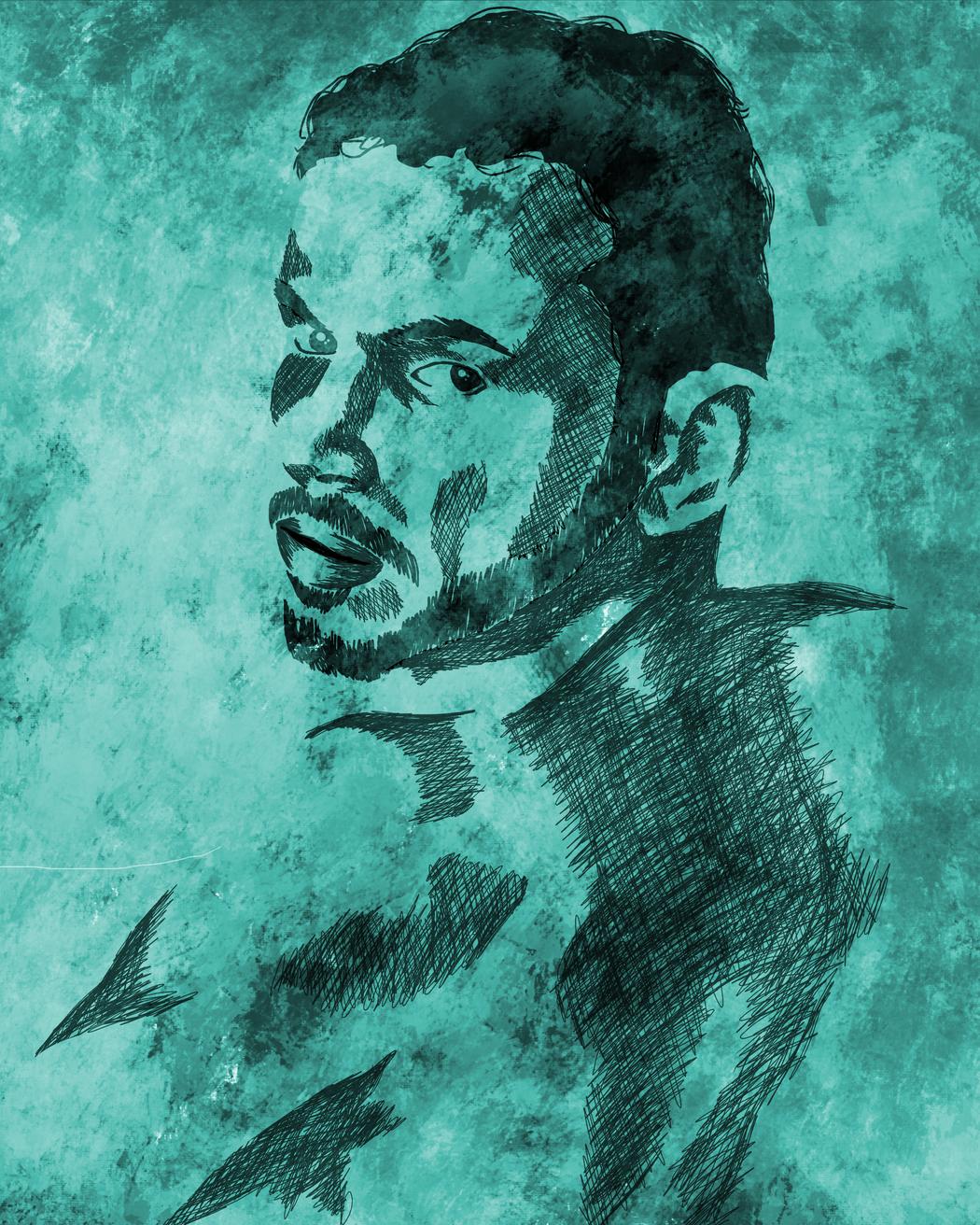 Cesar Vianna | Becoming Unapologetic | 2026
You place contemporary bodies in dialogue with visual traditions once associated with saints, heroes, and idealised figures. Which aspects of those traditions do you find valuable, and which do you feel compelled to challenge?
What I value most in those traditions is their understanding of the human body as something capable of carrying meaning. In classical and Renaissance art, the figure was rarely just a body. Proportion, posture, gesture and light could transform it into a saint, a hero, a martyr or an ideal of beauty. I am very attracted to that attention to anatomy and proportion, and to the idea that the body itself can become a visual language. My interest in artists such as Leonardo da Vinci and Renoir comes partly from this search for subtlety and precision in the representation of the human form.
At the same time, I do not want to reproduce the classical ideal. The bodies in my work belong to the present. Many are inspired by real people I have encountered through life-drawing sessions or through personal exchanges, with different ethnicities, ages, proportions and physical characteristics. That diversity has become an important part of the way I understand the human figure. I want to borrow the visual authority traditionally given to saints and heroes and offer some of that same dignity to contemporary, ordinary bodies.
Saint Sebastian is particularly important to me in this context. Historically, his image brings together beauty, physical suffering, vulnerability and the idealised male body, but it has also acquired a strong homoerotic resonance. I have explored that ambiguity in my work before, including through a Saint Sebastian inspired by a real model whose personal experience gave the image an entirely different emotional dimension. In the 2026 works, I return to that visual tradition without trying to recreate a historical painting. The arrows or the raised arms may immediately evoke the iconography, but the man remains contemporary.
This is perhaps where I feel most compelled to challenge tradition. Historically, idealisation often established quite narrow definitions of which bodies deserved to represent beauty, heroism or even transcendence. I am interested in separating those qualities from a single physical ideal. Tom of Finland is an interesting reference for me here because, although his bodies are also highly idealised, he placed the male body, masculinity and homoerotic desire at the centre of the image with extraordinary confidence. His representation of the male figure has influenced the way I think about both detail and presence.
So I am not rejecting the classical tradition; I am appropriating its visual vocabulary and changing who is allowed to inhabit it. I want the proportion, dignity and monumentality of the classical figure, but I want them to belong to bodies that exist now.
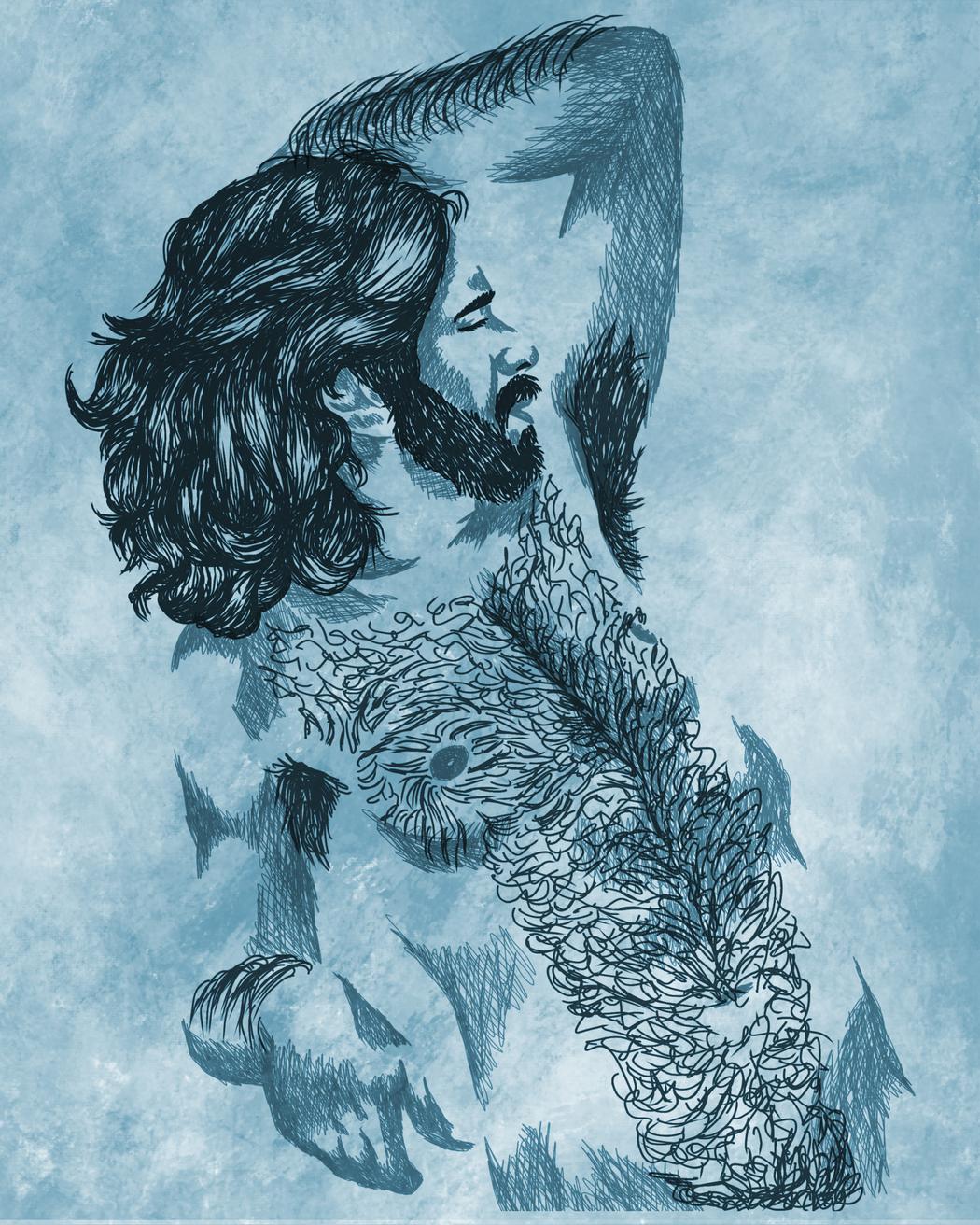 Cesar Vianna | Owl Within | 2026
The male figure occupies a prominent place in your recent work. What ideas about masculinity become possible when strength, vulnerability, sensuality, and uncertainty are allowed to coexist?
I think masculinity becomes much more interesting when we stop treating these qualities as opposites. Strength does not exclude vulnerability, sensuality does not diminish dignity, and uncertainty does not make a man less masculine. For me, the male body becomes more human when all these possibilities are allowed to exist simultaneously.
The history of art offers many examples of this complexity. Michelangelo gave the male body extraordinary physical power, but his figures are not simply demonstrations of strength; there is often tension, introspection and psychological weight within that monumentality. Caravaggio introduced something different: his bodies can be beautiful, sensual, wounded and dramatically human at the same time. Saint Sebastian is perhaps one of the clearest examples of this ambiguity in Western art. He can embody physical beauty, endurance, suffering, surrender and sensuality within a single image. This combination has fascinated me for a long time and is one reason I continue returning to his iconography. In an earlier work, I connected Saint Sebastian with the experience of a real model facing cancer, which made the traditional image of the wounded body become something very personal and contemporary.
Tom of Finland is another important reference, but from a very different perspective. I have always admired the confidence with which he placed the male body at the centre of the image. His men occupy space unapologetically; masculinity and desire are not hidden. His detailed treatment of the male figure has been an important influence on my own work. However, I am interested in taking that confidence into a more ambiguous emotional territory. My figures may have strong bodies, but they can also turn away, close their eyes, raise their arms, expose themselves, appear contemplative or seem momentarily uncertain.
There is also something important to me about the gaze. Traditionally, the female body has occupied a much larger space as an object of beauty and desire in Western art. I am interested in giving the male body permission to occupy that position as well: to be looked at, admired, desired and contemplated without needing to justify its presence through action or heroism. A man does not always need to be doing something heroic. Sometimes his presence is enough.
This is particularly relevant to my minimalist approach. Because I often construct the figure almost entirely through shadows and hair, much of the physical body disappears. Paradoxically, this can make the body feel more exposed. There is less information, but more space for the viewer to perceive gesture, sensuality and emotion. The empty areas become part of that vulnerability.
Ultimately, I am interested in masculinity as something plural rather than fixed. A man can be powerful and fragile, confident and uncertain, masculine and sensual, heroic and ordinary, all within the same body. For me, allowing these apparent contradictions to coexist does not weaken the representation of masculinity; it expands it.
Your figures often appear emotionally exposed yet retain a strong sense of dignity and self-possession. How do you portray vulnerability without reducing it to weakness?
I do not see vulnerability and strength as opposites. In fact, I think there is a particular kind of strength in allowing oneself to be seen without constantly performing power. This is something I increasingly look for in the male figure: a body that can be exposed, contemplative, sensual or emotionally uncertain and still retain its dignity.
Gesture is fundamental to this. A lowered gaze, closed eyes, a turned head or raised arms can suggest introspection, surrender or vulnerability without making the figure passive or powerless. I have always been interested in these small movements because body language can communicate emotions with very little information. I think this is also connected to my interest in animation: the Disney animators I admire taught me to look not only at a pose, but at the movement and emotion that lead to that pose.
There are important precedents for this in art history. Michelangelo could give a figure enormous physical strength while simultaneously suggesting psychological tension. Caravaggio allowed beauty, sensuality, fear, pain and mortality to inhabit the same body. Egon Schiele went even further in exposing psychological unease through the body. And, once again, Saint Sebastian interests me because his iconography contains an extraordinary contradiction: he is wounded and physically exposed, yet he rarely appears defeated. His vulnerability becomes part of his endurance.
In my own work, I try to achieve something similar without relying on dramatic facial expression. My minimalist technique is particularly useful here. By constructing the figure primarily through shadows, cross-hatching and body hair, while allowing large portions of the anatomy to disappear, I remove some of the visual armour surrounding the subject. The figure becomes exposed through absence. Yet because I remain attentive to proportion, posture and the structure of the body, that absence does not make him fragile in the sense of being powerless.
I also think dignity comes from the way I look at the person I am drawing. I am not interested in using vulnerability as spectacle. Many of my figures originate in encounters with real people, and those exchanges have taught me that portraiture can reveal something a person may not immediately recognise in themselves. One of the reactions that has affected me most is when a model looks at my work and says, “You made me look beautiful.” That tells me that the drawing has preserved something essential about the person rather than simply exposing them.
Perhaps that is the distinction I try to maintain: vulnerability in my work is not the loss of power; it is the absence of armour. The figure may reveal something intimate, uncertain or fragile, but he remains in possession of himself.
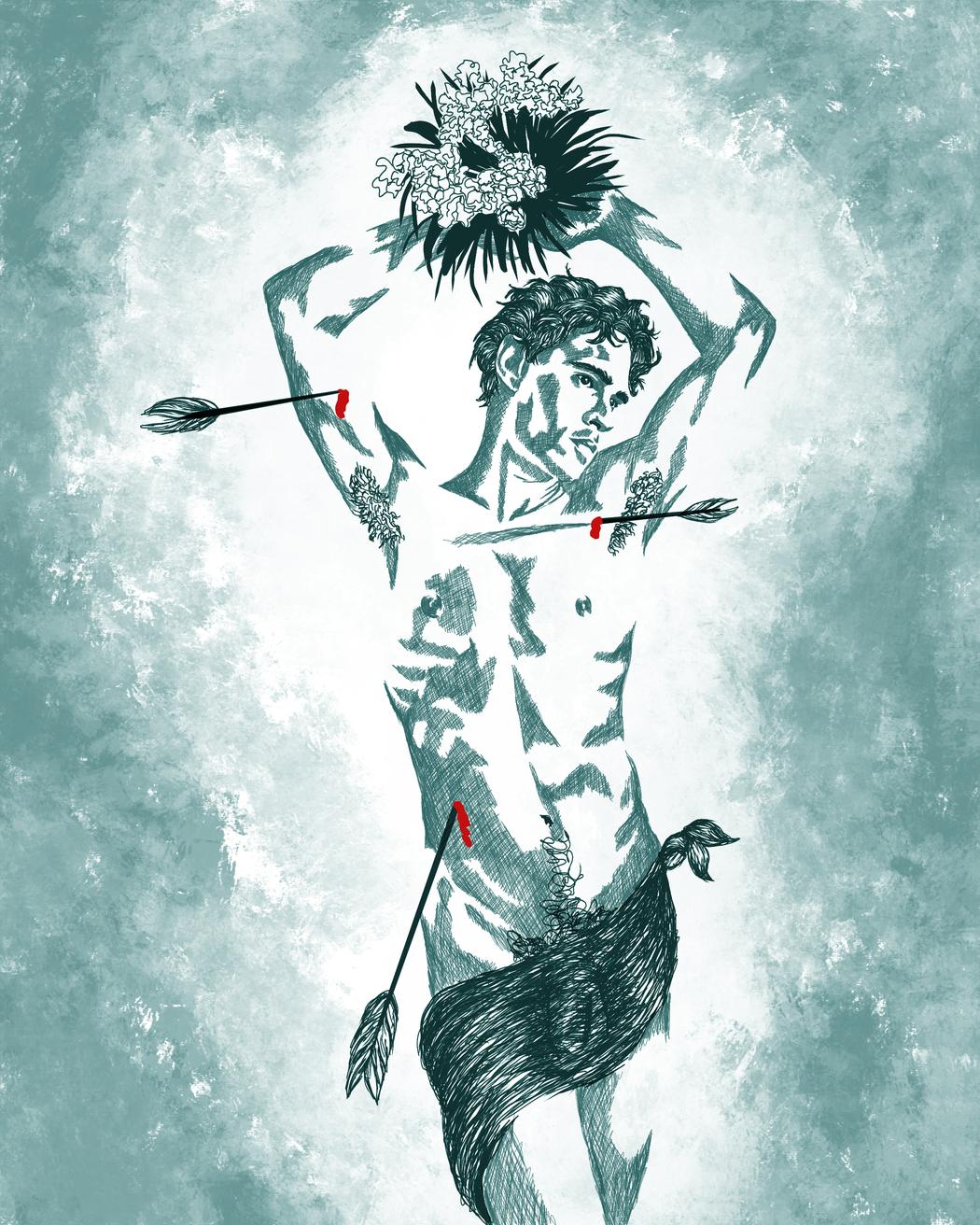 Cesar Vianna | Saint Sebastian | 2026
When an artwork develops from an encounter with a real person, what responsibilities do you feel towards that individual? How do trust, consent, and personal boundaries enter your creative process?
When I work from a real person, I am very conscious that I am not simply borrowing a body or a face. There is an individual behind the image, with a history, a personality and boundaries that must be respected. This became increasingly important in my practice when I began participating in online life-drawing sessions and meeting models from different countries. In commissioned portraits, this relationship can become even more personal because conversation often becomes part of the process, and what I learn about the individual can subtly influence the final work.
Trust is therefore fundamental. There is already a degree of vulnerability involved in allowing another person to observe your body closely enough to draw it, particularly when the work involves nudity or sensuality. I never interpret that openness as unlimited permission. Consent to pose is not automatically consent to every possible transformation, context or use of that person’s image. I think an artist has a responsibility to understand that distinction and to respect the boundaries established by the model.
At the same time, I am not trying to make a photographic reproduction of the person. There is always a transformation between the model and the artwork. I observe anatomy, gesture, light and individual characteristics, but these elements pass through my own visual language. Sometimes the resulting figure becomes symbolic or enters into dialogue with another image or tradition. My experience with Saint Sebastian is a good example: a real model and his experience with cancer became connected to the symbolism of Sebastian as a wounded figure associated with survival and homoerotic imagery. Because I knew something of his personal story, the work acquired an emotional significance that went far beyond simply representing his body.
This also makes me conscious of the difference between revealing someone and exploiting their vulnerability. I may emphasize sensuality, physical beauty or emotional exposure, but I never want the person to lose their dignity in the process. I think this connects to something models have occasionally told me after seeing my work: “You made me look beautiful.” That reaction is particularly meaningful because it suggests that they still recognize themselves, but perhaps through a perspective they had not previously considered.
There is also an interesting paradox in my current minimalist work. I observe the model very carefully, but then I deliberately remove information. Shadows, hair and selected details remain while much of the body disappears into the paper. In a way, that process creates another boundary: I can suggest intimacy without necessarily revealing everything.
Ultimately, I see the relationship between artist and model as a collaboration, even when the model never physically touches the artwork. They give me access to their presence; what I owe them in return is respect. Artistic freedom is essential to me, but it does not eliminate responsibility. For me, trust and consent do not restrict the creative process—they create the conditions in which something more honest can emerge.
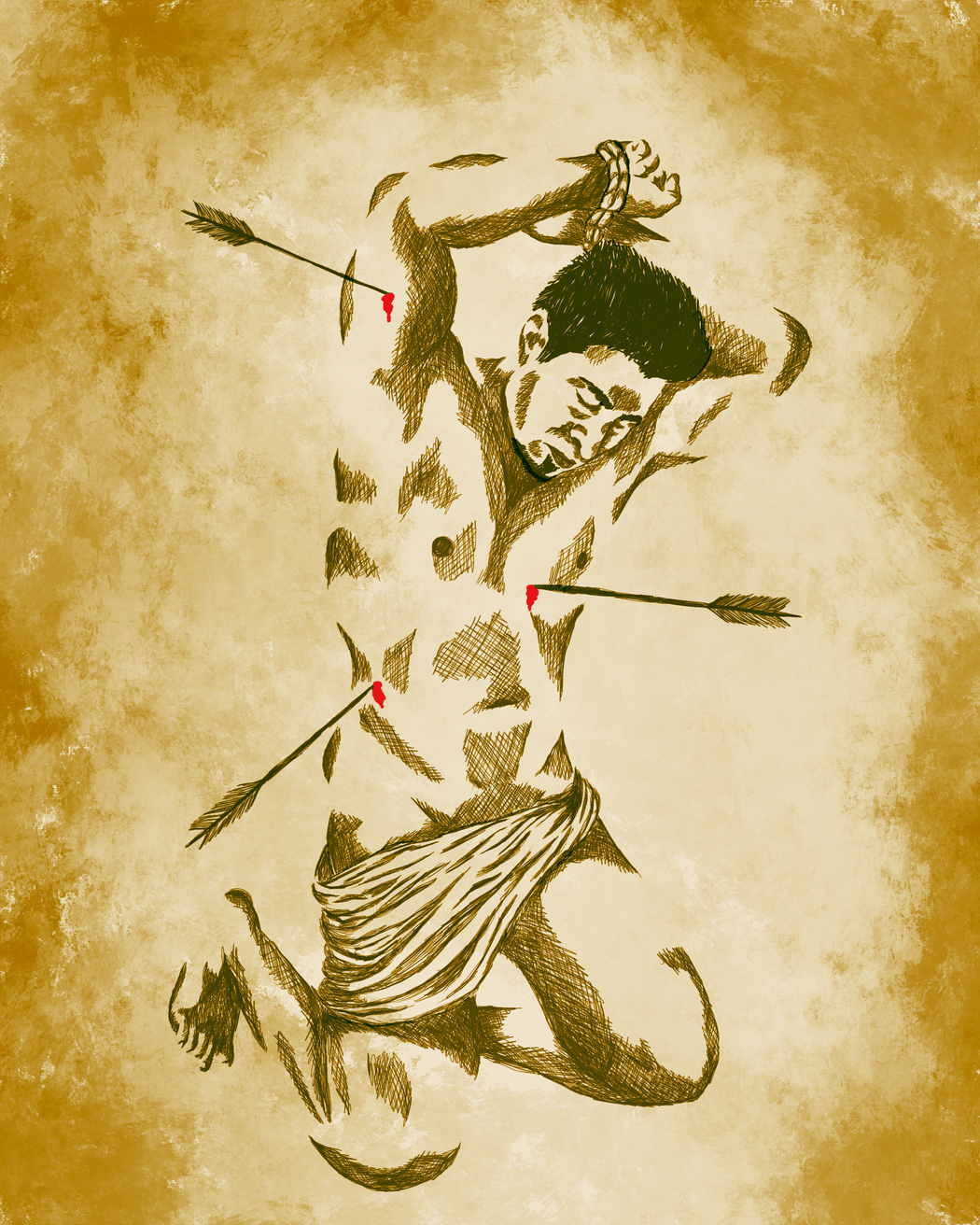 Cesar Vianna | Saint Sebastian 2026
Having taught drawing and art history for many years, how has teaching influenced your own way of looking? Has explaining artistic principles to others made you more inclined to follow them or to break them?
Teaching drawing and art history for many years profoundly changed the way I look at art. When you teach drawing, you cannot simply say that something “looks right.” You have to understand why it works: proportion, perspective, anatomy, composition, light, shadow, movement. You have to break the image down into principles that can be understood and then reconstructed by someone else. Teaching made me much more conscious of decisions that, as an artist, I might otherwise have made instinctively. My background in design and architecture had already given me a strong sense of structure and precision, but teaching reinforced that analytical way of seeing.
Art history had a different influence. Teaching it meant constantly revisiting how artists responded to the conventions of their own periods. What interests me is that many artists we now consider masters did not simply follow rules—they understood them extraordinarily well and then found ways to transform them. Michelangelo needed an exceptional understanding of anatomy before he could exaggerate it. Picasso knew academic drawing before dismantling representation. Matisse understood colour before liberating it from naturalism. Looking at art history in this way taught me that experimentation is much more interesting when you understand what you are challenging.
I think this describes my own relationship with the human figure quite well. I remain very attached to what I would call a classical understanding of form and proportion. I want the anatomy underneath the image to work. I want the distribution of weight to be credible and the gesture to make sense. My earlier interviews already describe this desire to master a classical approach to the figure while bringing contemporary elements into it.
But once that structure is established, I feel increasingly free to break the rules of representation. In my current work, for example, I may spend considerable time studying the anatomy of a figure and then deliberately refuse to draw most of it. I eliminate the outline, remove areas of the body and retain primarily shadows, hair and a few essential marks. The paradox is that I need to understand the complete body in order to know exactly what I can remove.
This is probably the most important lesson teaching gave me: rules are tools, not obligations. I do not believe an artist needs to choose between academic knowledge and freedom. For me, one makes the other possible. The more I understand proportion, anatomy, composition and art history, the more confident I feel in deciding when those principles are necessary, and when I can abandon them.
So teaching ultimately made me both more disciplined and more willing to experiment. I learned to respect the foundations without becoming imprisoned by them. Perhaps that is also why my work today can pursue something close to classical proportion while representing a body with almost nothing at all.