
Tatjana Capuder Vidmar
When did you first become interested in art, and how did your artistic practice begin?
In my teenage years I was excited about modern painting, sculpture, and architecture. But since my childhood I play piano and I adore classical music. As a student I have enrolled in the Faculty of Architecture, University of Ljubljana, and to fulfil my further interests in architecture after my PhD I went to London to study at the Architectural Association School of Architecture. There I learned completely new approaches out of the box that were liberating and expanded my critical thinking and imagination. This was not an imagination of a dreamer but of a serious tendency to understand what space per se is and to figure out the role of architecture in space.
How did your background in architecture shape your artistic approach to space, light, and form?
Architecture makes it evident that everything is connected. As physicist Carlo Rovelli beautifully explains in his book Reality Is Not What It Seems, the reality is relational. And architecture is a part of the reality. So, everything is in a relation and therefore connected. Architecture is in a relation to space and light, and architectural form should depend on these relations, and of course on many other relations, too. But my artistic research is focused on relations between space, light, and form.
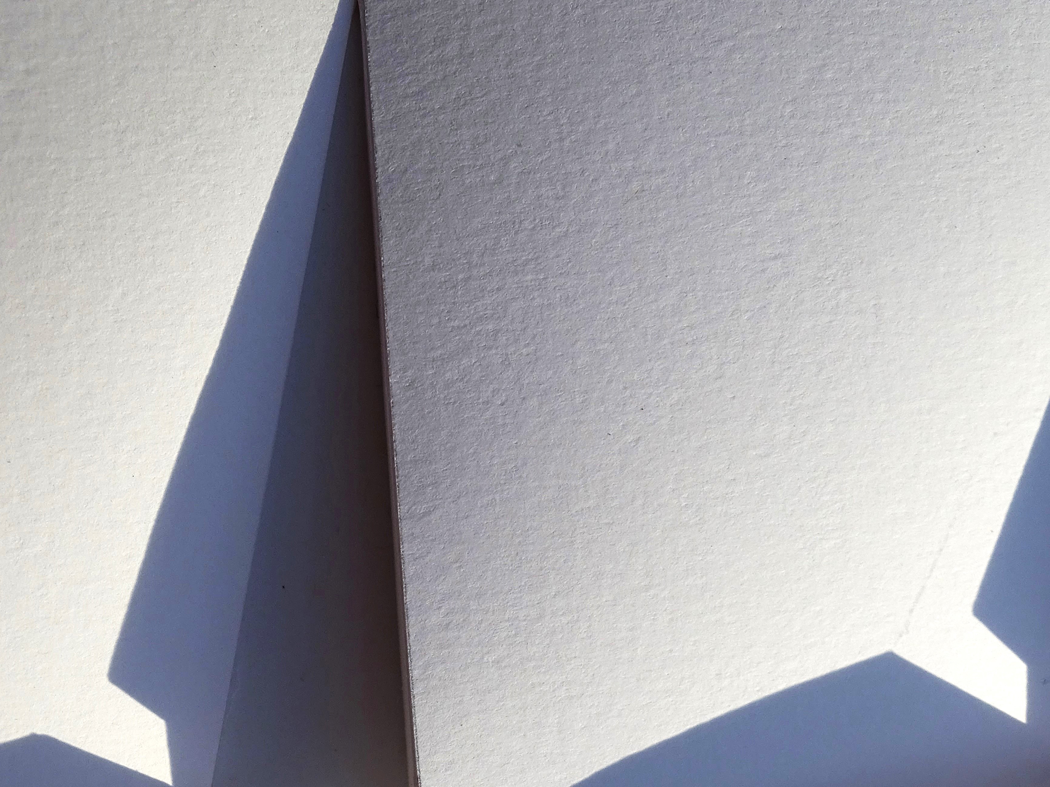 Tatjana Capuder Vidmar | Space = Light + (Shadow) | 2024
Was there a particular moment when you realized that architecture and art could connect in your practice?
I have never understood architecture separated from art. Architecture is an art. But to be realized it needs at least two approaches: on one hand it needs outstanding professionals to make plans and then to realize them on a site, on the other hand it needs extraordinary studies in many realms from philosophical thinking to innovations in technologies and materials if we want to go further and follow the development and needs of society. Architecture needs a vast knowledge. My artistic research is only a small part of it. The results of it show relationality and connectivity between space, light, and form. This I find very interesting because I consider space and light as basic entities that manifest forms. Therefore, my art tries to deal with serious questions that also question human feelings in a space manifested by light and forms.
The series “SPACE = LIGHT + (SHADOW)” appears to transform simple paper structures into complex spatial experiences. What was the starting point for this series?
Years ago, I have started with the idea that if I want to research space per se I need to research spaces that were not yet touched by humans. It is hard to find any except in smaller scales that are usually not interesting for contemporary science or a developer, that is space between micro natural structures like in a dried autumn leaf or in a surface of a forgotten stone. The question was what is going on here between structural elements in such a micro world, and if there is possible to understand space in a reflection of a natural form. And yes, paper is a very simple and modest material which is able to simulate the natural forms of the micro world, and with the paper this world was enlarged to be easily observed.
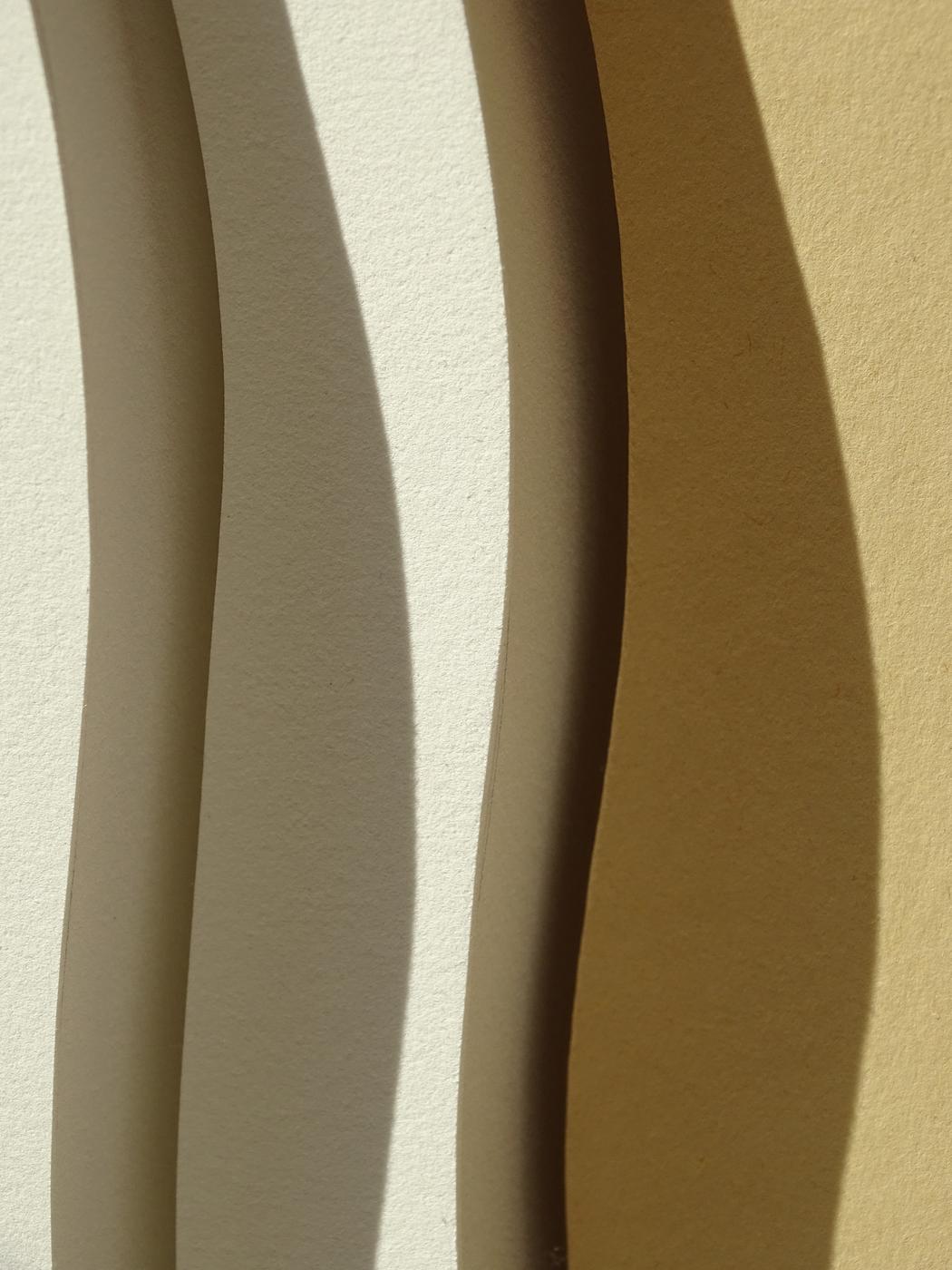 Tatjana Capuder Vidmar | Space = Light + (Shadow) | 2024
What role does shadow play in your work – is it a visual effect, a structural element, or an independent part of the artwork?
In the sixth century BCE for example Taoism understood life and its processes as a balance between opposites that are part of the same system, the Tao (or Dao). In the Tao, light and darkness need each other in order to be recognized, defined and understood – and thus they are needed for us to be able to understand the world and ourselves. Therefore, shadow is a relational element and depends on light. It creates also an atmosphere in space and reveals our feelings in the space.
Your paper models seem minimal at first glance, yet they reveal rich layers through light and perspective. How important is the viewer’s movement or point of view?
The paper models are intentionally minimal with the aim that a viewer would stop and try to reveal all these layers motionless. In such a motionless moment, I hope, it becomes evident, that this moment and the relations in it are just one of the many possible relations in a limited cloud of relations between space, light and form, and the viewer of course.
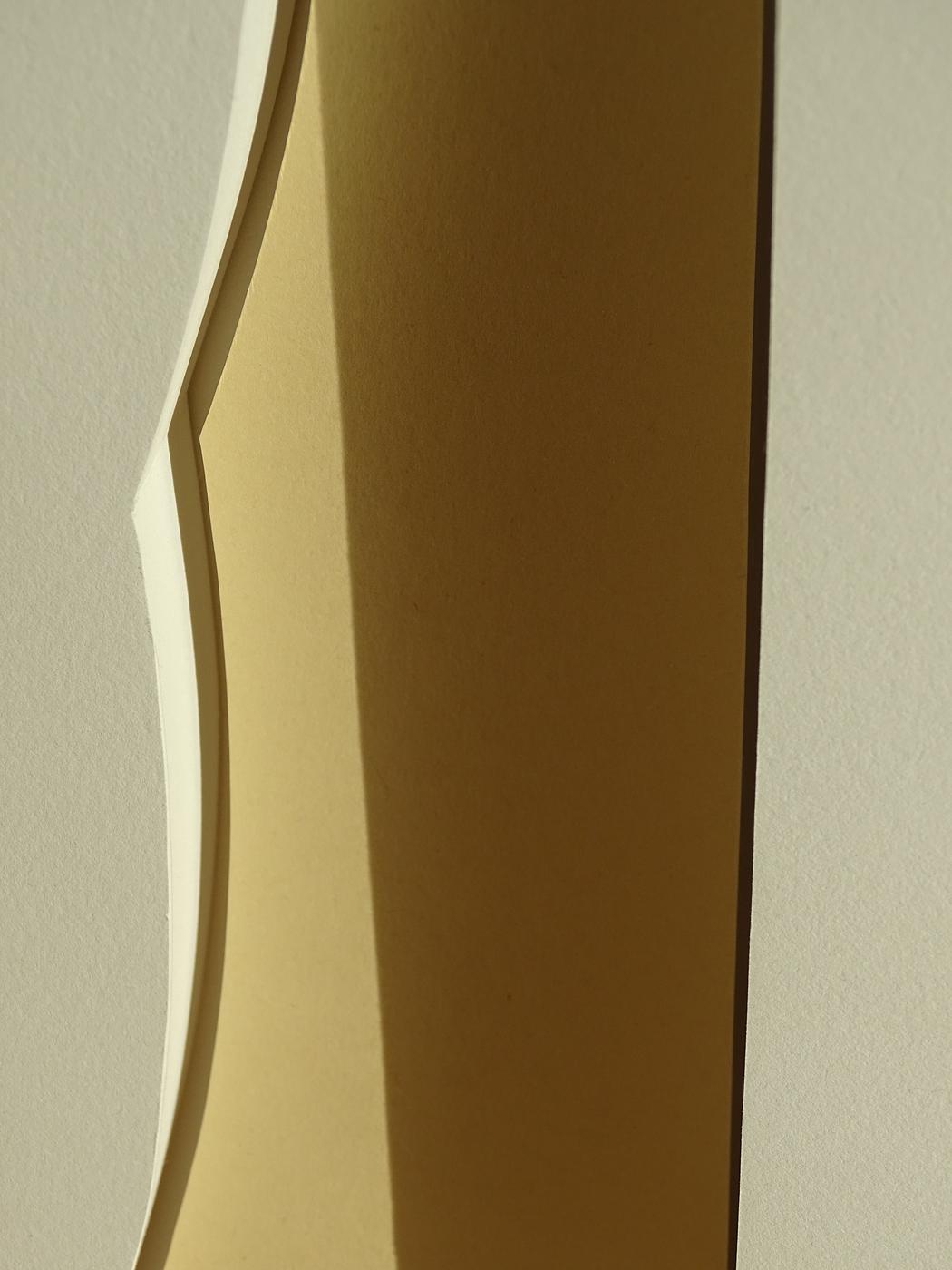 Tatjana Capuder Vidmar | Space = Light + (Shadow) | 2024
Alongside your artistic and architectural work, teaching has been an important part of your professional life. How does communication with students influence your way of thinking, creating, and understanding space?
I teach three subjects, Development of Settlements, Basics of Architecture and Urban Design, and Urban Planning at the Department of Landscape Architecture, which is one of the departments of the Biotechnical Faculty, University of Ljubljana for 20 years now. In all these years I have used flipped class methodology and I am lecturing ex-cathedra only where it is needed. Flipped class gives a lot of opportunities for debates, where moderating is very important. It needs to be flexible and it needs to support critical thinking and creativity in students to get them out of the box. But these are also characteristics needed for the moderator of the debate. There are always many moments during the process of moderation and also of course during mentoring students’ projects that I get an upgraded insight to a knowledge. Teaching is also self-learning through the teaching which is most exciting. I consider ex-cathedra lecturing of the same subject extremely boring if one does not challenge oneself with new ideas which can go beyond a paradigm. And yes, space is always in the focus of my ideas. I think it is most necessary to go beyond one’s profession to be able to go beyond existing norms to find new solutions for a better world.