
Internal Terrains, External Forces: A Review of Psychological Landscapes
Internal Terrains, External Forces: A Review of Psychological Landscapes
By Tabitha Ysart Green
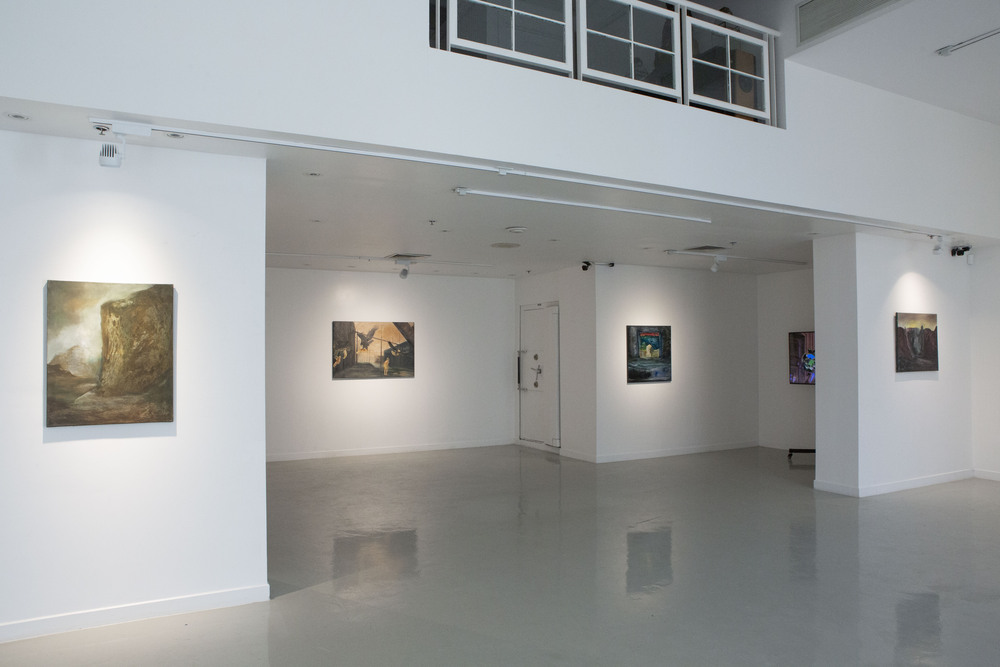
Installation view from Psychological Landscapes, Courtesy of 1215 Gallery.
The group exhibition Psychological Landscapes is currently on display at the 1215 Gallery until June 24th 2026. The exhibition brings together works across a range of media that investigate how one’s environment can shape and manipulate emotion, desire, memory, and psychological perception. The artists explore the “Psychological Landscape” as an internal terrain, creating visual representations of experiences and processes often hidden from outside perception.
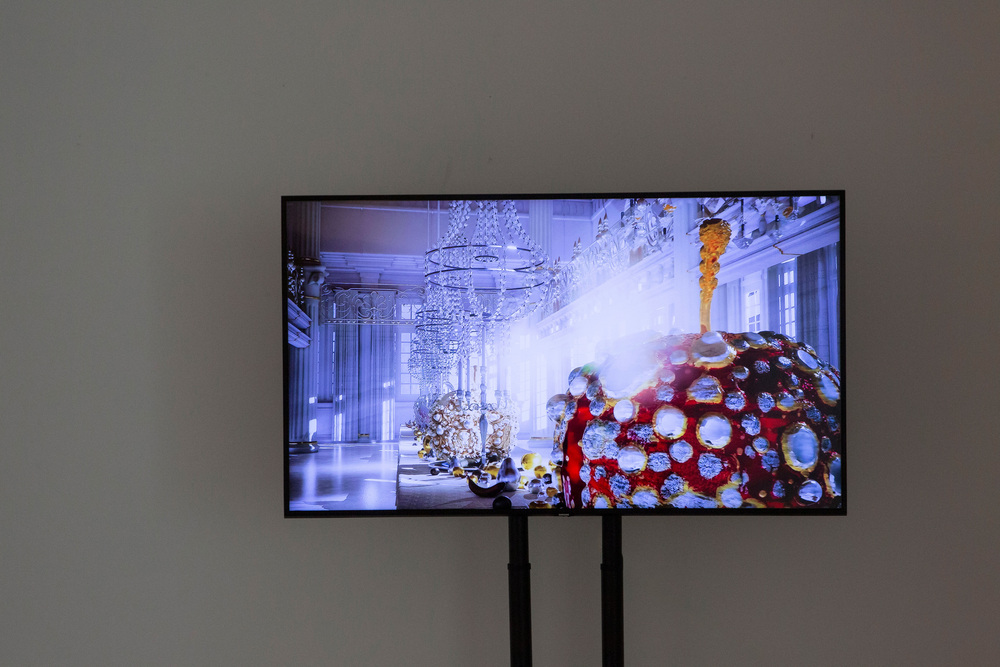
Installation view of “Institutionalised Desire” from Psychological Landscapes, Courtesy of 1215 Gallery.
“Institutionalised desire” by Chenyu Wang uses the symbolic apple to begin a dialogue about consumerism, and the tactical exploitation of desire, herd mentality, and envy by modern advertising. Through the repeated motif of the apple the artist taps into a number of established cultural associations, including Eve’s Apple from the Bible, the Apple of Discord from Greek mythology, and the poisoned apple from Snow White, and the associated negative connotations. One may even extend the metaphor to the tech giant Apple, whose monopoly of the tech world, and continuous turnout of new products echoes the artist’s expression of algorithmically produced desire.
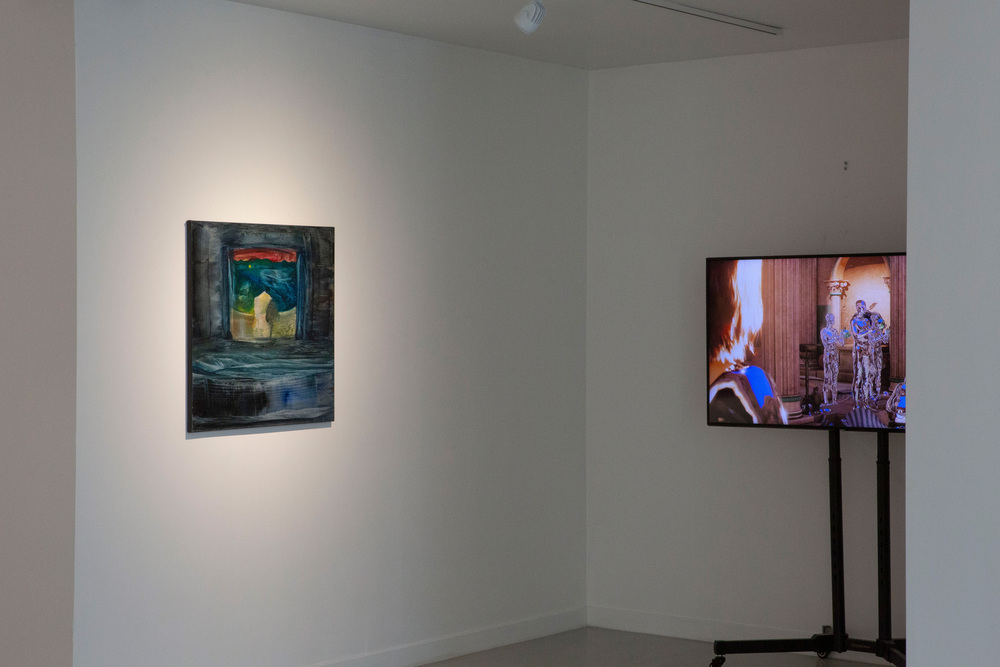
Installation view of “Institutionalised Desire” from Psychological Landscapes, Courtesy of 1215 Gallery.
Wang indicates that in an environment of commodification, desire is no longer an individual’s impulse, but a produced condition shaped by systems of advertising and consumption. This surreal digital work seems to illustrate the internal processes one goes through on the way to being seduced by an advertising campaign. Products are repeatedly elevated and displayed, while figures appear as both participants in and spectators to a cycle of consumption. Through repetition and spectacle, desire gradually shifts from suggestion to inevitability. The artist emphasises this critique through the central symbol of the gem-encrusted apple – a gem-encrusted apple with no actual use, it is simply desired because others do, and because of the manipulation of desire. The utilization of digital video as the medium adds an extra dimension to the piece, allowing these processes to unfold over time, tracing the gradual assimilation of the individual into systems of consumption and market logic.
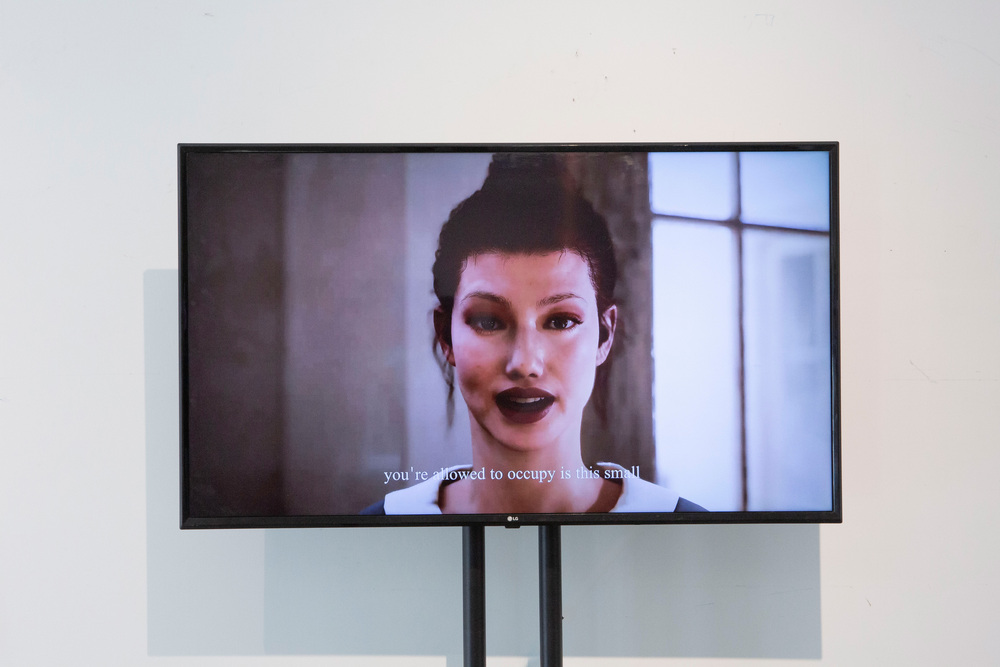
Installation view of “Future Distribution” from Psychological Landscapes, Courtesy of 1215 Gallery.
“Future distribution” moves from a generalized and population-wide experience to one more close to home; the control of a child’s future by parents. This artwork draws on the artist Jiangyu Huang’s personal experiences with their parents, and how they feel that their imagination has been limited by their parents’ visions for their future. The parents: a pianist and a dancer, are shown in both past and present states – once free and creative, now limited by the bounds of their own societal perceptions.
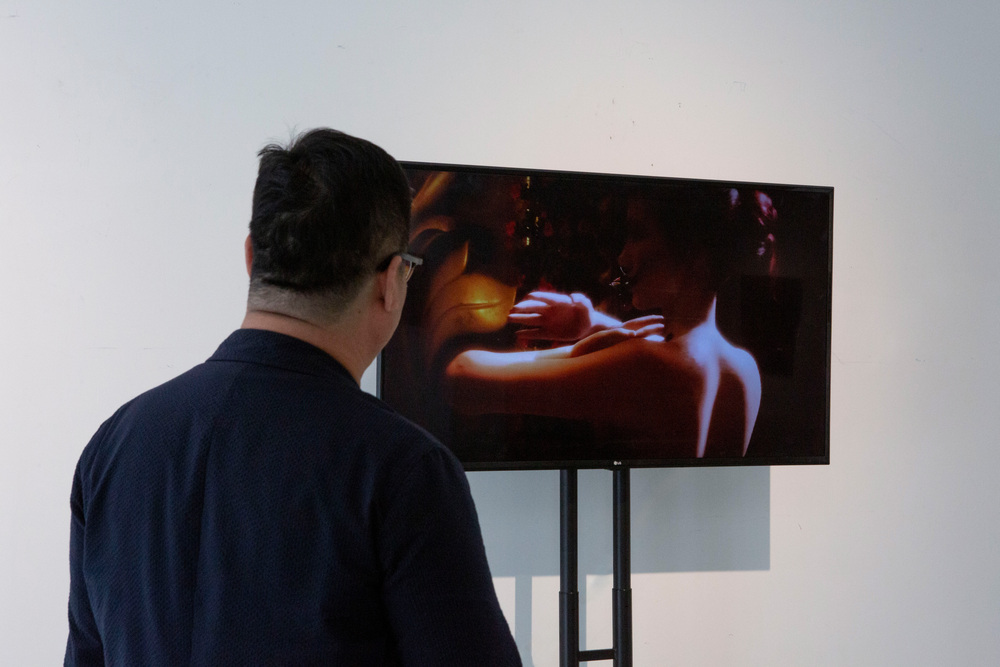
Installation view of “Future Distribution” from Psychological Landscapes, Courtesy of 1215 Gallery.
The visuals of this piece are accompanied by narration from the perspective of the mother and father, each expressing the uselessness of creative freedom, and expressing the necessity of boundaries and fundamentals within an artform. This artwork speaks to the commodification of artistic skills in the modern era, once forms of personal expression, piano and dance are presented as professions increasingly shaped by economic necessity – this is most effectively expressed through the limitation of the dancer, once a stage performer is now literally confined by the four walls of the phone screen as they dance for social apps rather than a live audience.
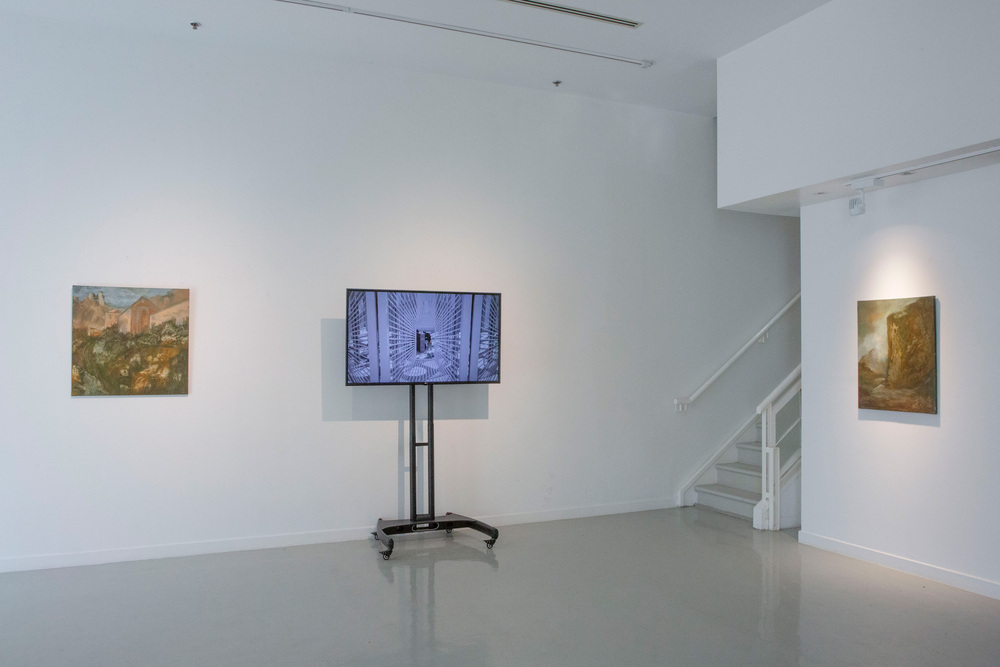
Installation view of “Future Distribution” from Psychological Landscapes, Courtesy of 1215 Gallery.
The parents strive to place limitations on the freedom and creativity of the child to prevent them getting hurt, and to ensure they may continue to pay for the life they have grown up within. The work seems to question how free this child is, and whether our futures are simply predetermined by the people and algorithms which govern life decisions. The digital video format allows for the expression of multiple viewpoints, including internal dialogues from the parents, as well as memories of the past and projections of the future. These overlapping temporalities create a portrait of parental influence that is both restrictive and deeply rooted in lived experience.
Works by Guy Lapierre, Elias Vey, Étienne Roy, Jiangyu Huang, and Chenyu Wang touch on similar themes, examining the ways in which external environments – from family structures to systems of consumption – shape an individual’s experience. Collectively, the artworks presented in Psychological Landscapes display the psychological landscape as a realm continuously formed through interaction with the social, economic, and technological forces that surround us, rather than something insular and private.