
Mildreth Sarahi García García
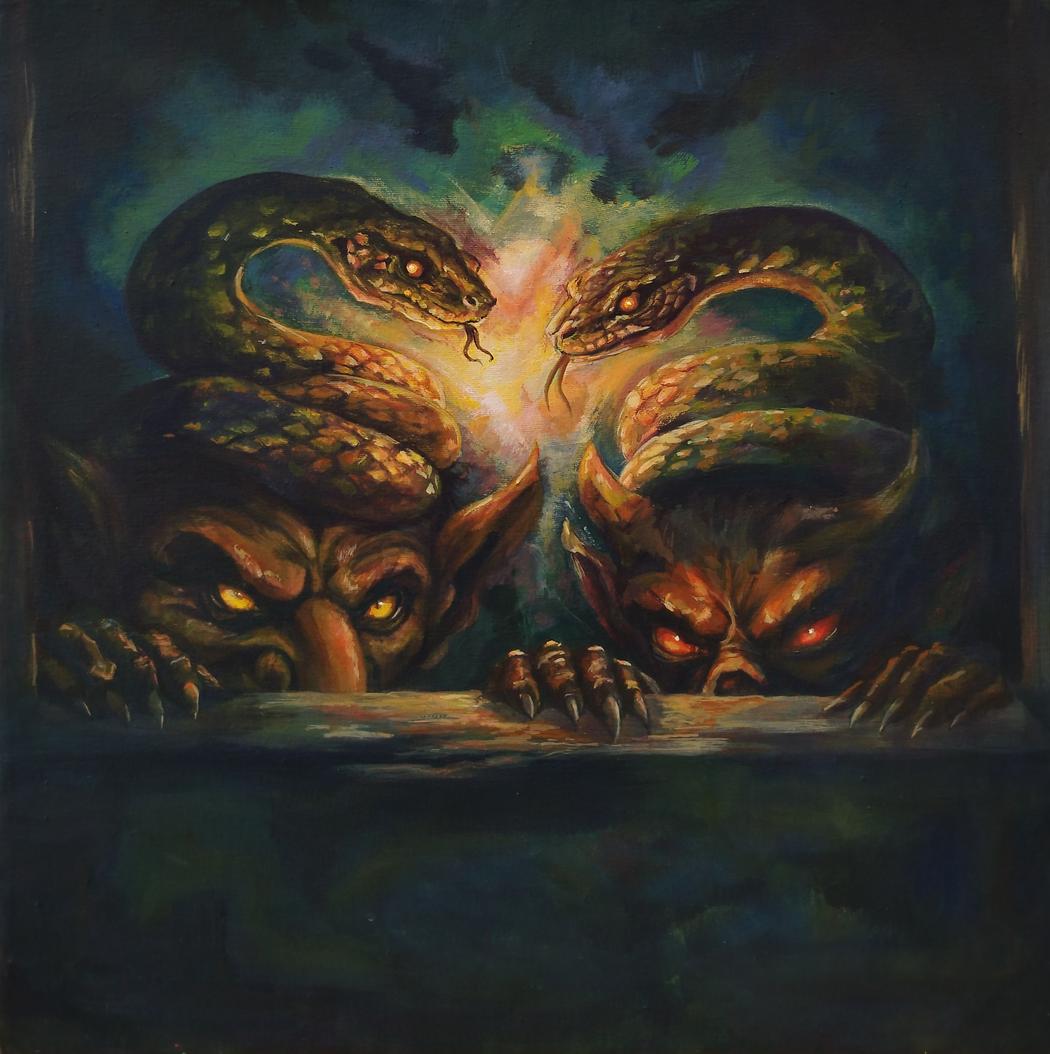 Mildreth Sarahi García García | Tongues That Crawl | 2026
Your work combines dream symbolism, folklore, and psychological tension. How did your interest in the dream traditions of Santo Domingo Tlaltinango begin?
My interest emerged from having grown up within this town, surrounded by its traditions and cultural practices linked to oral storytelling, superstitions, and the symbolic interpretations of dreams, all of which are deeply rooted in the daily life of this Oaxacan community. For many of its inhabitants, as well as for my own family, dreams were understood as warnings or spiritual messages.
Over time, I became interested in the way these symbols and beliefs acquire meanings capable of shaping collective identity and being passed down from generation to generation. Painting then became both a technical and conceptual medium through which to explore and illustrate these practices from an artistic perspective.
However, this practice does not emerge from a psychological or Freudian perspective, but rather from a cultural dimension. In my community, dreams are part of an inherited system of knowledge transmitted through oral tradition, beliefs, and everyday practices. They are not perceived merely as manifestations of the subconscious, but as warnings, messages, or connections between the individual, nature, spirituality, and collective memory. In this way, the interpretive value lies in the symbols that appear in dreams, rather than solely in personal experience. These elements possess meanings of their own that, once identified, allow people to understand both the broader and the particular context of the dream, anticipate events, and determine the ritual actions that must be carried out.
In your paintings, childhood imagery often appears alongside disturbing or unsettling elements. What draws you to this contrast between innocence and fear?
I am interested in the way fear is often introduced from a very early age through memory, culture, family stories, or personal experiences. Images from childhood allow me to speak about vulnerability, curiosity, and imagination, while the unsettling elements represent the anxieties, tensions, or inherited fears that coexist with those memories. I believe dreams function in a similar way: something familiar suddenly becomes strange or threatening.
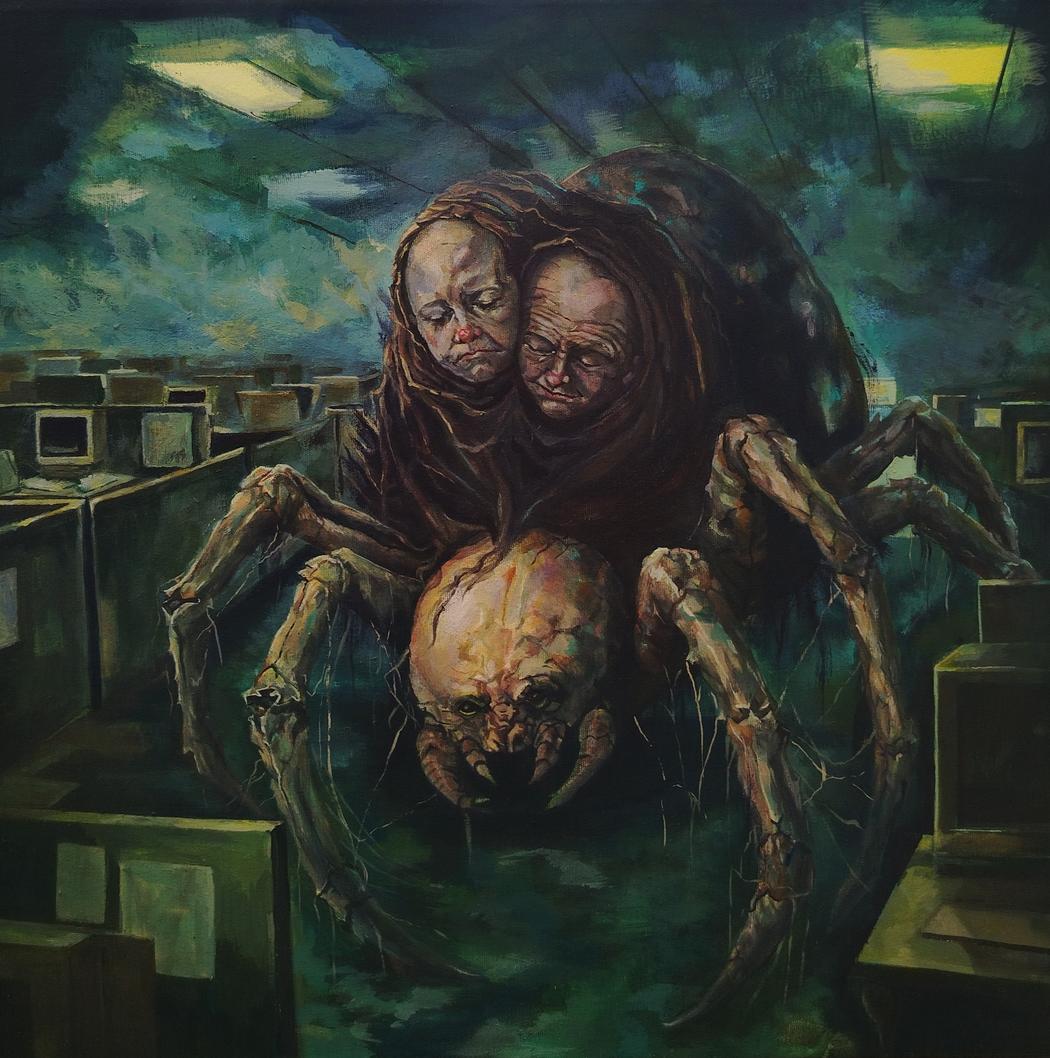 Mildreth Sarahi García García | Weaving Of Anxiety | 2026
Animals and symbolic creatures play an important role in your visual language. How do you choose which figures appear in your compositions?
I choose animals based on their symbolic weight, their emotional presence, and their relationship to the narrative of each painting. Many of them originate from folklore, religious imagery, dream symbolism, or observations of human behavior reflected through animals. I am interested in how certain creatures can embody instincts, fears, social structures, or emotional states in a more direct way than human figures. Their presence helps construct a language that feels both personal and universal.
Many of your works feel deeply narrative, almost like fragments of dreams or memories. Do your paintings begin with personal experiences, written stories, or spontaneous images?
The paintings in this project emerged partially from personal experiences, but primarily through oral accounts collected by means of written interviews and audio recordings conducted with people from Santo Domingo Tlaltinango. These narratives were fundamental to the conceptual development of the work, as they contain the interpretations, symbols, and meanings surrounding oneiric traditions within the community.
Based on these testimonies, the compositions, scenes, and characters were developed with the guidance and collaboration of inhabitants of the town who possess a deep understanding of the cultural context of each dream and the beliefs associated with them. For this reason, the paintings do not seek to invent an external imaginary world, but rather to construct an artistic interpretation grounded in experiences, stories, and forms of knowledge that continue to live within the collective memory of the community..
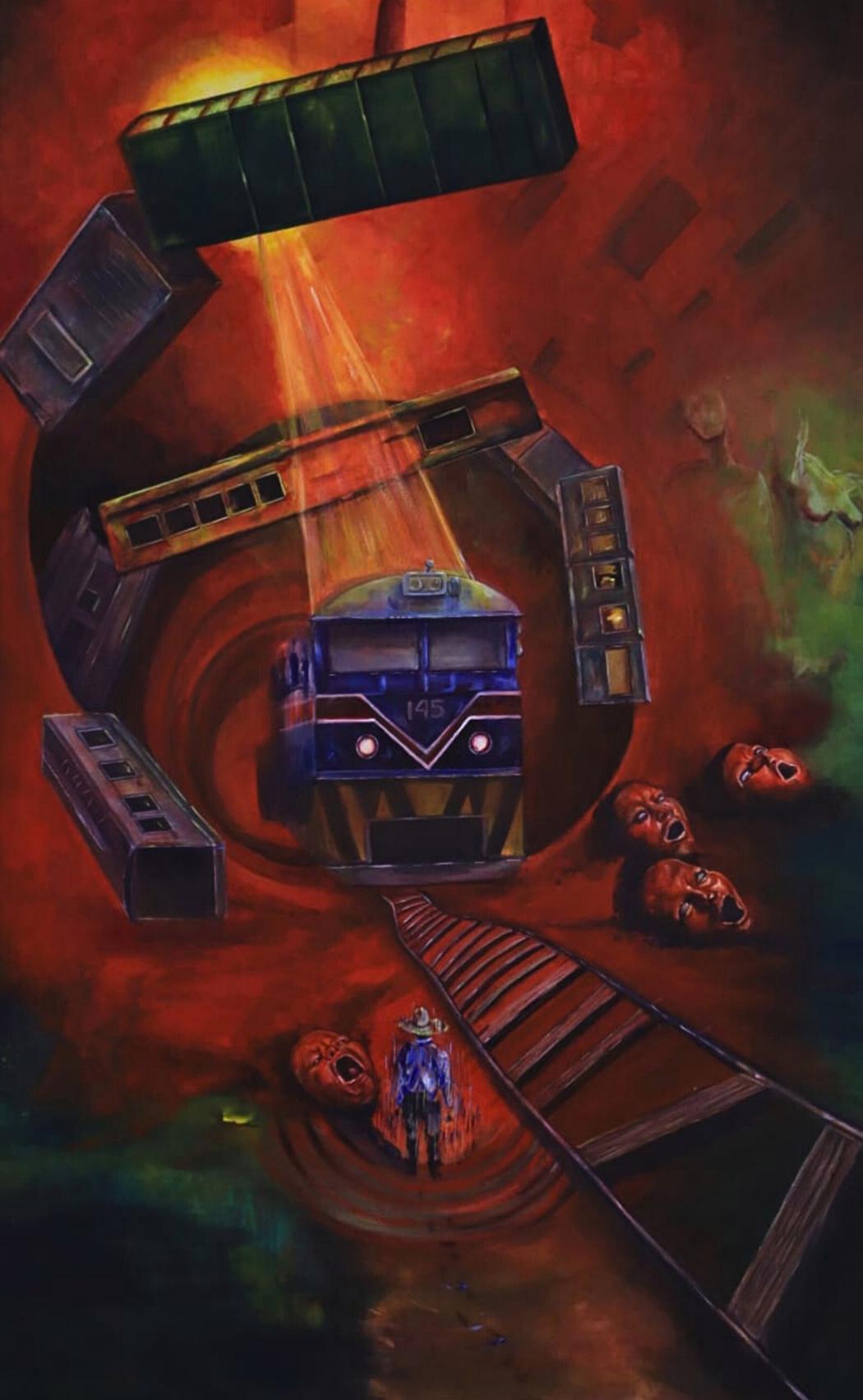 Mildreth Sarahi García García | One Last Journey | 2025
Your project explores collective beliefs and inherited symbolism. How do you balance preserving cultural traditions with creating your own contemporary interpretation of them?
For me, balance lies in understanding that these traditions are not static elements of the past, but living systems of knowledge that continue to transform within the community. My relationship with them also emerges from personal experience, since I belong to and come from Santo Domingo Tlaltinango, and I grew up within a family where these beliefs and ways of interpreting dreams were part of everyday life.
My intention is not to literally reproduce the stories or symbols. For this reason, much of the project was built through testimonies, interviews, and conversations with inhabitants of the town, who guided different symbolic and narrative aspects of the works.
From there, painting functions as a contemporary medium that allows me to visually explore these beliefs through my own experience and artistic sensibility. The contemporary aspect of my work does not emerge from modifying or “modernizing” these traditions, but from the way I engage in dialogue with them through image, composition, and pictorial construction.
I am interested in showing how these symbolic systems continue to exist in the present day and still influence the way people interpret reality.
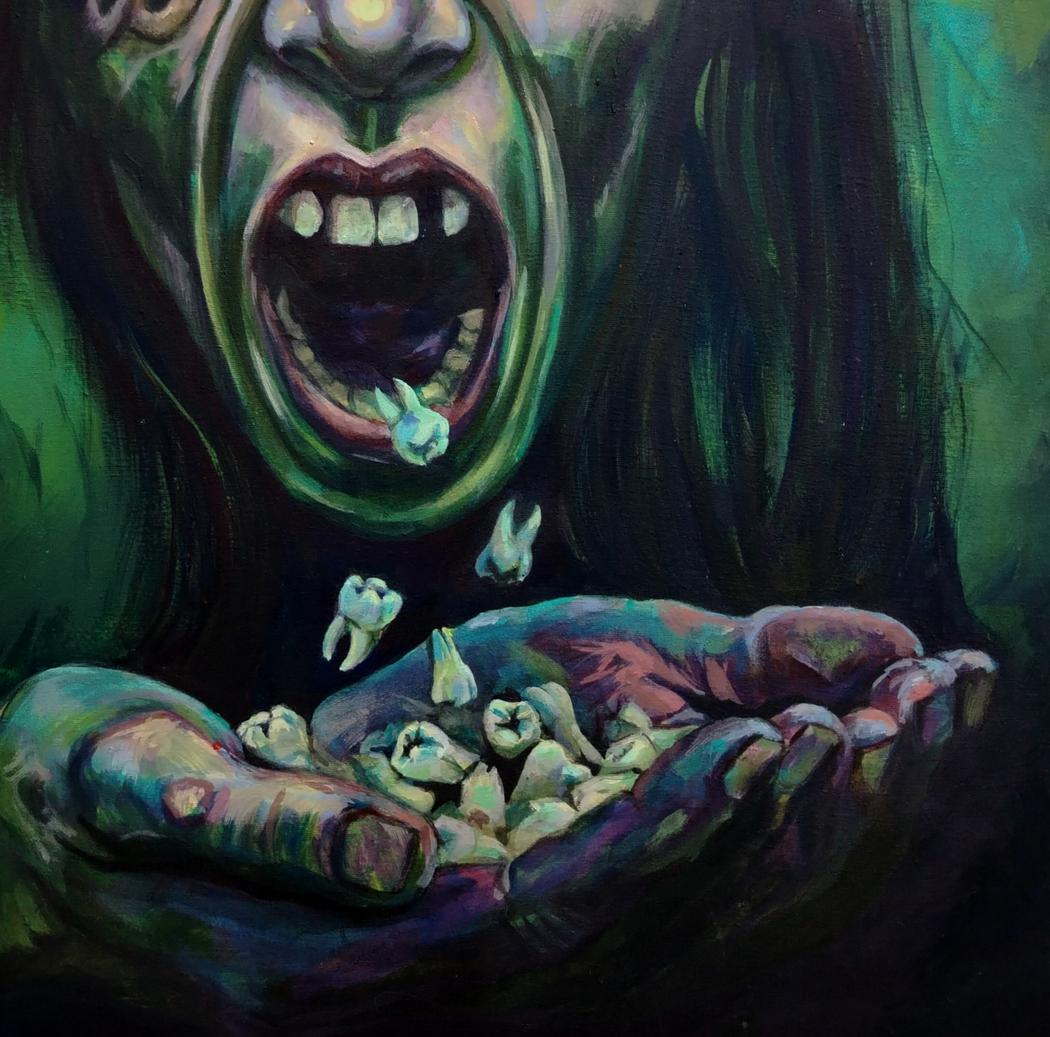 Mildreth Sarahi García García | Loss And Absence | 2026
Some of your figures appear trapped between reality and nightmare. Do you see dreams as warnings, reflections of trauma, or a way of understanding identity?
I consider dreams to be primarily warnings and a way of understanding identity. Within the cultural context in which I grew up, dreams are often interpreted as messages connected to everyday life, spirituality, nature, or future events, rather than as mere manifestations of the subconscious. They function as a form of inherited knowledge that influences the way people perceive reality and understand their experiences.
At the same time, I believe that dreams can reveal aspects of both individual and collective identity. The symbols, fears, animals, and situations that appear within them often reflect the values, beliefs, tensions, and cultural memories of the community. In my work, the figures that seem trapped between reality and nightmare exist precisely within that tension: between the visible world and the symbolic meanings that people project onto dreams in order to understand their surroundings.
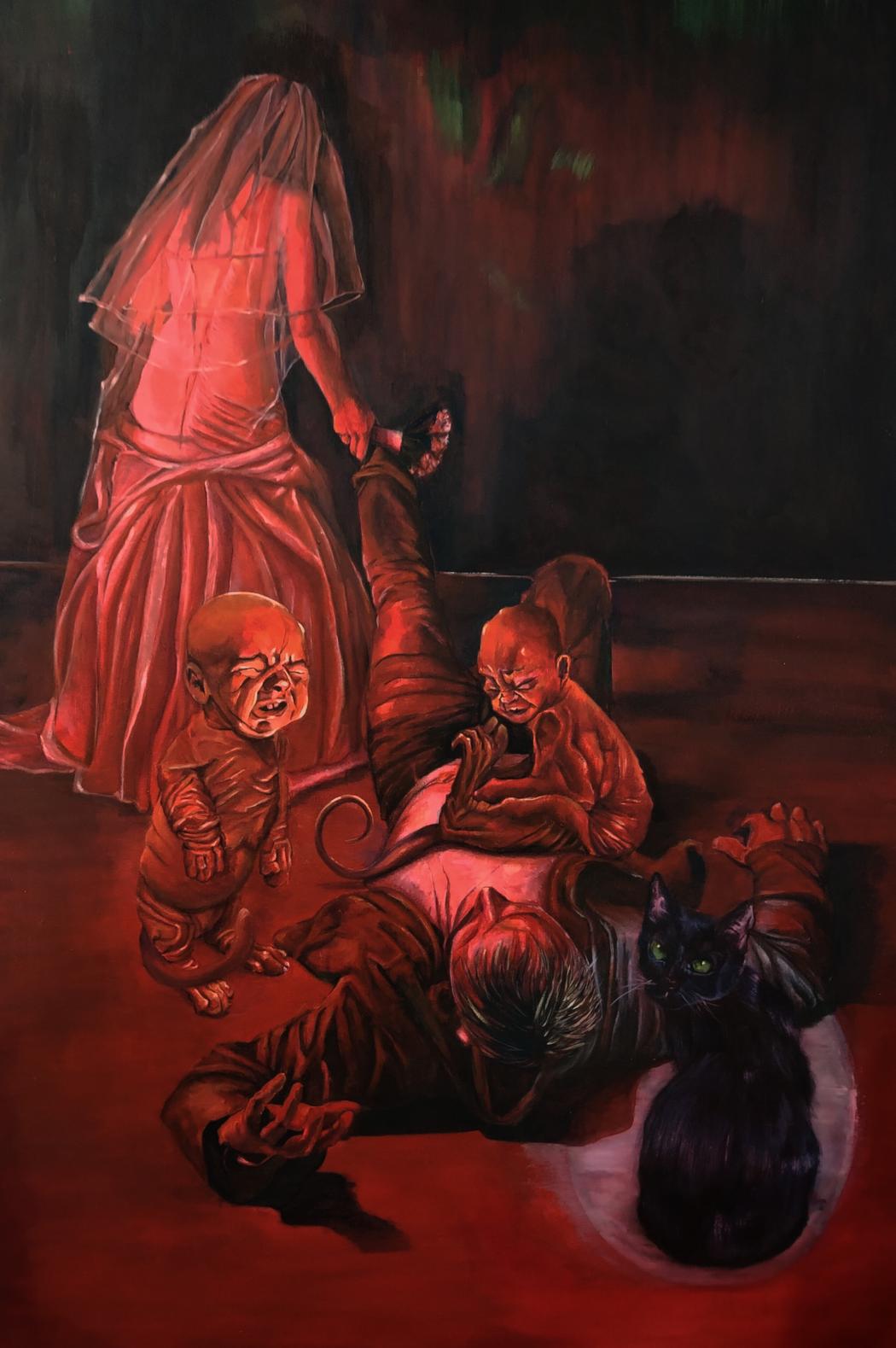 Mildreth Sarahi García García | An Omen Of Death | 2025
What do you hope viewers experience emotionally or psychologically when standing in front of your paintings?
I hope the viewer experiences a sense of intrigue, curiosity, and emotional reflection when standing before the paintings. Beyond the visual atmosphere of the works, one of the project’s central intentions is to invite people to think about the importance of preserving cultural traditions and inherited systems of knowledge.
The dream interpretations and symbolic beliefs represented in the paintings originate from Santo Domingo Tlaltinango, where these practices continue to function as part of the community’s cultural identity and collective memory. Through this project, I am interested in encouraging the viewer to recognize the value these traditions possess, not merely as folklore or superstition, but as forms of cultural heritage that allow communities to remain connected to their history, beliefs, and ancestral roots.
At the same time, I am interested in allowing the paintings to open a space for personal interpretation. During the development of this project, I came to understand that many people outside my community also associate dreams with warnings, symbols, emotions, or spiritual meanings. Because of this, I hope viewers may reflect on their own beliefs, memories, and symbolic interpretations while engaging with the work.
In many ways, these traditions are threatened by contemporary systems of thought that tend to invalidate or replace local forms of knowledge. For me, painting becomes a way of preserving, commemorating, and reinterpreting these practices within a contemporary artistic context without separating them from their cultural essence. Ideally, I would like the work to invite the viewer not only to question the images, but also to reflect on the importance of protecting cultural diversity and intangible heritage, both of which continue to shape the identity of many communities.
Leave a Reply
You must be logged in to post a comment.