
Iva Staykova
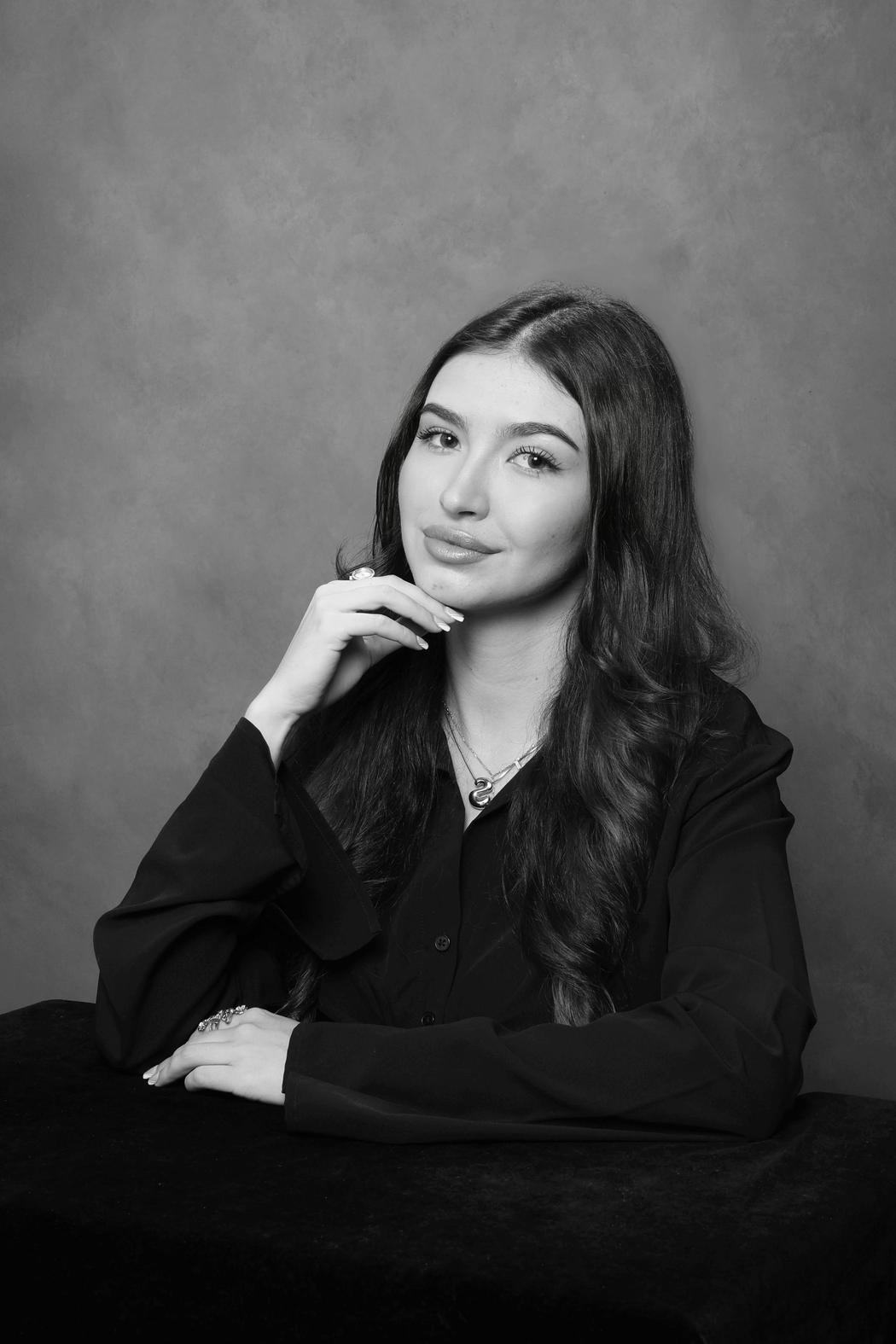
Your work often explores the feeling of being “in between” cultures and places. How has your personal experience between Vancouver and Sofia shaped this perspective?
I grew up living and studying in Vancouver, but every summer I’d go to Sofia to spend time with my grandparents and the rest of my family. Moving back and forth between those two places, which feel really different in terms of culture and everyday life, shaped how I see the world, never fully rooted in one place, but not disconnected either. It made me more aware of nuance, differences, and overlap, and that perspective naturally feeds into my work. My art often reflects this sense of in-betweenness, exploring themes of adaptability, shifting identity, and the ongoing search for belonging.
In your series In Between Here and There, you merge architectural elements from different cities into imagined landscapes. What role does fiction play in expressing your sense of belonging?
Fiction plays a really important role for me because it lets me bring together places and feelings that don’t fully exist in real life. I often felt like my sense of belonging was split across places, but never fully rooted in one. In In Between Here and There, merging architectural elements from Sofia and Vancouver becomes a way of visualizing that experience. I’m not trying to recreate real places, but to build imagined ones that feel emotionally true. Fiction gives me the freedom to collapse distance, to let different environments coexist, and to create spaces where that “in-between” feeling can actually belong somewhere. It becomes less about choosing one place over another, and more about embracing hybridity and adaptability as a valid form of home.
You use acrylic paint for manmade imagery and oil paint for “living” subjects. How did this distinction develop in your practice, and what does it symbolize for you?
The distinction between acrylic and oil paint in my practice developed very naturally. When I first started painting, I used acrylic, and it taught me not to overthink because it dries quickly and allows for fast layering. Oil paint, on the other hand, taught me patience. It dries slowly and forces me to spend more time looking and adjusting, which changed the way I think while painting.
Over time, I began to associate oil paint with living subjects because it feels more alive to me in its depth, texture, and warmth. I use it for people, animals, plants, etc. Acrylic, in contrast, has a flatter, more controlled finish that I associate with manmade environments like buildings, interiors, and technology. This distinction is intuitive, but it has become a way for me to use material to reinforce the difference between the natural and the constructed world in my work.
The circular wood slices are a distinctive element of your work. What drew you to this format, and how does it relate to your themes of growth and continuity?
The circular wood slices are important to my work because they are more than just a surface; they already carry a history. The rings of the wood mark time, growth, and an organic history that existed before I began working on it. Because of this, the surface itself already embodies the themes I am interested in; growth, time, and continuity.
Their circular form is also significant to me because it resists the rectangular logic of urban planning, architecture, and traditional canvas formats. The circle suggests cycles rather than straight lines, continuity rather than edges, and invites a slower, more meditative way of looking.
Painting architectural and built environments onto these organic, circular surfaces allows me to bring the natural and built worlds together in one place. This connects to my interest in how people adapt to the environments they live in, and how nature and construction are always co-existing side by side.
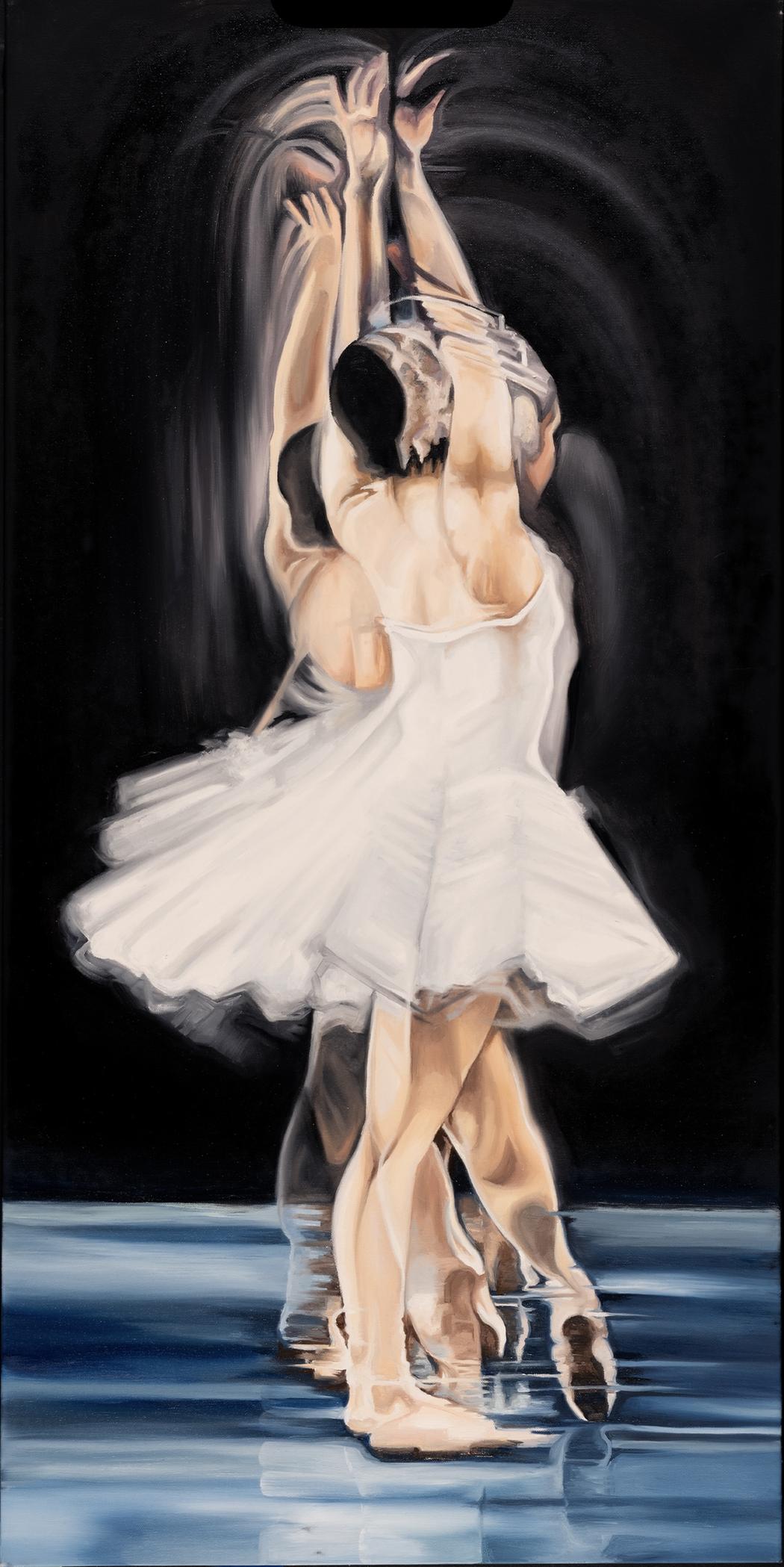 Iva Staykova | In Motion | 2024
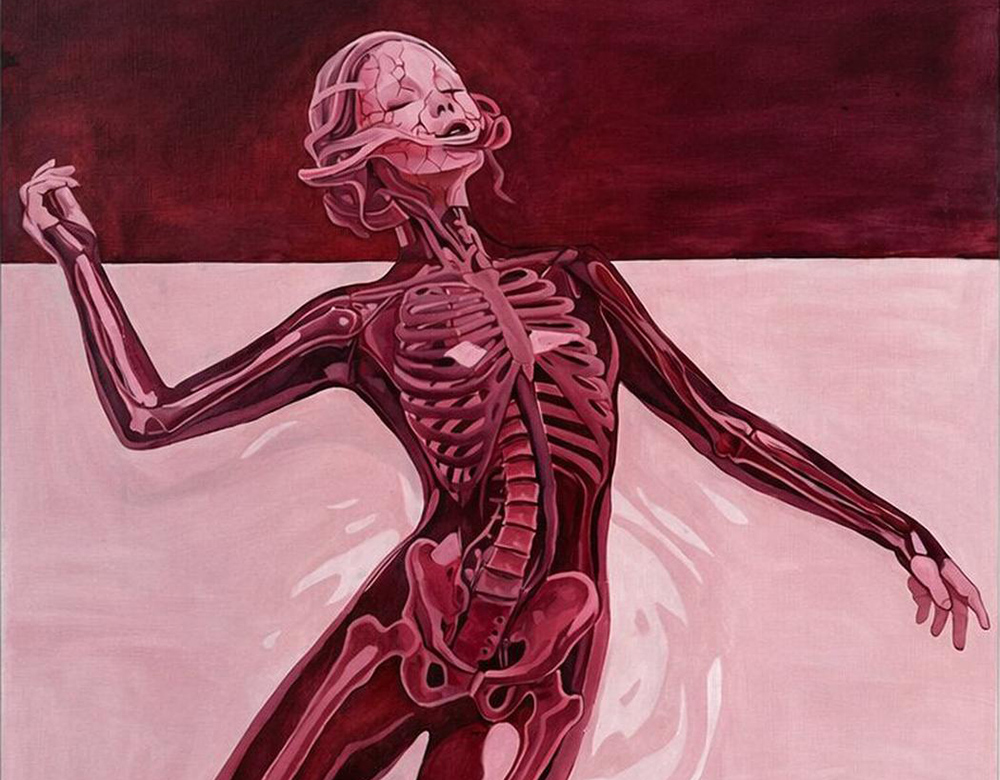
In Growth, the figure appears intertwined with roots in an almost embryonic state. Can you tell us more about the symbolism behind this composition?
In Growth, the figure appears in an almost embryonic state, intertwined with roots, to emphasize a sense of fragility and beginning. The embryonic pose represents the start of a human life, but also the beginning of personal growth. There is something very vulnerable about this stage, but also full of potential.
You mention inspiration from Edward Hopper. In what ways do you relate to his approach, and how has his work influenced your visual language?
I’m inspired by Edward Hopper because of the way he captures moments that feel both very specific and universally recognizable. His paintings often feel like quiet snapshots, scenes that seem ordinary at first, but carry a sense of isolation, tension, or introspection. I’m interested in creating a similar feeling in my work, where the image feels familiar, but also slightly uncanny. Like Hopper, I try to create scenes that feel like a moment paused in time. They suggest a larger story, but never fully explain it.
His work has influenced my visual language in my use of simplified compositions, quiet atmospheres, and figures that appear lost in thought. I’m interested in the balance he creates between narrative and stillness, where not much is happening, but emotionally, a lot is happening beneath the surface.
How do you balance personal narrative with universal themes so that your work resonates with a wider audience?
As a second-generation immigrant, I believe that everyone carries a story, and each story is part of a larger human experience. By sharing my own personal experiences and perspective, I aim to tap into universal emotions, like growth, adaptation, identity that many people can recognize in their own lives.
Leave a Reply
You must be logged in to post a comment.