
Daniella Husam
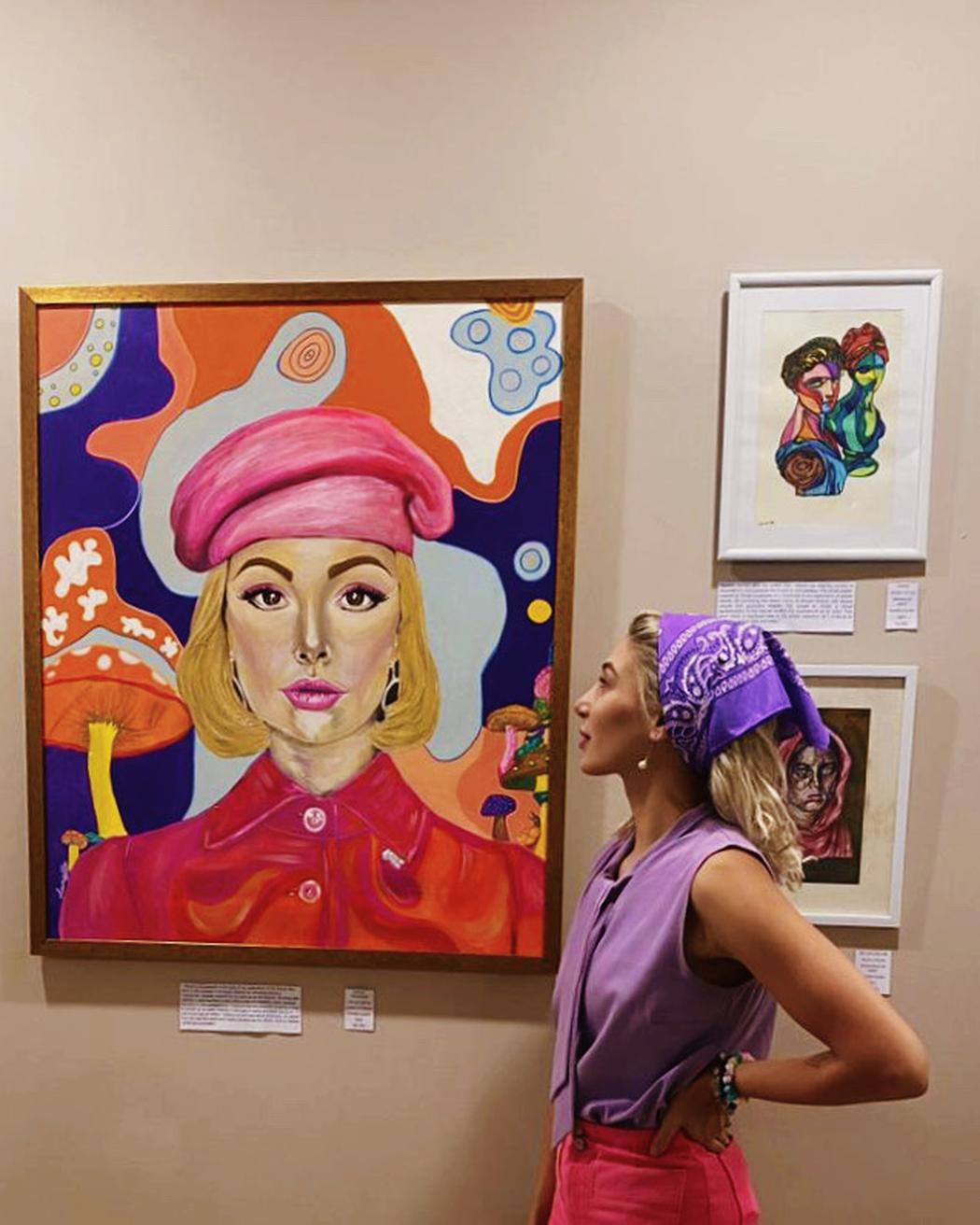
You describe your practice as a conversation with material. Can you recall a moment when the material completely changed the direction of a work?
I think that moment happens more often than people realize. I’ve had pieces crack, collapse, or completely shift in the kiln, and instead of resisting it, I learned to listen. One work in particular started as something controlled and structured, but it partially gave in during the firing process. I remember looking at it and realizing it felt more honest in its “failure” than it ever did in perfection. That moment changed how I work. I stopped trying to dominate the material and started collaborating with it. There’s something about clay and matter in general that mirrors life in that way. It refuses control. It teaches you to adjust, to accept, to respond instead of impose.
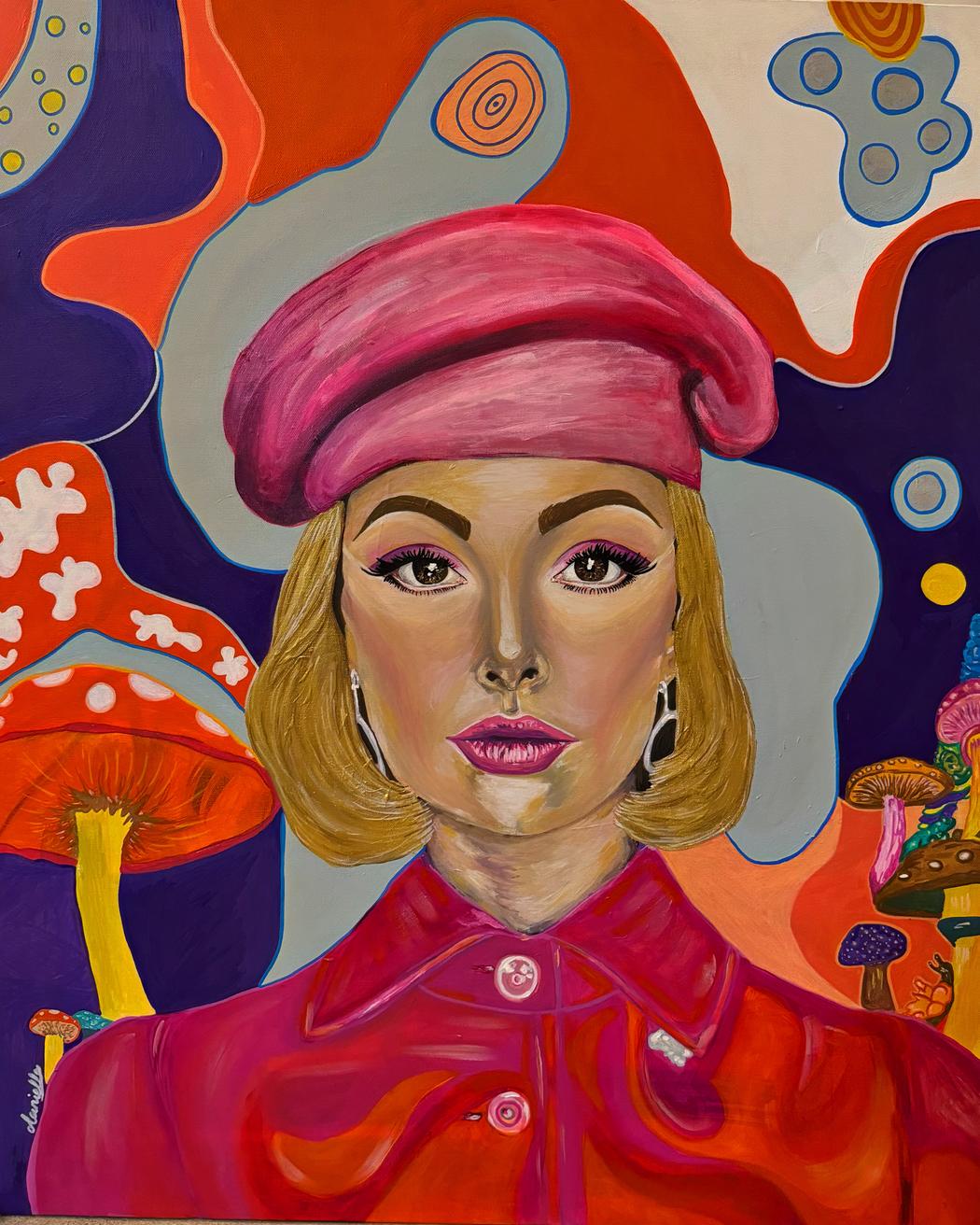 Daniella Husam | Barbie’s wanderlust | 2024
Color plays a powerful emotional role in your pieces. Do you approach color intuitively, or are there underlying associations guiding your palette?
It begins intuitively. Color, for me, is emotion before it is anything else. I don’t sit and plan it academically. I feel it first. But over time, I’ve realized that my choices are deeply tied to personal experiences and emotional memory. Colors carry weight. They hold tension, softness, fear, comfort. I think we all understand color emotionally before we intellectualize it. It’s something we learn as children, and I try to hold on to that instinct. I don’t want to lose that direct emotional language. Colors speak louder than words.
Your work moves between painting and sculpture. How does your thinking shift when working in two versus three dimensions?
Painting feels like entering a dream. It’s psychological, atmospheric, and layered with symbolism. Sculpture is more physical. It’s about presence, weight, and confrontation. I actually chose sculpture during my studies as a challenge, and it became a way for me to process some of my most difficult experiences. It taught me problem-solving, patience, and how to translate emotion into form. Even though I move between both, they feed each other constantly.
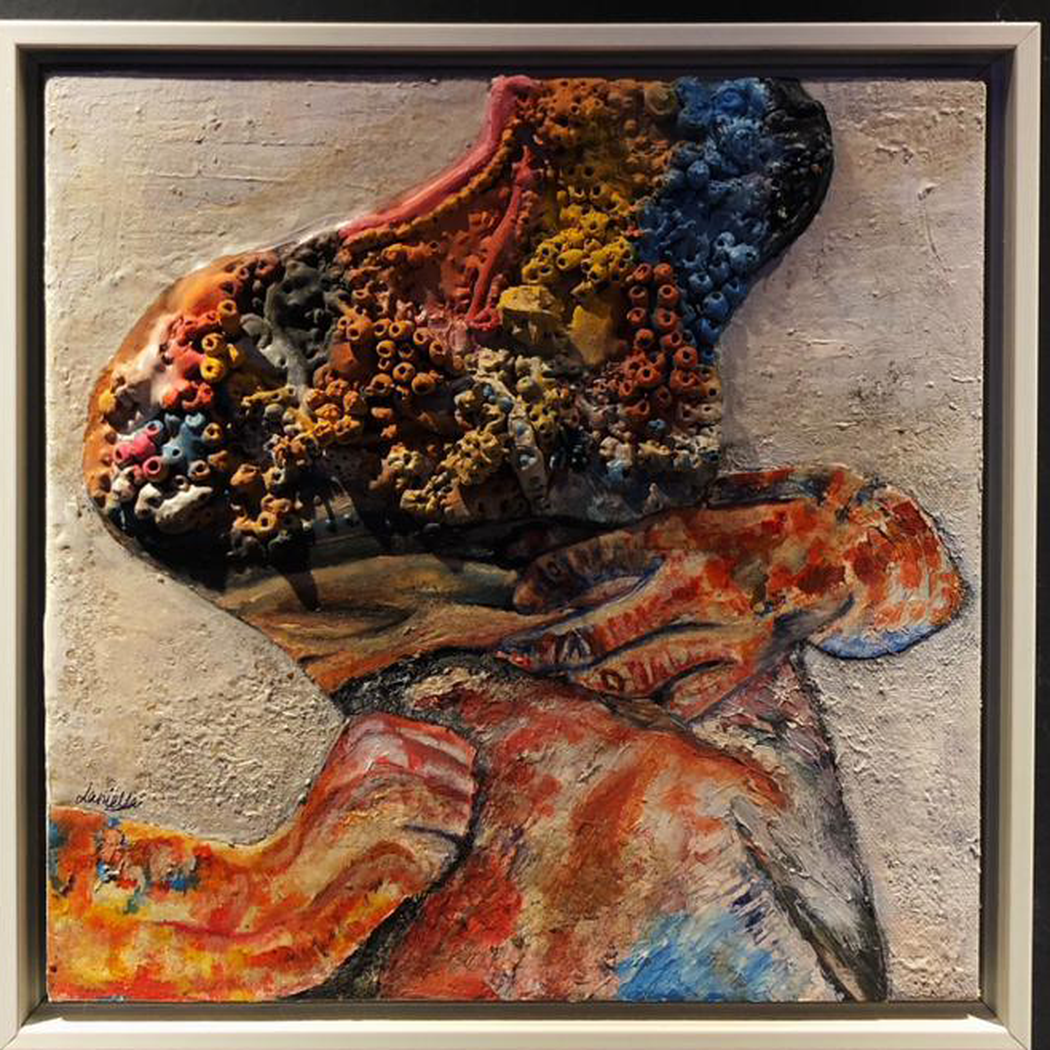 Daniella Husam | Blooming
There is a strong sense of surreal, dreamlike imagery in your paintings. Do these visuals emerge from specific memories, or are they more subconscious constructions?
They come from a mix of both. I’ve always been someone who lives a lot in her imagination. As a child, I even had an imaginary friend, and I would spend hours building entire worlds, often with animals as the central characters. That world never really left me.
What appears in my work now feels like fragments rather than complete memories. They dissolve and recombine into something unfamiliar. I also research symbolism quite deeply, but I never use it in a detached way. Every symbol I include is personal. It comes from lived experience and traumas; from questions I still don’t fully have answers to.
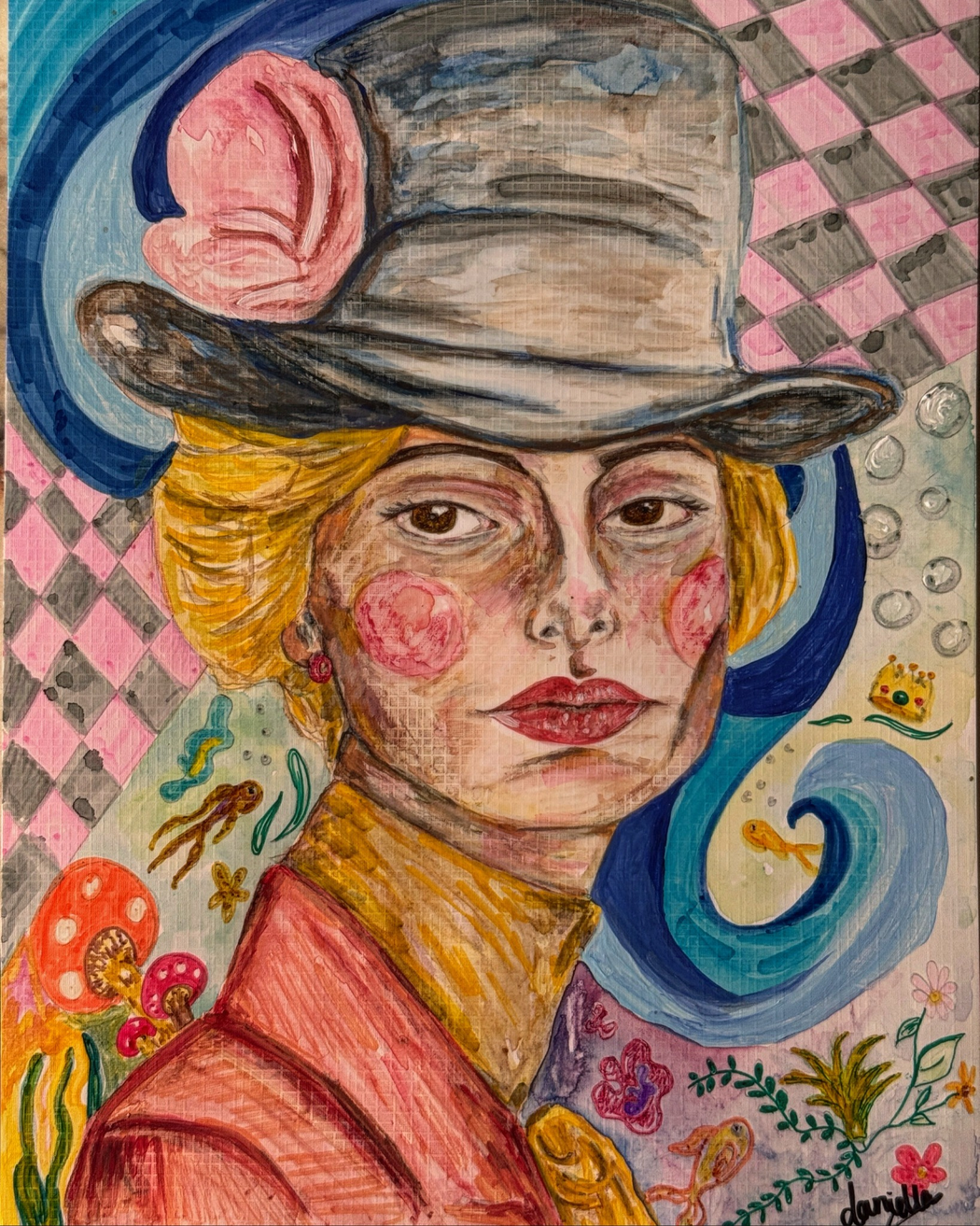 Daniella Husam | Madam monarch
Texture seems central to your practice. What draws you to tactile surfaces, and how do they shape the emotional experience of the work?
Texture makes the work feel alive. It creates a physical reaction before anything else.
I’ve always been drawn to surfaces that feel imperfect, layered, or even uncomfortable. That tension creates intimacy, which is important to me. It pulls the viewer closer but also makes them slow down. You can’t just glance at it and move on. Texture holds emotion in a very direct way. It’s almost like memory made physical.
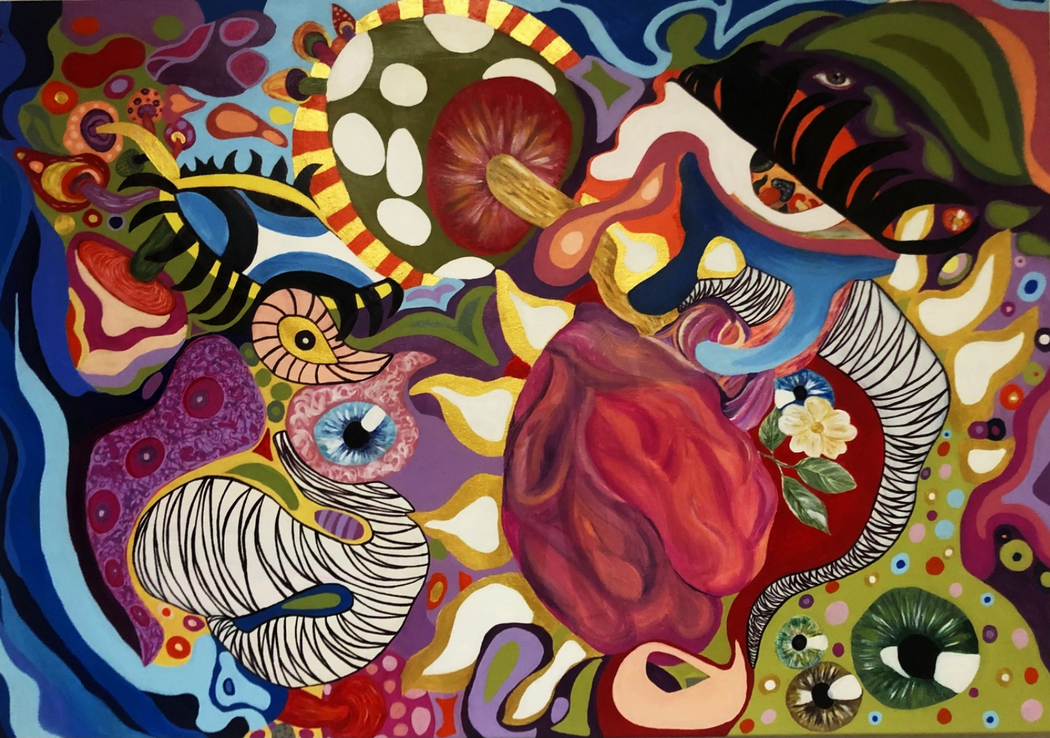 Daniella Husam | Mushroom | 2022
As an educator, how has teaching influenced the risks you take in your own artistic process?
Teaching changed everything for me. There was a point where I lost my own creative voice because I was trying to fit into what the market expected. I felt like I wasn’t enough. But my students, especially the younger ones, reminded me what art actually is. They didn’t care about perfection or being “good enough.” They were fearless with color, with ideas, with expression. One of my students once asked me why I wasn’t a full-time artist, and that question stayed with me. It made me reflect on everything.
They pushed me back into my own practice and reminded me to take risks again. Teaching changed everything for me. There was a point where I lost my own creative voice because I was trying to fit into what the market expected. I felt like I wasn’t enough. But my students, especially the younger ones, reminded me what art actually is. They didn’t care about perfection or being “good enough.” They were fearless with color, with ideas, with expression.
One of my students once asked me why I wasn’t a full-time artist, and that question stayed with me. It shifted something.
When I later moved to Muscat, I made the decision to step away from teaching, at least for now, to fully commit to my own practice. It felt necessary. Teaching gave me a
sense of belonging, but it also made me realize I couldn’t keep pouring into others while neglecting my own voice. That transition pushed me to take risks again, not just as an artist, but in how I choose to live.
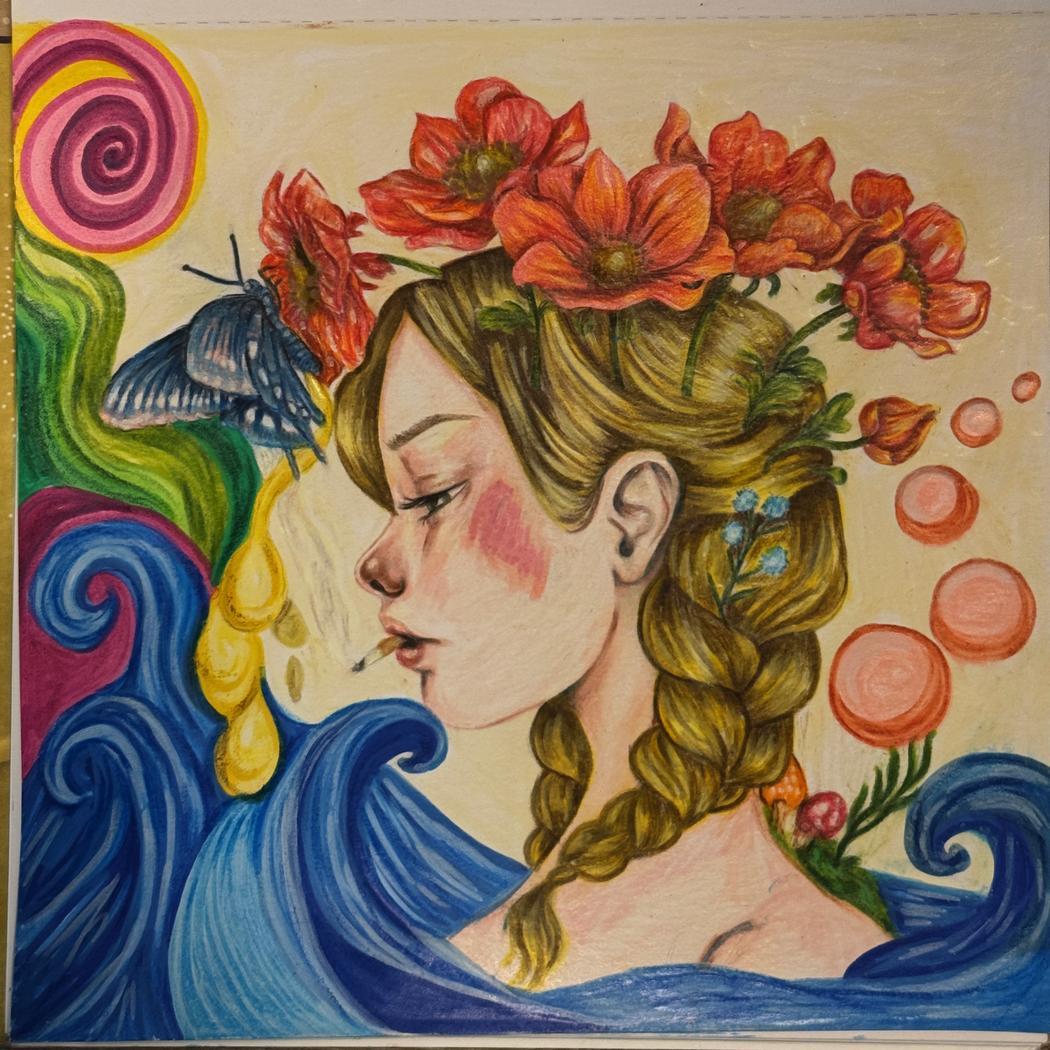 Daniella Husam | Reverie in red poppies
Your project Clay and Chaos reveals the raw side of creation. What made you decide to share such unfiltered moments with your audience?
Because the reality of creating is not polished. There’s frustration, doubt, failure, and a lot of vulnerability. Clay and Chaos, which I created with my brother Omar, came from a need to show that side. It was also a moment where I allowed myself to fully let go and use clay almost as a form of therapy. I wasn’t trying to impress anyone. I was just responding to my emotions in real time. I think it’s important for people to see that art isn’t just the final piece. It’s the process, the chaos, and everything in between. A lot of my work is shaped by lived experience, including trauma, and I don’t separate that from the act of creating. I don’t see art as decoration or performance. I see it as action. As a way of survival. It’s how I process, translate, and sometimes even transform what I’ve lived through into something that can exist outside of me.
I think there’s something important in showing that art is not only the final image or object, but a way of staying emotionally and mentally alive in a world that often feels overwhelming. For me, making work is not optional. It’s necessary. Art is not just something I do. It’s something I rely on.
Leave a Reply
You must be logged in to post a comment.