
Zeynep Altın
Your paintings combine the human body with flowers, vegetables, and other natural forms. When did this visual language first appear in your work?
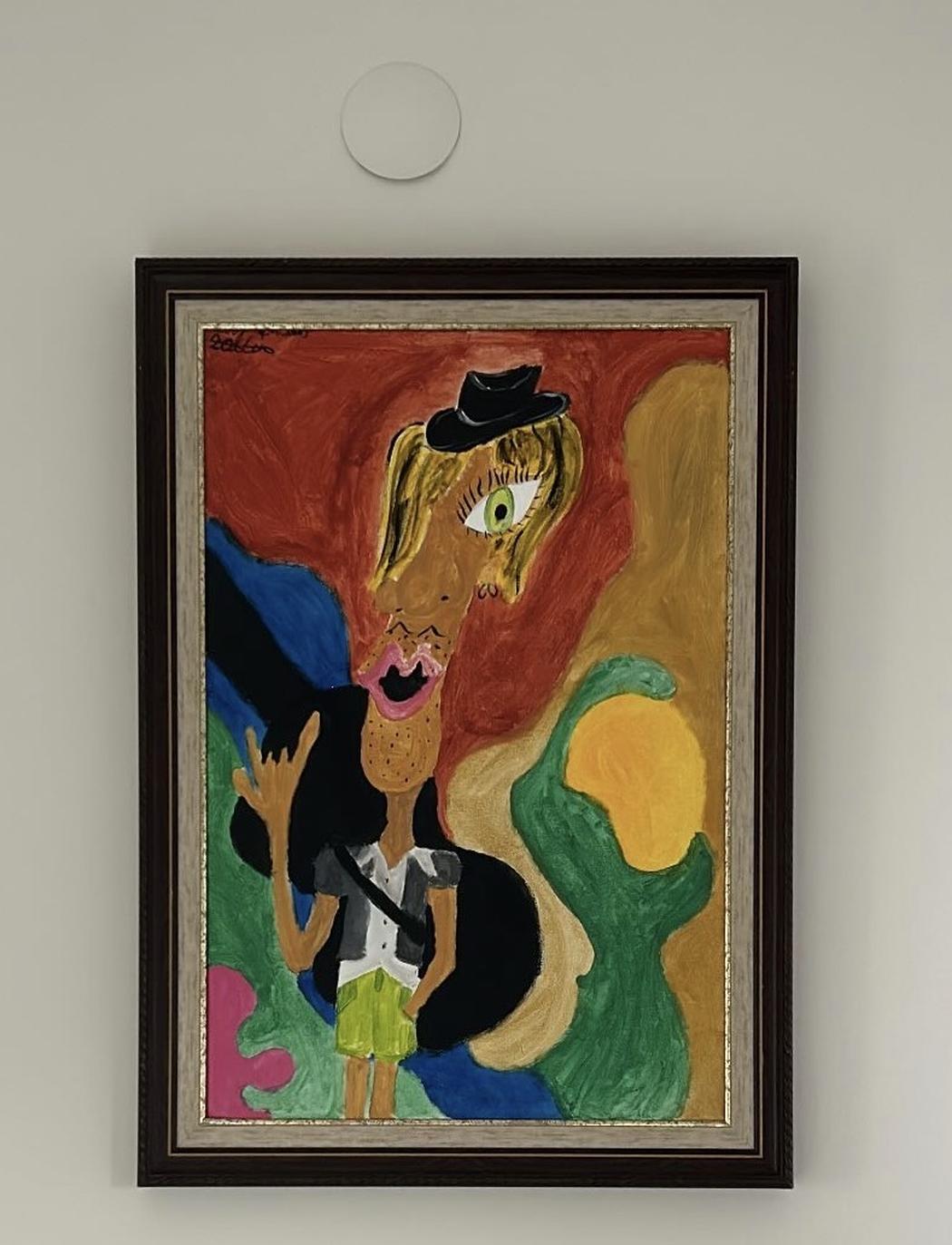
I always painted bodies, always abstract in a caricature form and always with tons of colours. It was almost a compulsion. My first idea for a painting came from this doodle I made while I was in an English class in middle school, it was a distorted face of a traveller and I liked it so much that I just kept doing more but I’m not exactly sure where that interest for these distorted figures came from, maybe from all the magazines and cartoons I consumed. The idea to combine the vegetation with body didn’t come to me until a few years ago. I think at the time I was a bit concerned with showing my paintings to some of my relatives because one of my aunts told me that I should be painting landscapes instead of ugly, disfigured bodies but then I was thinking actually a lot of things in the nature look like parts of bodies so why not make the body the landscape instead.
You mention that caricature magazines from your childhood influenced you. How did humor and satire shape the way you see the human body in your paintings?
Türkiye has always felt a bit chaotic to me, both politically and socially but we all loved those caricature magazines (Penguen and Uykusuz were the most popular in my time) because they always softened the harsh realities of life, made them more digestible and the disfigurement of the bodies were always the part of humour. Stuff like popped out eyes, noses as large as the heads, etc. were the part that made the joke funnier for me. Emphasizing certain body parts to embellish the humour was what were the comedians doing and I think I subconsciously used it in my own expression.
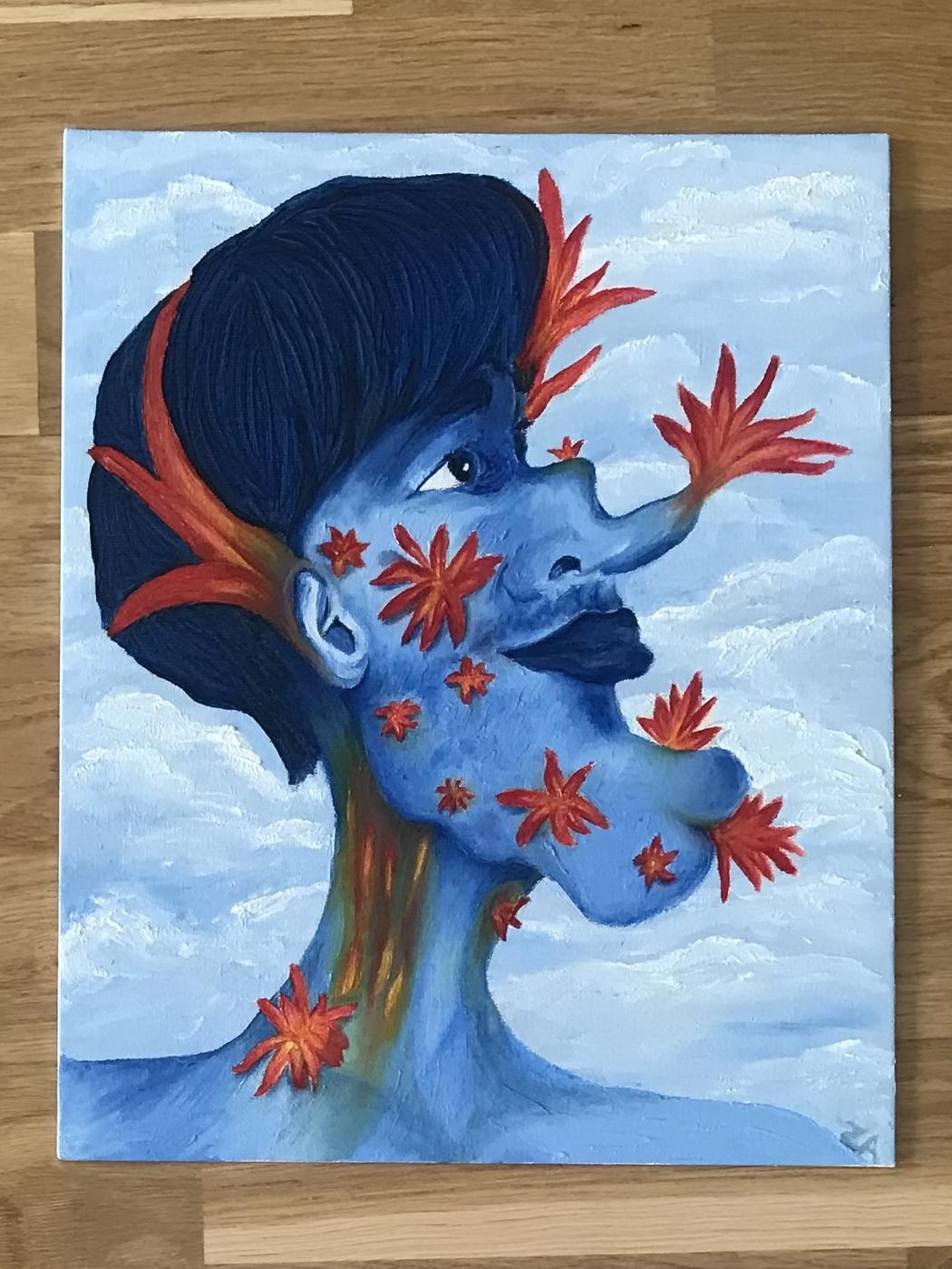 Zeynep Altın | Flower Head | 2023
Many of your figures feel playful yet slightly surreal or unsettling. What kind of emotional reaction do you hope viewers experience when they encounter your work?
I honestly never aimed for anyone to feel something certain when they view my work. I look at a tree or a face, and I write a story in my mind. It makes life more enjoyable for me. Sometimes I write a joyful story and sometimes a darker one, sometimes a bit of both. I want to put it out there and people are free to feel and think whatever they do but I want them to escape from reality for a moment, like playing a video game, because I think that’s essentially what I’m doing when I paint.
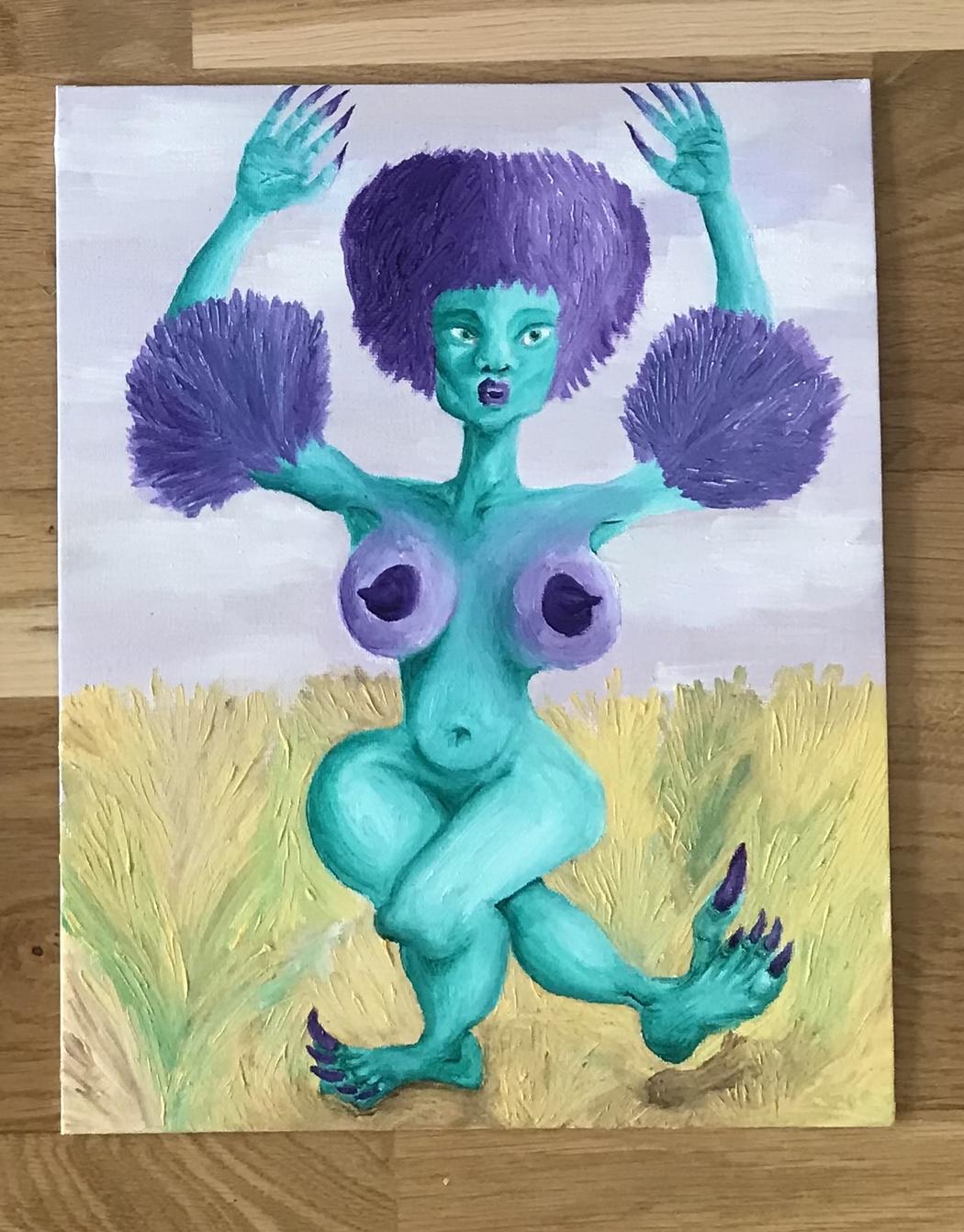 Zeynep Altın | Dancing Thistle | 2023
You work professionally as an architect. Does your architectural training influence the way you construct composition, form, or space in your paintings?
If it happens, I’m sure I don’t do it on purpose. When I was in university or as I work in the office now, the forms that I had to and have to work with are very angular and everything about the project is tied to its surroundings. Many detailed and focused works come together to build a singular construct that’s almost alive. On top of that architecture is very collaborative. I liked to think I paint in a very contrary manner. I’d like to get away from the idea of this precisely planned, perfected object and focus more on the almost fluid, exaggerated form and adjust the background to it, creating this unreal surrounding that only I have a say in.
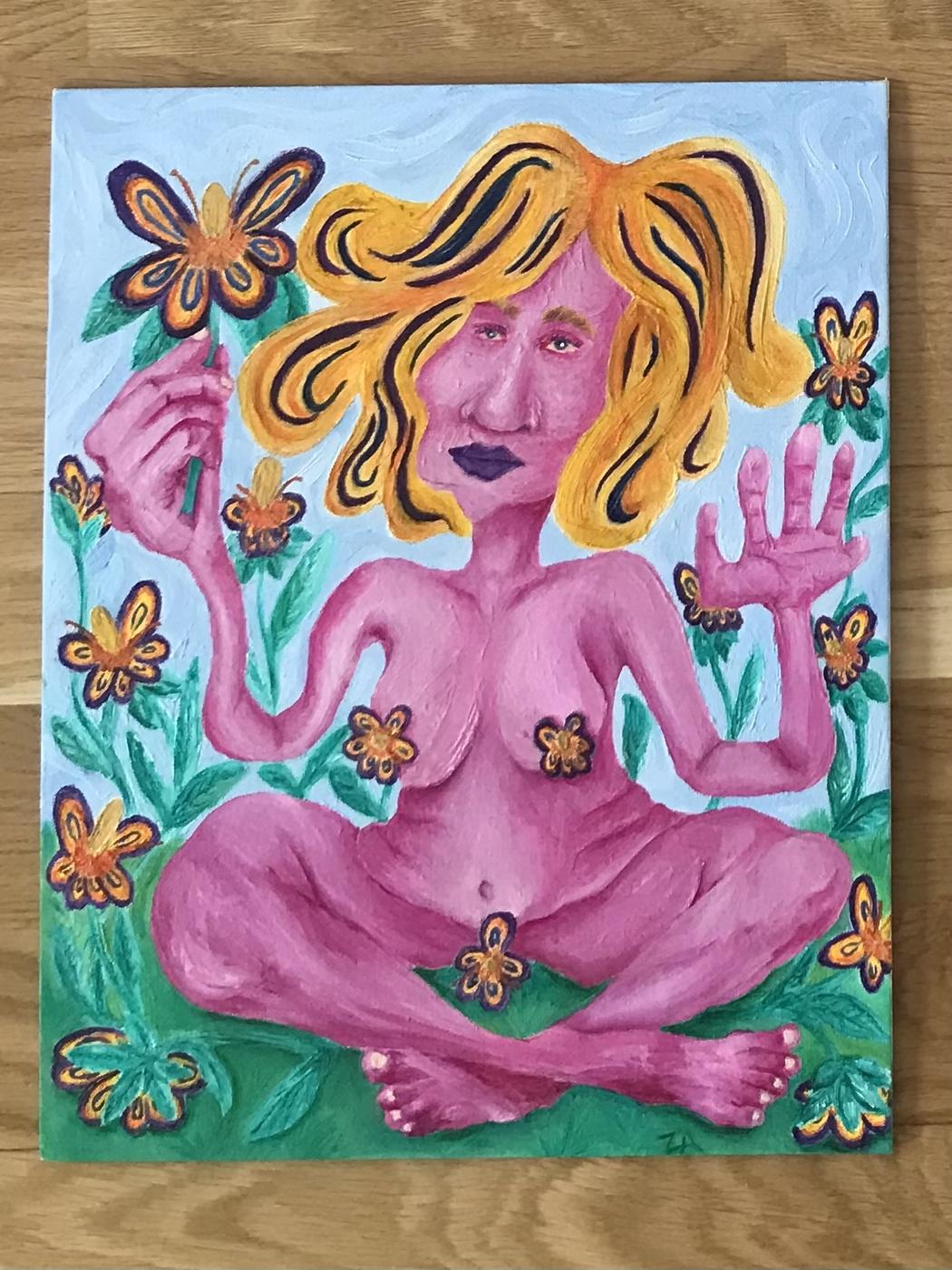 Zeynep Altın | Flower Woman | 2023
Nature appears as a living, almost mischievous character in your works. What draws you to flowers, vegetables, and plant forms as recurring motifs?
The answer is a bit tied to my previous answer. I love that nature is crazy, wild and anarchical. It provides the absolute escape from the strict cities that I have always lived in. Not that I don’t like to live surrounded by tall buildings, especially that I consider Vienna to be one of the prettiest cities, but my mind gets bored of the construct of civilization at times. When I look at flowers at the park or the vegetables in the supermarket, it reminds me the colour of life.
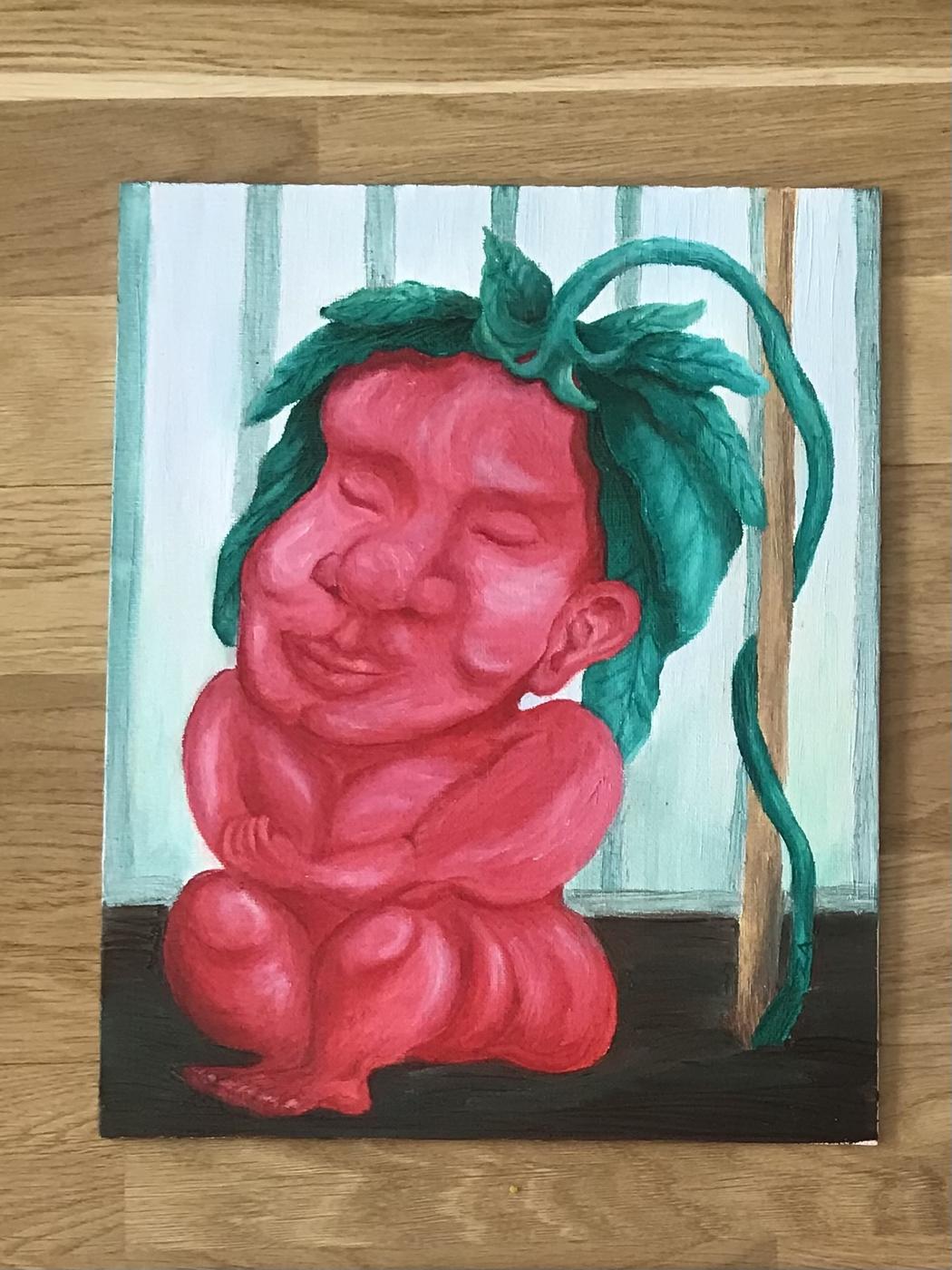 Zeynep Altın | Unborn Tomato | 2023
Living in Vienna for more than a decade while being originally from Turkey, do you feel that your cultural background influences your artistic voice?
I wouldn´t say I do this to be in touch with my cultural background or to make a statement about my immigrant background, it is more of an individualistic thing to do for me. Maybe if the inspiation strikes, I can experiment with traditional motives but one thing that I think comes from my culture is this connection to nature. There are a lot of references to nature in the Turkish folk art but I dont think my art is traditional in any way. It feels as it should, I am a very typical Turkish woman and feel connected to my roots, but “painter” feels like a separate identity. Maybe because appreciation for art wasn’t exactly encouraged in Turkish society while I was growing up. Obviously, there is an audience out there that appreciates it and a lot of Turkish artists that work very hard too, but my impression is that painting is widely considered as more or less a “hobby thing”.
Humor, body imagery, and political caricature can sometimes be provocative. Do you see your work as social commentary, or is it more about imagination and personal expression?
I used to think that art should make people think and provoke them to be more politically correct but I let that ambition go after seeing Caravaggio´s painting Narcissus in real life and hearing Leon Battista Alberti`s quote that is mostly used to interpret it: “What is painting but the act of embracing by means of art the surface of the pool?” In short to me my work is a selfish endeavour, I don’t want to give people a message other than “I’m here too and the way that I see the world matters.” My work is just my vision of the world that reflects on the canvas. Like that time I saw these beautiful thistles on the side of the road and to me they were dancing in the wind and by accident I saw them in the middle of their dance, so they were embarrassed to be caught off guard and naked but someone else can look at it and think “a woman pressured and policed by society, free and vulnerable but puts her hands up high like she’s ashamed and guilty for being herself” And if that´s what people see that matters too.
Leave a Reply
You must be logged in to post a comment.