
Mario F. Bocanegra Martinez
Your Tipográficos series transforms typographic forms into luminous abstractions. How did this project begin, and what first inspired you to merge typography with projection and photography?
Tipográficos started as an open-ended experiment. I wanted to see what would happen if I took typography off the page and put it into a space filled with light, distortion, and hands-on improvisation. When I began arranging typographic fragments, wood blocks, perforated discs, and transparency sheets on what I call “the translucent stage” of an overhead projector, I quickly saw how letters could lose their meaning as language and become sculptural forms.
The idea started when I noticed how a single projected composition could change with a slight movement of a material, a different camera angle, or a change in aperture and shutter speed. A letterform might turn into a pattern or silhouette, then come back together as something new. This process reminded me of László Moholy-Nagy’s work with light, transparency, and photogram-based abstraction. His belief that light could be a main creative medium has had a lasting influence on this project.
 Mario F. Bocanegra Martinez | Tipográfico Uno | 2025
You describe your process as one of purposeful play and inexactness. How do you balance experimentation and control in your creative workflow?
In my home studio, I have the freedom to spread out and set up for experimentation. The camera and lights are always ready, with materials close by for whenever inspiration strikes. Typography gives me a formal foundation—shapes, proportions, rhythms. But once these elements are placed in the overhead projector and mixed with other materials, the rules become more flexible. I can then enjoy the beauty that comes from inexactness as a design tool, and welcome surprises that help me move forward.
My process is hands-on: I stack, tilt, and raise objects. I keep moving pieces around, watching how shadows overlap, how perforated objects create texture, how light bends across a curved object, and how a soft focus creates unexpected contrast with darker shapes. I understand the system I’m building, but I never really know what the image will look like until it appears on the wall. The tension between control and the unpredictable behavior of materials, along with unusual camera setups, is central to my work. With practice, you learn to adjust your approach and find potential in almost anything you see.
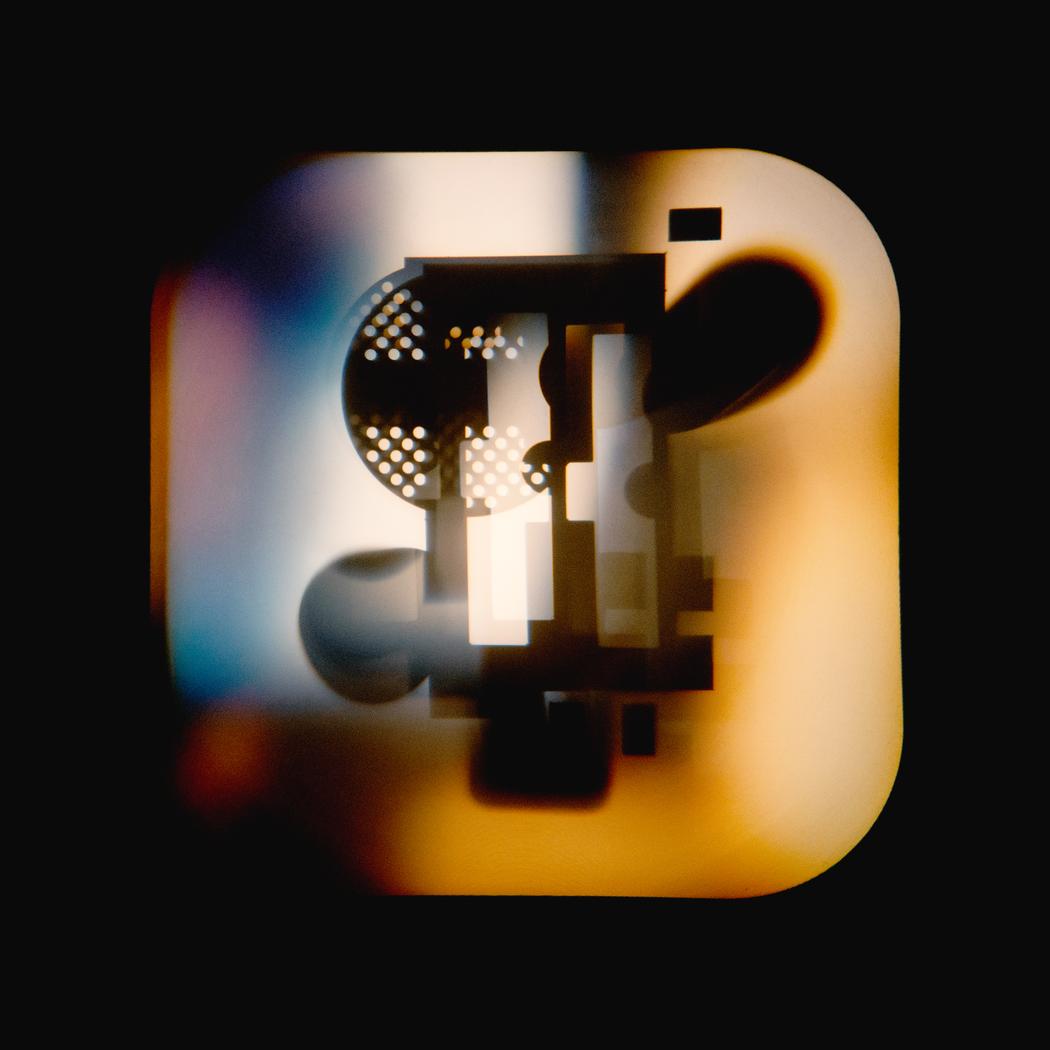 Mario F. Bocanegra Martinez | Tipográfico Dos | 2025
The use of an overhead projector feels both nostalgic and innovative. What draws you to this analog device in a digital age?
The overhead projector has a presence of its own. It hums, glows, and even warms the room. Its imperfections, like dust, scratches, and uneven light, become textures in the final image.
Moholy‑Nagy worked extensively with light, transparency, and shadow to create what he called “new vision photography.” That spirit is embedded in the overhead projector and in the ways I use the camera to investigate. It offers a kind of optical poetry that digital tools rarely replicate. The overhead projector brings friction, unpredictability, and intimacy. I find these qualities essential to this series.
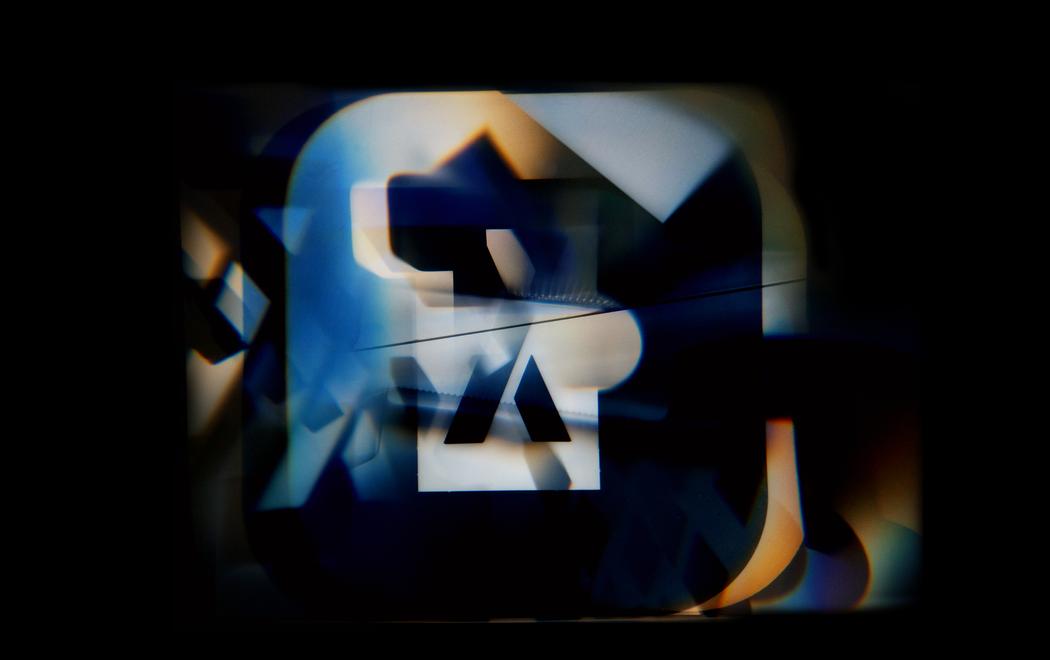 Mario F. Bocanegra Martinez | Tipográfico Tres | 2025
Many of your compositions feel kinetic, almost like motion frozen in light. How does your background in motion design influence these still images?
Motion design has changed how I see form. Even when I make still images, I think about motion and design principles like contrast, repetition, overlap, rhythm, and direction.
As I manipulate materials on the overhead projector bed, I work almost as if I’m animating in real time. The final photographs often capture a moment of transition: a transparency lifted, shadows and focus responding as an object tilts, distortions and color gradients seamlessly come together. It’s like a kind of choreography, and the still image becomes evidence of the movement that produced it.
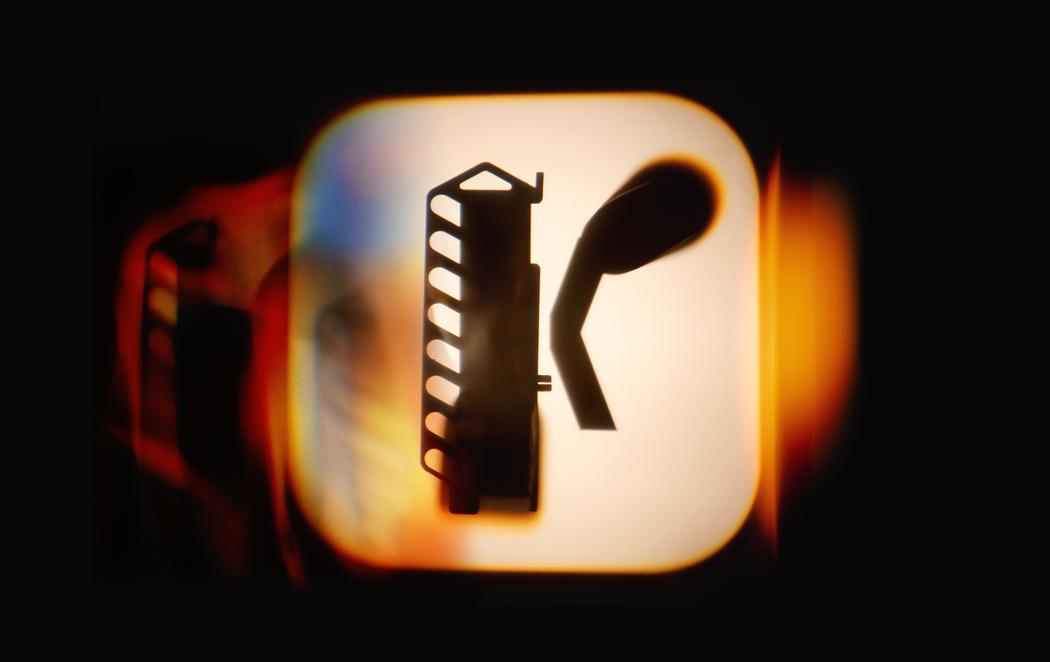 Mario F. Bocanegra Martinez | Tipográfico Cuatro | 2025
The interaction of light, transparency, and shadow seems crucial in your work. Could you share more about how you select and arrange your materials?
A big part of my process actually starts outside the studio, often in thrift stores and flea markets. I look for objects that catch light in interesting ways, like odd plastic containers, textured glass, perforated metal, small hardware pieces, or anything with transparency, unusual edges, or unique silhouettes. I try to imagine how they’ll perform, but I’m almost always surprised—and that’s the fun of it. When I get to the studio and put these objects on the projector bed, they produce results I could never have predicted. The surprise teaches me. I learn by testing and seeing what happens. Each setup is temporary, a brief mix of light, shadow, and overlapping forms, captured in a photo before I take it apart and start again.
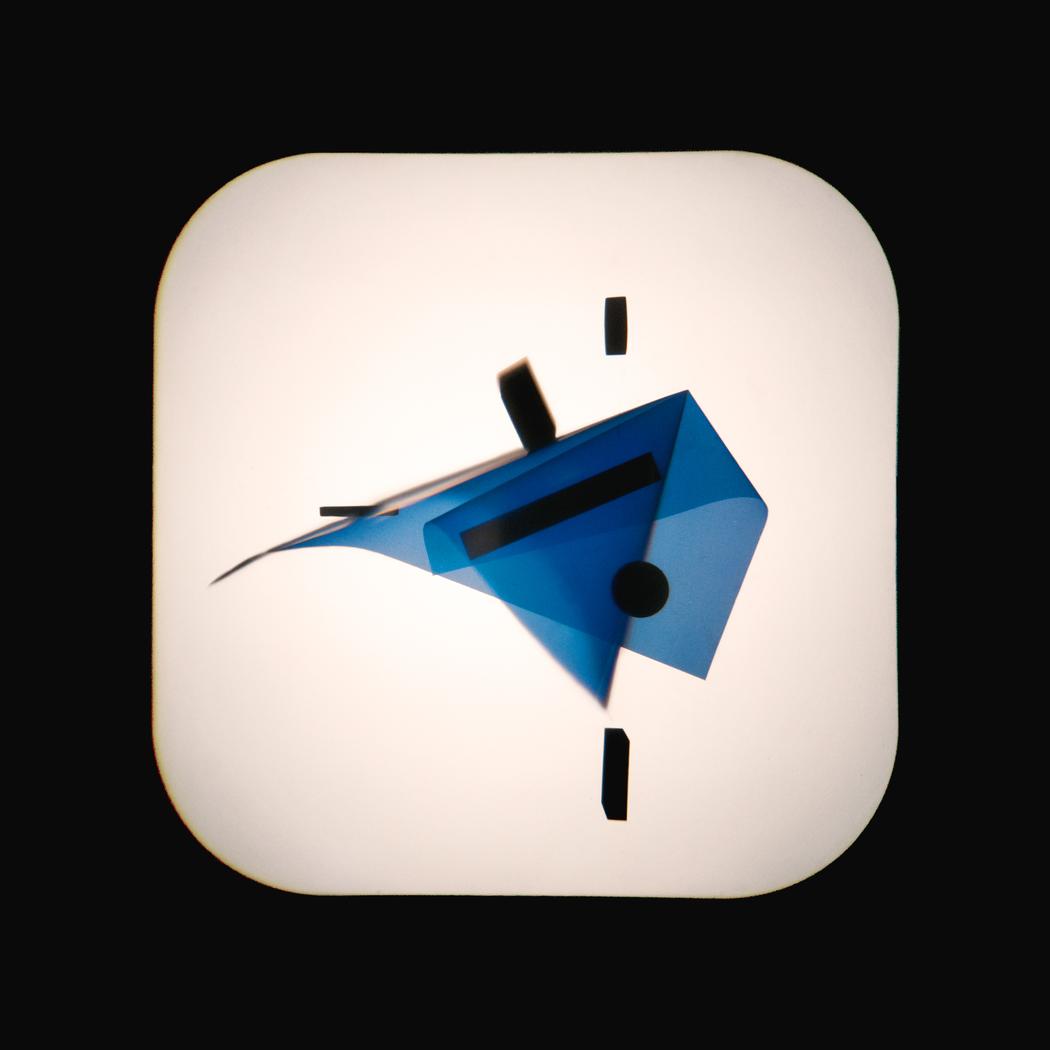 Mario F. Bocanegra Martinez | Tipográfico Cinco | 2025
Typography here loses its linguistic function and becomes pure form. What does this abstraction reveal to you about the nature of language and communication?
When a letter is freed from legibility, it reveals the underlying expressiveness we often overlook. It becomes a shape with its own internal logic rather than a symbol tied to language.
This process shows me how meaning is constructed—and how easily it can dissolve. By fragmenting and abstracting typographic forms, I’m not erasing communication but transforming it. The work asks viewers to engage with typography not through reading, but through sensing.
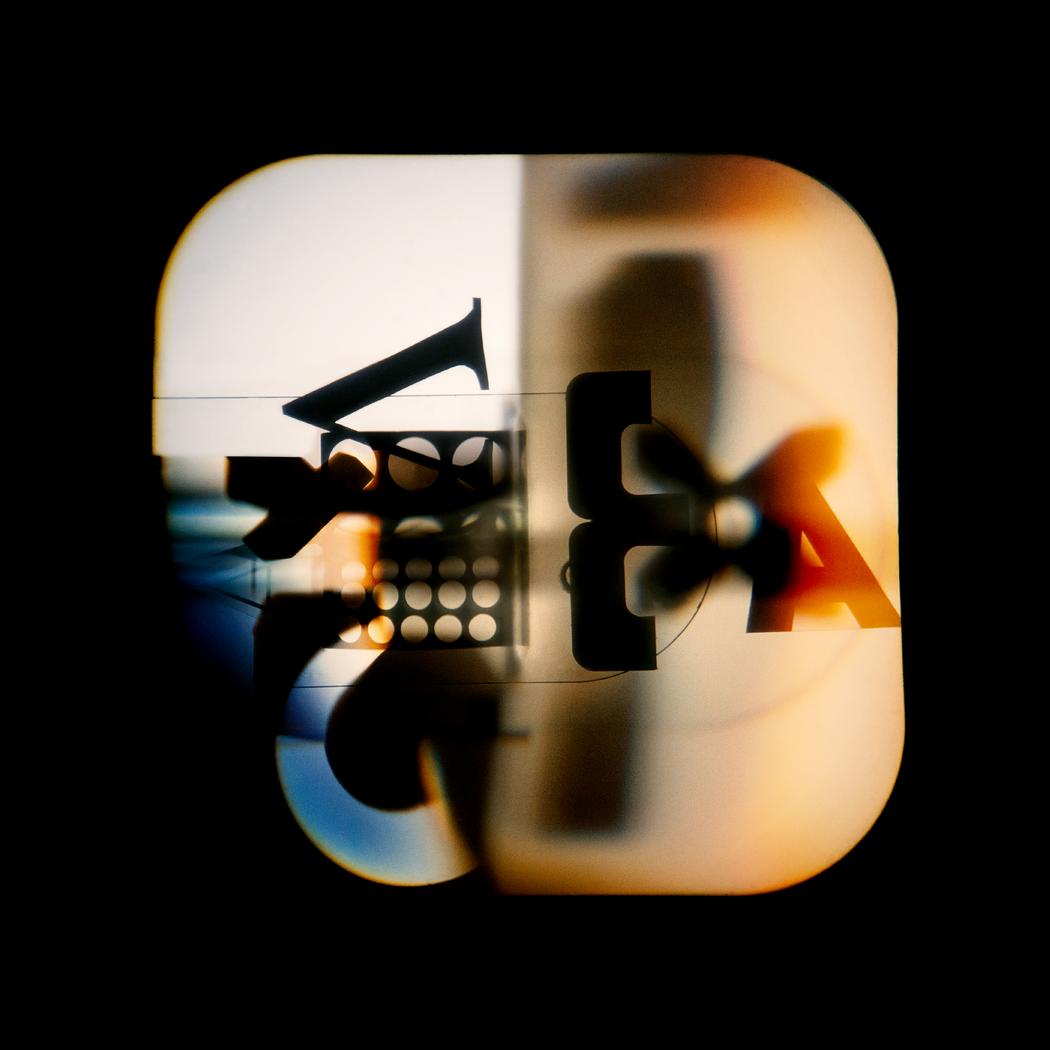 Mario F. Bocanegra Martinez | Tipográfico Seis | 2025
Your work bridges design, art, and education. How does teaching inform your creative practice—and vice versa?
Teaching always brings new energy to my work. Students ask questions, share doubts, and offer unexpected ideas. Their curiosity helps me explain my thinking more clearly, stay open to new ways of working, and rethink old habits.
I create classroom workshops that let students explore materials, projection, typography, and both analog and digital processes. I see these workshops as chances for students to start shaping their own creative paths, rather than simply following a prescribed set of rules. When students see the messiness behind work driven by intuition, they realize that experimentation isn’t chaos—it’s at the heart of all creative work. This reminds me that creativity is always a process, not a fixed result.
Leave a Reply
You must be logged in to post a comment.