
Márta Nyilas
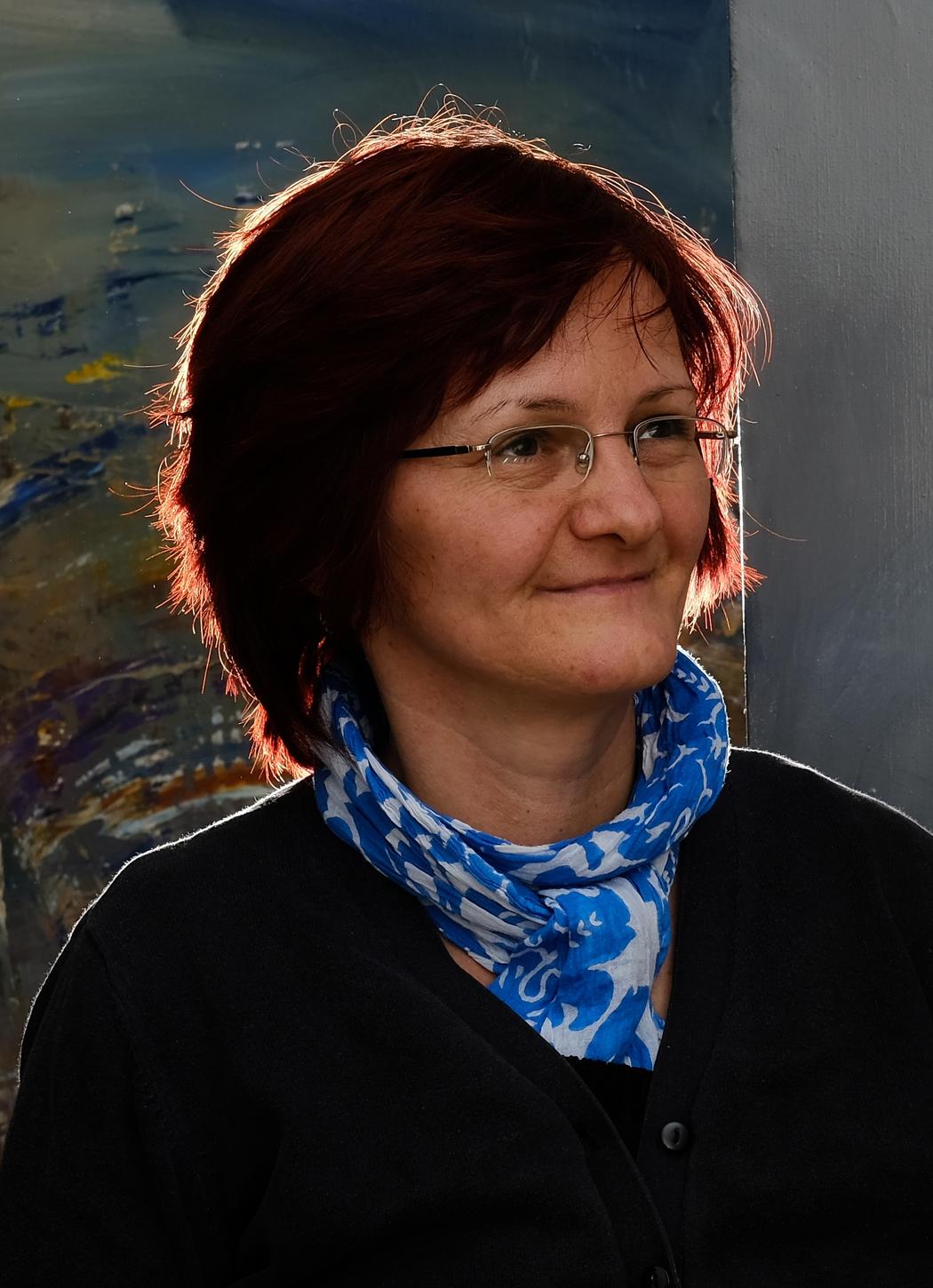
Your artistic journey moves from informal non-figurative and gestural painting toward a delicate balance between figuration and abstraction. What inner or conceptual shifts prompted this transition over time?
Indeed, looking at the totality of my works, there is a shift from the non-figurative direction, toward a delicate painterly style between figuration and non-figurativeness. I did indeed do non-figurative painting for a decade or so. In recent years I have been interested in how I could present classical scenes such as those inspired by the Bible in a contemporary way.
At the same time, it is well known that there is no difference between the criteria for creating a figurative and a non-figurative image. Unless the non-figurative picture is focus less, i.e. it does not have a main plot, it should be constructed in the same way as one that contains recognizable depicted forms. Composition, rhythm, colors and their tonal scale, different textures, opaque and translucent painted surfaces. Of course, in the case of a figurative painting, you have to figure out what should be on it, so to speak, i.e. with what elements and their arrangement you can convey the desired message. Meanwhile, in non-figurative painting, the painter works with elements that are universally used: homogeneous or color-to-tone gradient surfaces, spots, lines, bands, etc., concrete (geometric) or painterly treated.
Recently in addition to my paintings balancing between figuration and abstraction, I have just revived a series of non-figurative pictures that I started more than thirty years ago and which I considered closed at the time – where I interpreted the letter as an element of image construction, a band, – and to which type of paintings I turn back with great excitement and expectation while the works are still in the experimental stage.
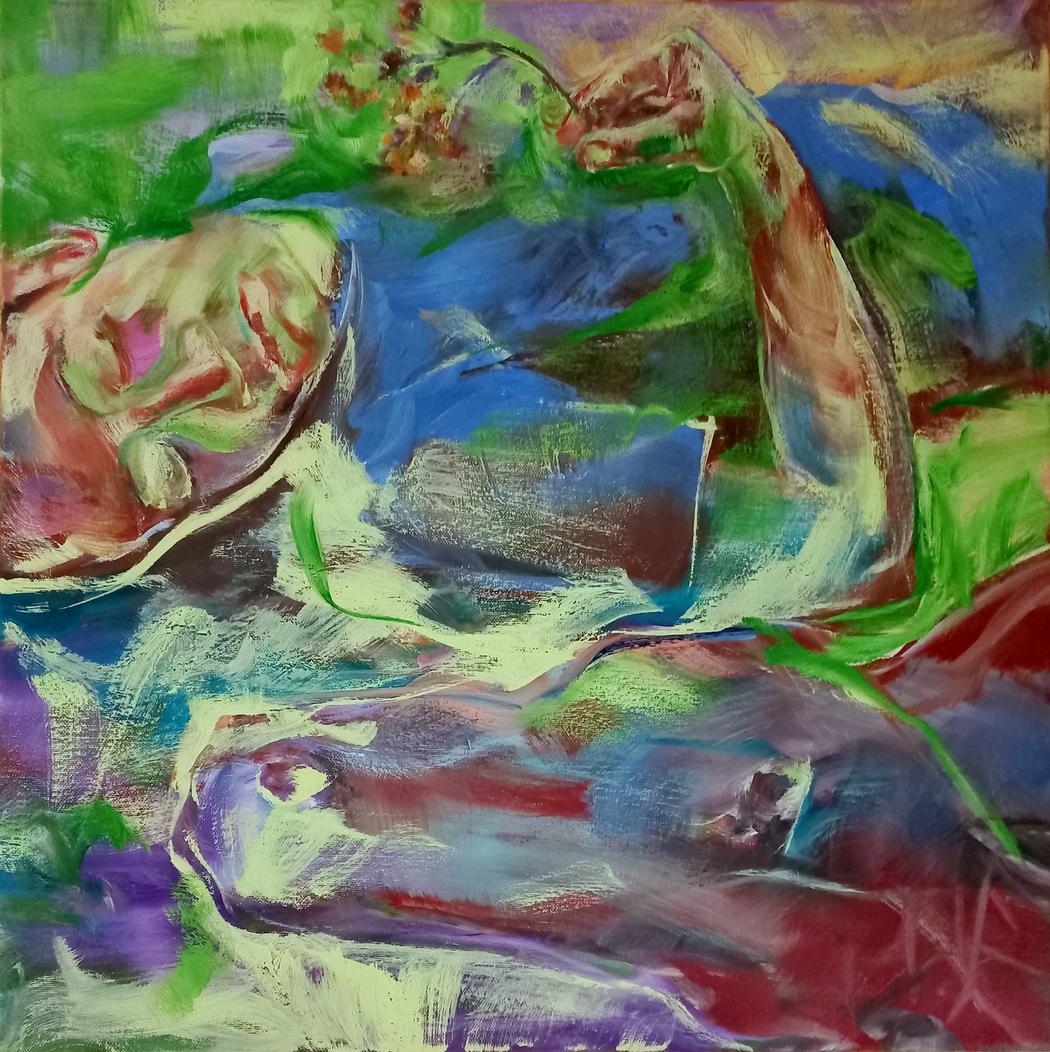 Márta Nyilas | Dream About The Orange Flower | 2023
You describe your recent works as lyrical, intuitive, and emotionally charged. How do you recognize the moment when intuition should lead, rather than conscious composition?
This is a very apt question. I think that in general consciousness and lack of it alternate in the making of a painting. I think that those paintings of mine are successful which, after a long period of contemplation, make you say I have lost my mind. Sometimes I try to consciously induce the lack of control, sometimes I fail. But when I manage to lose my mind on purpose an uncontrollable force bursts out and radiates from my body. In such cases, the brush does not make mistakes: it brings the necessary line exactly there and in such a way, or places a spot as it should, even in a new and apt way that I could not have imagined. In these cases, I fully accept the risk and usually make the right decision.
However, sometimes the loss of control seems to happen randomly, but of course this is preceded by a longer period of time when I am filled with my own experiments. The beginning of this process can be triggered by a color found in a part of the picture, or a well-placed brushstroke. At such times, I usually feel that I can do anything with the painting that has been completed up to that point; I am bursting with a good sense of self-confidence, and I live in the present with my whole being. Surely, then, thought and action become one.
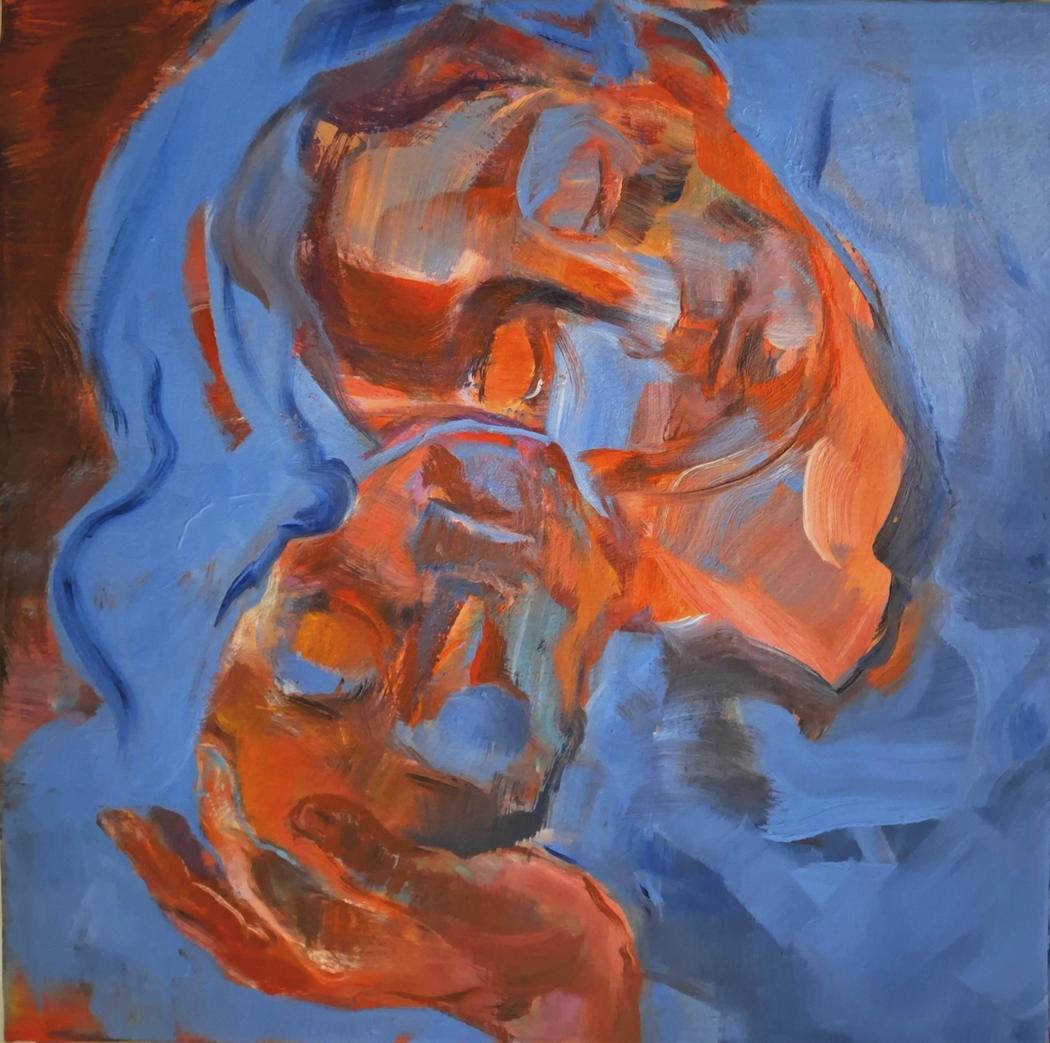 Márta Nyilas | Pieta | 2024
Many of your paintings seem to exist on the threshold of narrative and abstraction. How important is storytelling to you, and how much do you leave open for the viewer’s interpretation?
I am incredibly careful not to let the narrative dominate the picture. I try to formulate a story according to a contemporary feeling and perspective. Fragmentation is one of the characteristics of our time. Therefore, I only want to provide the viewer with clues so that they can build the story of the picture according to their own vision. Of course, my pictures in question have a message, but I leave it to the viewer’s imagination to decide what kind of interpretive branches can arise from this backbone.
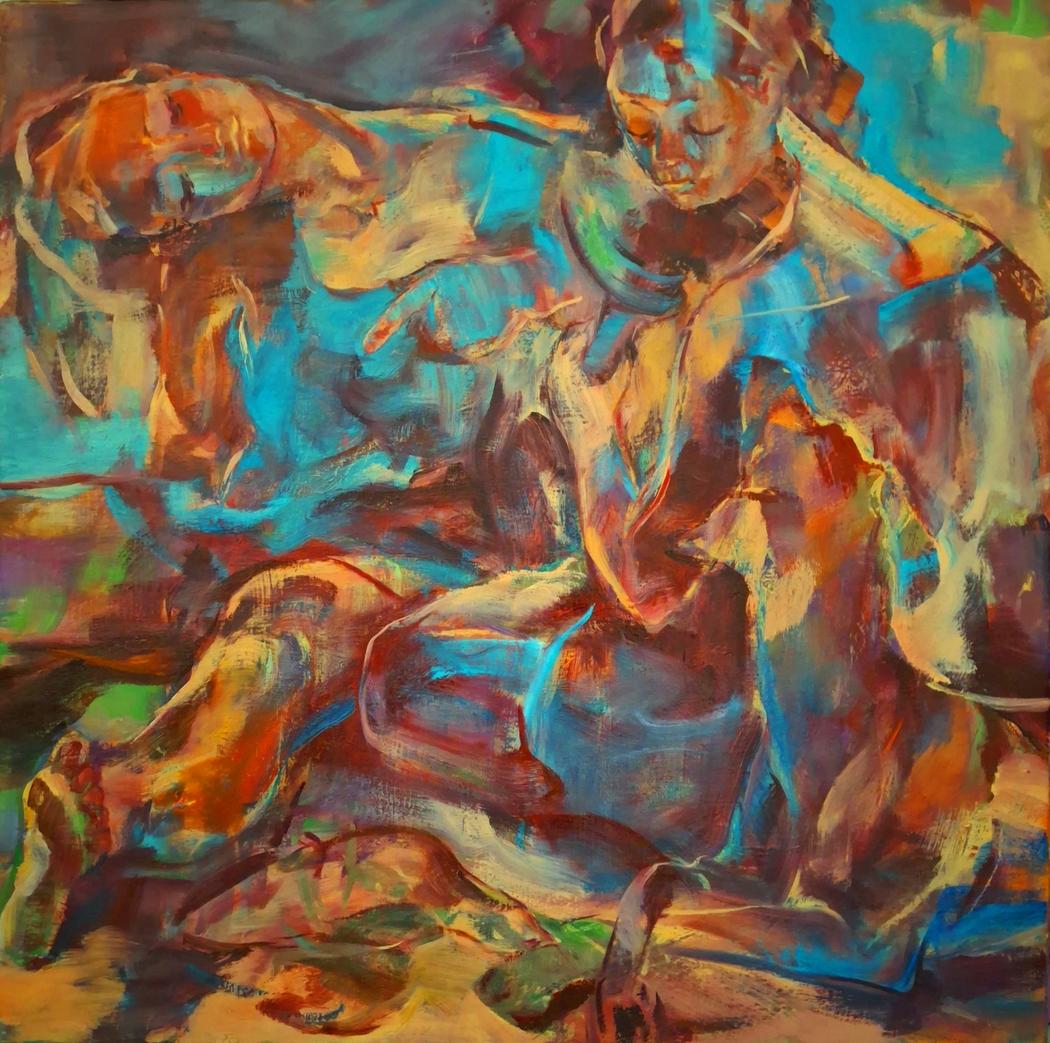 Márta Nyilas | Sunday Afternoon | 2025
Rhythm and the physical trace of the brush play a central role in your work. Can you speak about the relationship between bodily gesture, movement, and meaning in your painting process?
According to experts, a mode of cognition closely related to visual cognition is kinesthetic or neuro-muscular cognition. This means that the artist tries with his whole being to follow, or more precisely, to almost imitate, what is happening to the form and all its parts. “I paint a window the way I look out of it. We must behave in painting exactly as we behave in life,” says Picasso. Like this observation, I am trying to display figurative motifs, in my own traceable rhythm. The main carrier and reflection of the painter’s state of mind is, as is known, is the brushstroke, with which I strive to keep all the details of the picture together, so that the viewer also perceives it as a unit. My brushstrokes are brisk and dynamic; one of my painting colleagues says they are fluttering.
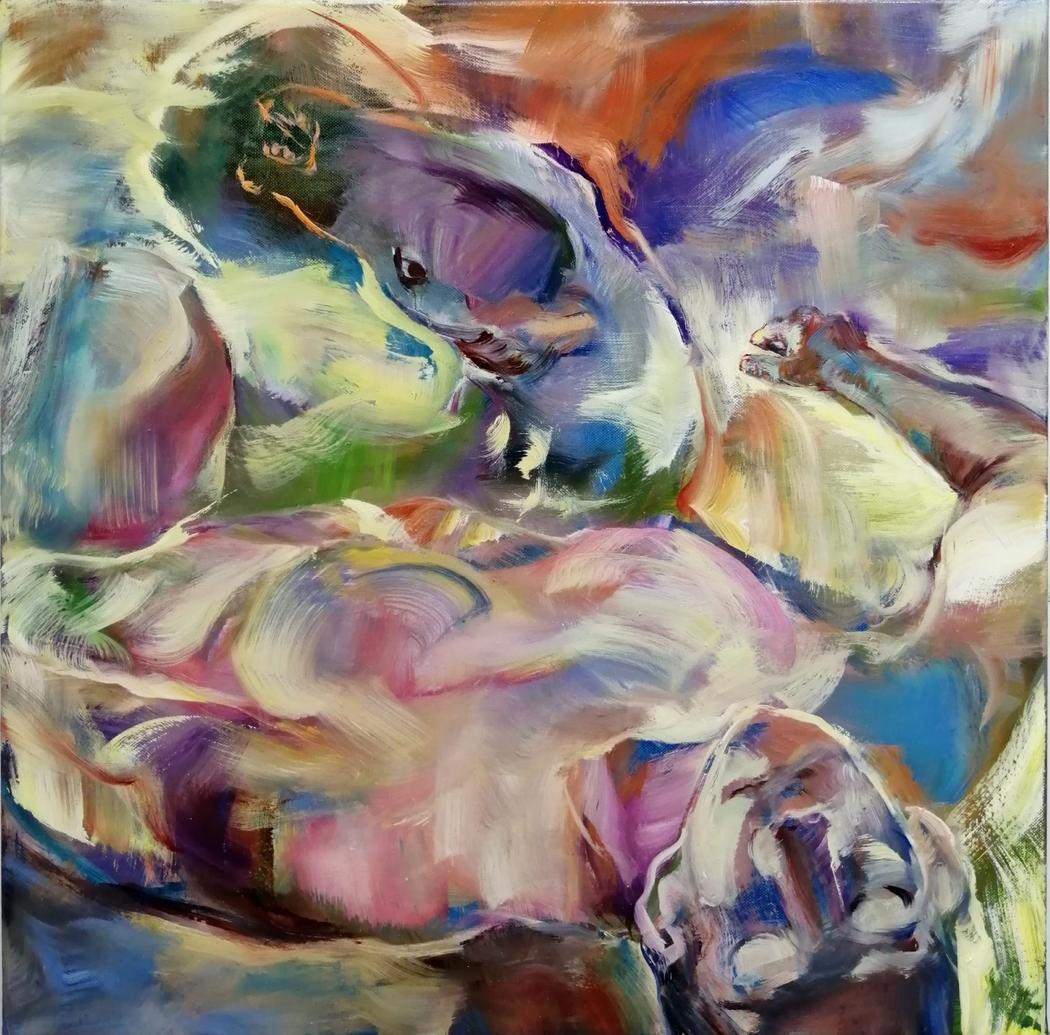 Márta Nyilas | The Night | 2021
You often simplify forms until they approach abstraction. What determines how far a figure can dissolve before it loses its emotional or symbolic core?
We can only abstract what we know well. I try to simplify the form I want to display to its essential characteristics as judged by me, while constantly paying attention to its adaptation to the two-dimensional character of the canvas. In this way, I simultaneously keep in mind the spatiality of the motif and its compression into two dimensions.
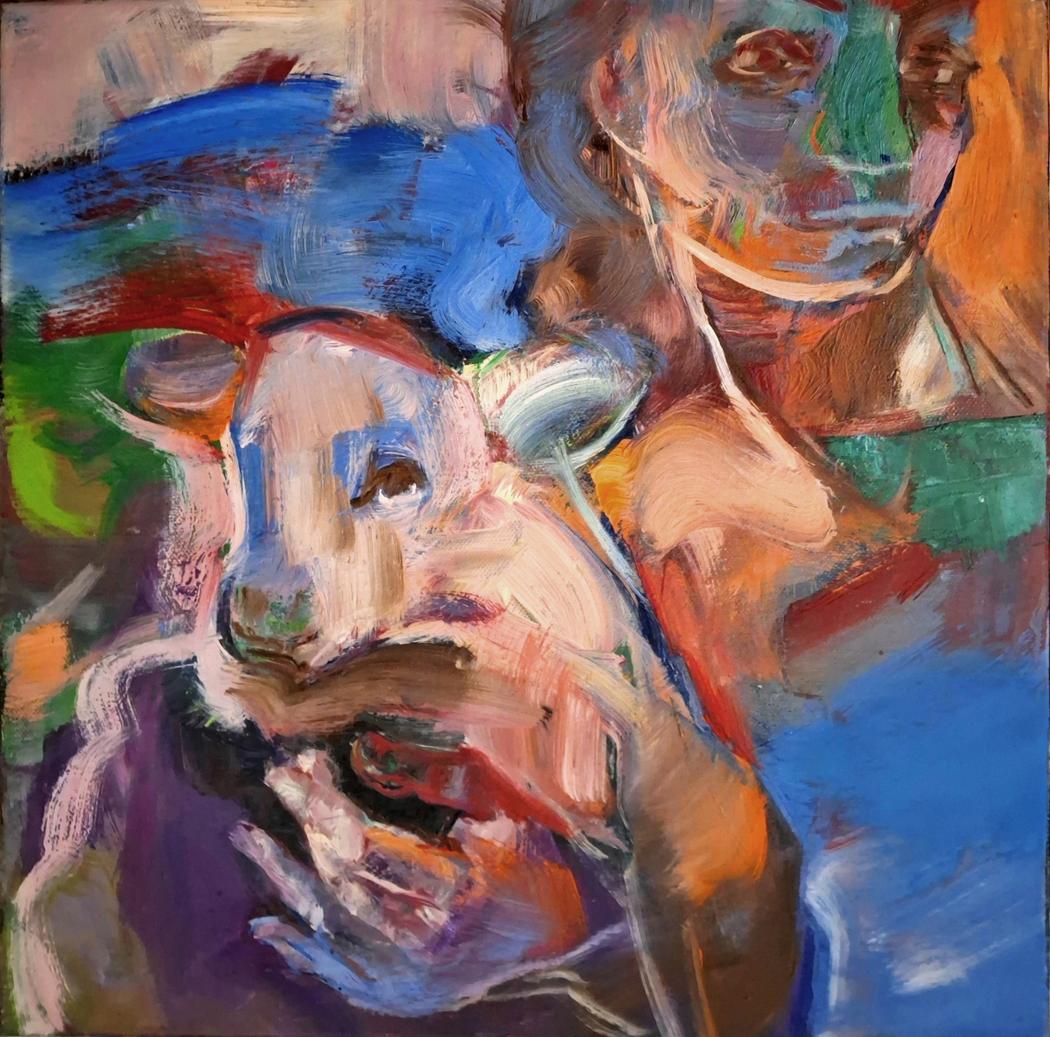 Márta Nyilas | The Good Shepherd | 2024
In recent years, you have been drawn to themes that resemble biblical scenes, not for their religious meaning, but for their archetypal familiarity. What attracts you to these well-known visual structures?
I do not want to offend Christian believers, but I believe that scenes depicting Biblical scriptures are, even without the holy book, the most faithful types of relationships between humans, or between human and in general with the animals tamed by the man. I prefer scenes with few characters since I have always been interested in depicting intimate relationships.
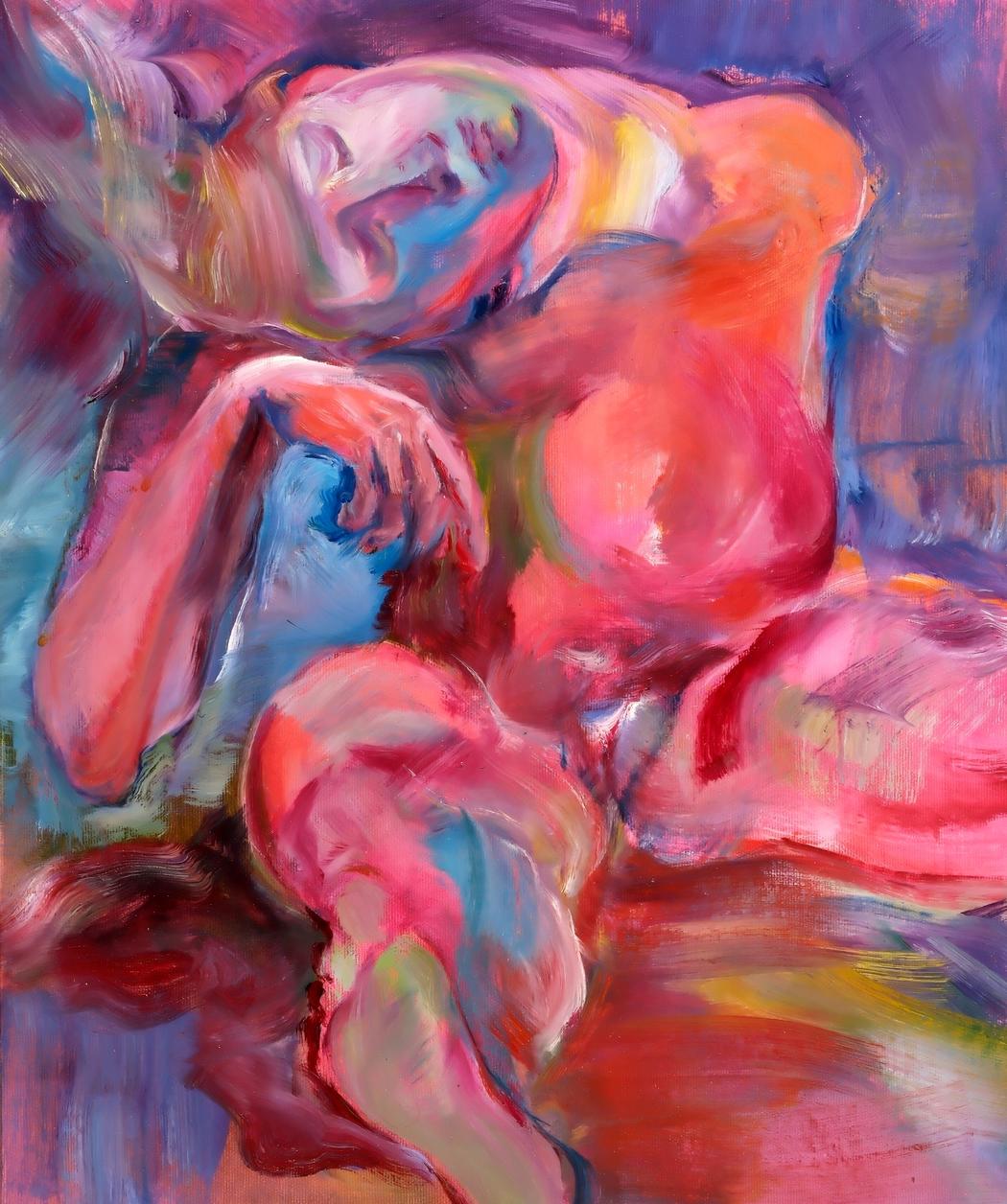 Márta Nyilas | The Dream | 2021
Having studied under influential figures such as Ilona Keserü and Markus Lüpertz, what lasting impact did these experiences have on your approach to painting?
I received a classical painting training in Cluj-Napoca, for which I am very grateful, but upon arriving in Pécs, Ilona Keserü in addition to her openness to the love of colors introduced me to an avant-garde experimental painting mindset, which opened new doors for me in the field of painting.
The painting workshop I spent with Markus Lüpertz had a great influence on my creative attitude: his words gave me self-confidence, which I still recall today when I am in a negative creative wave: “You have a very good sense for painting!” he told me in the summer of 1996.
However, when it comes to mastering the secrets of painting, I must also mention Matteo Massagrande, from whom in the late few summer art camps I learned about the importance of color tones in a painting or the importance of the type of applied paint.
Leave a Reply
You must be logged in to post a comment.