
Long Phi Tran
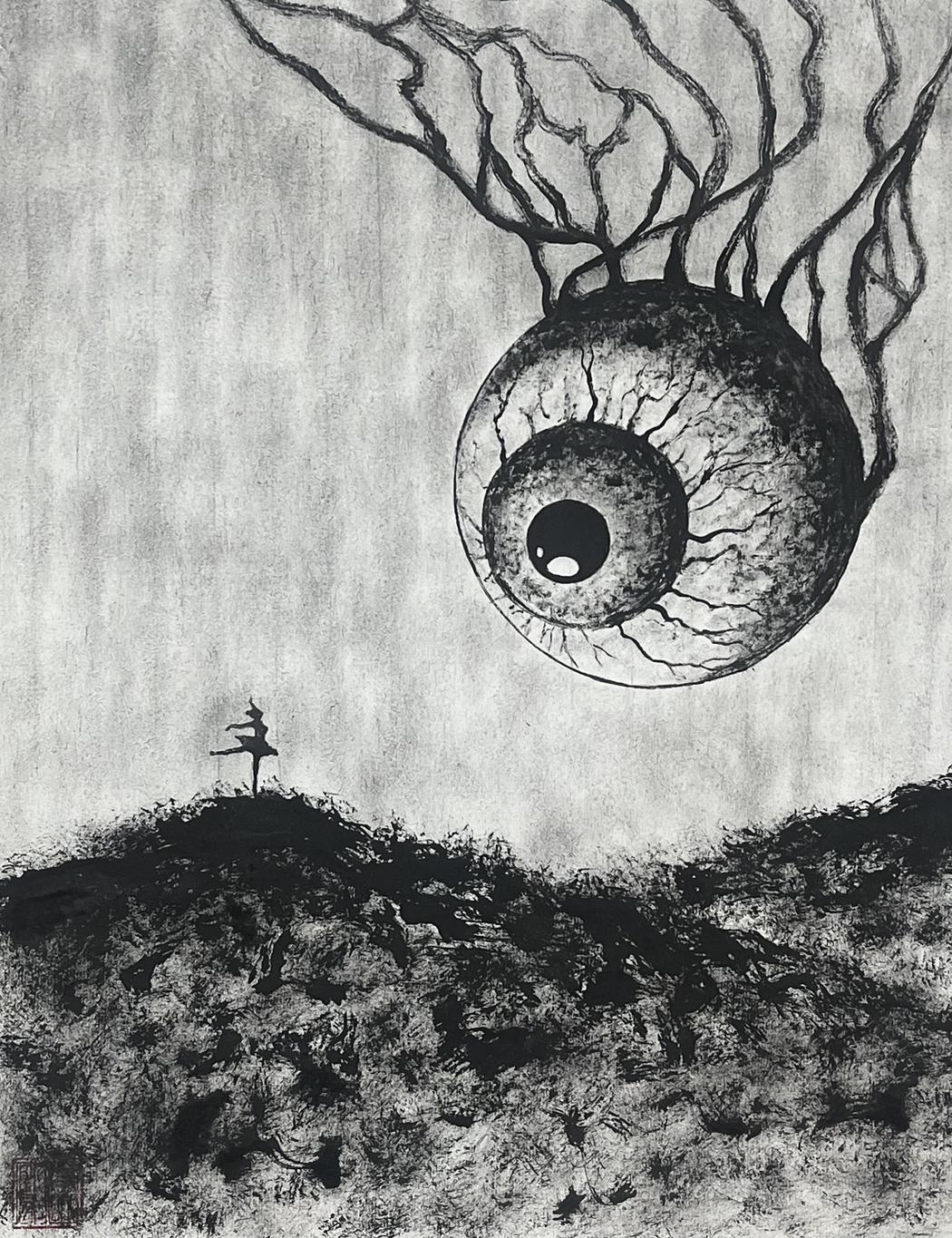
The title “A Definition of Art Criticism” is very direct and provocative. How did this idea emerge, and what personal experiences influenced it?
The title is a personal reflection on my creative journey rather than a universal definition. While I respect art criticism as a catalyst for growth, it often manifests as a ‘predatory gaze’—an overwhelming pressure that can stifle nascent ideas.
I personally felt this weight while utilizing traditional Asian mediums to explore modern surrealism, caught between the expectations of authenticity and my desire for experimentation. The enormous eye embodies this duality: it is simultaneously an acknowledgment and a judgment. It forces the artist—the small figure—to constantly strive for identity under such a colossal, inescapable gaze.
In the artwork, we see a striking contrast between a fragile human figure and an enormous observing eye. What does this imbalance symbolize for you?
In my view, this scale imbalance manifests the individual’s position beneath massive observation. The fragile figure represents the vulnerable artistic ego, while the enormous eye symbolizes powerful entities. To me, this contrast depicts the solitude of creation: a modest ‘self’ asserting its identity despite being overwhelmingly scrutinized.
You describe observation as “overwhelming and predatory”. Do you see criticism primarily as a threat, a necessity, or something in between?
I view criticism not as a threat, but as a harsh, essential ‘ecosystem.’ While it may ‘prey’ on fragile ideas, this pressure forces core values to emerge resiliently. To me, criticism is a survival challenge—a necessary tension that polishes a raw stone into a multifaceted piece of art.
 Long Phi Tran | A Definition Of Art Criticism
Ink is a demanding and unforgiving medium. Why did you choose ink on paper to express this concept?
Choosing ink was a philosophical decision. Its ‘unforgiving’ nature mirrors criticism: once committed, every stroke is permanent. By blending East Asian tradition with modern surrealism, I harness the medium’s inherent stillness to explore contemporary pressures, staying rooted in my heritage while opening a new space for dialogue.
The eye in your work feels almost organic, alive, and invasive. Is it meant to represent a specific entity – critics, institutions, society, or something more abstract?
I envisioned the eye as a living entity, weaving itself into the creative process. Beyond institutions, it represents a synthesis of pressures—from societal standards to the ‘internal eye’ of self-doubt. By giving this gaze an organic form, I hope to evoke an intimate yet daunting reality: criticism is an inherent, evolving part of life that takes root within us all.
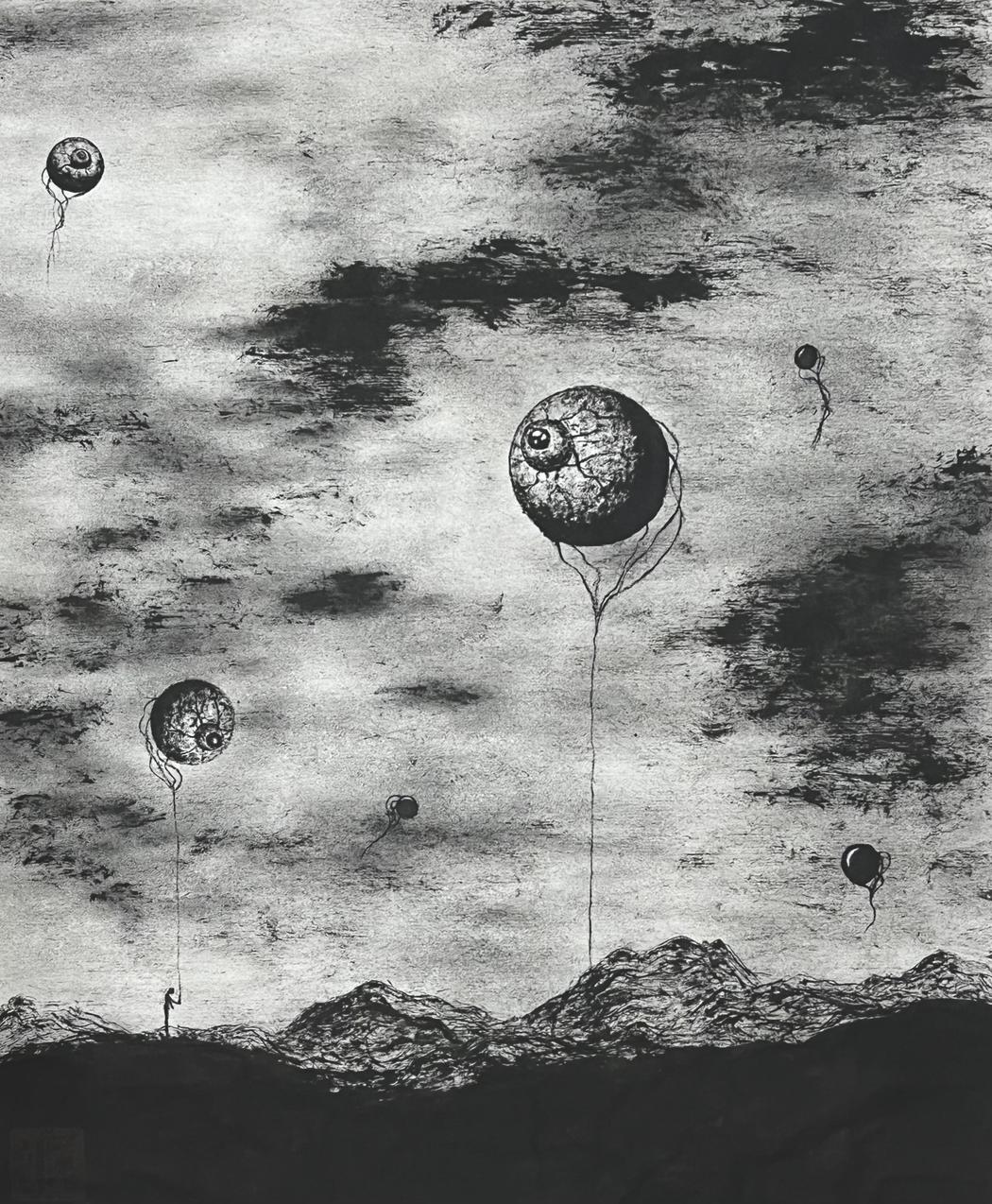 Long Phi Tran | A Definition Of Freedom Of Visions | 2025
How does your cultural and artistic context in Vietnam shape your approach to drawing and conceptual storytelling?
The Vietnamese cultural context, for me, is a confluence of deep heritage and the relentless pace of a modernizing society.
Technically, traditional Vietnamese art—particularly ink wash and graphic arts—taught me the power of minimalism and the significance of ‘voids’ (negative space). This discipline ensures that every ink stroke carries emotional weight.
In terms of storytelling, the humility and metaphorical nature of Vietnamese culture shape how I convey messages: subtle yet haunting. I use Asian mediums as a foundation to tell universal stories, creating a dialogue where past and present, East and West, can find a common language.
What do you hope viewers feel or question when they encounter “A Definition of Art Criticism” for the first time?
I hope that when viewers encounter the work, they see not just fear, but resilience.
I want them to ask themselves: ‘What is the eye observing my own life?’ and ‘Am I letting that gaze define my worth?’. Rather than feeling overwhelmed, I hope they find solidarity with the small figure—realizing that no matter how demanding the world may be, staying true to one’s identity and continuing the journey is the most quiet yet powerful form of strength.
Leave a Reply
You must be logged in to post a comment.