
Charlie Ramos
You have lived and worked in many different places across North America and Europe. How has constant movement shaped your sense of identity and your visual language as a painter?
Constant movement has always been a part of my life. I think it’s led me to always feel like an outside observer. This feeling has been a big part of the reason I always gravitated towards art. I consider it a kind of refuge in a way.
Some of my most vivid memories are of exploring a new city, taking in its history and culture. This fills me with inspiration. Each new place has its own distinct sounds, color, music, history, etc. When I paint, these are the sources of my imagery. I am especially inspired by the personal stories of the people I meet. The details of their experiences are much more interesting to me than anything you can learn from a history book.
You’ve worked extensively in the animation industry as a previs artist and cinematographer. How has that experience influenced your approach to composition, narrative, and movement in painting?
I grew up surrounded by animation and film in general being a latch-key child so I can only assume that it’s a part of my visual language. I attach images to music in almost every painting I create. It adds another level of meaning and depth for me. More directly, my experience working in film has created a focus on the importance of the shot. In filmmaking , every shot needs to have its reason for being in the sequence or else it’s just dead weight. The phrase “Use every part of the buffalo” was a kind of mantra at Pixar and I have tried to carry it with me in my paintings in trying to use every element: color, composition, subject matter, etc. to push the idea forward.
Nostalgia and isolation are recurring themes in your work. Are these emotions connected more to specific places, personal memories, or broader social experiences?
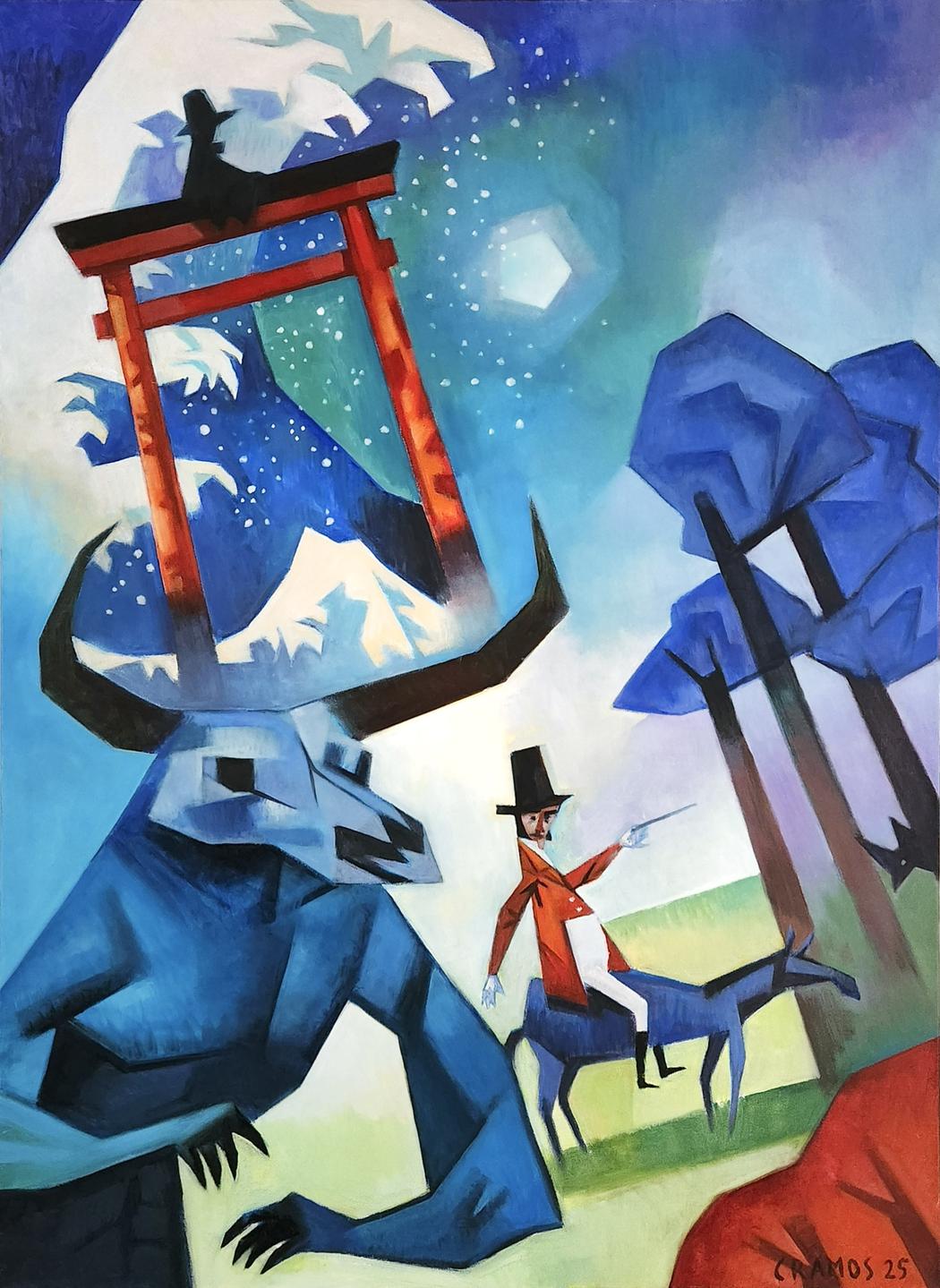
My paintings are almost entirely based on personal experiences. How I see myself in the world. I’m a hopelessly nostalgic person in the sense that I see the world almost always in retrospect. There is a song by the Catalan singer/songwriter Joan Manel Serrat which has the lines “there is nothing more cherished than that which i have lost” I see this in my work. My paintings are visual poems about what I’ve cherished in my experiences.
You cite Diego Rivera and Marc Chagall as influences – two artists with very different visual languages. What aspects of their work resonate most strongly with you?
Diego Rivera had a big impact on me in art school. I was an Illustration major and his bold structural compositions and ways of stylising his subject matter appealed to me in this way. His work is that of an objective observer that suited the kind of illustration I was doing. Later, as I moved from Illustration into fine arts and wanting to explore more personal stories, I became interested in Marc Chagall. His paintings to me feel like poetry or music. They have a sincerity and vulnerability that I gravitate towards. I try to imbue this quality in my work as well. I still see some of the Diego Rivera influence in my work but I feel that, like most sources of inspiration, it has melded into the big mix of influences that have come along since.
Your statement mentions not fully understanding your work as you create it. How do you balance intuition with intention during the painting process?
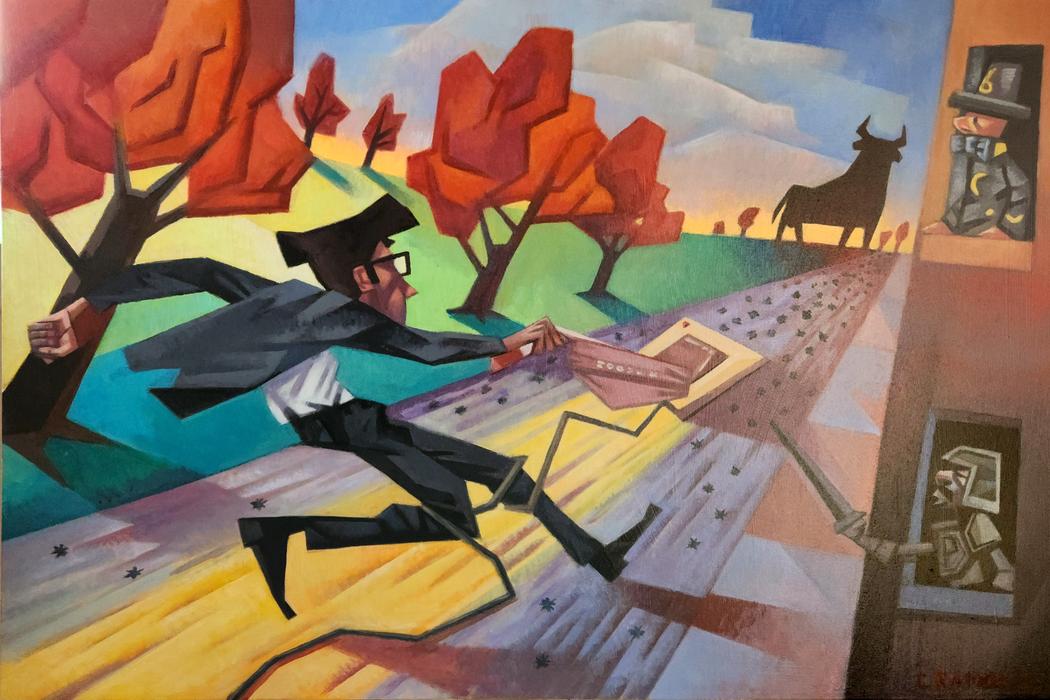
My paintings almost always are based on stream of consciousness writing. I find It’s the best way to get around the overly intentional and contrived conscious part of my brain. I do this as often as possible when I wake up after a strong coffee. What I write is mostly a big jumble of nonsensical strings of words but imagery starts to appear and after around 15 to 20 minutes there is inevitably something that resonates. A phrase, a place, an object, or a character..This is my starting point. I begin to draw after this and try not to over think..Just let it form itself. Little by little a story starts to form. As if the painting is guiding me. All of this is intuition. Sometimes it takes to the very end for the story to reveal itself to me.
Many of your paintings feel cinematic, almost like fragments of a larger story. Do you see your works as standalone images or as parts of an ongoing narrative?
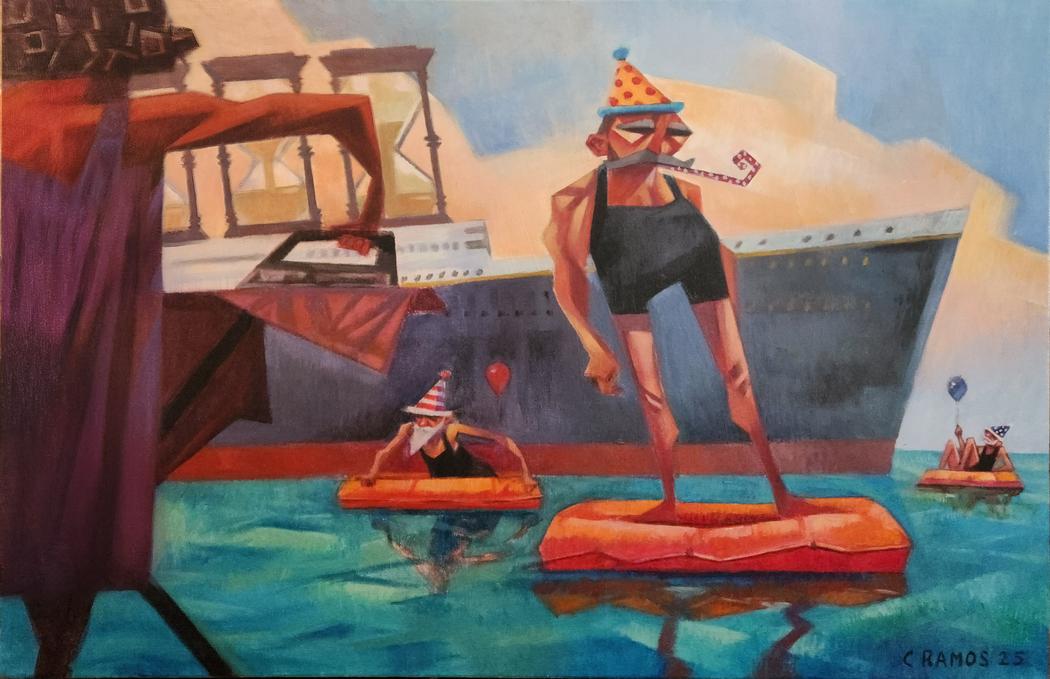
The work is standalone although the overall theme is part of a subconscious journal of my life experiences. I could almost categorize my paintings through a timeline as they correlate to particular moments and experiences in my life but there’s quite a bit of crossover. The painting “Birthday Party” is about my feelings on aging and isolation but incorporates memories of me watching my mother ironing in the foreground.
How does living in Montreal now influence your current work compared to your time in places like California, Mexico, or Spain?
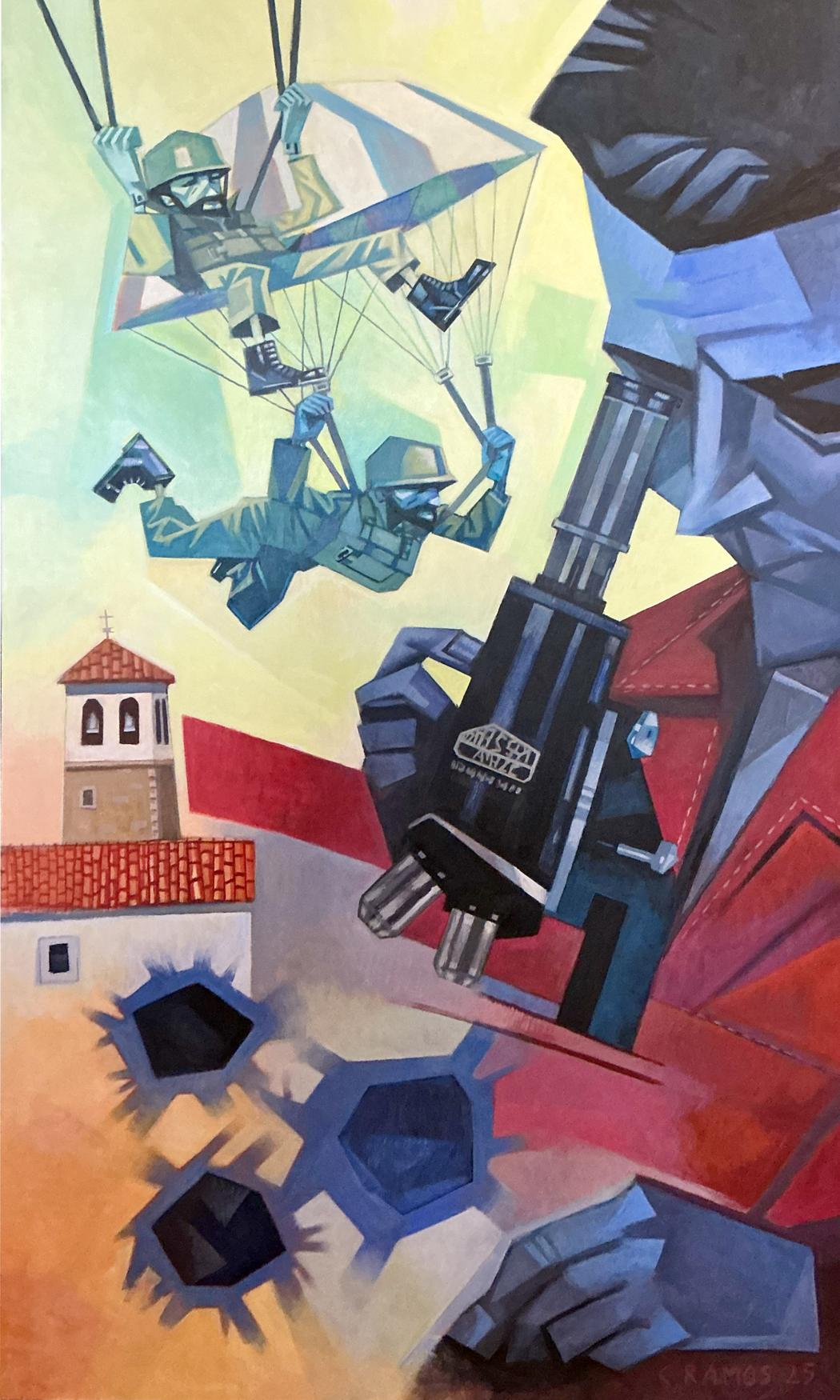
Montreal has been my home now for almost a decade. There’s something very inspiring and at the same time very accessible about this area even though the language is still a struggle for me. I’ve always been torn between my love of European culture and art and my roots and appreciation of my American upbringing and cultural references. I love this area in that it offers both at the same time. One can go to a county fair that feels like you’re in a small town in Texas and then drive to certain parts of the city and be transported to somewhere in Europe. Best of all is the sense of ease in how this diversity coexists.
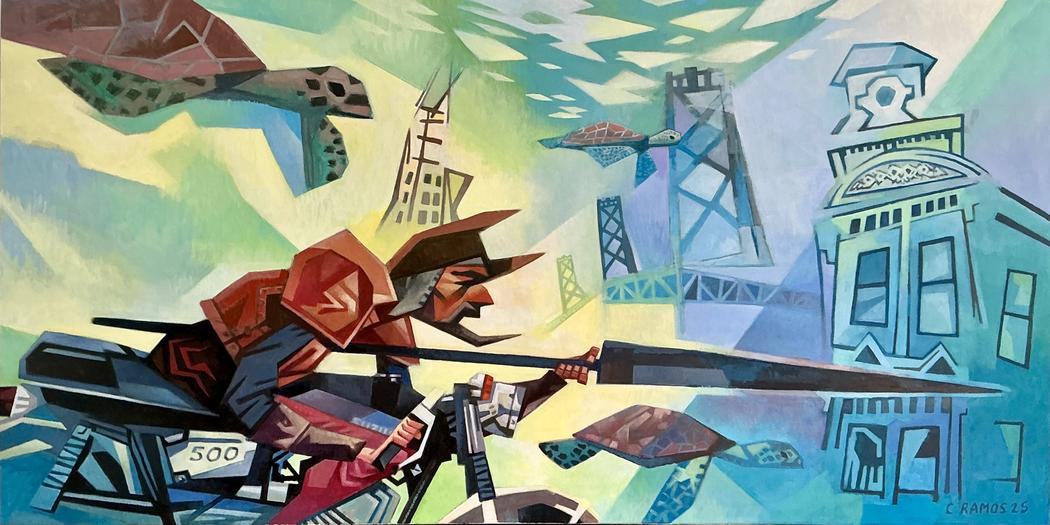
How do you know when a painting is finished, especially when meaning reveals itself gradually?
My paintings always start as intuitive imagery based on my writing. As I start to put paint to canvas I eventually enter into the “valley of despair” I hear many artists go through this. I get this feeling that the work makes no sense and I never had any talent and should give up..I think identifying this phase has helped me deal with it and accept it as part of the search. After a bit of time and work there’s this sort of Eureka moment when the painting resolves itself and guides me through. It’s still rough at this stage but the artistic journey feels over and then it’s mostly a technical process. Every painting is a journey in this sense.

Leave a Reply
You must be logged in to post a comment.