
NEFILAND by Angie Vanezi

Your works often depict miniature cosmic worlds where nature and the universe merge. How did this visual language first emerge in your practice?
This visual language emerged from an ongoing curiosity about scale and coexistence. I was always drawn to both vast cosmic imagery and intimate natural details, and over time I began compressing these extremes into contained worlds. Bringing galaxies, landscapes, and organic forms into a single frame allowed me to imagine environments where the infinite and the earthly collapse into one another. These miniature worlds became a way to explore how imagined futures and environmental aftermaths might coexist, not as opposites, but as interdependent realities.
You describe your interest in the collision between utopia and dystopia. How do you consciously balance beauty and unease within a single composition?
I’m interested in the tension that exists when something feels seductive yet unstable. Visually, this often means pairing harmonious geometry and luminous cosmic elements with signs of fragmentation, erosion, or imbalance. Beauty becomes the entry point, it draws the viewer in, while subtle disruptions introduce unease. I try not to resolve that tension; instead, I let both states coexist, reflecting how utopian ideals often carry dystopian consequences within them.
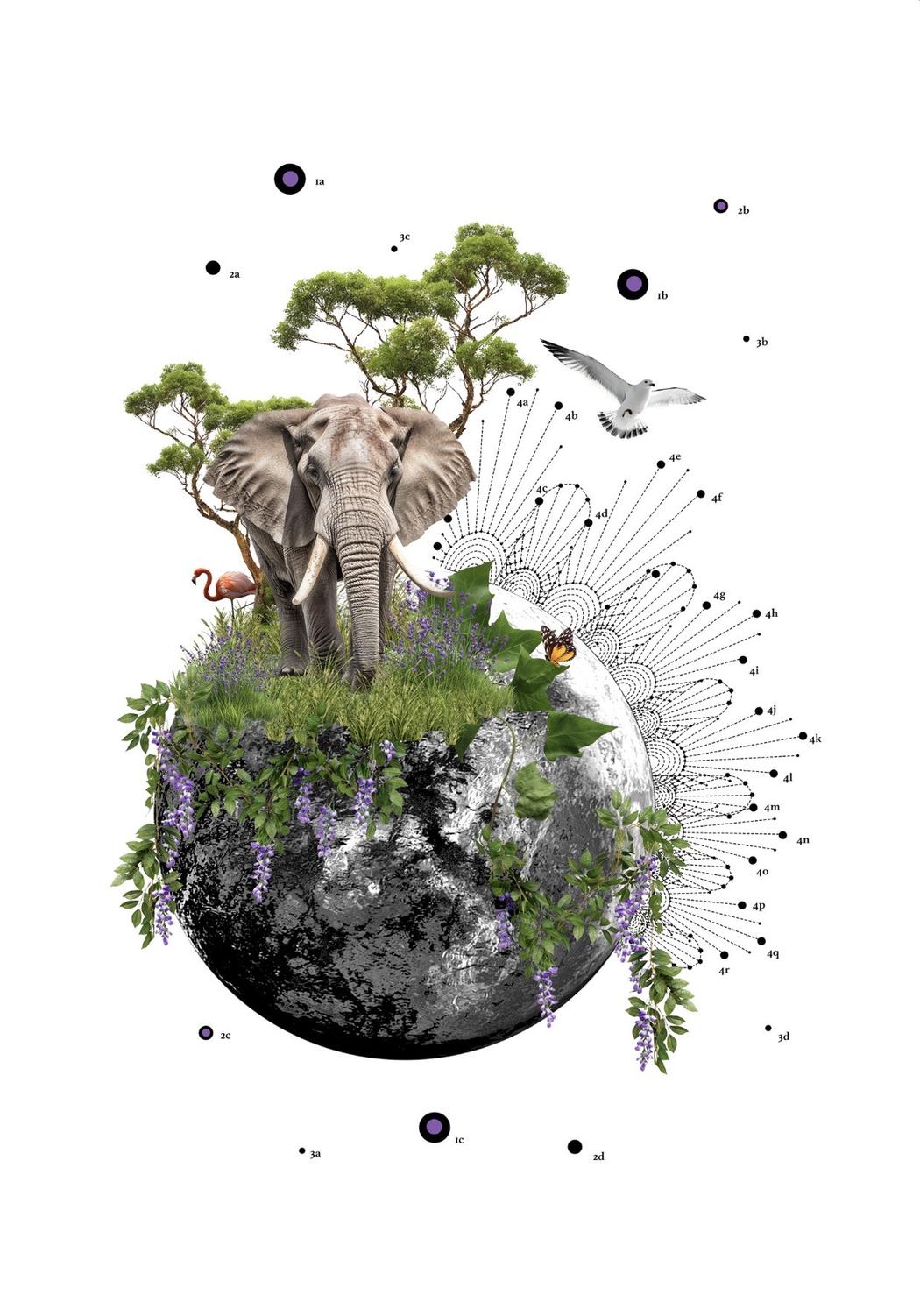
Geometry plays a key role in your work, both visually and conceptually. What does geometry represent for you beyond its formal structure?
Beyond its formal clarity, geometry represents a kind of universal language. It’s a system that exists in both natural growth patterns and human-made structures, bridging the organic and the constructed. Conceptually, geometry helps me hold together fragments of imagined futures and altered environments. It becomes a stabilizing force, an underlying order within worlds that are otherwise shaped by chaos, decay, and transformation.
With a background in architecture and academia, how has this training shaped the way you construct your imagined worlds?
My architectural and academic background has deeply influenced how I think about space, structure, and narrative. I approach each work almost like a constructed environment rather than a flat image, considering how elements relate spatially and conceptually. This training also instilled an attention to systems, how parts support or destabilize one another, which translates into the layered, often speculative worlds I create.
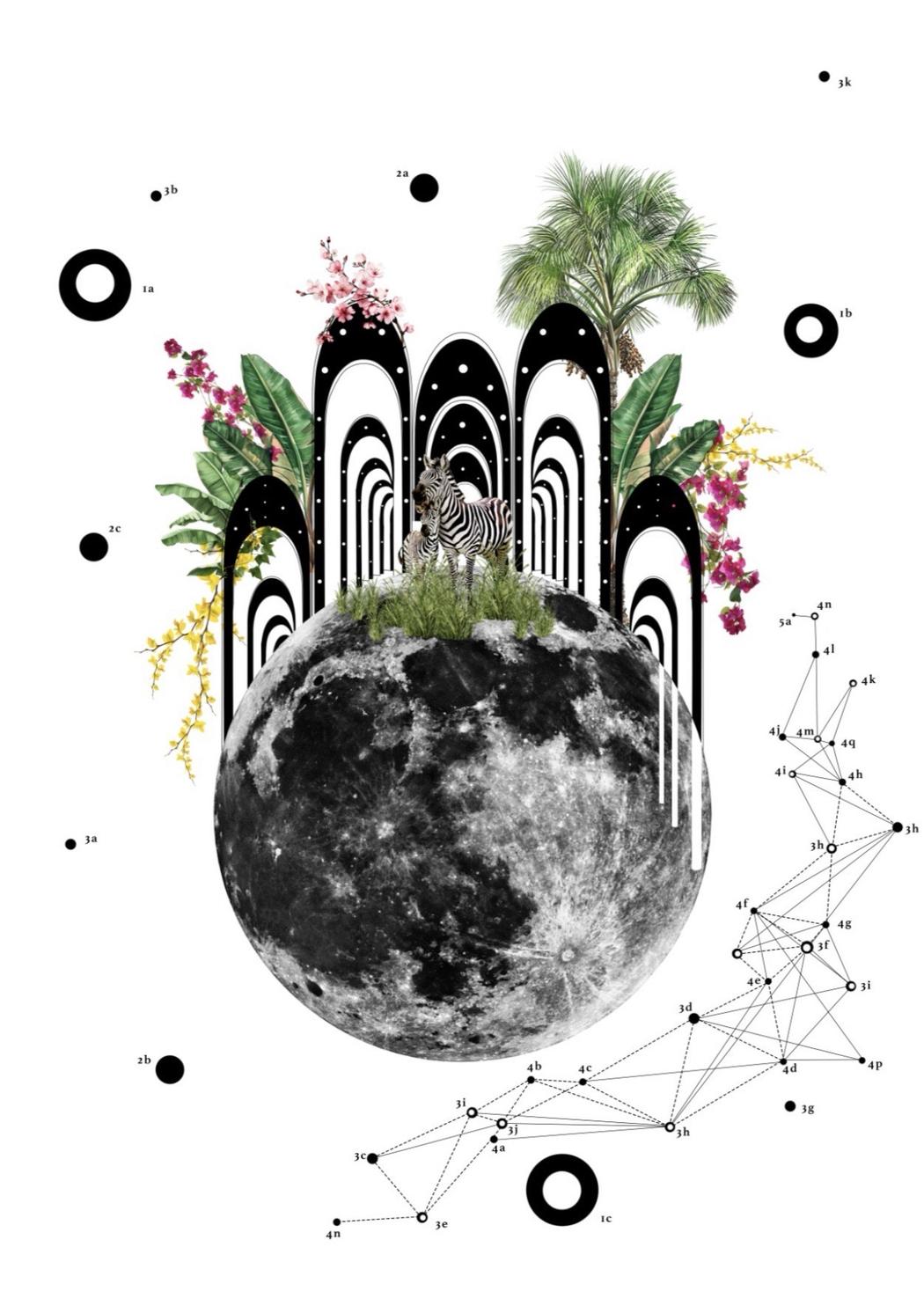
Nature in your work appears powerful and resilient rather than fragile. How does this perspective influence the narratives you build?
I see nature not as a passive victim, but as an active, enduring force. Even in damaged or altered environments, nature adapts and continues to sustain life. This perspective shifts my narratives away from pure loss and toward resilience. The worlds I build often reflect cycles of collapse and regeneration, suggesting that while human systems may fail, nature persists in unexpected and transformative ways.
You work across both 2D collages and 3D dioramas. How do these formats differ in terms of storytelling and viewer experience?
The 2D collages function more like portals, they offer a framed glimpse into an imagined world, encouraging contemplation and interpretation from a distance. The 3D dioramas, on the other hand, are more immersive and physical. They invite the viewer to move around them, to experience shifts in scale and perspective. Each format tells stories differently, but both are concerned with constructing layered realities that unfold over time.
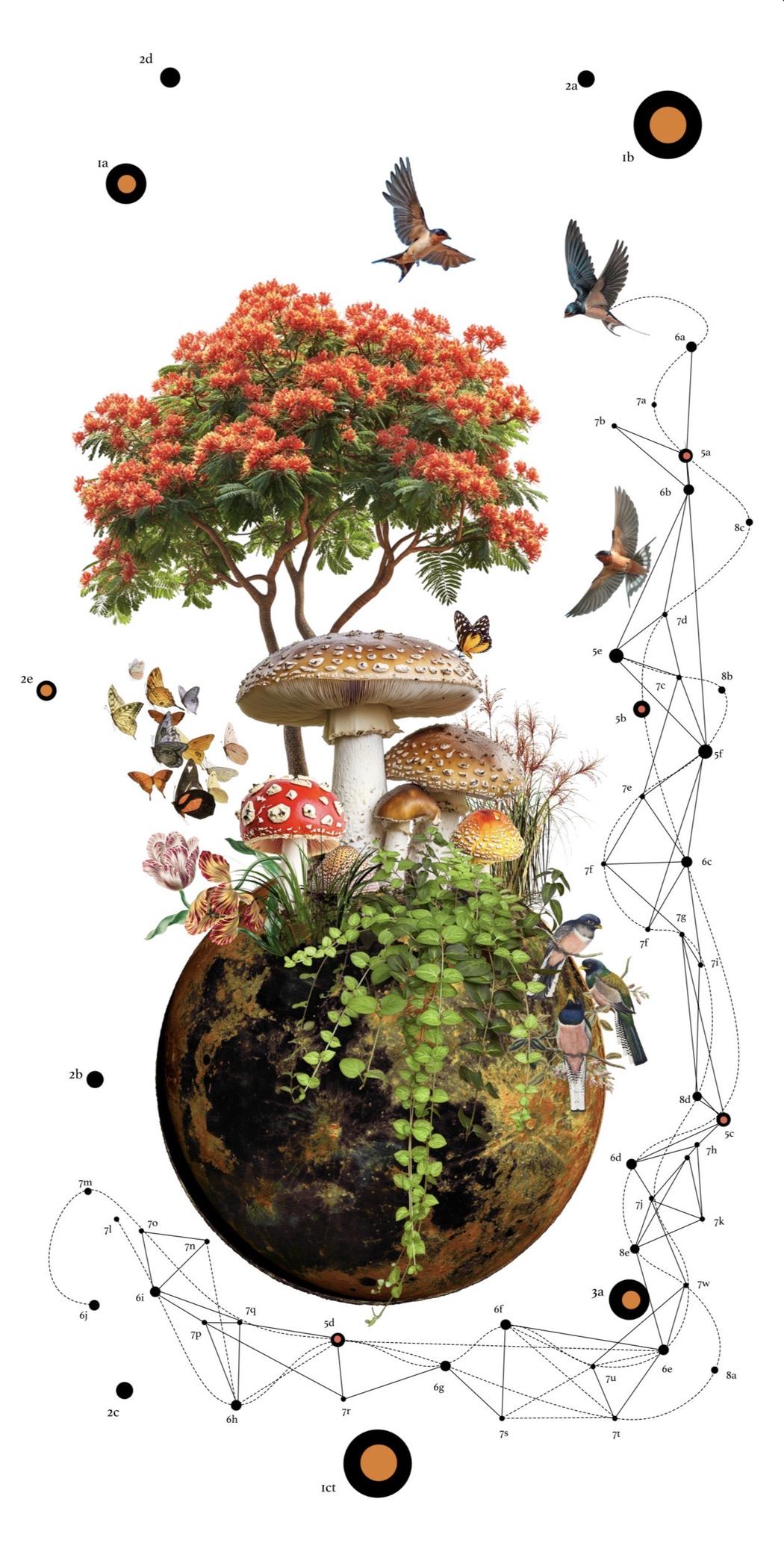
Can you walk us through your creative process, from the initial idea to the final visual outcome?
The process usually begins with a conceptual tension, an idea about coexistence, collapse, or resilience. From there, I gather visual fragments: cosmic imagery, natural forms, and geometric structures. I experiment intuitively, allowing forms to suggest relationships and narratives as they come together. Whether working in 2D or 3D, the final stage is about balance, ensuring that wonder and decay, order and chaos, are held in equilibrium within the world I’ve constructed.
Leave a Reply
You must be logged in to post a comment.