
Daun Suh
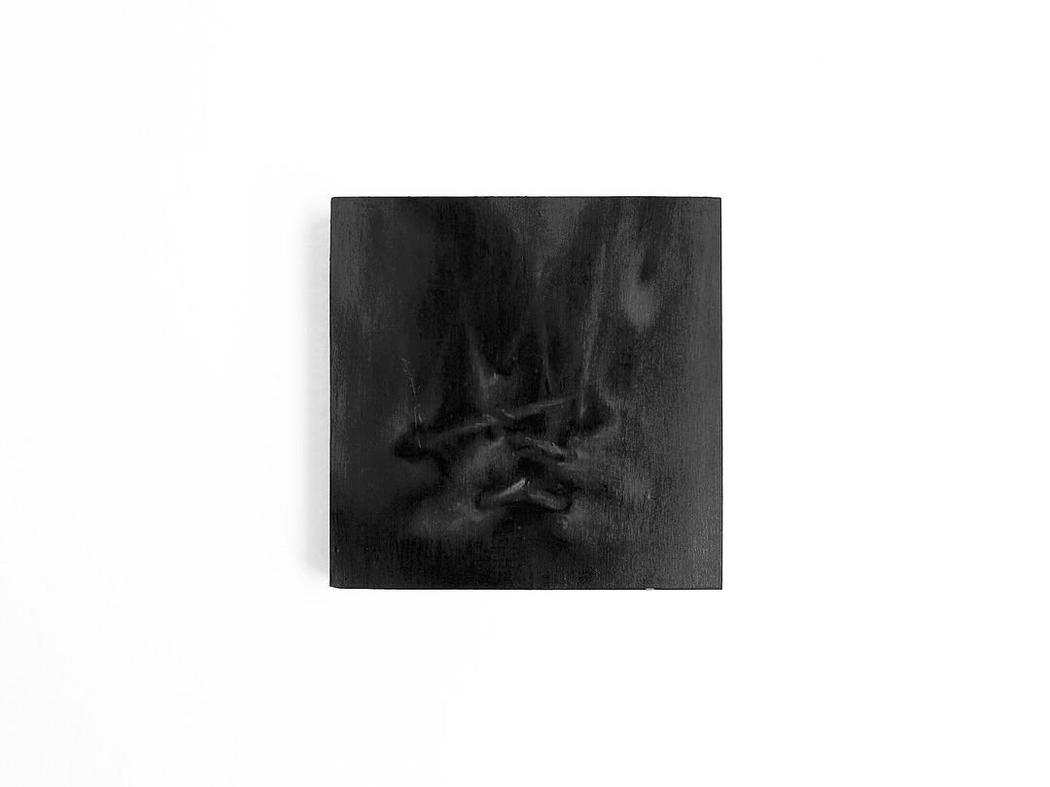 Daun Suh | Seeping Within Light | 2025
Your paintings often emerge from layers of darkness. Can you describe what “darkness” means to you — both visually and philosophically?
For me, “darkness” is not the absence of light, but a paradoxical form of light. It becomes a refuge that protects me by allowing a retreat from a world saturated with noise, crowds, and excessive brightness. Within it, seeing slows and perception sharpens.
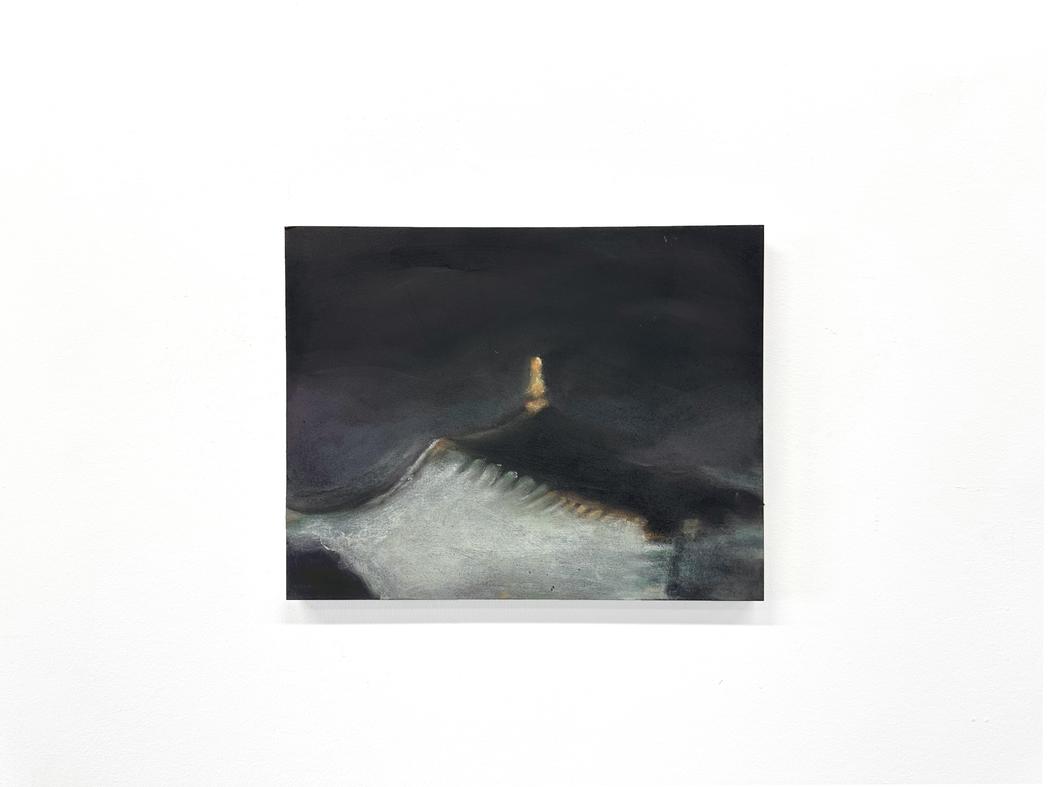 Daun Suh | Again, The Dawn | 2024
You wrote that “darkness is light.” How do you translate that paradox into your painting process?
I see darkness and light as complementary, which is why I define darkness as light.
In my paintings, darkness becomes the dominant structure rather than acting as a backdrop.
For the sake of clarity, I refer to the brighter areas as light.
As I paint darkness cast within light, or light seeping into darkness, I build up layers to modulate the boundary between the two. What matters most in this process is the subtle shifts in color and value that remain on the surface without overwhelming the subject.
When you begin a new work, do you start with a specific image or idea, or does it gradually reveal itself as you build the layers?
I often start with a clear idea or image, but as layers build, the image begins to dissolve and transform. Because of this, the subjects in my paintings are not always immediately recognizable. I’m drawn to this aspect of the process, as it closely reflects my philosophy of allowing meaning to remain in flux rather than fixed.
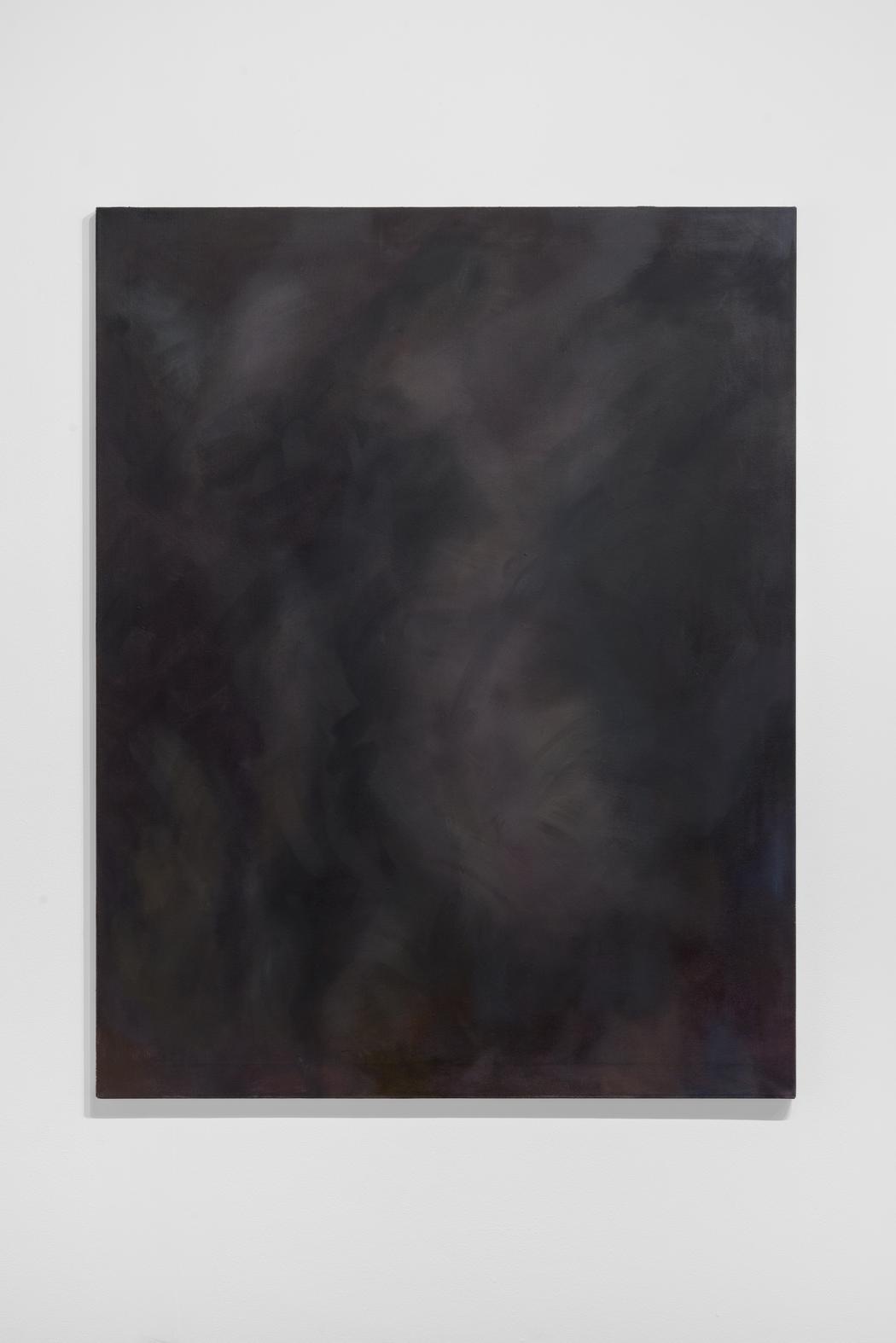 Daun Suh | Silent Thirst | 2025
The figures and landscapes in your works seem to appear and disappear, as if caught between existence and absence. What draws you to this threshold?
When I felt an aversion to the ambiguity of life and existence, heightened sensitivity only accelerated a sense of separation between the world and myself, the soul and the body.
Over time, I have gradually come to accept that there may be no clear or stable forms through which these conditions can be fully grasped.
The figures and landscapes in my work inhabit this uncertainty, responding to the possibility that existence itself may be incomplete.
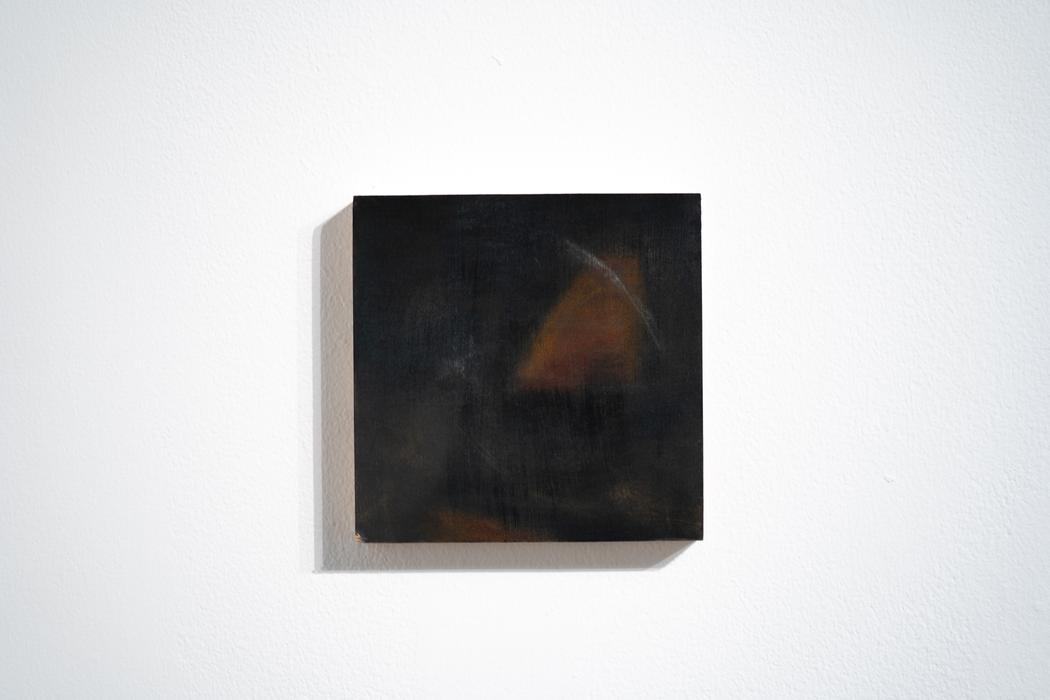 Daun Suh | Slanting Words | 2024
How do solitude and contemplation influence your creative rhythm?
Solitude and contemplation are indispensable conditions in both my life and my work. When I remain without solitude for an extended period, I begin to feel a sense of anxiety, as though I am losing myself. For this reason, writing and painting are not ways for me to resolve solitude, but rather ways of sustaining it through contemplation.
My work always begins in quiet. Only after external stimuli and noise have settled does concentration become possible, and it is then that sensations and thoughts slowly rise to the surface. This contemplative time naturally slows my creative rhythm, guiding the process away from immediate conclusions and toward gradual accumulation.
I believe painting is a deeply private language. Repeated experiences of wanting to understand the world, and to be understood by others, yet failing to do so, have extended my periods of solitude. Through contemplation, that solitude is translated into work. In this sense, the act of creation becomes a way of confronting myself by releasing what is inside me. That internal dialogue, once the work is placed into the world, expands into a silent dialogue with others.
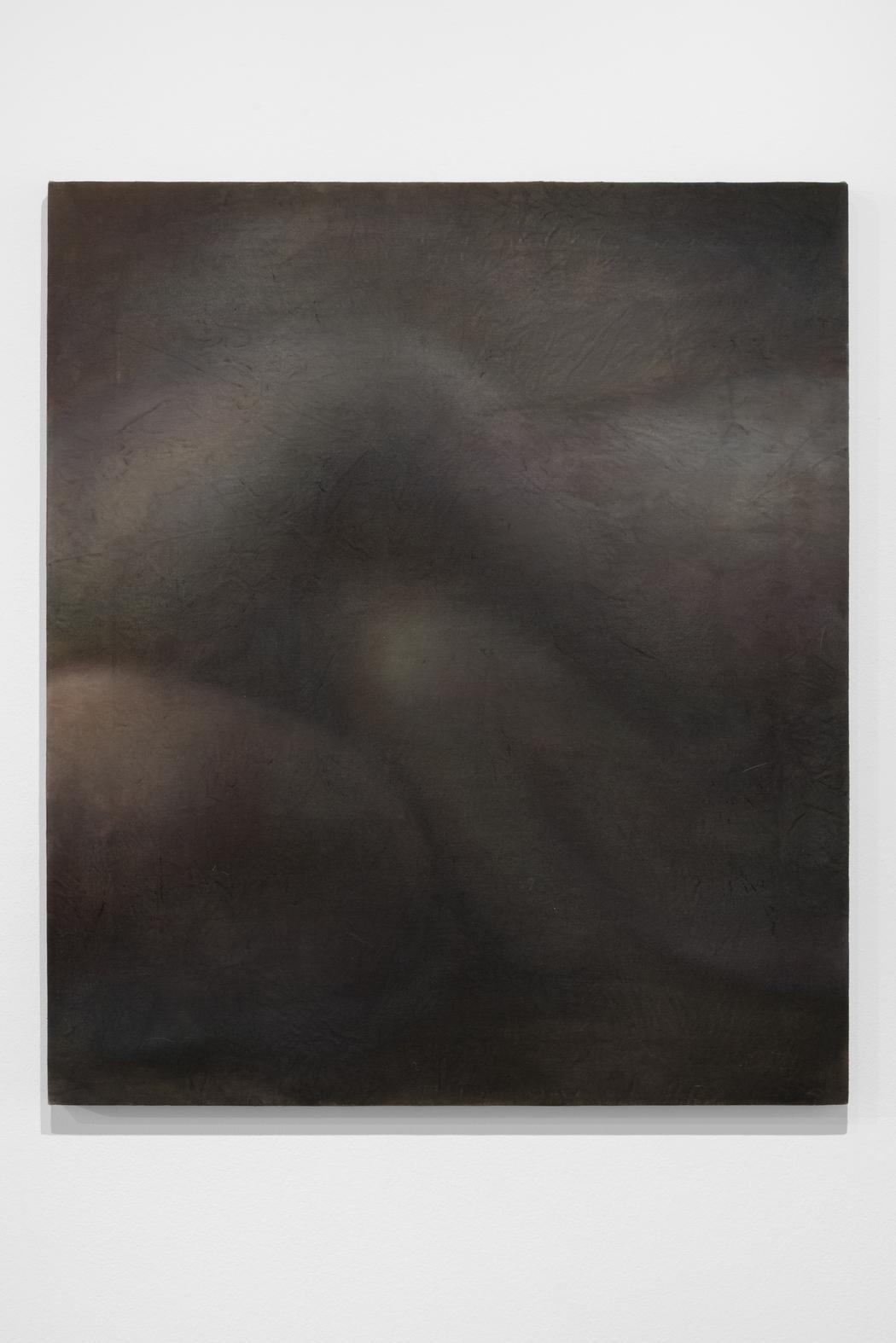 Daun Suh | Swelling Time | 2025
You’ve studied both in Seoul and Chicago. How have these two cultural environments shaped your artistic voice?
In contrast to Korea’s relatively homogeneous cultural environment, living in Chicago allowed me to encounter a wide range of personal narratives shaped by diverse racial and cultural backgrounds. When my advisors mentioned that there was something distinctly Korean in my work, I came to understand it as my own interpretation of han—a history of sorrow and accumulated emotion. What I once believed to be purely personal gradually revealed itself, after coming to the U.S., as a Korean story, and further, as an emotional language that could be shared across cultural boundaries.
This realization became especially tangible through my Scraping the Life series, which draws from my experience as a Korean woman and from narratives surrounding my mother. Hearing that many women felt resonance and emotional connection with the work was a moment in which I deeply sensed that sense of solidarity.
Finally, what do you hope viewers experience when standing in front of your paintings — a sense of calm, of mystery, or of something else entirely?
I don’t experience stillness as clarity. Even in silence, my mind remains tangled and unsettled. Perhaps for that reason, I hope viewers encounter a sense of mystery held within quiet rather than a passive calm. In the end, I want each viewer to arrive at their own emotions and interpret the painting through their own way of seeing.
Leave a Reply
You must be logged in to post a comment.