
Tom Zelger
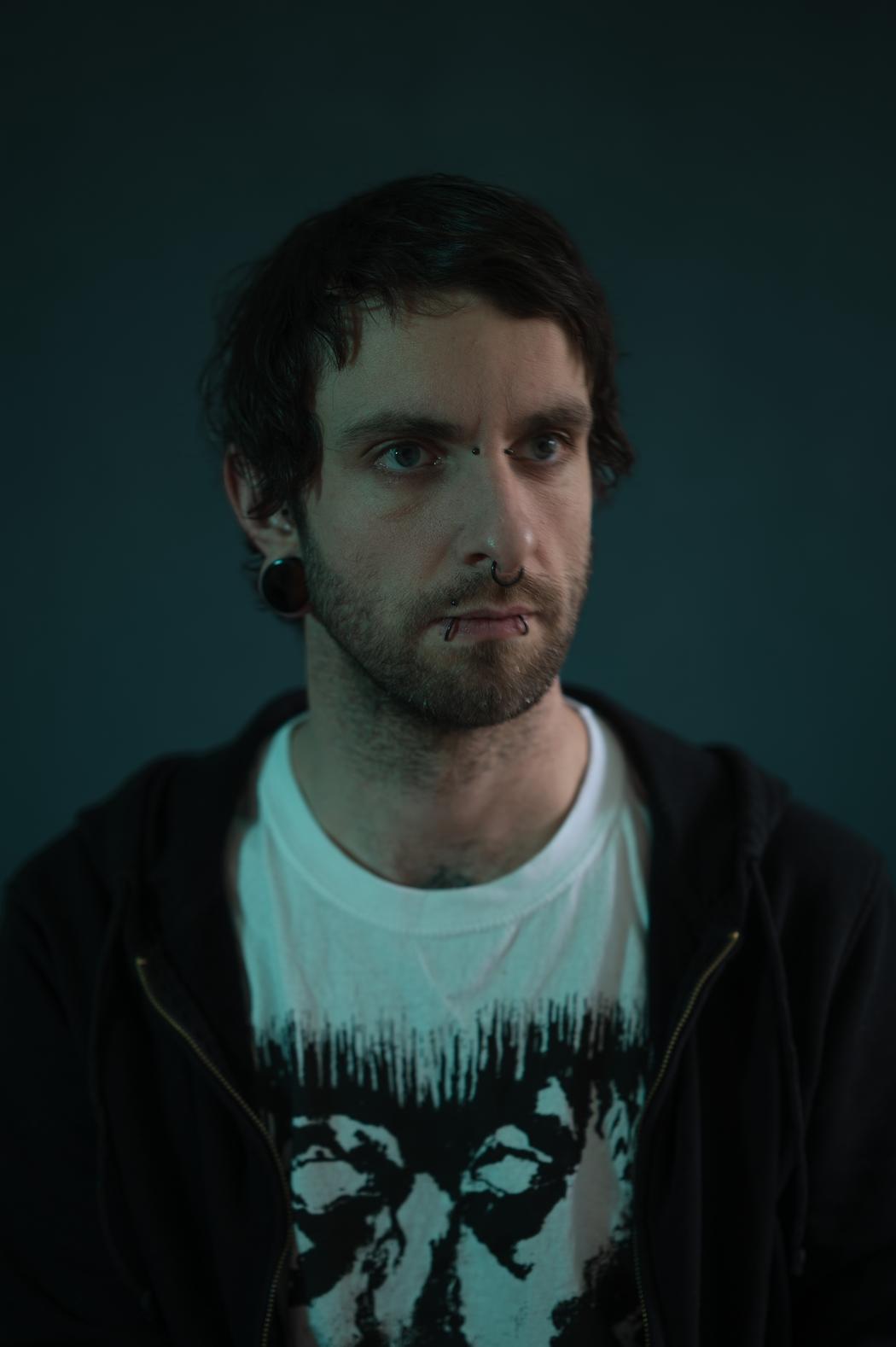
Your work frequently engages with social and ecological fragility. What initially drew you to these themes, and how have they evolved throughout your artistic practice?
I started from the conviction that objectivity is a utopia and that every choice, whether conscious or not, and every path we’re going is shaped by socialization and power. That awareness, together with a strong sense of ethics and justice, pushed me to make visible how human activity affects people and environments. Early encounters with state violence, shrinking habitats, and the marginalization of communities created a need to respond beyond documentation. At the same time I became critical of the rapid circulation of images, which often flattens complexity. That tension led me to develop methods in which meaning emerges through making itself.
Over time the practice moved from solitary documentation toward plural and participatory methods that emphasize vulnerability and interdependence. Collaborations with forest collectives in projects such as Burning Bridges and Emerging from Obscurity prompted a central question: how can a photograph carry the history of a place and the voices of those who live there? In practical terms I began inviting others to shape the work by suggesting sites, marking film or prints, and taking part in presentation decisions. I also introduced material processes that allow place to leave physical traces on film and paper, treating stains and abrasion as evidence rather than defects. What began as a personal response to loss has become a negotiated collective exploration that distributes power and responsibility among participants and sites.
 Tom Zelger | Trauma Project
Your images combine both analog and digital processes. What does each medium allow you to express that the other cannot?
I treat analog and digital processes as complementary because each offers capabilities the other cannot. Analog work – shooting on film, hand developing, and processing exposed film with soils, plant extracts or visual annotation by protagonists – invites unpredictability and lets people and place intervene materially. Emulsions can carry sediment, shifts in color, and chemical marks that register an encounter; these traces are part of the work’s meaning rather than mere texture.
Digital tools support different functions. After scanning, I use digital methods to organize sequences, integrate archival material, and ensure legibility across formats and audiences. Digital intervention is always modest and dialogical: edits serve translation and clarity rather than erasing the original materiality. In collaborative projects participants often engage in this stage too, discussing images, annotate captions, or suggest layouts so the final sequence reflects multiple perspectives. In short, analog embeds encounter and contingency into the object; digital enables that object to be read, shared, and co-curated across contexts.
 Tom Zelger | Trauma Project
Some of your works are transferred onto organic materials. How did this material experimentation begin, and what does working with natural surfaces add to your storytelling?
The move to print and transfer images onto organic substrates grew out of the same interest in letting place assert itself. I wanted to address clear cutting because this form of forestry is among the most destructive: it removes life above and below ground and regeneration can take decades. When I visited a recently clear cut site I noticed the countless remnants of trees that had stood there until recently and wanted to incorporate those fragments as historical testimony within the work. After exposing film to soils and plant extracts, it felt natural to carry that vulnerability into the print by using found wood and bark sourced from these sites. These substrates introduce grain, knots, and frayed fibers that become integral to the image. Cracks, stains, and warping are not damage to be concealed but layers to be read.
People’s perspectives and knowledge also play a vital role in selecting places and substrates. That shared decision making turns each object into a negotiated surface: a photograph intertwined with an element of an ecosystem and with human authorship. Conceptually the result is a double script, the photographic image and the material support, which asks the viewer to read both at once. Because the substrate can age or break down, the artwork enacts temporal vulnerability: it accumulates wear, changes form, or may even be returned to the ground. This gives the work a posture of care and accountability rather than permanence.
Your recent exhibitions span Sweden, South Korea, Italy, and Japan. How do different cultural contexts influence how your work is received or interpreted?
Each context brings a distinct frame of reference, and I welcome that plurality. The works are intentionally open ended so audiences in different places project their own histories and questions onto them. I do not prescribe a single reading; instead I try to create conditions for exchange, for example through co-curated talks, programs that include multiple local voices, and exhibition materials that invite response.
Practically, these strategies decentralize interpretive power and surface local priorities, which often reveal overlapping concerns such as non-human agency, stewardship, and diverse understandings of land and memory. Variation in reception is an asset: it shows that an image can participate in multiple knowledge systems and that meaning is produced collectively rather than delivered top down.
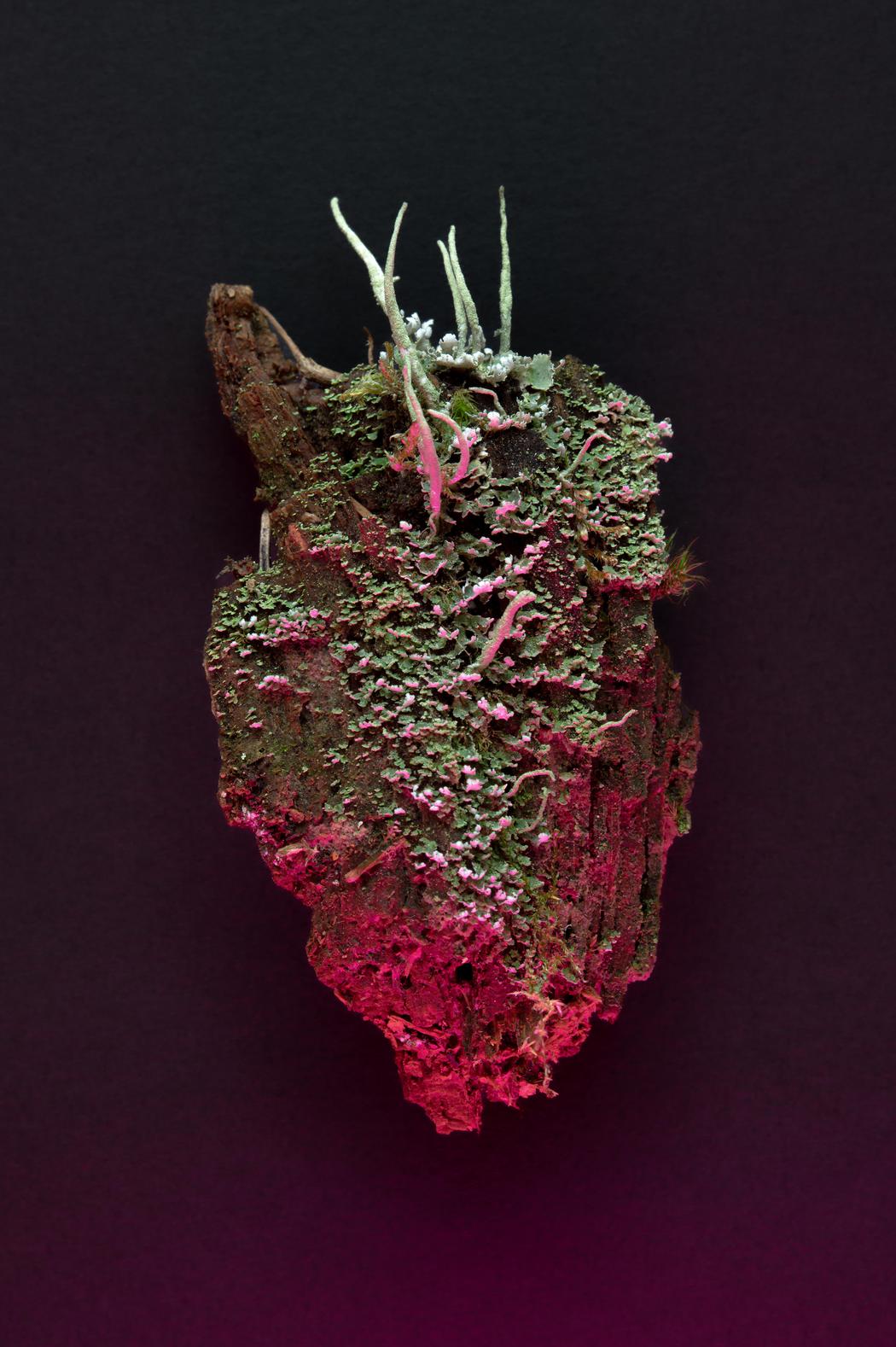 Tom Zelger | Heart
Your photographs often feel both abstract and political. How do you balance aesthetic experimentation with critical commentary?
Aesthetic experiment is itself a political stance. Formal choices, such as blurs, torn edges, shifts in color or partial framing are used to decenter dominant viewing habits and to unsettle the assumption of a single authoritative gaze. By disrupting legibility I ask viewers to slow down, question expectations, and attend to absences as well as presences.
At the same time the materiality of the work carries concrete information. Chemical stains, sediment, and physical alteration point to specific interactions between industry, communities, and ecosystems. I aim to merge formal ambiguity with evidentiary detail so aesthetic choices amplify rather than obscure context. Collaborative editing and presentation practices help keep this balance honest: when participants contribute to selection and display, the work is less likely to become a purely stylistic gesture. The result is work in which abstraction invites reflection and material evidence directs that reflection toward concrete issues.
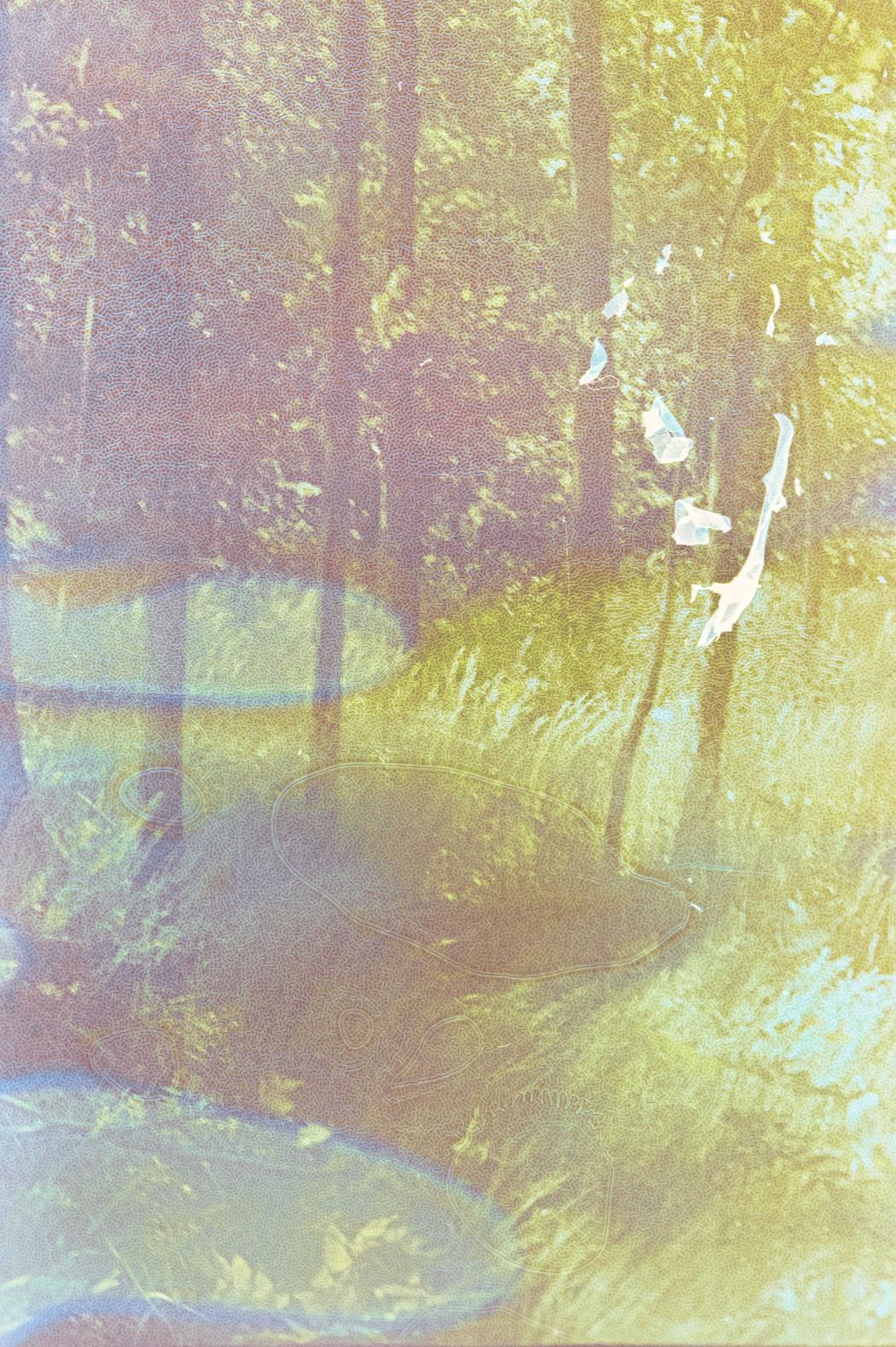 Tom Zelger | Emerging From Obscurity
Environmental questions appear deeply embedded in your practice. Do you see art as a tool for ecological awareness or even activism?
I regard the work primarily as a form of ecological awareness that creates space for civic engagement rather than functioning as straightforward propaganda. My methods – exposing film to place, collaborating with local knowledge holders and community members who are emotionally connected to the sites and topics, and producing objects that visibly carry traces of impact – are intended to prompt responsibility and open pathways for dialogue. In this sense the practice has activist potential, but it is a multi-layered activism grounded in relationship building: reflection, shared making, public conversations, and collaborative exhibitions that foreground local concerns and practical approaches to care.
This is a gentle activism rooted in attentiveness and co-responsibility. The work seeks to shift perception and feeling, creating moments in which people can reflect together on contamination, repair, and stewardship. Where appropriate I work with local groups to ensure that exhibitions, texts, and public programs reflect their priorities rather than only my interpretation. Ultimately art can change how people perceive and relate to complex issues, and by distributing authority and creating participatory settings the work encourages collective rather than prescriptive forms of action.
 Tom Zelger | Trauma Project
Working across Europe, how does constant movement and shifting environments shape your creative thinking?
Working in different places is foundational because each site contributes distinct materials, histories, and collaborators. Travel has taught me to treat projects as situated inquiries rather than prepackaged statements: I spend time listening, walking, and learning from people on the ground before deciding on methods or materials. That deliberate slowness is a practical discipline of border thinking, positioning the project at an edge where multiple knowledges meet.
Mobility also reinforces plural methods. Each context requires its own forms of dialogue and negotiation, and approaches are continually adapted to regional, personal, and ecological realities. The cumulative effect is a practice that learns by comparison, values marginal perspectives, and remains open to being redirected by the people and places I work with.
Leave a Reply
You must be logged in to post a comment.