
Mackenzie Browning

Your installation Meander is deeply rooted in slow, patient handwork. What does slowness mean to you as an artist, and how does it shape your process?
Slowness is the foundation of my studio practice. It is a meditative space where I train my mind to become centred, focused, and receptive. The repetitive actions of cutting, arranging, and layering hundreds of CMYK screen prints allow me to settle into a rhythm where I can listen closely to my intuition. Slowness helps me notice shifts in colour, quiet textures, and emotional cues that might be missed at a faster pace. It is where clarity shows up. When people encounter the installation, I hope they feel the calm and presence that this process builds over time.
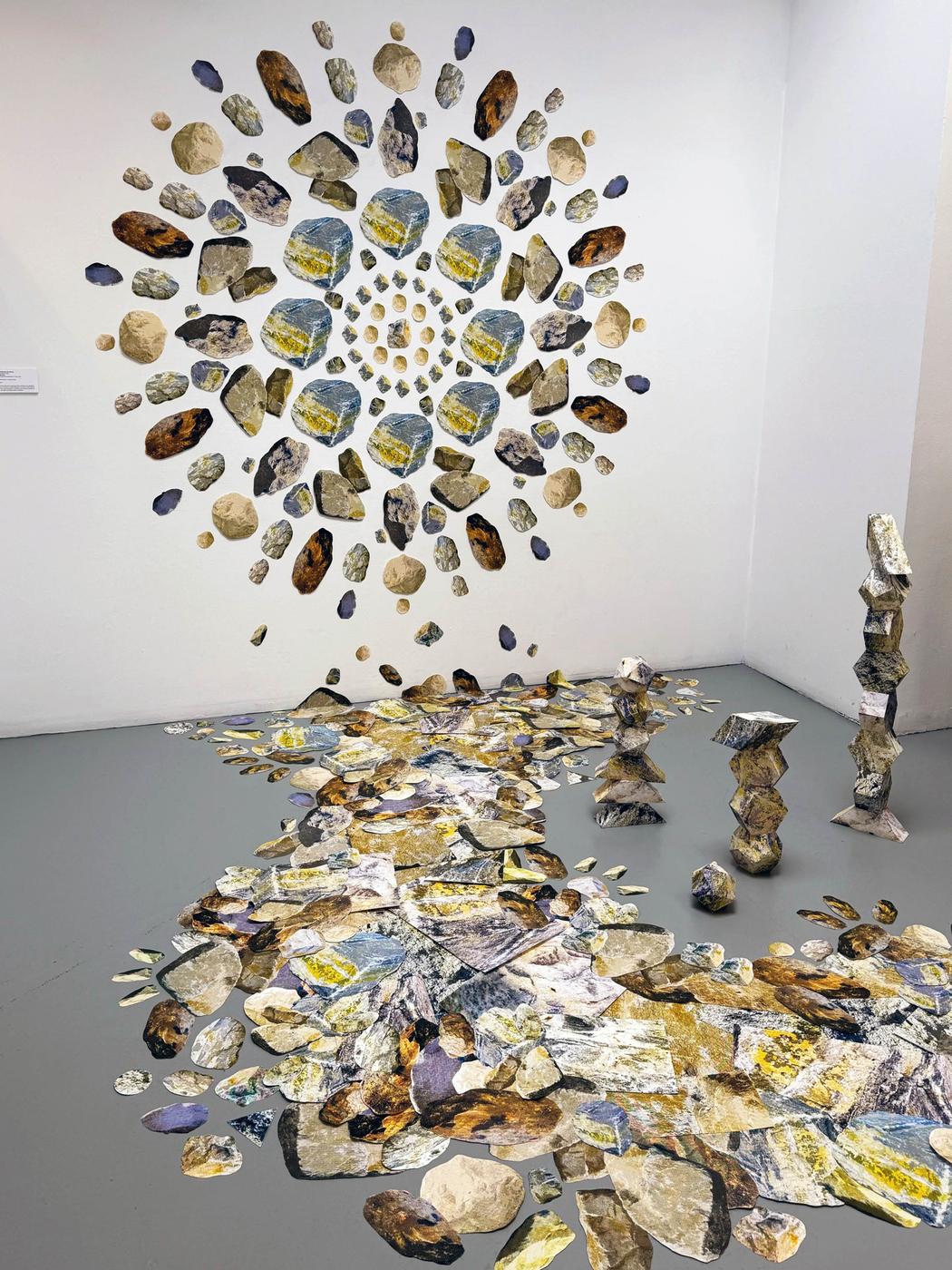 Mackenzie Browning | Wall Transition Detail | 2024
You often work with recycled and repurposed materials. How does material sustainability influence your creative decisions?
Paper has an ephemeral quality that I return to often. I work with recycled cardstocks, repurposed cotton papers, older prints, and offcuts. These materials carry evidence of their past lives and reflect the cyclical movement of nature. Growth, breakage, renewal. Sustainability in my practice is both conceptual and practical. By using recycled and repurposed materials I acknowledge the life of a sheet of paper and its ongoing transformation. The work becomes connected to natural cycles and to the landscapes that influence my thinking. It becomes a living material history.
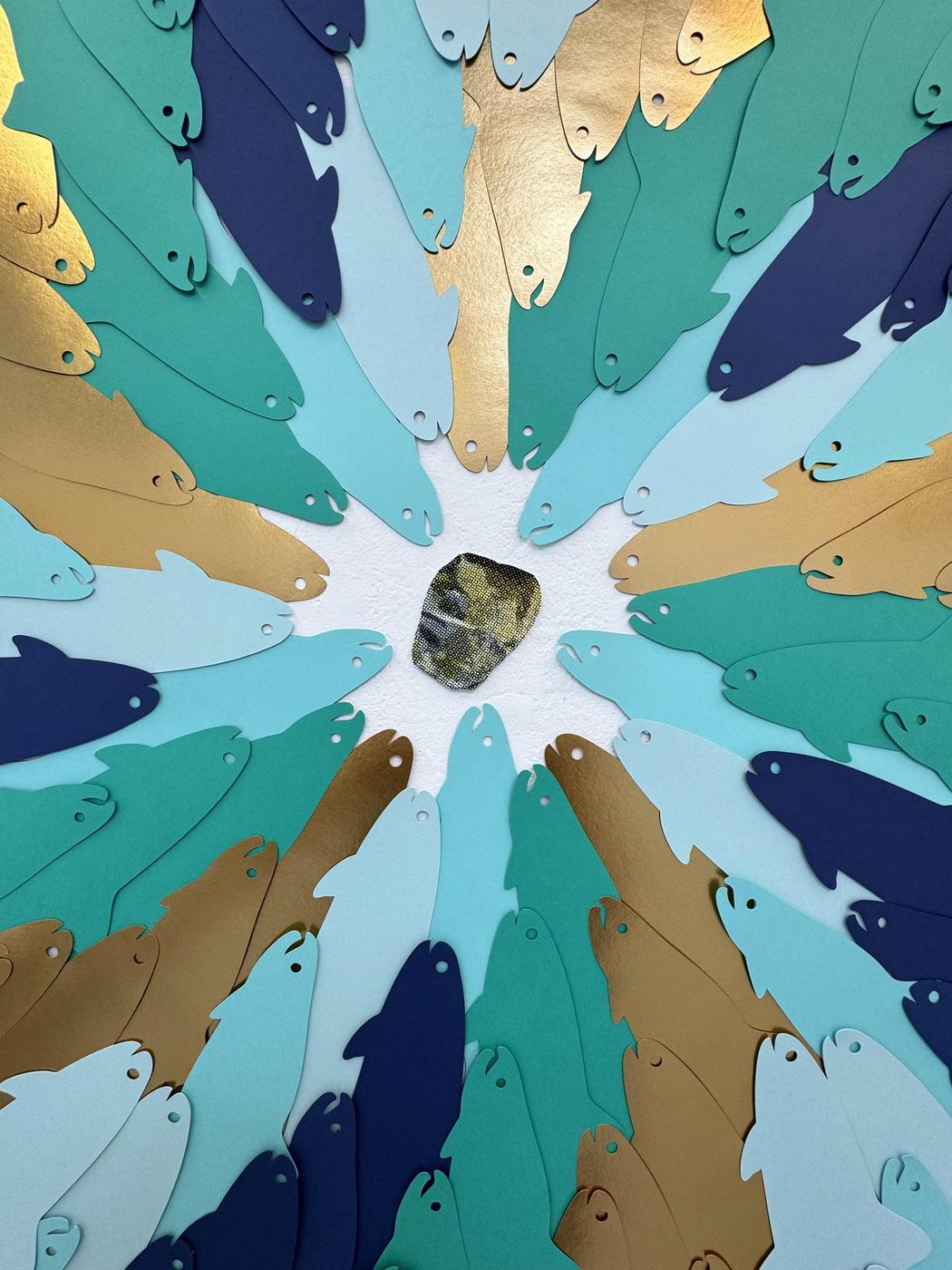 Mackenzie Browning | Radial Form | 2024
The stones in Meander were inspired by your hikes in Banff. What drew you to these forms, and what did you observe in them that informed the project?
My time in Banff was shaped by hiking. Those longer, slower routes allowed me to study the stones along riverbeds and trails with real attention. When you slow down, the colours and luminosity within these forms begin to reveal themselves. Soft mineral shifts. Unexpected pinks and greens. Surfaces that catch and hold light in subtle ways. Seeing these features takes a keen eye and a patient pace. Translating the stones through CMYK layers allowed me to amplify their natural glow and bring forward delicate tonalities that are easy to overlook. They became metaphors for resilience and for the beauty that reveals itself only through careful attention. Their rounded, weathered shapes naturally lent themselves to ideas of pathways that shift and reconnect, and these visual cues guided the conceptual direction of Meander.
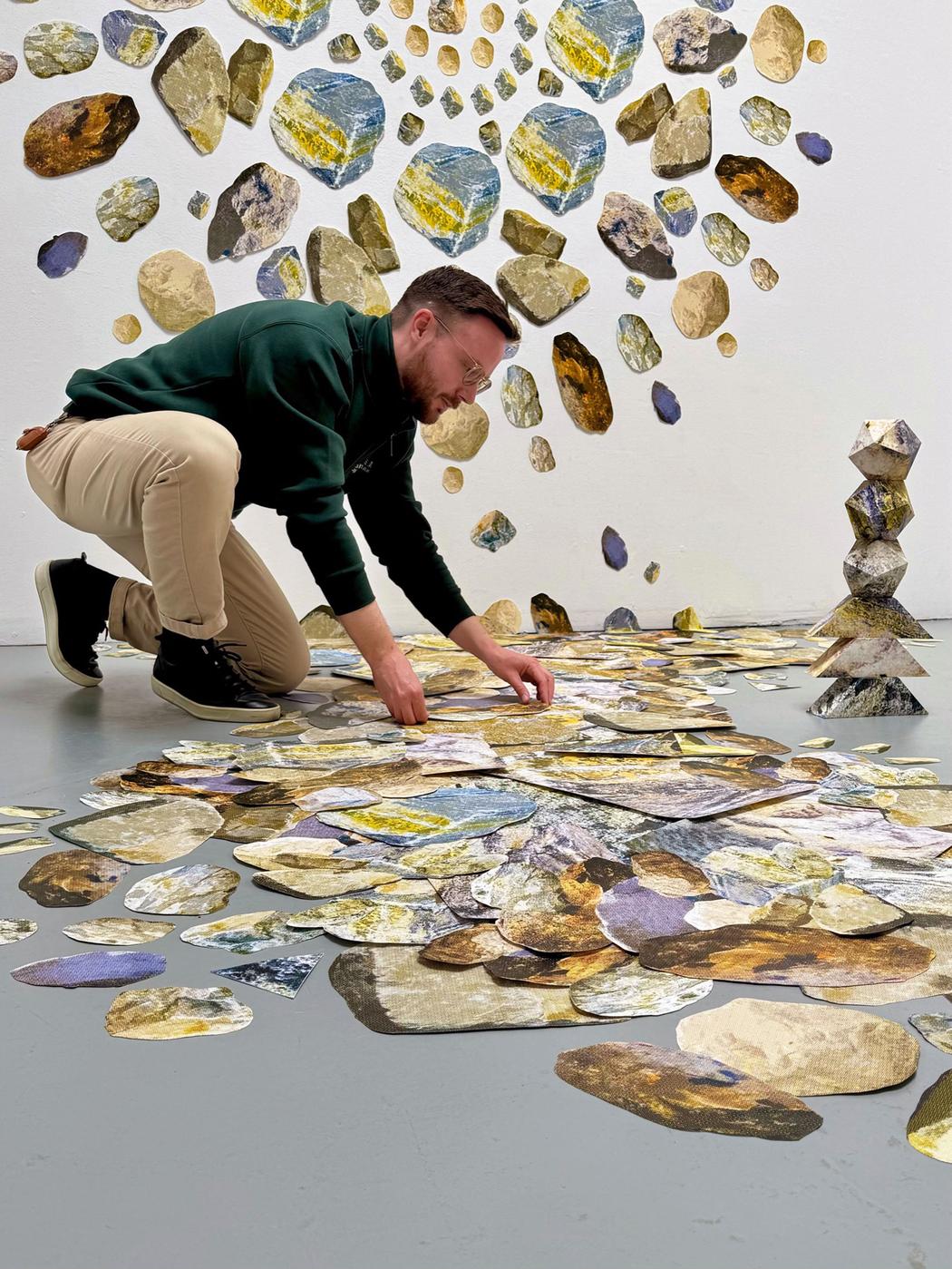 Mackenzie Browning | Process View | 2024
The installation shifts between wall and floor, creating a sense of movement. How do you think viewers’ bodies and perspectives shape their experience of this work?
The viewer’s movement is essential to the installation. The two circular forms on the walls act as anchors at each end of the space and the stones on the floor create a path that flows between them. As people move around the work they become aware of their own pace, balance, and presence in the room. I want the installation to feel like an encounter, almost like entering a symbolic landscape. Their shifting perspective changes what the piece reveals and this dynamic exchange is something I value. It mirrors the way the work was created through movement, observation, and slow accumulation.
You describe the work as reflecting non linear pathways of creative discovery. Can you share a moment during the residency when the direction of the project shifted unexpectedly?
Non linear discovery is at the heart of how I work. I usually enter a project with a plan that is about sixty percent formed and I intentionally leave the remaining forty percent open. That openness gives the work space to speak back. I listen closely to my inner dialogue and to the quiet cues that emerge throughout the day.
During my residency at the Banff Centre for Arts and Creativity there was a moment when the project revealed its own direction. I had placed a group of printed stones on the floor simply to clear space. As I moved around them it felt as if they were calling to climb upward and connect to the circular forms on the walls. That intuitive pull changed the entire project.
The pieces began to behave like a living system. They folded, climbed, and formed portals. Through daily action the work guided me toward a more expansive and immersive direction. This is how my strongest ideas emerge. It is a conversation between structure and intuition and a willingness to follow what feels true.
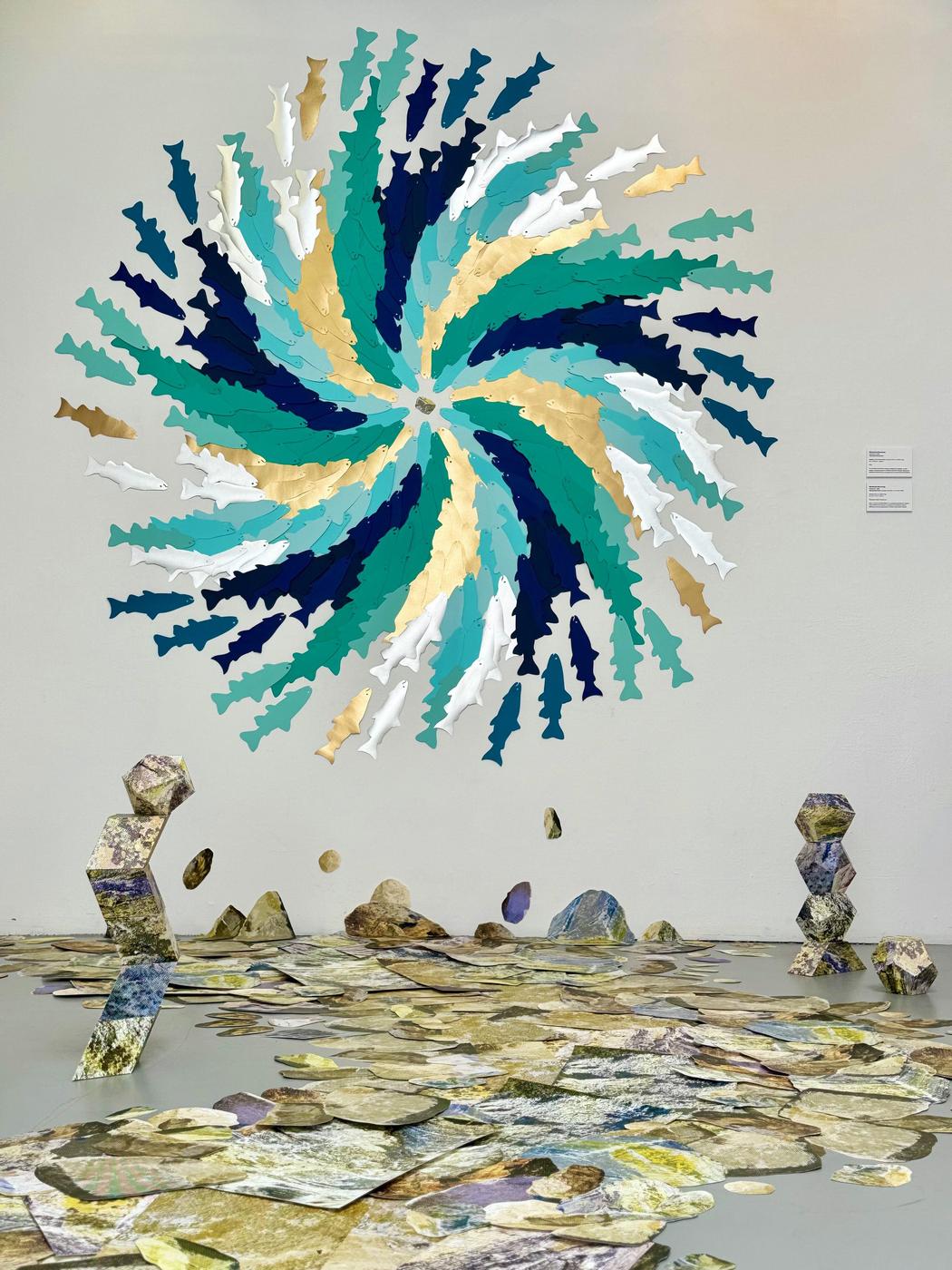 Mackenzie Browning | Installation View Alt | 2024
Walking and physical movement seem essential to this project. How does being in a landscape influence the way you compose and arrange your pieces?
Movement is essential to how I think. Hiking shaped the rhythm of my days in Banff. The act of climbing, pausing, taking in the view, and adjusting to terrain stays in my body long after I leave the trail. When I return to the studio I arrange the printed stones through similar gestures. I pace around the work, crouch down, shift my position, and respond physically to what is unfolding. The installation reflects the way a trail narrows, widens, and reveals new perspectives. The landscape becomes part of the work through these repeated movements and the memory of being in both the mountains and southern Ontario’s trails.
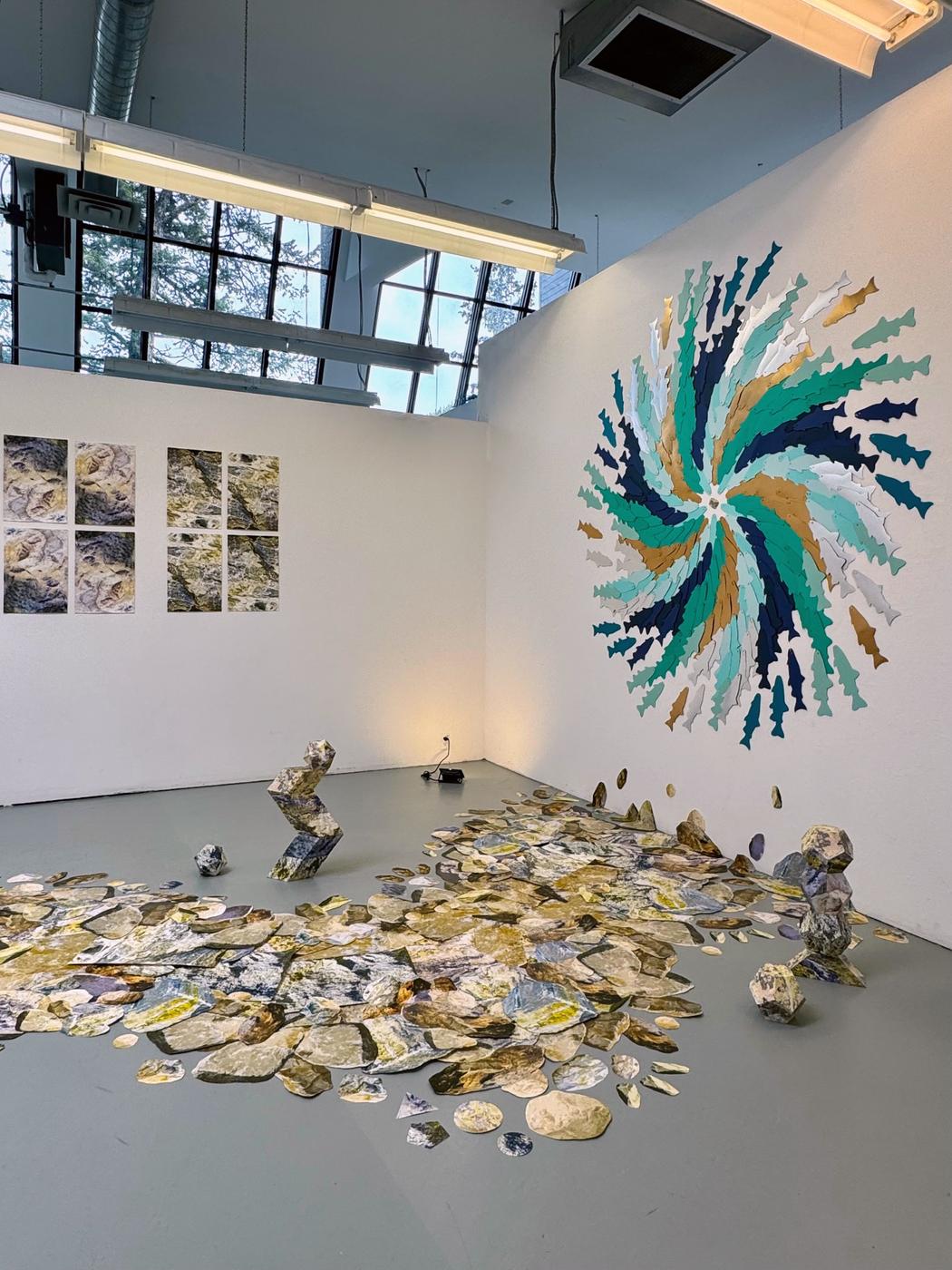 Mackenzie Browning | Installation View | 2024
Your work blurs the line between printmaking, sculpture, and installation. How do you see these disciplines interacting in your practice?
Printmaking is my starting point for everything. The CMYK layers build the depth and luminosity of the stones. Once the prints enter the space they begin to behave sculpturally. They shift between image and object and they activate the room around them. I am interested in how print can leave the frame, move across the wall, slip onto the floor, and function like temporary architecture. In Meander the printed stones act like a landscape that viewers move through. This expanded field of printmaking feels aligned with current conversations in contemporary art where disciplines flow into one another. I want my work to contribute meaningfully to that dialogue.
Leave a Reply
You must be logged in to post a comment.