
Nana Said
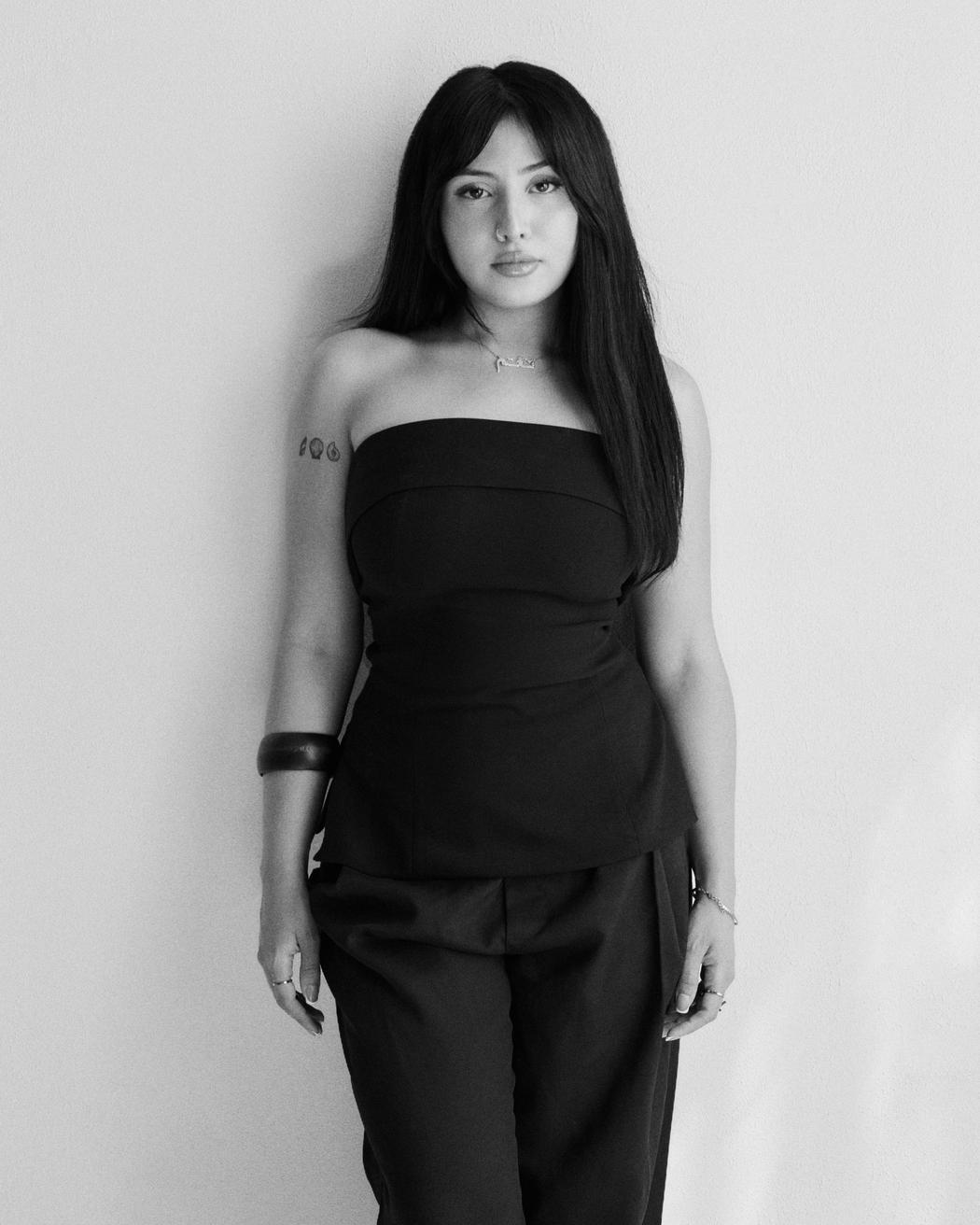
You grew up between Saudi Arabia and Alexandria – how did these contrasting environments shape your earliest sensitivities to aesthetics, atmosphere, and visual culture?
Growing up in both Saudi Arabia and Alexandria meant living in two very different places. In Al-Madinah, I spent most of my time indoors, where everything was quiet, spacious, and simple. That calm made me notice small things, like how light changed on the walls, repeating patterns, and the quiet of empty streets. Alexandria was the opposite: busy, colorful, noisy, and full of visual details. Experiencing both places, one calm and the other lively, taught me to notice mood, materials, and atmosphere long before I knew it was called design.
Looking back at your childhood, when did you first realize that observing, organizing, and sketching weren’t just habits, but early forms of design thinking?
I didn’t realize those habits were part of design thinking until much later. In college, when I first learned about design thinking (the idea of observing, organizing, and shaping meaning with intention) it finally clicked. I saw that I had already been doing these things as a child:
rearranging supermarket shelves when the spacing felt off, redesigning book covers in my notebooks, and sketching imaginary brands. What I thought were just personal quirks were actually early signs of the same instincts I use now. College gave me the words for it, but my childhood showed me I had been practicing all along.
 Nana Said | My Aroma Story–Stories
What made you choose graphic design over other creative disciplines like architecture, fashion, or interior design, and how did that clarity emerge?
I realized all those fields collaborate closely with graphic designers. Choosing graphic design meant I could touch many disciplines instead of being limited to one.
Graphic design felt like the one discipline where I didn’t have to choose between structure and emotion. Architecture felt too rigid, fashion too anchored to the body, interiors too tied to physical space, but graphic design let me move fluidly between systems and sentiment, concept and craft. It gave me a way to build worlds, stories, and atmospheres without being confined to one material or scale.
When you moved to the United States, visual communication became a new language for you—how did that experience transform the way you think about design, culture, and storytelling?
When I moved to the U.S., I noticed how emotions are expressed differently in each language. In Arabic, especially with all the dialects I grew up around, there are everyday words that capture feelings English doesn’t have: to’borni (literally “bury me,” meaning I love you so much I’d rather die before I ever lose you), hanan (tenderness), wahsha (the ache of missing someone), and tehawen (a natural ease with someone).
In conversations here, I often reached for feelings I couldn’t translate, and that gap made me rethink how I communicate. I began to understand visual language as a bridge; something that could carry tone and complexity when words fell short.
It shifted my mindset: I didn’t just want to design; I wanted to create visuals that make people feel something, even without shared vocabulary
 Nana Said | My Aroma Story–Stack
Aroma Story translates identity into scent, narrative, material, and form – what sparked the idea of telling your story through fragrances rather than traditional visual media?
What drew me to fragrance was how it connects something universal with something deeply personal. Everyone knows the feeling of smelling chlorine and suddenly remembering childhood summers at the pool, or catching a perfume that instantly brings someone to mind. Scent moves you in a way no visual medium can. It’s immediate, emotional, and completely involuntary.
At the same time, incense is a very specific part of my culture and upbringing. In Egypt and across the Arab world, burning incense is linked to ritual, cleansing, gathering, and protection. Every Friday, our home was filled with its warm smoke. This small but steady ritual shaped the atmosphere of my childhood. Those scents became emotional markers for home, safety, and tradition.
Aroma Story became a way to merge these two realities: the universal power of scent to trigger memory, and the cultural significance that fragrance holds in my life. Instead of illustrating my story visually, I wanted people to experience it as I do, through a scent that brings back an entire moment or feeling. It felt like the most honest way to translate something personal into a form others could feel for themselves.
 Nana Said | My Aroma Story–Art Direction
Each incense box carries its own geography, memory, and emotion – how did you approach choosing the scents, illustrations, colors, and bilingual typography to reflect those personal traits?
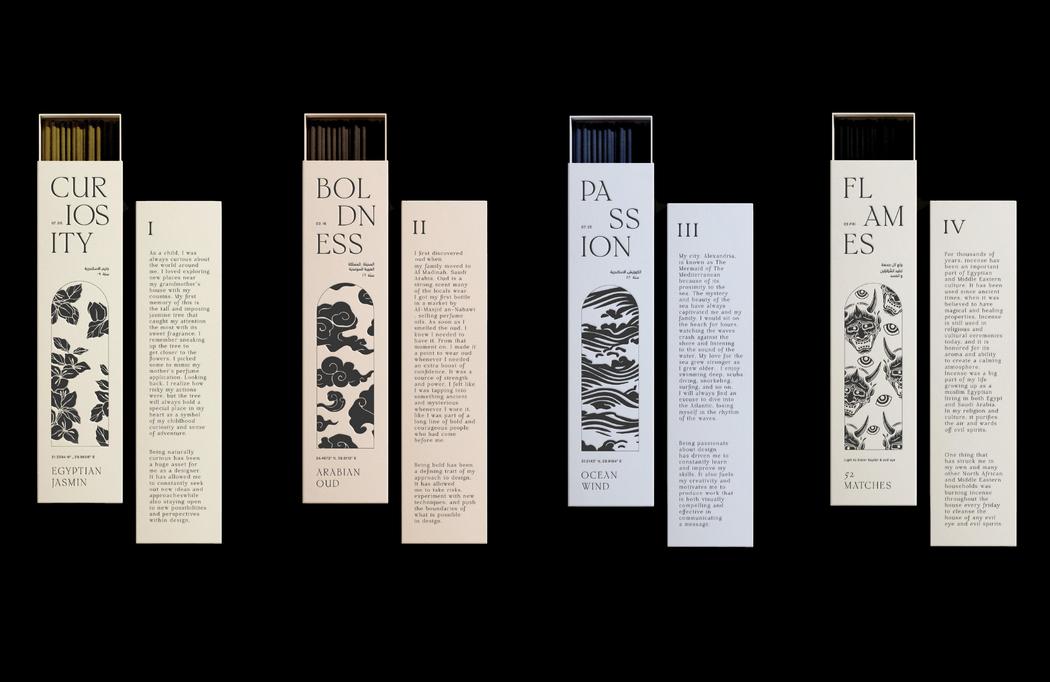
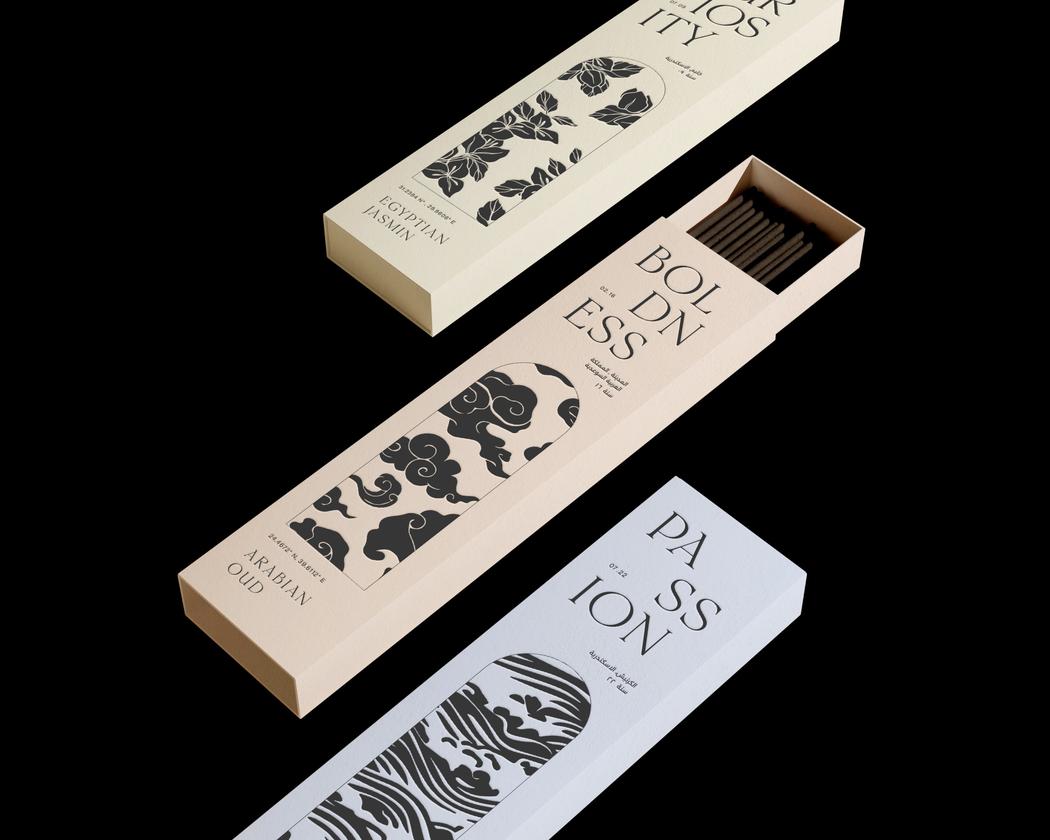
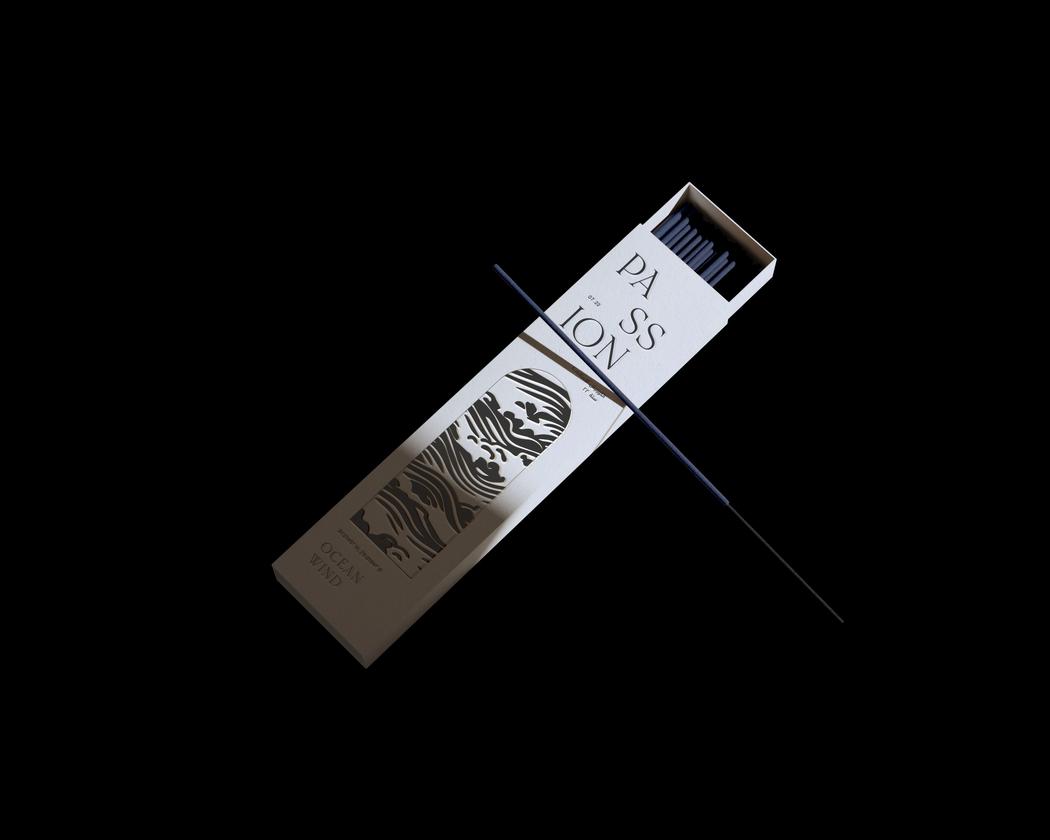
Each scent in Aroma Story wasn’t chosen conceptually; it was the fragrance actually present when each trait emerged. Jasmine surrounded my earliest moments of curiosity, oud marked the period when boldness first formed, the ocean wind reflects the passion and clarity I feel near water, and incense connects to the rituals that shaped my sense of protection. The back of each box explains how each scent ties to a real memory.
Typography acts as a bridge between the past and the present. These traits were formed in Arabic-speaking countries, so Arabic represents the voice of the person who lived those moments. English represents the designer I am now, interpreting them through form. Bringing the two languages together allows the two selves to coexist and acknowledges their continuity.
The illustrations are reduced motifs that provide the visual cues that complete each narrative.
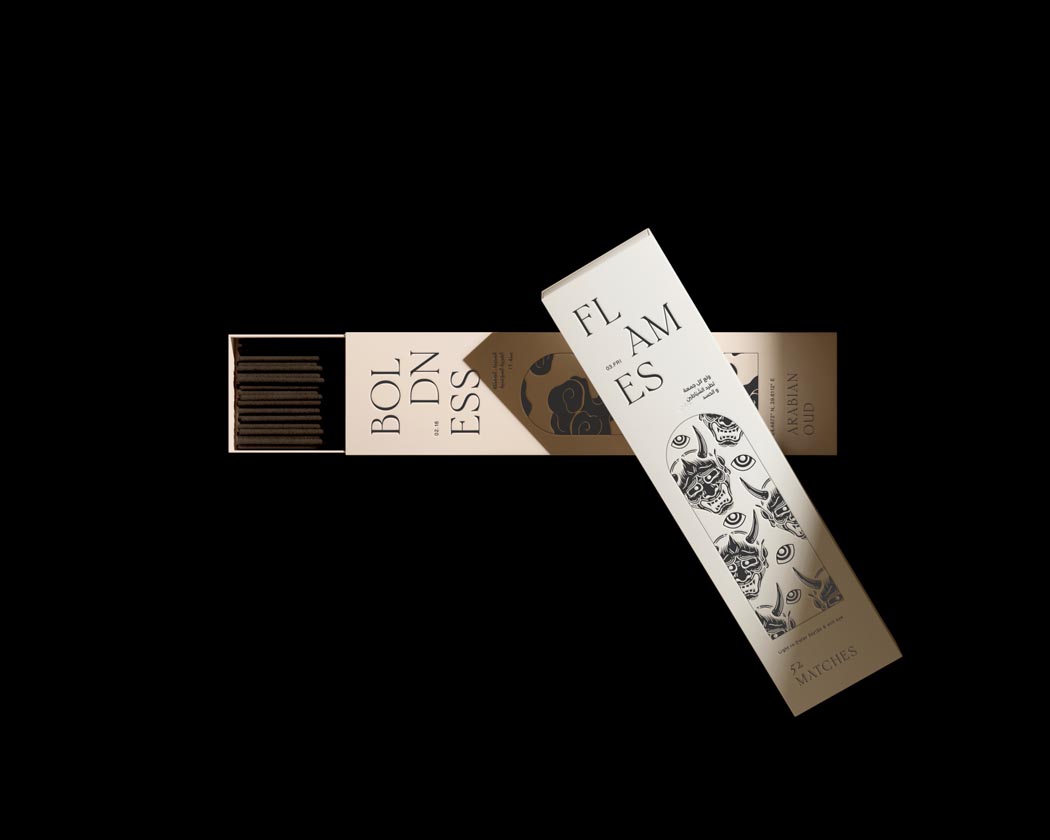 Nana Said | My Aroma Story–Art Direction
As you continue working in New York and evolving your practice, what kinds of stories, collaborations, or creative directions do you hope to explore next?
I’m drawn to collaborations where design becomes an extension of someone’s inner world. I want to art direct and build brands for artists and cultural practitioners who want a part of themselves embedded in the work, projects where identity and emotion lead the visual system. I’m also deeply interested in branding exhibitions and cultural spaces, where narrative, atmosphere, and material choices shape how people physically experience a story.
More broadly, I hope to explore creative directions that blur disciplines. Ultimately, I want to build work that feels both conceptual and deeply human.
Leave a Reply
You must be logged in to post a comment.