
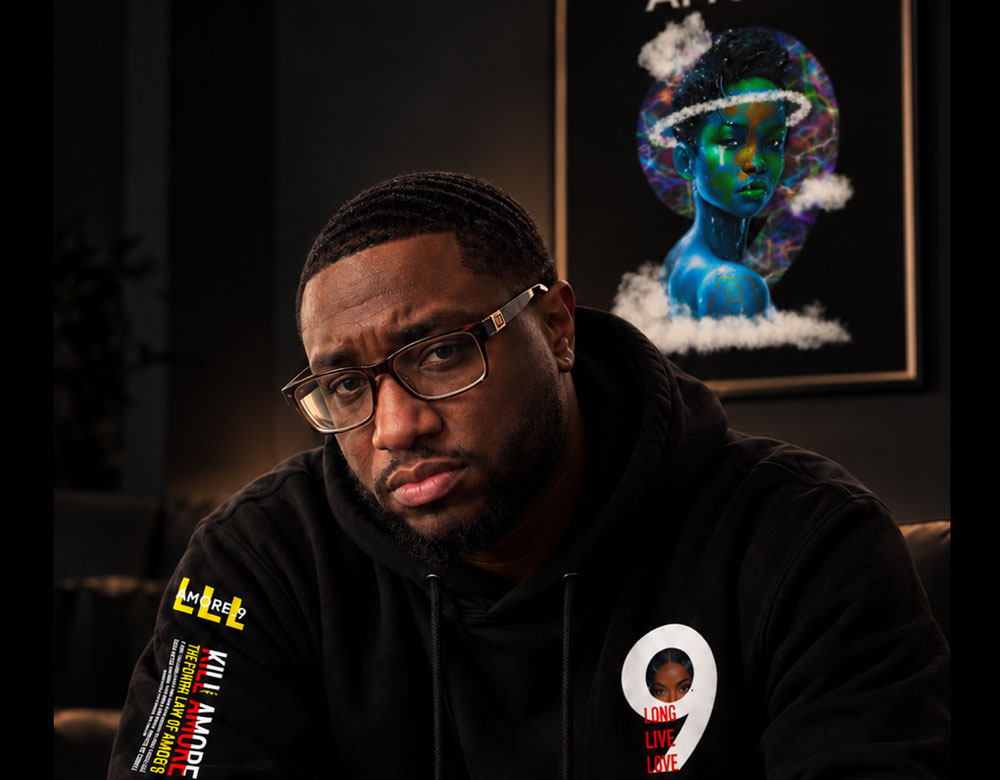
Marcus Mundy
What inspired you to create Amore 9 in 2023, and when did you first realize that clothing could become a form of personal storytelling?
My relationship with art began long before Amore 9 existed. As a child, I loved drawing my favorite cartoon characters, but recreating them was never enough. I wanted to give them something different, something uniquely mine. Every drawing needed a personality, a purpose, or a story beyond what someone could see.
One of my earliest inspirations was my mother. I remember discovering an old sketchbook filled with dresses and clothing designs she had imagined when she was younger. She would sit with us and share her creations. Those moments stayed with me.
I was even offered an opportunity to attend an art school during my younger years, but unfortunately, the tuition was beyond what my family could afford. Still, my passion never disappeared. I continued drawing, writing poetry, exploring design, and imagining what I could create.
After serving in the military, I began pursuing entrepreneurship through business courses, mentorship, and personal experience. Interestingly, one of my favorite parts of building my first business was designing its website and creating the visual experience. I loved bringing an idea to life.
Throughout my life, art had also been my refuge during difficult emotional periods. Eventually, I found myself returning to it while navigating another chapter of heartbreak and personal challenges.
That’s when I began asking myself whether these stories could become something more.
In 2023, Amore 9 was born from that question.
I wanted complete creative freedom to tell stories through something people could actually wear. Not simply clothing decorated with artwork, but artwork that could become part of someone’s identity and everyday experiences.
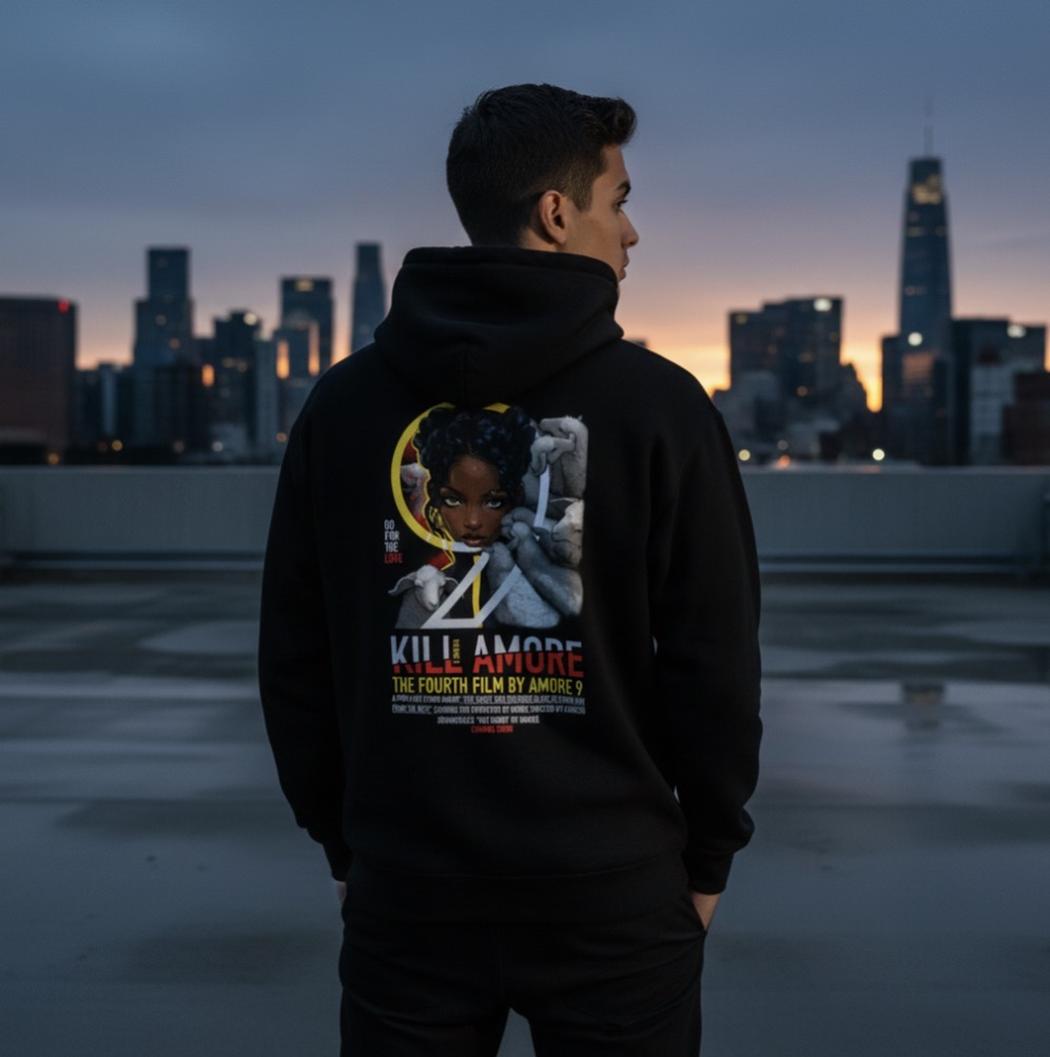 Marcus Mundy | Kill Amore
How has your background and life experience influenced the themes of love, vulnerability, identity, and self-worth that appear throughout your work?
I grew up in an environment where love wasn’t always easy to experience or express. Poverty, crime, drugs, violence, injustice, and broken relationships affected the community around me. These weren’t distant issues. They influenced people’s homes, relationships, and understanding of themselves.
There was love in my upbringing, particularly through the sacrifices and responsibilities my parents carried, but open affection wasn’t something we practiced frequently. In our environment, showing vulnerability could be mistaken for weakness, and weakness could make you a target.
I learned early that not every emotion felt safe to express.
Art and poetry became places where I could release those feelings without judgment. But I also developed an extraordinary desire to experience love and give it to others.
I became someone willing to give my time, energy, and sometimes my last dollar simply because I understood what it meant to need kindness.
Eventually, I learned something painful: people can become so accustomed to receiving your love that they forget you need it, too. They assume your generosity comes from an endless supply rather than recognizing that you may be searching for the very thing you’re giving away.
Those experiences shaped my understanding of vulnerability, identity, and self-worth.
They also taught me that remaining loving in a world that doesn’t always return that love requires tremendous courage.
I bring that understanding into my artwork. I want to explore the emotions people carry beneath their confidence, their beauty, their anger, and even their silence.
Because sometimes the things we struggle to express are the things that connect us most deeply.
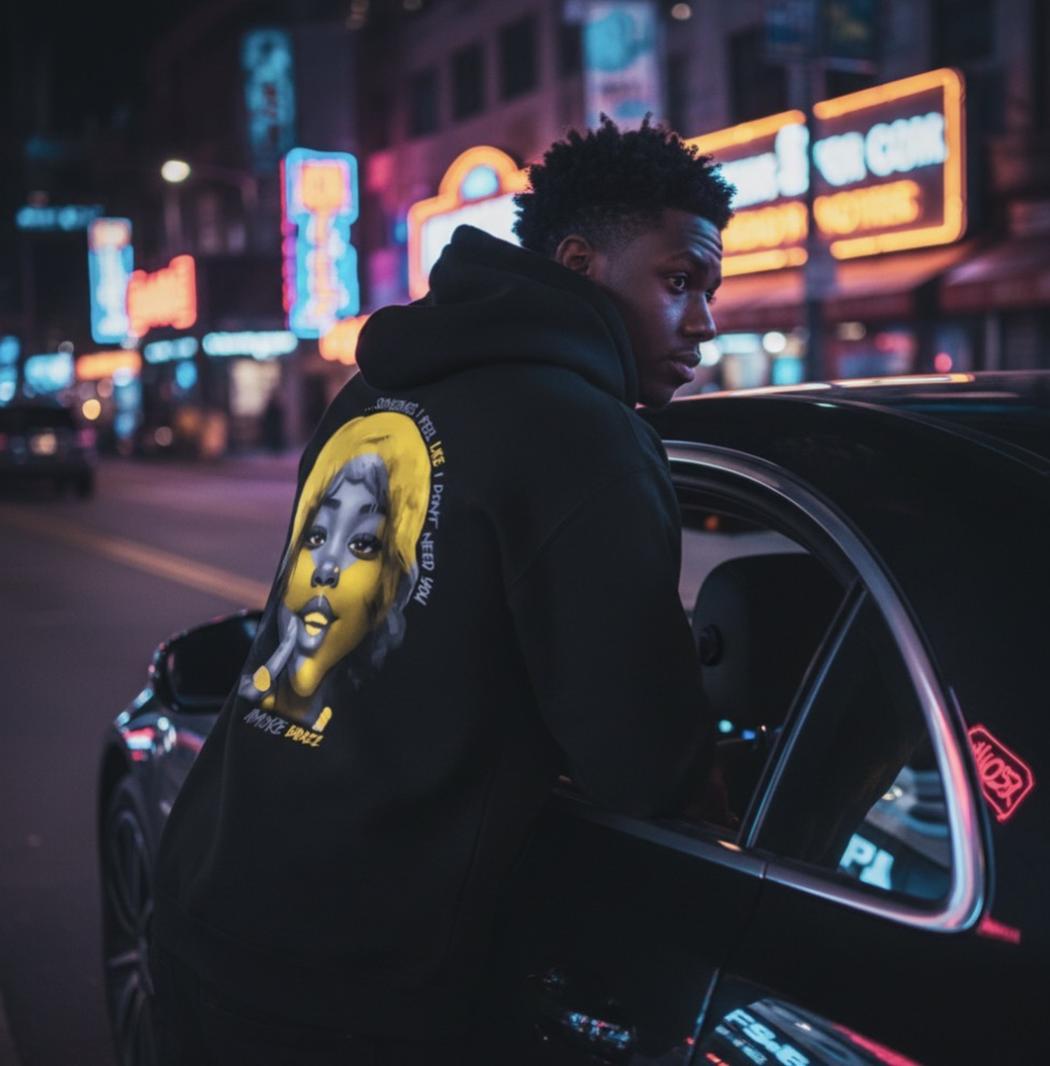 Marcus Mundy | I Need Amore
Why did you choose streetwear as the main medium for expressing emotional and often deeply personal ideas?
Streetwear allows art to exist beyond a canvas. It becomes something personal, something people carry into the world. Clothing already communicates identity, culture, and individuality, so I wanted to explore how it could communicate emotions and stories as well.
Even the name Amore 9 is a story of its own.
I’ve incorporated the word “love” into my artwork since childhood. During my military service, I had the opportunity to travel to Italy, a place that became especially meaningful to me. Discovering the Italian word amore, meaning love, gave a familiar concept a new identity.
The number 9 is where the philosophy becomes more layered.
Society often celebrates the idea of being a “10,” or a perfect dime. But I’ve always questioned what people believe they need to reach that standard. Sometimes we convince ourselves that beauty or worth requires something additional: jewelry, makeup, expensive clothing, status, or someone else’s approval.
Nine is the highest single digit. To me, it represents the idea that you can already be extraordinary without needing something extra to complete you. Your worth shouldn’t depend on becoming someone else’s definition of perfection.
I also became fascinated with the number’s symbolism, its associations with completion in numerology, and the mathematical patterns surrounding it. Those interpretations added to my personal connection with nine.
But there’s another meaning that’s equally important.
Amore 9 was originally envisioned as a men’s streetwear brand that celebrated women and encouraged a deeper appreciation of them. I wanted to explore the emotional experiences men often conceal through feminine perspectives and imagery. Women became central figures in my storytelling, not simply for their beauty, but for the emotional expression and humanity I wanted the artwork to convey.
In that sense, the name also carries a personal message about loving and valuing women.
All these meanings coexist. Love, self-worth, femininity, individuality, and the idea of completeness.
I wanted even the name of my brand to give people something to discover.
Many of your designs explore contradictions—wanting love while rejecting it, appearing strong while feeling vulnerable. Why are these emotional conflicts important to you?
Because I believe contradictions are among the most fascinating parts of being human.
Someone can desperately desire love while being terrified of receiving it. Someone can appear confident while privately questioning their worth. Someone can hurt another person while carrying wounds of their own.
We’re complicated, and our emotions don’t always agree with our actions.
Much of my artwork comes from a place of understanding. Sometimes I’m interpreting experiences I’ve personally lived through. Other times, I’m inspired by people I’ve encountered, situations I’ve witnessed, or stories that reconnect me with feelings from another point in my life.
Some designs even contain private references that only I, or the person who inspired them, would recognize.
But the viewer doesn’t need to know those details to connect with the artwork.
That’s what I find beautiful about storytelling. Two people can experience the same piece and recognize completely different parts of their lives within it.
I’m not always trying to tell someone who’s right or wrong. Sometimes I simply want them to question a perspective or recognize an emotion they’ve never considered.
Because human beings rarely exist entirely within love or hate, happiness or sadness, strength or weakness.
Most of our stories happen somewhere in between.
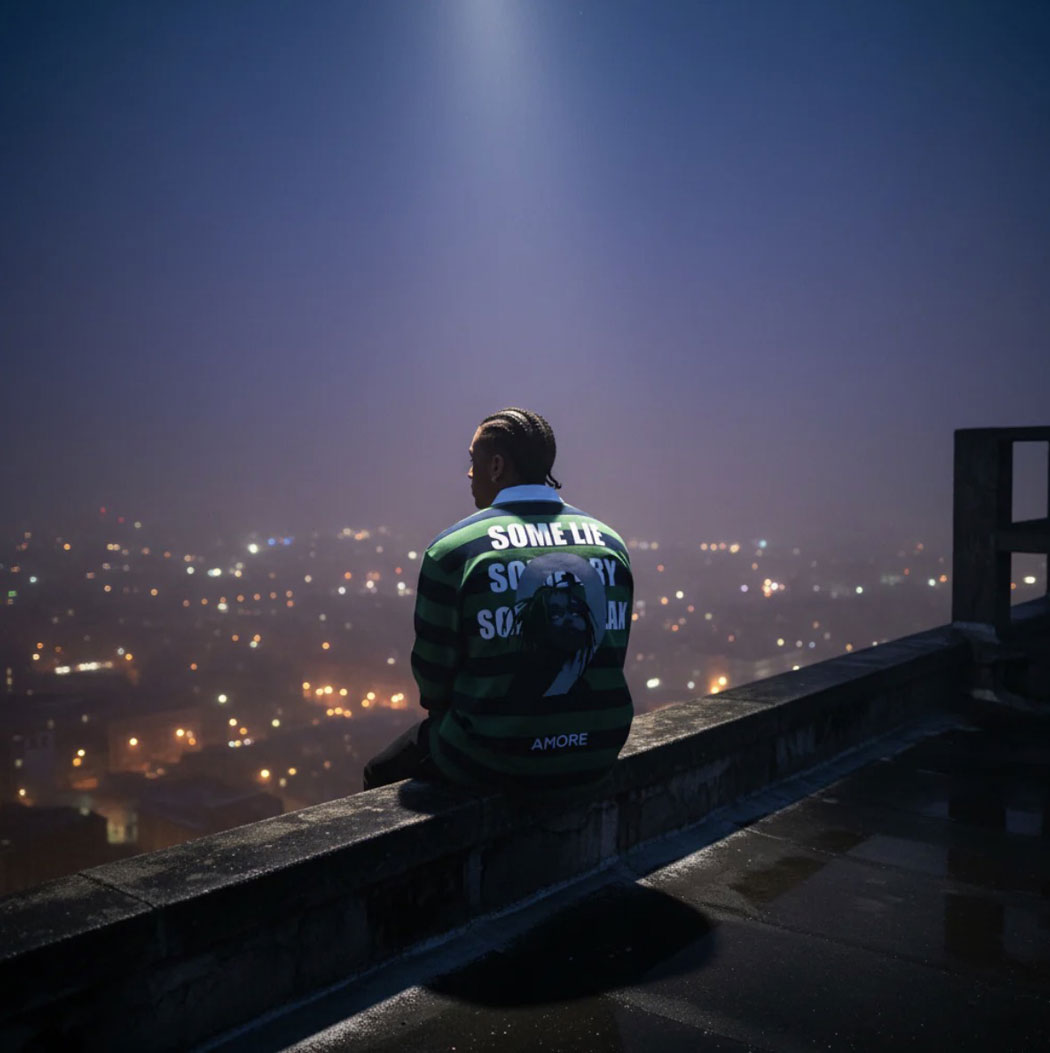 Marcus Mundy | Some Lie, Some Cry, Some Break
In “Some Lie, Some Cry, Some Break”, love is presented as something that can transform people in very different ways. Which emotional response to love do you find the most interesting to explore creatively, and why?
What fascinates me most is how love can change someone’s relationship with themselves and the world around them.
Heartbreak doesn’t transform everyone in the same way.
Some people become guarded. Some become angry. Others lose confidence, while some develop a deeper compassion because they understand what emotional pain feels like.
What interests me is the contradiction between what people desire and what their experiences teach them to do.
Someone who wants honesty may begin hiding their feelings. Someone desperate for affection may reject it when it finally arrives. Someone who understands the pain of betrayal may eventually betray someone else.
“Some Lie, Some Cry, Some Break” explores those different responses without pretending that love affects everyone equally.
I also believe understanding someone’s pain doesn’t automatically excuse the harm they cause. Empathy and accountability can coexist.
For me, the most compelling question isn’t always what love did to someone.
It’s who they became because of it, and whether they can recognize that transformation within themselves.
The phrase “Handle With Care” seems to connect all of these works. What does this philosophy mean to you personally, and how do you hope people understand it when they encounter Amore 9?
“Handle With Care” is more than a slogan. It’s a philosophy about how we treat the things we encounter in life, especially the things we cannot always see.
When someone encounters Amore 9, I want them to handle more than the garment with care.
I want them to handle the emotions embedded within the artwork with care. The experiences that inspired those emotions, the meanings behind them, and the people who have lived through them.
Every design tells a story, but somewhere in the world, that story is someone’s reality.
Growing up, I learned how easily emotions could be dismissed or mistaken for weakness. Later, I experienced what it meant to give love freely while quietly hoping someone would recognize that I needed it, too.
Those experiences taught me that we rarely know everything another person is carrying.
So “Handle With Care” is an invitation to become more intentional.
When we encounter love, handle it with care. When we encounter joy, handle it with care. When someone shares their vulnerability, their heartbreak, or their happiness, recognize the value of what they’ve entrusted to us.
The philosophy also extends beyond emotions. It applies to our responsibilities, relationships, communities, and the choices we make that affect others.
I hope people eventually carry that message beyond the clothing itself.
Because if we can learn to handle the emotions represented in artwork with care, perhaps we can become better at handling the people experiencing those emotions with care, too.
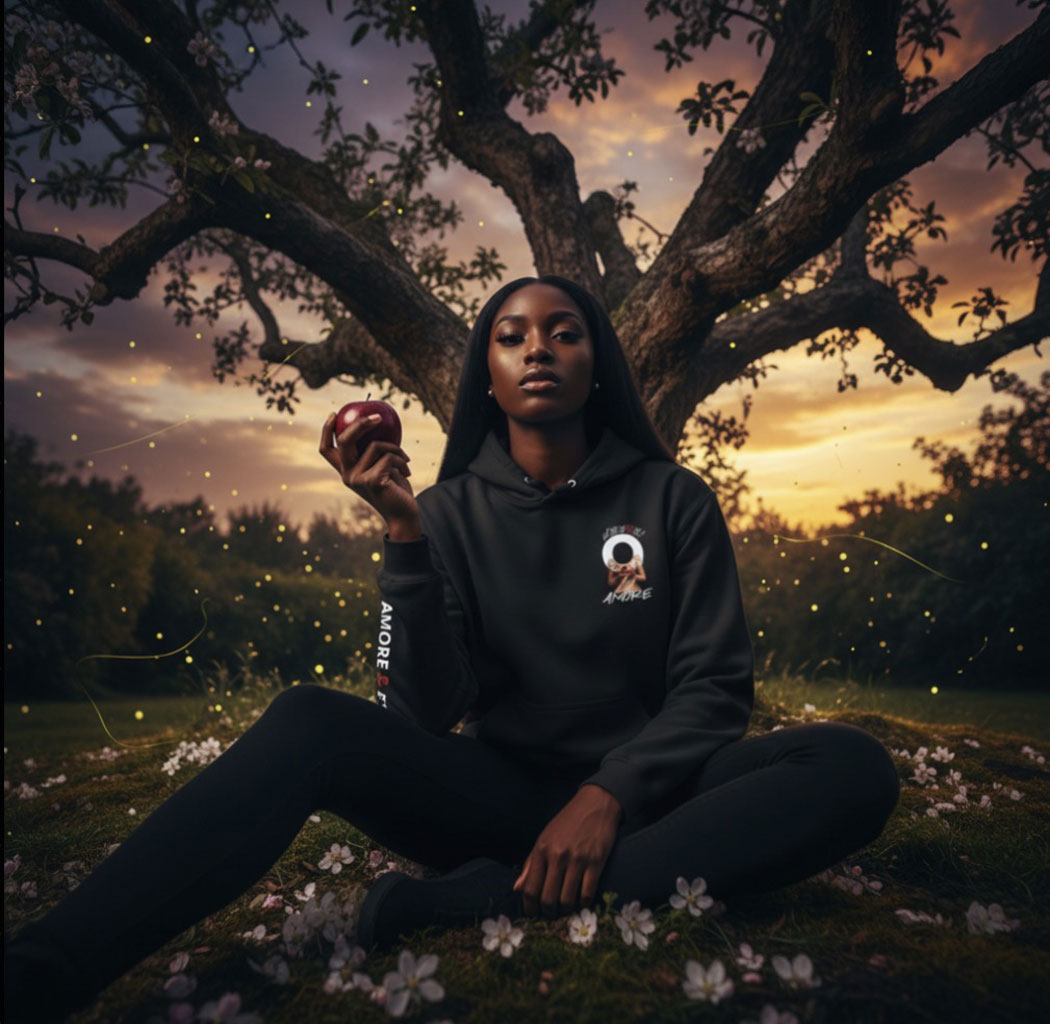 Marcus Mundy | What does love taste like
When someone wears one of your designs, what do you hope they feel or communicate about themselves beyond simply wearing a piece of fashion?
Above everything else, I want people to feel seen.
I want someone to discover a design and recognize a part of themselves they may have struggled to explain. Maybe it’s a memory, a relationship, an insecurity, or an emotion they’ve carried privately for years.
I want them to understand they’re not alone in that experience.
I also want them to feel comfortable being themselves, without needing to meet someone else’s definition of perfection.
But there’s another experience I hope the artwork creates: curiosity.
I love imagining someone noticing a design, asking what it means, and discovering a story they didn’t expect. Maybe the person wearing it interprets the artwork differently than I do. That’s beautiful to me because it means the story has taken on a life beyond its creator.
I don’t want to dictate what someone should feel. I want to create something meaningful enough for them to discover their own connection.
If someone walks away feeling understood, inspired, or more thoughtful about themselves and others, then the artwork has accomplished something greater than simply looking good.
I want people to wear the art, experience the story, and carry the message.
Handle With Care.