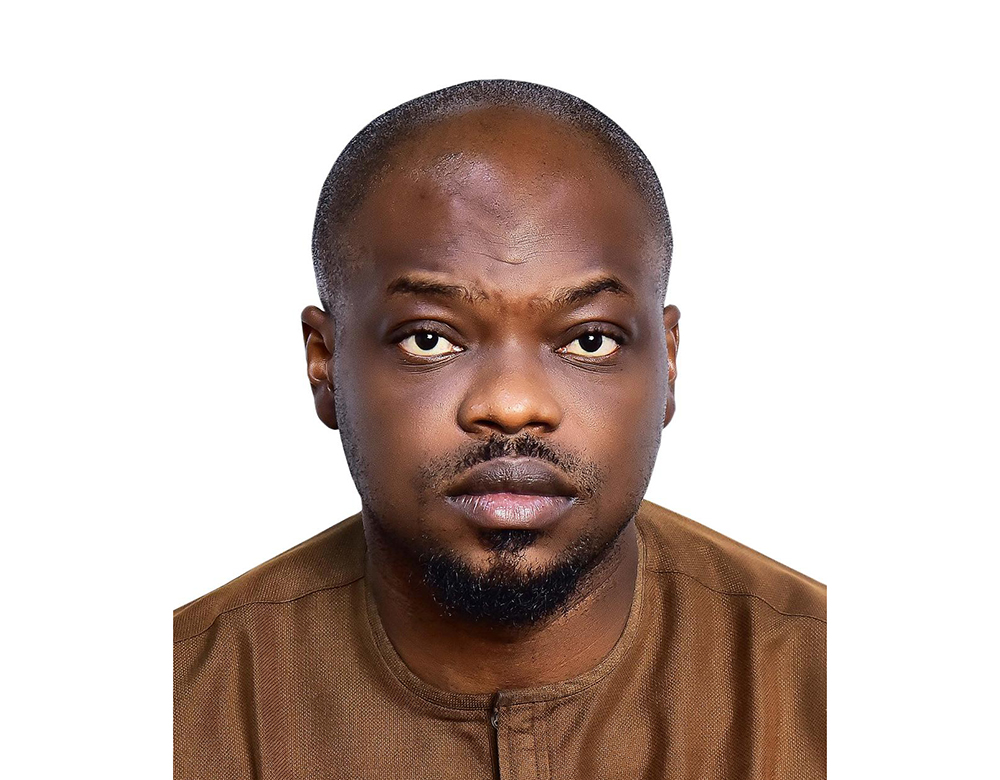
iponmwosa Joseph Okundaye
What first led you to use photography – and portraiture in particular – as a way of exploring cultural identity and ancestral memory?
My relationship with photography began with a vision shaped by my earliest experiences of the world around me. Long before I understood photography as an artistic practice, I was absorbing the visual language of my environment—the colours, patterns, architecture, rituals, landscapes, and people that surrounded me. These became a kind of internal archive of memory, fragments that stayed with me and continued to shape how I see.
Growing up in Lagos, I was particularly influenced by cultural and spiritual traditions such as the Eyo Festival and masquerade festivals. Experiencing these rituals as a child, I was struck by their visual intensity, but also by the sense of history and continuity they embodied. I was witnessing traditions that existed beyond the individual, carrying stories, beliefs, and ancestral knowledge from one generation to another.
As I began to develop my photographic practice, I found myself returning to these early impressions. Photography offered me a way to revisit those memories and question how culture is remembered, inherited, and transformed. Portraiture became especially important because the human figure provides a space where the personal and the collective can meet. The face and body can become repositories of memory—holding traces of ancestry, place, history, and identity.
My work therefore emerged from a desire not simply to represent my culture, but to investigate my relationship to it. I am interested in what we inherit consciously and unconsciously, and how ancestral memory continues to exist within us, even as our environments and identities evolve.
You describe Westernization as something that can gradually wear away African identity. Which specific changes in contemporary Nigerian life have had the strongest influence on your work?
The changes that have influenced my work most are the gradual shift away from traditional dress, language, rituals, and communal practices, particularly among younger generations. In contemporary African life, Western fashion, popular culture, social media, and global ideas of beauty and success have increasingly shaped how people see themselves and present their identities.
What interests me is not simply the disappearance of tradition, but the tension between what is inherited and what is being adopted. I see this in the way traditional symbols, clothing, and cultural practices are sometimes replaced, adapted, or reinterpreted. My work comes from that space of transition questioning what happens to ancestral identity when a culture is constantly negotiating with a rapidly changing world.
Africa encompasses an enormous diversity of cultures and experiences. How do you balance the broader idea of African identity with the cultural specificity of your own Nigerian background?
I approach African identity through the specificity of my own Nigerian experience. Africa is incredibly diverse, so I do not see my work as attempting to represent the continent as a whole. Instead, I focus on the histories, traditions, visual language, and memories that have shaped me growing up in Nigeria.
At the same time, I believe that the personal can speak to something broader. Through Nigerian culture, I explore themes of ancestry, identity, migration, memory, and cultural change that can resonate across different African experiences. My Nigerian background is therefore the foundation of the work, while the broader idea of African identity emerges through the universal questions I am exploring.
Your portraits are carefully constructed rather than purely documentary. How does an image begin for you – with a personal memory, a cultural reference, a symbol, or a visual idea?
An image often begins with a feeling or a memory sometimes a cultural reference, a colour, a pattern, or a particular visual that has stayed with me. I rarely begin with a fully formed image. Instead, an idea develops through research, memory, and intuition.
From there, I consider the symbolism, setting, styling, gesture, and relationship between the subject and the environment. I construct the portrait deliberately, allowing these elements to communicate something beyond the person being photographed.
For me, the process is about translating memory and cultural references into a contemporary visual language. The final image is therefore not purely documentary; it is a constructed space where personal memory, symbolism, and cultural identity can coexist.
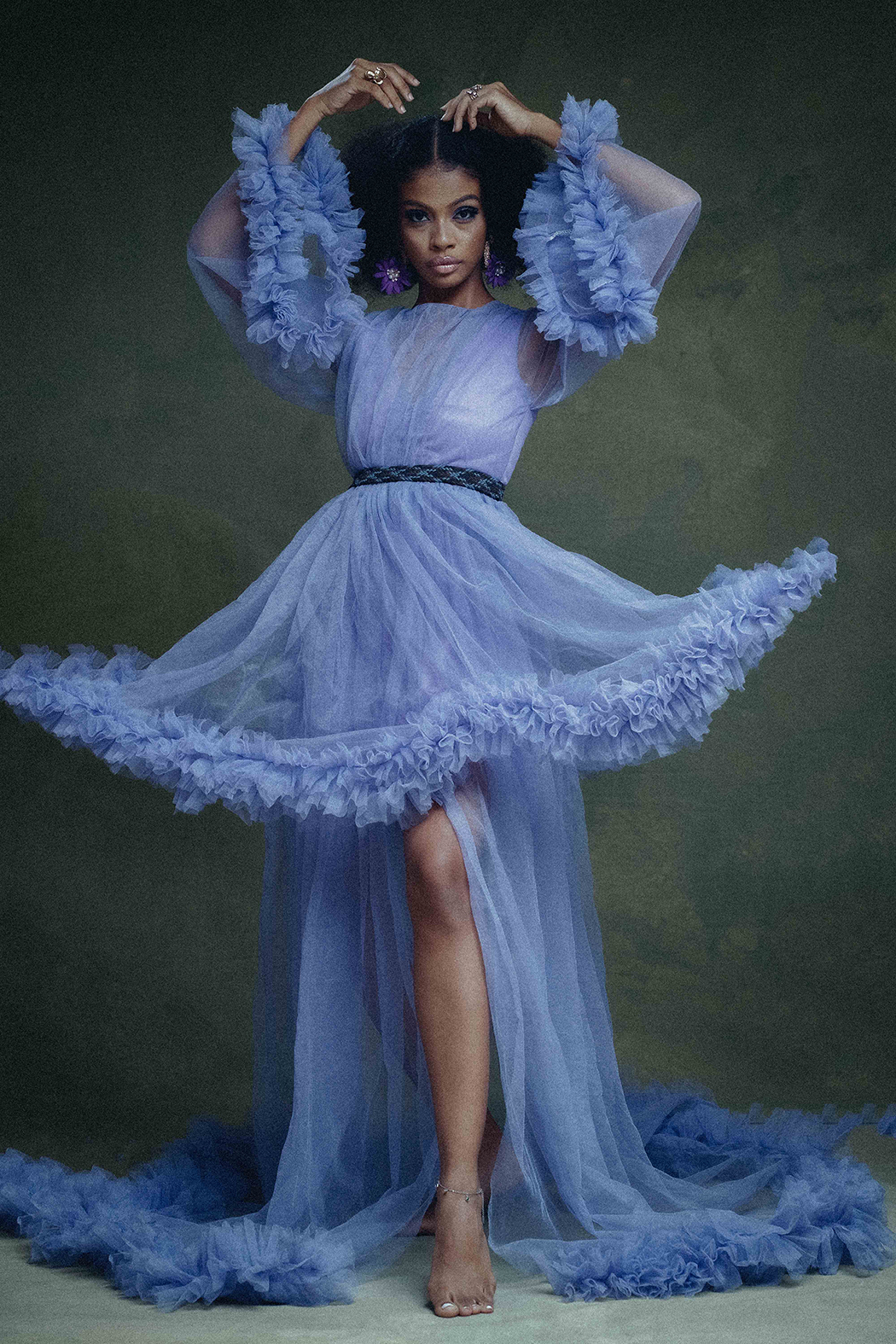
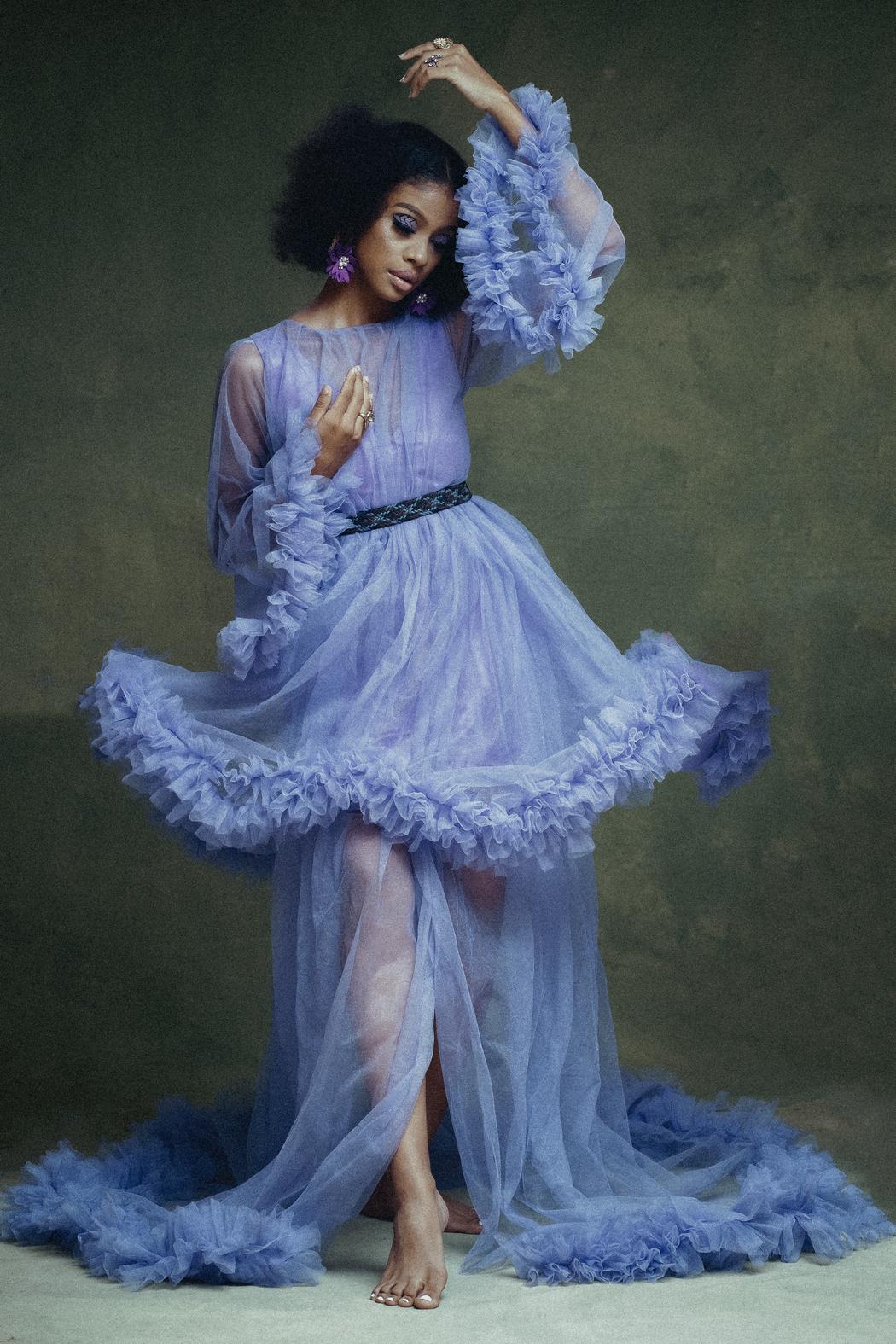
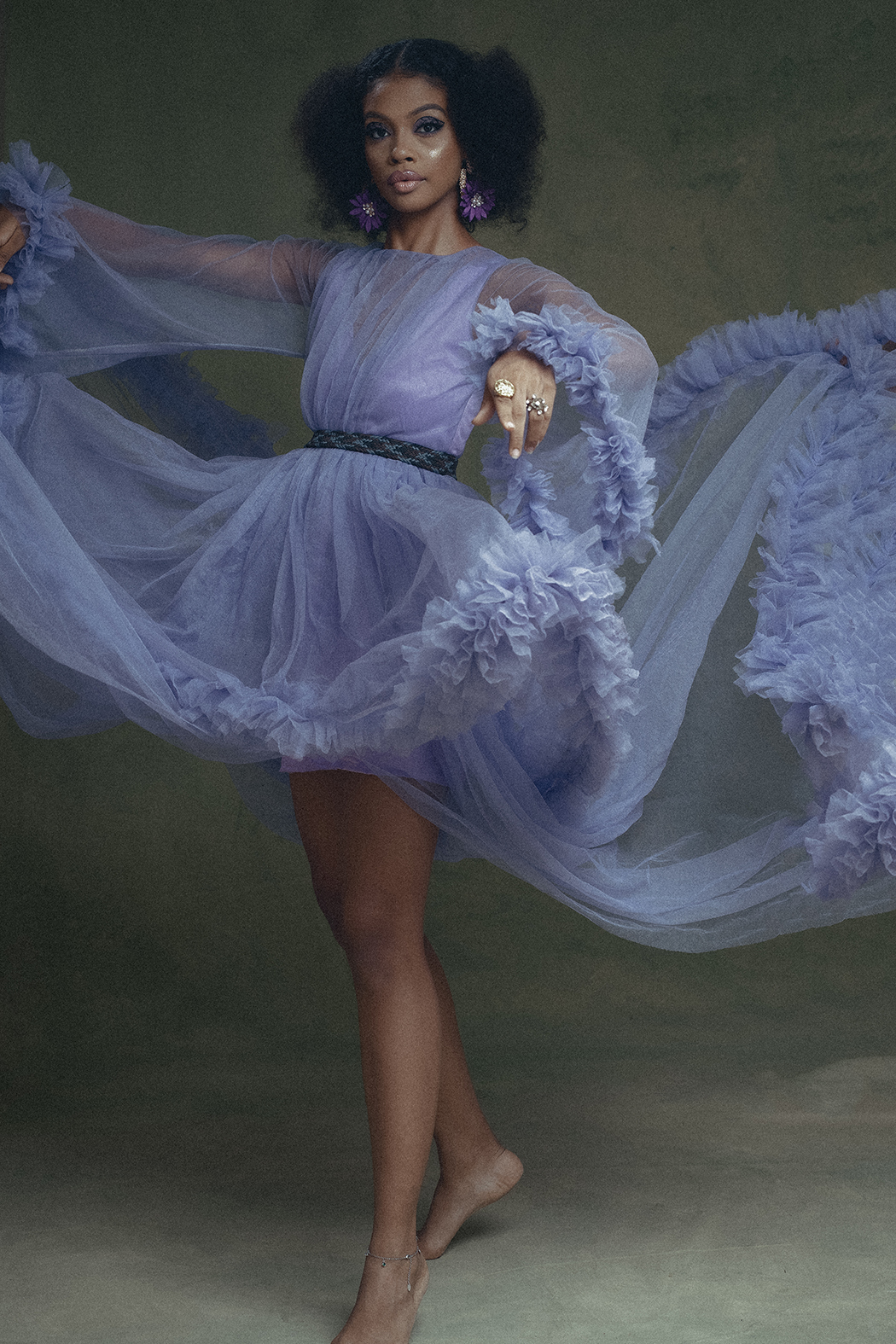
In the works presented here, the flowing lavender-blue garment and the subject’s gestures create a strong sense of movement. What role do color, fabric, and bodily expression play in the narrative of this series?
For me, colour, fabric, and bodily expression are central to communicating a sense of African femininity, strength, and grace. The series came from my admiration for the quiet strength and beauty of women their ability to embody power without always needing to express it through force.
At a time when migration and displacement have become prominent themes in contemporary African photography, I wanted to explore a different dimension of African identity: femininity, presence, and inner strength. The flowing lavender-blue garment became an important visual element, symbolising calmness, softness, and movement, while the subject’s gestures reinforce a sense of confidence and composure.
Her hair is also intentional, referencing ideas of royalty and cultural pride. Together, the styling, colour, movement, and mood create a portrait of femininity that is both gentle and powerful. I wanted the image to embody a kind of quiet strength one that feels distinctly African while remaining contemporary and open to interpretation.
The soft light, textured background, and visible grain give these photographs an almost painterly, timeless quality. How do your technical decisions contribute to the emotional and cultural meaning of the work?
The technical choices are intentional in creating a sense of memory, intimacy, and timelessness. I use soft light to create a quiet, almost contemplative atmosphere, allowing the subject’s presence and emotion to remain central.
The textured background and visible grain add a tactile, painterly quality that moves the image away from the feeling of a contemporary photograph and towards something that feels remembered or inherited. There is a sense of history in that imperfection, which connects to my interest in African identity, ancestry, and cultural memory.
Ultimately, I want the technical process to support the emotional language of the work. The softness, grain, and muted atmosphere allow the images to feel both contemporary and timeless as though they exist somewhere between a remembered past and the present.
How do you preserve cultural memory without presenting tradition as something fixed or untouched, especially when culture is constantly evolving?
I preserve cultural memory by treating tradition as something living rather than fixed. My work draws from inherited symbols, rituals, and aesthetics, but reinterprets them through a contemporary lens. For me, preserving culture means allowing it to evolve while keeping its memory and meaning alive.