
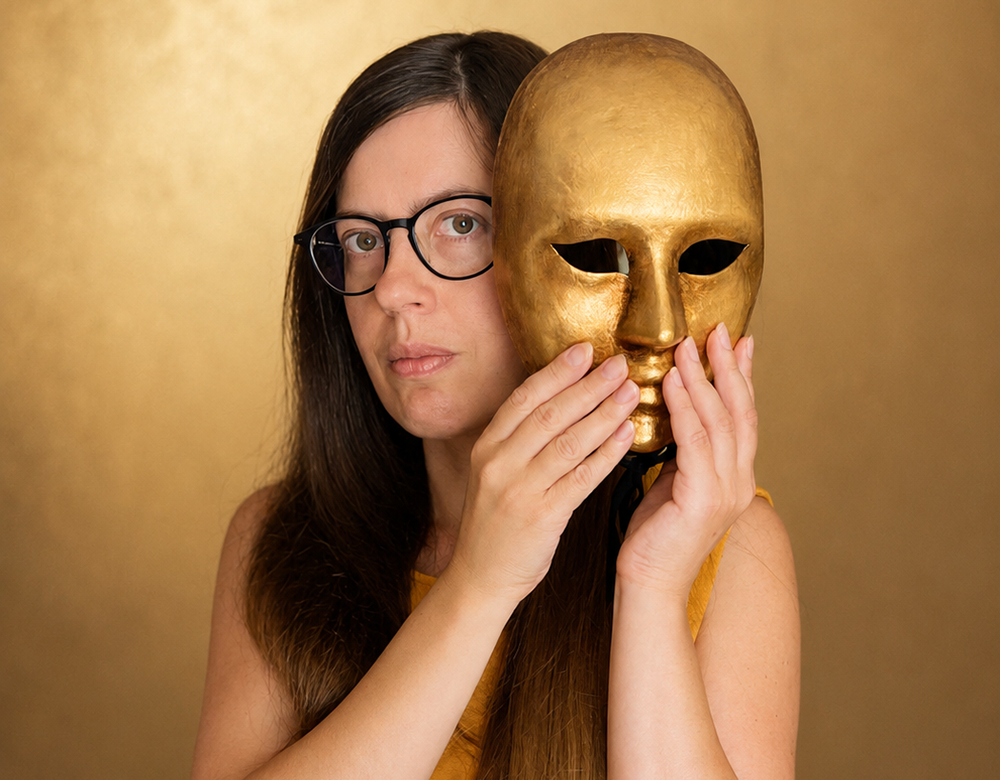
Olga Krakovyak
You were born in Kyiv and have lived in Germany since 1999. How have these two cultural environments influenced your identity and the way you approach your artistic practice?
I have spent almost my entire adult life in Germany. I spent my childhood and youth in Ukraine, partly still in Soviet Ukraine. My entire personal development as an adult has taken place here: I studied here, worked here, and built my life here. I feel very much at home in Germany and, today, I cannot really imagine living in Ukraine again.
European art has also had a strong influence on me. I am particularly drawn to the Impressionists and their feeling for light and colour, the Expressionists and their strong expression of emotions, and especially Magical Realism. I am fascinated by how something magical and dreamlike can emerge within realistic images. This connection is also important in my own work.
At the same time, my heritage is also present in my art. I have been particularly influenced by the intense colours and strong symbolism of icon painting.
It was only after the beginning of Russia’s full-scale war against Ukraine that I realised how strong my connection to my original homeland still was. I had not been fully aware of it before. The war triggered something in me that I had to confront very intensely – emotionally as well as artistically. Over a period of about a year and a half, I worked almost exclusively on this subject and created a series of almost 50 graphic works dealing with the war in Ukraine. I called this series “Diary of Feelings.”
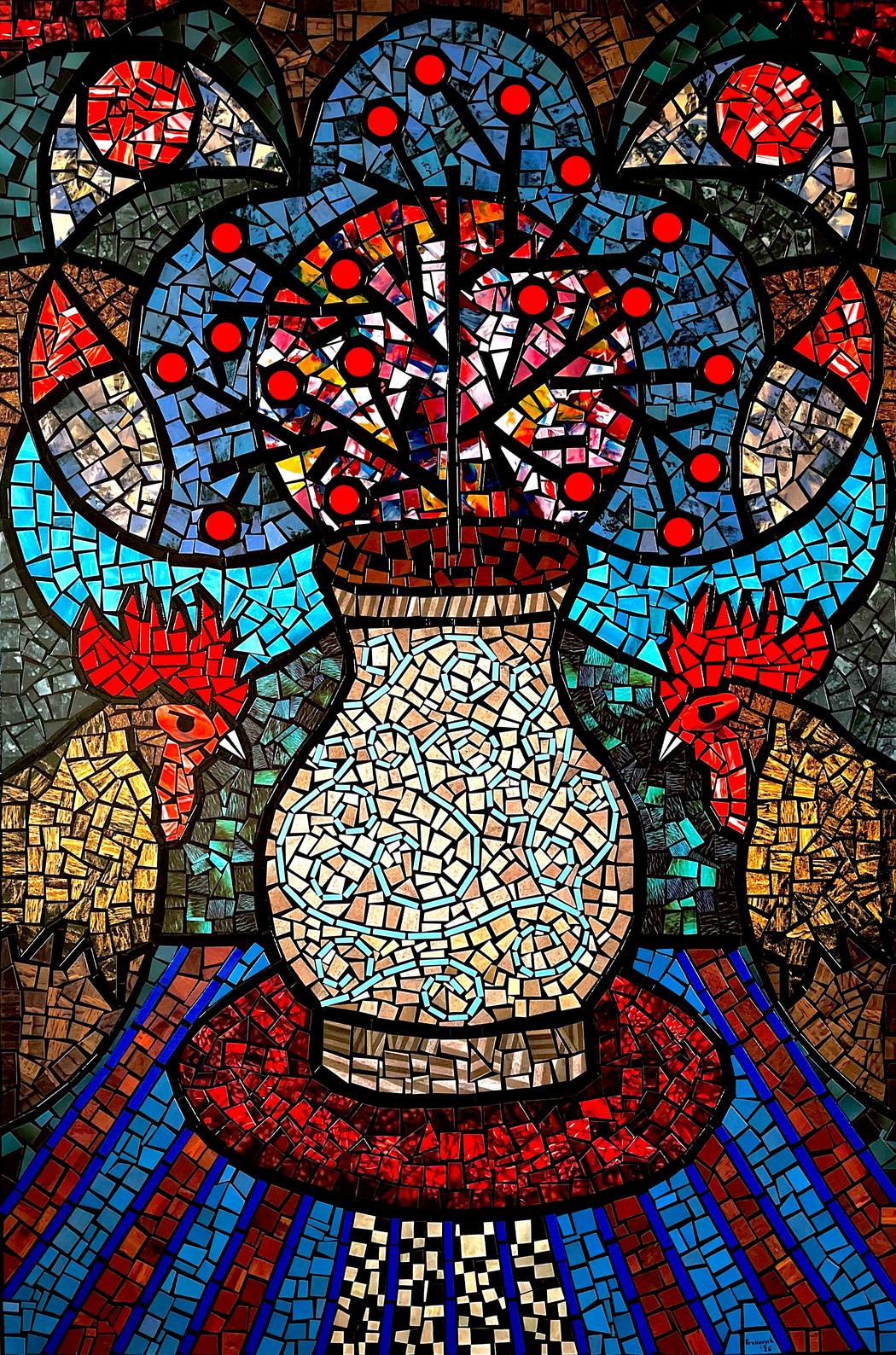 Olga Krakovyak | Grandma’S Fairy Tales | 2026
Your work spans drawing, painting, and collage. What led you to develop the distinctive paper mosaic technique that has become so central to your recent work?
Yes, this development is closely connected to the first question. After working exclusively in black and white for many months and dealing with difficult subjects such as war, loss and painful emotions, I felt a strong need for colour.
But I could not simply return to my earlier painting. Something had changed, including the way I saw the world. The Hamas attack on 7 October 2023 and the growing antisemitism in Europe also created a strong feeling of insecurity in me. After all these painful experiences, I felt the need to symbolically piece my inner world back together.
That is how the idea for my paper mosaics emerged. I create a new world from many small fragments. I use materials that have already been used and turn them into something new. For me, this carries the hope that even difficult experiences, painful episodes and a broken world can be put back together and transformed into something new.
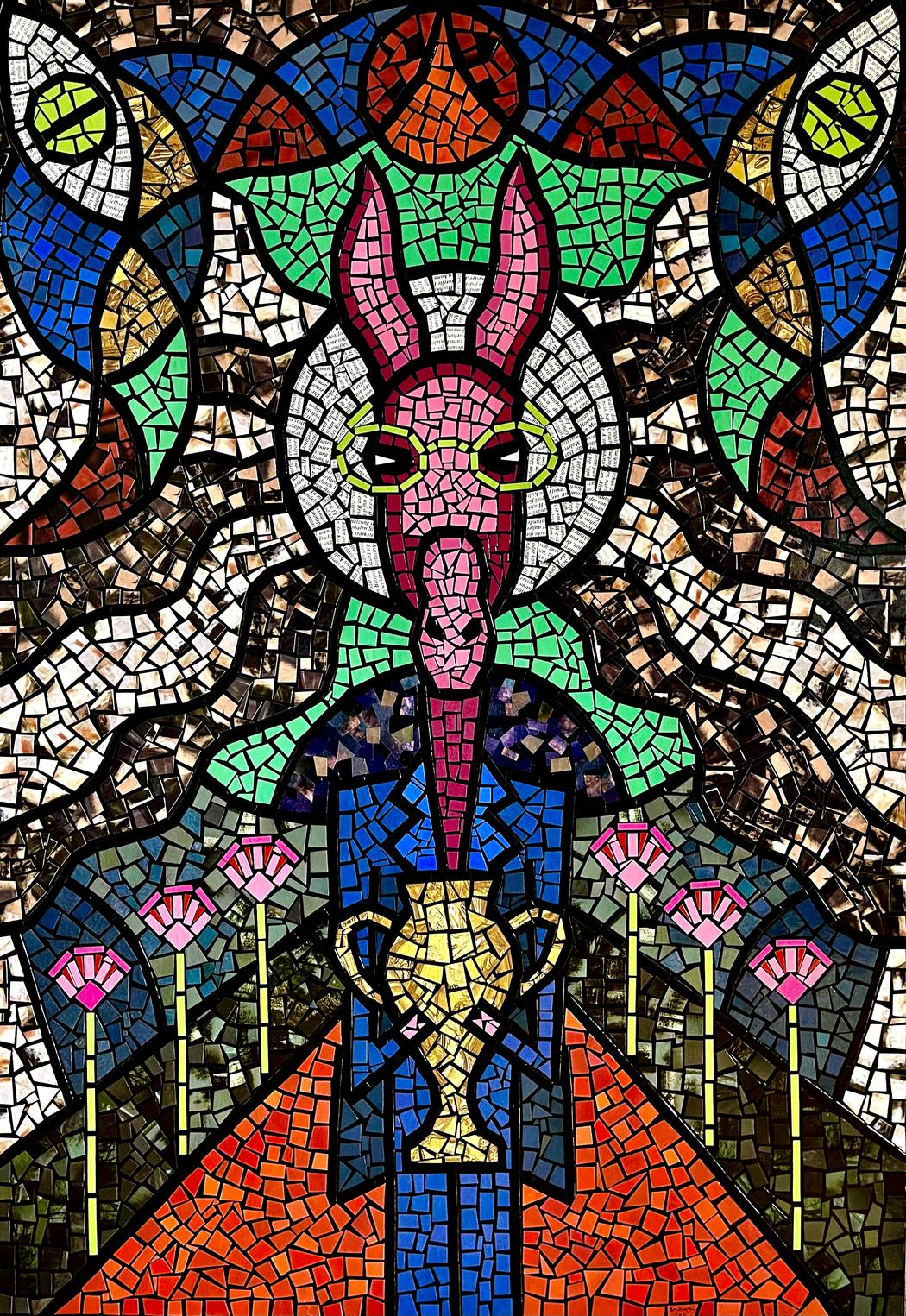 Olga Krakovyak | All That Glitters Is Not Gold | 2026
You often work with old books, magazines, packaging, and other previously used materials. How important is the history of these fragments to the final meaning of a work?
For me, it is fundamentally important to reuse materials. There is also an upcycling idea behind my work. I find it exciting when things that would normally be thrown away are given a new life. In a large artwork made from several thousand individual paper fragments, of course, not every piece can have its own story. Sometimes it is simply about colour, texture and the composition of the fragments.
But sometimes the content of the material is actually important to me. For example, I collect invitation cards from exhibitions I have taken part in, art prizes I have been nominated for, or cards from museums I have visited. When these personal memories become part of my paintings, they give the work an additional meaning for me.
Many of your works feature animals and highly symbolic, almost theatrical compositions. What attracts you to animal figures, and what role do they play in your visual language?
Yes, animals, but also insects, often appear in my work. Animals have a special inner beauty for me that is also visible on the outside, and that fascinates me. I find insects particularly interesting because we do not usually think of them as beautiful. I see a very special visual quality in them, especially their symmetry.
At the same time, the animals in my work are not animal portraits. They serve as symbols and take on human qualities and abilities, similar to the way animals are used in fables. This allows me to express certain human situations or feelings without depicting people directly.
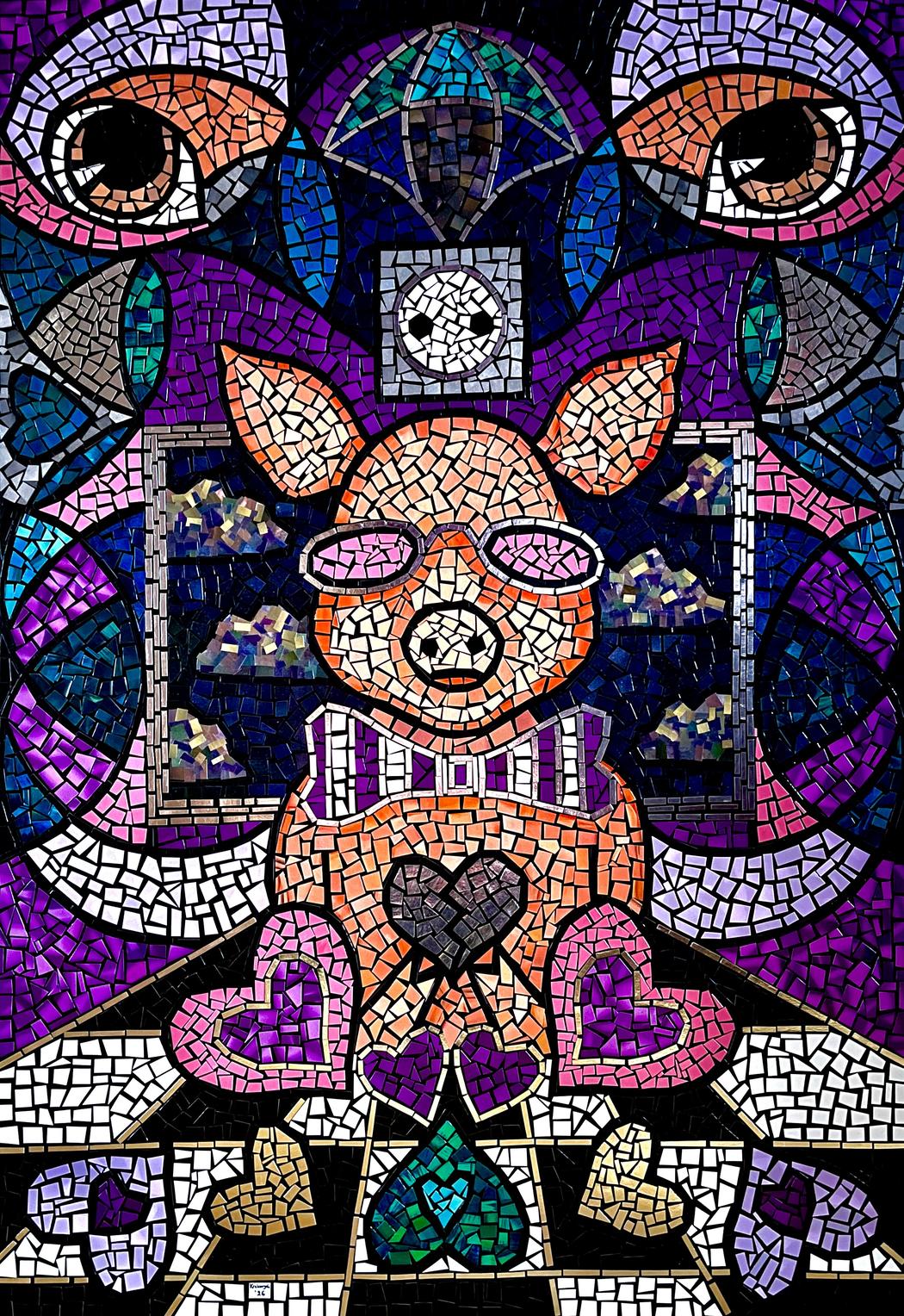 Olga Krakovyak | All Sunshine And Rainbows | 2026
Some of your works have titles such as Elephant in a China Shop, Clothes Make the Man, and All That Glitters Is Not Gold. How do proverbs, familiar expressions, and storytelling influence the concepts behind your images?
Although the overall concept behind my work is about piecing a broken world back together, each artwork also has its own story.
Proverbs and familiar expressions are often the titles of my works. I like them because they express an idea very briefly, precisely and with great impact. I have always been fascinated by them, know many of them by heart, and enjoy thinking about their meanings.
But in my work, I often do not mean the expression in the way it is normally understood. “Clothes Make the Man”, for example, can be meant ironically or as a question. I want the viewer to read the title, look at the image and ask themselves: Is it really like this? Or is it perhaps completely different? For me, it is important that the viewer can form their own opinion and develop their own story.
Since 2023, you have also been teaching acrylic painting in Dortmund. How has working with students affected your own creative process or the way you think about art?
I teach acrylic painting to adults as a leisure activity. Of course, you have to lower your own expectations a little and not expect everyone to learn to paint professionally. Many people come to my classes to relax, be creative, or learn new techniques.
At the same time, I find it very fascinating to see the progress my students make. And actually, teaching has also brought me back to my own acrylic painting. After a long period of working on my black-and-white graphic works and later on my paper mosaics, acrylic painting had moved somewhat into the background. Through my students, I was gradually drawn back to it – and I really enjoy that.
For me, acrylic painting is a wonderful contrast to my paper mosaics. With the mosaics, I have to work very precisely and with great concentration, and I have to plan a lot from the beginning. With acrylic painting, I can be much freer, experiment with colour, and sometimes start without knowing exactly what the finished painting will look like.
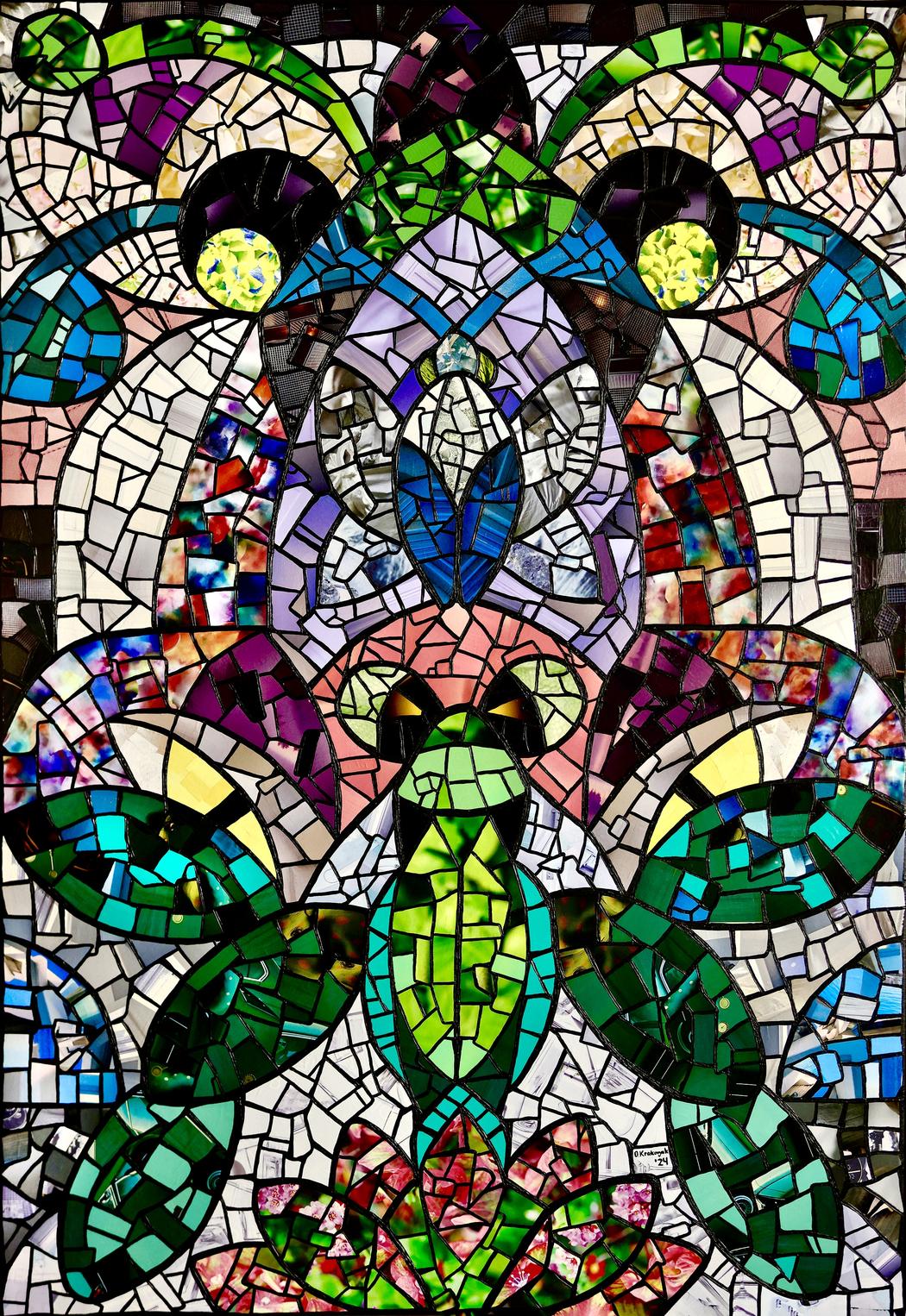 Olga Krakovyak | Beauties Of Nature | 2024
Looking back at your development from studying at the Private Art Academy Wetter/Ruhr to exhibiting widely across Germany, what moments have been particularly important in shaping you as an artist, and where would you like your practice to develop next?
During my training, the teachers who recognised and supported my feeling for colour were very important to me. I was also encouraged to develop my graphic work further. I was told, for example, that I could illustrate books. That gave me confidence.
In terms of exhibiting, being selected for my first juried exhibition was an important moment. I realised then that my art could interest other people and have an impact on them.
Later, my larger artistic projects became increasingly important. I am now working on three main themes: “Ukraine. War. Close to the Heart,” “Risen from the Ashes,” about synagogues destroyed in Nazi Germany, and my paper mosaics under the title “Broken World.” When I realised that these projects worked as complete bodies of work and could lead to several solo exhibitions, that was an important step for me.
Teaching has also shaped my development. Through it, I gradually found myself as a teacher as well.
Looking ahead, it is particularly important to me to develop further as an institutional artist. I want to take part in more curated exhibitions, develop new concepts, work in series and bodies of work, and realise larger solo exhibitions.
At the moment, I am especially interested in creating a solo exhibition with my paper mosaics. I already have a concept and am looking for a suitable space. Alongside the existing paper mosaics, I would like to incorporate elements from the digital world. My works would be digitised and projected onto the walls. At the same time, I want to involve the visitors and viewers directly in the creative process. Part of the artwork would be created together with them, as a kind of collective work. This process would be documented, and the exhibition itself would become a space for a kind of ritual, collective healing.