
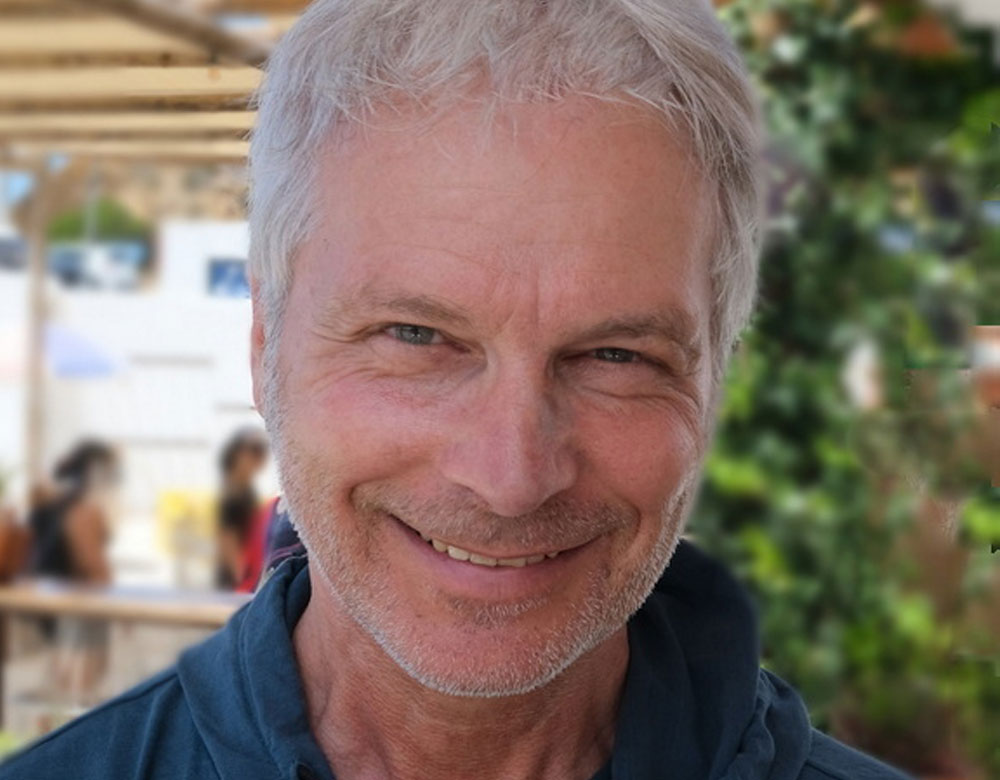
Josef Aigner
What originally drew you to Intentional Camera Movement (ICM) photography, and what did it allow you to express that would not have been possible through conventional photography?
I was not familiar with the ICM style or the term itself. My first “ICM photographs” came about more or less by accident. I immediately liked the dynamism and sense of movement in the images. At some point, I discovered the name for this way of photographing.
You describe the camera as a “paintbrush”. How do you find a balance between photographic observation and the more painterly, intuitive process created through movement and long exposure times?
That is not a question I ask myself—either beforehand or while taking photographs. I know that certain movements and exposure times will produce particular results.
When I am out photographing, the subject finds me. I decide spontaneously whether to capture it in a conventional way or using the ICM technique.
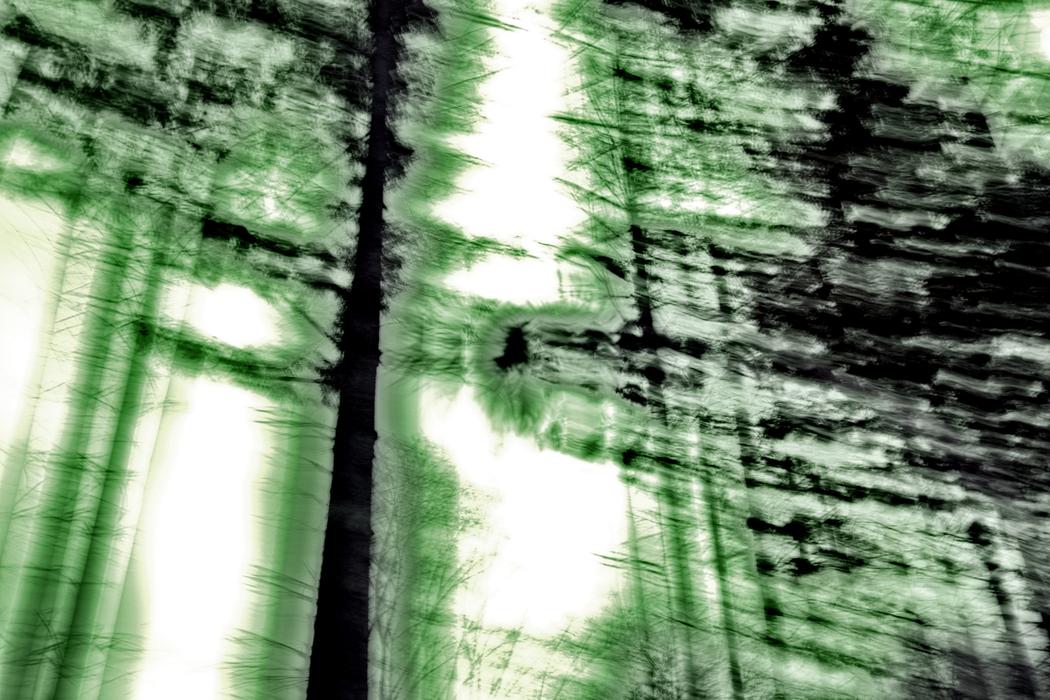 Josef Aigner | Fichtenwald | 2025
Your photographs often exist somewhere between recognisability and abstraction. How important is it to you that viewers can still identify the original subject?
That is not important to me, and it is not something I focus on. I see a situation and think that its colour, form, movement—or all of these elements together—could create an exciting image. I do not plan in advance which element will ultimately dominate.
In your museum photographs, people become part of the visual environment created by the artworks around them. What interests you about the relationship between viewers and the art they are observing?
The artworks in the “background” need to appeal to me in some way. A particular constellation often emerges when a visitor approaches an artwork, looks at it, or photographs it. I then try to capture that brief moment.
When everything comes together, I ideally enter a state of flow.
Dance is a relatively new subject in your artistic practice. What attracted you to photographing dancers, and how has working with bodily movement changed your approach to ICM?
I enjoy capturing the dynamism of movement—not in a pin-sharp image, but by showing how the body or bodies move through space. The resulting photographs make these moments visible.
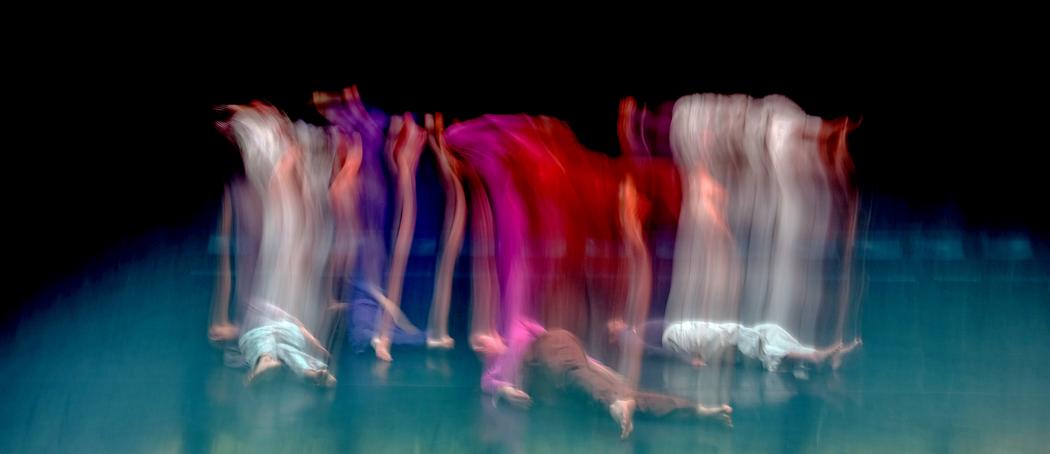 Josef Aigner | Bodies In Rebellion | 2025
You mention that many of your images arise spontaneously and that you usually work with only a rough plan. How do you recognise the moment when a potentially interesting photograph begins to emerge?
I usually rely entirely on my intuition. Sometimes, however, I notice a visitor whom I consider particularly suitable and hope that they will look at the selected artwork or walk past it. Naturally, I work very discreetly, as I cannot create a huge commotion in a museum.
You say that technical equipment plays a relatively minor role in your work. What skill or sensitivity do you believe is more important for creating compelling ICM photographs?
You need a particular eye and a feel for the situation. Nevertheless, there is always a significant “unknown” element. In my view, that is precisely what makes this kind of photography so appealing.
When you look at the images at home, there are always surprises. You often discover something that you did not notice while taking the photograph.
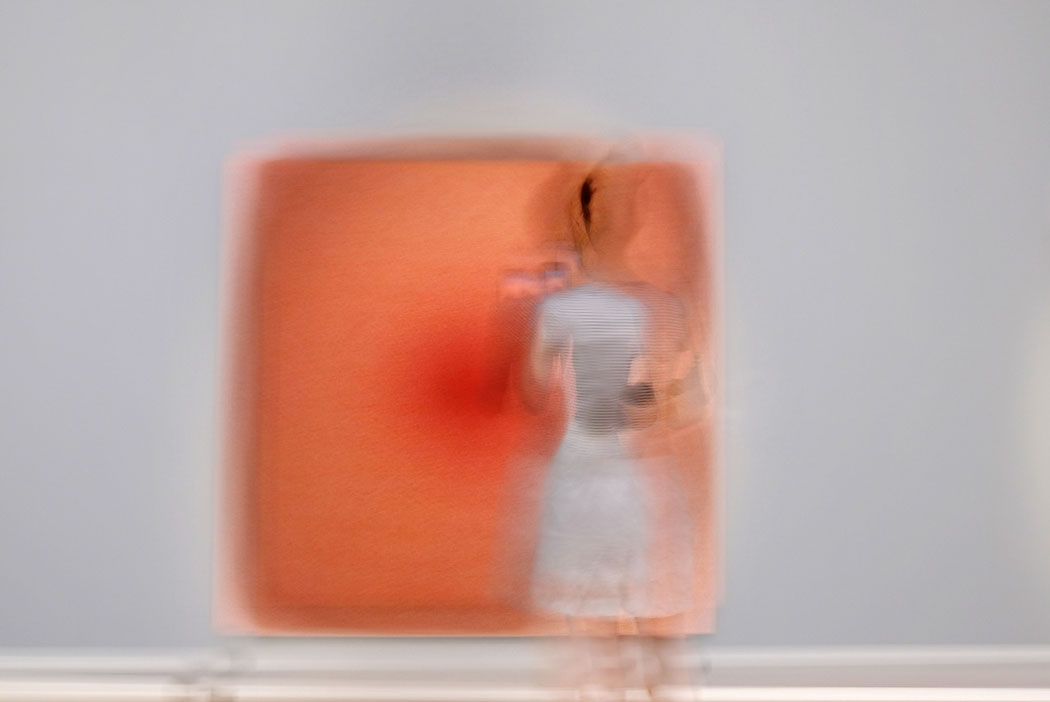 Josef Aigner| Frau vor Strahlkraft Nr. 8 | 2025