
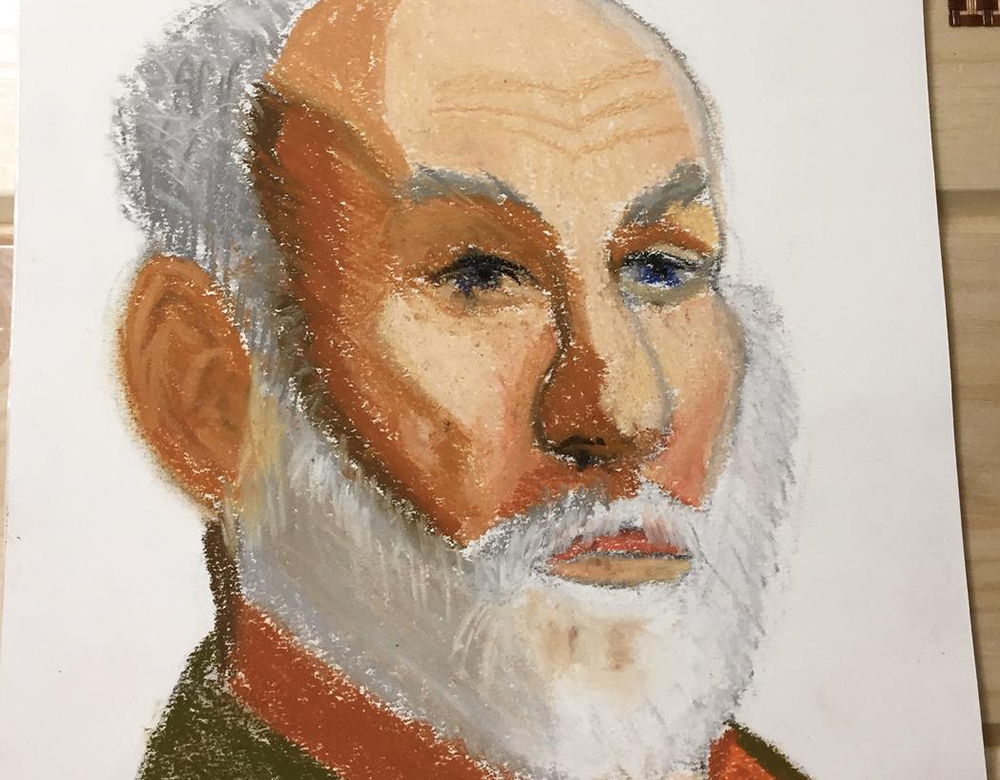
520 (Anthony Martini)
You describe drawing as something that began in childhood and eventually became your calling. At what point did you realize that art was no longer simply a creative outlet, but something you wanted to dedicate your life to?
Art has been part of my life for as long as I can remember. It was always a passion, but it took years for me to realize that I wanted to dedicate my life to it. That realization developed through time spent creating, learning beyond the classroom, and experimenting with different mediums until I found what truly fit my artistic style. It was a gradual process of discovery rather than one defining moment.
Throughout my childhood, teachers, fellow students, friends, and family encouraged me to continue with something they saw in my work. At the time, I didn’t necessarily view it the same way—it was simply part of my life. Later in my childhood, one teacher told me that she couldn’t wait to watch the cartoon show she believed I would one day create. Encouragement like that stayed with me and motivated me to keep creating while I continued discovering.
I went on to study art for three years in college, and during that time it often seemed more obvious to my professors and classmates than it did to me that art was becoming my life’s direction. Their confidence reinforced what I was gradually beginning to recognize for myself, but I still felt there was much more to learn through experience and experimentation.
The journey was not without obstacles. Looking back, every stage of my life has added, and continues to add, another brick to the foundation of where I may be meant to go. Around 2020, the pieces began to come together, and I developed a clearer understanding of what I wanted. One of my former managers once told me that there are points in life when a light switch just turns on out of nowhere. He was right. By 2025 and into 2026, that dedication had begun to transform into deeper professional opportunities, reinforcing that the path I had spent so much time building—and continue to build—was finally taking shape.
That progression changed the way I viewed art. It was no longer only a creative outlet—it had become a lifelong commitment to learning, evolving, and creating work which continues to challenge me both artistically and personally.
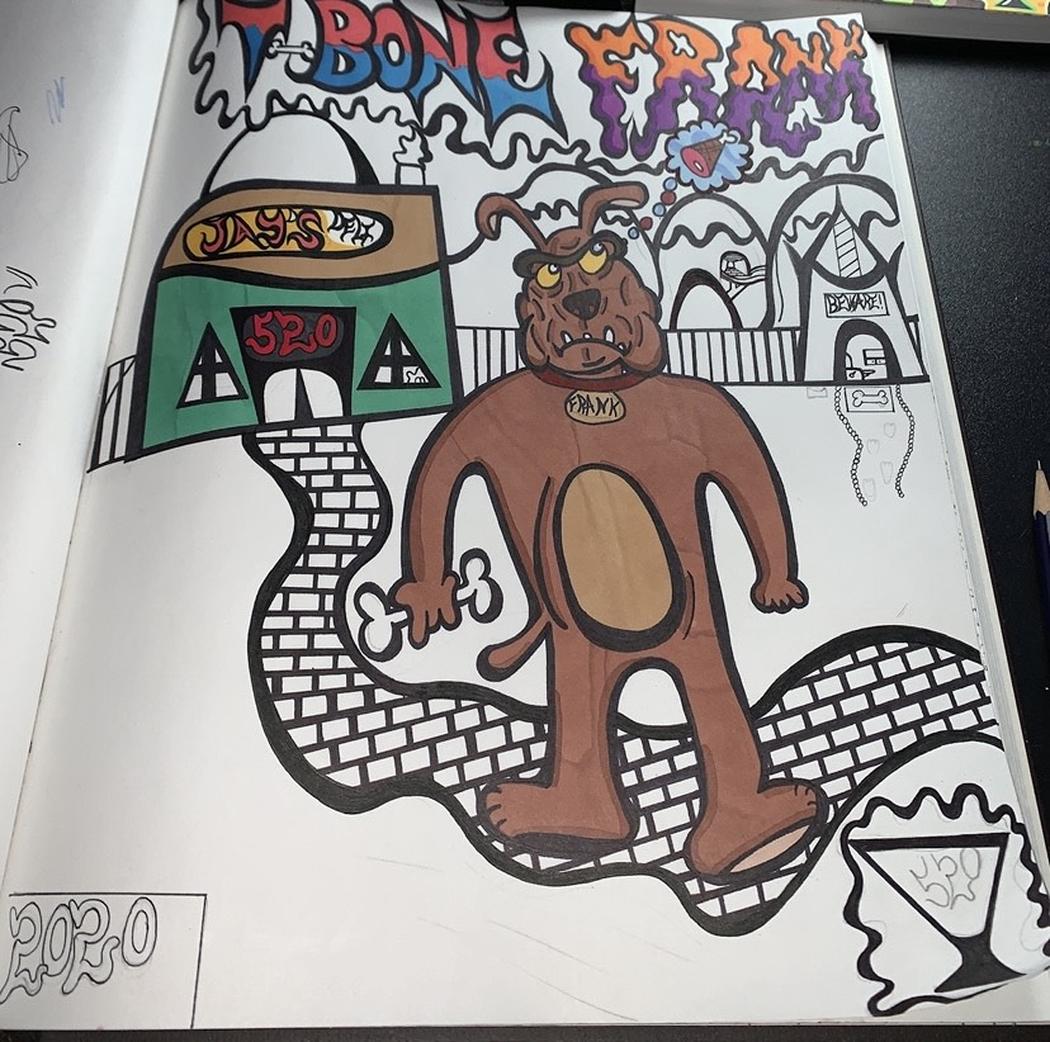 520 (Anthony Martini) | Tbone | 2026
Your artistic development has been shaped by several very different mentors, from graffiti pioneer VICTOR-161 to realism painter Randi Eisman and animation artist Al Nickerson. What did each of these influences contribute to the visual language you use today?
In 2013, VICTOR-161, also known as VIC 161, was a New York graffiti artist who began introducing me to the general discipline and foundations of art while I was still in high school. At that age, I didn’t fully understand everything he was sharing with me. It was more about establishing a baseline that I could continue to build upon. He taught me through the areas he knew best, focusing on what he felt was necessary for my development and drawing from his own experience with his preferred mediums of spray paint, markers, and graphite. Through that process, he taught me principles including composition, balance, movement, and letter structure. Above all, he emphasized the importance of developing a unique personal style and encouraged me to think independently as an artist.
As time went on, I gained a greater understanding of what he had initially introduced me to. He continued sharing his knowledge and experience, guiding, critiquing, and encouraging my development whenever he could. His influence gave me a creative foundation that I came to understand more deeply with time and that continues to shape the way I approach composition, lettering, and artistic problem-solving today.
In 2017, I began studying with Randi Eisman, a realism artist whose work and career had taken her around the world. She expanded the way I observed the world around me. When I first met her, I wasn’t a realism artist, and she knew that. Rather than trying to change who I was, she devoted a great deal of attention to strengthening the areas she believed would benefit me most. She structured my classes around principles from Betty Edwards’ Drawing on the Right Side of the Brain, training me to observe carefully rather than assume and to better understand form, light, depth, and proportion.
Near the end of my studies with her, Randi explained why she had approached my training that way. She wanted to give me the strongest opportunity she could with what she saw in me. That conversation became one of the greatest gifts she gave me because it allowed me to understand what she had been trying to develop throughout our time together. More than teaching me realism, she taught me what I needed to see as an artist.
In 2017, I also began working with Al Nickerson, an animator and comic book writer who brought another perspective to my artistic development through comic illustration and animation. Before I even enrolled in his class, professors had introduced us and shared examples of work I had created during the previous semester in addition to outside of my studies. He knew I had a genuine interest in animation. Due to his professional background, he understood the areas I wanted to explore more deeply.
Even before I entered his classroom, he encouraged me to begin studying Richard Williams and the principles of animation, so I could put the first brick into place there. He recognized that storytelling, character creation, and visual communication were already important parts of my work, but he challenged me to refine them through more advanced illustration. His guidance broadened not only my technical abilities, but also my understanding of narrative, movement, expression, and visual storytelling.
Looking back, each mentor contributed something very different to my artistic development. They gave me knowledge, discipline, and perspective that I was able to carry forward while continuing to discover my own visual language. Their lessons remain present in the way I create today, but over time those different influences have become integrated into a style that is uniquely my own and continues to evolve.
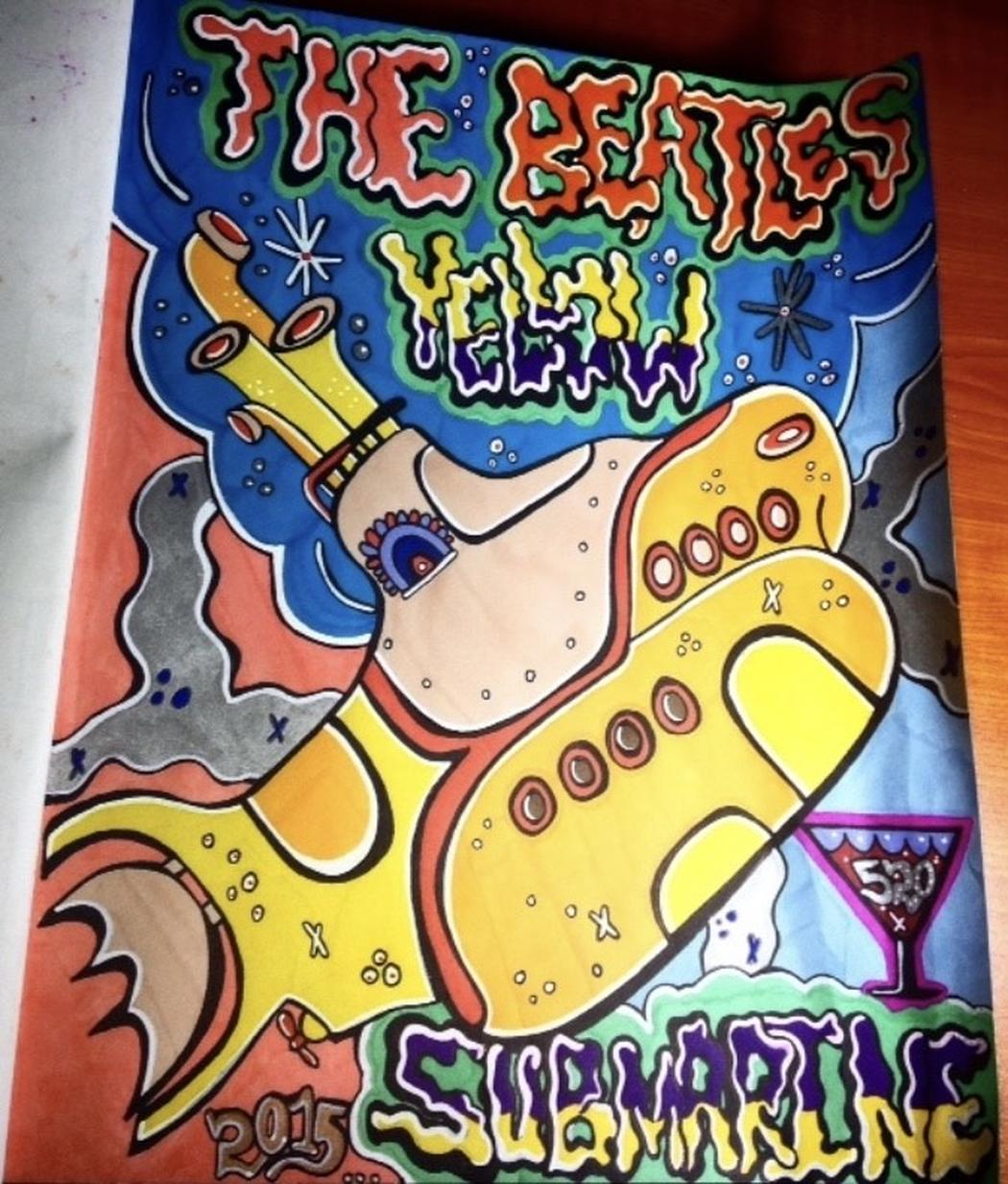 520 (Anthony Martini) | The Beatles Yellow Submarine | 2015
You create all of your work through a left-handed drawing practice and place great importance on the physical act of making marks by hand. How does the movement of your hand influence the rhythm, character, or spontaneity of an image?
Being left-handed influenced the physical way I created from the beginning. I was naturally left-handed; it was simply part of my biological anatomy. When I was young, some of my teachers tried to encourage me to use my right hand instead, but I resisted because my left was instinctively how I worked. At that age, I wasn’t thinking about what that could eventually mean in the future. Looking back, however, something so fundamental to the way I physically interacted with the world became important to how my practice evolved.
Around 2015, when I began diving deeper into my work and taking it more seriously, I started to recognize how my left hand was shaping my lettering, line work, and a more consistent approach to color. I was working at an inclined drafting table or on relatively flat surfaces, generally using a hooked-wrist or southpaw posture. At that point, I wasn’t yet rotating my black books to accommodate different strokes and angles, so much of my approach was built around the position and mechanics of my hand.
Around 2017–2018, I began rotating the black book as I worked. That allowed me to adapt the surface to my left hand rather than forcing my hand into a particular position. Certain mediums also give you a relatively short window to make or manipulate a mark the way you want, so repositioning the book and reaching an area from the right angle became increasingly important. What began as an adaptation grew more fluid with time, and by 2025–2026 it became an instinctive part of the way I create.
The motion of my hand isn’t separate from the image—it influences how the image takes shape. The direction, pressure, and angle of one mark can affect what follows. Much of the rhythm comes from those changing angles, which is why the black book can be continuously rotating or sometimes resting on one edge as I move it into position for the next stroke. My hand, the orientation of the book, and the medium I’m using can all affect the length, curvature, and momentum of a line.
If I weren’t a left-handed artist creating this particular type of work within the physical structure of a black book, it’s entirely possible that I never would have arrived at this approach. It grew from adapting the surface to the mechanics of my hand, and eventually that adaptation became part of the rhythm itself.
As that relationship has become more instinctive, it has also become increasingly refined. I can see the progression from one piece to the next. Actions that once required conscious thought now happen more fluidly. The book turns, my hand adjusts, and I respond to the material accompanied by what I’m seeing without having to consciously separate every decision.
That refinement also contributes to what many describe as a flow state. There are periods when the interaction between my hand, the medium, and the page feels continuous. I’m still making decisions, but the physical mechanics no longer interrupt the creative thought behind them. For me, that is where much of the spontaneity comes from.
Every hand-drawn mark is also a record of a decision made in a particular moment. The finished piece carries evidence of how it was created—the shifts in direction, pressure, angle, and approach along the way. In that sense, the motion of my hand doesn’t just produce the image; it becomes another layer of what the finished work communicates in addition to the image itself.
Graffiti, typography, illustration, realism, and character design all appear within your practice. How do you bring these different visual languages together without allowing one of them to dominate the others?
I don’t believe every element should compete for attention. What I’m trying to express determines which visual language takes the lead, while the others support and strengthen the composition. Balance, to me, doesn’t necessarily mean giving each discipline equal presence. It means understanding what role each one needs to play within a particular piece so the result feels unified rather than like a collection of separate styles.
The medium often determines the initial direction of a composition, but as the work develops, the piece itself begins to influence those decisions. Each discipline contributes something different, but their functions frequently overlap. Depth, movement, structure, observation, personality, and expression aren’t restricted to any one of them. Graffiti, lettering, illustration, realism, and character design can each contribute those qualities in different ways depending on what the composition requires. Over time, the boundaries between those influences have become less important to me than understanding how they can work together.
The challenge isn’t simply bringing these different disciplines together—it’s recognizing when each should step forward and when it should step back. As a piece develops, I continually evaluate whether an addition strengthens the artwork or simply competes for attention. Sometimes the strongest artistic decision is knowing when not to add another line, color, or detail. Restraint is just as important to me as experimentation.
Ultimately, I want the viewer to experience the artwork as a unified whole rather than immediately noticing where one discipline ends and another begins. When those influences are working together successfully, they become part of the same expression rather than separate categories within the piece.
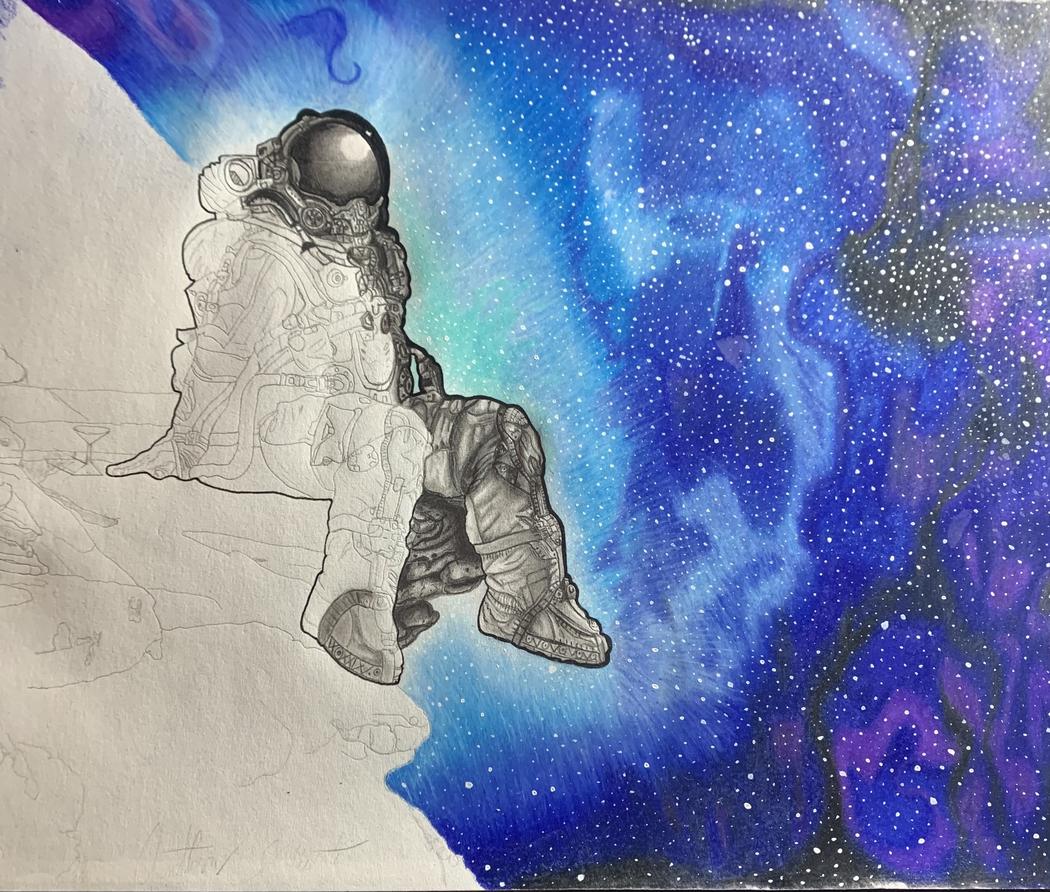 520 (Anthony Martini) | Undone Evolution | 2023
You compare your creative process to a game of chess, where each decision builds upon the previous one. How much of a composition is planned before you begin, and how much emerges through instinct while you are working?
There isn’t an exact percentage that applies universally to my work. The balance between planning and instinct depends heavily on what I’m trying to express and the direction of the individual piece. Sometimes I can envision a significant portion of the composition before I begin, while other pieces leave much more room for discovery. I usually have a basis for what I want to create and an overall direction in mind, but I don’t consider the idea itself the beginning of the physical creative process. From there, I move to what I call my test page—the opposite page beside the developing work in my black book. It functions as a visual planning space, and that’s where I consider the work to truly begin.
The test page contributes heavily to everything that follows. It’s where I explore colors, mediums, techniques, forms, and possible relationships between elements before committing certain decisions to the piece. Because it remains alongside the work throughout its creation, it also becomes a visual record of how the composition took shape. Some decisions happen quickly, while others can take hours to resolve. That’s where the comparison to chess begins: the original vision establishes the board, but once I start exploring the possibilities, the pieces begin to move.
Beneath the Sand, a piece I’m currently working on, is a good example. The main composition is on the left page of the black book, while as a left-handed artist I generally prefer having my primary working surface positioned to my right. There are instances when I will sit and study the piece for an extended period, sometimes with a timer running, because I’m mentally connecting the entire layout rather than looking at one area in isolation. Each new mark or addition can change that layout to some degree, so I evaluate what it has done to my position before deciding what comes next. Sometimes a decision creates an unexpected advantage; other times it puts the original plan at a disadvantage and requires me to reconsider the next move.
What isn’t established through planning emerges through instinct, observation, experience, and adaptation. As I work, new relationships appear between colors, lines, forms, and materials, and recognizing those relationships can influence where I go next. Something I hadn’t envisioned beforehand can become an important part of the finished piece. I don’t want the original plan to become a limitation. I want enough structure to understand the direction I’m taking while remaining open to what I discover along the way.
That’s where the chess comparison becomes very literal for me. I’m continually reading the position. Something that appeared to be the right move earlier may change once another element is introduced. There is also an opponent within that analogy—in a sense, both the artwork and the artist. The human element means that an unintended mark or unexpected result can immediately alter the circumstances I’m working from. At the same time, the surface and mediums respond to what I do. Materials absorb and layer differently, colors shift in relation to what surrounds them, and even a successful addition can change what becomes possible next. I have to study the new position, connect it back to my position within the overall piece, and determine the next move from there.
For me, planning and instinct aren’t separate stages; they’re continuously interacting with observation and experience. The original vision establishes the board, the test page allows me to explore potential moves, and experience helps me respond to what emerges. Like chess, I can try to think several moves ahead, but every move changes what becomes possible next. The finished piece ultimately becomes a record of that exchange between the original vision, the physical materials, observation, instinct, and the decisions made along the way.
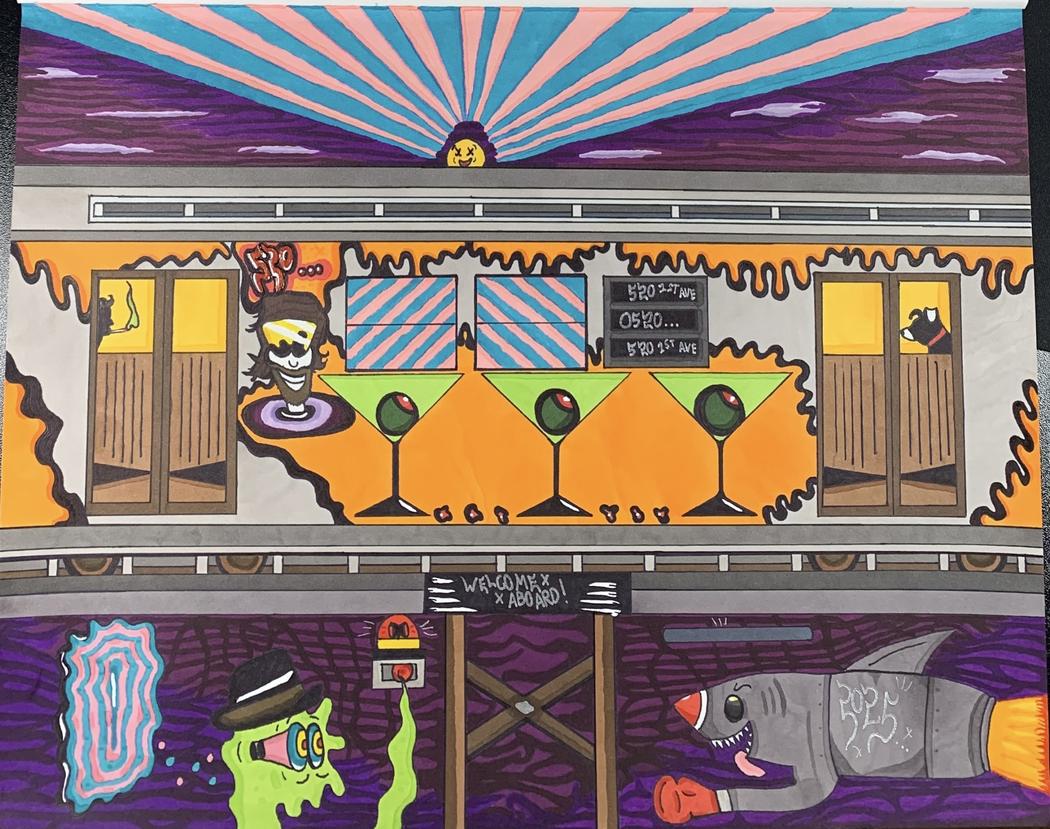 520 (Anthony Martini) | Welcome Aboard | 2025
Your work is deeply connected to the history and lineage of New York graffiti, yet you are also determined to develop an individual visual language. How do you balance respect for that tradition with the need to move beyond it?
For me, part of respecting that tradition begins with being clear about how I identify myself. I don’t directly identify as a graffiti artist or writer. I was taught by a traditional New York graffiti writer, and through that experience I was introduced to portions of the culture, history, and artistic foundations surrounding the traditional era. I’ve practiced elements of the art form as well, but I have a great deal of respect for what those titles represent and for the experiences behind them.
My interest primarily lies within the traditional era because that’s how I was introduced to the art form. Most of the knowledge I have under my belt comes from what I was personally taught, stories and perspectives shared with me by a few artists, and some of my own research. New York graffiti has an extensive history with a great deal to learn, and it isn’t my specialty, so I wouldn’t present myself as being near well versed in it. I’m comfortable with what I’ve learned and am always happy to learn more.
The art itself has always been what interested me most. The creativity, ingenuity, individuality, lettering, structure, and stories surrounding the work caught my attention more than the politics or other aspects of the culture. I respect artists and their individual contributions, but I stay out of the politics. My focus has remained on the artwork, what I can learn from it, and how those lessons can contribute to my own development.
I was fortunate to begin learning about the art and portions of its history when I was 17. Around that time, I was asked to choose an artist tag. I initially used AM-520, which eventually became simply 520, originating from my registered motocross number at the time. The artwork is incredible to me, but so are the stories behind it and what people from an earlier generation went through to create their work in addition to establish individual identities. Fifty years ago, it was a very different world.
VICTOR-161 tried to share as much knowledge with me as he could during that period of my life. He incorporated portions of what he knew into the way he taught me the fundamentals of the art. It was a healthy learning environment because he knew I was genuinely interested, and this was something that had been a significant part of his own life. He shared what he felt could benefit me while allowing me to absorb it in my own way. I was learning about composition, movement, lettering, balance, personal style, the stories pieces could tell, and the thought behind creating them. My initial training began with sketching in the black book while watching him create, and from there I moved into working with spray paint on traditional stretched canvas. That allowed me to experience one of the primary mediums associated with the art form while developing in an environment that made sense for me. I still genuinely enjoy working with spray paint when I have the opportunity.
The art form, from learning to work with spray paint on stretched canvas to developing ideas in a black book, opened a creative path for me like no other. It introduced me to ways of thinking about lettering, structure, movement, mediums, and personal style that I continued to expand upon as my own practice developed.
The black book became an especially important connection between what I was taught and the direction my own work eventually took. Black books have long had a place within graffiti culture as spaces for ideas, lettering, sketches, and designs. For me, however, the book gradually became more than a planning space—it became the primary home for my finished work. I carried one throughout the end of high school and continued that habit afterward, even bringing smaller books with me to work. Of the different ways I was originally taught, the black book became the portion that stayed most closely connected to my daily practice.
That’s also why I’m careful about the distinction between influence and identity. I genuinely love the traditional era of New York graffiti. Elements of what I was taught remain an important part of who I am, but I don’t directly claim that discipline as my own. Many of the artists associated with that tradition have dedicated a large portion of their lives to it. That’s their road and I respect them, but it isn’t mine. I was taught through stretched canvas and the black book. My own practice continued developing primarily within the black book. Acknowledging that distinction is part of general respect for the tradition and the people who lived it.
As I continued developing, I began submitting work in college and to state-level competitions. Whenever I had the opportunity to work within my natural style, a portion of those traditional elements often found their way into the work. I never encountered the idea from professors or judges that those influences needed to be separated from everything else I was doing. Instead, they existed alongside the other disciplines I was studying and gradually became integrated into the visual language I was developing.
The black book gave me a place where everything I was learning could interact. Graffiti-influenced lettering and structure crossed into typography, while illustration, realism, character work, and experimentation developed alongside them. Rather than consciously trying to combine those disciplines, I allowed them to influence one another as the work evolved.
Ultimately, that’s where I find the balance. How I was taught and influenced is simply part of who I am as an artist. I don’t approach a composition thinking that a certain amount needs to represent tradition and another amount needs to move beyond it. Those aspects are already part of the way I create, and they continue to evolve through experience, instinct, observation, and experimentation.
Sometimes I’ll do something, even on a test page, that I never would have expected beforehand. A line, form, technique, or relationship can appear naturally and open another direction for the work. That’s part of what keeps the process exciting for me. I can recognize where certain foundations came from while also seeing how they’ve changed through my own practice.
Elements associated with the art remain visible in my work because they’re part of how I was taught, and due to that, I genuinely enjoy working with the mediums and continuing to expand upon what I’ve learned. I don’t feel a need to move away from those elements simply to establish individuality. One of the most important lessons VICTOR-161 emphasized was developing a unique personal style, and continuing to evolve is part of that lesson for me.
I don’t want to recreate another generation’s work, nor do I want to use its history simply as an aesthetic. How I was taught and influenced is part of who I am, but it doesn’t define the limits of where my work can go.
 520 (Anthony Martini) | Headshot
At a time when digital tools and AI-generated imagery are becoming increasingly common, what does the commitment to entirely hand-drawn work mean to you, and what do you believe the physical trace of the artist’s hand can communicate that technology cannot?
For me, working entirely by hand is less about rejecting technology and more about preserving the connection I have with the act of creating. Digital tools and AI-generated imagery have their own applications, but they don’t change what I value about sitting in front of a surface and building an image through my own movements and decisions. It isn’t part of my artistic practice, and I don’t see that changing. For artists who find fulfillment through those tools, I don’t discourage it; it’s simply a different realm of creation from the one I’ve chosen to dedicate myself to.
Respectfully, I also don’t approach the subject through the political lens surrounding technology and AI in art. Those conversations exist, but my perspective is rooted in my own practice and what creating by hand means to me. Over the past 13 years, my practice has developed through tools and mediums that I was progressively taught to use from one mentor to the next, with each stage adding something to what came before. Continuing to work with those materials allows me to tell my story through a direct connection between mind, hand, and material that has evolved alongside me as an artist.
When I draw, that connection is always present. Pressure changes. Lines aren’t always perfect. A marker can react differently depending on the surface I’m working on, how much ink remains, the temperature, and countless other variables. My hand approaches an angle differently depending on where I am on the page. Something unexpected can happen, and I have to respond to it rather than simply remove it. Those decisions accumulate until they become part of the physical history of the piece.
There is also a mental connection to working this way. When I’m creating by hand, with music playing and distractions removed, I can become completely absorbed in the work and enter what many describe as a flow state. At that point, the interaction between thought and movement becomes almost continuous. That experience is an important part of why I’ve remained committed to working this way. The act of creating means as much to me as the finished image.
That’s one of the things I believe the artist’s hand can communicate: physical presence. When you look closely at work created by hand, you can find evidence of the person who made it—the pressure of a stroke, a correction, overlapping materials, subtle variations, and even imperfections. To me, those aren’t simply marks on a surface; they’re evidence of the human process behind the work. They allow the finished piece to carry physical traces of the person who created it and of the decisions made throughout its development.
There is also time embedded in those marks. A piece can represent hours, days, months, or even years of accumulated work and experience. The finished image isn’t only the idea I started with; it contains the decisions required to get there, along with the countless hours of practice that shaped my ability to make those decisions in the first place. What someone sees in a single mark can be the result of years spent learning how to make it.
That physical history is important to me because it can’t be separated from the experience of creating the piece. The surface records what happened. A line may reveal the angle of my hand, a layer of material may show where I changed direction, and an imperfection may remain because adapting to it became part of the composition. Those traces aren’t something I view as flaws that need to be eliminated. They’re evidence of the physical act of creating the work.
This is the way I began my journey as an artist, and it’s something I intend to carry with me throughout it. I want someone looking at one of my originals to know that what they’re seeing passed directly through my mind and hand into the materials in front of me. The variations, adaptations, imperfections, accumulated work, and experience aren’t things I want removed from that story; they’re part of what makes it human.
As technology continues to evolve, I hope creating by hand continues alongside it. I don’t believe one requires the disappearance of the other. For me, there is something meaningful about leaving behind a tangible record of what I imagined, the decisions I made while creating it, and the fact that my own hand was physically there to make it.