
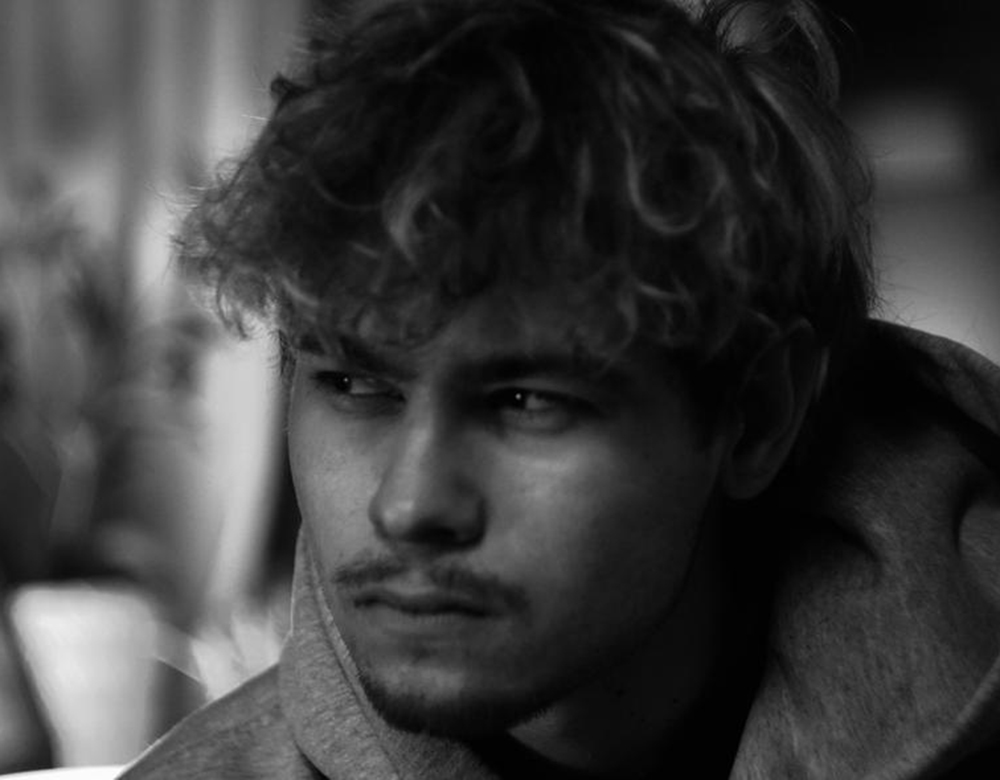
Mikołaj Radzyniak
You have been developing your artistic practice for more than a decade. How has your understanding of art and its role in your life changed during this time?
I remember that when I was a little boy, the person who taught me how to draw told me to write the words, “A day without drawing is a day wasted,” on my sketchbook. At the time, those words put a lot of pressure on me, to the point that I stopped drawing altogether for a while.
Today, I feel that I have matured enough to say that creating is what gives my life meaning. It puts me into a state of flow, it helps me survive, and most importantly, it no longer feels like an obligation.
Digital art definitely changed a lot for me along the way. It made me fall in love with drawing and creating all over again. Although I appreciate traditional mediums, digital painting has become my favorite artistic medium because of the incredible freedom it gives me.
For a long time, I wandered between different styles, trying to fit myself into certain categories, but looking back, I realize how unnecessary that was. The best advice I received, and something that completely changed the way I think about art, was simply to trust and observe what comes from within rather than trying to adapt myself to the outside world.
Your style has evolved through anime aesthetics, graphic design, realism, and surrealism. Which elements of these influences are still present in your current work?
Unfortunately, I hardly ever draw in a manga or anime style anymore. It simply doesn’t excite me the way it used to. I am also gradually moving away from realism understood as faithfully copying or imitating reality. Occasionally, as part of my practice and development, I still do photo studies, where I try to reproduce what I see in a photograph as accurately as possible on a digital canvas.
I think surrealism is the strongest influence in my work today, especially in my posters. I love that aesthetic drawn from all kinds of dreamlike visions. It works beautifully in posters and graphic design, but also in creating magical fantasy worlds.
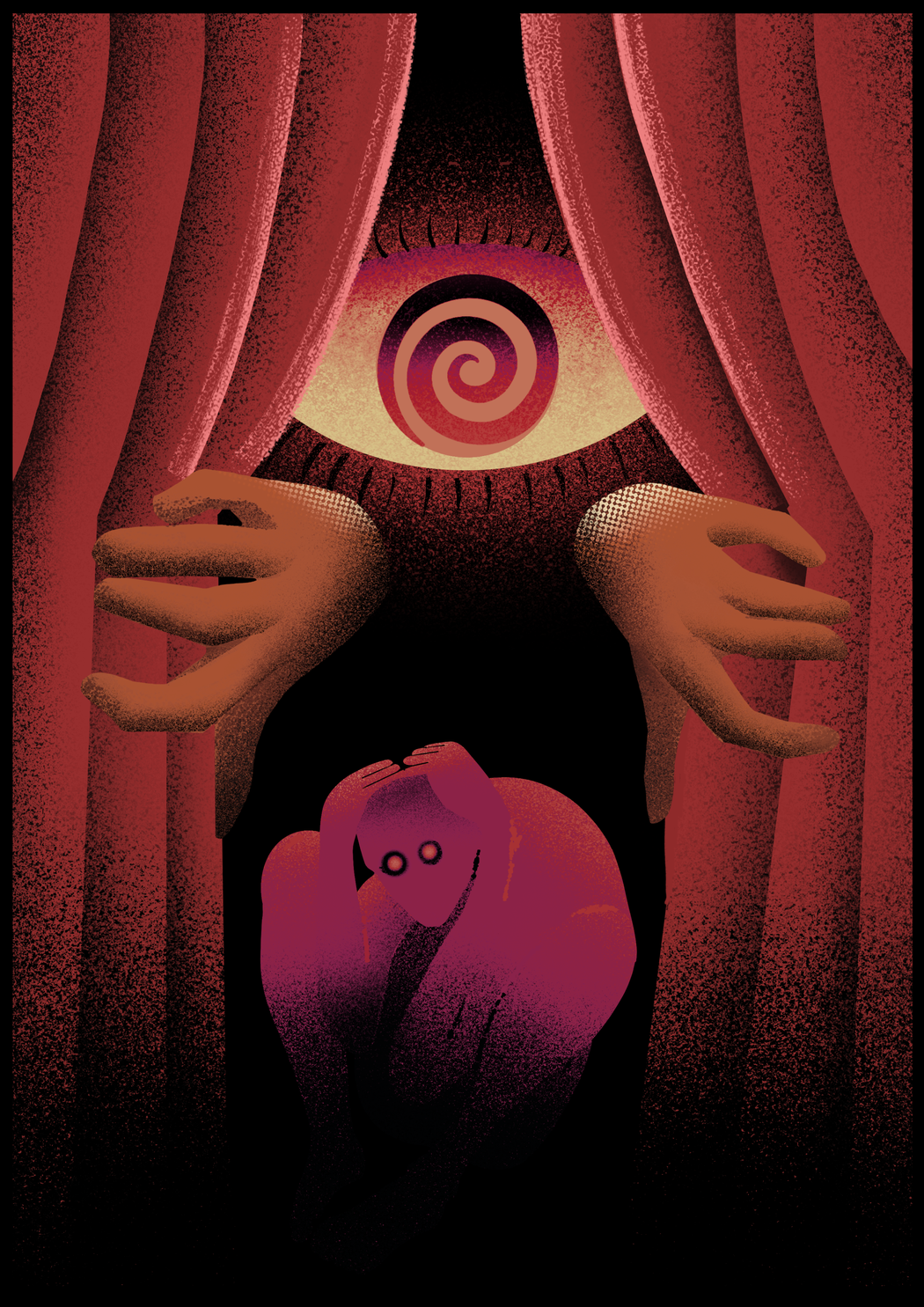 Mikołaj Radzyniak | Obsession
You describe style as a tool for storytelling rather than a fixed identity. How do you decide which visual language is most appropriate for a particular idea or emotion?
I try to begin by finding the subject, associations, ideas, concepts, and values, and only then choose the style and form through which I want to express them. Of course, sometimes you simply act on impulse, and that can be great too. But when I create more personal projects, I like the form to serve as a tool for telling the story, rather than the other way around, where the story becomes merely an excuse to experiment with form.
That is why, despite my strong connection to digital painting, I love exploring new techniques and mediums, such as linocut, aquatint, experimenting with architectural concrete, epoxy resin, and other forms of artistic experimentation.
How has your professional experience creating worlds and environments for the video game industry influenced your personal illustrations?
I think creating worlds has greatly developed my creativity and taught me to ask questions about the purpose and context of what appears in an illustration. For example, if I am designing a dark medieval castle, I ask myself: Who lived there? What happened inside it? What did the surrounding area look like? What purpose did the fortification serve?
I approach my personal illustrations in a similar way. I ask myself what I want to portray, why a particular association or image comes to mind rather than another, and what emotions I want to evoke.
Of course, working in the video game industry has significantly improved both my speed and technical skills, but I think the most important changes have happened in the way I think about creating.
Architecture and imagined spaces are important parts of your practice. Do you approach the human mind and emotional experience as spaces that can also be visually constructed and explored?
I like the analogy of the human mind as a labyrinth filled with thousands of corridors and doors. I often imagine the subconscious and deeply rooted psychological processes as the lower levels of a vast, multi-layered basement.
Through reflection, self-awareness, or therapy, we can gradually reach those levels, open the doors, and begin cleaning those rooms of the mold that poisons our soul.
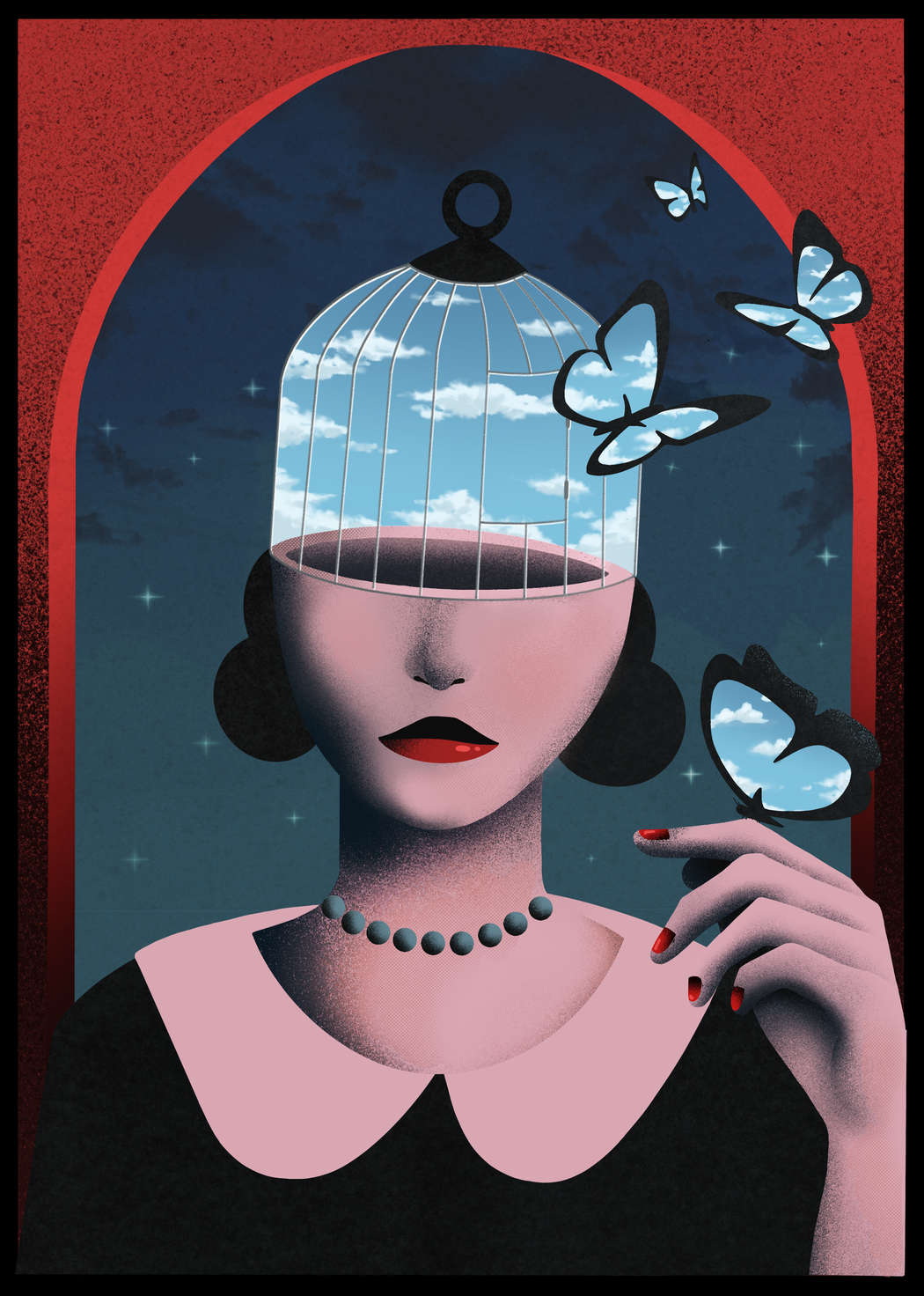 Mikołaj Radzyniak | Thought Trap
You have said that art helps you express experiences connected with chronic mood disorders that are difficult to communicate verbally. What can an image reveal that words sometimes cannot?
I often find it difficult to talk about things that are painful or difficult for me. When friends ask me how I am doing, I often cannot bring myself to say, “Listen, things are really bad.” Instead, I simply answer, “I’m getting by.”
Some subjective emotional states are also incredibly difficult to express through words. It is hard to explain what deep sadness looks or feels like, but it is easier to compare it to a dense fog that covers your entire world—a fog in which, like in a swamp, you sink even deeper the harder you try to escape.
And that is what I love most about creating.
What would you like viewers to feel or reconsider after encountering Obsession and Thought Trap?
I would like viewers to feel anything.
I don’t want to tell anyone what they are supposed to think about my work. Even if their reaction is negative, that is still much better to me than indifference, or simply thinking, “That’s nice,” and forgetting about the work a second later.
So I will be very happy if my work moves someone in any sense of the word.