
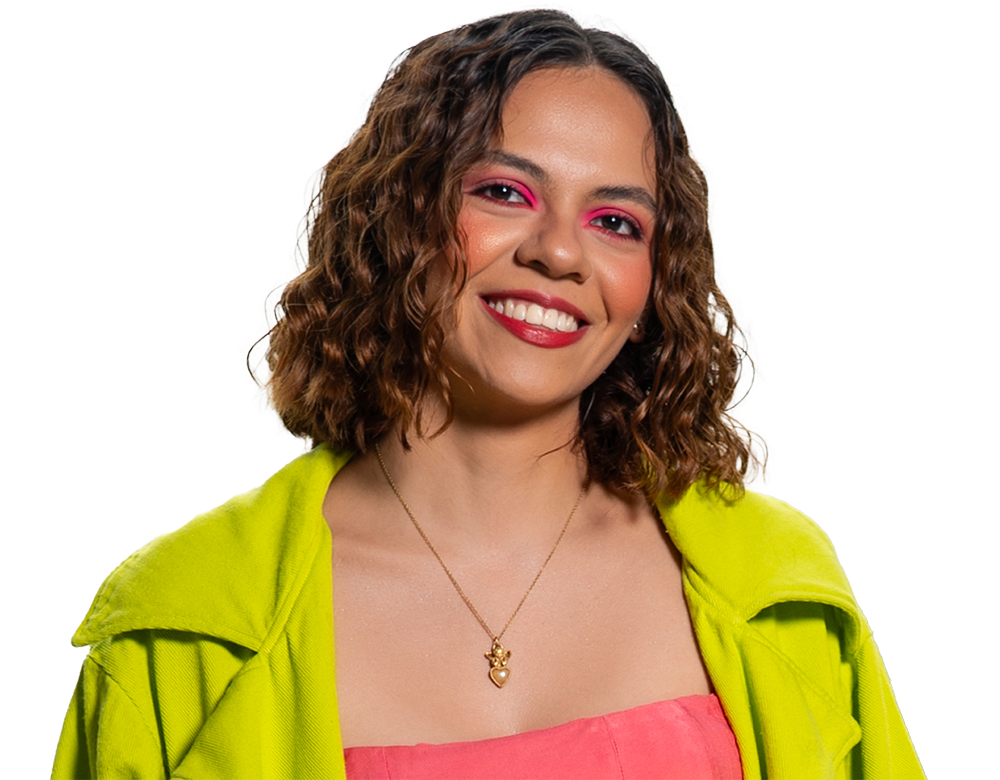
María Camila Restrepo Pedrosa
Your work is described as poetic, socially driven, and emotionally expressive. How do you personally define the emotional role of fashion in contemporary culture?
Fashion is constantly evolving; every day it takes on a new meaning, representing something new… from my perspective, there are two ways of seeing it.
On one end, fashion is a tool for social pressure to find its new home in people’s minds. The speed at which trends come and go, globalization, and the lack of meaning in much of the content on social media can impact people, especially young minds exploring and searching for their voice, DNA, and style.
On the other hand, fashion can be an amazing vehicle to express who we are and how we feel. Fashion as an industry is so much more than making clothes. I once worked with a community of kids in Medellín, many of them indigenous and all of them victims of violence in the country. They were separated from their families at a very young age and forced to be active members of illegal armed groups. Most of them didn’t know how to express everything they were feeling, and we were teaching them how the creative process could help them release their feelings through art and design. In this case, we were leading this class on how to shape your creative process to make loom-woven accessories, which is very characteristic among many indigenous communities in the area.
It was like before words could only tell part of their story, and drawing was a way of telling a different part of the same story, but there wasn’t a resource they could use to tell the whole story all at once. Almost as if there wasn’t a language they could use for that.
In this creative workshop, we were able to see them not only reconnect with their roots but also find a way to express all of their feelings, layer by layer and bead by bead.
Fashion has that power; even in much simpler daily situations, fashion can be a vehicle to express and transform any emotion inside you. It can mean resilience, happiness, resistance, pain…fashion can mean a lot of things. After all, fashion is a form of art, and art is subjective; art is made to express and provoke.
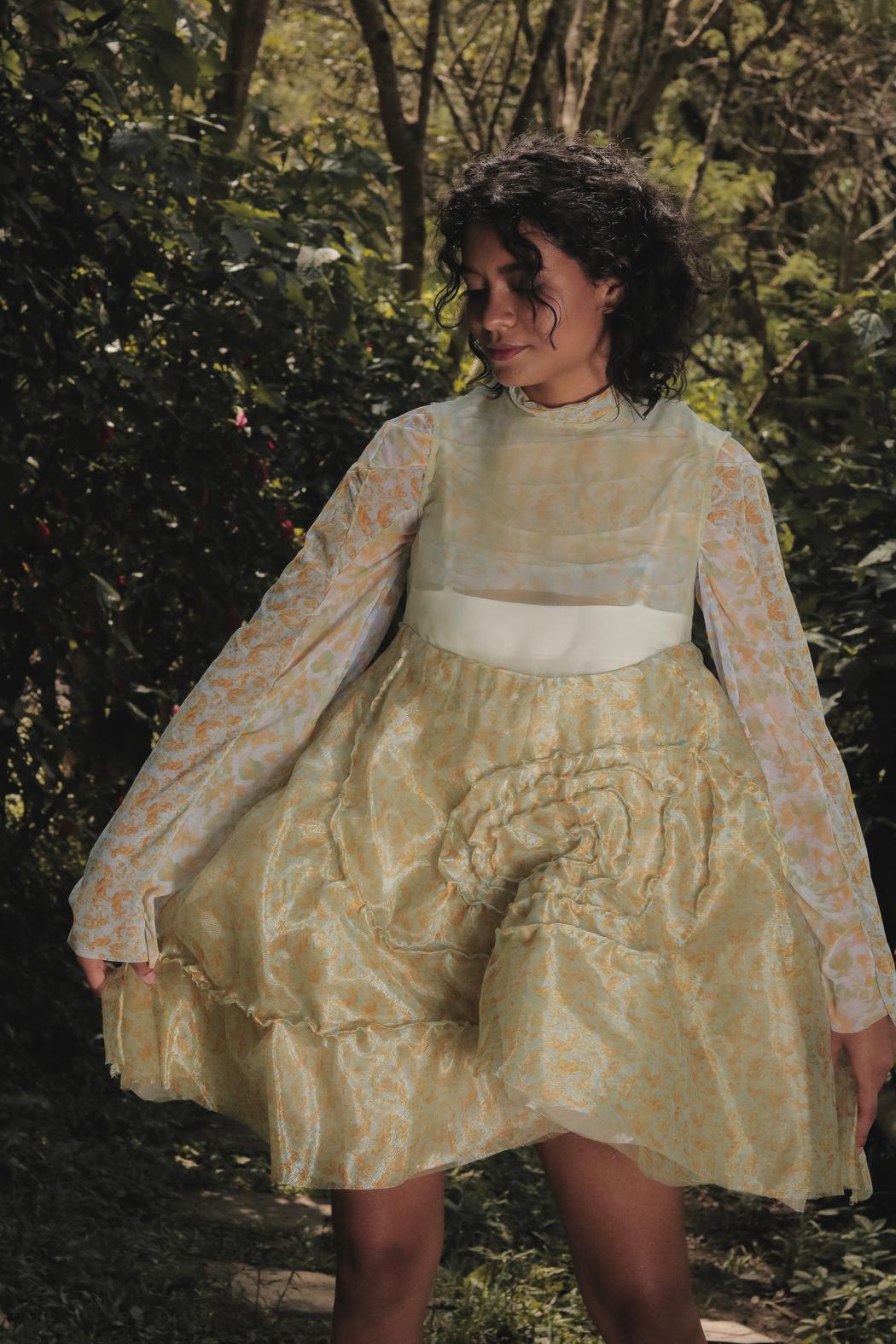
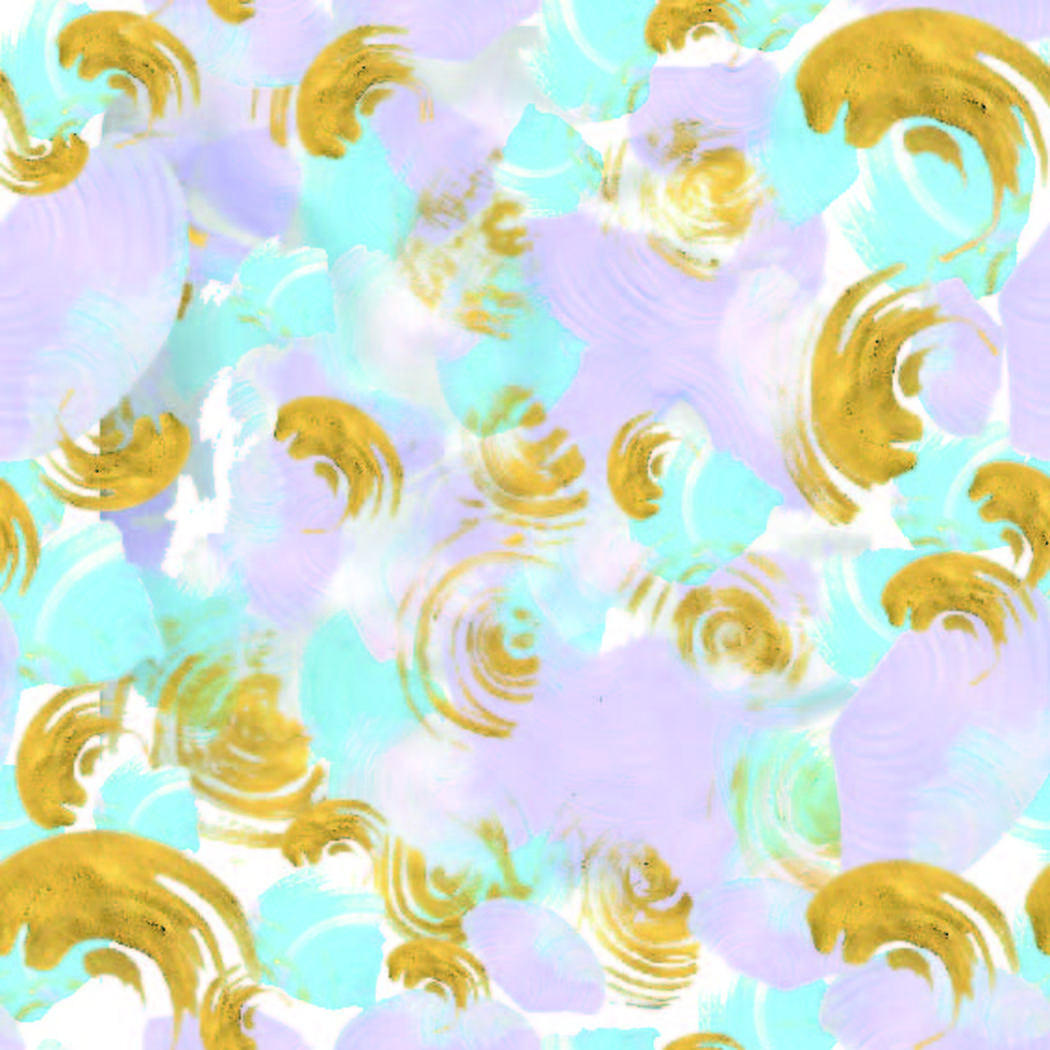 María Camila Restrepo Pedrosa | Modulo Espirales Dorados Estampado
You were born in Bogotá and raised between Pereira, Barranquilla, and Medellín. How have these different Colombian cities shaped your understanding of identity, memory, and visual language?
Colombia is very diverse in so many aspects, and culture is definitely one of them. We have 6 different regions in the country, each of them with different accents, stories, and roots. This might not be evident at first sight or if you have only been in one region, but for me, being born in the capital and moving around two other regions gave me the capacity to connect the dots and see how we are all different, while coming from the same place.
I spent around 15 years in Barranquilla absorbing everything our Caribbean culture had to give us, observing the Arab roots in the city and dancing to rhythms produced by the mixture between indigenous, Afro, and Spanish during colonization. On the other hand, Medellín is a city in which, whether we like it or not, the violence and presence of narcos made a huge impact on the city and its culture. Every form of art is like a diary entry of what the city has experienced and the resilience of the people living in it, and fashion is just another part of that puzzle.
The first one is very colorful and playful, full of joy, curvy shapes, flowing silhouettes, and volume, while the other one has a stronger structure, a very urban aesthetic, and clear gender roles assigned through clothing, where the feminine is very sensual, and curves are emphasized through tight silhouettes and short lengths, and the masculine is highlighted through colors, textures, and shapes.
Pereira and Bogotá are a whole different story despite being relatively close geographically.
A way to describe Bogotá is cold, grey, in a rush, from far might look a little intimidating and rude, but once you approach it and reach its heart, kind, friendly, and warm are the right words. This is accurate not only in how people inhabit this city and interact with outsiders, but also in what they wear and how they spend their spare time. Once again, this isn’t a random pattern it is absolutely related to the geographic location, being surrounded by mountains and rain, and the capital of the country where most of the political activity occurs, where the country’s independence arose but is also a target of many attacks during the violence period.
From Pereira, I have always loved how much you can see the pride they take in being cafeteros. This city is located in an area known primarily for growing coffee and working in the fields. Of course, this happens nearby outside the city; that doesn’t seem to be important when talking about who they are and who they are proud to be. They are proud of their roots.
This is just a very general example of how identity, memory, and aesthetics are not unrelated, but instead are dots that connect, can give you hints of a place or group of people´s history, their joy or burdens, an idea of the way they think, and even their roots.
The formula to understand how identity and visual language interact has become simple to me over time: what you see is like a sneak peek; it’s a little taste before the whole meal, and it’s also a big clue for you to be curious and explore. Once you know and understand the culture behind an outfit, a form of art, or any kind of expression, the dots connect. Suddenly, everything makes sense: why is it colourful, why does it look heavy, why is it rigid, why do they look pretty and uncomfortable at the same time…everything is related to culture, because culture makes us who we are.
And memory is always there, no matter if the conversation is about identity or about visual language. Memory is always part of the conversation, and we honour it, most of the time unconsciously, with every decision we make and how we present ourselves to the world. That’s our way of telling them who we are, the things we have lived that shaped us, and who we want to be.
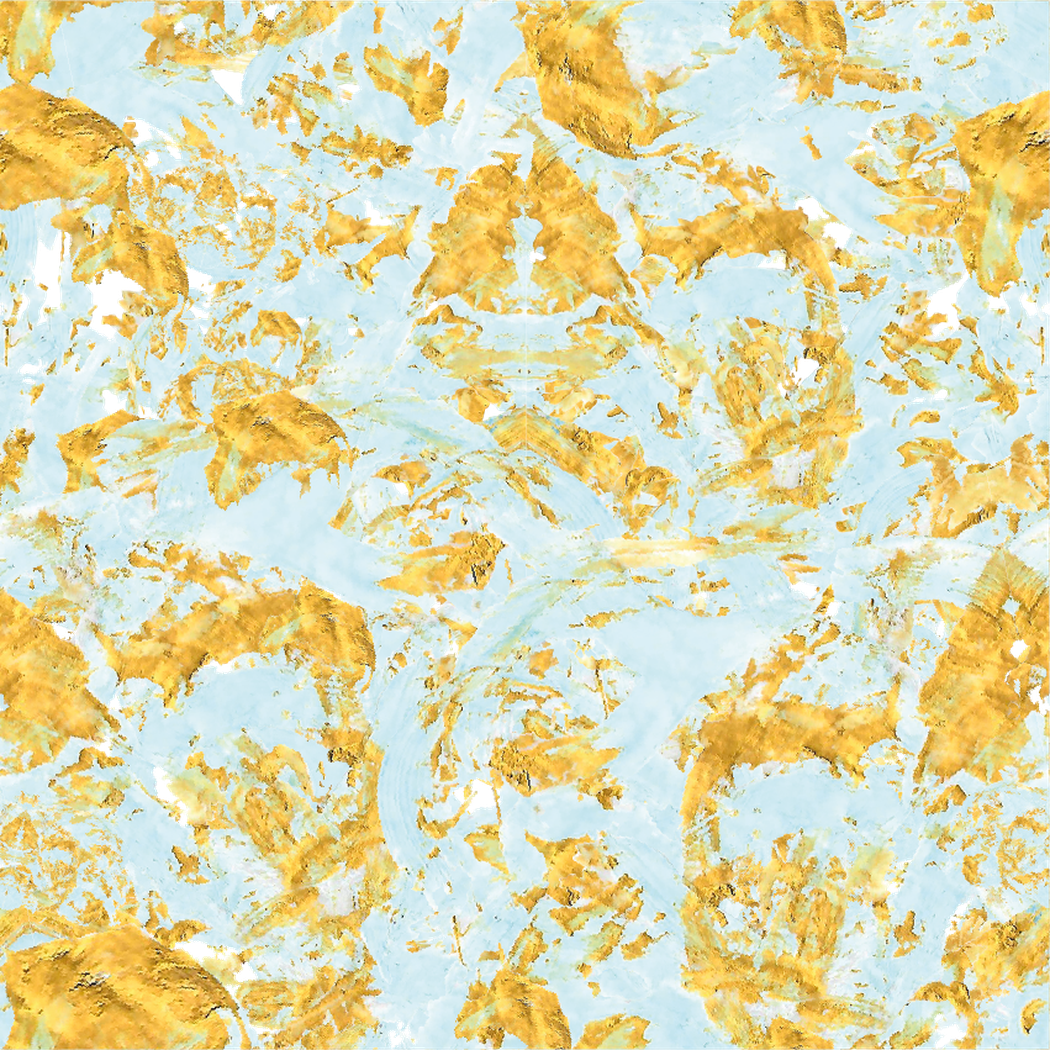 María Camila Restrepo Pedrosa | Modulo Marmoleado Celeste Y Doradi
Your statement says that each project begins with a question, a diary, or a collective story. Could you describe how an idea transforms from an intimate thought into a garment or collection?
It is a very intimate and personal process; sometimes it takes a long time to start, and sometimes it just flows naturally. I try to create out of myself a feeling, a personal experience, and a thought or posture over something I have.
Writing is a big tool for me in this process of transforming something so abstract as a feeling or thought into a collection.
I usually start by writing a poem or a short piece very emotional and full of sensations, intentionally using metaphors that later on will allow me to find inspiration in daily life objects, cultural symbols, or historical moments from which I extract aesthetic values, shapes, textures, and a color palette.
Imagination is a huge ally as well, a big part of the process after writing is just sitting down in my studio, under the sun or touching the grass, closing my eyes and imagining what this would look like. How would it smell? If it were a sound, how could I describe that sound? How is this color feeling? Those are the type of questions that help me shape and give direction to everything in my mind directly to paper and then to fabric.
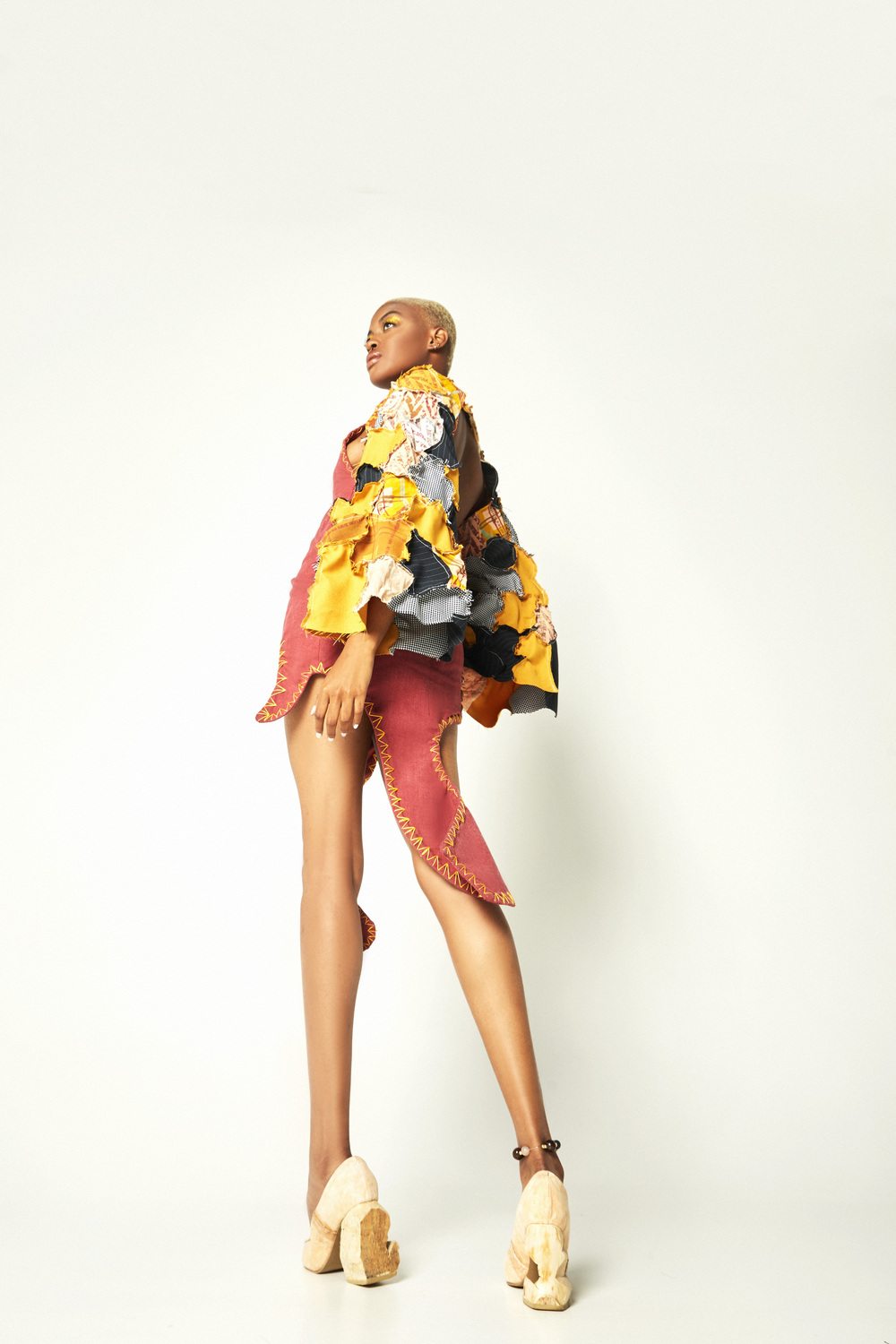
María Camila Restrepo Pedrosa | Restrepo Mitochondrial Eve
Your silhouettes combine softness, volume, transparency, and sculptural construction. How do you approach the relationship between the body and the garment?
For me, as a fashion designer, the most important aspect is always making wearable garments, in the sense that the final consumer will feel comfortable and will be able to move without restrictions using them. Yes, many clothes are very extravagant, but are people wearing them truly comfortable? My aim is always to check both boxes.
The human body should be able to move, breathe, expand, and dance; it should be able to express itself using clothing as an extension of the body itself.
Thinking about clothing as an extension of the human body and a tool of expression has allowed me to explore with volume and geometrical structures, almost sculptural as you mention. What I like about volume, fluidity, and tightness is that it adds movement to the garment, and whoever is using it is commanding how it moves.
I have also realized that I like making opposite concepts interact in my designs, when it comes to structure and silhouettes, sometimes the final structure or shape of a piece is not determined by a sketch or the patterns. Sometimes I like allowing the opposite concepts to play with each other by draping directly on the mannequin. That often gives breathtaking results.
The project “Punto de Partida” explores the historical, cultural, and symbolic value of artisanal techniques in Colombia. What did this research teach you about the responsibility of a designer?
As designers, it is very easy to forget where you get your inspiration from. Nowadays, everything is so fast, I can’t even really count how many pictures, videos, buildings, or even people walking on the street we see per minute. And every single thing we see is inspiration, whether we are looking for it or not.
But that doesn’t take away our responsibility as designers to give credit for the inspiration we take from indigenous and artisanal communities.
Beyond that, we have the responsibility of keeping our roots and culture alive through our designs and art. It’s not about becoming indigenous or adapting techniques that don’t go with your narrative; it’s about telling stories that light up the spark of curiosity towards an unknown community and giving them a voice. It´s about telling our customers where our inspiration comes from, what’s the story behind this specific and very special seam.
Fashion is full of symbols and history, and those two concepts are always tied to culture.
You describe fashion as a medium “to heal, to question, and to transform”. What kinds of healing or transformation do you hope your garments can offer?
I like to think that behind all of my garments, there’s an invitation for everyone to get more in touch with their inner child, to dare to get out of their comfort zone and explore more about themselves and who they are through clothing.
With social media and how big of an impact it makes in our lives, I feel like a challenge no one can escape is what others will think about you, about me, about us.
My clothes are always full of color, patterns, textures, volume, and layers. And I take that as my reminder, and your invitation to care less about what others might think about you, go outside, explore, and have fun like when you were a kid. Try on your clothes and create unique outfits that connect you with who you are.
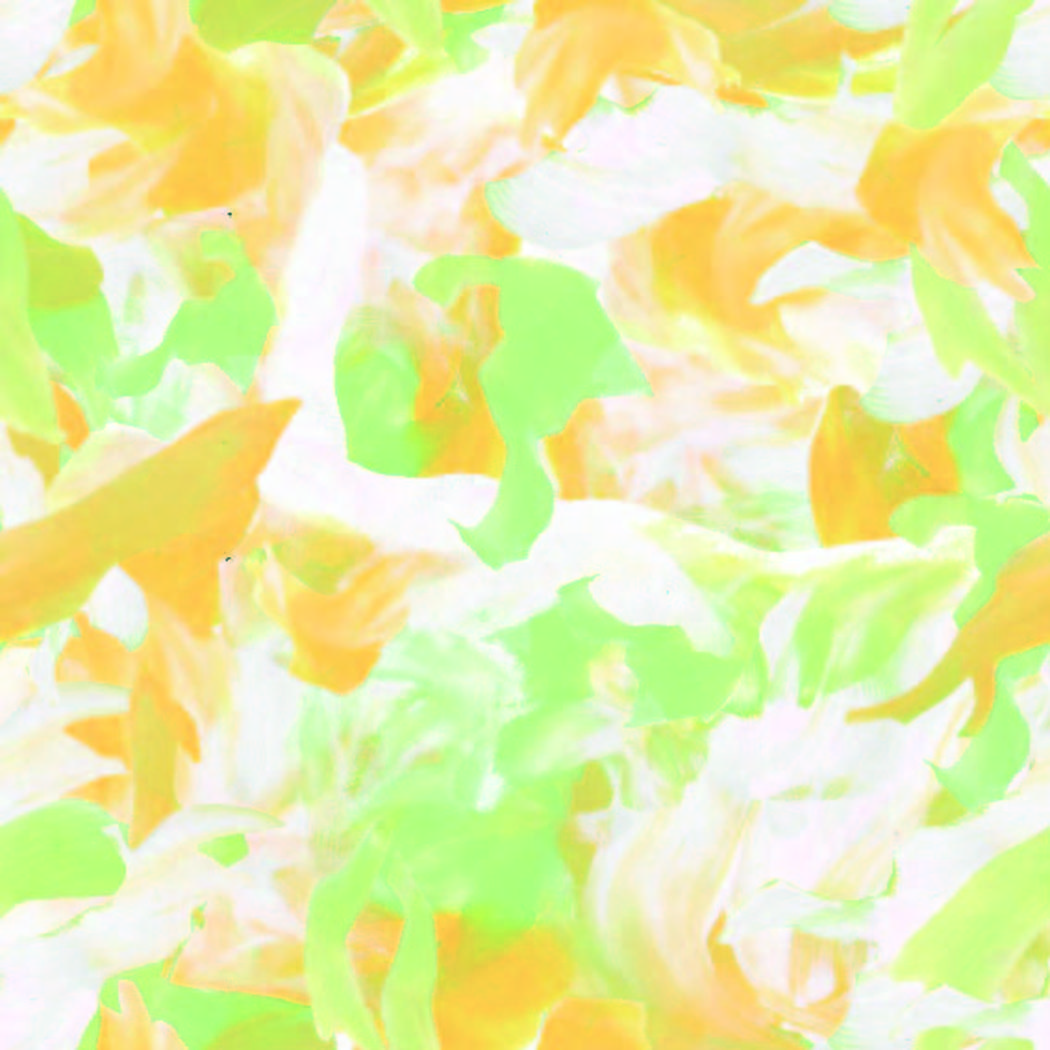 María Camila Restrepo Pedrosa | Modulo Abstracto Amarillo Estampado
Your collections have been presented at Colombiamoda, while your research has also entered academic and social innovation contexts. How do you see the dialogue between runway, research, and community work?
From my perspective, they are all connected, especially how I run my creative process; everything starts with research. You might have an idea or feeling you want to express and almost like a plan on how to do it, but without proper research, all of that is meaningless. Research is the bridge between a simple idea and a collection of symbols and visual resources to connect your ideas with a story, a clear identity, a culture, or a community. When culture is such an important part of your creative process, working with a community is almost inevitable. As a designer, I’m trying to make my work a platform to honor their story, to give them a voice.
There’s a fine line between getting inspiration from a community and the inappropriate use of culture. I prefer being perceived as a respectful cultural advocate rather than being known for taking credit for creating something another community has had in their culture for thousands of years.
Of course, there are always cases in which research is way deeper than just visual resources, and it turns into a more academic and longer exploration. There’s more analysis, very often, sociology, science, history, anthropology, and even politics get involved too. And I think that’s part of the beauty of fashion: on a surface level, you might think everything is about garments, shoes, runways and magazines, but fashion as a discipline is here to show us how everything is connected and impacting our lives.
Runways and fashion shows are the most common places where we see the final product of months and months of exploration, research, designing, production, styling, and more, not only from a designer or brand’s perspective in their shows, but also with how people attending these events choose to present themselves. Every look we see in a fashion event is very much intentional; those are the perfect scenarios for people to speak their minds, their truths, to make sure the world hears what they want to say.