
Sister Annie
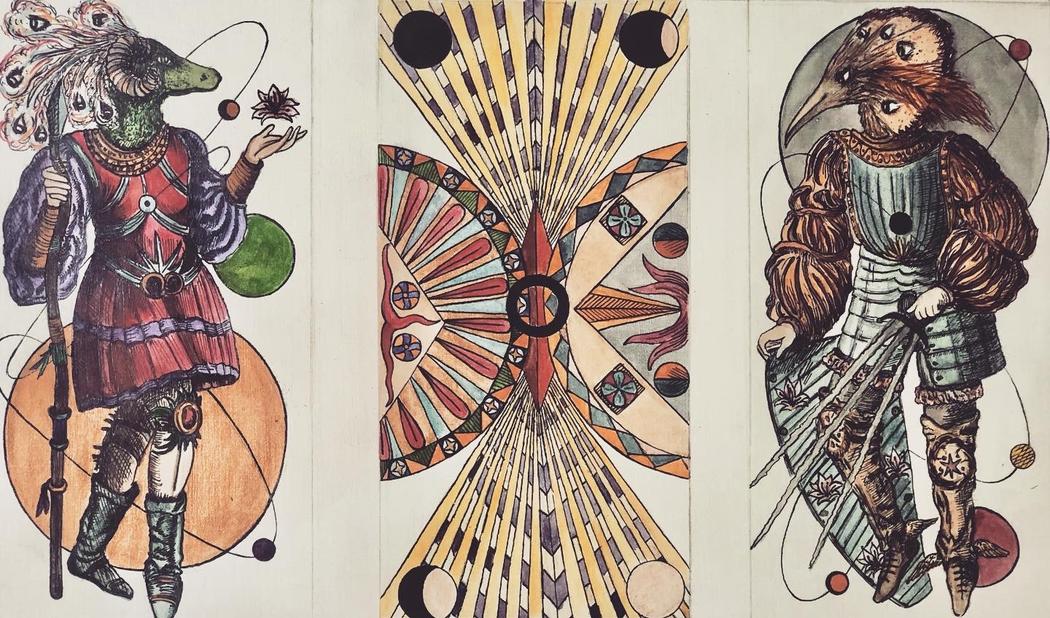 Sister Annie | The Collision | 2022
Your work combines historical printmaking techniques with contemporary music culture. How did this intersection first emerge in your practice?
I used to be a designer for music projects long before I became a printmaker or studied graphic design. In fact, it was my ongoing work in the music field that shaped me as an artist. Between 2015 and 2017, I lived in my friends’ rehearsal studio, organising events, festivals, rehearsals, and band tours. During that time, I also drew most of the posters myself to save money. Not many original drawings from that period have survived. In 2019, I began a Foundation course where, among other disciplines, we were introduced to printmaking, first and foremost, drypoint on plastic. To be honest, I found it challenging, time-consuming, and frankly frustrating. This pushed me to start researching alternative printmaking methods, which is how I came across etching. My first copper plate was made at home with no practical experience, relying only on a few instructions from an obscure 1960s book. Somehow, it turned out exactly right: a deep, clean open-bite etching of St. Margaret of Antioch from Liber Chronicarum. Most importantly, it was faster than scratching into plastic plates for days. From there, I began to explore the process more seriously, learning new techniques and attending open workshops. Looking further back, I suppose my interest in historical imagery traces all the way to childhood fascination by King Arthur’s Tales and the late 70s animated Lord of the Rings films my parents introduced me to.
What draws you specifically to medieval and Renaissance visual language, and how do you reinterpret it in a modern context?
It is the sense of mysticism and wonder that draws me in. In earlier times, when natural events, laws of physics, the universe, and human physiology lacked clear explanation, the mind filled those gaps with fantasy and fairytale-like narratives like medieval stories of giants, dragons, and other mythic creatures. Equally important is the craft element. In periods when everything was hand-drawn, typeset, and painted, objects carried a more human presence and are marked by small imperfections of age, something like Western interpretation of wabi-sabi. In my own work, I try to preserve this sense of craft, often referencing folk tales and following visual canons of Renaissance era. We already have seen few medieval revivals, such as Arts and Crafts movement and the 1970s rediscovery of mythic and fantasy aesthetics. I believe another revival is overdue, particularly in the context of AI imagery and contemporary fashion trends already flirting with chainmail and knight-core. Yet we live in a world of constant visual flow at our fingertips, and in such a fast paced environment, my work has found its most natural place within contemporary music. Music is a vivid, fluid art form, leaving much space for this kind of imagery across a wide range of genres. If it still plays, it stays.
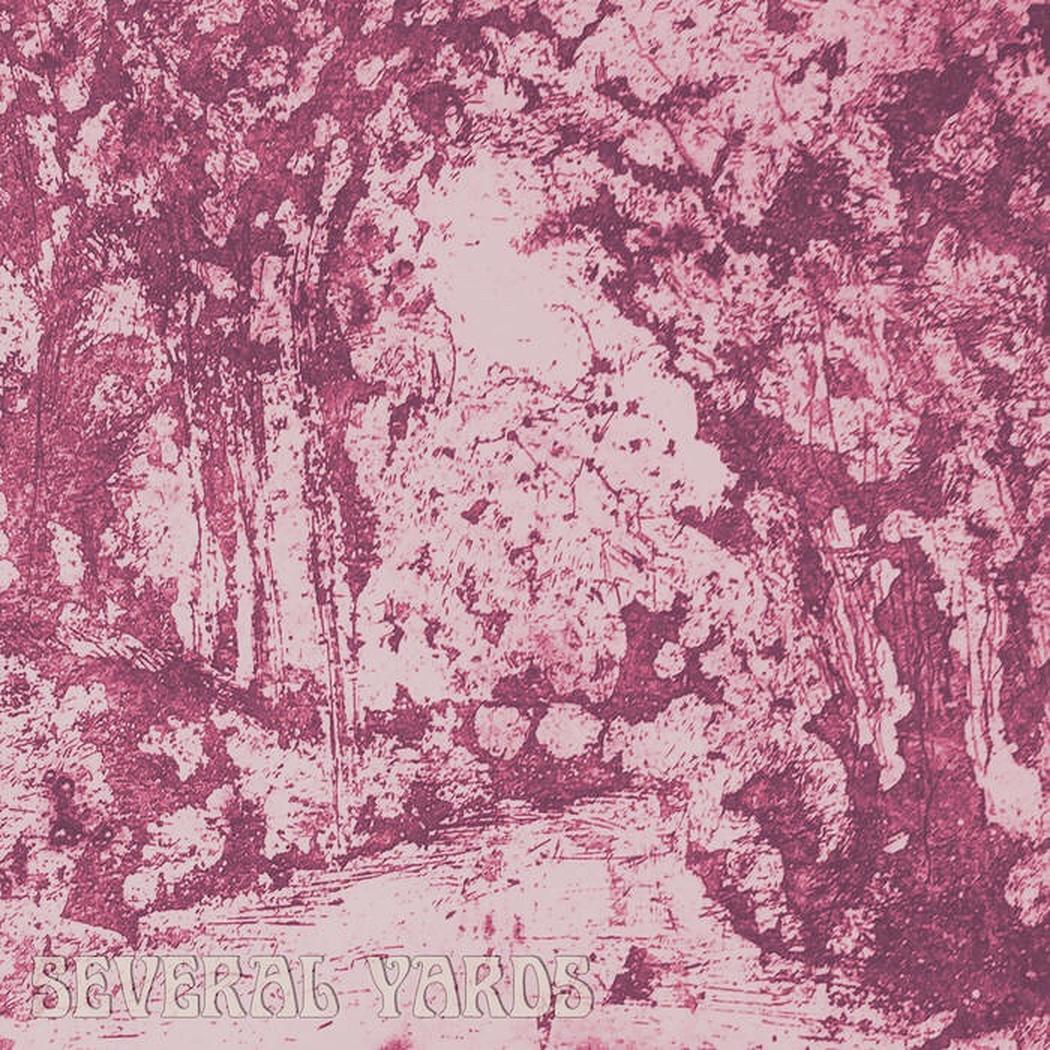 Sister Annie | Several Yards Album Cover | 2021
You often reference mysticism and hermetic philosophy – how do these ideas shape your visual narratives?
I am strongly drawn to metaphor and symbolic language, both in literature and visual art. This is reflected in my interest in alchemical imagery and in the poetry of Milton, where meaning often operates on layered, allegorical levels. For me, the language of symbols allows multiple strata of meaning to exist at once, often carried by a few carefully placed accents or details. I use this density, as it lets an image hold ambiguity, memory, and resonance without resolving itself too quickly. The process of creation itself feels inherently mystical, where inner states and outer forms mirror one another. In making, there is a sense of stepping outside the constraints of ordinary time and physical logic, entering a spiritual and intuitive space. Rhythm is central to this, just as it structures music, it also governs visual harmony, repetition, and pauses within an image. Like much spiritual art, my work isn’t seeking to provoke, impress, or assert an argument – it’s here to remind of interconnectedness of things around, to spark reflection, memories, and search for inner light. It quietly arrives to recall the childhood sense of wonder, to be felt and heard in the Nous (the divine mind within). Our path is, indeed, a spiral of trials and errors, leading to reunion with ourselves, with the prima materia of lived experience, with the silence between the wind chimes.
Can you describe your process when working with traditional techniques like etching or relief printing? What role does materiality play for you?
A lot of my printmaking process is rooted in sensory interaction. In many ways, it echoes the medieval idea of ars, a labour-intensive transformation of material. I value the physical effort that goes into making, for me, that tangible engagement is part of what gives the work its weight and presence. I mostly work with copper, partially because it is the most accessible material, but also because I associate it with a certain warmth. This year I’m planning to experiment with steel, which I’m particularly drawn to – there’s something compelling about its historical use in swords and armour. I don’t work in gloves, unlike many printmakers, because it creates a distance between myself and the material. Direct contact is important to me so my hands are always stained with ink. At the same time, while I can be quite meticulous and exacting in technical processes, I always leave space for unpredictability and experiment. For example, one of the “Crescent Moon” illustrations was my first attempt at sugarlift. I mixed the solution myself, which introduced a number of unexpected artefacts into the plate. Once the plate is submerged in the etching bath, I no longer try to fully control the outcome, instead I allow it to open up and develop on its own terms. It becomes a kind of improvisation within a classical framework.
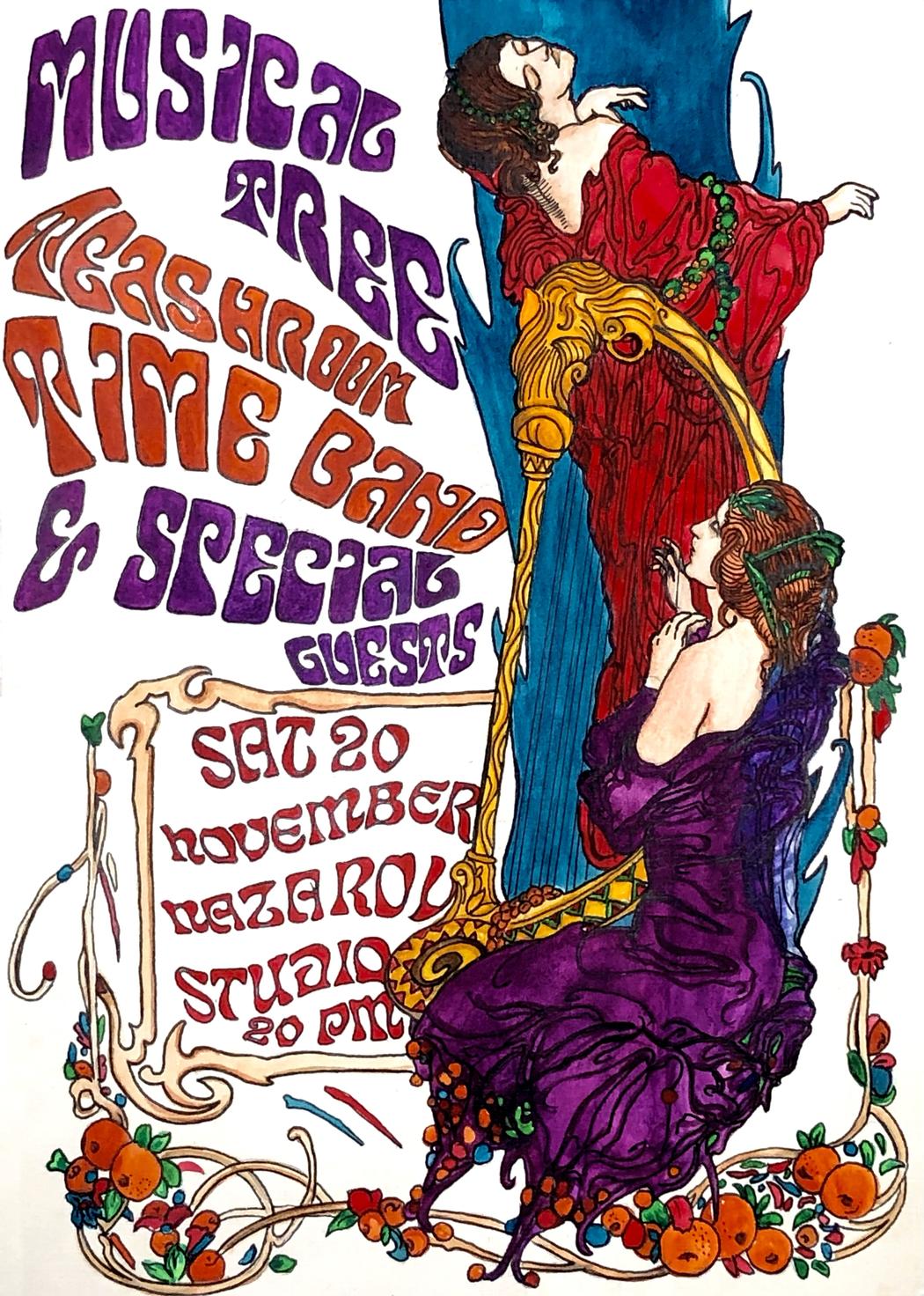 Sister Annie | Musical Tree Poster | 2022
Your poster designs for music events have a very distinct identity. How do you translate sound or musical atmosphere into visual form?
As music is built on patterns, rhythms, and pauses, my posters follow a similar structural logic. I tend to work with vivid, concentrated colour, whiplash lines, and gothic typefaces, elements carrying both movement and intensity. I got into progressive and psychedelic music fairly early in my teenage years. Between 2016 and 2019, I ran a community dedicated to progressive music reviews, and at some point it became a personal mission to support emerging bands within the genre, often free of charge, and help shape it into something closer to a unified countercultural force. This led me to study posters from the 1960s and 1970s, their visual language and production methods, which I then began introducing into my friends’ bands. We used to call that atmosphere psychedelic underground, or jokingly, hippie metal. Later, this interest developed into my degree essay, which focused on psychedelic and occult imagery in music illustration from that period. For me, it is always about striking a balance between the progressive flow and richness of arrangement, and a heavier, rougher underlying structure that recalls the rawness of rock music. This is why many of my designs revolve around themes of life and death, nature and mysticism. For instance, the Musical Tree cassette design centres on the unity of three arts – music, visual art, and poetry – brought together under the tree of life. The figures are shown harvesting its fruits among iris flowers, traditionally associated with hope and wisdom. Inside the gatefold, repeated image of a blackbird as a subtle reference to the guitarist who introduced me to the band – his surname is Blackbird. As a progressive band in the most classical sense with strong conceptual foundation, they lend themselves naturally to allegorical imagery.
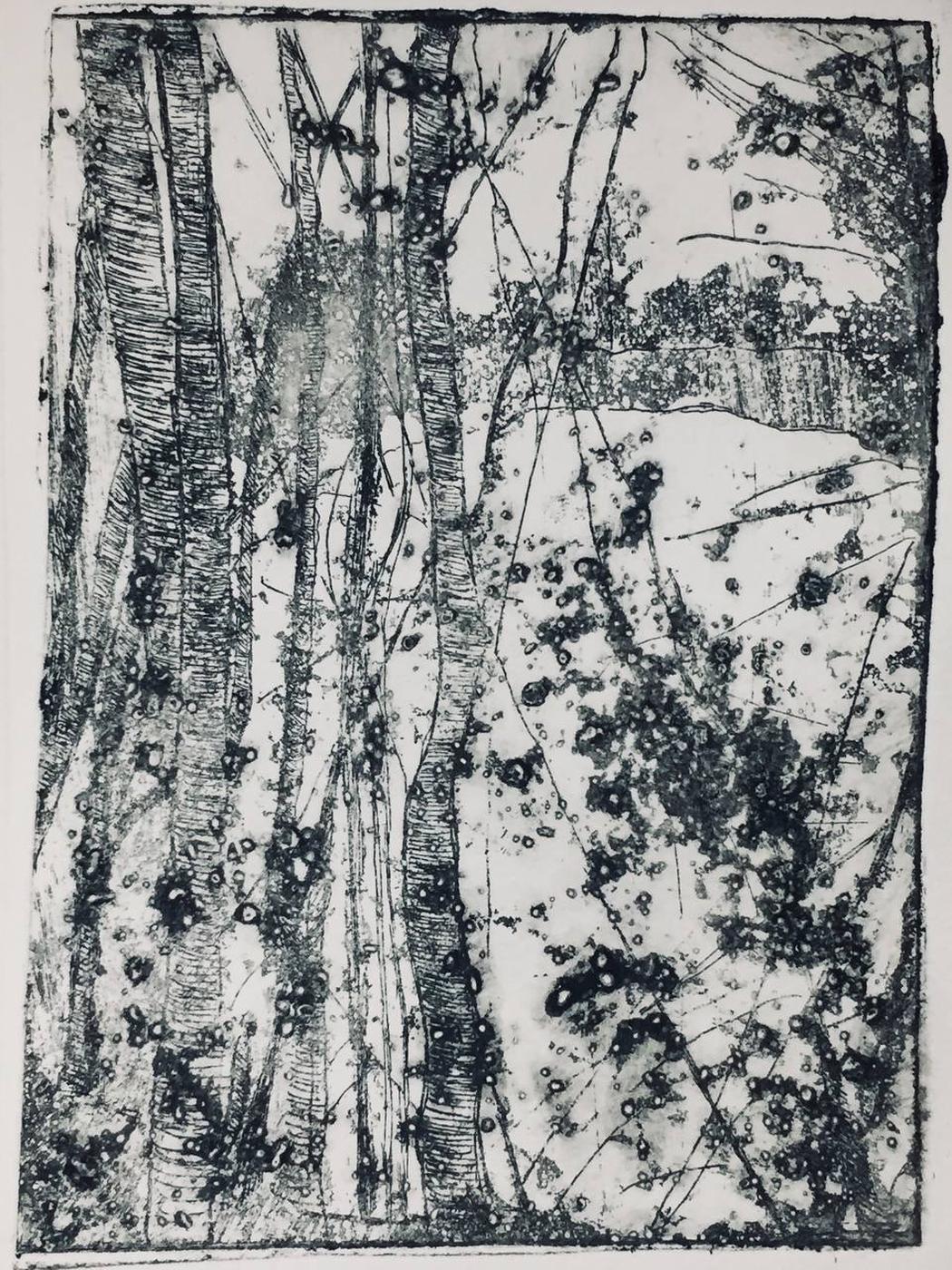 Sister Annie | 5 4 | 2019
The influence of 19th-century book illustration is very present in your work. Are there particular artists or publications that inspire you?
Kay Nielsen’s West of the Sun, East of the Moon has long been one of my most cherished fairytales. As a child, I was equally captivated by Arthur Rackham’s King Arthur and the Knights of the Round Table. Last summer, during a trip to Hay on Wye, I finally came across an original 1917 edition.
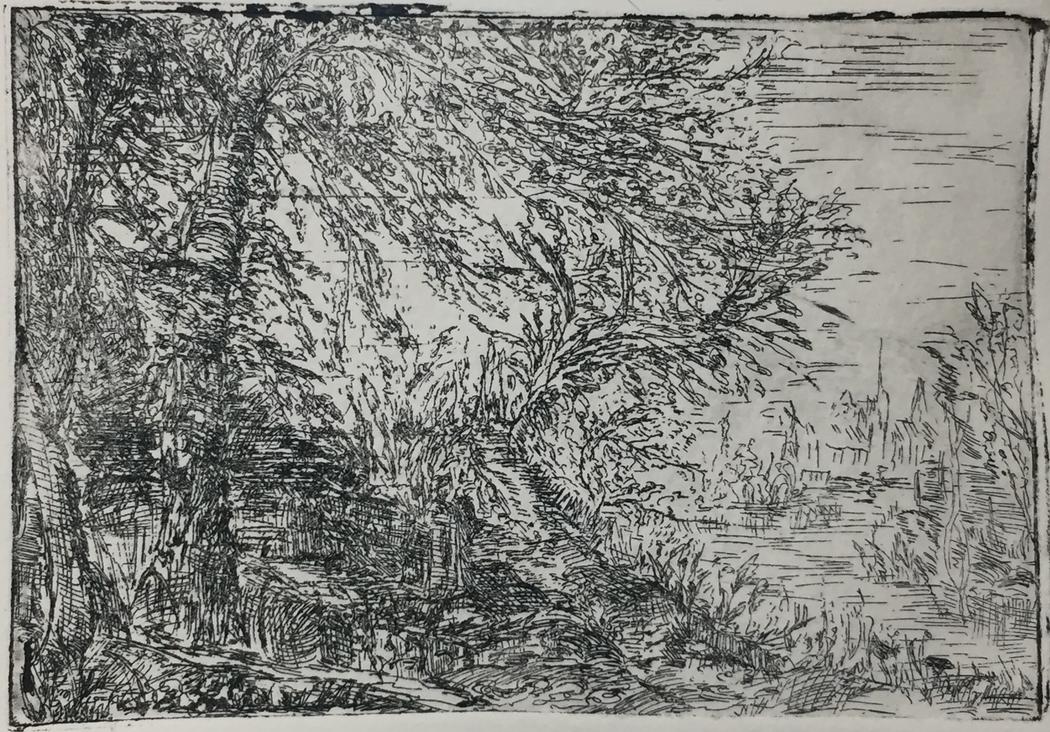 Sister Annie | High Rise | 2019
How does working within the underground music community influence your artistic direction and collaborations?
Through this work, I’ve met my closest friends and long-term collaborators. The underground music scene has always been a space of connection for me, I regularly attend festivals and events, meet new people, and many of those encounters naturally evolve into shared projects, bands, or long-term creative partnerships. I first met my sound engineer and co-founder of Devil’s Well Records around twelve years ago. Since then, we’ve worked together on numerous events and releases. Whenever a band approaches me for design, I often bring him into the conversation if they might also need support with studio production or live recording. It’s a collaborative network that tends to grow organically. I find a constant source of inspiration within the underground music community. When working with bands, I aim to translate their sound, atmosphere, and underlying ideas into a visual language that feels true to them. That process often leads me into new areas of research. For instance, my recent interest in sacred geometry, antique mechanical constructions, and early machinery has been shaped largely by an album cover I’m currently developing for TIME (The Invisible Machine Engine), a project that calls for a more structural, symbolic, almost cosmological approach to image-making.
Leave a Reply
You must be logged in to post a comment.