
Shree Mehta

Your work combines natural materials with imaginative storytelling. How did your journey into leaf painting begin?
My journey into leaf painting didn’t begin in a professional studio, but rather under the sprawling canopy of a massive Peepal tree that stood like a silent guardian in my schoolyard. As a young student, I spent nearly every break sitting in its shade, lost in my sketchbook. In those days, I didn’t have a fancy palette to mix my paints. Like any resourceful young artist, I looked to the ground for a solution. I began picking up the fallen Peepal leaves scattered around me, using their broad, sturdy surfaces as a natural palette to test my colour shades before applying them to my paper. The ‘aha’ moment came quite unexpectedly. One afternoon, after finishing a sketch, I looked down at the discarded leaves at my feet. They were no longer just debris; they were vibrant, jewel-toned fragments of art. The way the pigments settled into the intricate skeletal veins of the leaf was mesmerizing. They looked so inviting and full of life that I couldn’t bring myself to throw them away.
I remember thinking: ‘Why am I using the paper as the final destination and the leaf as the tool? Why not flip the script?’
The very next day, I returned to my spot under the tree with a new purpose. I selected a perfect leaf and painted an entire composition directly onto its surface. Boom—the result was magic. It was a ‘one-of-a-kind’ piece that felt like a collaboration between me and the tree. When I showed it to my family and friends, their reaction confirmed what I felt: they were captivated not just by the image, but by the tactile, organic nature of the canvas itself. It invited them to reach out and touch the art. That childhood curiosity turned a simple fallen leaf into a lifelong gateway for my storytelling.
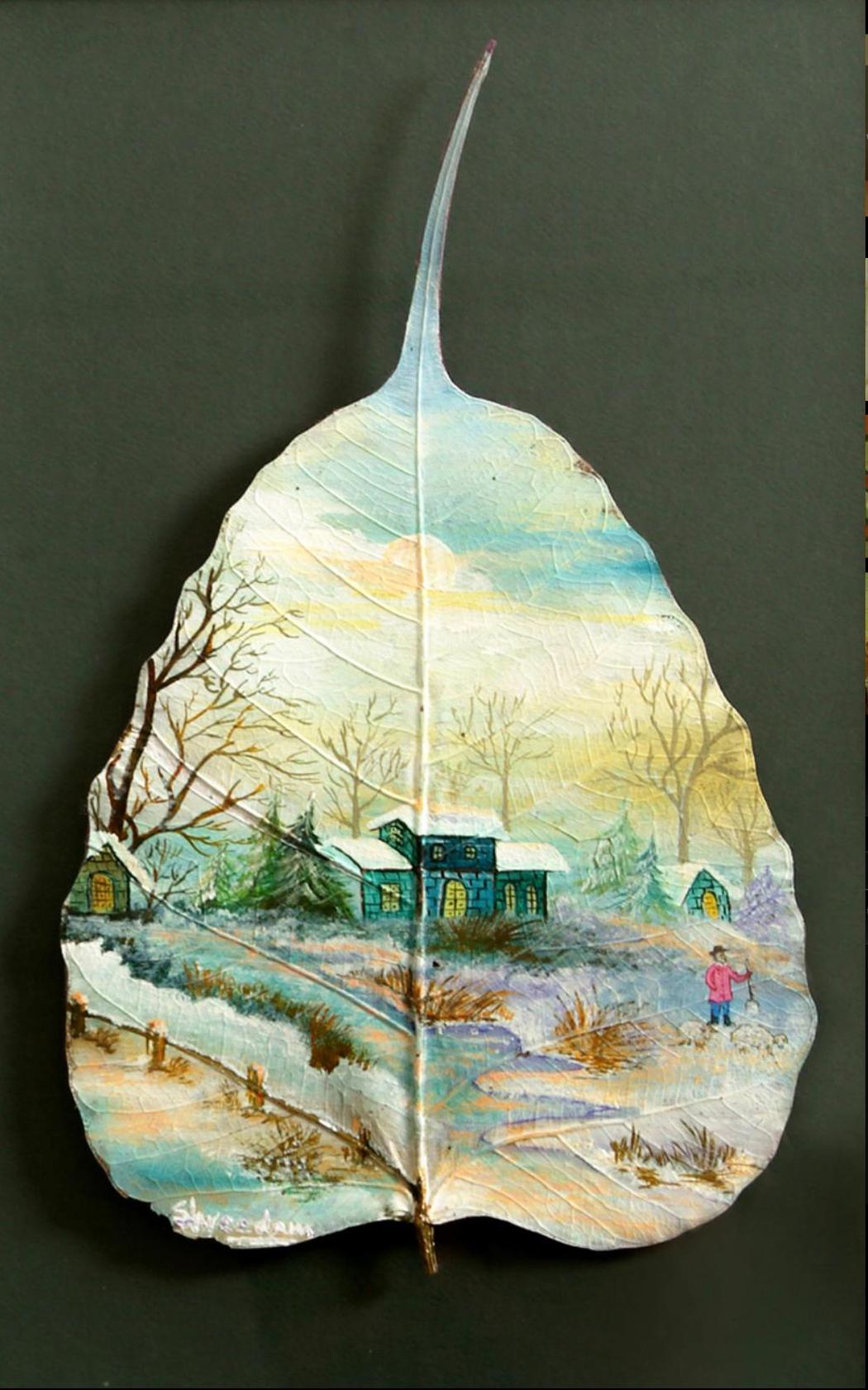 Shree Mehta | Frosted Heaven | 2006
What drew you specifically to Peepal leaves as your primary medium? Do they hold any symbolic meaning for you?
The Peepal leaf is more than just a canvas to me; it is a storied fragment of the earth. What first drew me to them was their iconic, heart-shaped silhouette and the intricate, lace-like network of veins that acts as a natural guide for my brush. Unlike paper, which is silent, a Peepal leaf has its own voice and texture that invites the viewer to look closer and even reach out to touch. Symbolically, these leaves represent the eternal cycle of life. In many cultures, the Peepal tree is known as the “Tree of Life,” symbolizing enlightenment and the bridge between the physical and spiritual worlds. By choosing a fallen leaf, I am working with something that has technically “passed,” yet through art, it finds a second life. Unlike other foliage, the Peepal leaf is remarkably less brittle, allowing it to withstand the delicate pressure of a paintbrush. The most rewarding part of the process is their longevity; once the leaves are properly flattened and treated, they become incredibly durable. They don’t just wither away; they transform into a permanent, organic parchment that lasts for years.
It’s a beautiful metaphor for resilience and transformation—taking a piece of nature that would otherwise return to the soil and preserving its story forever. Every vein tells a tale of growth, and every stroke of my paint is a tribute to that history. Using them allows me to blend imaginative storytelling with a medium that already carries its own ancient, mystical soul. It’s a collaboration with nature that feels both grounding and divine.
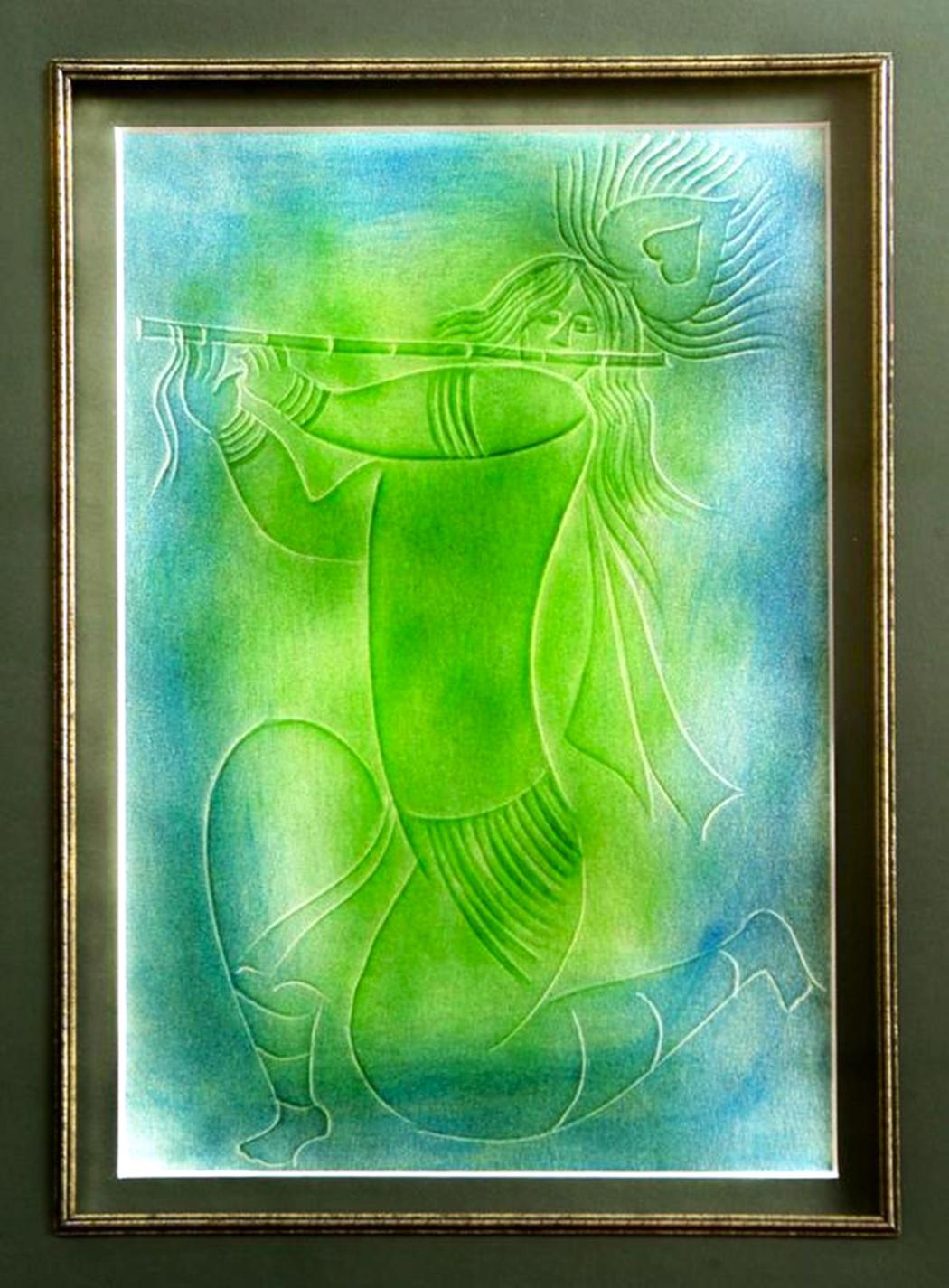 Shree Mehta | Krishna’s Melody | 2022
Painting directly onto such a fragile surface without sketches must require great control. How do you approach this process mentally and technically?
Painting on a Peepal leaf is a high-stakes dialogue between my brush and nature. Mentally, I enter a state of meditative focus; since there are no do-overs or pencil sketches, I must visualize the entire story before the first drop of paint touches the surface. It requires a “surrender to the leaf,” where I respect its natural veins and contours as part of the composition. Technically, the process is one of extreme precision and restraint. I use specialized miniature brushes and professional-grade pigments that won’t compromise the leaf’s integrity. Because the surface is porous yet delicate, my hand must be feather-light to avoid tearing the skeletal structure, yet firm enough to ensure the color adheres. I often hold my breath during the most intricate details, as even a slight tremor could ruin weeks of preparation. This disciplined control is what transforms a fragile, fallen fragment of a tree into a sturdy, timeless masterpiece. It is a balancing act of patience and agility, where the physical limitations of the leaf actually push my creativity to its highest level.
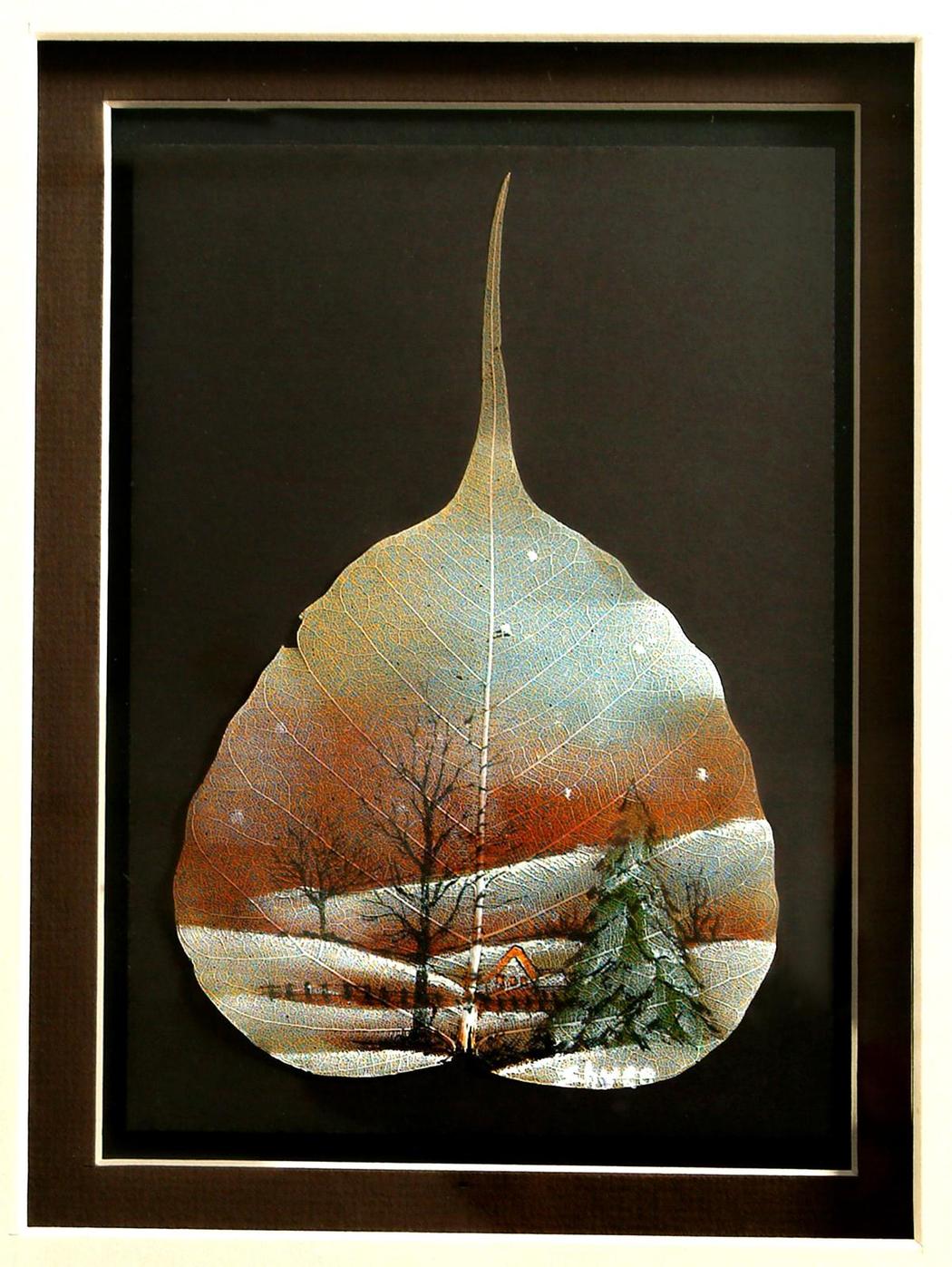 Shree Mehta | Magical Moments | 2005
The natural veins of the leaf play a visible role in your compositions. How do you balance control and spontaneity when working with these organic structures?
Working with the natural veins of a Peepal leaf is like dancing with a partner who already knows the steps. I don’t view the skeletal structure as an obstacle to be covered, but as a pre-existing map for my story. My approach is a constant shift between technical control and organic spontaneity. I start by observing the leaf’s unique ribbing; sometimes a curve in a vein perfectly mimics the flow of a garment or the bend of a tree branch, and I let that natural geometry dictate where my brush goes. Technically, I must maintain a firm grip on my medium, ensuring the paint sits precisely where intended without bleeding into the delicate “cells” of the leaf. Yet, there is a beautiful spontaneity in how the organic surface absorbs the pigment. Sometimes, the leaf resists or accepts the colour in ways I didn’t plan, and I have to pivot my narrative to match its character. It’s a process of listening to the material. I provide the vision and the steady hand, but the leaf provides the soul and texture. This balance ensures that no two pieces are ever the identical; each composition is a bespoke collaboration between my artistic intent and the tree’s original design. By the time I finish, the veins and the paint are so intertwined they become a single, breathing masterpiece.
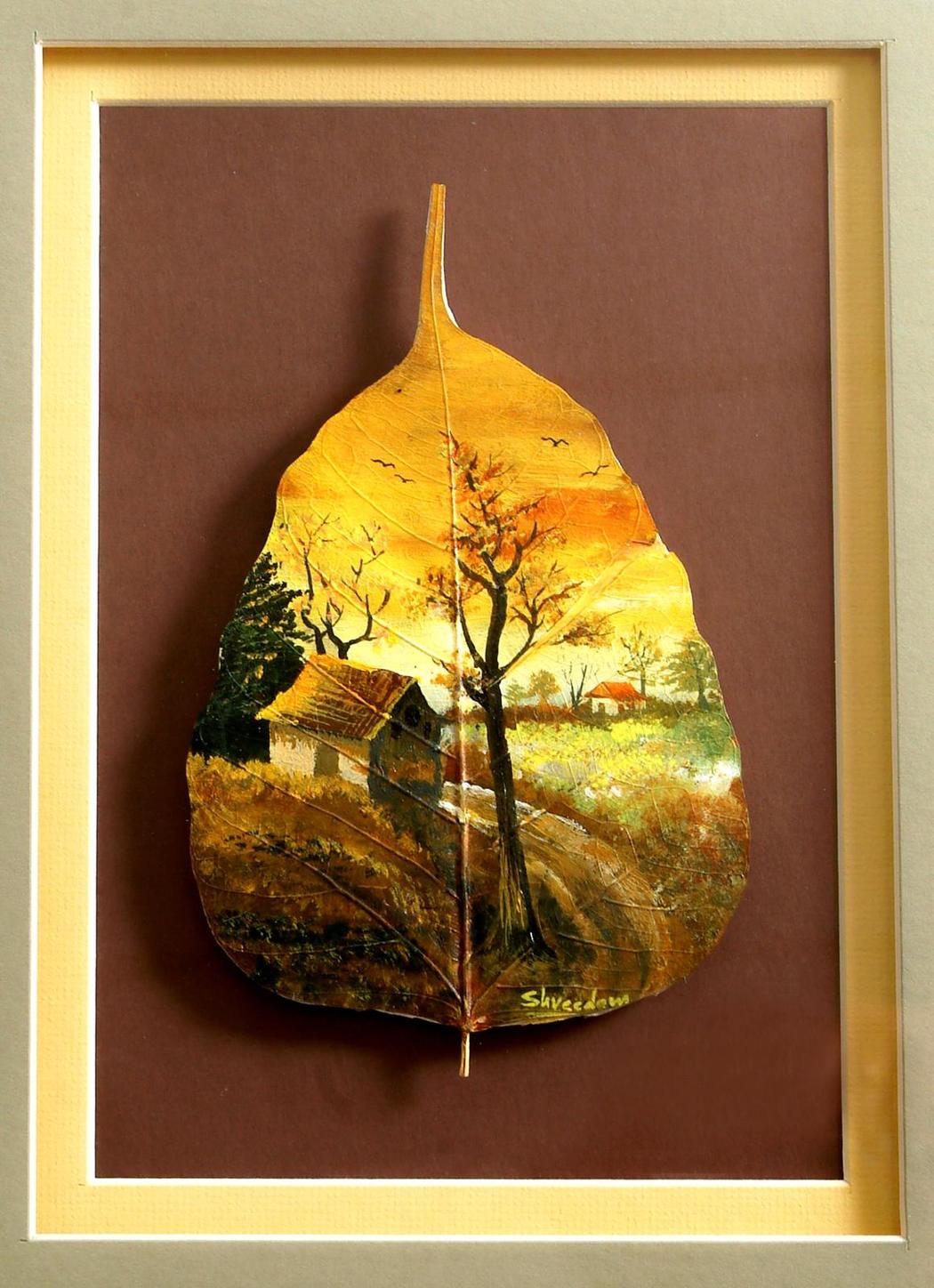 Shree Mehta | Sunny Honey View | 2025
Your leaf paintings often depict peaceful landscapes and quiet moments. Are these inspired by real places or imagined worlds?
My landscapes are a delicate bridge between vivid memories and imagined sanctuaries. Since migrating from India to Canada in 2005, my work has been profoundly shaped by the transition between two worlds. I often find myself blending the warm, mystical energy of my Indian roots with the breathtaking, vast serenity of the Canadian wilderness. The rugged coastlines, the towering pines, and the shifting light of the northern seasons—specifically the ethereal, hushed beauty of our “snow-scapes”—have become a constant source of fresh inspiration for my Peepal leaf canvases. These quiet moments are rooted in the peaceful energy of real places I’ve encountered, but once my brush touches the leaf, reality transforms. The leaf’s natural veins might suggest a flowing glacial river or a frosted mountain range that doesn’t exist on any map. These are ethereal worlds where time stands still, designed to offer the viewer a sense of “refuge and reflection.” I aim to create a space that feels familiar yet mystical—a place where one can escape the noise of the modern world. Ultimately, these paintings are emotional landscapes that map my journey across continents. Whether inspired by a real horizon in Ontario or a dream of home, the goal is to capture the feeling of peace rather than a literal geography. By blending my personal memories with these “imagined realms,” I try to turn each leaf into a portable sanctuary that invites the viewer to step inside and find their own quiet moment of zen.
Your self-developed Nail Painting technique is very unique. How did you discover or invent this method?
My Nail Painting technique is a deeply personal innovation that feels like a conversation with my past. The seeds of this method were planted in my childhood, watching my father, a self-taught yet extraordinary artist. He had a fascinating ritual of sketching incredibly intricate floral designs with a simple pen on small, circular laboratory filter papers from his workplace. Seeing him create such immense beauty on such a tiny, unconventional scale taught me that art doesn’t require a traditional canvas—it requires a keen eye and a steady hand. I inherited his fascination for the miniature and the detailed, but I wanted to push the boundary of “tools” even further. One day, while experimenting with my paints and lacking a brush fine enough for the microscopic details I envisioned, I began using my own thumb’s nail as a precision tool. I discovered that by honing the edge of my nail, I could achieve a level of delicate line-work, depth & texture that even the finest synthetic brushes couldn’t replicate.
It is a technique born of necessity and heritage. Mentally, it connects me to my father’s legacy of finding art in the everyday objects around us. Technically, it requires a rhythmic, tactile control where my body literally becomes the instrument. This “Nail Painting” allows me to etch life into a special kind of rough funnel paper with a closeness and intimacy that feels like I am breathing the story directly onto the surface without any pre-sketch work, curves start getting elevated as per my thoughts, embossing some fantastic abstract visuals. It is my way of honoring my father’s quiet creativity while forging a unique artistic identity of my own.
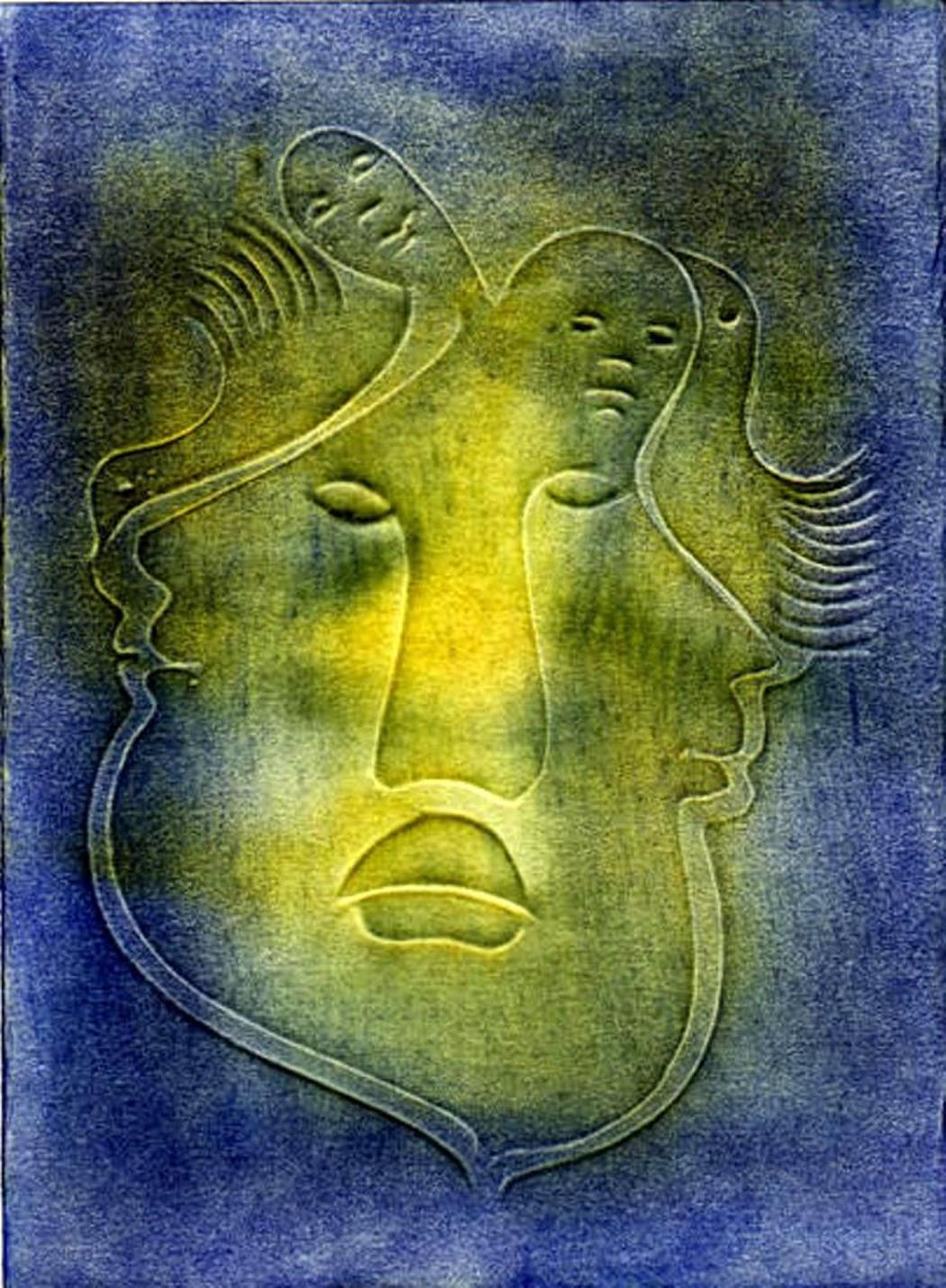 Shree Mehta | Voices of Silence
Working without traditional tools like brushes changes the relationship between artist and material. How does using your own nail affect your creative expression?
Working without traditional brushes has allowed me to pioneer a self-invented art style where my body literally becomes the instrument. This technique is an intense interplay of etching and embossing artistic curves using only my thumb-nail, creating a tactile experience that traditional tools simply cannot replicate. By engraving directly onto a special kind of rough funnel paper without any pre-sketching, I allow my imagination to flow instantly onto a blank surface rotating into my palm. The accurate pressure of my nail causes the paper to elevate, portraying intensely unique abstract visuals that represent a highly evolved stage of the techniques I have defined & mastered over the years.
What makes this style truly evocative is the unconventional shading process. In this method, wax-based powder colours are spread over a cloth, and the embossed artwork is rubbed over it with different pressure points to generate unbelievable depth and textured effects. This combination of creative engraving and wax shading transforms each piece into a mystery, adding an element of emboss that pushes the image beyond the confines of two dimensions into a 3D artistic illusion. It takes tremendous patience and immense concentration—sometimes days—to etch distinct details that capture the spirit of human emotions, divine existence, and intricate floral or animal patterns. This unusual yet unique style doesn’t just represent my subjects; it breathes a tangible, sculptural life into them, making the invisible textures of my imagination visible and touchable.
Leave a Reply
You must be logged in to post a comment.