
Tricia Seymour-Barrier, PhD, EdD
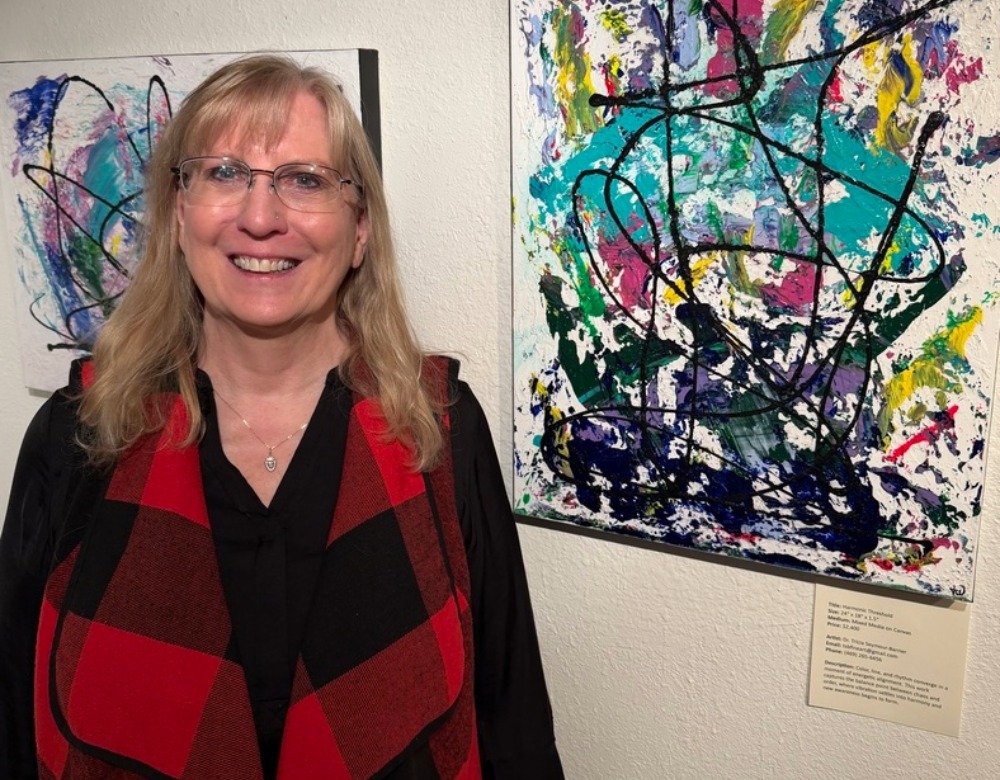
Your background combines transpersonal psychotherapy and abstract art. How does your psychological practice influence the way you approach painting?
My foundation in transpersonal psychotherapy deeply informs how I approach painting. This perspective honors the integration of the psychological and the spiritual, viewing each person as a multidimensional being. In my art, I use non-objective abstraction as a language to access those deeper emotional and energetic layers of experience. Each piece becomes an exploration of inner landscapes – an intuitive process of translating what is often unseen or unspoken into color, texture, and movement. For me, painting is not simply expression; it is a contemplative practice and an ongoing inquiry into wholeness, consciousness, and the subtle realms that shape our lived experience.
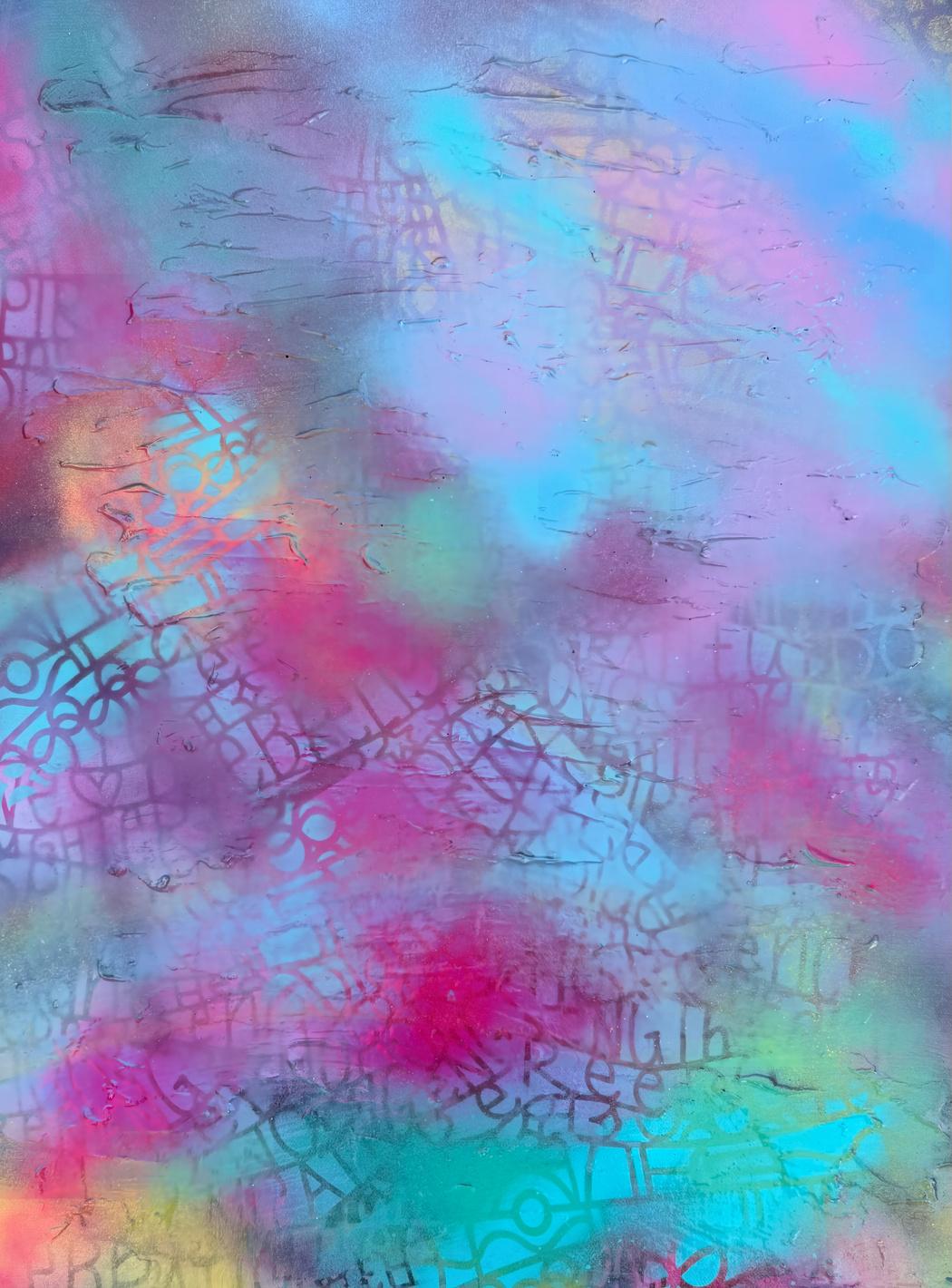 Tricia Seymour-Barrier | Spirit Code | 2025
You often describe your paintings as emerging through listening rather than control. What does this state of “listening” look or feel like while you are working?
When I speak of “listening,” I’m referring to a state of deep presence and receptivity. Rather than approaching the canvas with a fixed plan, I enter into a kind of dialogue with the work as it unfolds. I follow intuitive impulses, gestures, shifts in color, and changes in energy allowing them to guide the process. It feels less like constructing and more like uncovering something that already exists beneath conscious awareness. In this state, I’m attuned to subtle emotional and energetic currents, translating them into visual form. The result is work that invites viewers beyond interpretation and into a direct, felt experience.
Texture plays a central role in your work. What attracts you to tactile surfaces and layered materials as a way of expressing inner experience?
Texture allows the work to move beyond the purely visual and become something more immersive and embodied. I’m drawn to layered, tactile surfaces because they mirror the complexity of our inner lives – there is depth, irregularity, and a sense of connection within each piece. These surfaces invite the viewer to slow down and engage more intimately, almost as if they could step into the painting. The interplay between texture and color creates a dynamic energy that pulls the eye inward, transforming the work from something observed into something experienced.
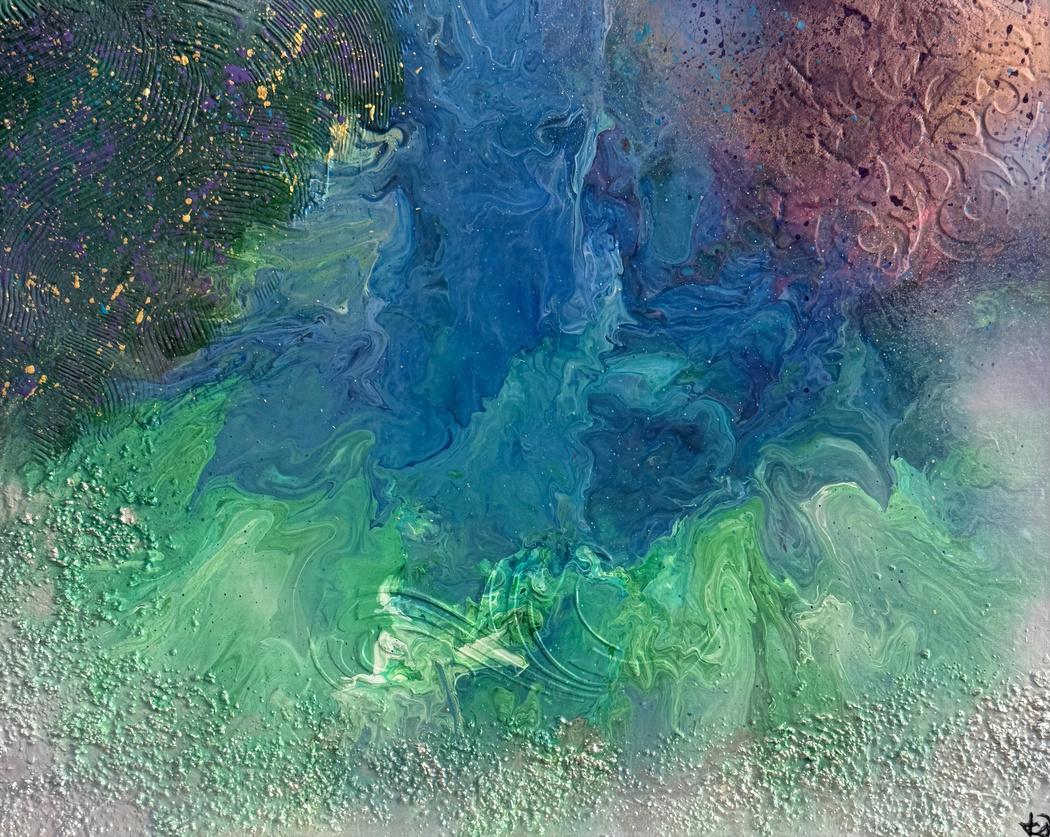 Tricia Seymour-Barrier | Mystical Sanctuary | 2026
Many viewers sense a spiritual or meditative atmosphere in your paintings. Do you consciously seek to create this space, or does it arise naturally through the process?
It is both intentional and intuitive. I begin each painting by grounding myself through practices such as breathwork, music, or creating a calming sensory environment. This allows me to enter a receptive state where I can attune to the energy of what wants to emerge. I often sense an impression, an inner image or energetic signature, that guides the beginning of the piece. From there, I allow the process to unfold organically. I sometimes describe myself as an intuitive alchemist, translating subtle emotional and spiritual experiences into physical form. The meditative quality arises naturally from this way of working, as each piece is created within a space of presence, openness, and connection to something beyond myself.
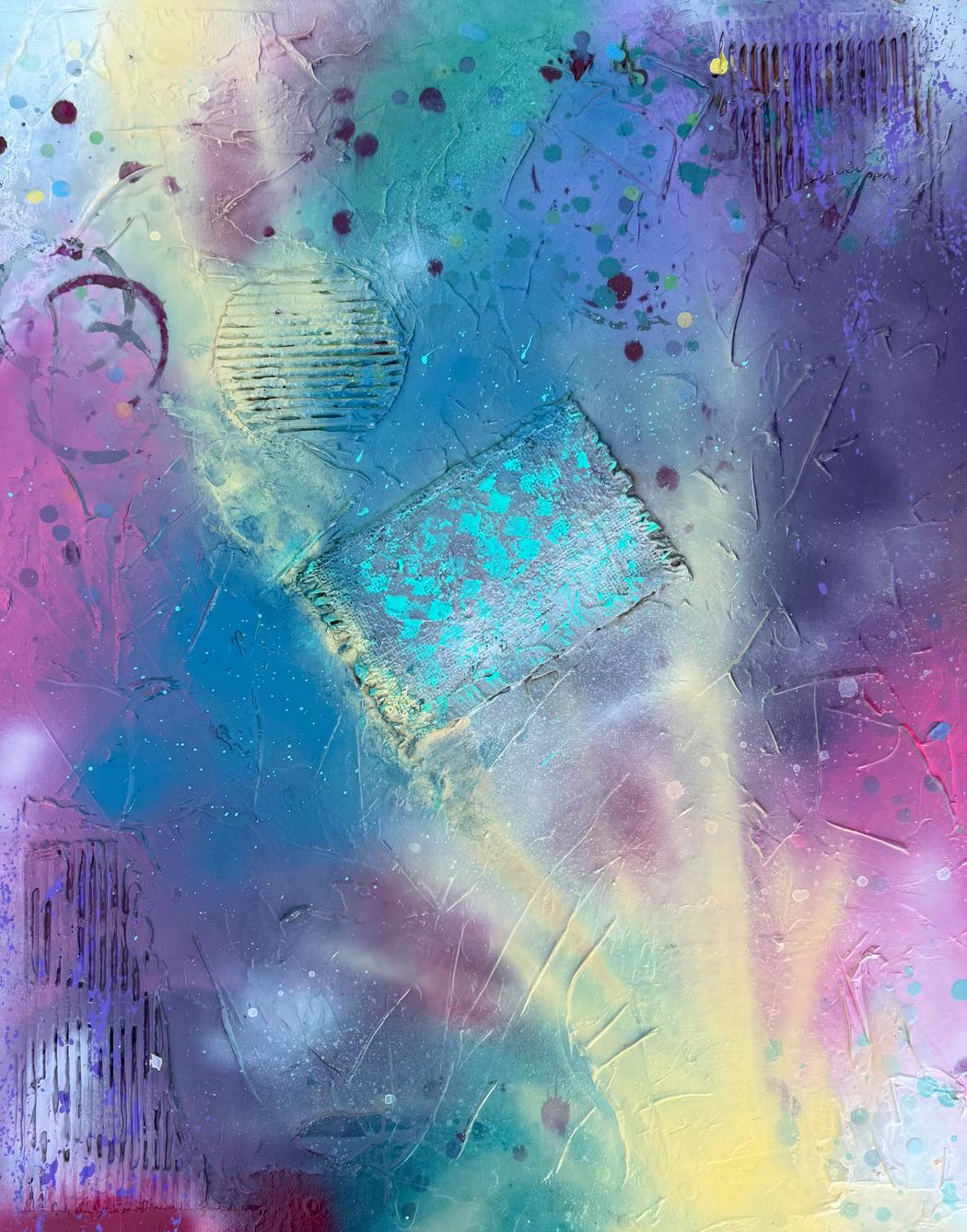 Tricia Seymour-Barrier | Magic Carpet | 2025
Your artistic journey began relatively recently, yet you have already produced a large body of work and participated in numerous exhibitions. What motivated you to fully dedicate yourself to art at this stage of your life?
I often describe myself as a late bloomer in my professional art career, although creativity has always been central to who I am. I began fully dedicating myself to painting in 2024, in my 60s, after a lifetime of creative exploration expressed through other avenues. I grew up in an environment that encouraged curiosity, imagination, and authenticity, and those values have stayed with me. I have always been an entrepreneur. I was constantly creating, building, problem-solving, and bringing ideas into form. Transitioning into painting felt like a natural evolution rather than a departure. At this stage of my life, I felt a clear calling to devote myself more fully to this form of expression and to share that work more widely.
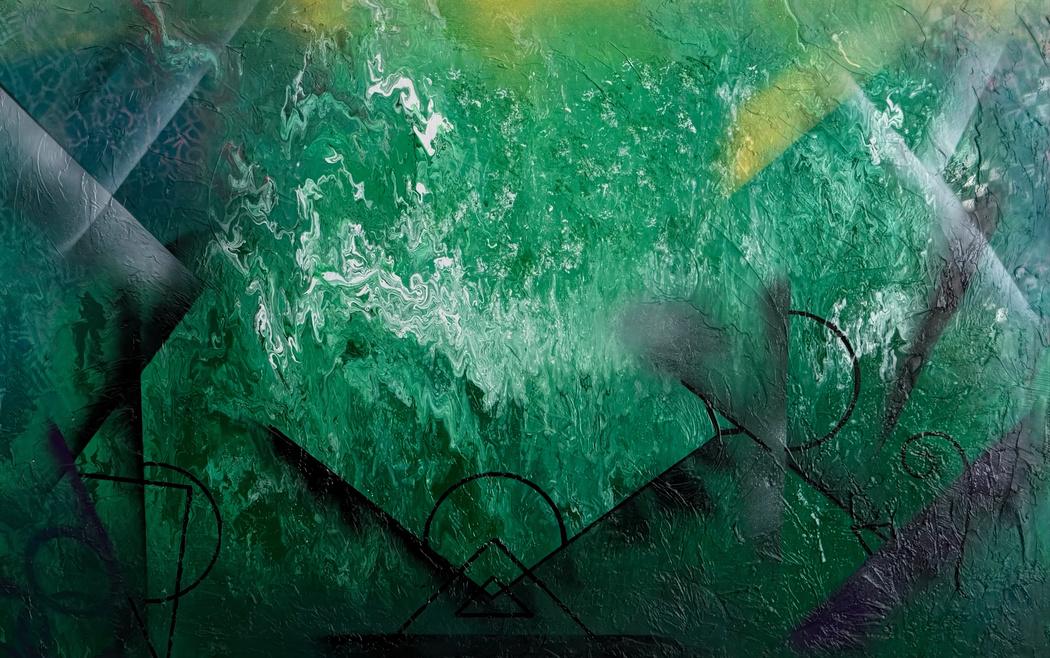 Tricia Seymour-Barrier | Geometric Alchemy | 2026
Some of your compositions evoke landscapes, cosmic spaces, or organic structures. Do these associations interest you, or do you prefer the viewer to experience the work without specific references?
While I’m aware that viewers often perceive landscapes, cosmic environments, or organic forms within my work, I’m more interested in allowing the imagery to remain open and expansive. Each viewer brings their own experiences, memories, and inner world to what they see. If the work evokes a sense of vastness, movement, or connection to something greater, then it is doing what I intend. I hope the paintings act as portals or spaces where viewers can explore their own interpretations and perhaps feel a deeper connection to the larger field of existence.
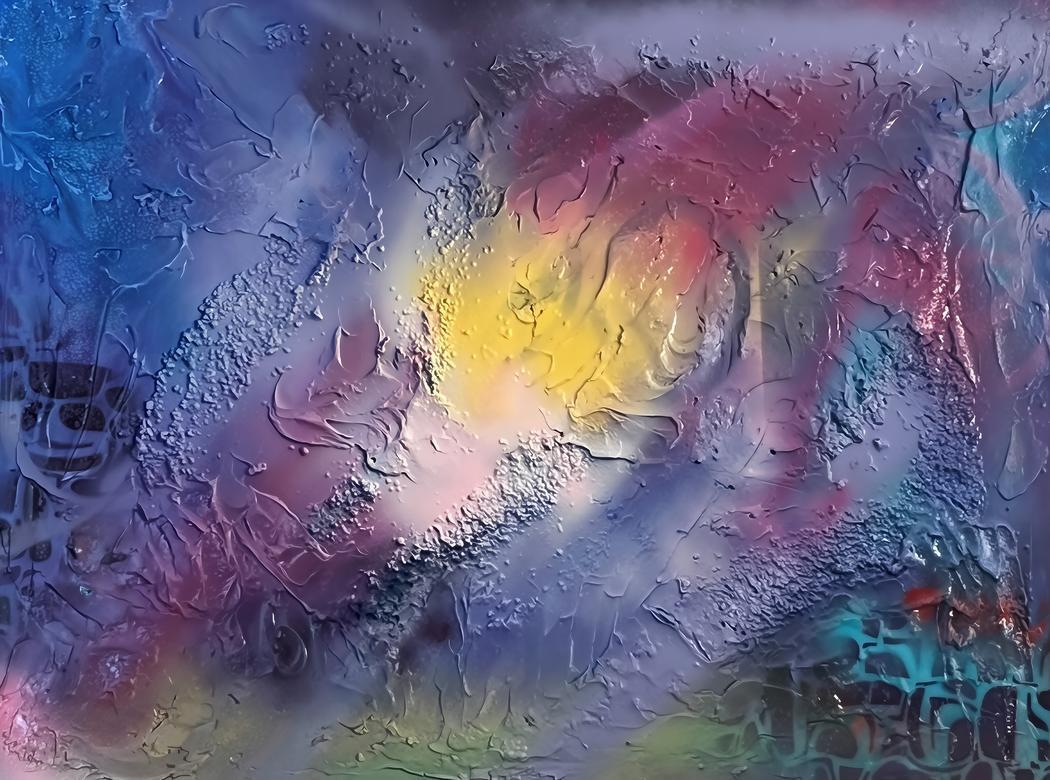 Tricia Seymour-Barrier | Celestial Voyage | 2025
As someone who views painting as a form of meditation, how do you hope viewers engage with your work when they encounter it in a gallery?
I hope viewers engage with my work in a way that invites stillness and presence. Rather than analyzing or trying to define what they are seeing, I encourage them to simply feel into the experience. If a painting can create a moment of pause, where someone senses a shift, a resonance, or a quiet expansion, then it has fulfilled its purpose. Ultimately, I hope my work offers a space for connection: to oneself, to something greater, and to the subtle, often unseen dimensions of being.
Leave a Reply
You must be logged in to post a comment.