
Cecilia Piπ
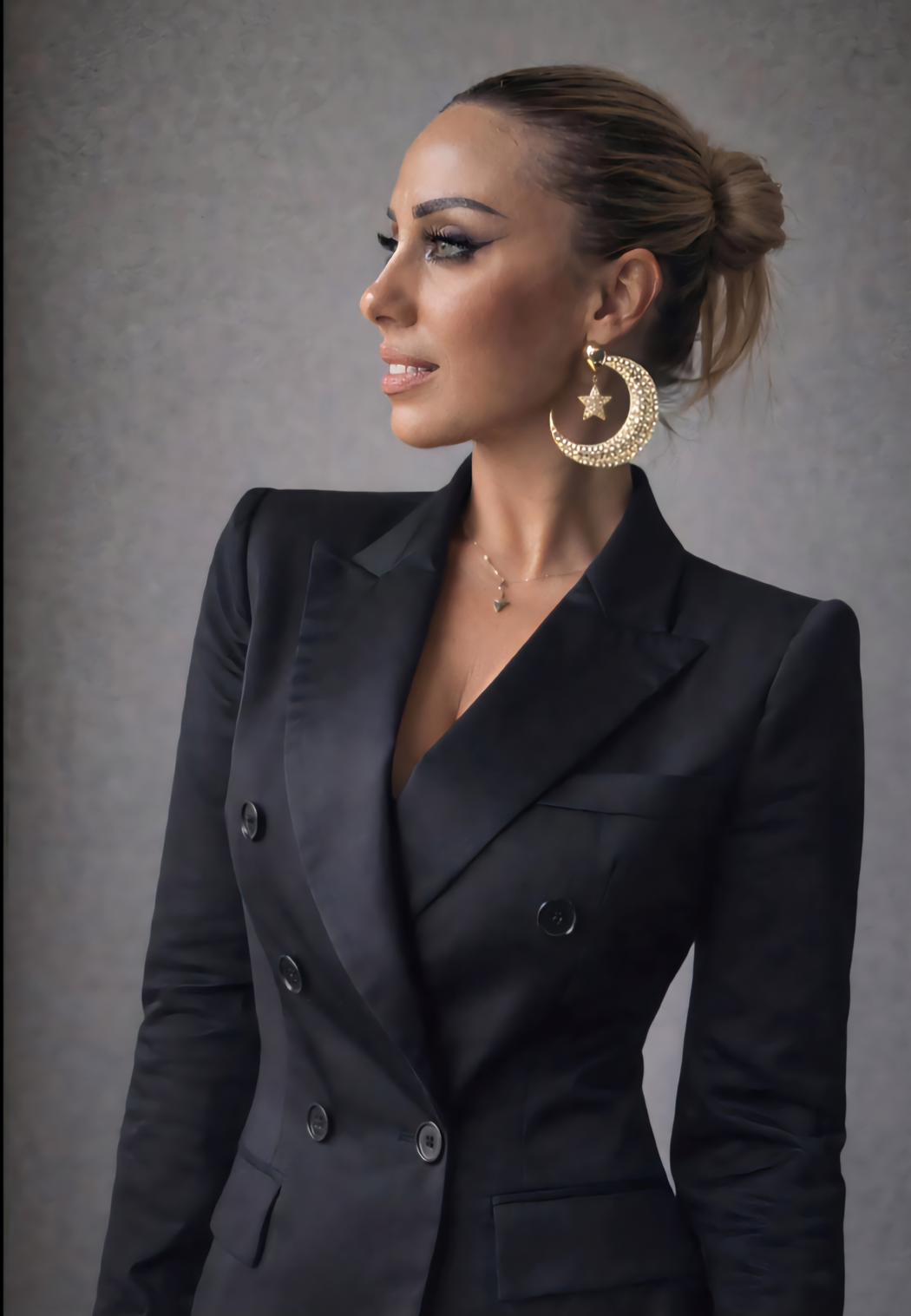
You describe your figures not as portraits but as presences. How do these presences emerge when you begin a painting?
They never arrive as portraits. They arrive as presences.
When I approach a canvas, I am not trying to represent someone. I am listening. There is usually a moment of suspension, a quiet threshold where something subtle begins to gather beneath the surface.
Then the first gesture appears. A line, a fragment of color, a gaze that was never planned. Slowly a presence negotiates its way into visibility.
I often say that I do not invent these figures. I host them. Each painting becomes a temporary portal where something unseen chooses to inhabit form. What emerges is not a representation, but a presence carrying its own energy and intention. The canvas is the meeting point between the visible and the invisible.
Your background is rooted in psycho-socio-anthropological studies. How has this perspective influenced the way you approach identity and symbolism in your work?
My studies certainly shaped my thinking, but they mainly amplified something that already belonged to my nature.
I have always been an extremely curious and introspective person, what I sometimes like to call an intronaut: someone naturally drawn to exploring inner landscapes and the symbolic structures that shape human identity.
Before painting, my first expressive language was always writing. For many years I explored ideas, emotions and archetypes through words. Literature, anthropology, psychology, spiritual inquiry and cultural observation all became part of the inner mosaic that later flowed into my visual work.
Painting eventually became the place where all those fragments converged.
Identity, in my work, is never singular. It is a constellation composed of personal experiences, cultural memories, intuitive insights and symbolic narratives.
In that sense, symbolism becomes the bridge that allows those layers to communicate visually.
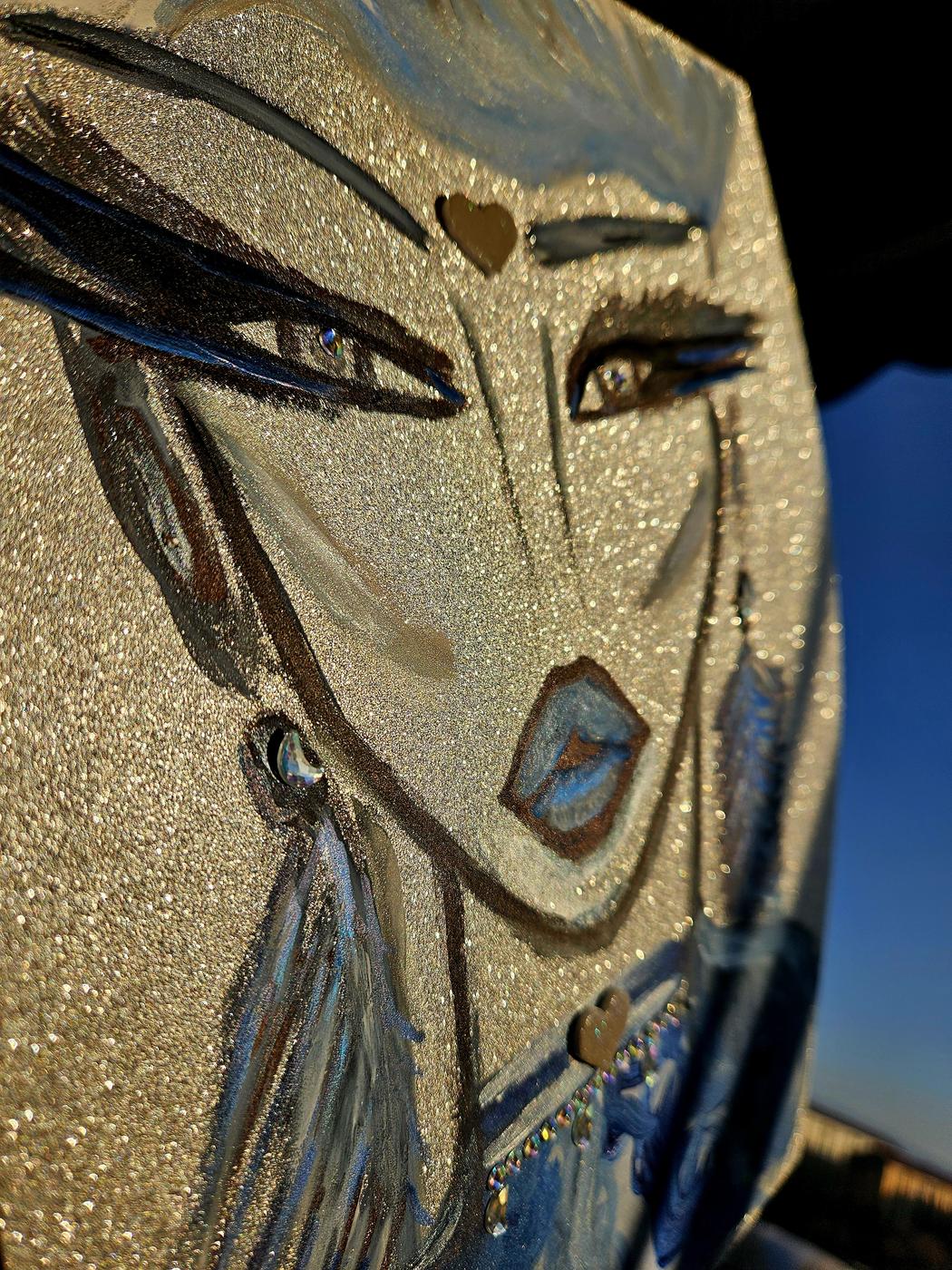 Cecilia Piπ | Celestine | 2026
You began painting only in 2024. What triggered this moment when ideas and observations finally transformed into visual form?
The beginning was completely unexpected.
Painting was probably the last thing I imagined I would ever do. Since childhood I had always expressed creativity through other forms, especially writing. Words were my natural language. Drawing and painting, on the other hand, never seemed to belong to me.
At school my attempts at drawing were often considered unconventional, even “wrong” or simply not good. Eventually I internalized the idea that visual art was not my path. I continued to create in many other ways, but not through painting.
And yet I always looked at those who could draw or paint with a kind of quiet awe.
I remember once saying, almost jokingly, that maybe in another life I would learn how to draw. Someone replied, “Why not in this life?”
Strangely enough, I cannot remember who said it. And I usually have a very good memory. Sometimes I wonder if it was not a person at all, but something my own unconscious whispered to me long before I was ready to hear it.
Then, in February 2024, something happened.
Out of nowhere I felt an impulse so clear it almost felt like a call. One day I simply said to myself: okay, I’m going to buy canvases and acrylics and see what happens.
There was no plan. No training. No expectation.
Just a sudden inner pull.
That is why I often describe the beginning of my painting journey as a kind of whisper from above. Something subtle but undeniable that invited me to open a door I had never imagined opening.
What started as an intuitive experiment soon became something much deeper.
It was as if a language that had been waiting quietly in the background of my life had finally decided to speak.
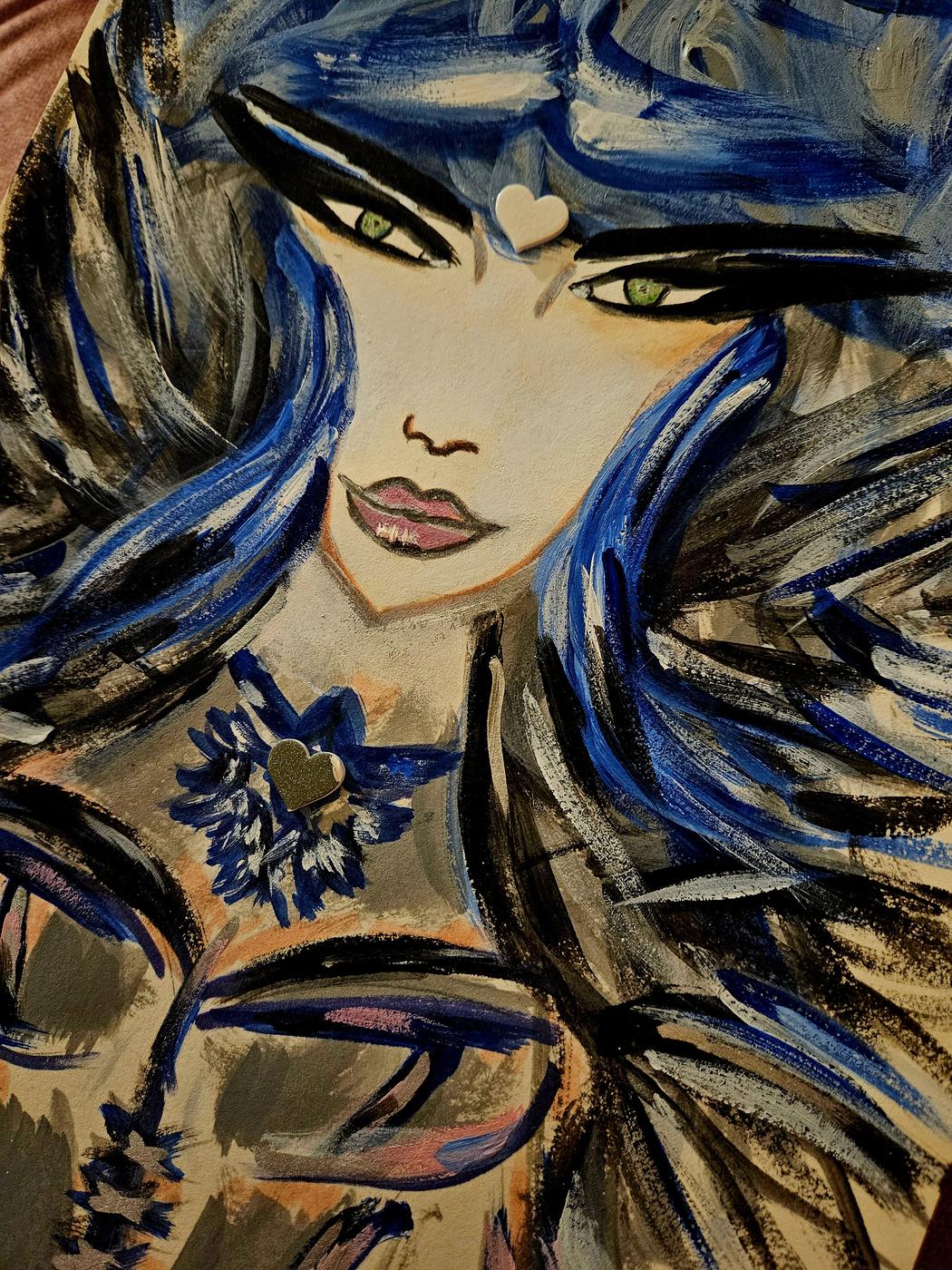 Cecilia Piπ | Eira | 2026
Many of your figures feel archetypal, almost mythological. Are they connected to personal experiences, collective memory, or something more intuitive?
They exist at the intersection of all three.
Sometimes a painting begins with a personal emotional landscape, but very quickly the figure expands beyond autobiography and enters a more archetypal territory.
As the process unfolds, she begins to resemble something ancient and symbolic: the warrior, the oracle, the mystic, the rebel, the healer…
At that point the figure no longer belongs exclusively to me. She becomes part of a larger symbolic language connected to collective memory.
Many viewers tell me they feel as if they recognize something in these figures, even when they cannot explain exactly why.
That intuitive recognition is what interests me the most.
Also, many of them tell me: “It’s you, the painting it’s you”. Well, in a way it is. The many me are feasting all together.
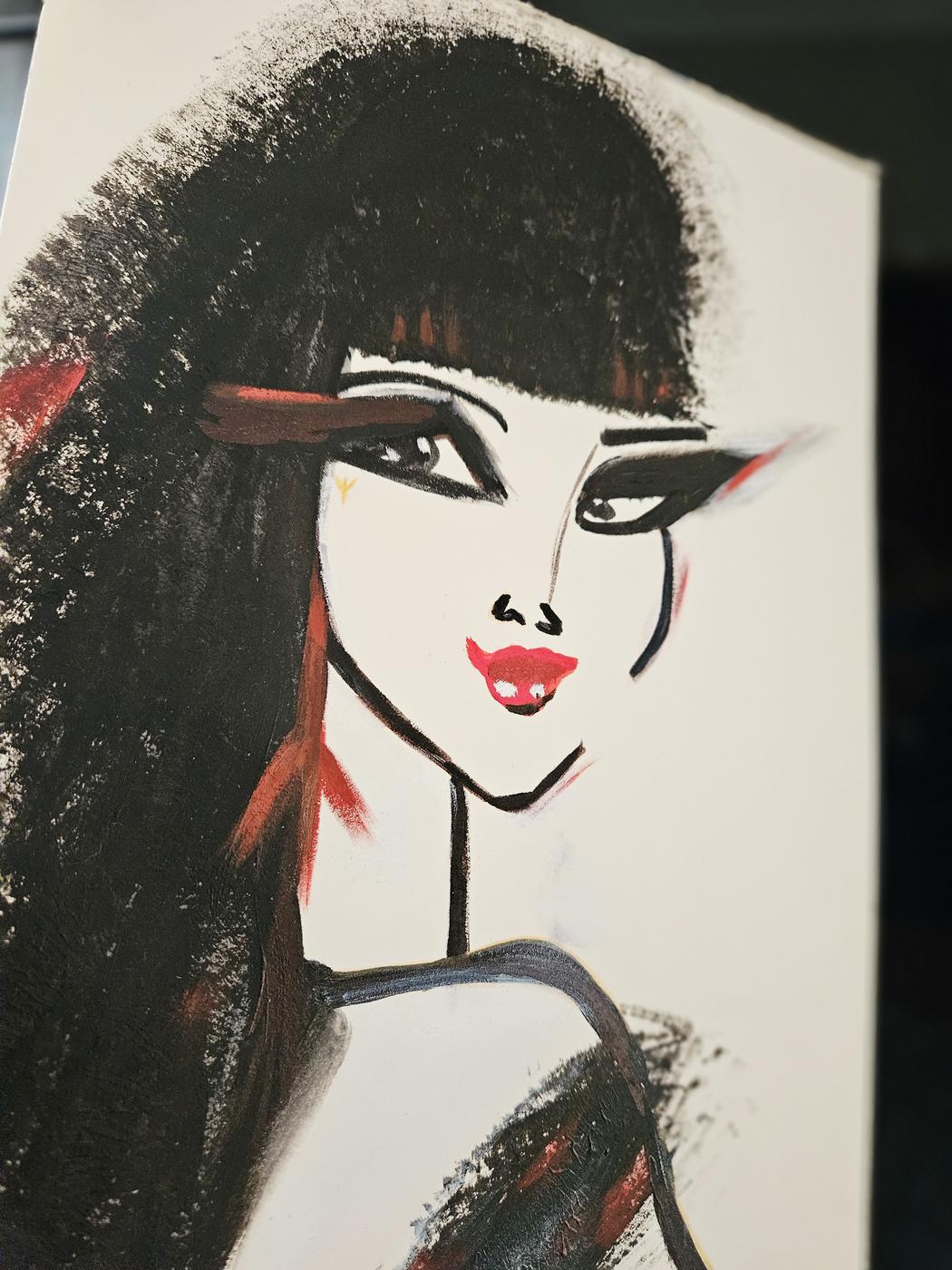 Cecilia Piπ | Eve Sister Maybe | 2026
Color and gesture seem to play a powerful role in your paintings. How do you decide on the emotional rhythm of a piece?
I rarely decide it consciously.
Color arrives almost like a pulse. Certain tones insist, others withdraw. Gesture becomes the breath of the painting, the movement through which emotion travels across the surface.
In many ways the process feels closer to composing music than constructing an image.
The rhythm emerges through contrast, repetition and tension. Each figure seems to guide its own emotional tempo.
There is also a vibrational dimension to the process.
I have always been very sensitive to subtle energies, and that sensitivity inevitably becomes part of the creative language. Sometimes a painting feels less like an act of control and more like tuning into a certain frequency.
Color, gesture and intuition become a kind of vibrational dialogue.
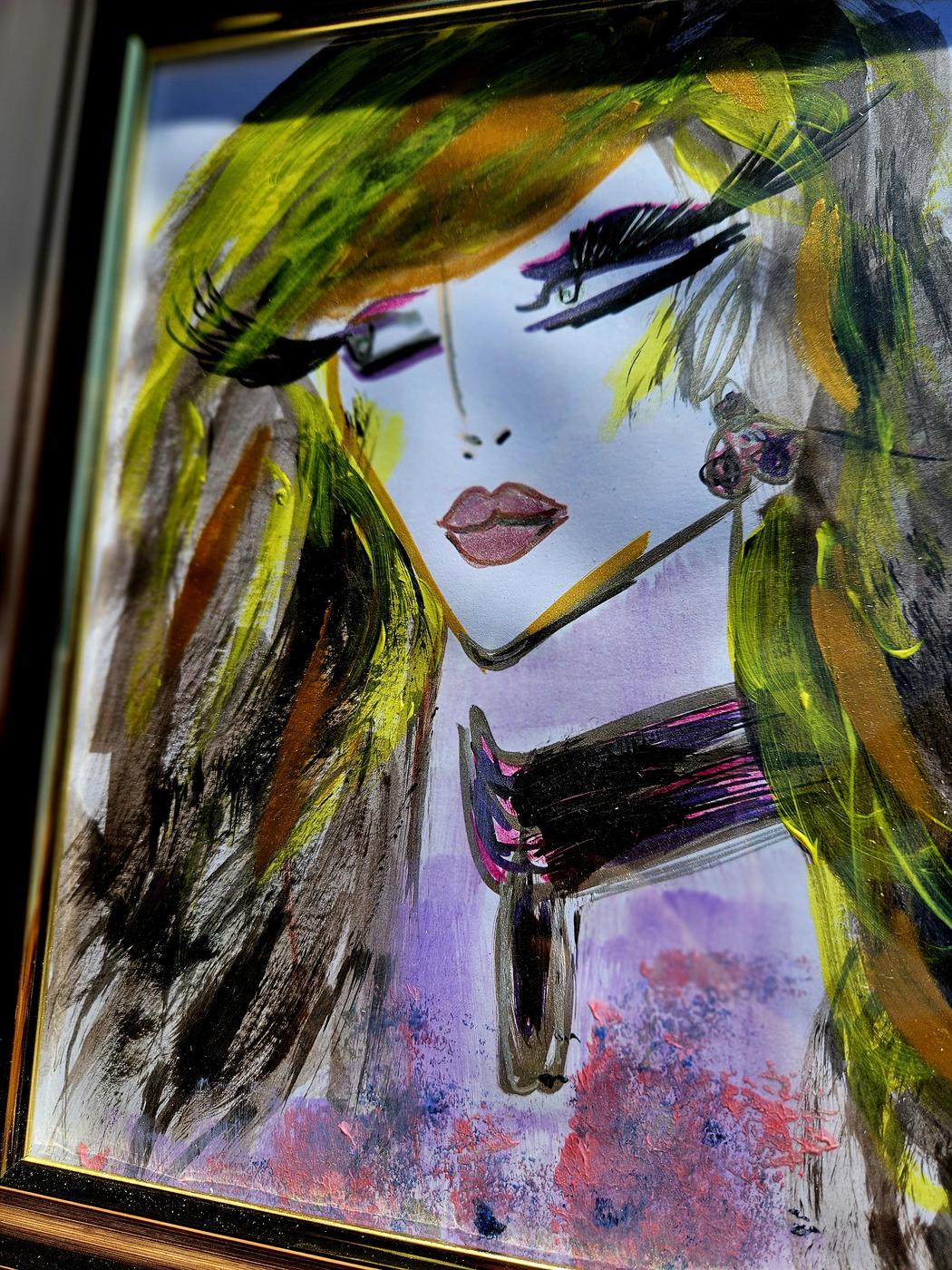 Cecilia Piπ | Selene Kaia | 2025
What do you hope viewers feel or discover when they encounter your work for the first time?
Transformation, even if it happens in a quiet and subtle way.
Whenever we create something, I believe it is important to ask: what purpose am I serving?
For me, art carries the possibility of inspiring, awakening and sometimes even consoling.
I hope that when people encounter my work they experience a moment of resonance, a feeling that something within them has been gently touched or awakened.
Art can sometimes act as a quiet healer.
Not by offering answers, but by reminding us of the richness and complexity of our inner worlds.
If a painting opens even a small interior door, it has already fulfilled its purpose.
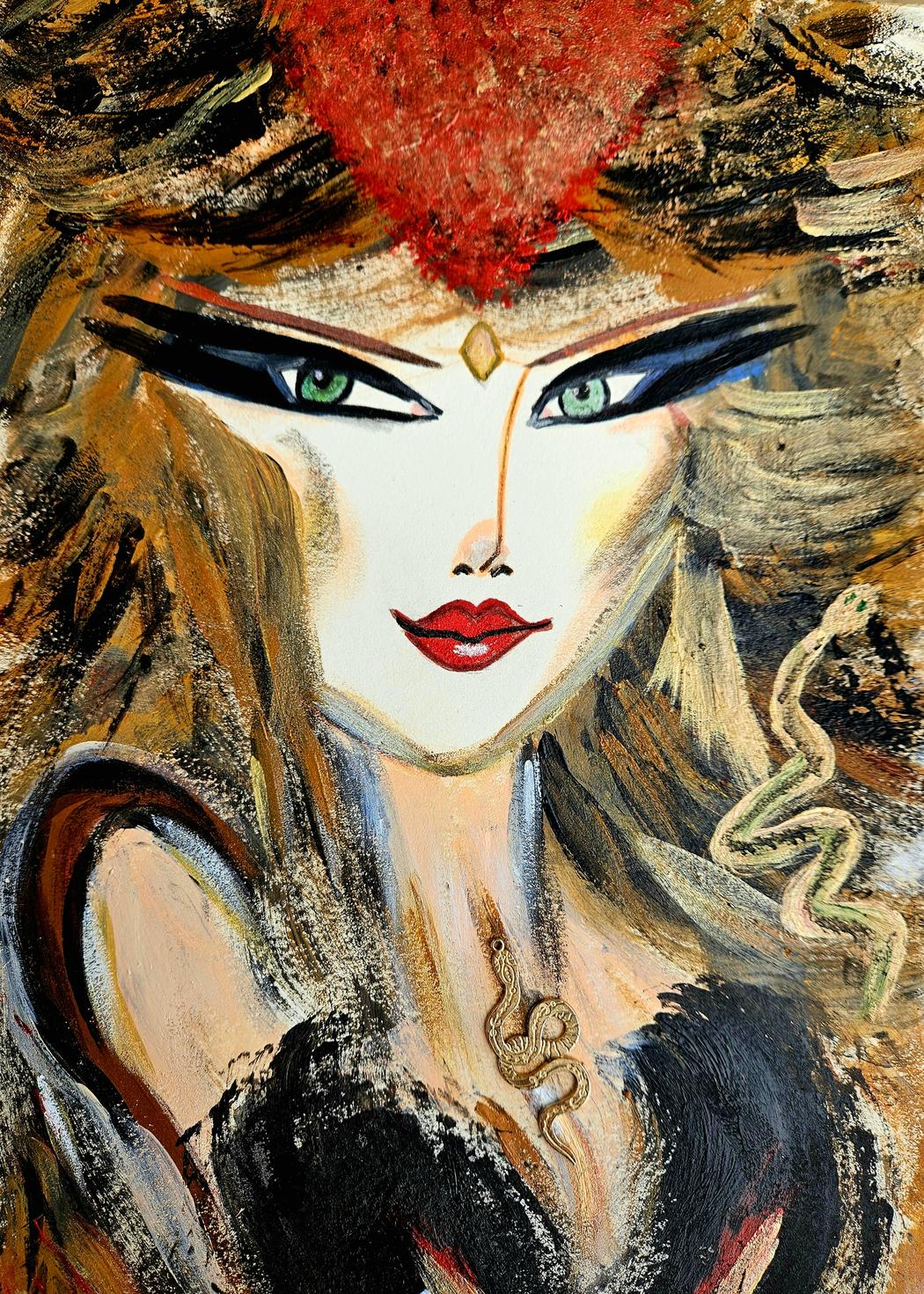 Cecilia Piπ | Modern Eve | 2026
As an artist who recently began painting, how do you see your visual language evolving in the coming years?
I feel that I am only at the beginning of a much larger narrative universe.
I imagine the fugures inhabiting more complex worlds, interacting with environments, symbols and definitely with each other (that felt sort of natural in the beginning of my art journey, yet).
Storytelling will likely become even more central.
Narrative is the frame that holds everything together. It is where all the fragments of my journey converge: my studies, my readings, my spiritual curiosity and my intuitive exploration.
Each painting becomes both an image and a chapter in an evolving post modern mythology.
Leave a Reply
You must be logged in to post a comment.