
Aliya Kaunova
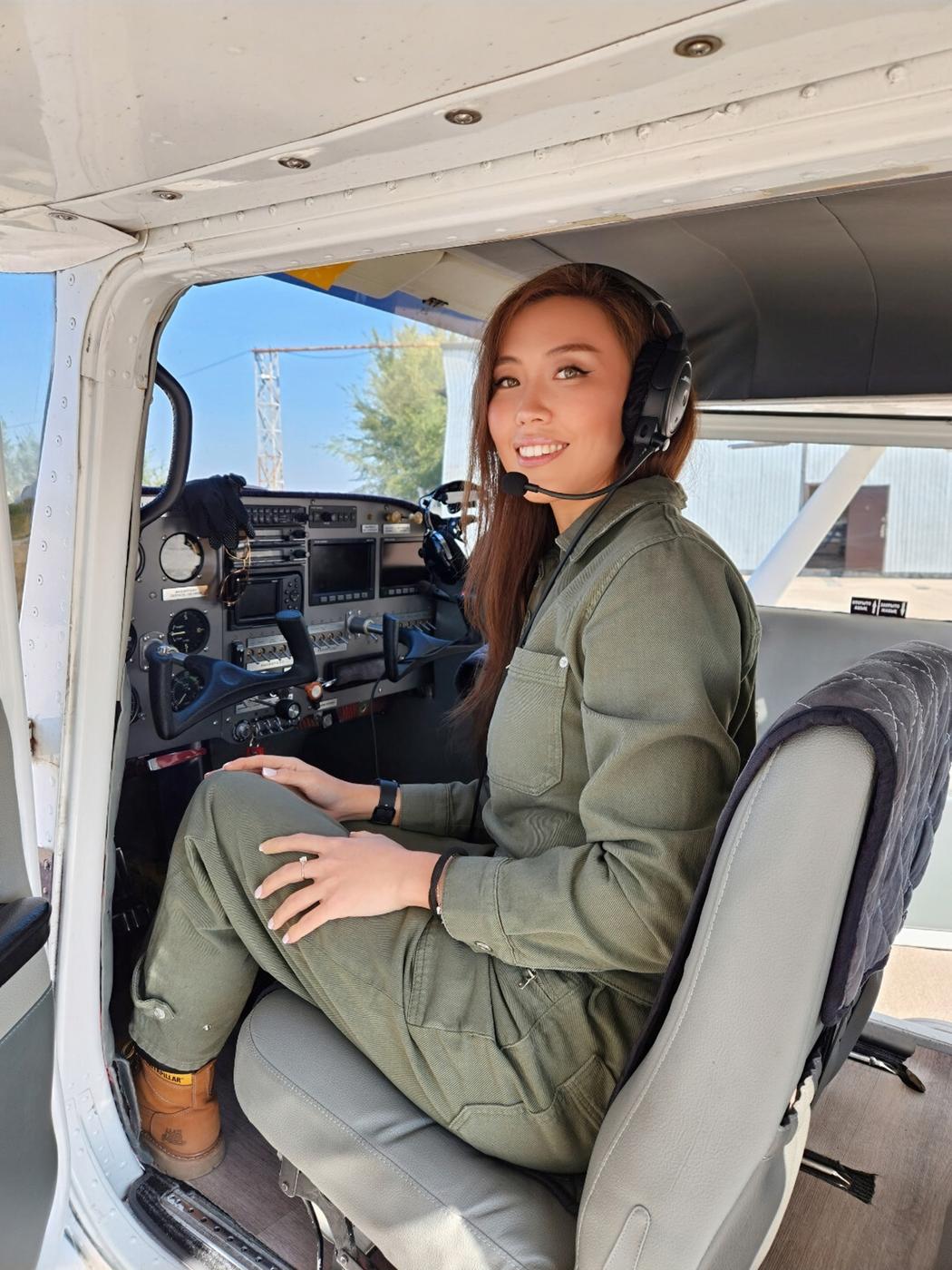
Your artistic path began outside the traditional art education system. What led you to leave economics and fully devote yourself to mosaic art?
My artistic path developed outside the traditional academic system, but creativity has always been part of my life.
By nature I am a structured person who values clarity and order, yet my parents always encouraged my creative curiosity. As a child I studied violin, attended art studios, and explored traditional crafts such as beadwork, tapestry weaving, and silk batik. I also write poetry and later became a member of the Union of Writers of Kazakhstan.
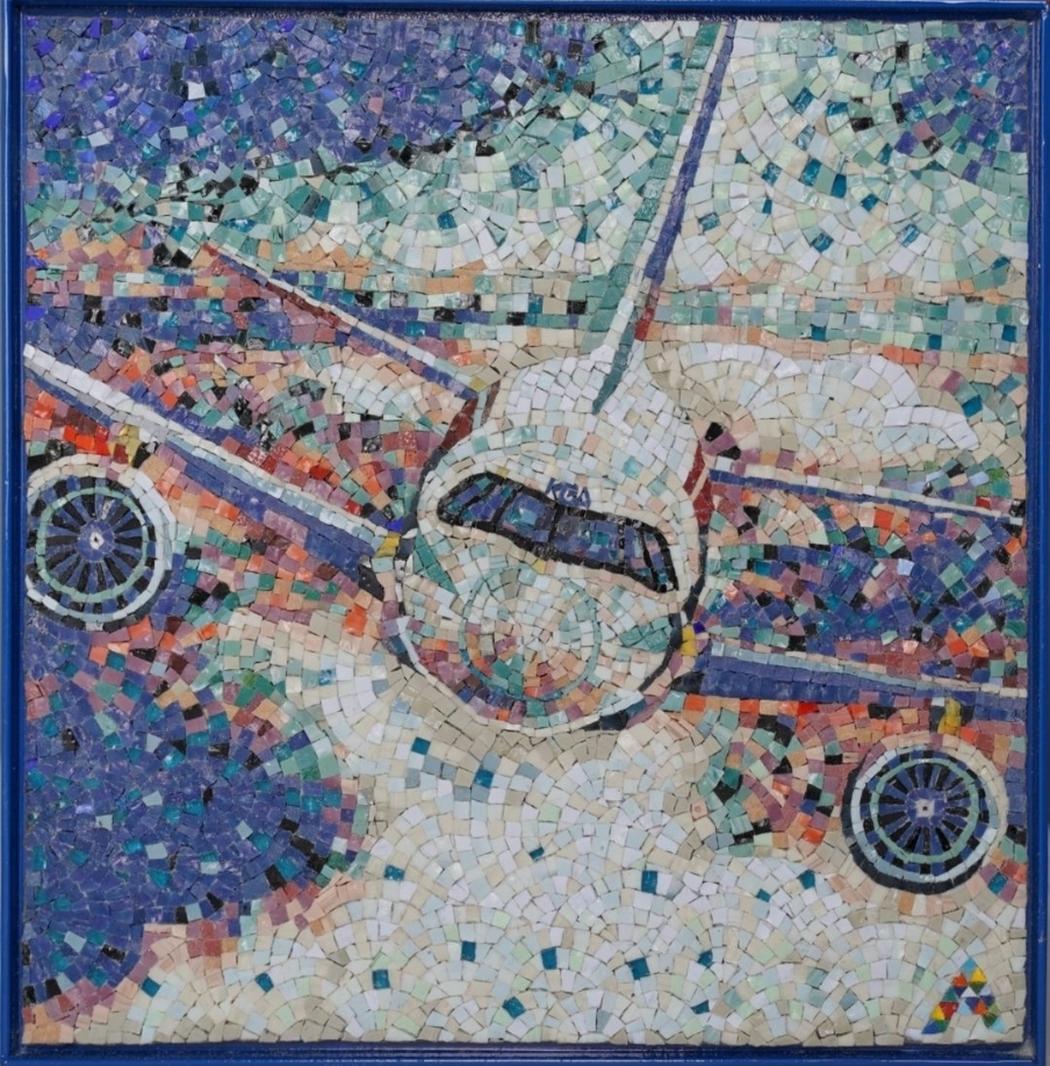
Today I work with mosaic in a wide range of materials: natural stones, glass, and smalti, while continuing my career in civil aviation with Air Astana as a senior flight attendant and recruiter.
Rather than choosing one path over another, I learned to weave together different parts of my life. My education in economics never disappeared; on the contrary, it helped me develop the ability to thoughtfully structure and connect these different elements, allowing my life and practice to remain multifaceted without sacrificing any of its dimensions. In many ways, this approach mirrors the essence of mosaic itself – bringing separate fragments together to form a cohesive whole.
You have worked as an international flight attendant for many years. How did constant travel shape your artistic vision and the themes in your mosaics?
Well, I entered aviation almost immediately after graduating from university. While many of my classmates were celebrating their graduation, I chose instead to attend safety training in order to begin working for the airline. I may not have a photograph wearing a graduation cap, but today I have fourteen years of flights behind me.
These years of constant travel have profoundly shaped the way I see the world. Aviation allows you to encounter different cultures, landscapes, and people almost every day. My eyes meet hundreds of new faces, and this kaleidoscope of diversity teaches you to notice beauty in many different forms. The more I travel, the more complex and fascinating the world appears to me.
At the same time, a life of constant movement often means being far from the people you love. In those moments, the mind begins to search for something equally meaningful and grounding. When I return home, I transform the impressions gathered during my travels into mosaic.
For me, mosaic becomes a way of preserving these fleeting experiences in stone, creating something far more enduring than a photograph.
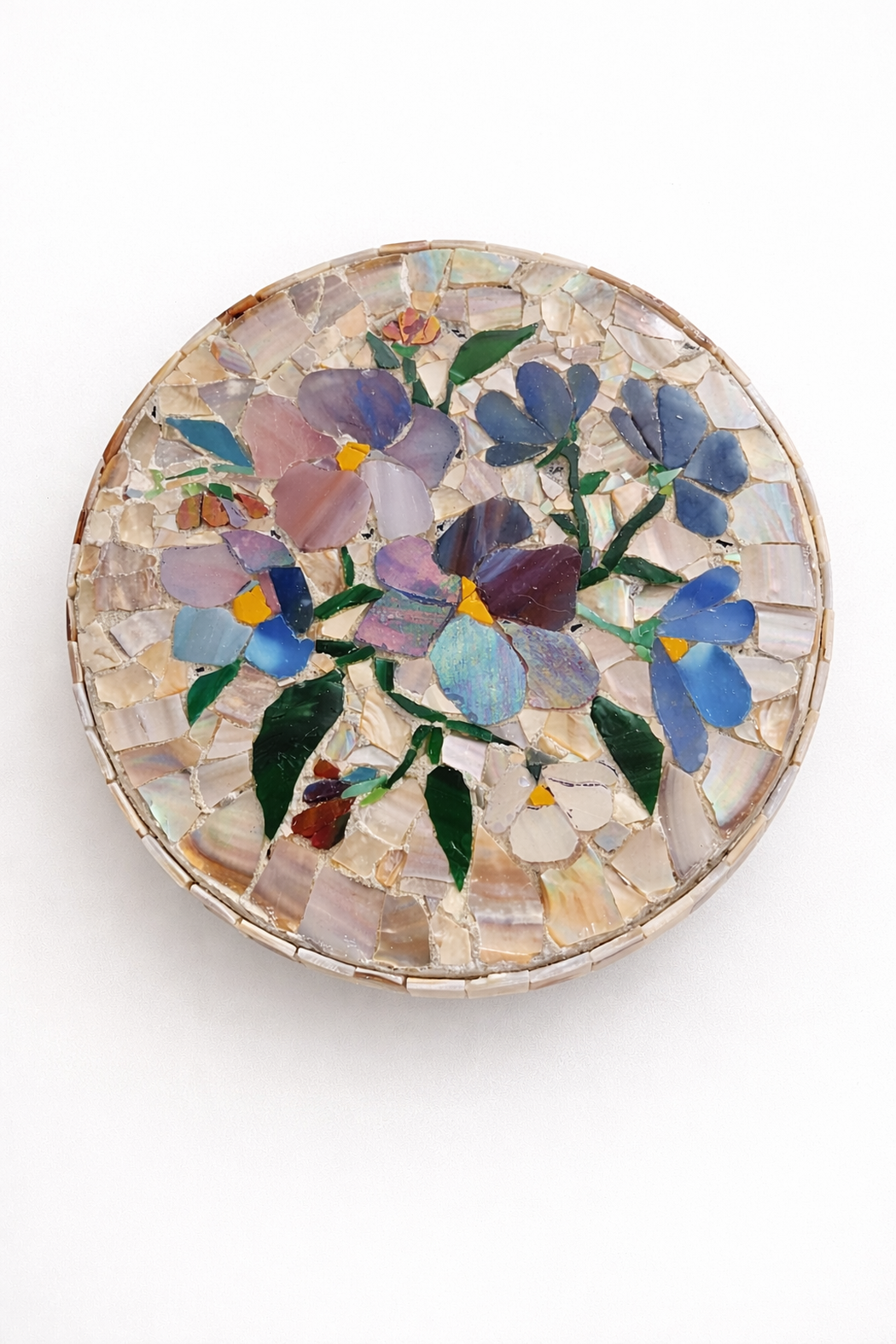
Many of your works incorporate stones collected from different cities around the world. Could you tell us about the process of selecting and integrating these materials into your compositions?
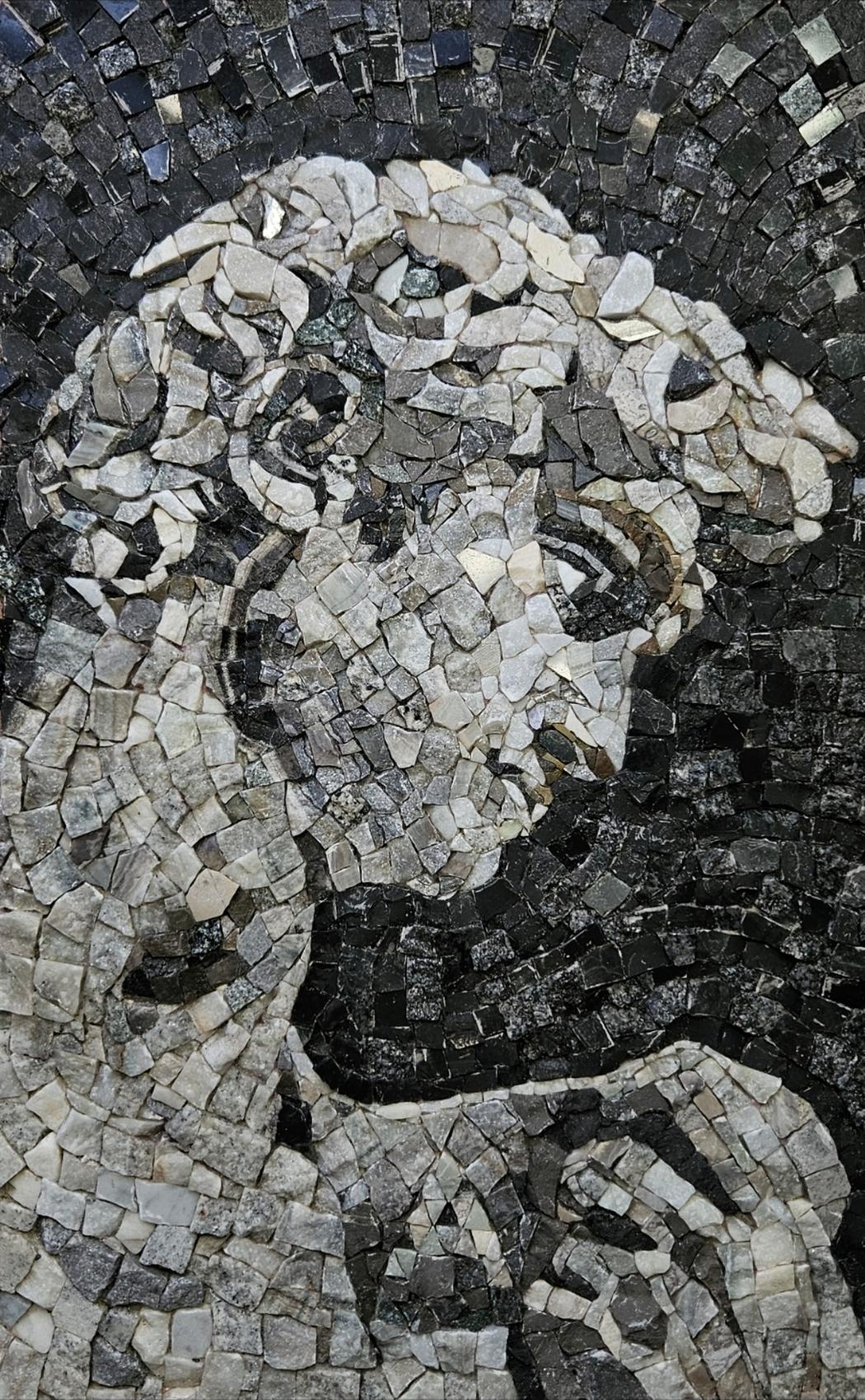
Some of the stones I use were collected many years ago during my travels to different places around the world. My father is an architect and has a deep understanding of minerals and geological materials, so from a very early age I was fascinated by stones and shells with unusual shapes or colors, objects, that seemed to carry their own character.
So, over time I began collecting them almost instinctively. It gradually became a personal tradition to bring back stones from my travels, even when I did not yet know how they might be used. What I have come to understand is that none of these stones are accidental. Each one eventually finds its place within a composition, just as in life every person has their own place, purpose, and path.
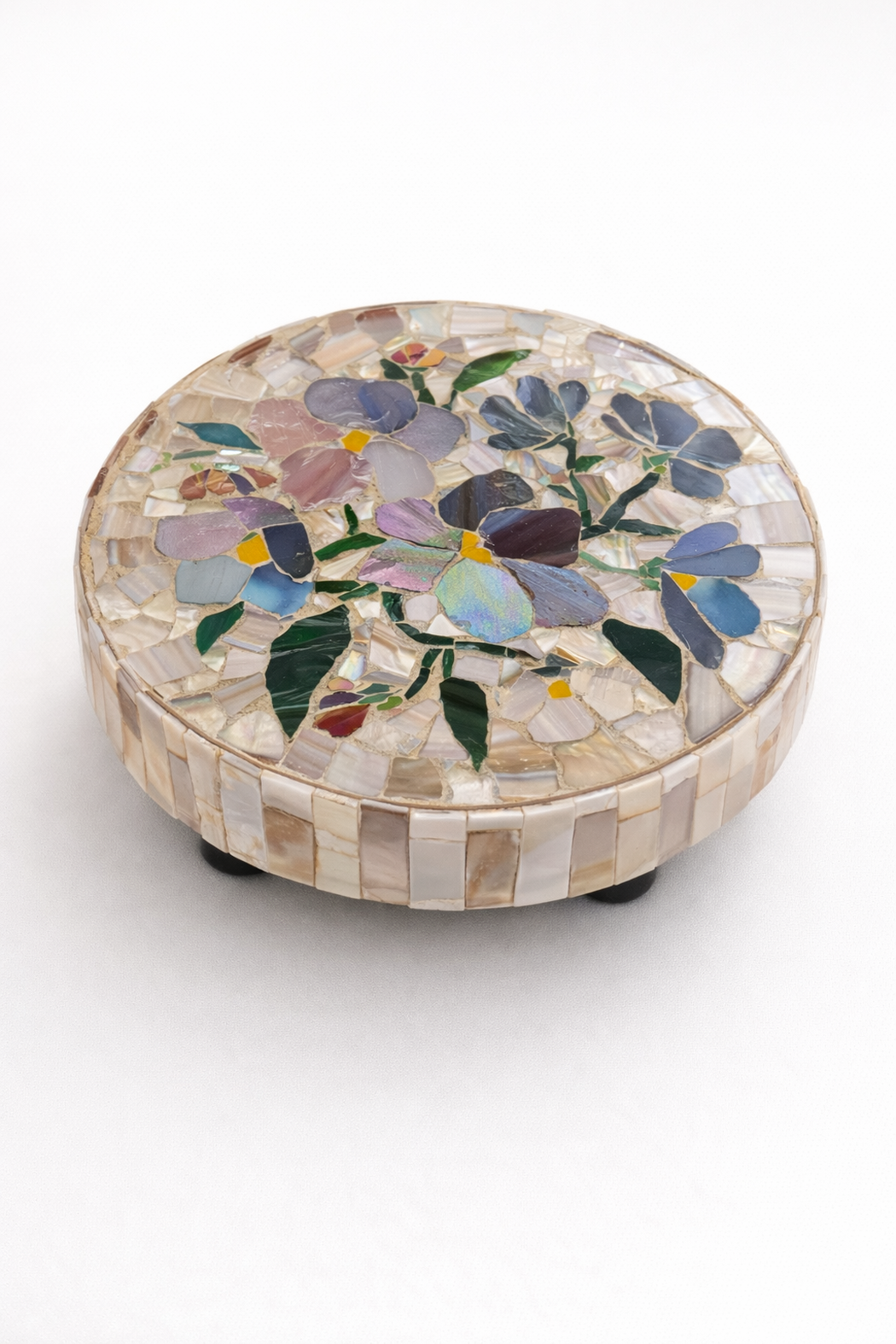
When I begin working on a mosaic, the process involves a careful analysis of the sketch and composition, the choice of technique, and the direction of the tesserae (the individual pieces of stone or glass that form the mosaic surface). I also consider the selection of materials, subtle variations of color, and the dialogue between textures and surfaces in order to achieve visual harmony. Through this process the mosaic becomes more than an image. It transforms into a gathering of places, sensations, and memories.
As an artist, I am fascinated by the moment when fragments of the world, materials that may be thousands of years old meet within a single work and form something entirely new and unexpectedly harmonious. For me, this process reflects how travel shapes our understanding of the world, just as a mosaic is built from hundreds of tesserae, our perception of life is formed from countless encounters, landscapes, emotions, and memories that eventually come together to create a single whole.
Mosaic is an ancient technique with a long history. How do you position your work within this tradition while addressing contemporary themes?
Mosaic is one of the oldest visual languages humanity has created. Long before photography or digital images existed, people were already assembling fragments of stone to create images that could endure for centuries. For me, working with mosaic feels like entering into a dialogue with time itself.
Sometimes it seems as if the image already exists somewhere in the universe, and my task is simply to assemble it. The process reminds me of gathering the fragments of a broken vessel, or even a broken heart, carefully returning each piece to its rightful place. Once assembled, the mosaic may appear fragile, yet in reality it can survive for centuries. Perhaps this is why I feel that every mosaic carries a small part of my own heart within it…
More broadly, my practice stands at the intersection of tradition and contemporary experience. The technique itself may be ancient, but the way we experience the world today is shaped by movement, global connections, and constant change. My mosaics attempt to express this modern condition through a very old language.
Each tessera carries the weight of geological time, stones that were formed thousands or even millions of years ago. When these fragments come together to form an image, the work becomes a meeting point between deep time and the present moment. In this sense, mosaic allows me to slow down and reconnect with a more natural sense of time, creating something that feels grounded and lasting within an increasingly fast-moving world.
In an era dominated by rapid images and endless scrolling, I am drawn to a medium that requires patience, precision, and quiet attention. Mosaic reminds us that meaning is not created instantly; it emerges gradually, fragment by fragment. In this way, the ancient technique remains deeply relevant today, inviting us back to a more human rhythm of making, seeing, and understanding.
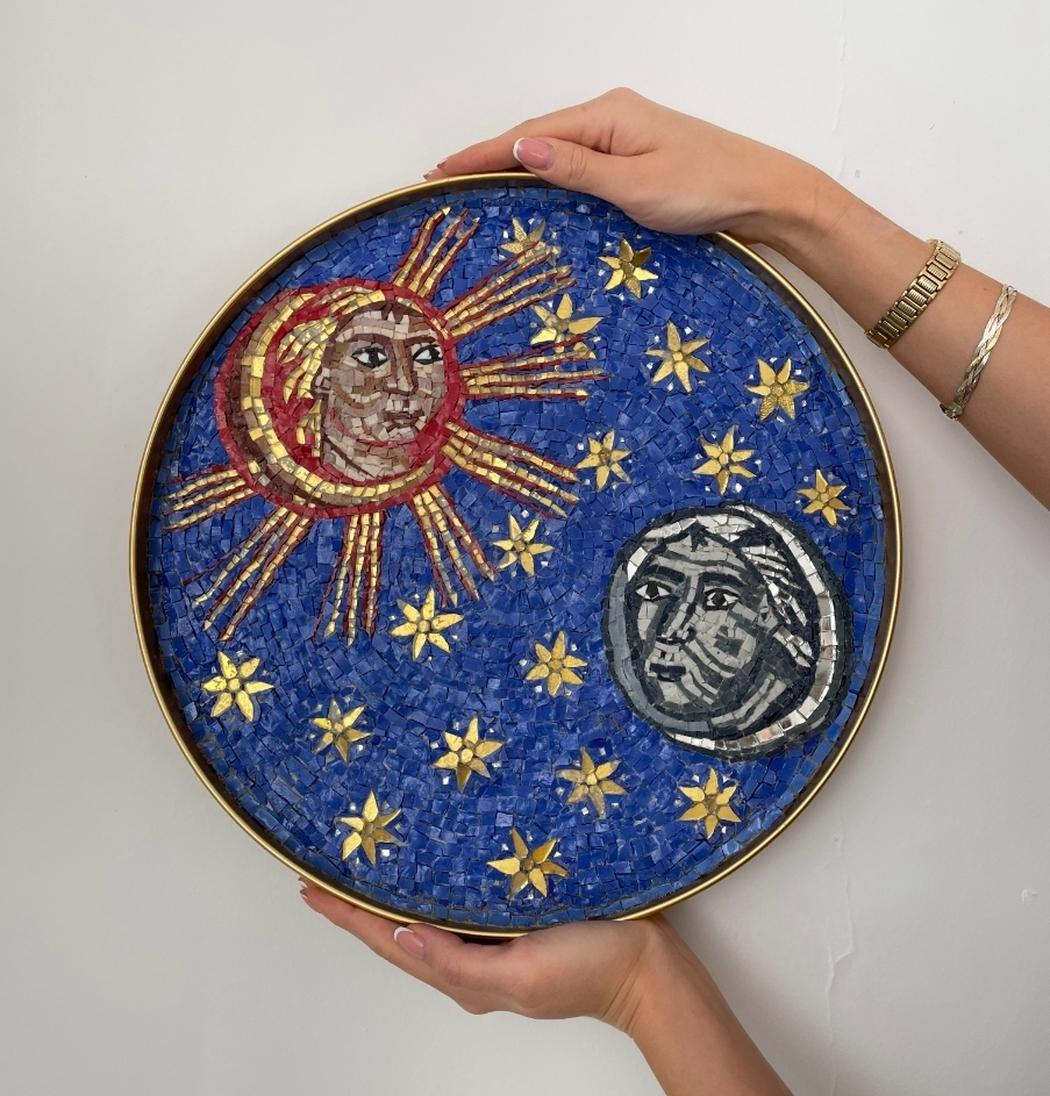
Your practice explores the relationship between fragmentation and wholeness. How does this concept relate to personal identity and human experience in your work?
The relationship between fragmentation and wholeness becomes very clear during the actual process of building a mosaic. Mosaic begins with fragmentation. The image does not appear all at once; it emerges gradually from hundreds of individual pieces that slowly find their place within a larger composition.
As I work, there are moments when a tessera that seemed perfect at first no longer feels right within the overall harmony of the image. Even if its size or shape fits technically, I sometimes remove it and replace it with another piece that better serves the composition.
This process often reminds me of how personal identity is formed. Our lives are also built from many fragments: experiences, decisions, encounters, and lessons. Over time we reconsider some of these elements, keeping certain qualities while letting others go. Sometimes this also means rethinking our environment and the relationships around us. Just as in a mosaic, some pieces that once seemed to belong must sometimes be let go when they no longer fit the harmony of the whole.
In this sense, mosaic becomes a reflection of human growth. Just as a mosaic artist carefully chooses each tessera, a person gradually shapes their own character and identity, deciding which parts of themselves to nurture and which directions to follow. Wholeness does not appear instantly; it is formed slowly, through conscious choices and constant refinement.
As both a poet and visual artist, do words and poetry influence the narratives behind your mosaics?
You know, poetry has always been closely connected to my visual practice. In many ways, both poetry and mosaic are built from small elements that together form a larger meaning.
I often think of a poem as a small architectural structure… Something carefully built from rhythm, pauses, and meanings that exist between the lines, which prose cannot always express. Mosaic works in a similar way: each tessera plays the role of a word, and together they create a visual sentence.
Writing poetry has taught me to think in images and metaphors. Sometimes the idea for a mosaic begins not only as a visual concept but as a feeling or a thought that could almost exist as a line of poetry.
Even my signature reflects this connection. In some of my works I leave only a single logo letter “A.” For me, this gesture is similar to the final line of a poem: minimal, quiet, but carrying the presence of the author.
Mosaic is a slow and labor-intensive medium. What does this slowness mean to you in an era dominated by speed and digital images?
Much of my life moves within very fast systems. Economics follows the rhythm of global markets, and aviation operates within precise schedules where every minute matters. In such an environment, life can easily become filled with constant movement, pressure, and noise.
For me, time spent with mosaic becomes a kind of inner space. It is a pause within the constant movement of everyday life, where attention can settle and thoughts become clearer. In that quiet concentration, the work grows gradually, almost organically.
Perhaps this is why mosaic feels so meaningful to me. Its slowness allows the image to emerge piece by piece is the way meaning itself often appears in life: gradually, through patience and attention.
Leave a Reply
You must be logged in to post a comment.