
AJ Samarco
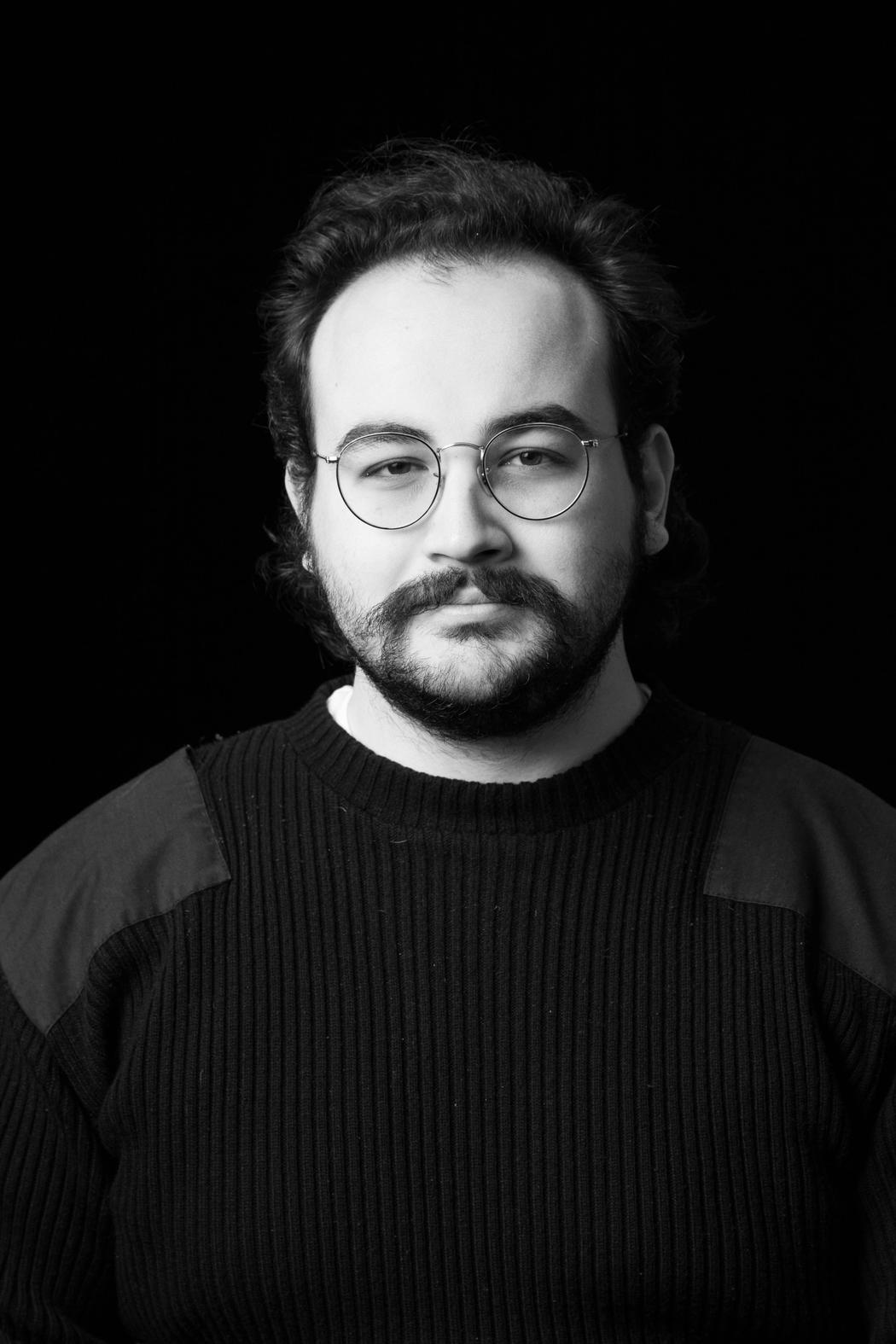
Your works often feature expressive faces and intense emotional states. What draws you to exploring human emotions through distorted or surreal facial forms?
It’s easier to show my emotions through distorted forms because they aren’t easy to navigate or explain with words. Having faces as the focal point in my artwork is because they’re one of our main sources of connecting. Using faces to depict emotional states lets me go to the unfiltered feelings that give off a sense of chaos or uncertainty. Being able to stretch or distort a face allows me to give the complex emotion I need for my artwork.
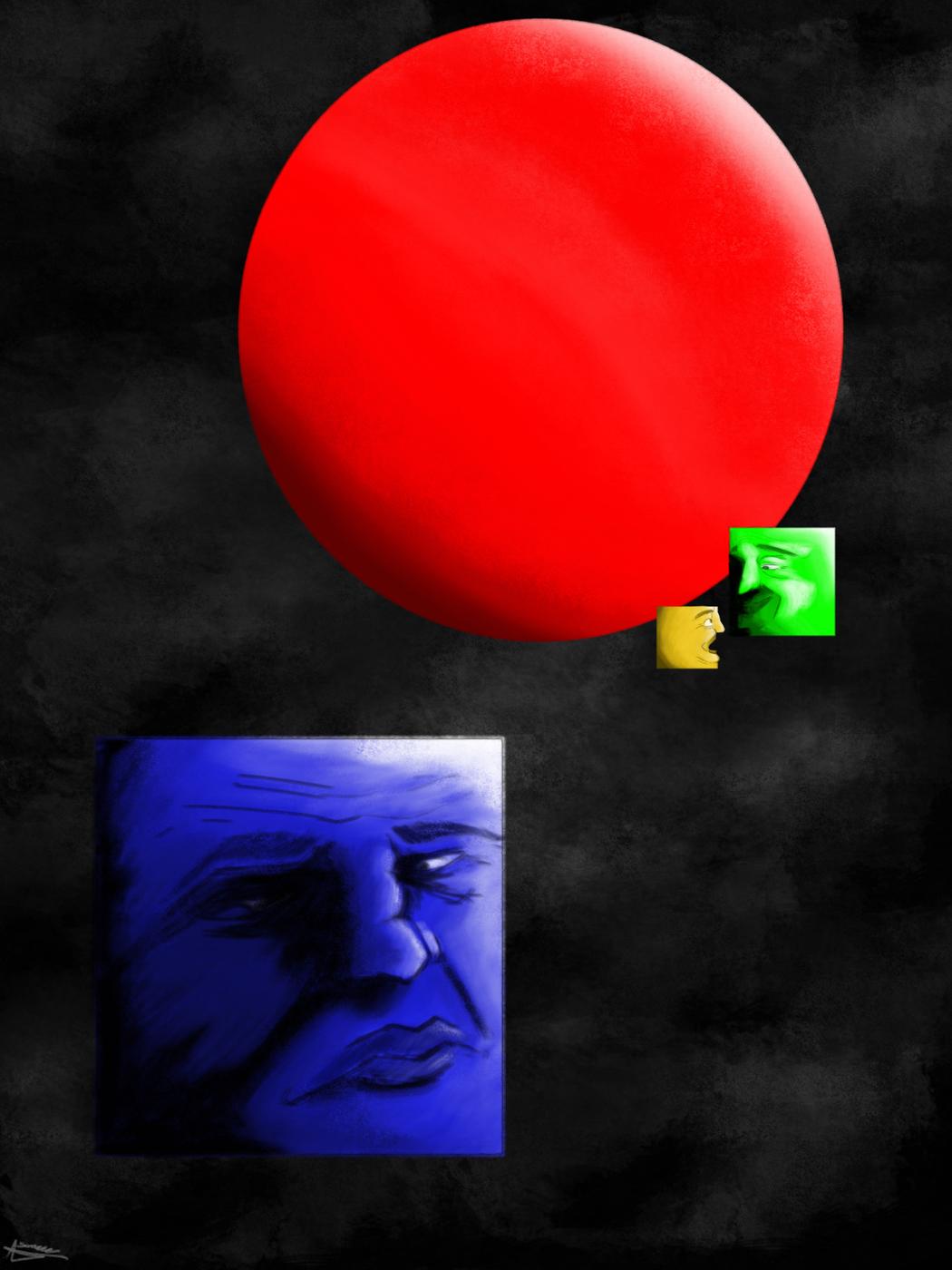 AJ Samarco | Bored | 2025
Your practice combines semi-realistic drawing with surreal and fantastical elements. How do you balance observation from reality with imagination in your compositions?
Most of my drawings are spontaneous so I prefer to dive into the composition so I can capture my idea immediately. I lean into that process by allowing my emotions and imagination to lead the composition, balancing it out by using realistic light and shadows to cast on the shapes to give my shapes a sense of weight and believability. Allowing me to set the mood I want with the light to make the fantastical elements feel real but still set the specific emotional mood I want for the piece.
Many of your artworks rely on strong, contrasting colors such as red, blue, and yellow. How do you choose your color palettes, and what role does color play in conveying emotion in your work?
The colors are bold and grab your attention, just like emotions can be loud and contrasting with each other. Emotions are never a straight forward thing to me, things that make you sad can make you angry when you think about how unfair it could be or how anger can turn into sadness, just like the faces some of them have colors that reflect the opposite of what colors are usually associated with. Like some faces are blue but laughing while another is red but sad, and one is purple showing a mix of sadness and anger. It shows the mix up on how I feel on certain problems, this mashup of emotions and memories clashing with one another making it hard to navigate on how I truly feel.
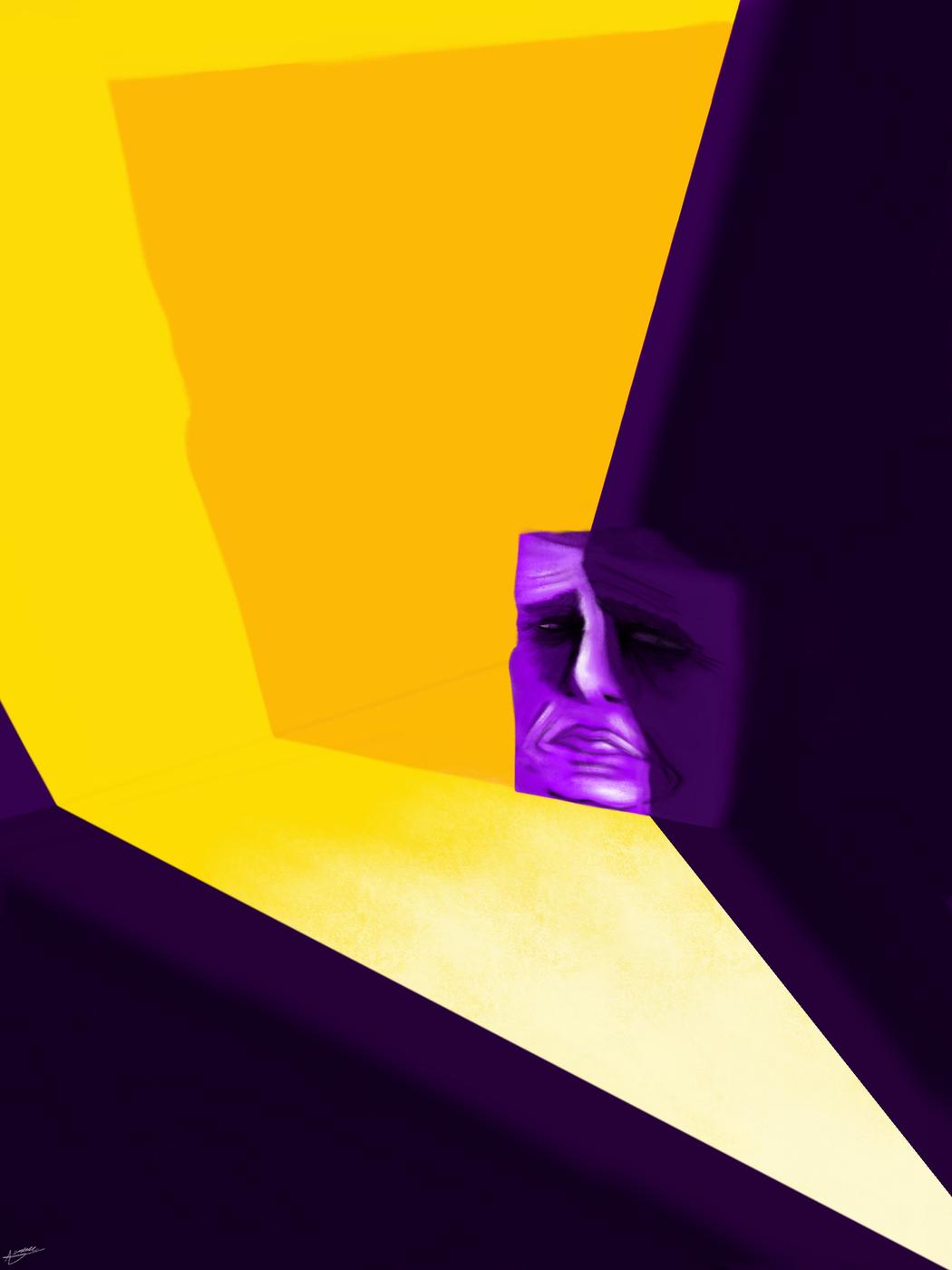 AJ Samarco | Don’t You Think I Know | 2026
You describe your process as intuitive and spontaneous. Can you walk us through how a typical piece develops from the first sketch to the final image?
The beginning of the idea for a drawing usually starts with what bothers me. It isn’t about controlling how I feel but more just letting the feeling of the emotion happen and what faces would best represent how I feel about it. Starting with drawing faces and seeing what works, what doesn’t then to arrangement, sizing, positioning, and the perspective of the faces. Once all that is set in place then I draw my shapes for the faces to be on and any set pieces that will go along with it next is refining all my faces and shapes and coloring them in. Thereafter is picking where the light source is coming from and where the shadows would be casted. Lastly would be just doing small touch ups on coloring, lighting, or shadows before being finished.
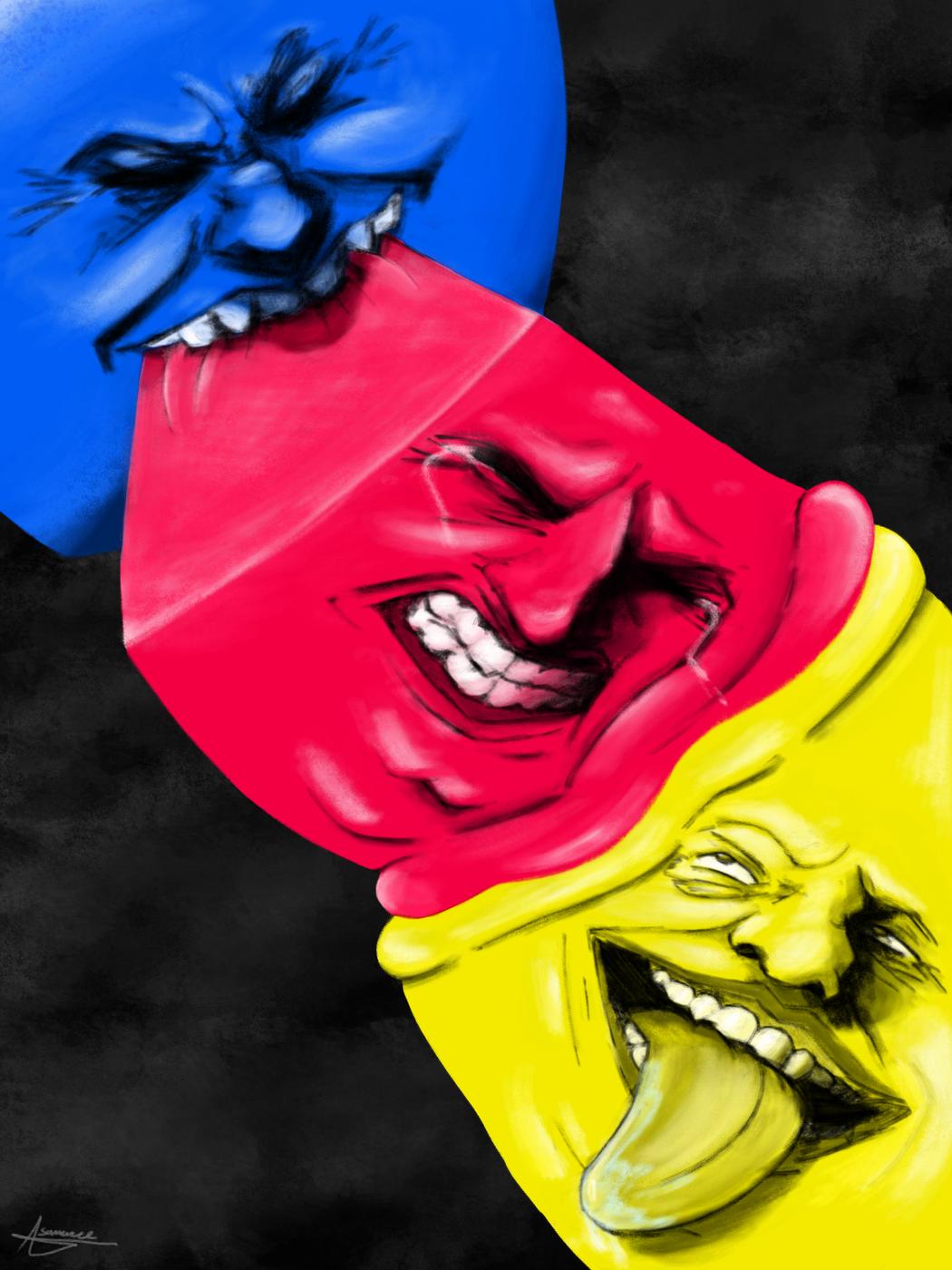 AJ Samarco | Endless Ruin | 2025
Your abstract digital works are described as “deep dives into your psyche”. How do you translate complex emotions into visual form?
I translate my psyche by using my canvas as a doorway into my mind, Leaning into the aesthetics of Weirdcore and Uncanny Valley. Creating artworks that feel familiar and unsettling and using faces that feel Uncanny to the viewer. The cluster of faces going through different emotions and looking distorted at times, acting like a visual manifestation of my inner struggles. When viewing my artwork, I want the viewer to feel like they’re in a liminal space, being confronted with frightening and confusing imagery that makes them ask questions rather than finding the answer.
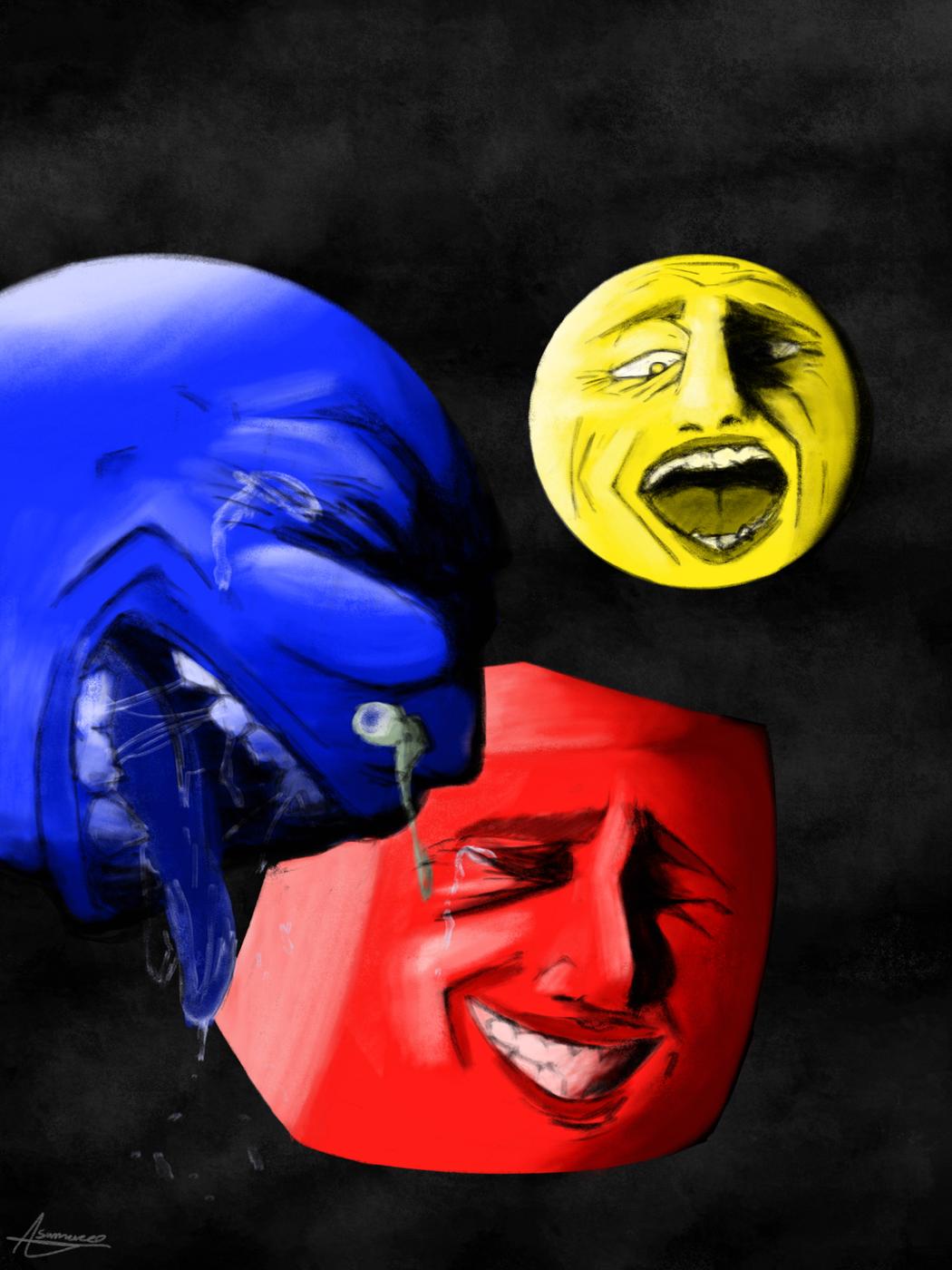 AJ Samarco | Let Me Go Away | 2025
The characters in your work often appear fragmented, distorted, or placed in unusual spatial environments. What do these visual distortions represent for you?
The fragmented, distorted characters in my work represent the internal conflict and confusion that memories bring us. Using multiple faces that clash with each other shows that we don’t feel one emotion at a time but rather a collision of many. Visualizing the ‘mental noise’ that comes with looking back on the past, showing how one memory can be interpreted with more than one emotion.
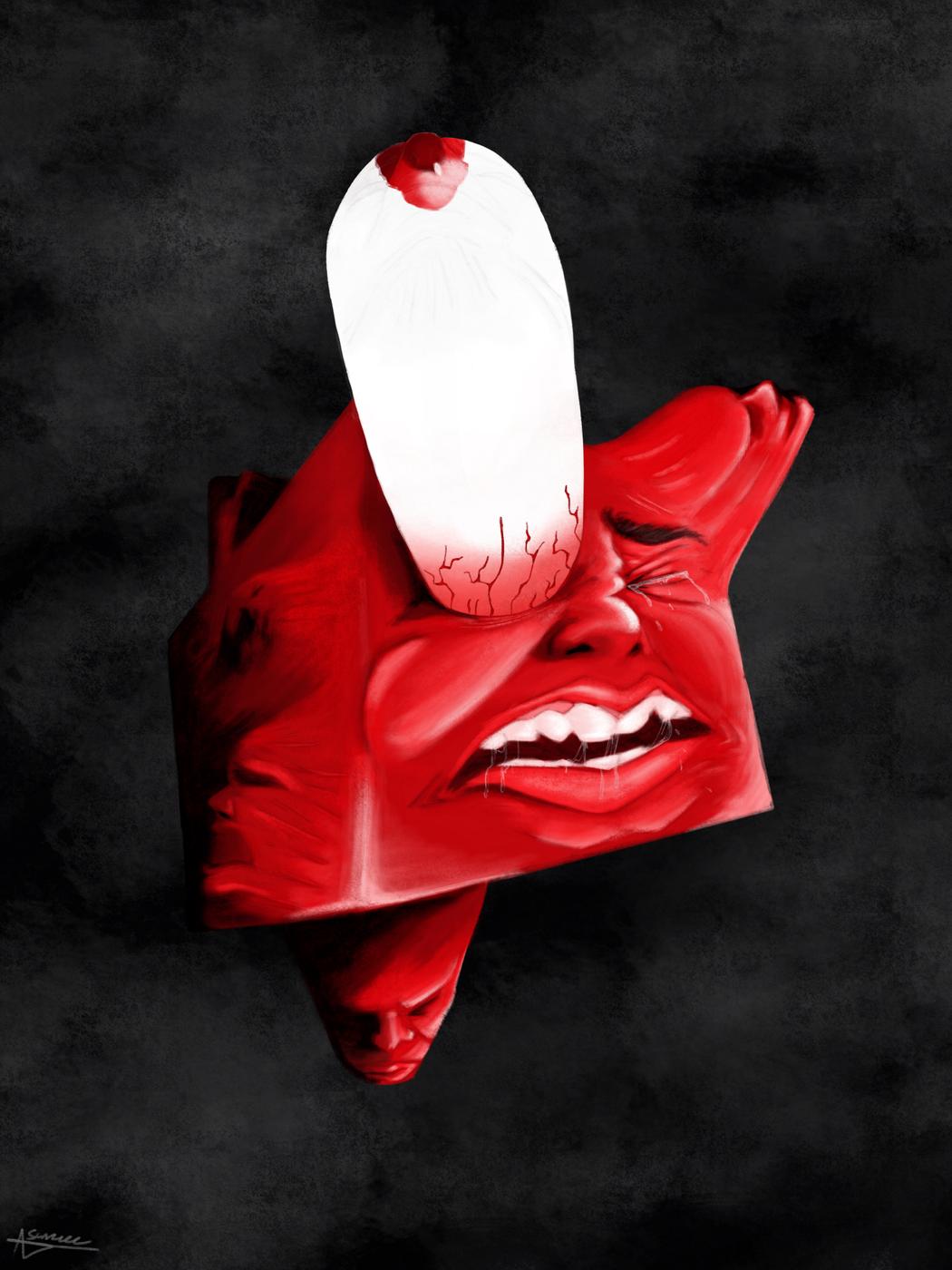 AJ Samarco | Numbness | 2025
When viewers encounter your more abstract or emotional pieces, what kind of reaction or reflection do you hope they experience?
To think to themselves of what the meaning could be of my pieces and converse to others about it, but more importantly draw conclusions themselves. Having a viewer have their own interpretation of my work while examining it deepens the connection they’ll have with the work. While my interpretation of my own work will be the final say of what it means, having other people find something in the piece that speaks to them is more important.
Leave a Reply
You must be logged in to post a comment.