
Sílvia Bassas
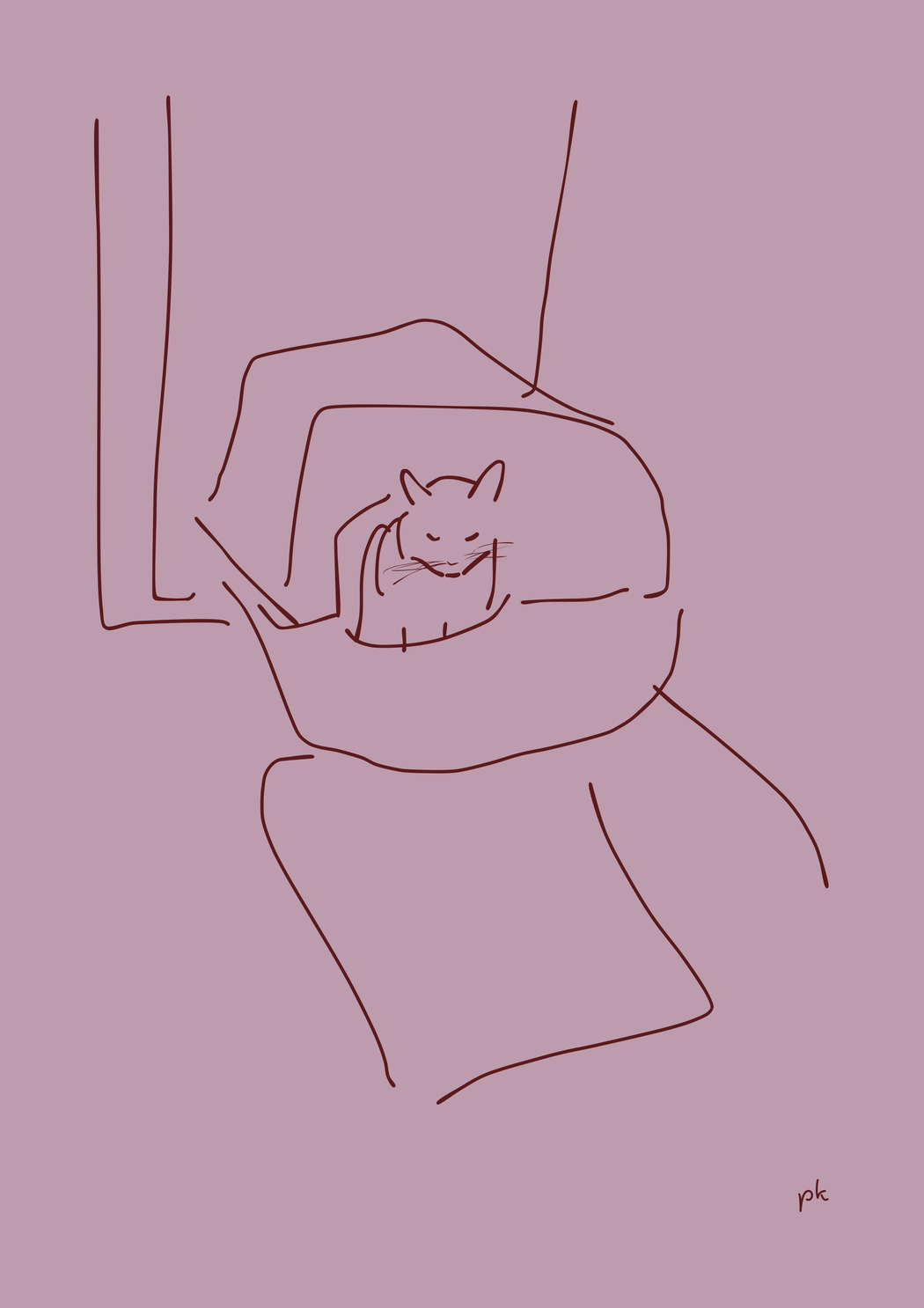 Sílvia Bassas | Comfort break | 2026
Your project is rooted in everyday moments with your two cats, Pinda and Kaas. What made you realize that these small, domestic scenes were worth turning into a long-term artistic project?
From the beginning, I never consciously decided to turn these scenes into a long-term artistic project. It happened in a very organic way. Adopting Pinda and Kaas after never having lived with animals before opened up an entirely new space of attention in my daily life. Understanding them is not about languages in the human sense but about paying attention to their rituals, habits, small gestures, and unexpected positions to fall asleep. Drawing became a way of processing that observation and holding on to fleeting moments that might otherwise pass unnoticed. Over time, I realised that these simple domestic scenes can carry a subtle beauty. They are modest, everyday moments, yet they contain intimacy, tenderness and sometimes a quiet strangeness.
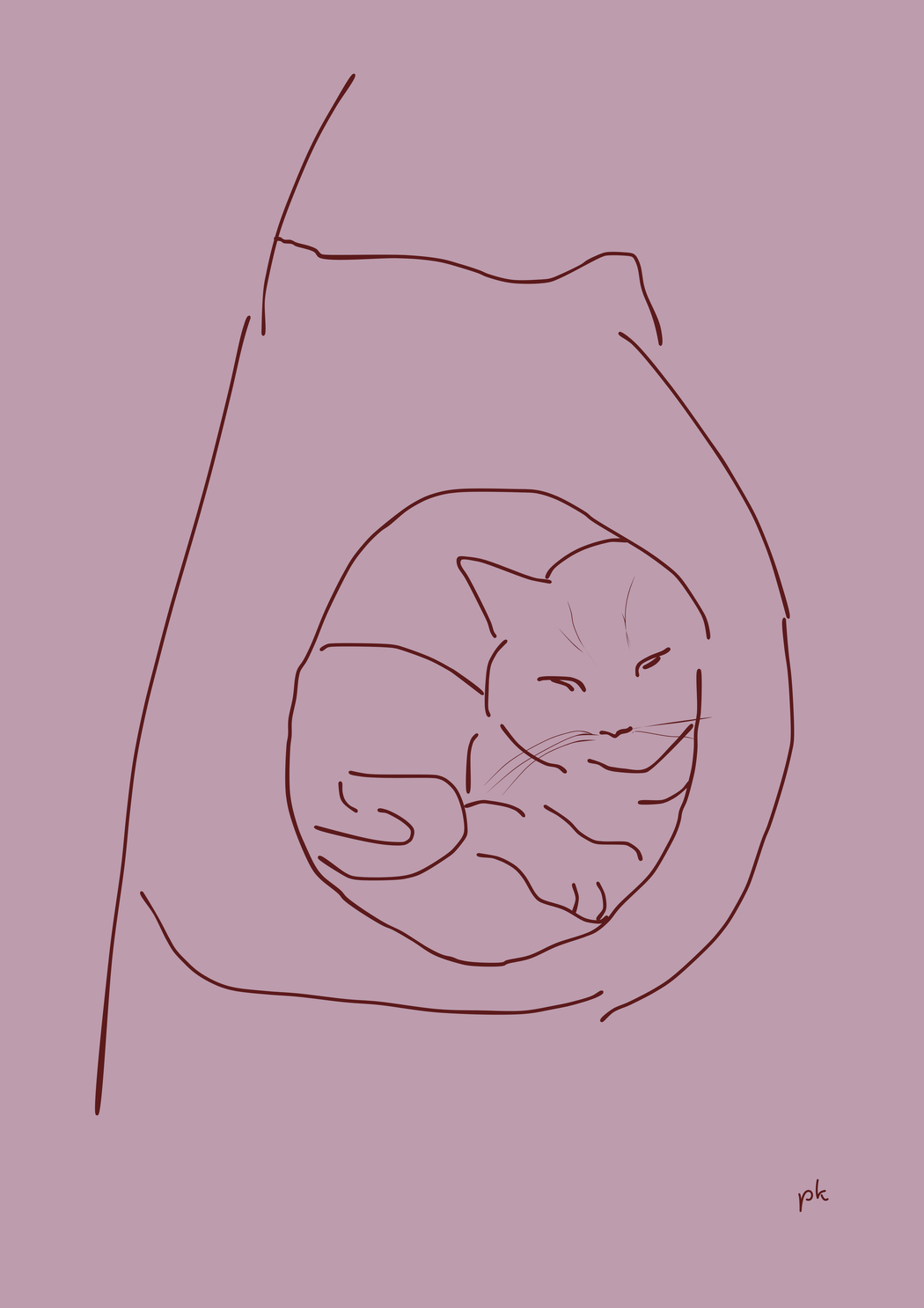 Sílvia Bassas | Am I cute | 2026
You work from spontaneous photographs and then translate them into digital line drawings. What do you decide to keep, and what do you intentionally leave out during this transformation?
When I translate a spontaneous photograph into a digital line drawing, my primary focus is always the cat’s presence — its silhouette, posture, and gesture. The body position often carries the emotional core of the scene, so I try to preserve that essence above all else. The surrounding space becomes secondary. In most cases, I intentionally remove background elements to avoid visual noise and allow the figure to breathe, although occasionally I include wider spaces when they meaningfully contribute to the atmosphere.
For instance, I do not reproduce the patterns of their fur, even though one is an orange cat, and the other is a black-and-white tuxedo cat. Instead, I draw them as clean silhouettes. What I choose to emphasise are subtle expressive features — the whiskers and vibrissae sensory hair. Interestingly, because their physical differences are reduced, identification shifts from appearance to personality. Friends who know them sometimes try to guess which cat I’ve illustrated based solely on the gesture or posture, associating certain movements with their character.
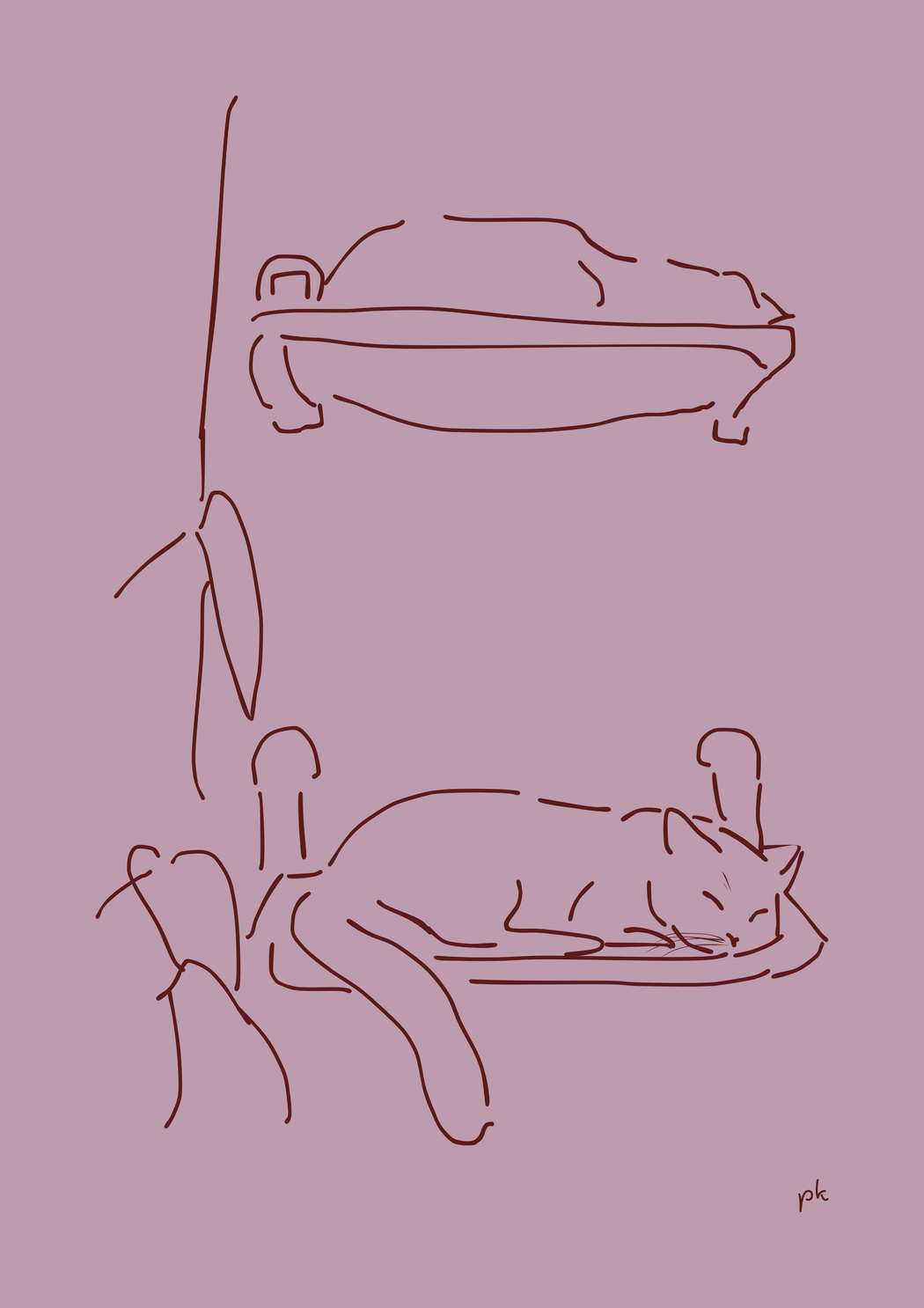 Sílvia Bassas | Beauty sleep | 2026
Your illustrations use a single line colour on a block-colour background. How did you arrive at this visual language, and what does this limitation give you as an artist?
The decision to use a single line colour against a block colour background was key in developing a consistent visual language for my illustrations. It was a conscious choice, closely tied to the project’s focus on simple, everyday moments; two tones are enough to convey the mood.
Working within this limitation presents both challenges and opportunities. The contrast between the line and background must be carefully considered — often a dark background with a light line, or vice versa — which requires a thoughtful selection of complementary colours. Finding combinations that feel distinct for each illustration can be surprisingly difficult, especially when creating a series for platforms like Instagram, where I want every piece to have its own personality.
At the same time, this constraint encourages experimentation. I can explore thematic “colour capsules,” creating mini-collections where a few harmonised tones unify multiple illustrations, while still allowing each drawing to retain individuality.
Cats are often associated with comfort, routine, and stillness. What do Pinda and Kaas reveal to you about time, rest, and everyday rituals?
Observing Pinda and Kaas has made me more aware of the natural rhythm of daily life — something that is often overlooked in our busy, constantly stimulated world. Their simple routines — stretching in the sun, pausing for a nap, circling a favourite spot before settling down — remind me that stillness and rest are not idle, but essential and intentional. Watching them has made me more attentive to subtle changes in light, movement, and mood, and inspired me to reflect on how we, too, can find meaning and calm in the small, repeated acts of everyday life.
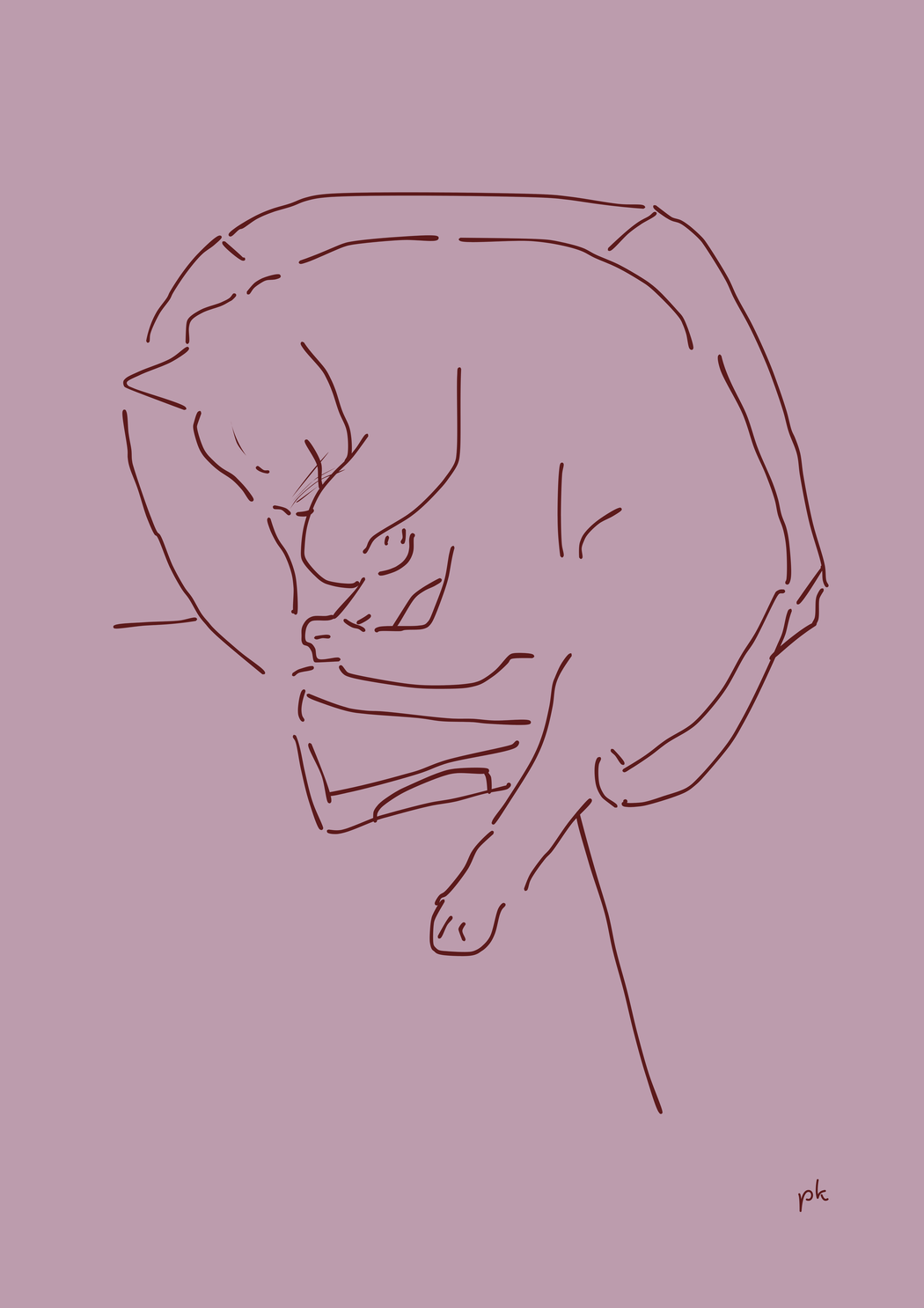 Sílvia Bassas | Catch some zzzs | 2026
Many of your works feel calm, intimate, and almost meditative. Is this atmosphere something you consciously aim for, or does it emerge naturally from the process?
I do agree that the illustrations often feel calm and intimate; it arises quite naturally from the cats inhabiting the space differently. Interestingly, when I’ve tried illustrating some of the dogs I have in the family, the energy immediately felt different: — more dynamic, more outward. So rather than aiming for a meditative atmosphere, I would say it arises as a natural consequence of observing the cats closely and translating their gestures through a reduced and minimal visual language.
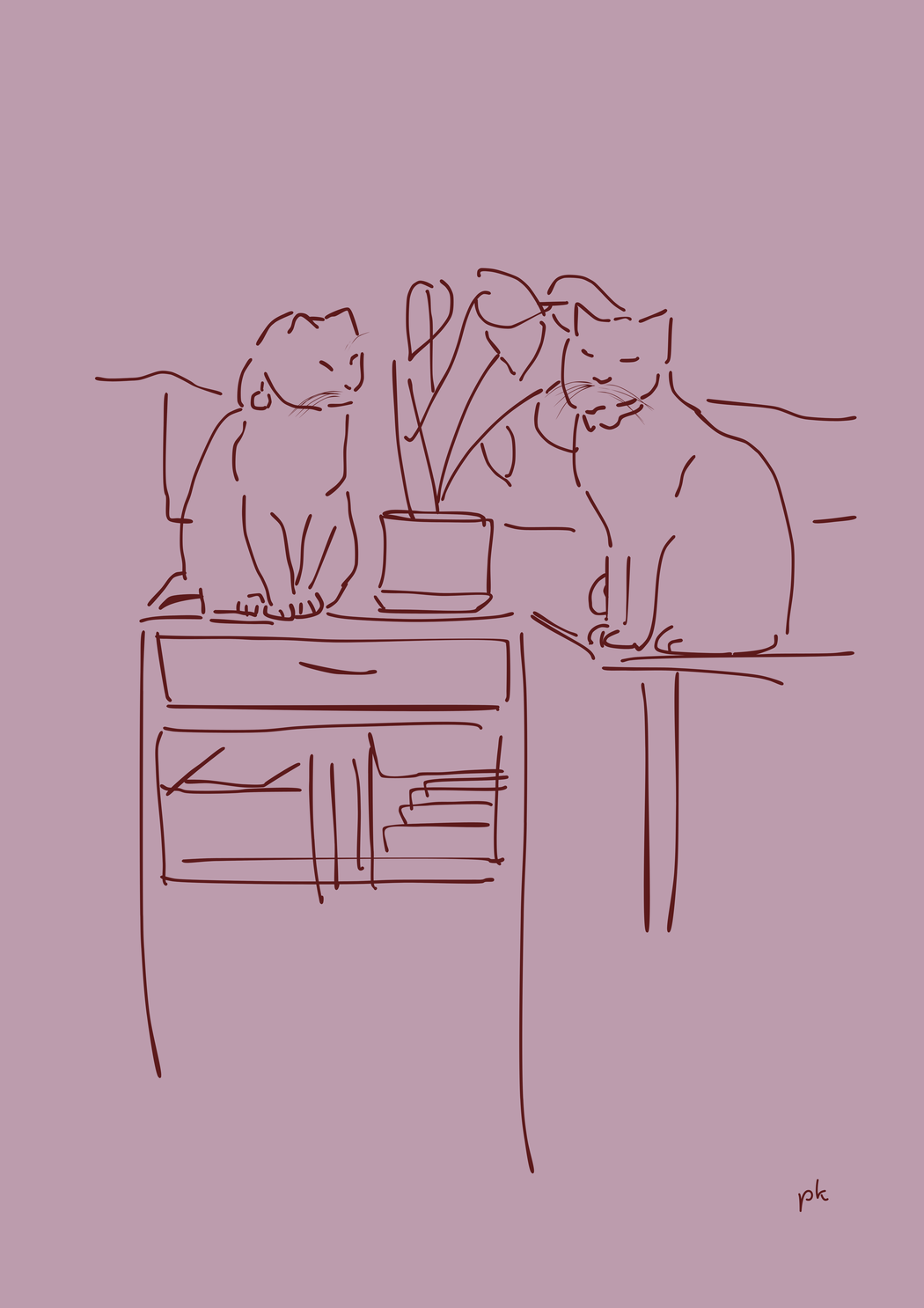 Sílvia Bassas | Hold that pose! | 2026
How do viewers usually react to your work? Do they recognize their own everyday moments in these scenes?
Most of the feedback I receive so far comes from friends and people who know Pinda and Kaas personally, so there is often an element of recognition and affection in their reactions. They enjoy identifying specific gestures or attitudes that they have witnessed themselves, which creates a sense of shared intimacy. People who live with cats tend to respond in a particularly personal way. They often recognize similar gestures in their own daily routine and project their own experiences onto the drawings.
Viewers mention that the project has a clear and coherent visual identity, and that the aesthetic feels aligned with what I am trying to represent. That consistency seems to strengthen the emotional impact of the scenes.
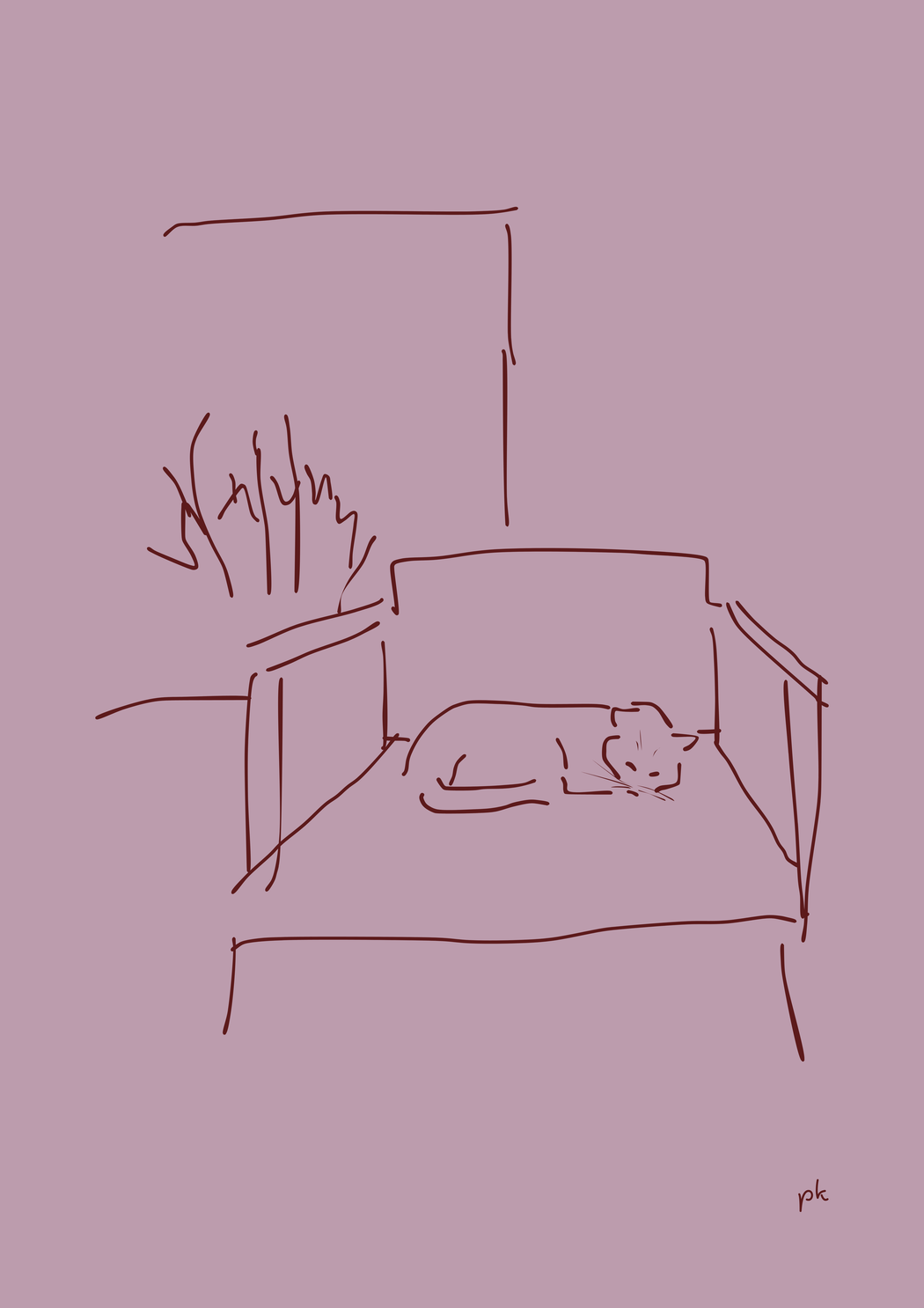 Sílvia Bassas | Power nap | 2026
What role does art play in your life right now, and how do you imagine this practice evolving in the future?
Right now, art occupies a very personal and exploratory space in my life. This project began without a specific ambition or long-term plan; it started as a spontaneous creative practice that I currently share mainly through Instagram. In that sense, it remains something close to a hobby — a space of freedom and experimentation alongside my professional path.
At the same time, I feel that the project is gradually opening new possibilities. I am exploring ways to materialise the illustrations beyond the digital format — perhaps as prints or small decorative pieces that can inhabit other people’s homes, echoing the domestic intimacy that inspired them. I have also received suggestions about developing a children’s storybook or short illustrated narratives based on these characters, which I find both surprising and inspiring.
For now, I see this practice as a process of learning and refinement. I am interested in letting it evolve organically, while remaining attentive to opportunities that feel coherent with its essence.
Leave a Reply
You must be logged in to post a comment.