
Tim Clarke
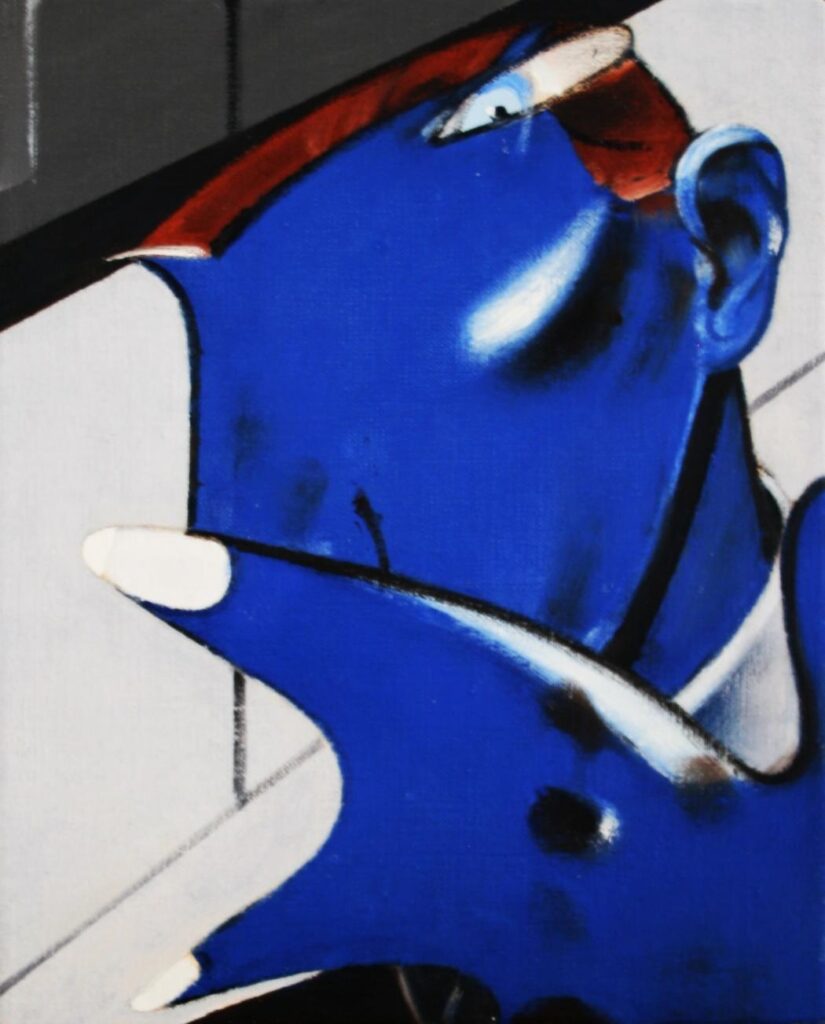 Tim Clarke | Bettrys Jones as Laertes in Hamlet
Your portraits originate from live theatrical performances rather than studio sittings. How does the immediacy of theatre change the way you observe and interpret a subject?
Drawing dancers with special needs in movement was pivotal to my maturity as an artist. I drew their whole body, sometimes in group situations. From this experience I understood how my drawing transformed in the most positive of ways by addressing movement.
Having been a Shakespeare’s Globe groundling for years and having drawn a local street or the theatre on each visit so there was really nothing nearby outside the Globe to draw, I thought I would draw inside. Initially I drew the whole body, like my dancers, but quickly altered that profitable habit to concentrate on faces. By drawing actresses’ faces when they were moving, I found the most wonderful surprises constantly occurring where human expression was exemplified through the ‘natural’ distortions created by drawing at speed which surpassed by far studio sittings. Drawing moving actresses opened boundless interpretation of character without repartition. I discovered drawing faces in movement gave me a constant unique quality to each individual face suggesting endless depth and the mystery of human nature. That’s what I wanted.
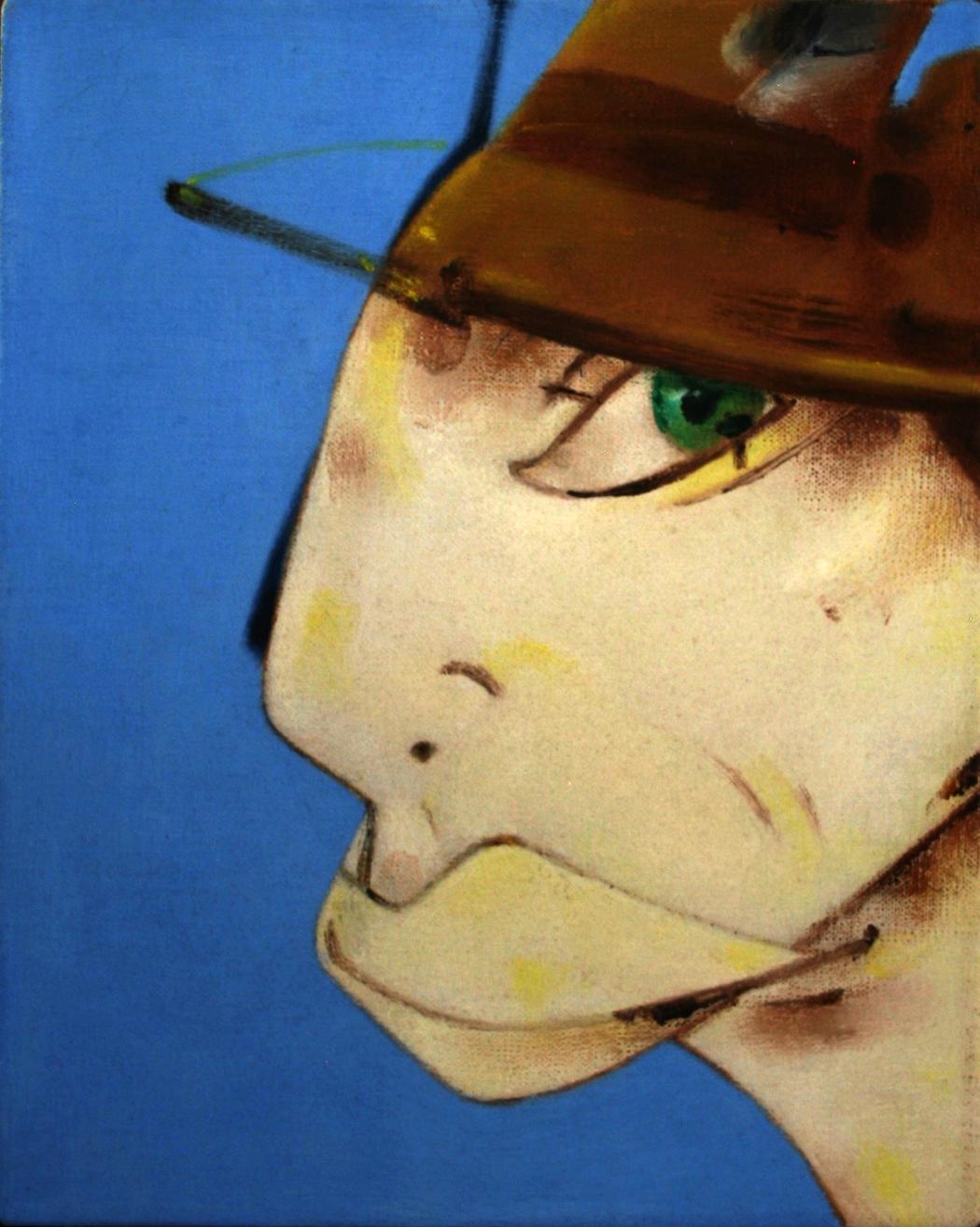 Tim Clarke | A Good deed in a naughty world. Kirsty Besterman as Portia
In transforming quick observational drawings into oil portraits, what do you choose to preserve and what do you intentionally alter?
The powerful base of these oil portraits is the rapid drawings done at the globe Theatre. These are vital and instrumental to the success of these portraits. Back home I look very carefully at my Globe drawings and then draw them again, trying to keep their essence. I look for coherency, vitality, uniqueness and subtle emotional expression. Some are too wild to use but often I am surprised to have made a successful oil painting from a very unlikely and unpromising drawing.
Sometimes a portrait may need more than one attempt, several have taken up to six attempts. When I slip away from the original Globe drawing, that’s when my oil work goes awry. In cases like this I return to the original Globe drawing to remind me of the line and composition made then. It is that unique line giving aliveness, spontaneity and vitality, transferred to the canvas that I believe gives my portraits a unique quality. Most of my drawing done at the Globe is useful and only needs tidying up.
Theatre is ephemeral, yet painting is permanent. How do you translate a fleeting moment on stage into something timeless on canvas?
I accept the human search for meaning is paramount to our wellbeing. ‘‘Out, out brief candle! Life’s but a walking shadow, a poor player that struts and frets his hour upon the stage and then is heard no more. It is a tale told by an idiot, full of sound and fury signifying nothing’’. So Macbeth reflects upon learning of Lady MacBeth’s death. I believe our hour comes from God, source, all that is, the Creator, signifying everything. Everything is connected to everything else, so any one thing can express the whole. That is what I am looking to express in each portrait.
Our lives lived in time are ephemeral, but spiritual time, as best I understand, is eternal now. I try to freeze a snippet of ephemeral time into the eternal now with this spiritual awareness, that connects everything, including all time in a permanent instant.
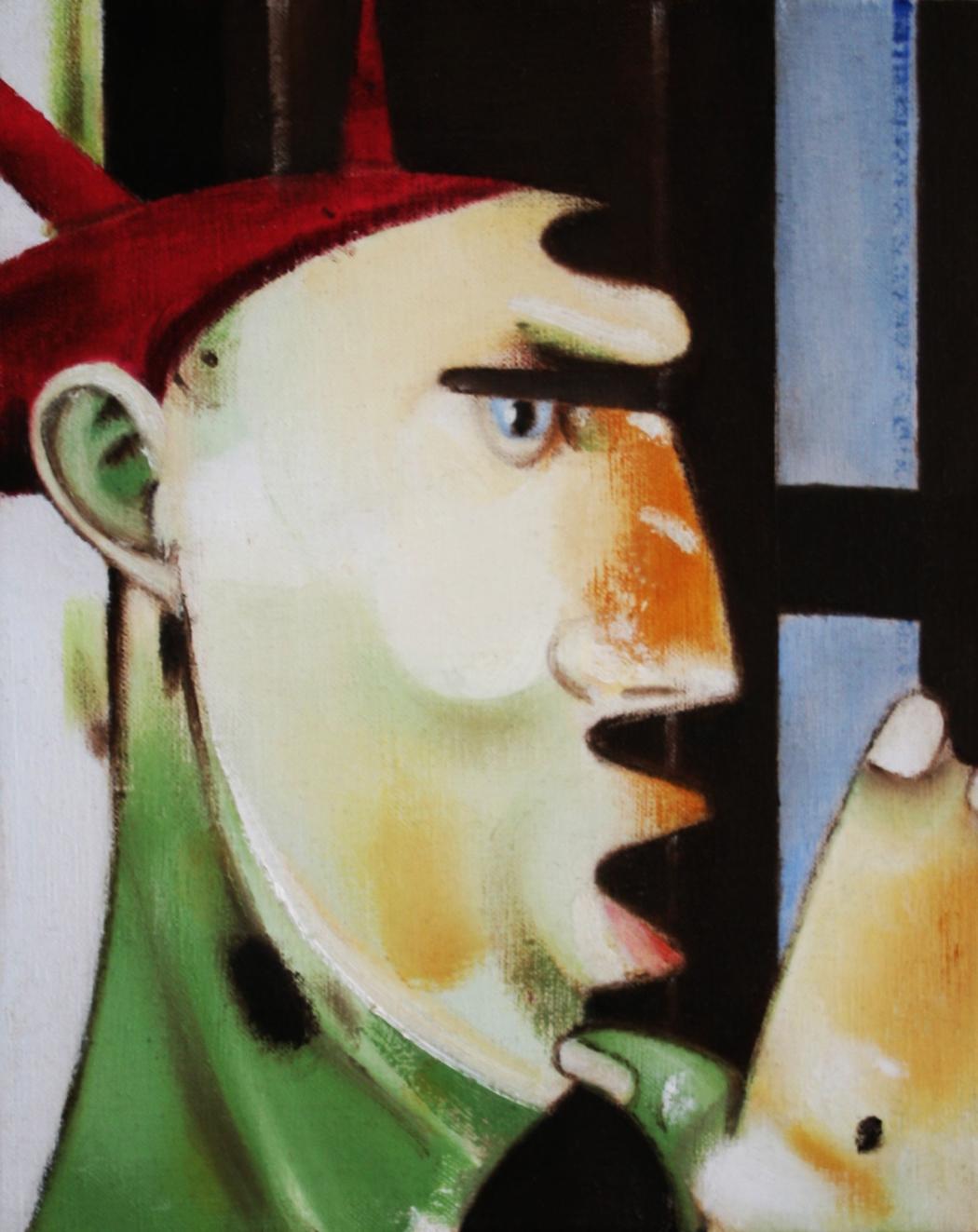 Tim Clarke | Helen Schlesinger as Gertrude in Hamlet
Shakespeare’s female characters often navigate power, vulnerability, and resistance. Which of these qualities most compels you as a painter?
I am drawn to the power Shakespeare gives his female characters. Inspired by his example I make my female portraits powerful, whatever emotion they are expressing. I want to make them powerful in all ways, so they can express vulnerability and still be powerful. I feel there is no end to the power of females.
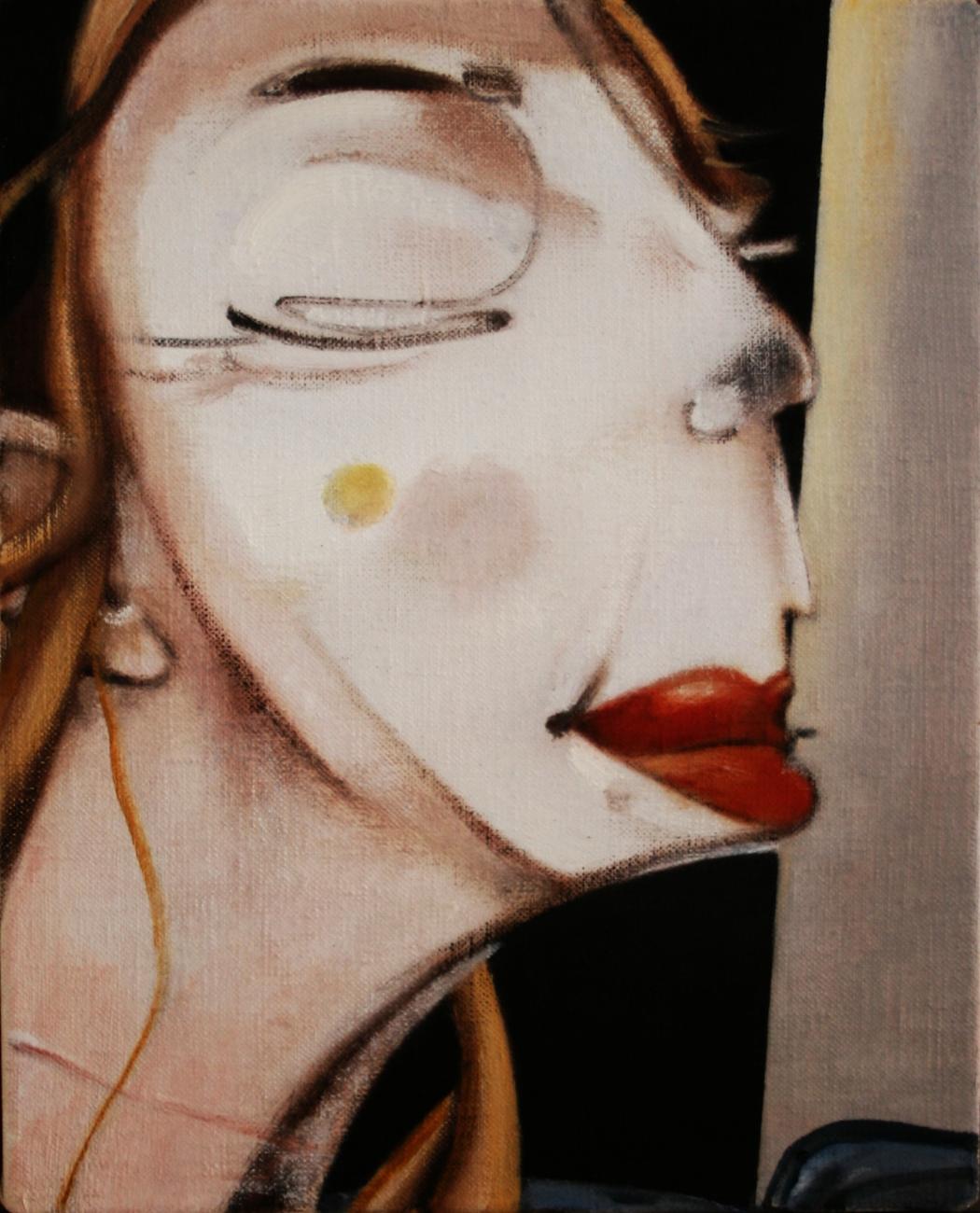 Tim Clarke | Kirsty Bushell as Juliet | 2018
Your portraits often crop or fragment the figure in unexpected ways. How do you decide what to reveal and what to withhold?
The unusual and unexpected ways in which my portraits are fragmented comes from the live drawings done at the Globe. This is part of their beauty. It is the surprising forms that deeply attract me by giving a unique representation of the boundless nature of human character. They are dancing not with their bodies but with their faces. If I can make my oil portraits convincing, I will follow any fragmentation that my Globe drawings reveal.
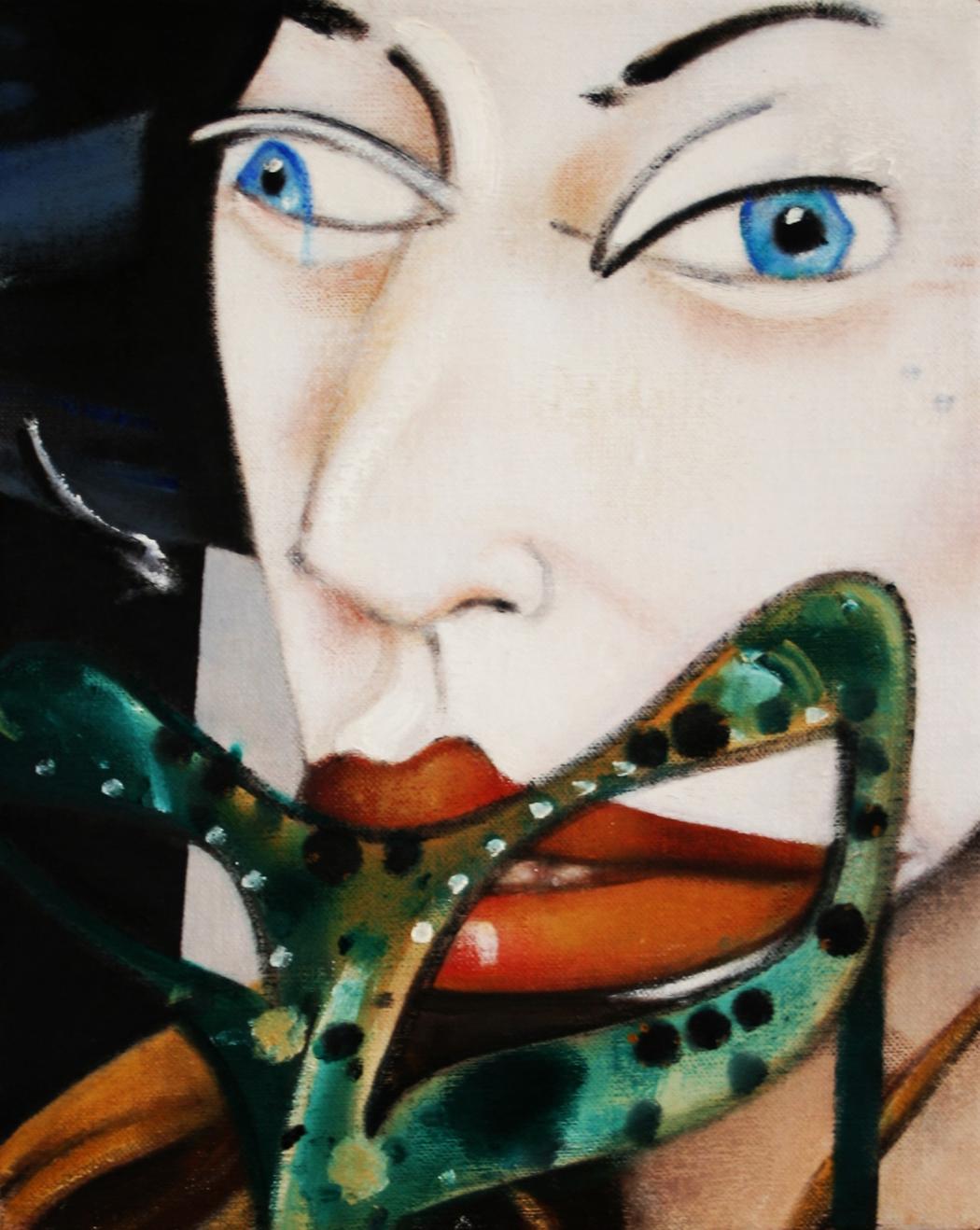 Tim Clarke | Kirsty Bushell as Juliet lowering her masquerade ball mask
The faces in your paintings feel psychologically charged, sometimes tense or introspective. Are you painting the character, the actress or something beyond both?
Sometimes I title my portraits with a quote from Shakespeare or name this actress playing this role. I am responding to the uniqueness of the actress performing Shakespeare’s unique female characters in my drawing and painting using both as a platform to express and celebrate my respect and admiration for all women. I want their internal feelings and thoughts to emerge on their faces charged with the fullness of being an individual connected to and containing all that is. The eye colour in my portraits is the eye colour of the actress concerned.
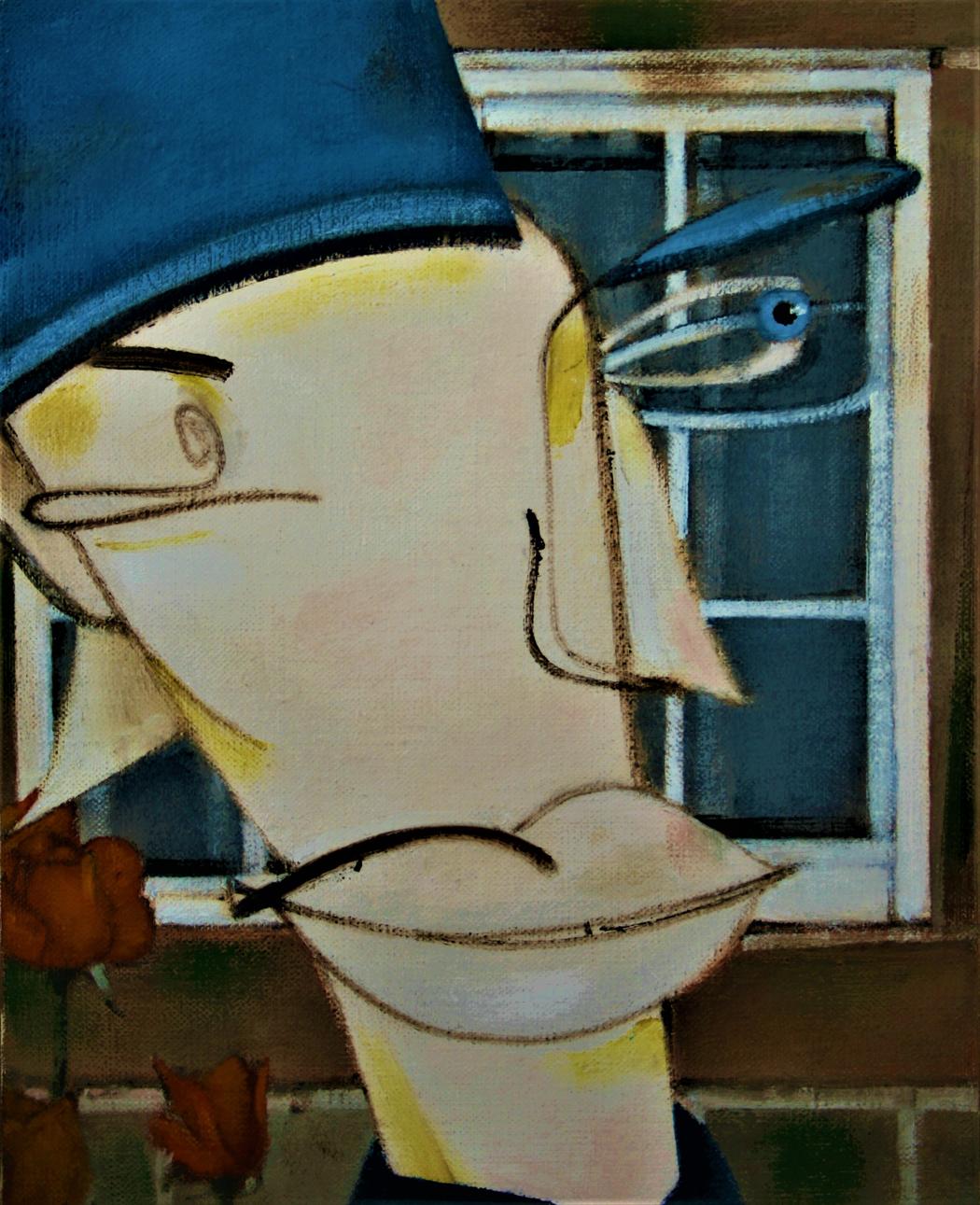 Tim Clarke | Rose Wardlaw as Harriet Stubbs with roses | 2021
By focusing exclusively on women in this ongoing series, do you see the collection as a political gesture, a poetic one, or both?
In my first two plays I drew both genders. My first oil portrait was of Portia titled ‘‘A good deed in a naughty world’’, quoting her in The Merchant of Venice. I quickly understood I could make a significant statement by painting only women. This allows me to express my love and admiration for women and contend with the gross mistreatment, belittling and abuse of women by men for too long. I feel only when the colossal gifts of women are respected by men will peace on Earth reign. By painting only women in my Shakespeare’s Globe Theatre series, I strongly feel I am creating my own ‘good deed in a naughty world’.
Leave a Reply
You must be logged in to post a comment.