
Valeriia Popova
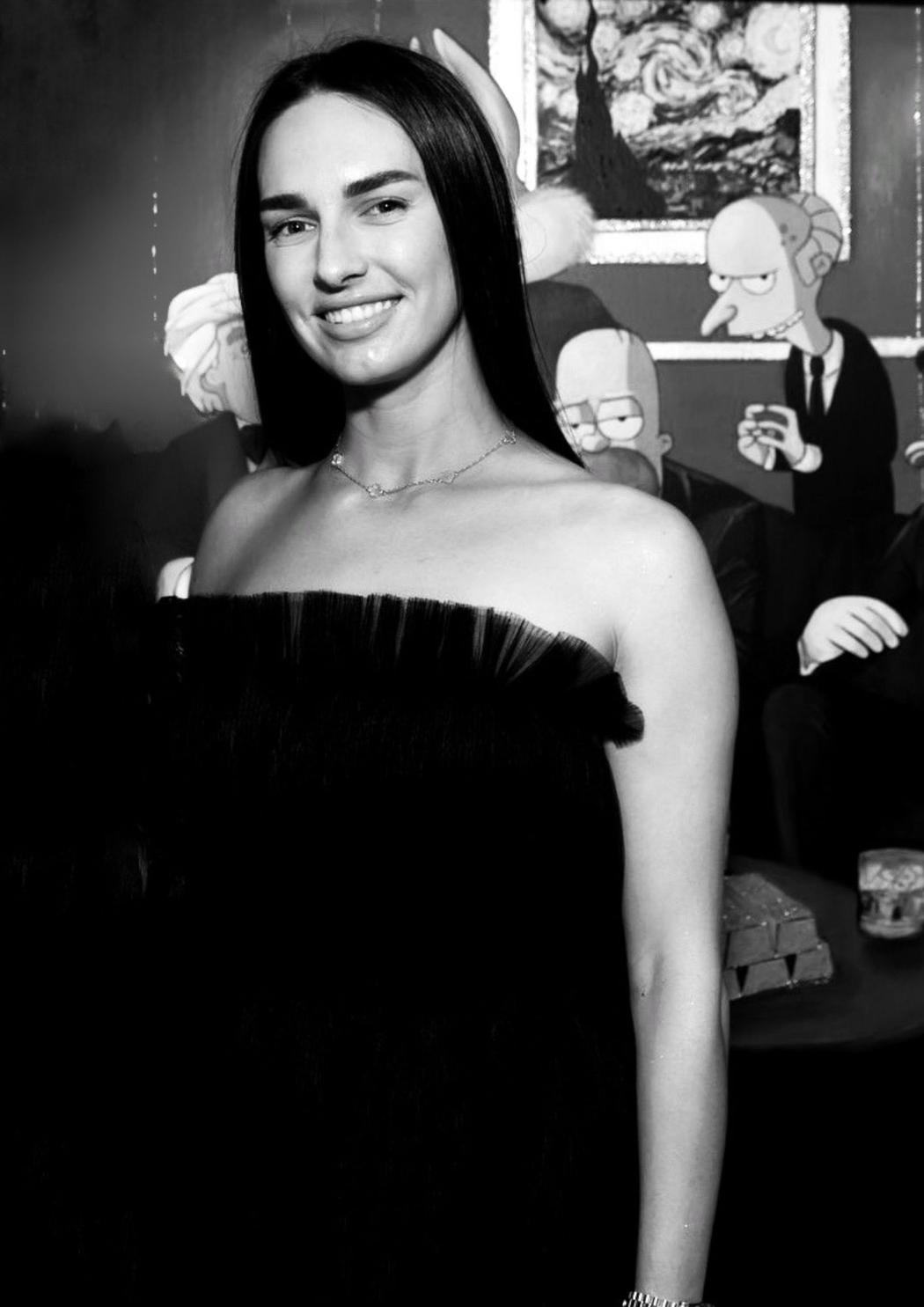
Many of your works reinterpret globally recognizable cultural icons. How do you decide when an image becomes your image rather than a reference?
I don’t really “decide” in a technical way — it just evolves. Ideas simmer in my head while I’m still finishing another piece. Inspiration can come from music, classic films, or even an old magazine image that just won’t leave me alone.
It feels like a slow puzzle assembling itself in my imagination. When the picture finally becomes clear, I start sketching and refining until it no longer feels like a reference but like my own vision — usually charged with humor, sarcasm, or that big, dream-like energy I love.
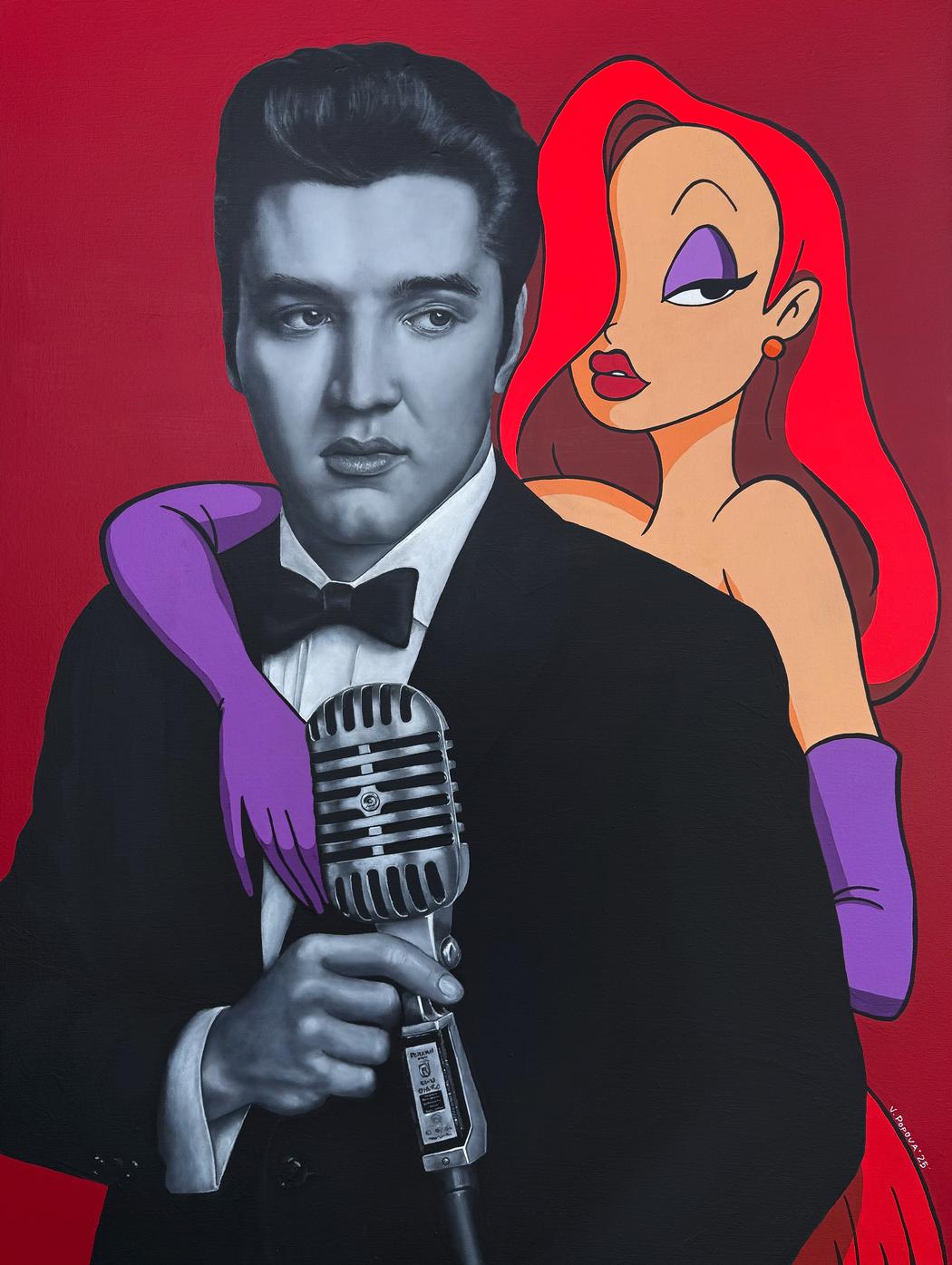 Valeriia Popova | Curtain Call | 2025
Your characters often project confidence and control. How important is the idea of the female gaze in your work?
I don’t really think about my work through a strict gender lens. What attracts me is confidence, attitude, and power. In “We Can Do It (Reimagined)” I wanted a woman who isn’t just strong — she’s composed, stylish, and completely in control of her world.
How I portray a figure always depends on the idea. Sometimes I elevate feminine elegance as power; other times I lean into a more traditionally masculine sense of control. It’s not about picking a side — it’s about what the artwork demands.
At the end of the day, power for me isn’t gendered — it’s an energy.
Your work balances glamour with subtle irony. How does humor function in your visual storytelling?
Humor is my secret ingredient. Glamour pulls you in, but irony keeps you thinking. In “We Can Do It (Reimagined)” the luxury Birkin bag in Rosie’s raised fist is intentionally playful — it blends historic grit with modern aspiration.
I like that moment when a viewer first thinks, “Wow, that’s beautiful,” and then realizes, “Wait… that’s actually funny.” That tension is where my storytelling lives.
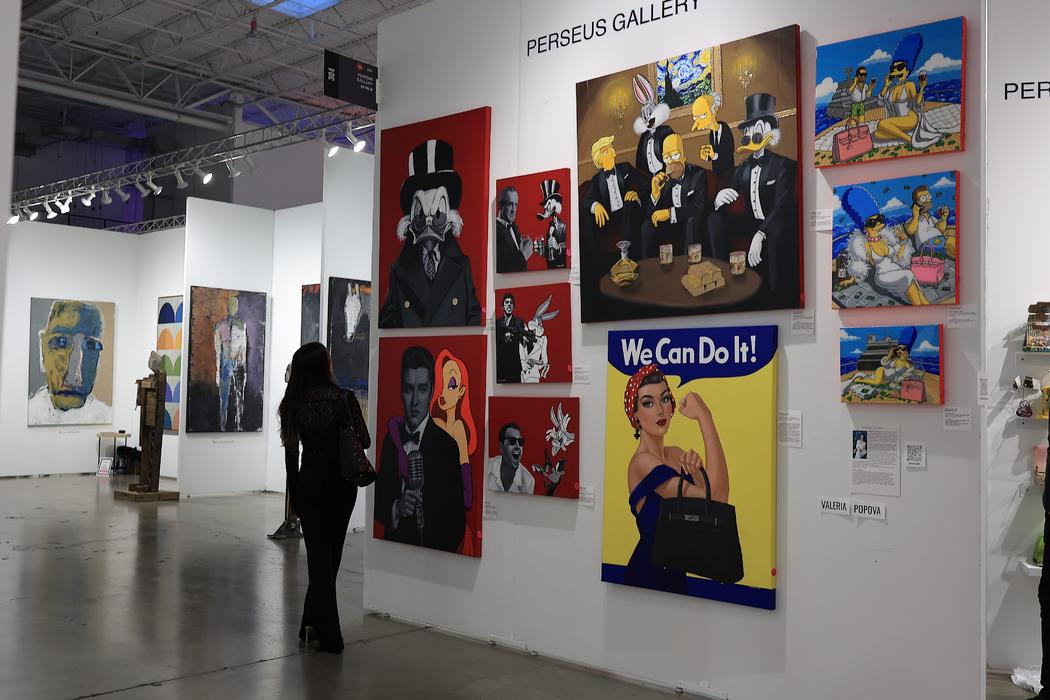 Valeriia Popova | Red Dot Miami | 2025
What emotional reaction do you hope viewers experience first — attraction, nostalgia, or confrontation?
A smile. Always. If people smile or smirk first, I know I’ve connected with them. After that, they might feel nostalgia, attraction, or even start questioning what they see — but humor is the door I want them to walk through.
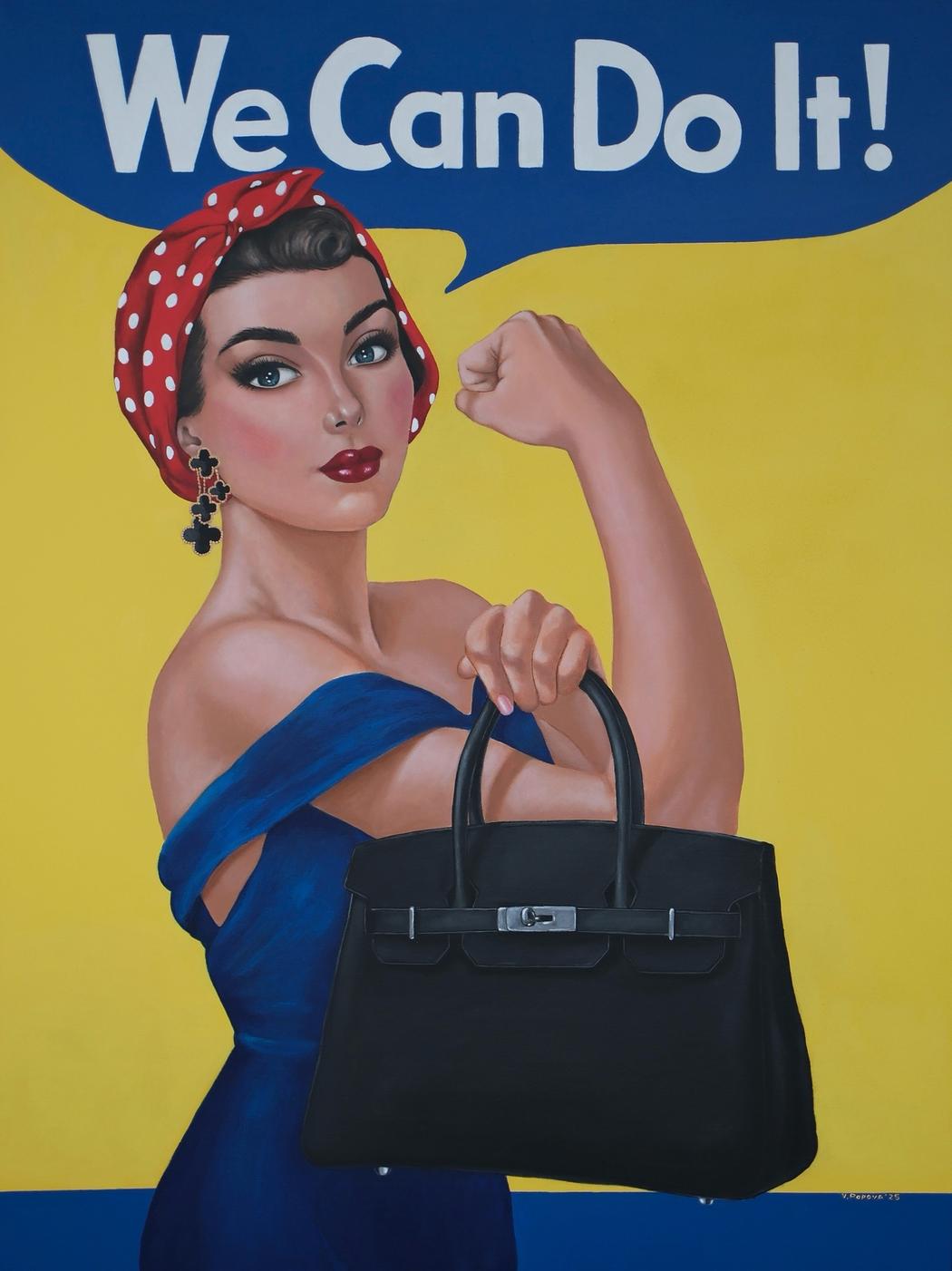 Valeriia Popova | We Can Do It (Reimagined) | 2025
Working in pop art today means existing in an image-saturated world. How do you keep your work from becoming just another “beautiful image”?
In an image-saturated world, I’m very aware that beauty alone isn’t enough. I care a lot about visuals — color, composition, mood, and that immediate impact — but I never stop there.
Each painting begins with an idea that excites me, whether it’s the confidence and ambition in “We Can Do It (Reimagined)” or the emotional stillness in “Curtain Call.” I work at the intersection of strong visuals, clear ideas, and raw energy. That balance is what makes the work feel meaningful rather than just decorative.
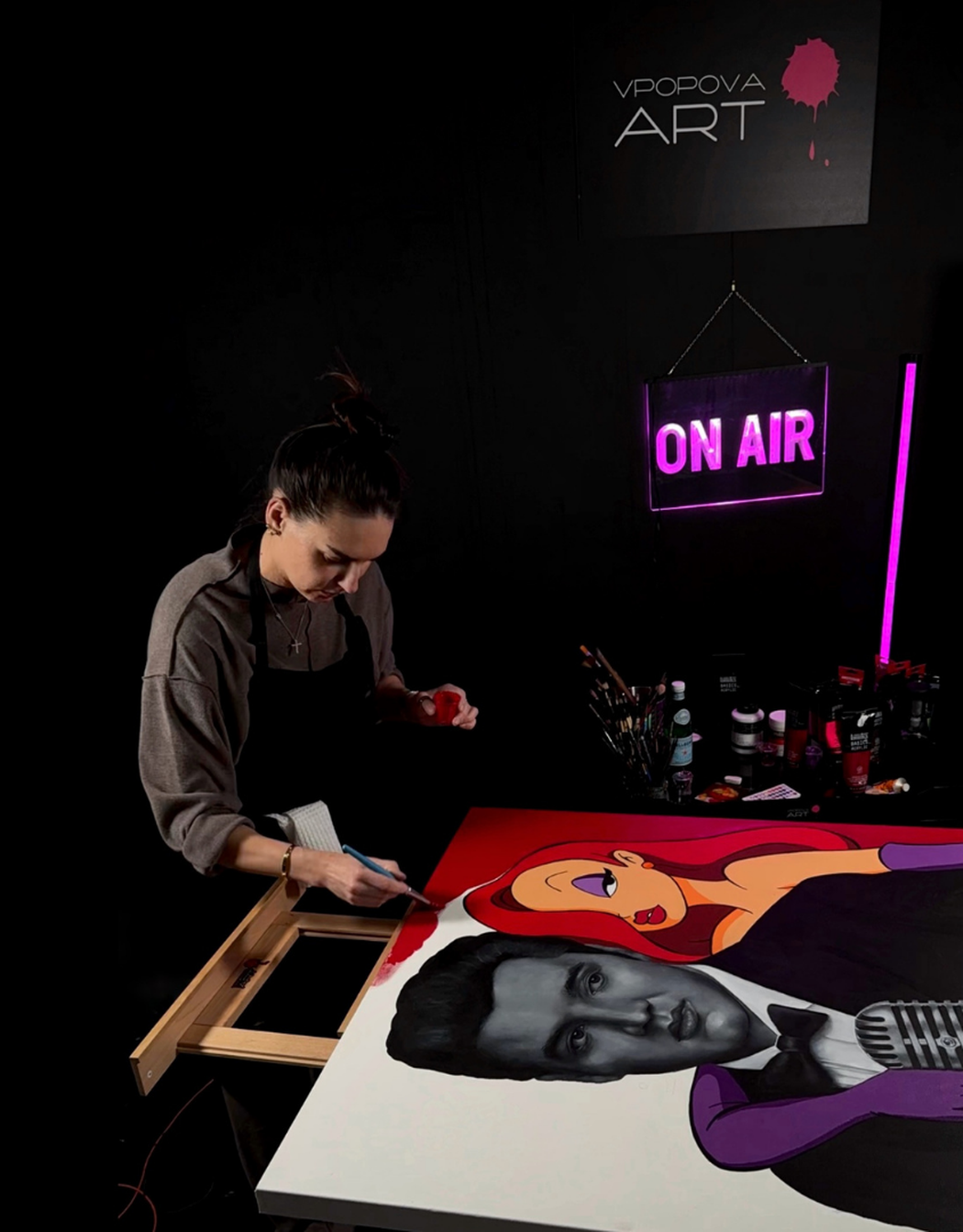 Valeriia Popova | Studio
Miami has a very distinct visual and cultural energy. In what ways has living there reshaped your artistic voice?
Miami is a city of contrasts — relaxed yet ambitious, sun-soaked yet fashion-driven. That duality definitely feeds my work.
Art Basel Miami was a huge turning point for me before becoming a full-time artist. Seeing that level of creativity made me believe I could truly exist in that world — and push my art further.
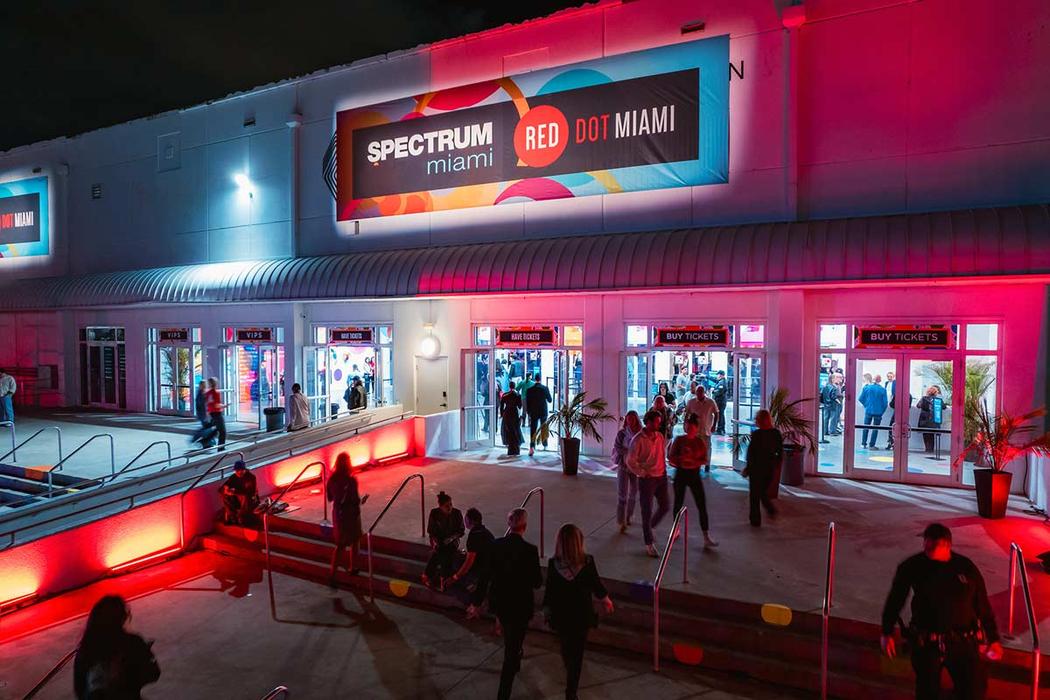 Valeriia Popova | Red Dot Miami
Many of your paintings feel cinematic, almost paused mid-scene. Do you imagine narratives before you paint, or do they emerge during the process?
The story usually comes first. With “Curtain Call,” I imagined that exact moment after a performance — when the applause fades and the spotlight softens, revealing something more honest beneath the persona of an icon like Elvis Presley.
I build the scene in my head like a film director before I ever touch the canvas. By the time I start painting, the narrative is already alive — I’m just bringing it into the physical world.
Leave a Reply
You must be logged in to post a comment.