
Daria Un
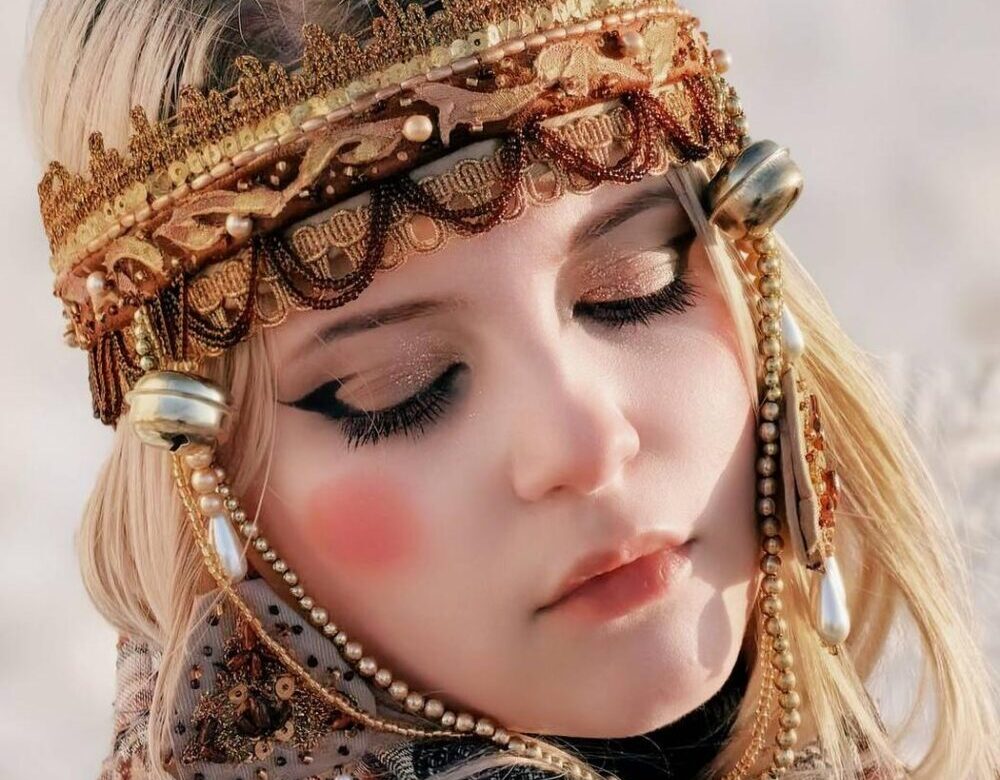
Your work is deeply rooted in Chuvash folklore and feminine archetypes. How did your personal connection to this cultural heritage begin, and how has it shaped your artistic voice?
My connection with Chuvash culture began not as research, but as recognition. Chuvash is spoken in my home. From childhood, I was surrounded by its fragments: in ornaments, gestures, images of women, in the very intonation of memory, even when it was not spoken aloud. Later, when I began to consciously study mythology and symbolism, I realized that I was not so much discovering it as remembering it. Chuvash folklore taught me to think in symbols rather than narratives, which is why my works became quieter, more ritualistic, and timeless.
You describe folklore as a “living language.” How do you translate ancient myths and symbols into a contemporary visual form without losing their spiritual depth?
For me, folklore is not the past, but an ongoing dialogue. I do not aim to literally illustrate myths; instead, I work with their inner resonance and with how I feel and perceive them. I translate ancient symbols through atmosphere, color, rhythm, and posture rather than through direct depiction.
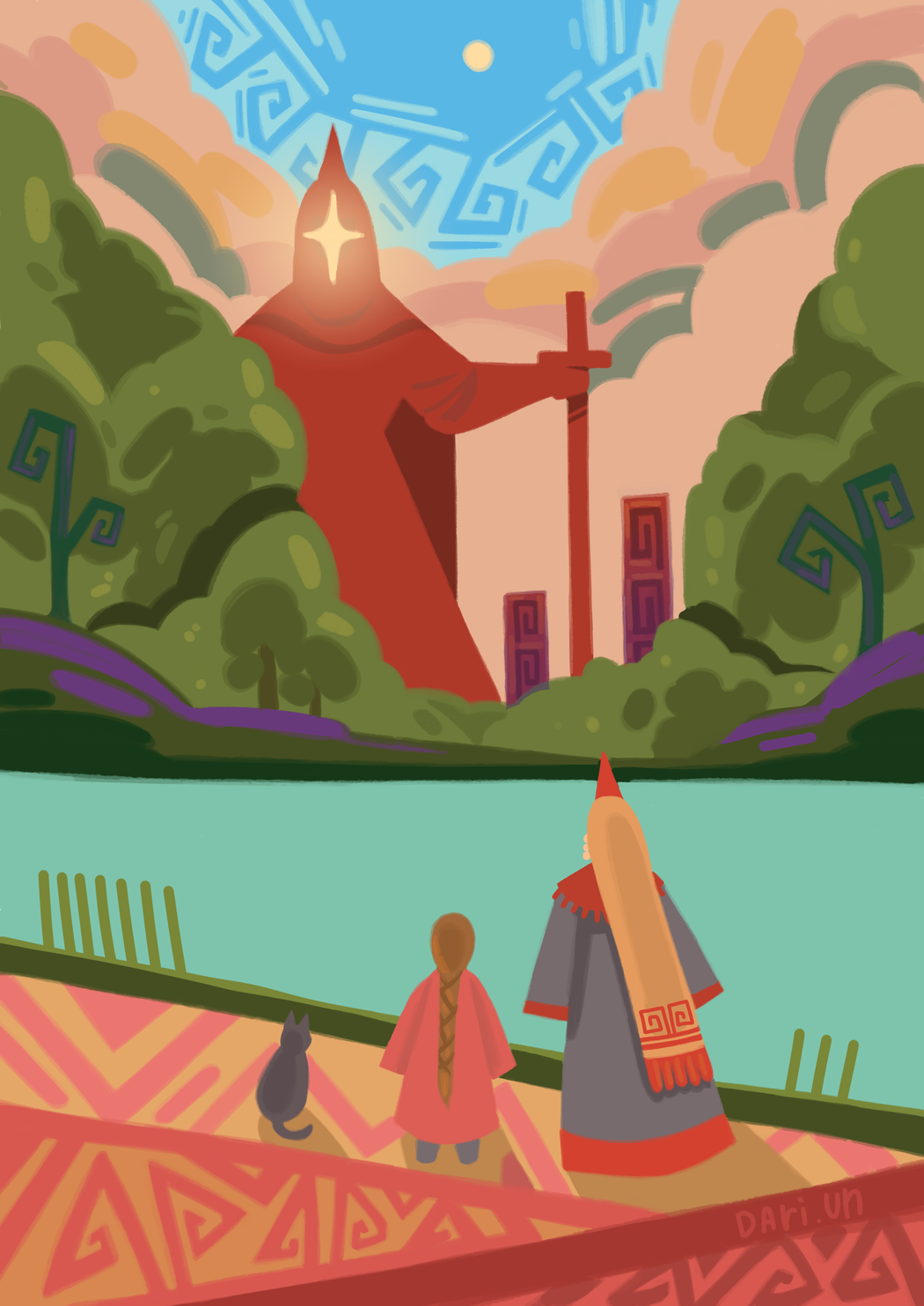 Daria Un | Homeland
Many of your figures appear calm, ritual-like, and timeless. What role does stillness and silence play in your visual storytelling?
In many ancient traditions, silence was considered a sacred moment before revelation. My characters exist precisely in this state—between thought and awareness. The concentrated stillness in my works allows the viewer not just to look, but to enter the image, to listen to it, and to search for subtle details.
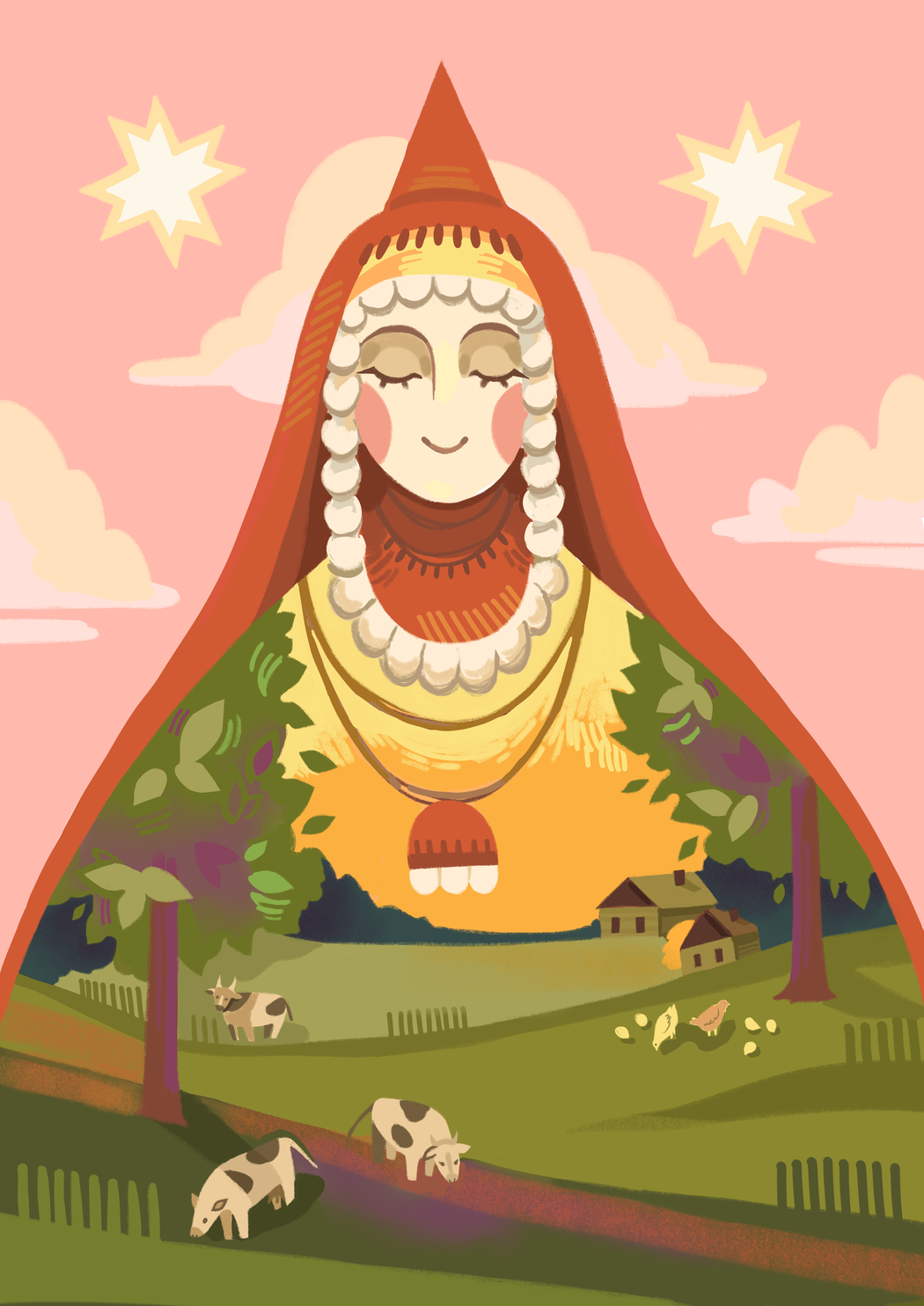 Daria Un | Land Of Ancestors
The landscape in your illustrations often feels inseparable from the female figures. How do you perceive the relationship between women, nature, and ancestral memory in your work?
In my visual world, woman and landscape are inseparable because both the body and the land carry memory. They remember through cycles, through wounds, and through healing. The female figures in my works are not placed within nature—they are nature itself. This reflects how I perceive feminine identity: as a continuation of lineage, landscape, and time.
One of the key images in your series is inspired by the Chuvash legend of the Three Suns. Why was this myth particularly important for you to reinterpret today?
The legend of the Three Suns is, for me, above all a story about ingratitude and the loss of connection to a gift. In this myth, people could not withstand the power of what they were given and responded not with gratitude, but with fear and destruction.
Today, this story feels especially sharp: we live in a world where many things are taken for granted—life, resources, attention, the Earth itself. The myth of the Three Suns reminds us that every gift requires respect and inner maturity.
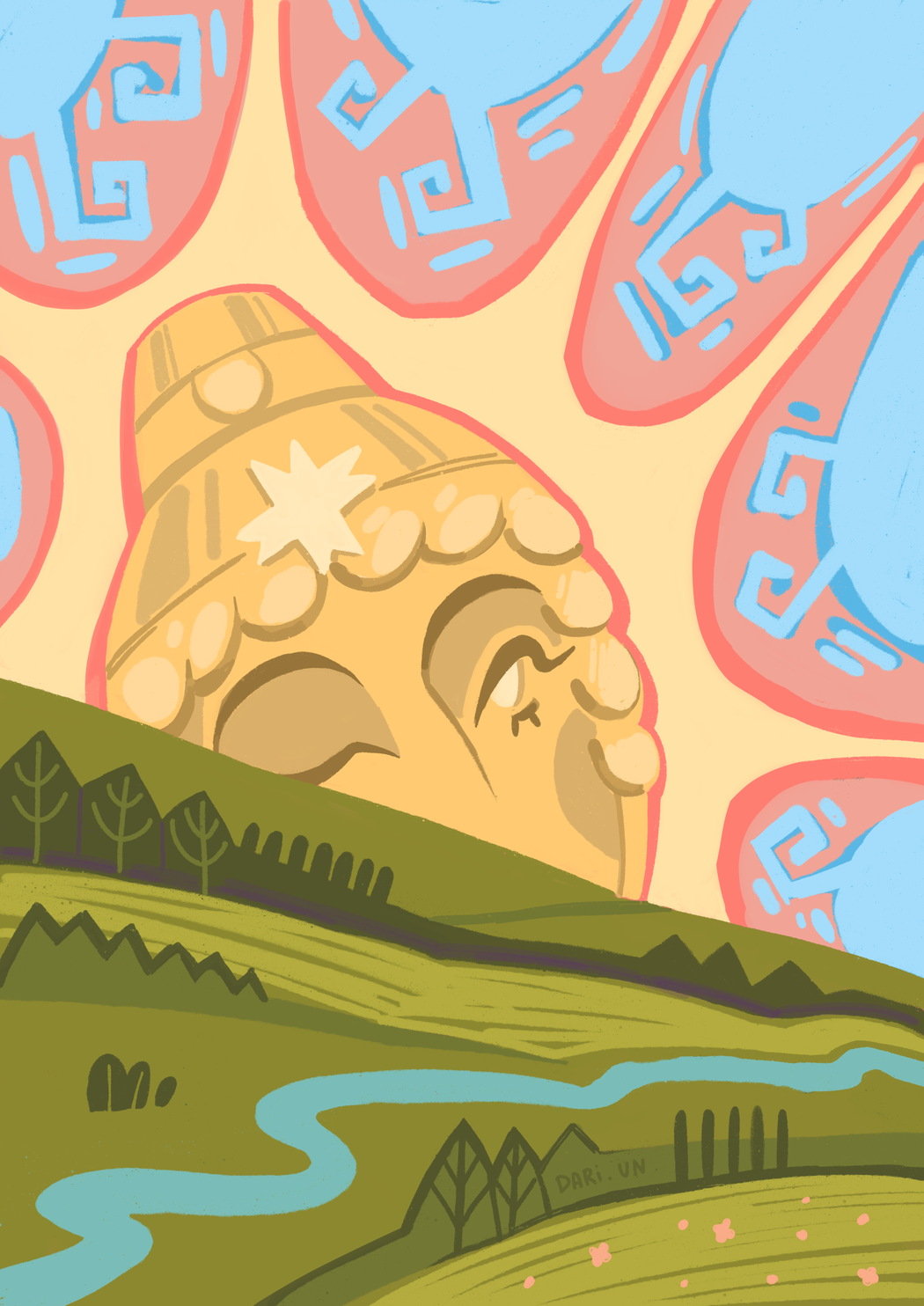 Daria Un | Last Sun
Your characters are not portraits of specific individuals, but symbolic embodiments. How do you construct these archetypal female figures, and what emotions or qualities are most important for you to convey?
I begin not with appearance, but with an inner state. Each figure is born from a feeling—for example, calm, longing, strength, or protection. My characters are not meant for identification, but for sensation. For me, it is most important to convey quiet strength, vulnerability, and inner autonomy—a state in which a woman belongs to herself.
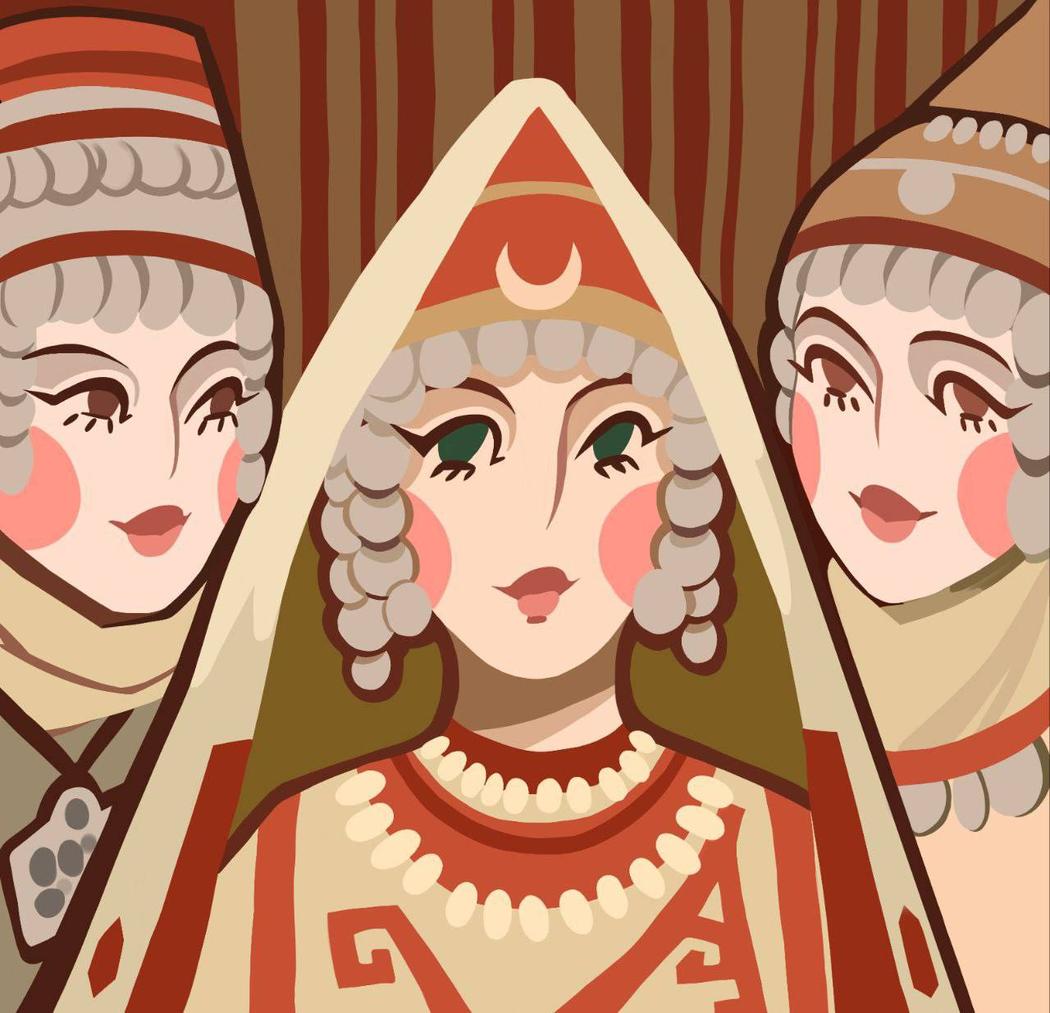 Daria Un | Our Future
As a contemporary digital illustrator working with traditional mythology, how do you balance modern tools with ancestral themes?
Digital tools are only a form. Meaning is born from intention. Mythology survives precisely because it changes its outer shell without losing its essence. My works exist at the intersection where ancestral memory speaks through a contemporary visual language.
Leave a Reply
You must be logged in to post a comment.