
Ksenia Panasyuk
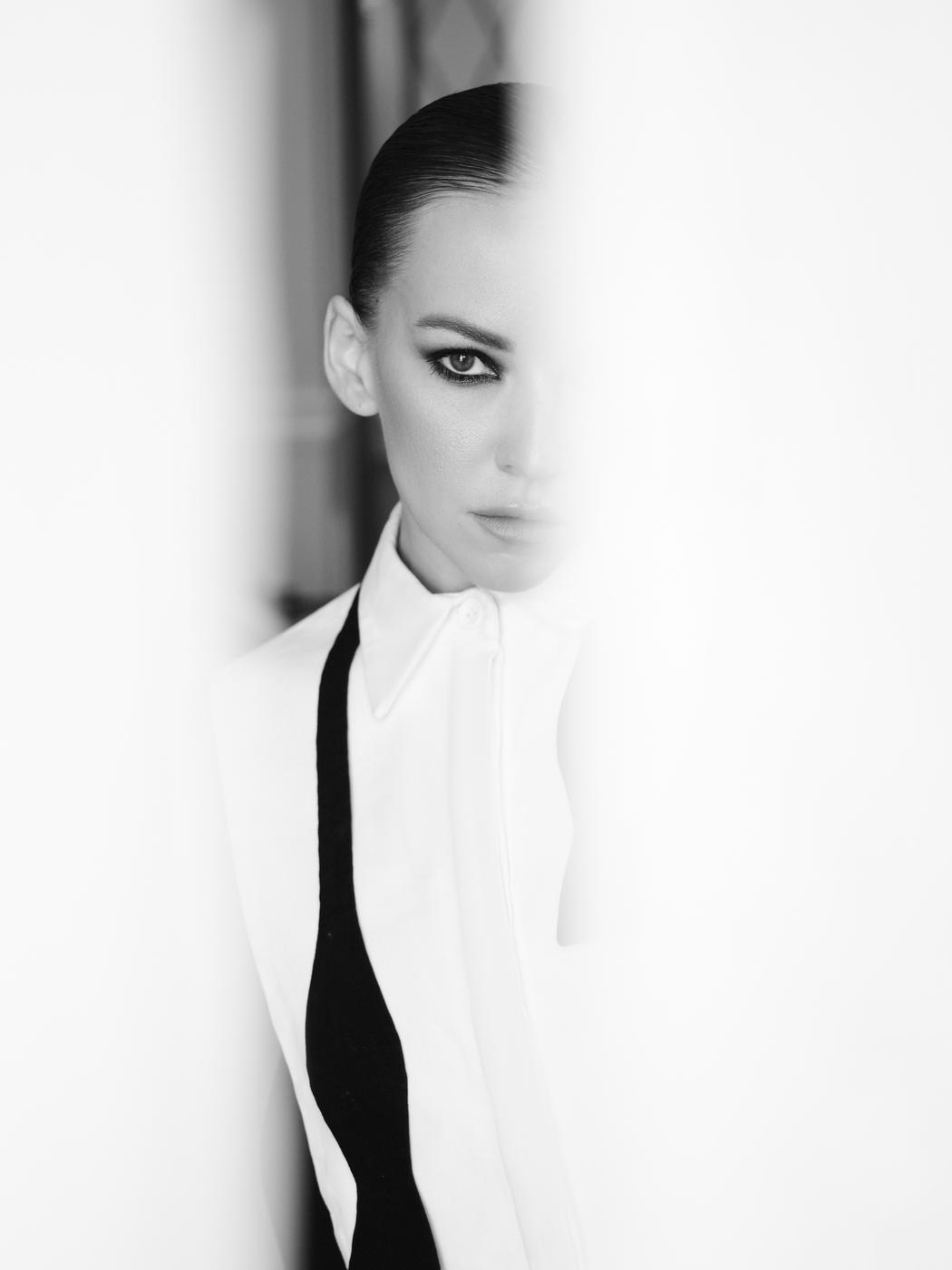
Your biography includes many relocations. How have these cultural shifts shaped the emotional world of your artwork?
I believe that changing your environment and a person’s ability to adapt really upgrades your neural network—your inner programming. It’s like in a computer game: new maps and new possibilities unlock. Your worldview literally becomes wider. You learn how and where different people live, and you’re able to perceive any information much more objectively, comparing it with your own internal data and lived experience.
I wouldn’t link moving from place to place to the emotional world of my art. It relates more to my personality as a whole and doesn’t directly influence my artistic practice. It’s simply not a topic I’m interested in exploring creatively.
You describe your years in China as the most difficult in your life. Do those experiences appear in your imagery or themes, even unconsciously?
No, my subconscious and I interact quite often, and I more or less understand where things come from.
Those two years in China were unpleasant for various reasons, but only because I wasn’t in the right place — it happens. So that episode simply sits in the archive of “it happened and that’s it.”
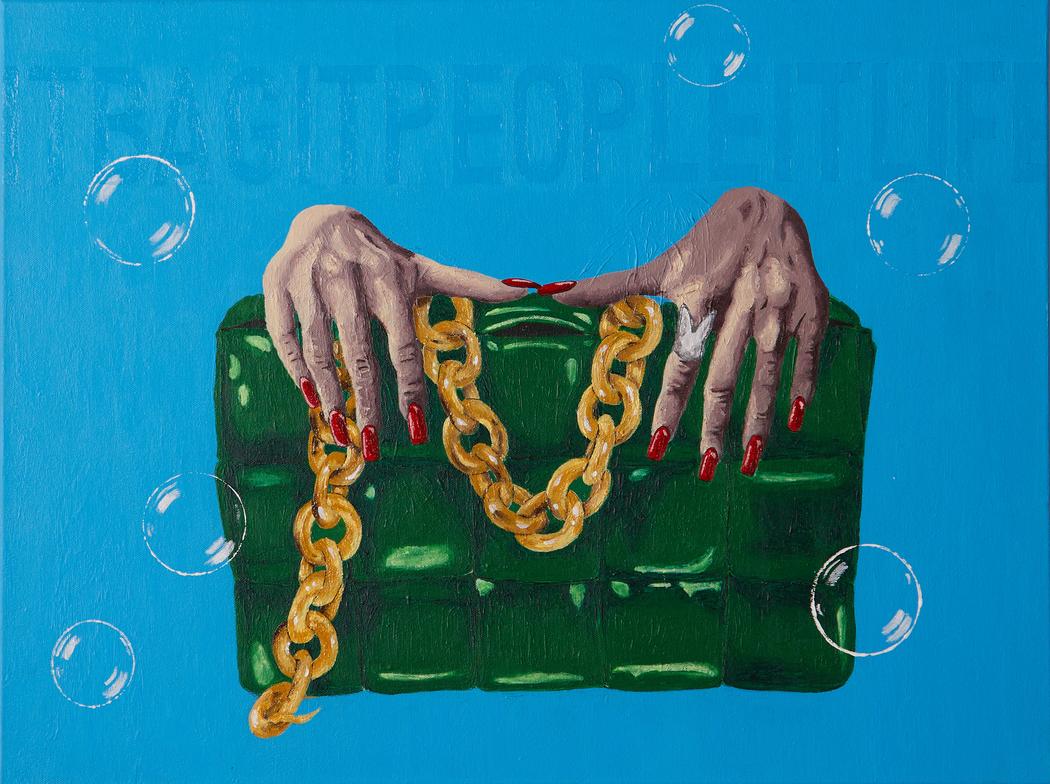 Ksenia Panasyuk | It
Coming from photography, styling, and art-direction, how do these previous professions influence your current approach to composition, symbolism, and visual storytelling?
Not exactly — I actually started with drawing first (not for long), then shifted to photography, styling, and art direction, and later returned to drawing — when I needed to create paintings for the rooms in a new photo studio. I just decided to try and see what would happen 🙂
All of these fields are intertwined into one shared database, where you have knowledge from different areas and use it to solve various creative tasks. There’s no direct influence between them. It’s just that through these fields, a lot of information from the fashion world flows into me, because fashion photography is closer to me.
And the fashion world… yes, that really influences me a lot.
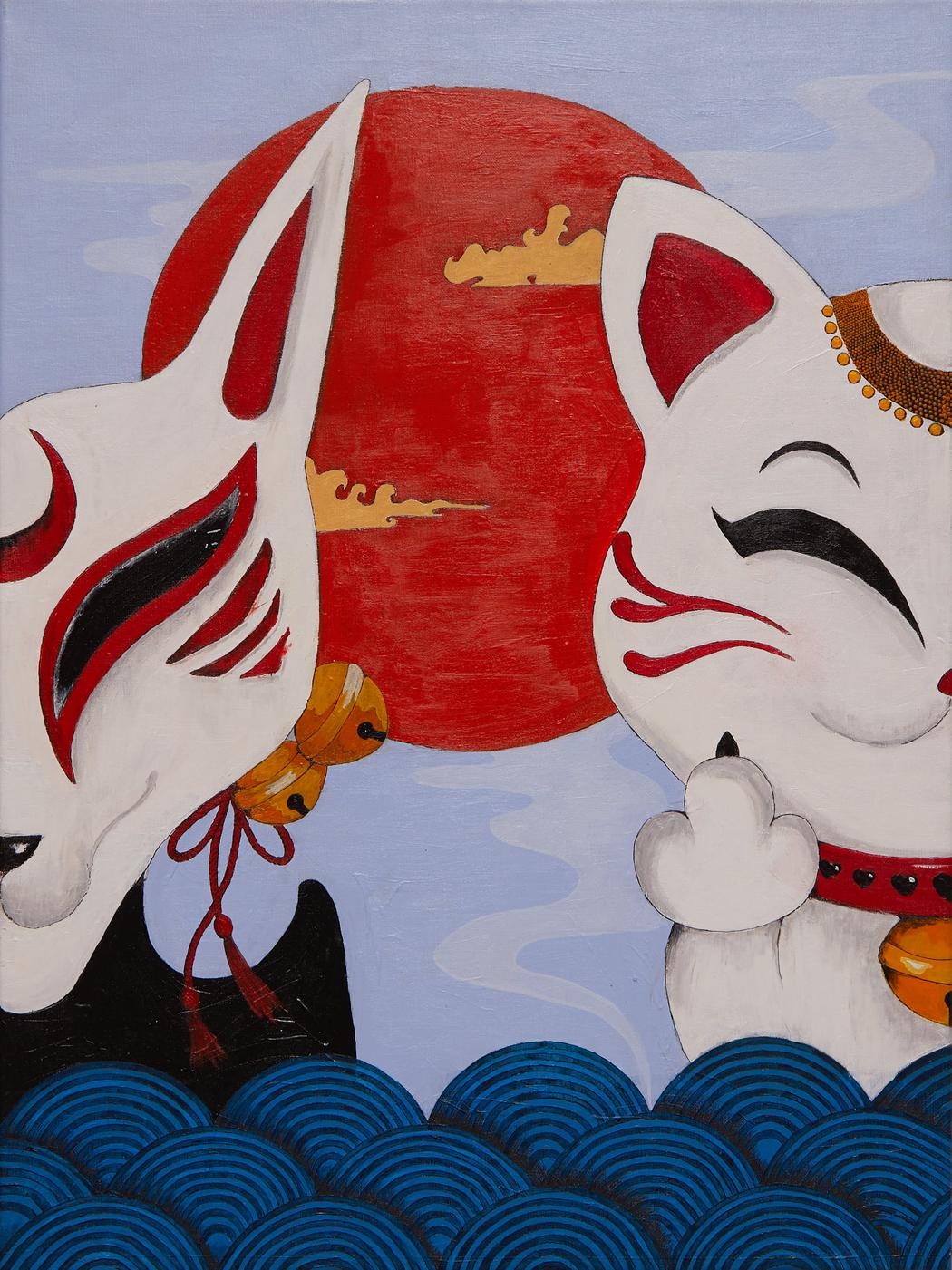 Ksenia Panasyuk | Inner Adult Inner Child
Your works combine humor, surrealism, and social commentary. What role does irony play in your artistic vision?
I love irony – I enjoy playing with meanings and using whimsical forms to draw attention to important things. It may look lighthearted, like I’m just joking, but suddenly someone might stop and think.
Many of your paintings include animals with expressive or anthropomorphic traits. Why do animals become the carriers of your messages?
I adore animals. As a child, I used to visit my grandmother in the village, and there were all kinds—cows, pigs, chickens, sheep, goats, turkeys, cats, and dogs… I interacted with every one of them. I helped deliver calves, saved a dog from death, watched chicks hatch from their eggs… I saw so much magic. When I was four, my best friend was a huge dog. That’s when my deep connection with animals began.
And animals also look incredibly cool! All of them! They are endlessly beautiful.
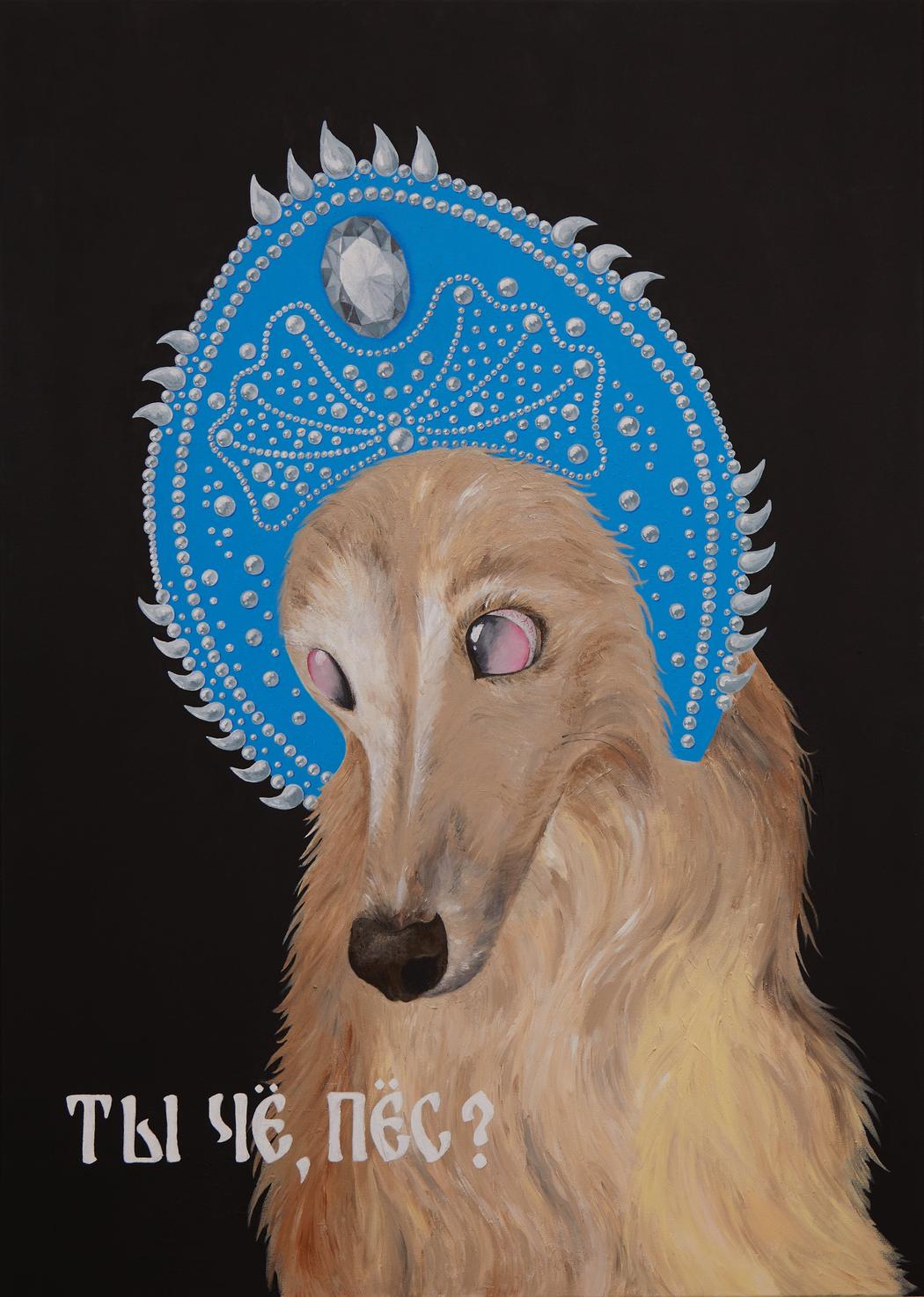 Ksenia Panasyuk | Russian Greyhound
What emotions or thoughts do you hope to evoke in viewers when they encounter pieces that contain both playfulness and critique?
I understand that we’re all very tired of talking and thinking about serious things right now. But—my conclusions and the important thoughts that were born within me aren’t going anywhere. So I lower the intensity of this seriousness through form.
If you’re in the mood to have fun, you can enjoy playful shapes and bright colors, admire the charming little animals. And if you feel like thinking—welcome, there’s plenty there to reflect on.
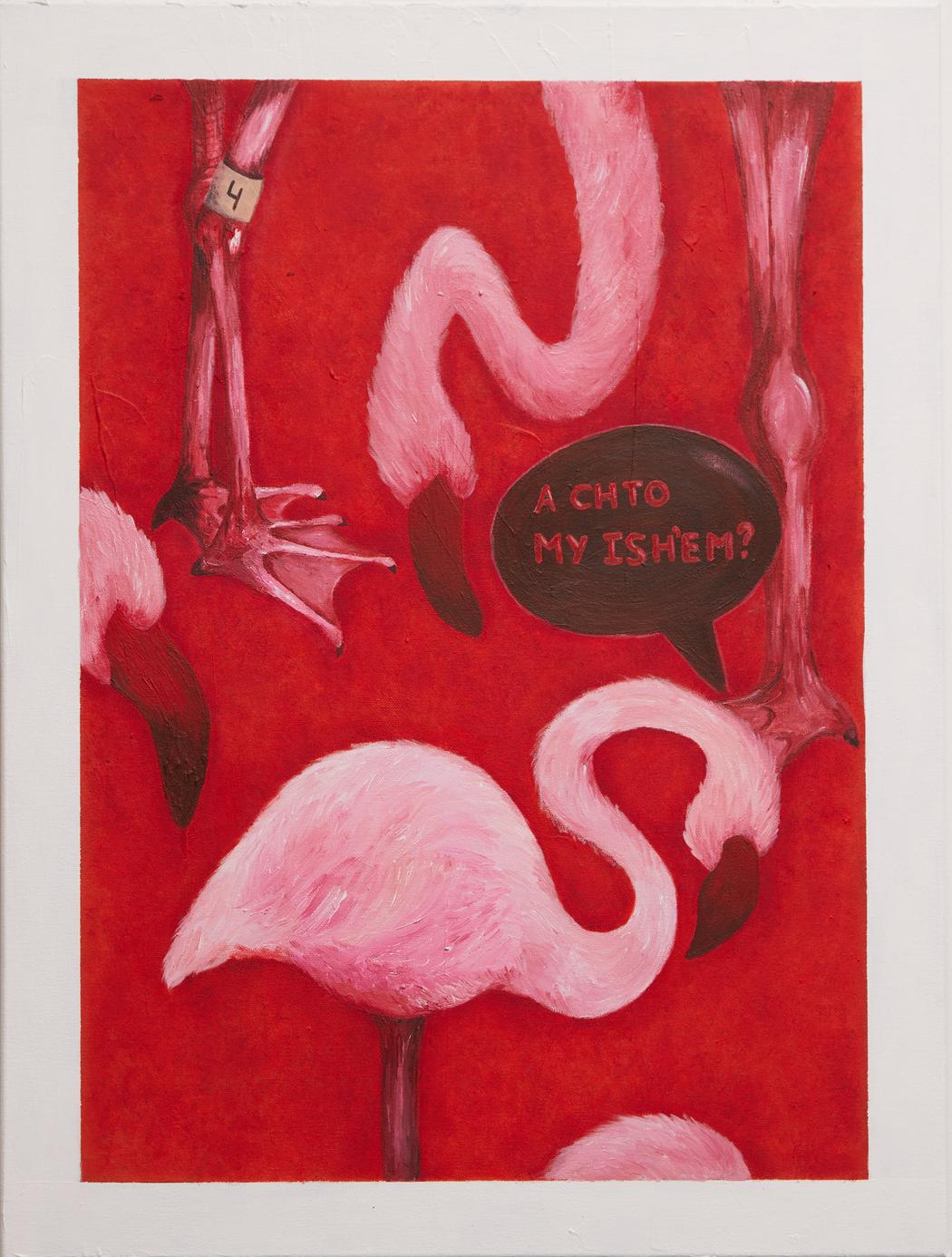 Ksenia Panasyuk | Search For Truth
You travel a lot and interact with many people. How does this constant change influence your ideas and artistic evolution?
Returning to the first question — your worldview expands, and you gain the ability to weave such networks in your mind that you marvel at them. But a change of environment often unsettles the nervous system, so for now I travel only within my own mind, creating routine and sameness in the physical world.
Leave a Reply
You must be logged in to post a comment.