
Misa Inoue
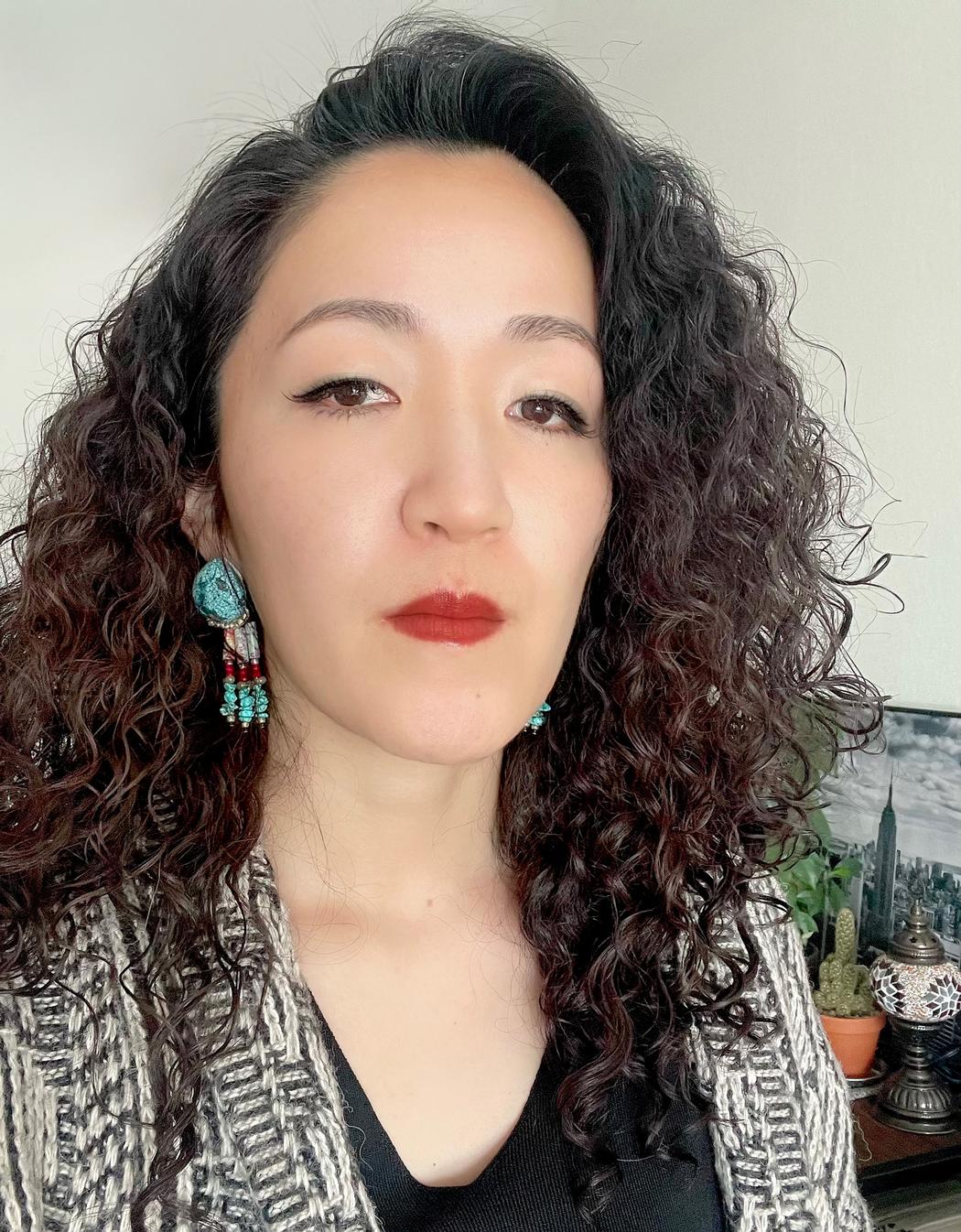
Your art blends traditional drawing with digital techniques. How do you decide which elements should remain hand-drawn and which should be enhanced digitally?
I grew up working with traditional media such as pencil, watercolor, acrylic, and oil paint—and I still love the textures and atmosphere that those techniques offer. At the same time, I’m fascinated by the convenience and the wider range of expression made possible through digital techniques.
While every piece I create is hand-drawn, I intuitively switch between Procreate’s diverse brushes, constantly exploring how far I can convey the natural and realistic aesthetics of traditional painting through digital tools. Lately, Procreate has been my primary tool, — though I did recently buy new art supplies again because I suddenly felt like painting with real paint after such a long time.
You explore spiritual themes such as past lives, auras, and inner transformation. When did your interest in the unseen or metaphysical world begin?
I’ve been fascinated by the unseen world ever since I was a child. In my twenties, while living in the United States, I lost several friends at a young age. Their passing deepened my curiosity about the afterlife, and I began devouring books on the subject, almost in search of solace. Since then, I’ve had a number of mysterious experiences of my own. And even during times of emotional struggle, the certainty that I was being protected by an unseen presence made it much easier for me to keep going. I’ve realized that I seem to have the ability to sense people’s emotions and energy — not visually, but intuitively. Over time, I developed a desire to translate those delicate sensations into visual form through drawing, as a way to offer healing to others.
Moving from Japan to the U.S. and later to Paris has exposed you to very different cultures. How have these transitions shaped your artistic voice?
My artistic voice has been shaped by the cultures I’ve lived in. Each place has left a distinct imprint on how I see the world and how I express it visually.
I was born in Japan, and although I grew up with a strong fascination for Western culture through my family’s love of art, the Japanese sense of ma — the meaningful use of space — and the dedication to craftsmanship remain the foundation of my aesthetics.
During my time studying in the United States, I was deeply inspired by nostalgic art and graphic design that evoke the spirit of California in the ’60s and ’70s, as well as by my classmates from many different racial and cultural backgrounds. The mix of cultures and perspectives opened up an entirely new way of thinking about visual expression.
After moving to Paris, my artistic sensibility shifted once again as I was surrounded by a city where beauty is naturally woven into everyday life — from the streets to the architecture and the general appreciation for art in daily culture.
All of these cultural influences blend within me, and they drive my desire to create art that transcends borders — work that carries the quiet sensitivity of Japan, the free-spirited diversity of America, and the refined elegance of Paris. Although my voice has taken shape through these experiences, I’m still exploring and evolving — always searching for new stylistic possibilities.
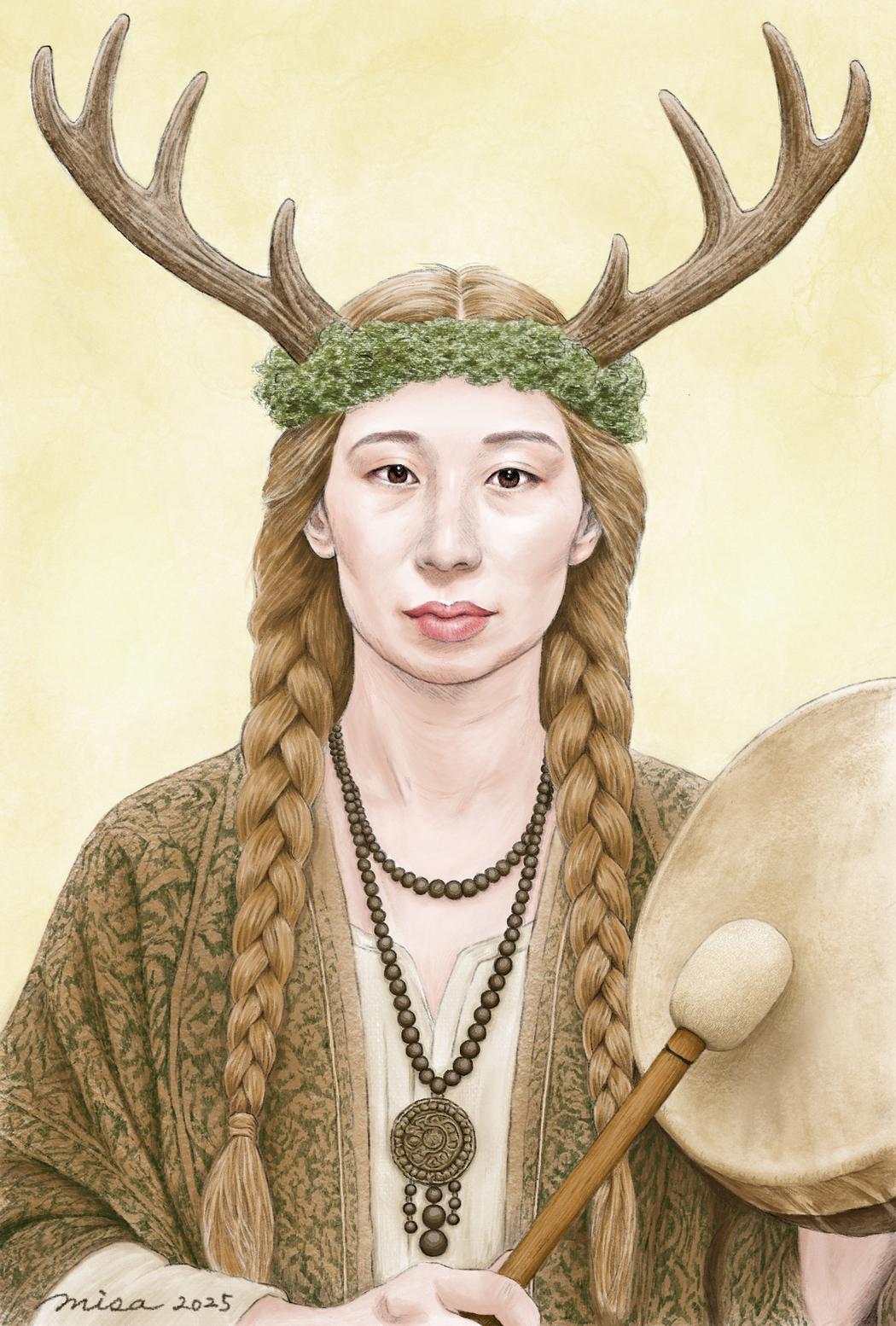 Misa Inoue | The Nordic Healer | 2025
Your portrait “Jealousy” uses the Hannya mask to symbolize emotional intensity and inner conflict. What personal insights did you gain while creating this piece?
This piece is a self-portrait in which half of my face transforms into a Hannya mask, and it explores one of the deepest and most universal human emotions — jealousy.
In Noh theatre, the Hannya mask symbolizes a woman consumed by intense emotions such as love, jealousy, and resentment, to the point where her heart transforms into a demon. Yet the word Hannya originally comes from Buddhism and means “the wisdom of enlightenment.” That duality suggests that overwhelming emotions can also become a doorway to deeper self-understanding.
Jealousy is one of the most difficult emotions for humans to handle. If left unattended, it can harm others and destroy ourselves. But at the same time, jealousy can also serve as a mirror — a chance to ask, “Why am I feeling this way? What am I truly longing for?” When we face that pain honestly, the hidden wisdom beneath the emotion can finally begin to emerge.
The half-Hannya face in the drawing represents that moment of inner awakening — the insight that arises only when we stop running away from the darkness and dare to look directly into it.
On a personal level, I have experienced jealousy myself, just like anyone else. But I also suffered from being the target of jealousy from others. In Japan especially, there is a cultural tendency expressed in the saying “the nail that sticks out gets hammered down”; standing out or being different can easily provoke resentment.
Through these experiences, I realized that jealousy brings benefit to no one. It only causes suffering — unless we transform it. If we shift our perspective, jealousy can become a source of growth, strength, and even healing. With this work, I wanted to express that possibility: that the emotions we fear the most can become the very catalyst for our inner evolution.
In your work “Past Life: The Nordic Healer,” you merge ancient shamanic symbolism with a contemporary Japanese face. What draws you to the theme of past lives?
My interest in past lives began in my teens, after reading the international bestseller series Many Lives, Many Masters. The idea that our souls reincarnate hundreds or even thousands of times — and that the traumas, joys, passions, and even professions of past lives can influence who we are today — deeply fascinated me. According to the books, remembering and healing past lives can play a powerful role in the growth of the soul.
Later in life, I had an experience that surprised me even more: a spiritual counselor who knew nothing about my background told me that I had past lives as American and French artists, and that those experiences were strongly affecting my current life path. Hearing that was both mysterious and strangely convincing, as if something clicked into place.
I wanted others to feel that same sense of romance — and to turn it into hope for their lives today. So I began offering portrait-and-reading services that connect people with their potential past selves. Past Life: The Nordic Healer is one of those works — a portrait that merges the contemporary Japanese woman with the attire of her past-life self as a Nordic shaman. I hoped to capture a mystical, forest-spirit-like atmosphere, as if two lifetimes were overlapping in a single image.
 Misa Inoue | Jealousy | 2025
Many of your works explore healing, clarity, and emotional transformation. How do you personally experience art as a tool for healing?
Art has always been a source of healing and purification for me — and it is also my ikigai. Growing up with an older sister who was very skilled at drawing, I found that since childhood, I felt most at peace when I was alone and completely absorbed in making art. Looking back, I think my sensitivity led me to pour my emotions into my drawings. Whenever I went through difficult periods in life, I always seemed to cross paths with someone who rekindled my passion for creating — a mentor-like presence or someone who reminded me why I love art.
When I was a child, my family and I often visited museums together, but since moving to Europe, spending time alone in museums, lingering in front of works I love, and walking through the city admiring its beautiful architecture have become precious moments that offer me deep insight.
Your recent move to Paris seems to inspire you. What aspects of the city’s artistic culture resonate most deeply with your current creative direction?
Living in Paris has deeply inspired my current creative direction. What resonates most deeply with me are the ornate details found in buildings and sculptures, the craftsmanship and devotion behind them, and the legacy of Art Nouveau, as well as the dreamlike influence of Surrealism, that still shape the aesthetic spirit of the city.
Moving to Paris reignited my passion for creating and encouraged me to push further into intuitive, emotionally driven expression. I’m truly grateful that I found the courage to move here; deciding to live in Paris was one of the best choices I’ve ever made.
Leave a Reply
You must be logged in to post a comment.