
Jovana Ciric Srbinovska
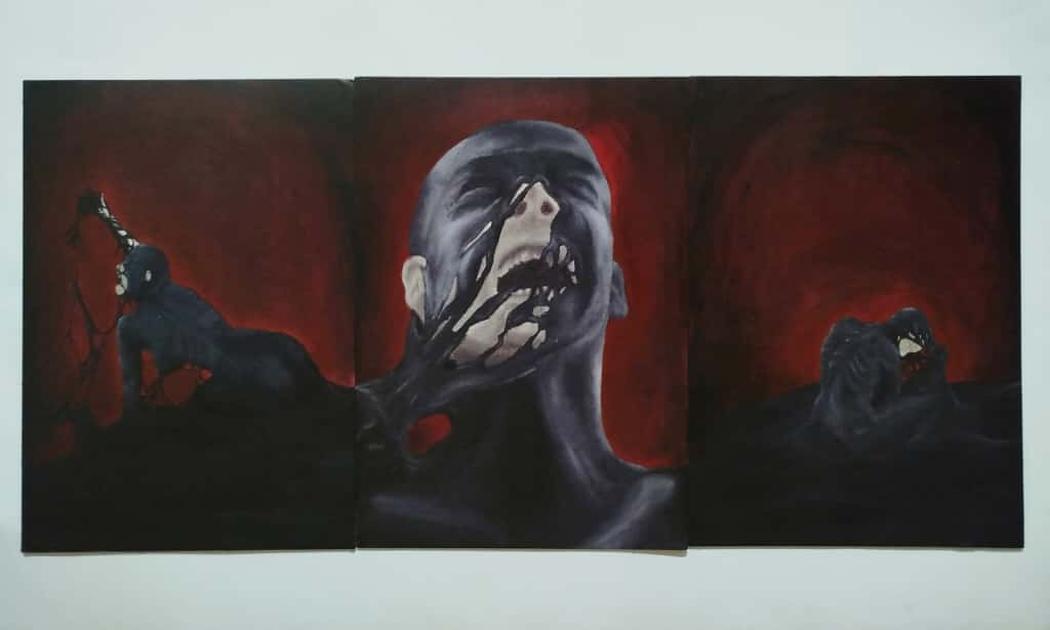 Jovana Ciric Srbinovska | Life With Trauma | 2022
Your academic background is in music, yet your paintings feel deeply psychological and visceral. How does your experience as a pianist influence your visual art?
My work on classical music influenced me as a person pretty much in any aspect of my life. I was fortunate enough to be accepted by a very good mentor at the Academy, and working with a good mentor shapes you into a professional which in turn shapes your character. A person that already sat inside you, waiting to be supported and brought out- it blooms through quality work on any kind of art and then translates into every other kind of art you open yourself to.
The most helpful thing I noticed was discipline and approach to work. Working on classical music demands a lot of discipline, pedantry, attention to detail, analytical thinking and sternness with yourself and with your work… Because I’ve learned how to notice and how to analyse through music- I was able to do that in other arts like painting and writing.
Another thing is respect and taste. While studying music we do not just learn how to play- our mentors teach us standards and a way of thinking. We develop our own taste, we learn how to think for ourselves, how to evaluate quality, how to respect it and how to respect art itself. It definitely defined my taste, approach and perspective towards painting and writing.
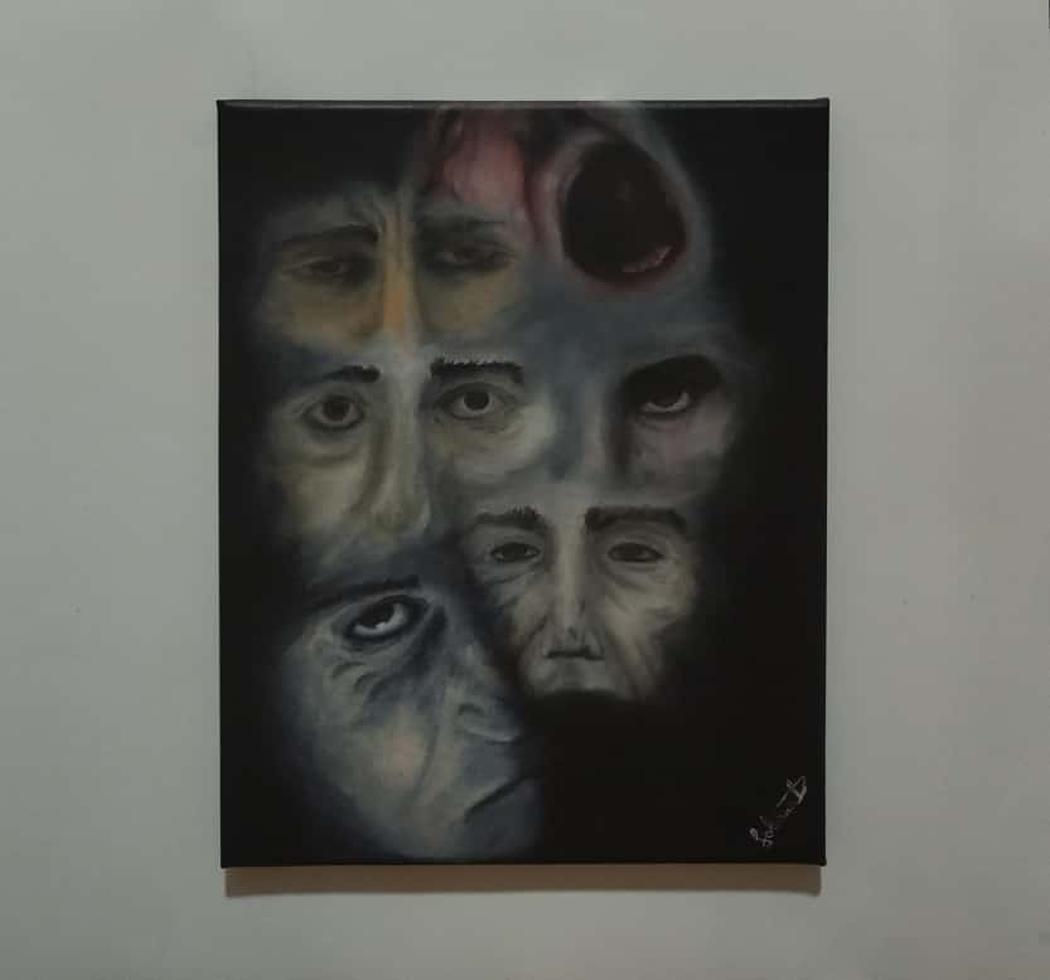 Jovana Ciric Srbinovska | All The Masks | 2023
You mentioned that art should reveal the “face” of both the individual and society. What parts of this hidden or denied inner world do you most want your audience to confront?
Any part that is awakened by art, be it pleasant or unpleasant.
I share a belief that art is a mirror for society and artist’s talent is to channel that. We artists- we watch, we feel, we notice, we remember and we digest all of that into art. Anything awakened by any piece of art- that is what we should accept and pay attention to. It is our consciousness or subconsciousness telling us something about ourselves, about our life, our environment, our company… If we listened to the truth that our imagination is telling us, maybe we could flow through life a little easier, let ourselves help ourselves. This is not a new idea, it is said and believed for centuries, from the religious beliefs which found sanctity and prophecy in art, to the modern psychology which finds subconscious truths and ideas in it, every period explaining it in it’s own terms of understanding.
Your current collection, “All unhappy families are alike,” deals with what happens behind closed doors. What inspired you to explore this theme?
There are parts of our society wich are like cages, still. People don’t talk about what is happening behind closed doors, it is shameful to mention anything that hurts and the neighbors don’t ask, everyone watches their own business… In a lot of cases, if anyone tries to say anything, people don’t want to get involved, they act like hurt and pain are a disease which can be carried over through talking. In a society so obsessed with outerpicture, the “peace” and the “pretty” face of people is kept by shutting up about the obvious things, letting aggressors do as they please in their own homes, and ignoring obvious signs and cries for help. Our family, what happens behind closed doors, is what no one can save us from until we grow enough to get out on our own. But if we addressed what we bury behind doors, maybe we would see how similar our pain is. We can feel that through honest art. You can hear a song, see a film, painting, read a book and be touched by someone feeling all the things you never said, someone describing everything too heavy to analyse and dissect, someone survived everything that hurts you and he now shouts it at the top of his lungs, at the tip of his brush…and that recognition, that understanding is enough to push you just into another day, and then another… So, this series is for people who need to feel seen and for those who need to see. I try to be as sincere as I can because I am inspired with hope that someone somewhere, maybe even some past part of myself, will be heard when he can’t say what hurts. There is too many people who just can’t afford to say or feel what pains them, or what they feel at all. I can now, so I hope what I can show will help at least one person through the day in any way.
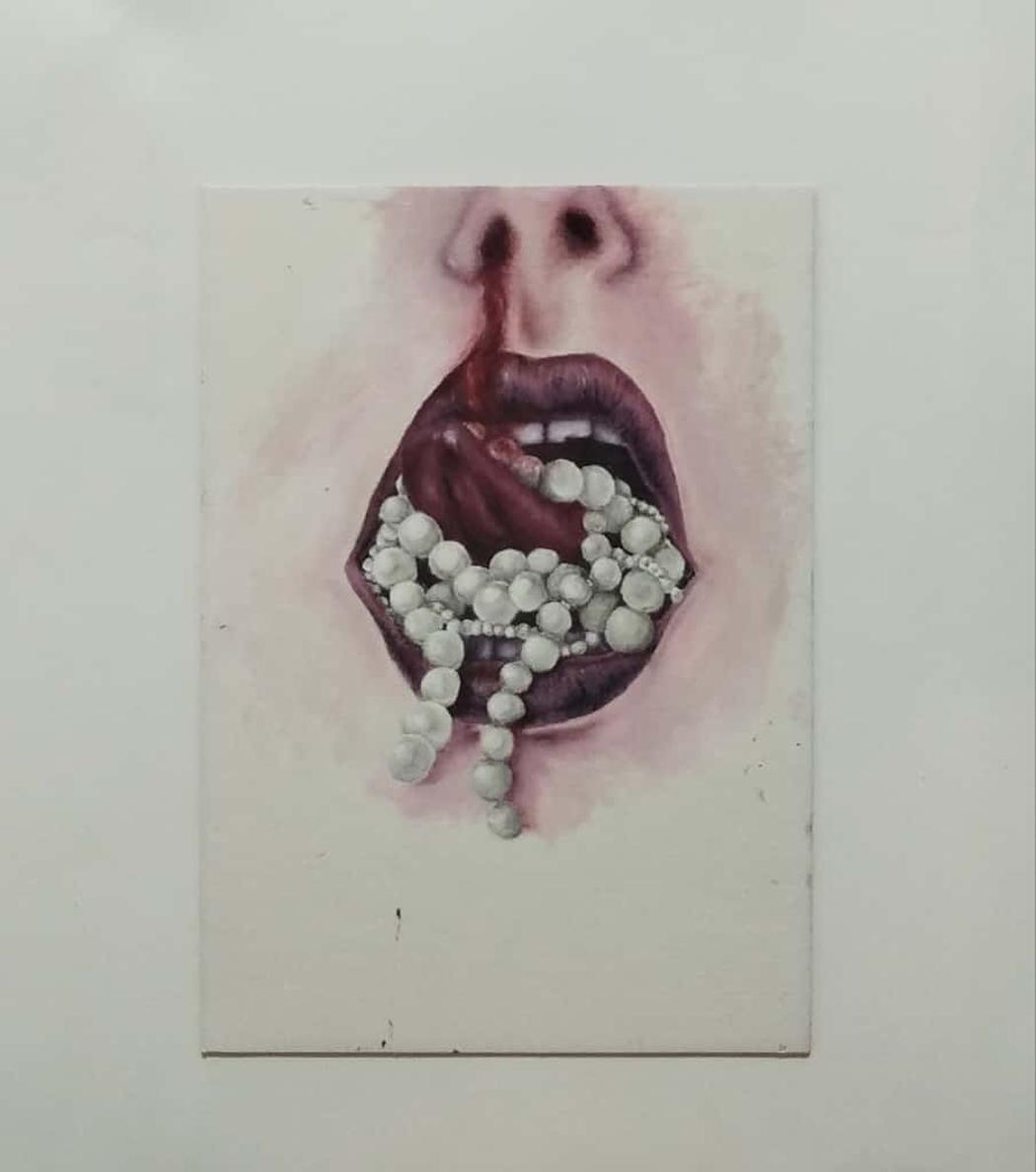 Jovana Ciric Srbinovska | Metthew 7.6 | 2022
Many of your works contain distorted faces, repeated emotional expressions, or fragmented bodies. What do these visual motifs represent for you?
Emotions, feelings, situations, states of mind, memories… I paint as I perceive and experience.
How do you approach translating difficult emotions—trauma, fear, shame—into symbolic or surreal visual forms?
If I paint for someone in particular, I will consciously fit the painting in the context of our relationship or that person’s request, but this series is just complete improvisation. I tried to be as true to my idea as I can, even in moments when I myself didn’t understand it.
Some of the paintings, like “Heritage” or “Living with trauma” or “Family portrait”(the one I’m working on right now), I dreamed about. Sometimes dreams are very real and persistent until I get them out on the paper, at least as a scribble of idea. Some parts of those ideas I recognise as clear metaphors and symbols drawn out of culture, memories or some psychological theory. Some parts I understood after finishing the painting, some parts I still don’t understand.
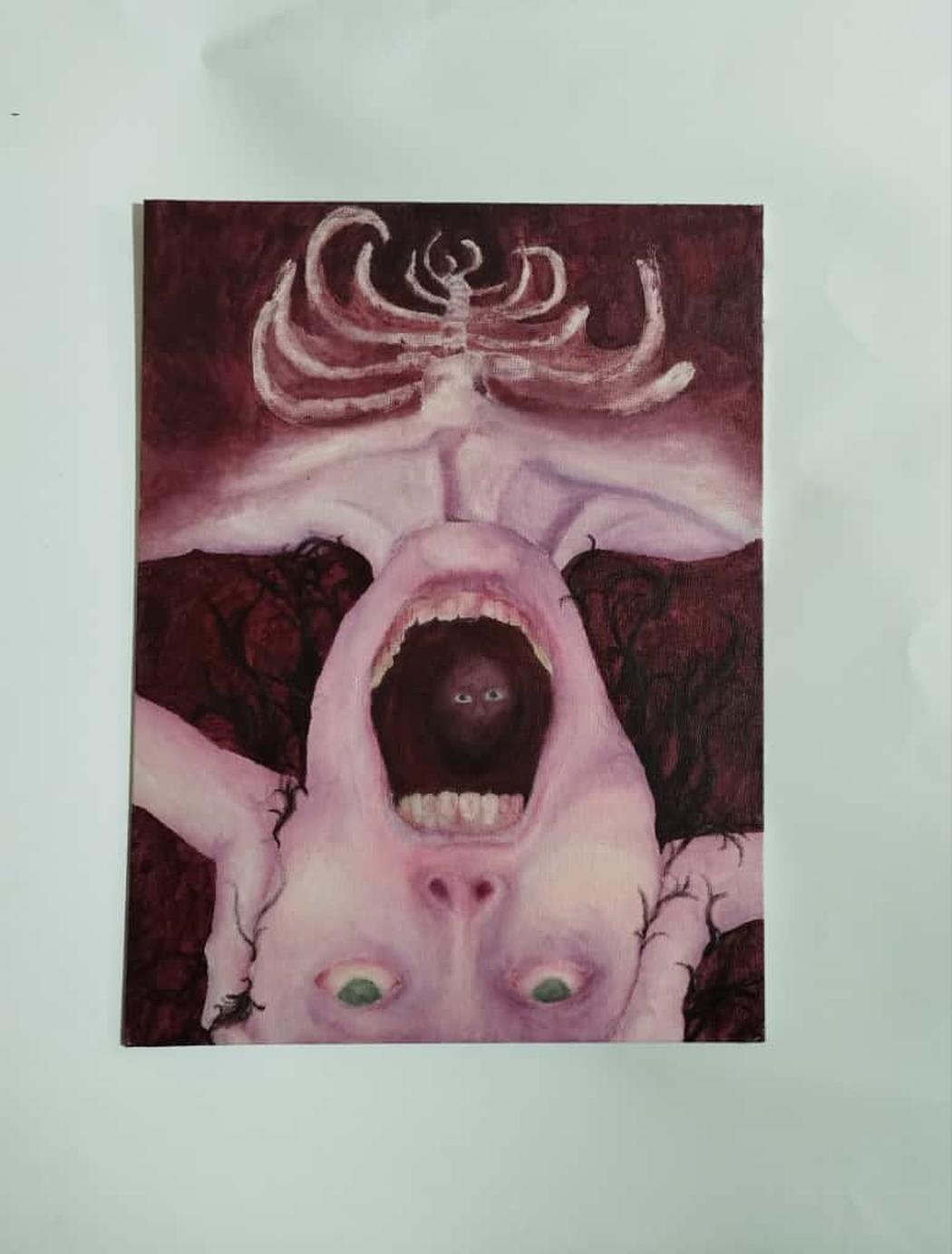 Jovana Ciric Srbinovska | The Heritage | 2021
Are any of the scenes in your paintings autobiographical, or do you view them more as collective representations of human experience?
I did not paint this series as a self-portrait or telling of my own story, if that was the assignment, I would not know how to cut the border between my life and society. I felt my own experience, I felt the experience of watching others live, I felt their feelings wash over me and that all escalated into painting. I feel like to try and part autobiographical parts from collective experience would cause the parts and the whole to lose meaning, to lose integral parts of each other. My own experience is indivisible from collective experience since I am an indivisible part of the society. There are parts which are autobiographical, but they are not just mine alone and their meaning is not just what I identify them with. Much more important is what it wakes up in anyone who sees it. I think that every painting is a finished work only in combination with people’s interpretations, not with just the author’s.
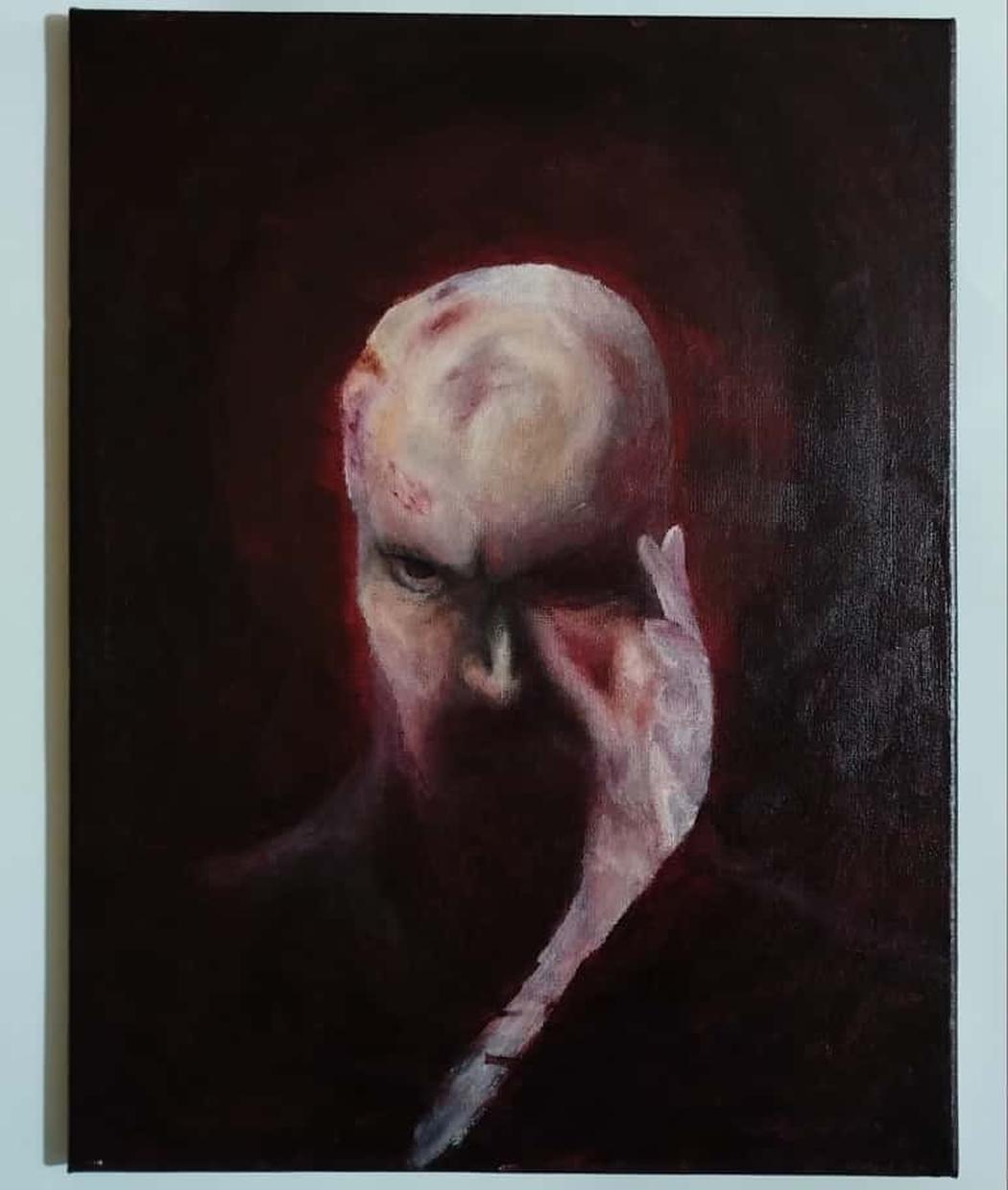 Jovana Ciric Srbinovska | The Mask | 2024
Your paintings often evoke intense, almost claustrophobic emotional states. What atmosphere do you hope the viewer experiences when standing in front of your works?
Exactly that which it evokes.
Leave a Reply
You must be logged in to post a comment.