
Leda Thanassa
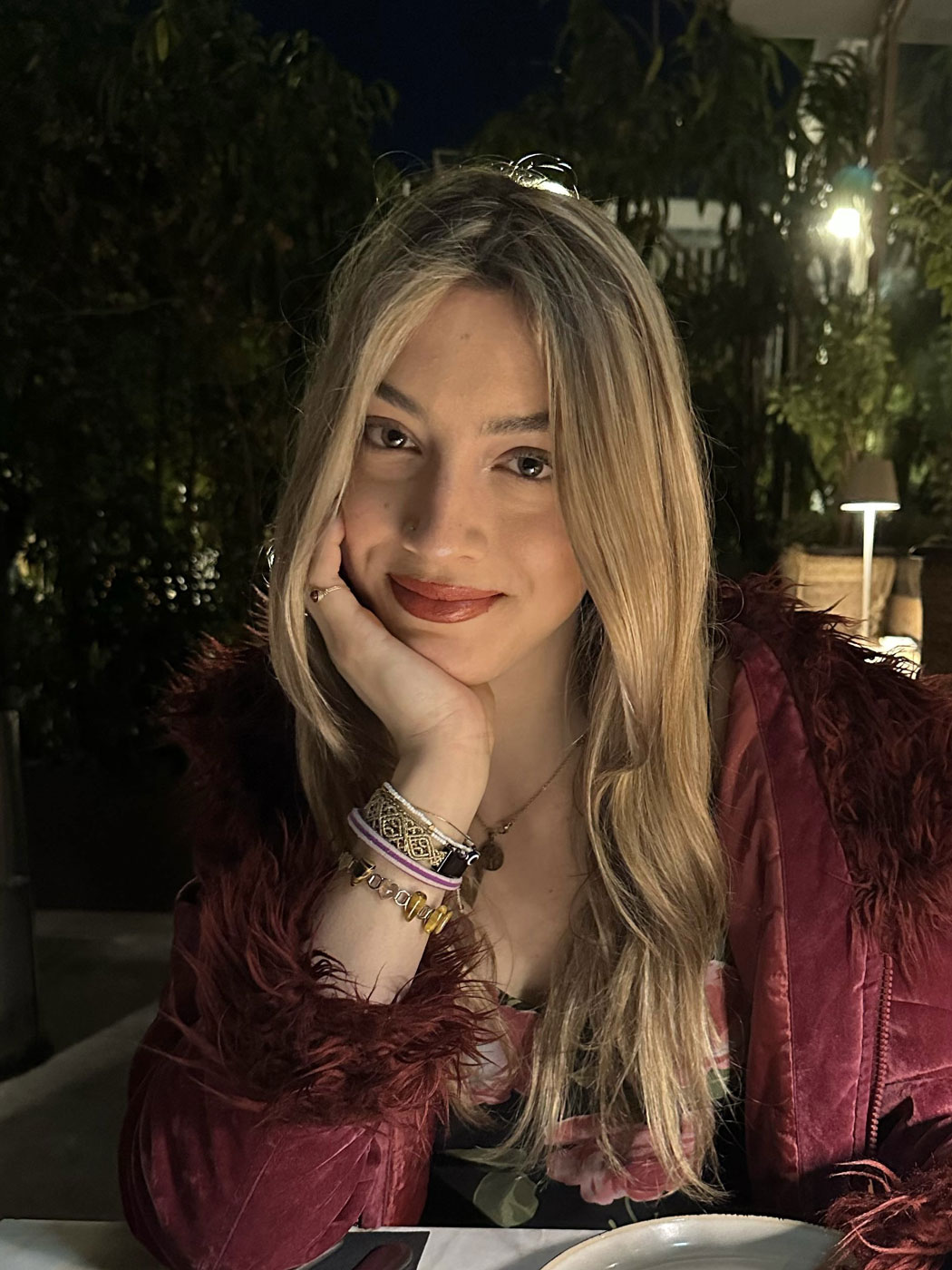
Your work seems deeply introspective and rooted in the subconscious. How do you begin translating something so intangible into a visual form?
My work has always been a reflection of my thoughts and emotions. Some of my ideas even come to me in my dreams, which is when the subconscious mind is at its most active. At times, many different ideas come to me at once and I need to organize them. I start by writing them all down, which makes it easier to understand and visualize them. Sometimes, my ideas come in the form of poems, or memories, so putting them on paper allows me to process these emotions and turn them into visual form.
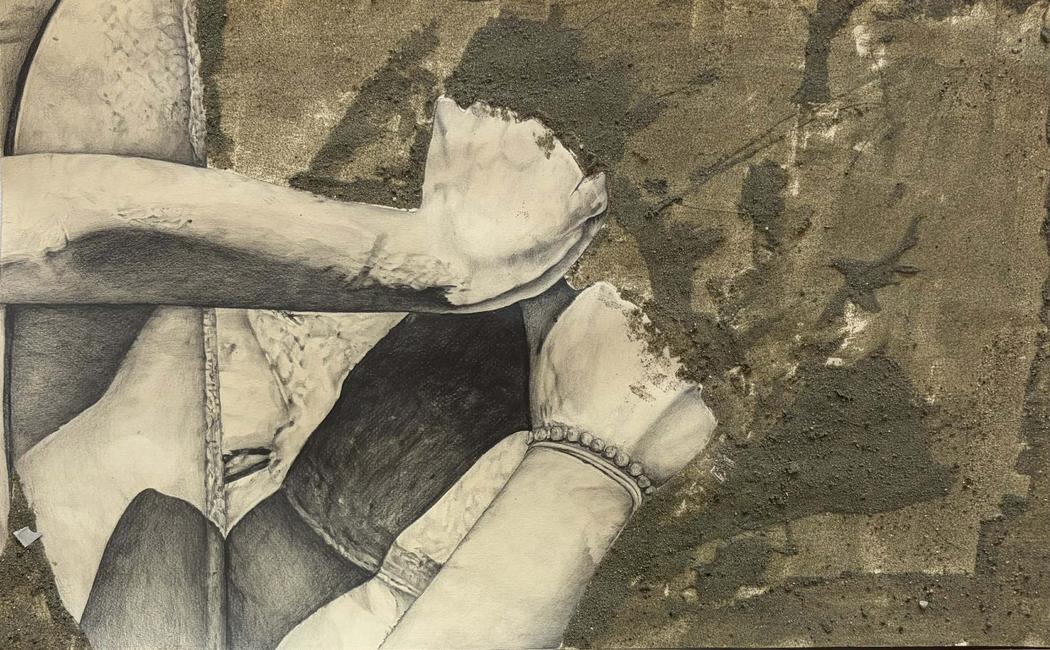
You mention exploring both the light and dark parts of yourself – how do you balance vulnerability and control in your artistic process?
My artistic process is very connected to my emotions. The darker pieces that I have created were at times when I, myself was feeling upset or angry or stressed. It is almost like keeping a diary, but instead of writing my feelings down, I am expressing them through my art.
Every single piece I have done is vulnerable in its own way. It shows a part of my real self, whether it is “light” or “dark”. The control plays a part, in the way these emotions are expressed. For instance, I might choose to work more realistically and focus all my feelings, on something tangible, such as the human body. In this way, I combine vulnerability and control in my works.
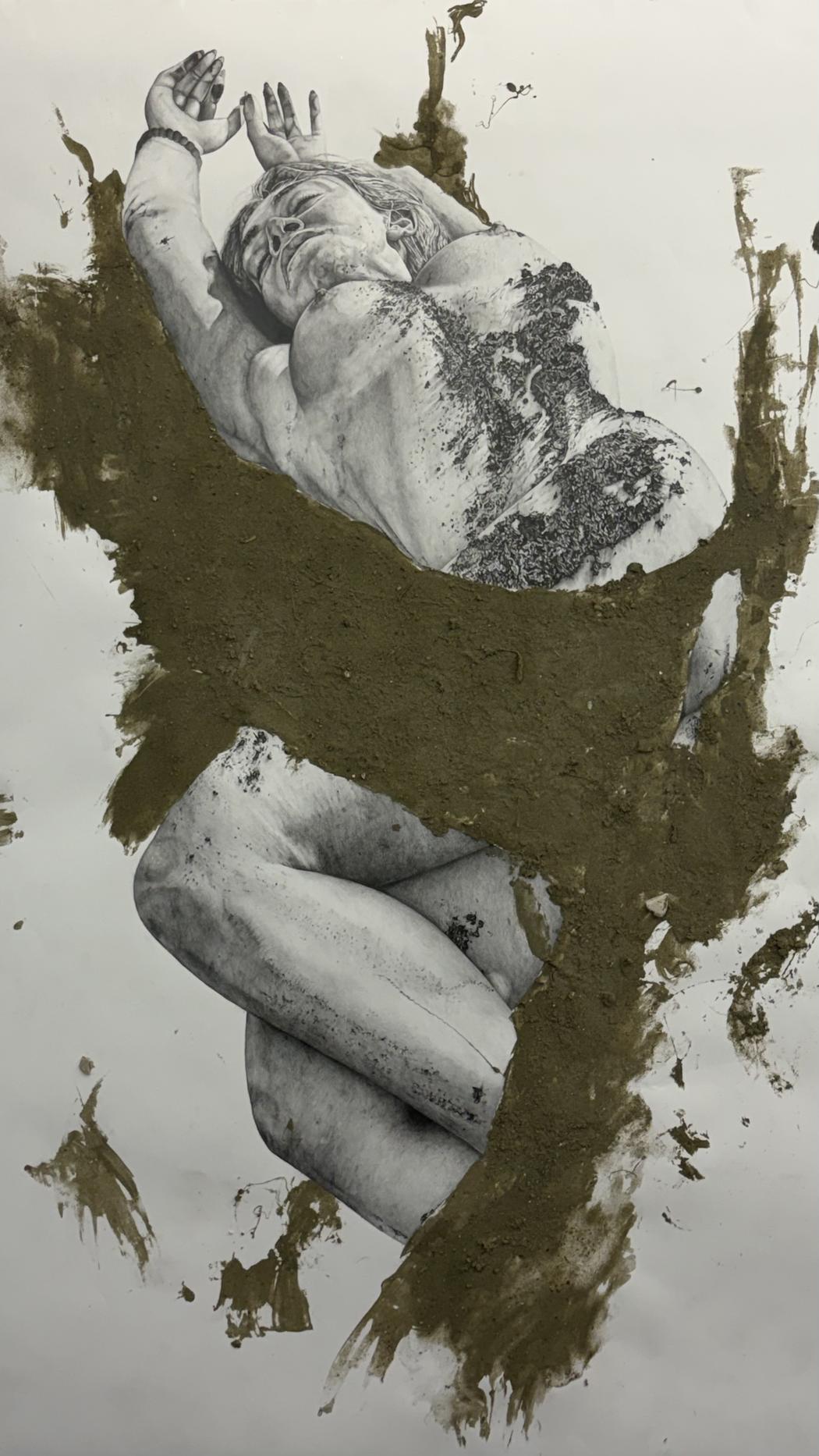
The human body plays a central role in your works. What draws you to this subject, and how do you approach representing it?
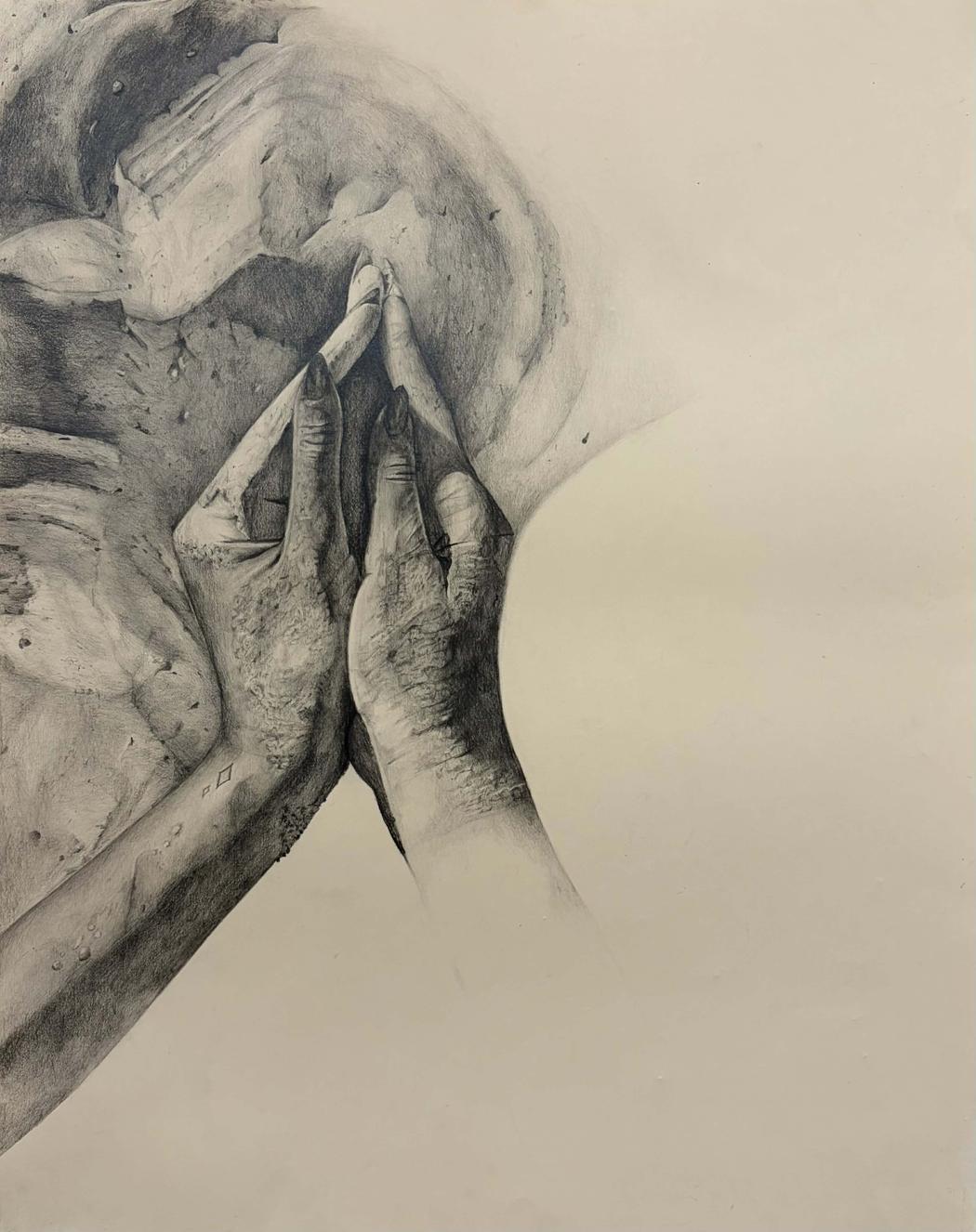
I have always been fascinated by the human body. Every single part of it, whether it´s the hands, or the belly or even the nose, can express emotion. It´s incredible how something tangible can be the bridge to the intangible.
I choose to work with mostly female bodies, because it pains me to see the female body being sexualised. I try to provoke this idea by showing the body in its purest form; naked. I often use my own body as reference, emphasizing the skin imperfections, because, for me, they are the most interesting.
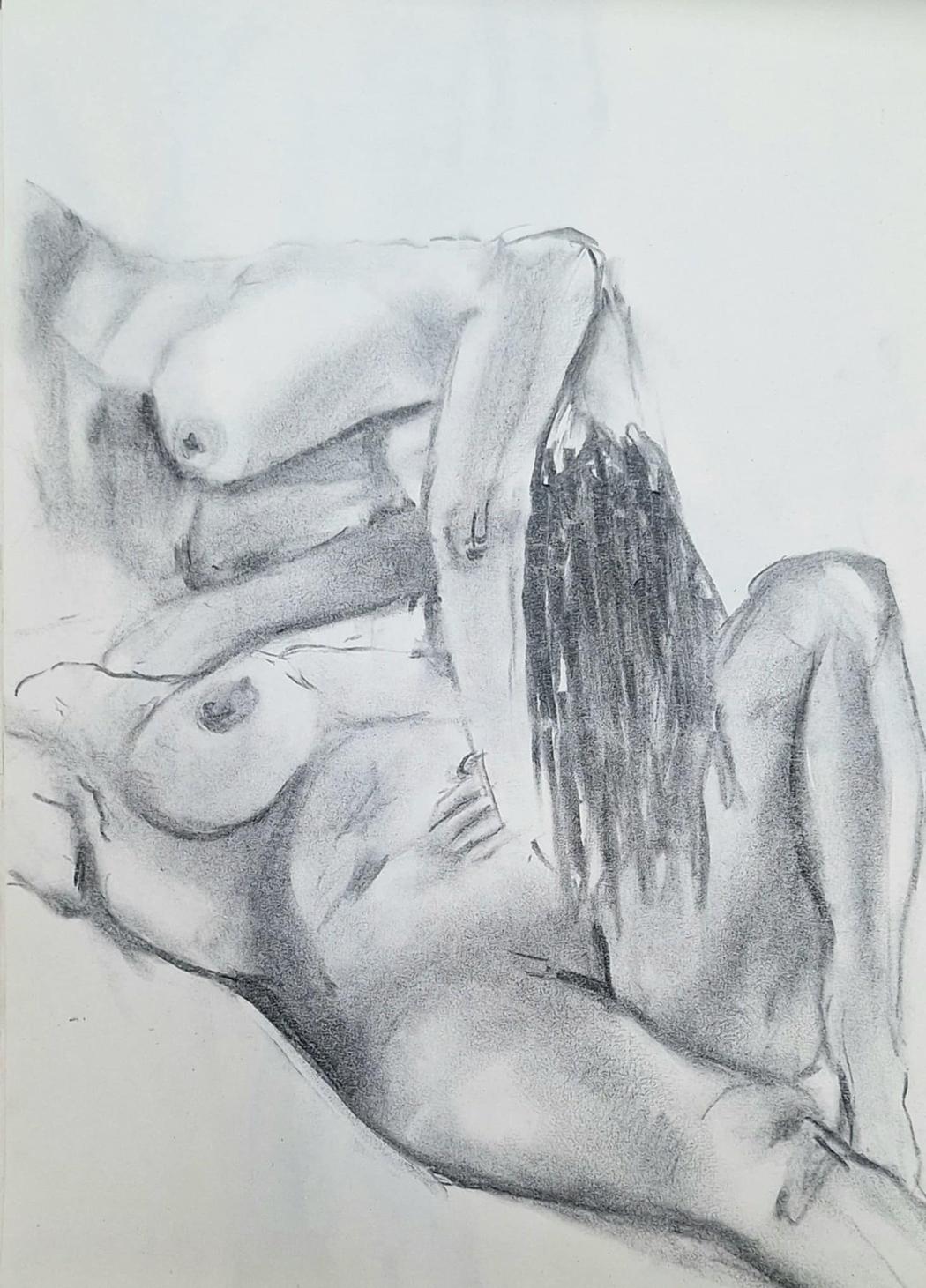
Many of your drawings combine delicate rendering with raw, almost violent textures. What role do materials and surface play in your storytelling?
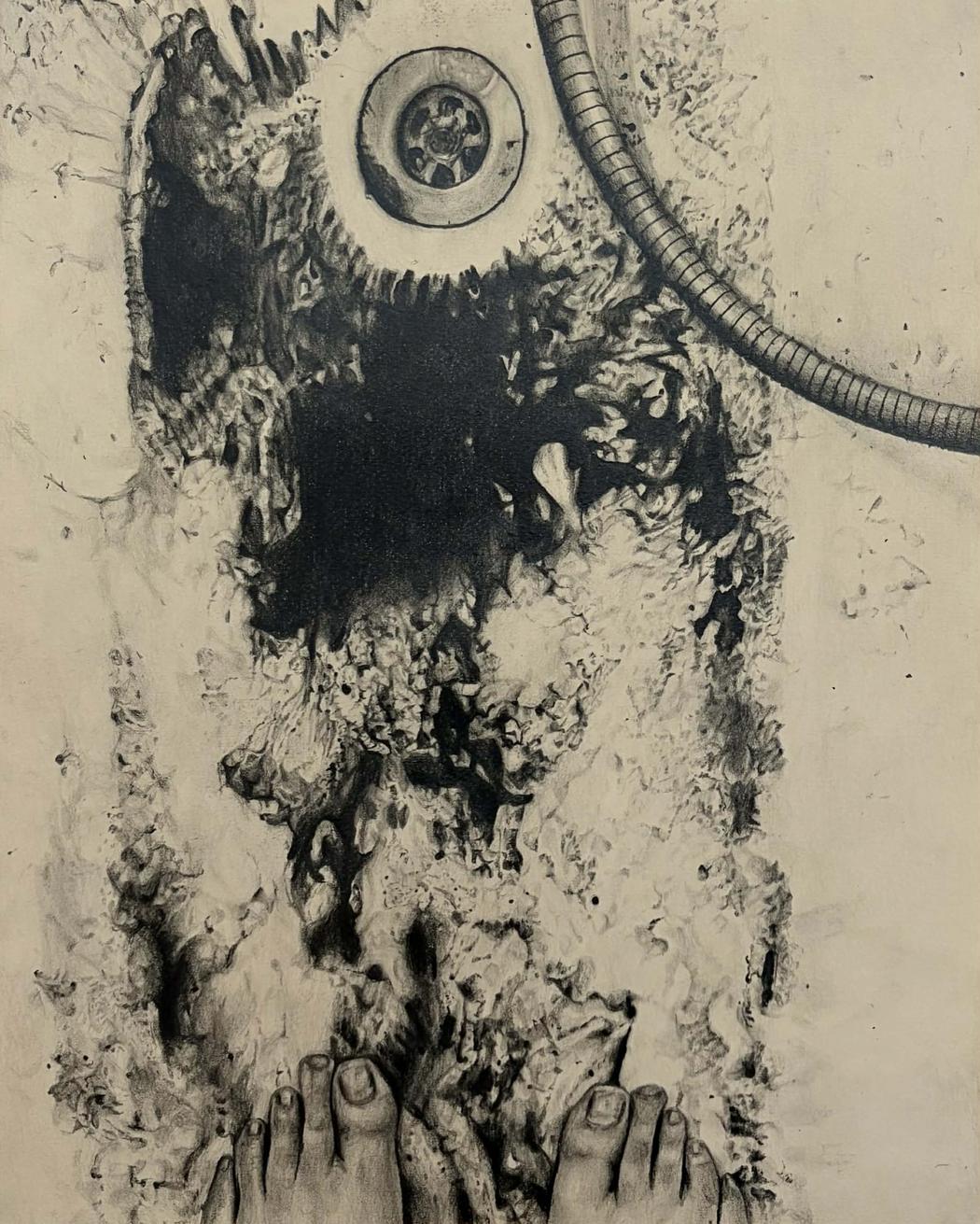
For the past year I´ve been working with sand. Having grown up in Cyprus (an island in eastern Mediterranean), the sea plays a huge role in my life, and I wanted to commemorate that. The sand in itself, is a naturally indelicate material. How many times have you showered after going to the beach and wondered how a human body can carry such a huge amount of sand? That´s why it made more sense to me, to let it take its own form on my works, guiding it as little as possible.
Placing the sand on top of very detailed work, creates an interesting contrast between the delicate and the indelicate, which is vital in my work. It reflects the chaos and order which exists in every single one of us. Our human nature is defined by a tension between contrasting forces.
Therefore, the texture of the sand in my works has different meanings. It is paying homage to my culture and life on an island, but it also showcases the idea of opposing forces.
How have your experiences studying in Vienna, Athens, and London influenced your artistic language?
It was significant for me to experience living in different countries and draw inspiration from different cultures. Having had many different professors and classmates has offered me great conversations and valuable insights.
I also realised how different people have very different perceptions of art. In one university my art was considered more conservative, whereas in another, it was considered more modern. Being open to different opinions and criticism has made me more open-minded and resilient. It made me realise that being true with ourselves and our art matters the most, for any artist.
Do you see your work as autobiographical, or does it extend beyond your personal experience?
To a big extent my work is autobiographical, as it is an extension of myself. At times, it also becomes political and a way to express my beliefs. It is very important for me to speak up about female struggles and inequalities, as well as peace in a world of conflict, and this have always been focal points in my work.
Are there particular artists, movements, or philosophies that have influenced your approach?
My Cypriot and Greek culture have been big influences in my art. I draw a lot of inspiration from Greek mythology. For example, my latest work (“emersion”) is heavily inspired by the ancient Greek goddess Aphrodite, who was born from sea foam and rose from the water, in a shell. This idea of rebirth has been central in my latest works.
Another inspiration was the exhibition of Muntean and Rosenblum at the Albertina in 2023. Their incredible pencil works are one of the reasons I chose to work more with pencil.
Leave a Reply
You must be logged in to post a comment.