
D.J. Horton
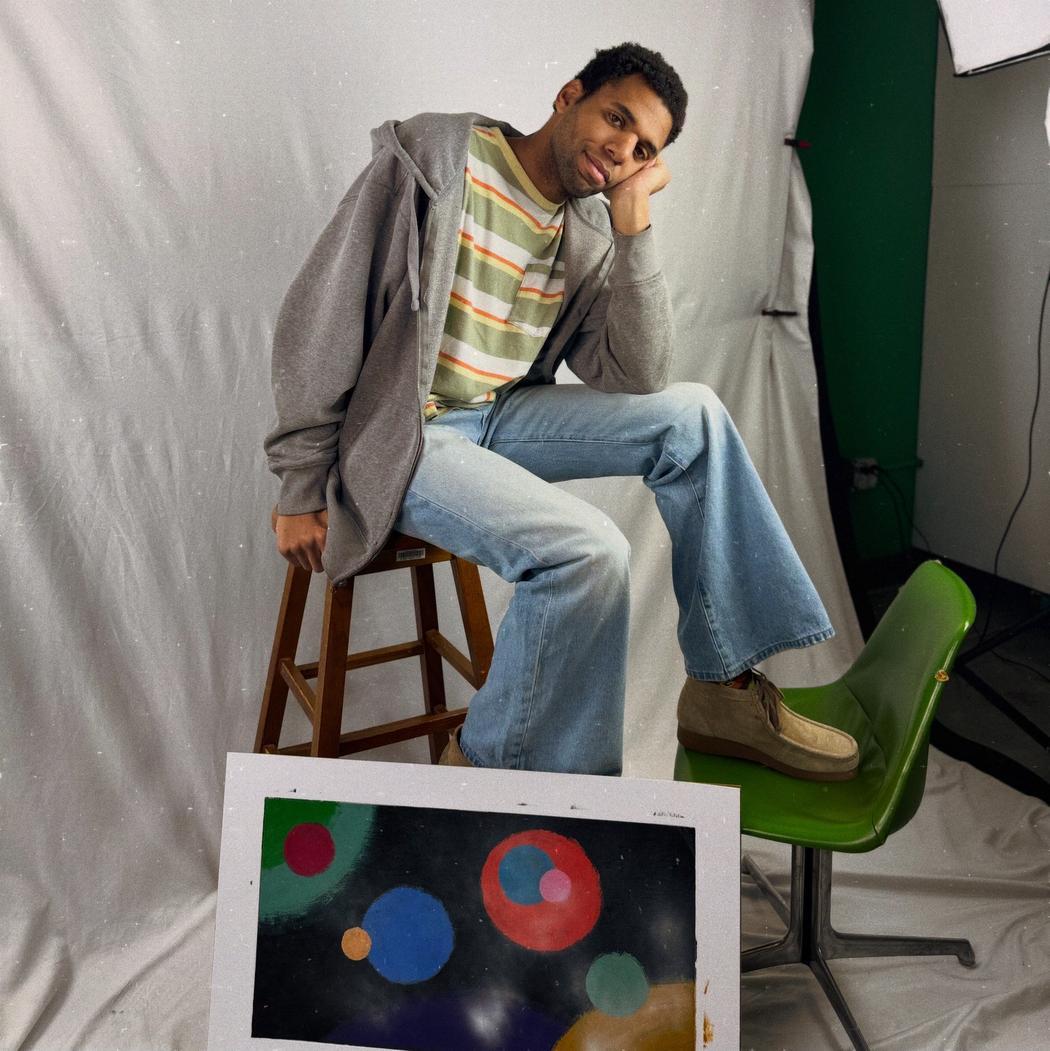
Your work explores gravity, space, and time – how did these concepts first become central to your artistic practice?
I’ve always been drawn towards the pursuit of things that lie just outside of full human understanding. Concepts like gravity and time aren’t just intellectually addressed in my work; they are meant to be experienced. When I place an orb to look as if it’s ‘floating,’ I’m inviting the viewer into a state of weightlessness while offering a moment to reflect on how grounded they are by comparison. For me, time is the landscape where these symbols ultimately find their place, and the viewer can nest themselves within it as-well.
You describe your process as intuitive and guided by an internal pull. How do you balance instinct with control while painting?
Most of my pieces begin with pure intuition, just getting that initial spark onto the canvas. The ‘internal pull’ happens as the work develops its own narrative that I have to mindfully listen to. Balance is achieved when my intent and the piece’s own ‘voice’ find a common ground. It’s less like a solo performance and more akin to a great conversation with a like-minded individual.
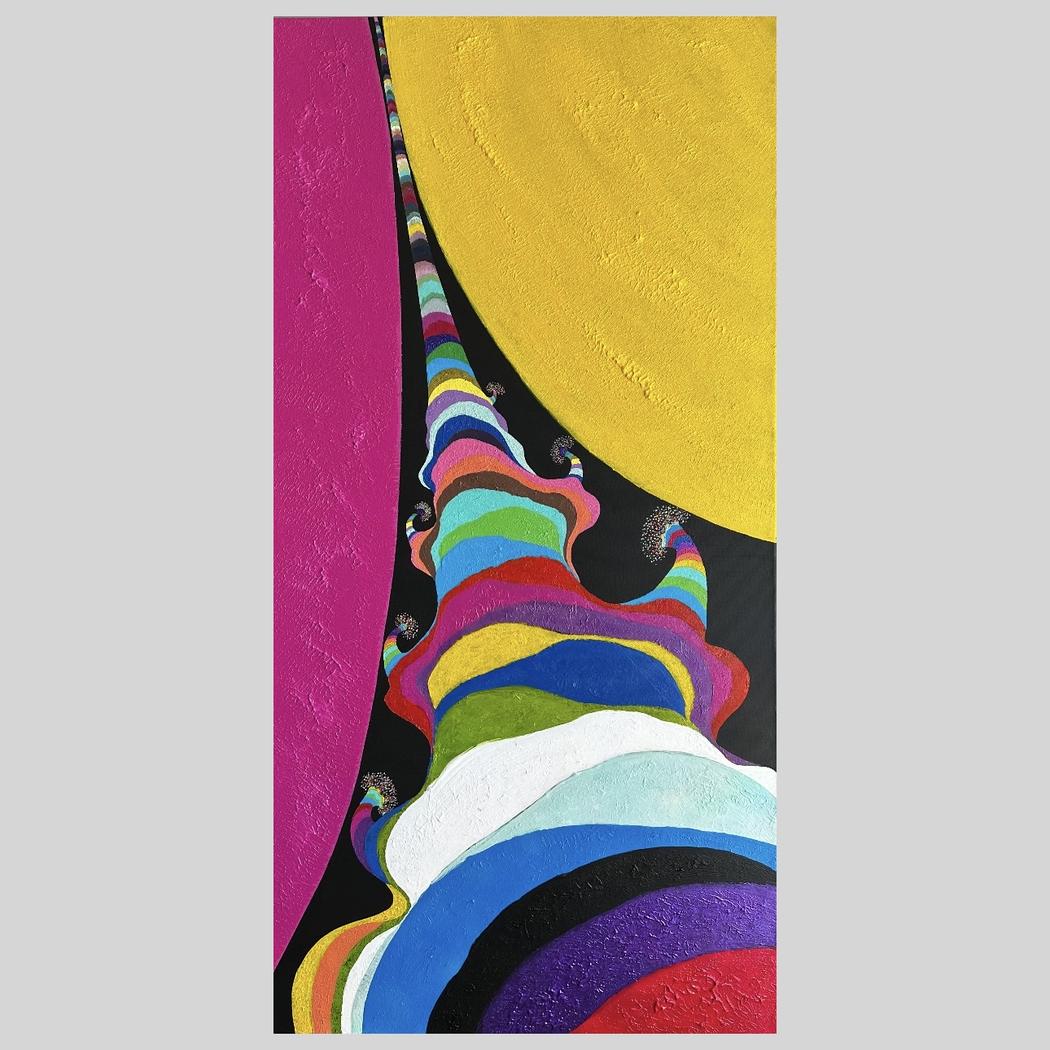 D.J. Horton | Mandel Dandies | 2026
Many of your compositions suggest movement and flow – do you see your paintings as capturing a moment or an ongoing process?
I see my pieces as snapshots of moments that exist only for a specific window of time. When I experience these ‘visions,’ they often manifest as scenes that happen in the blink of an eye which hints towards my tendency to make them first person. I want the viewers eyes to be the active participant. If a recurring image suggests a narrative is forming, I’ll pursue it through a series, creating until that specific energy is exhausted and the story has been fully told.
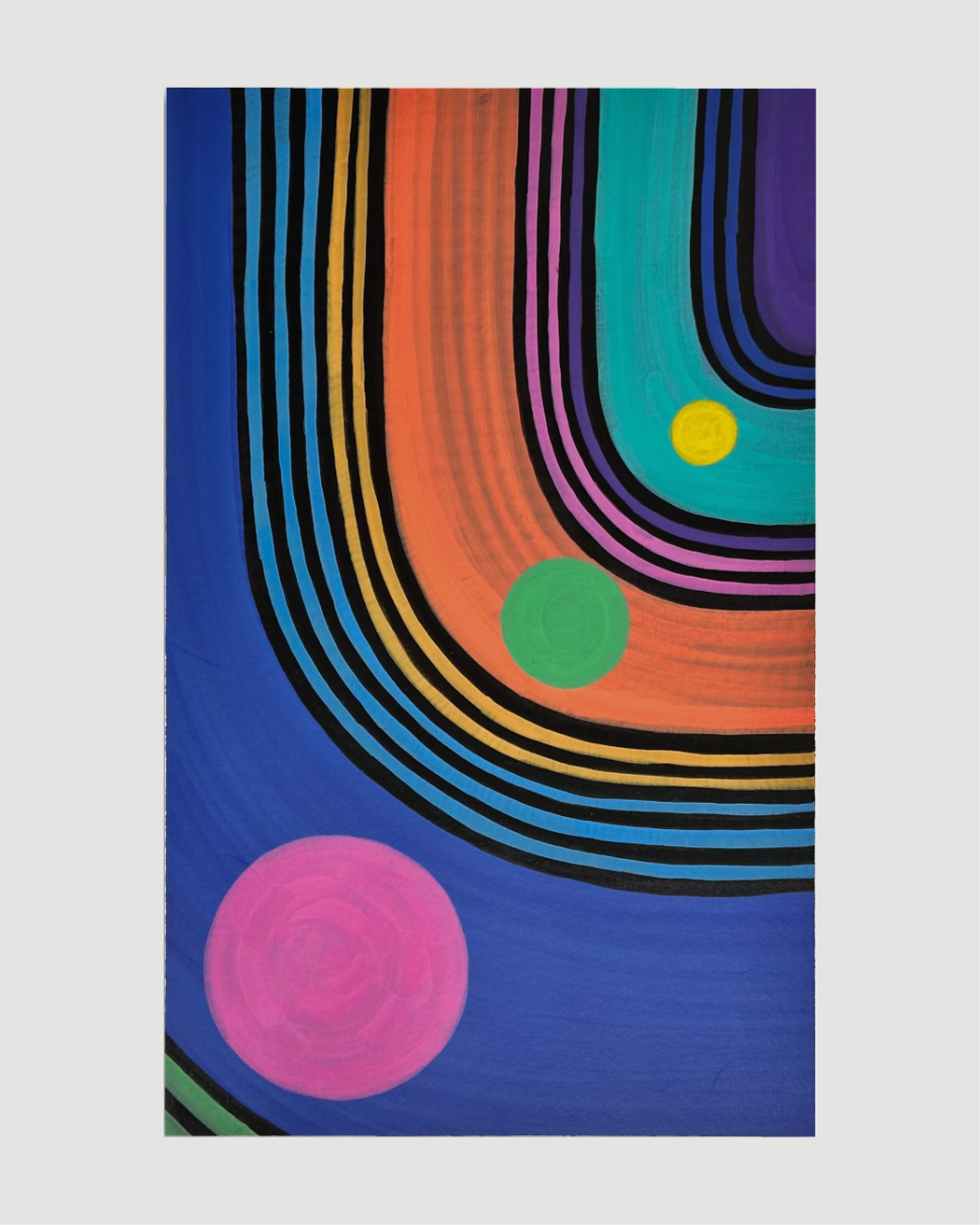 D.J. Horton | One Accord | 2026
How does your cultural background as an Afro-Native American artist influence your visual language and themes?
My cultural background is something deeply personal to me. I believe that, at this early stage of my career, my artistic ability is encoded with ancestral language that I have not even begun being able to tap into or see. To honor and preserve it, I want how it shows up in my work to remain in that sacred realm of unintentional markings until I’m able to harness it naturally at will. I’m observing its emergence mindfully because I never want to sensationalize it or use it to push my career. It’s part of who I am, and who I am is embedded and reflected within my work.
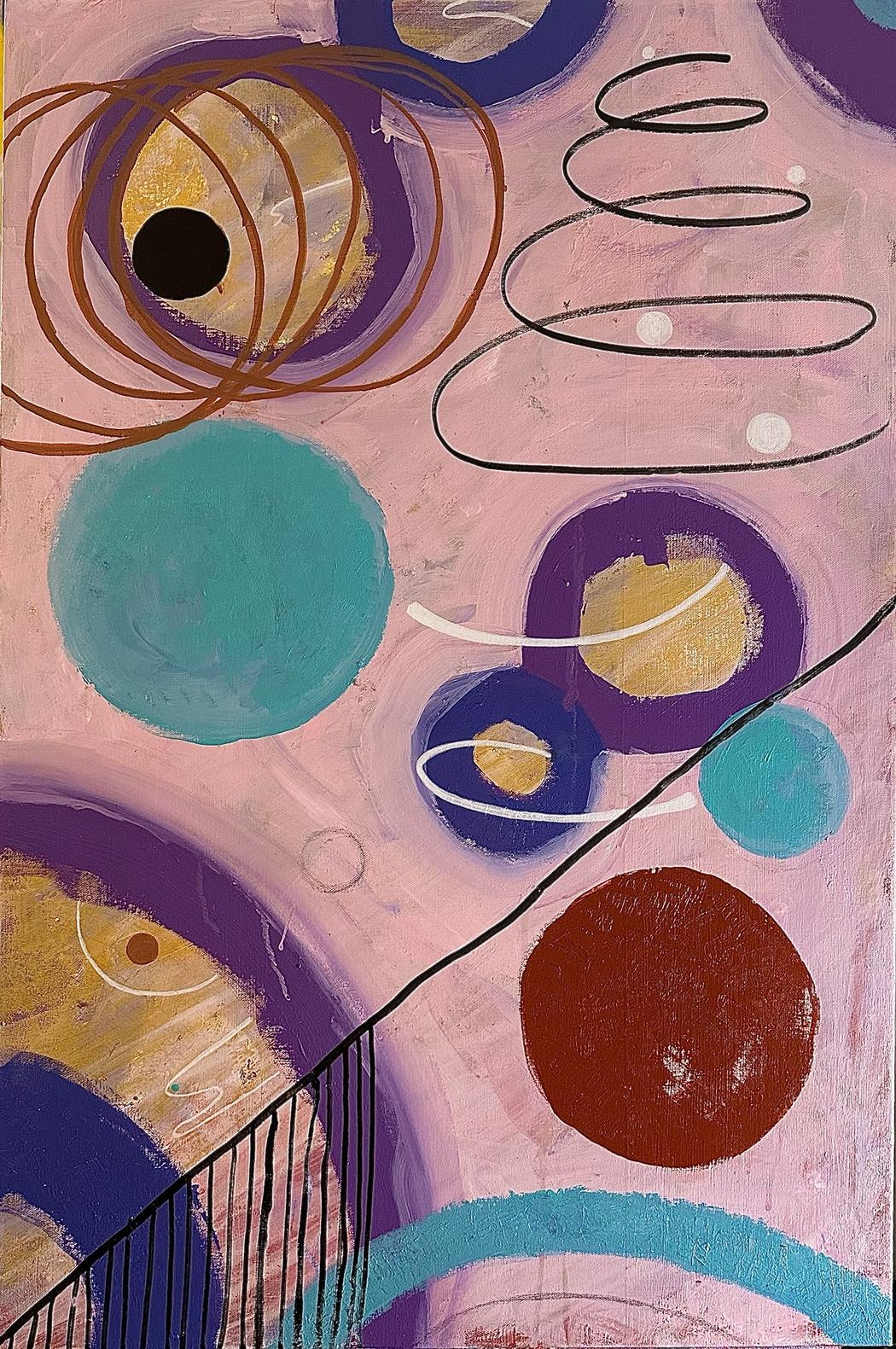 D.J. Horton | Realm of Thought | 2026
Your work reflects a tension between order and freedom. How do you navigate this balance within a single piece?
These two themes are used as a tool to draw attention to the messages in my art. Order gives the eye something familiar to resonate with, freedom allows the viewer to drift autonomously. I never want to “force feed” my viewers or just give them the narrative, a lot of my pieces require time to sit with. The tension itself serves as the backbone for the entire composition.
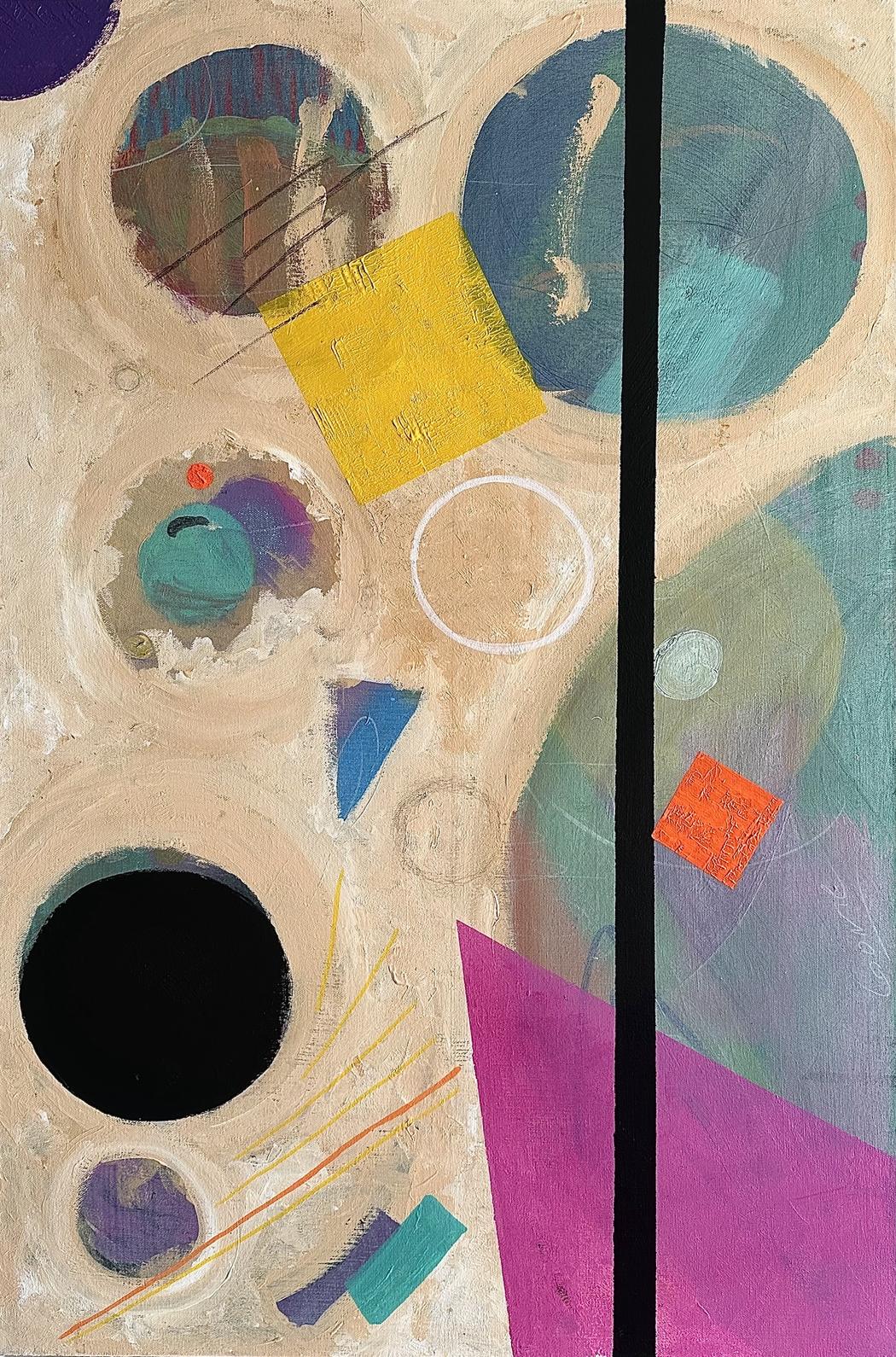 D.J. Horton | Refresh of Nephesh | 2026
How do the influences of artists like Kandinsky, Miró, Matisse, and Hilma af Klint manifest in your work today?
These are the artists that I feel like pushed the limits of human perception and interpretation as it pertains to the world of abstraction. Kandinsky (my personal favorite) created a landscape of visual language that just transcends many states of consciousness to understand. Hilma, a pioneering visionary amongst women, often spoke in sacred rhythms that took time and patience to piece together. That’s how I want my work to be; something that reaches far into the future of humanity and meets the viewers where they are at while viewing it.
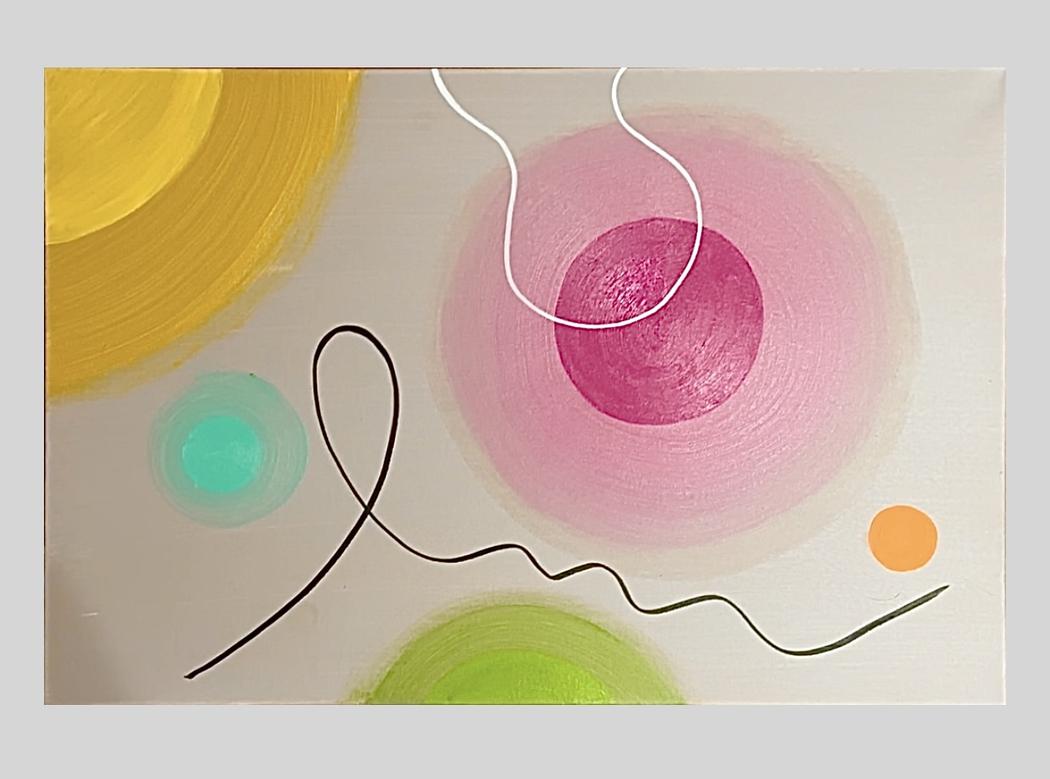 D.J. Horton | Sclera Solar system | 2026
As a young artist balancing family life, how does fatherhood shape your creative perspective?
This question is beautifully written. Being a father to my daughter has taught me so many things. I think the most important thing though, is the ability to adapt. During the creative process, things are changing all the time, a stroke may not land like intended, a color may not fit what was envisioned, a concept may not scale accurately; these factors require adaptations in order to create something meaningful and beautiful. With fatherhood, there are many times where I mess up; I miss a wake window, I’m not able to burp her or I accidentally scratch her while changing her diaper (ugh I hate that) and so many other things that just require instinctual adjustments to meet her needs or remedy the problem. This is a skill that I’ve had to hone in on a primal level, and one that’s seamlessly translated into refining my work.
Leave a Reply
You must be logged in to post a comment.