
Welmoed Boersma
Your work feels deeply rooted in observation. How do you choose the moments or subjects that are worth capturing?
I observe my surroundings in order to understand them better. I find it interesting to look at why a shadow falls the way it does, or why my reflection is more visible in one window than in another. I also enjoy watching animals doing their own thing, without being distracted by people. A cat grooming itself and suddenly startled by a sound, or a crow dropping a nut from a tree to break it. I’ve noticed that I’m often easily distracted by the things around me, and I’ve learned to embrace that. When something distracts me, it means I find it interesting, and I often take a photo of it. This does mean that I frequently stop when I’m on my way somewhere, and that I’m sometimes late for work. But I think it’s a shame to let these moments pass without taking them in. I like to give them the attention they deserve by incorporating them into my illustrations.
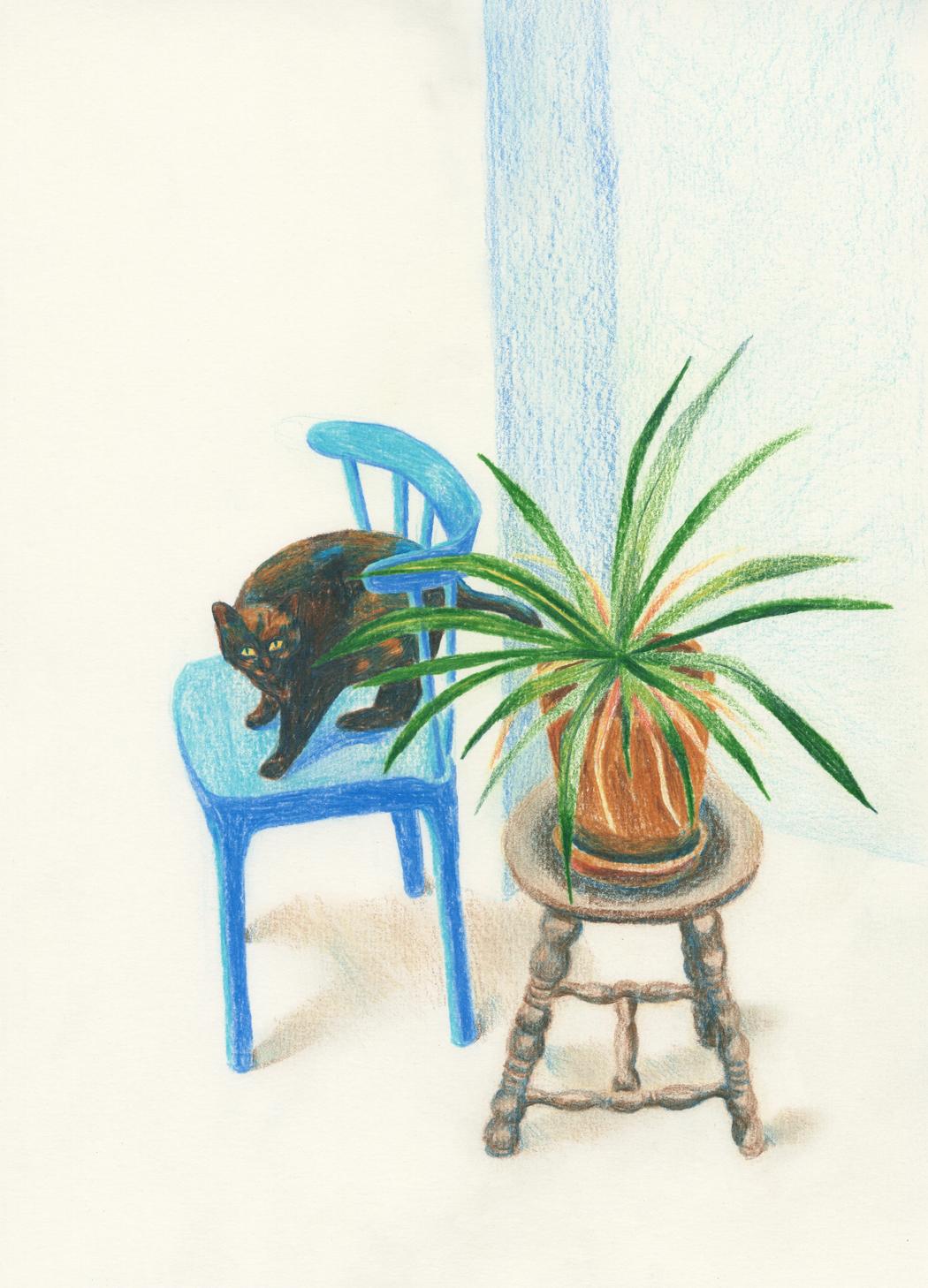 Welmoed Boersma | Juno | 2024
Many of your artworks depict animals in quiet, almost intimate settings. What draws you to these creatures, and how do you approach portraying them?
In my work, I focus on the animal. I try to capture its nature and personality. I want to portray the arrogant gaze of a seagull or the stubborn expression of a cat. I try to make sure the animal looks at me when I take a photo, so that the viewer of the resulting work feels more connected to it. I usually depict the animal in a human-made environment. For example, a mandrill in a zoo or a cat on a chair. I find the way animals navigate life in the human world very interesting. It creates a contrast between humans and nature. It can also feel uncomfortable—, ou might feel sorry that animals have to live in the human world. Observing and communicating with animals also gives me a sense of calm. It is free from social expectations.
There is a strong sense of stillness and atmosphere in your illustrations. How do you create this emotional tone?
The atmosphere that often emerges in my work is not intentional, it just happens. I think it comes from the fact that I’m not very fond of busyness. I’m quite a calm person (on the outside, not on the inside), and I enjoy quiet environments. This is reflected in my work. I choose calm reference photos, or I filter out the busyness. The emotional tone, however, is something I do choose consciously. In my work, it’s often important how the animals feel about being observed. This often brings out a kind of vulnerability. With that vulnerability, I want to create a stronger connection between the viewer and the animal. I want them to reflect on their impact on the animal’s life.
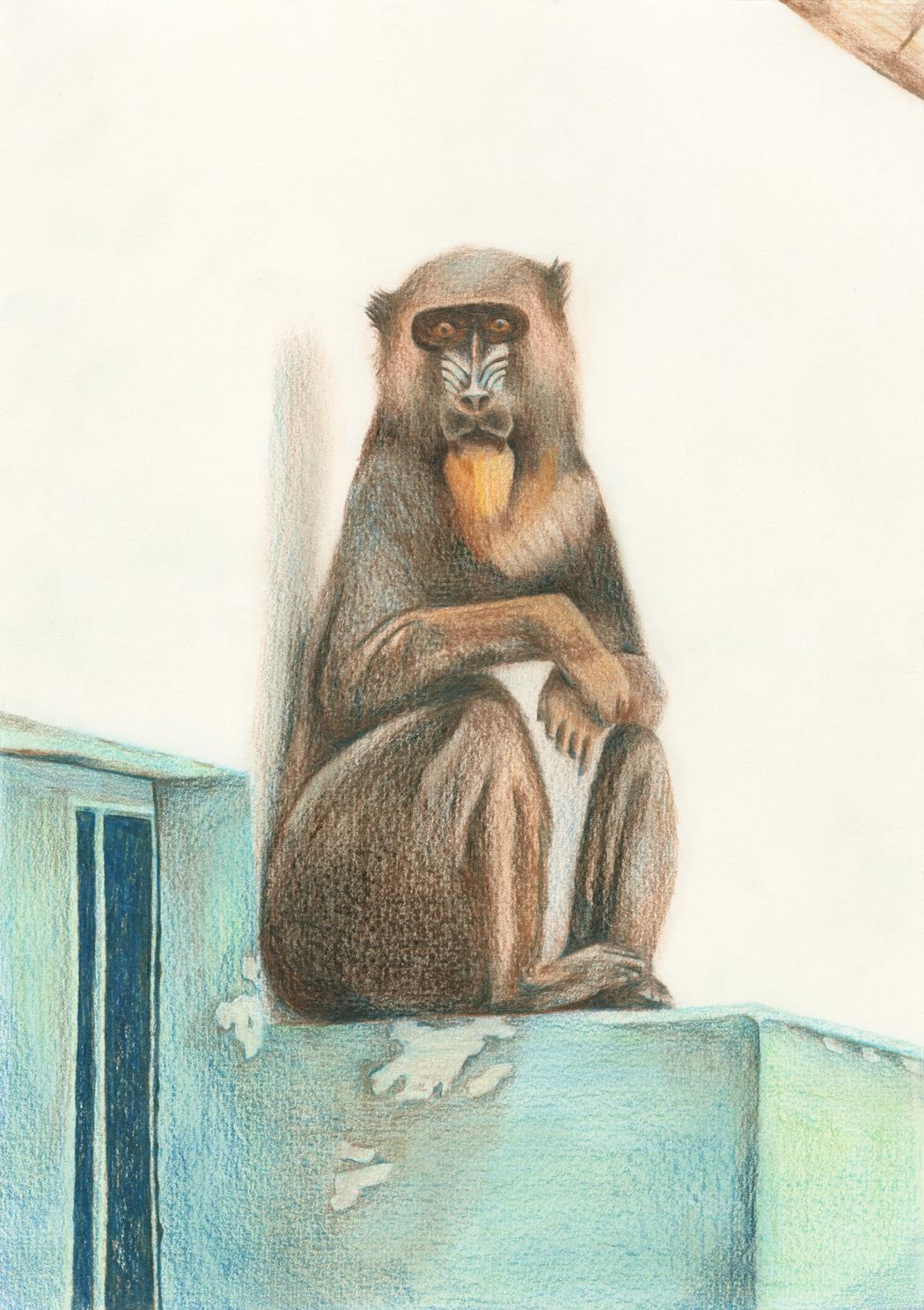 Welmoed Boersma | Mandril | 2024
How important is your immediate environment in shaping your work? Do you actively seek inspiration, or does it come naturally through observation?
I like to use references from my immediate surroundings. When I see something that appeals to me, I take a photo and save it for when I need inspiration. By using my own photos as references, each work is also tied to a memory. This gives me more enjoyment in the process. Most of these moments simply occur while I’m walking down the street, but sometimes I deliberately seek them out. For example, I was in Edinburgh a while ago, and I set myself the goal of photographing every seagull I saw. The photos didn’t have to be good, as long as the seagull was recognizable. I chose this because I found the contrast between the seagull and its urban surroundings interesting. On another trip, to Prague and Vienna, I searched for beautiful windows in which I could see my reflection. In that way, I captured the architecture of the city while simultaneously creating self-portraits. When I don’t have inspiration for these kinds of projects, I return to focusing on the small things in my environment.
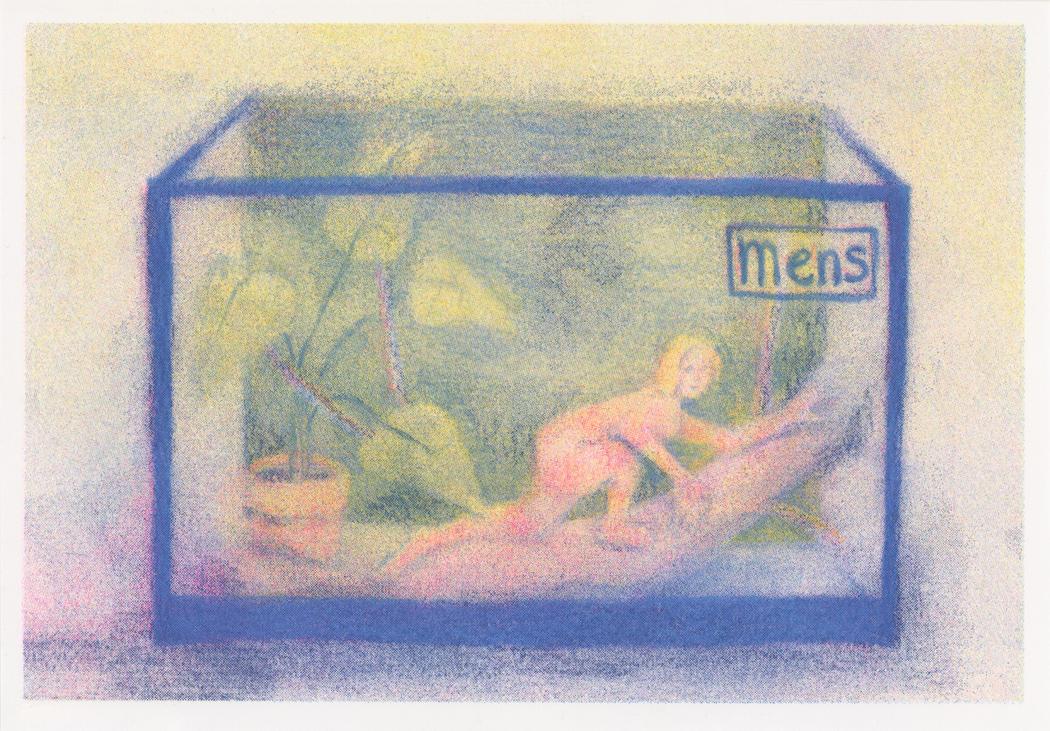 Welmoed Boersma | Mens (human) | 2025
In your artist statement, you mention love and appreciation as key drivers. How do these feelings translate into your visual language?
I use my work as a way to better understand an animal. I believe it’s important that an animal is seen and appreciated for what it is, not for what you want it to be. My love for animals draws me toward them again and again. I appreciate them in their small moments, when a cat catches a scent in the wind or when a jackdaw picks up a crumb. Often, it’s the animals that go unnoticed by most people that appeal to me the most, such as the different birds you encounter in everyday life. I like to give them the attention and appreciation I believe they deserve.
Do you see your work as storytelling, or more as capturing a moment or sensation?
Primarily, I capture a moment in my work, but you can also see the story surrounding it. The story lies in the atmosphere and meaning of the work, more in some pieces than in others. An example of this is the work “Human” (or “Mens” in Dutch). This piece evokes a sense of confusion. You might wonder why the human is inside the terrarium. Did she end up there by accident? Does she enjoy being there? I could create an entire story around it if I chose to. Capturing a moment is, of course, a snapshot, but something happened before and after that moment as well. When I capture a moment, those surrounding moments are inherently part of it.
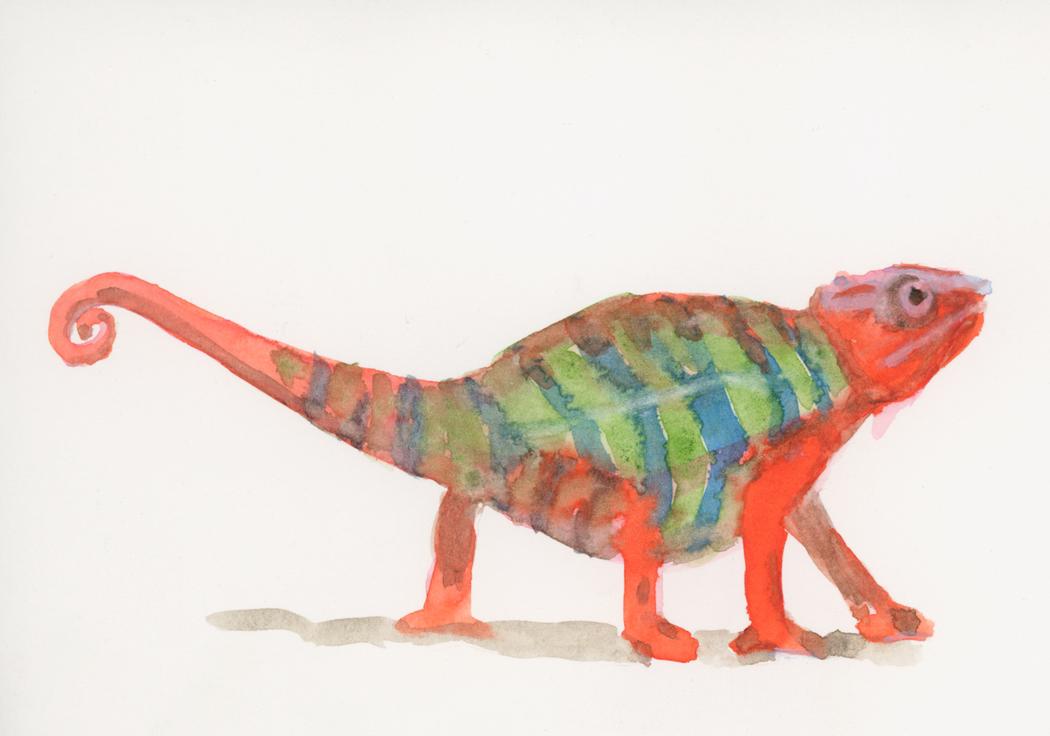 Welmoed Boersma | Panther Chameleon | 2025
What would you like viewers to feel or reflect on when they look at your illustrations?
I would like my work to spark curiosity and encourage viewers to think. In my animal-focused work, I want viewers to reflect on the role they play in the lives of animals. I want them to think about how they perceive animals and how they treat them. Animals have just as much right to a good life as we do, but what that means is different for them than it is for us. People often find it difficult to imagine that animals function differently than humans. For example, they might think a monkey feels connected to them when it looks at them, while it may actually experience that as threatening. I want people to realize how strange it is that we consider pigeons to be pests, or that we keep chameleons in terrariums. My animal work is an invitation to look at the animals around you with more appreciation. At the same time, a large part of my work is also simply meant to be beautiful and to decorate your wall.
Leave a Reply
You must be logged in to post a comment.