
Barbara Luckyman
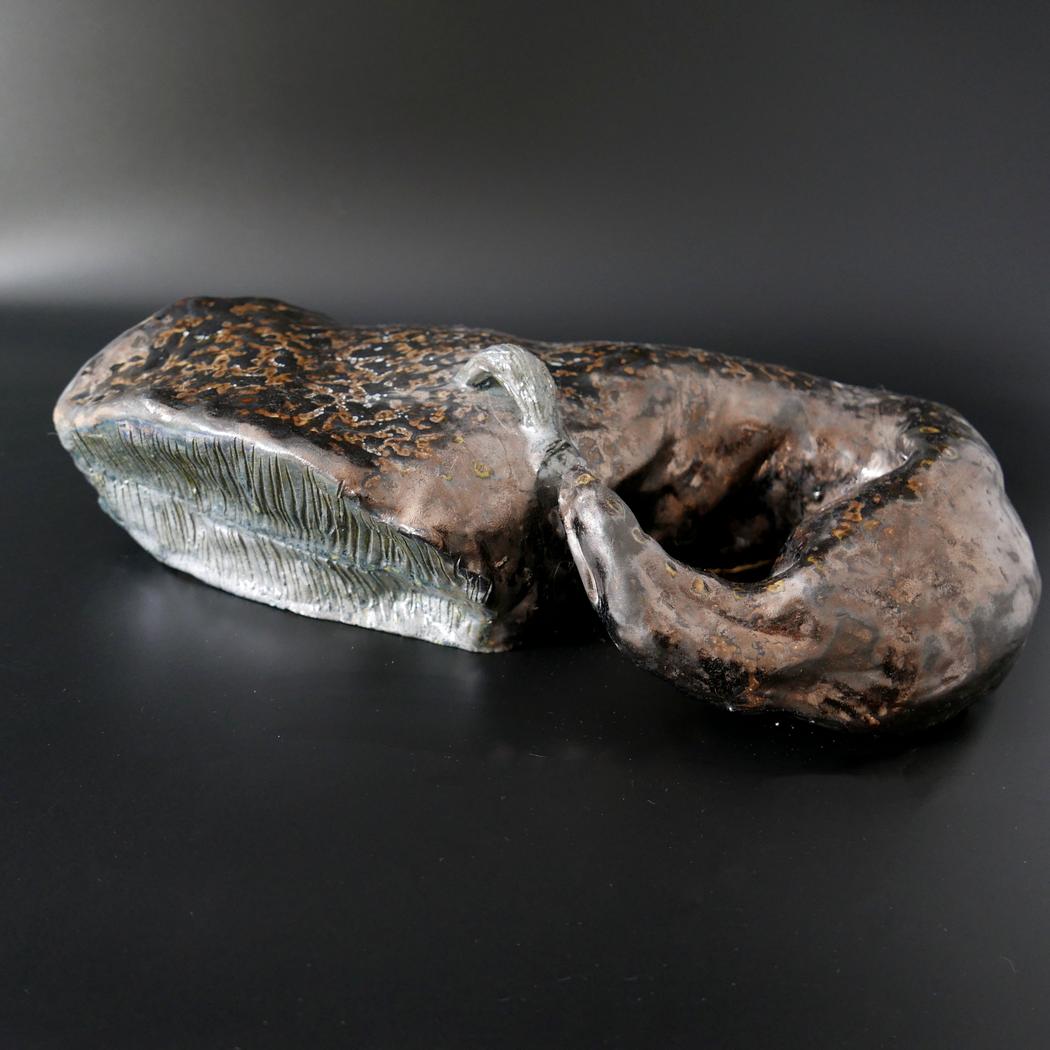 Barbara Luckyman | Sandworm
Your ceramic sculptures form a kind of personal “bestiary” populated by fantastical creatures. How did this imagined world first emerge in your artistic practice?
I think many people are waiting for something in their lives. Waiting until they have more money, more time, more energy, and so on. I was waiting too. Until something happened to me that happens to almost everyone – the death of my mother. That became a powerful impulse to act. I realized a simple truism: time passes and no one can turn it back.
After several years of not creating, I received a kind of “kick” from life through the irreversibility of death – a paradoxical jolt that pushed me back toward living. So I returned to the world of creation and ceramics. In fact, almost immediately, when after so many years I touched clay again, I knew I wanted to create “beasts,” although at that time I did not yet call them that.
The first were the Bird-Women – female bird figures – and of course cats. Later came cyclopes and characters with fantastical and Halloween-like motifs. I have always felt a deep attraction to warm red and orange tones, dark art, black humor, and the courage to search for what lies behind the meaning of life, why all of this is happening. That is why entering the world of fantasy felt quite natural and easy for me.
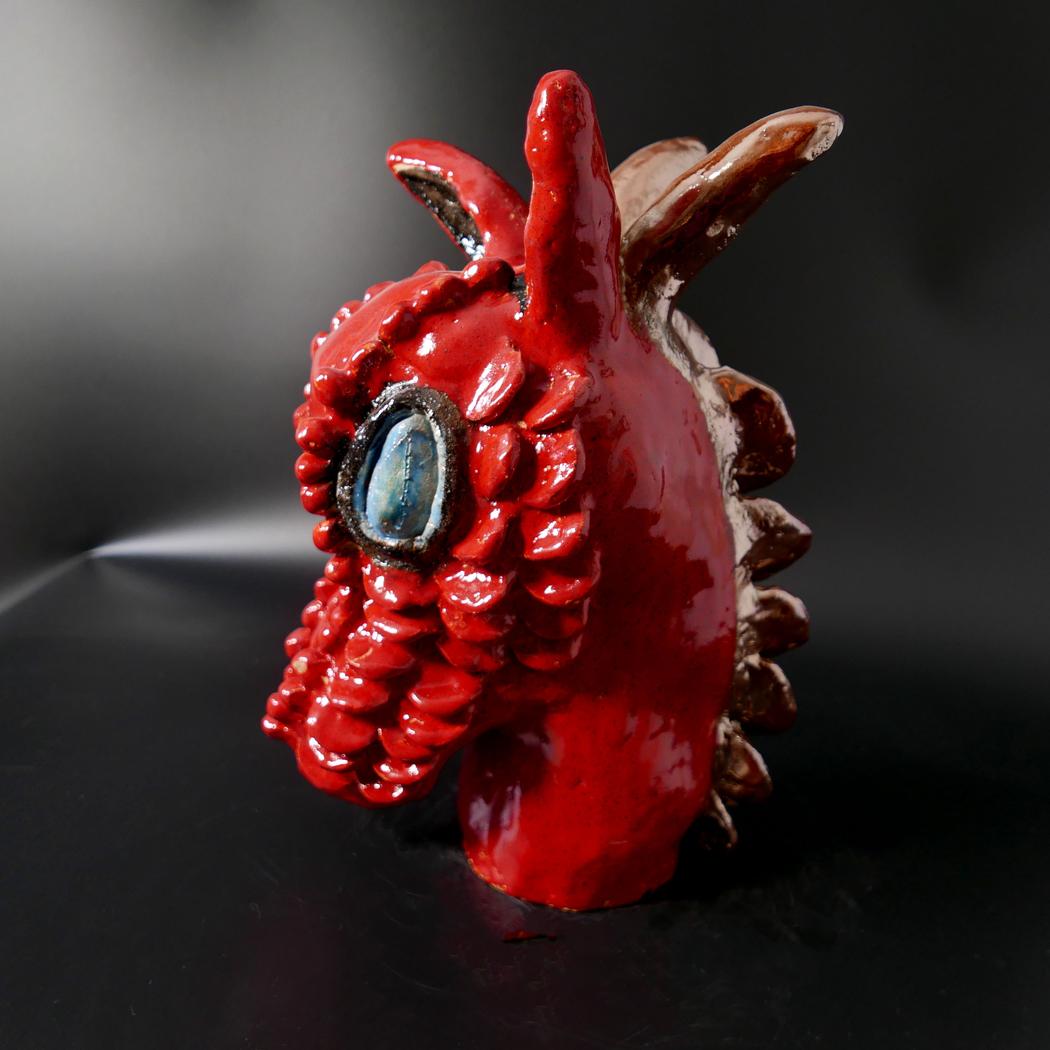 Barbara Luckyman | Dragon
Many of your works seem to exist somewhere between mythology, fairy tale, and contemporary imagination. What sources of inspiration most influence the creatures you create?
Above all, fantasy art and literature. But also Slavic mythology, which is full of demons and other supernatural beings that want to steal your soul somewhere in the marshes among the mists, or out in a field in the blazing sun, when the heat is so intense that you suffer sunstroke.
It is not a widely known fact that vampires are Slavic creatures that went on to achieve an international career in literature. I think that in the past people interpreted phenomena that are entirely natural in supernatural ways. But on the other hand, there is also a metaphysical side to human beings. It is there that many emotions, images, and beliefs reside, and it remains unclear whether everything can be explained scientifically, or whether magic truly exists? I feel all of these themes very strongly within myself.
Your sculptures combine playful forms with a sense of mystery and symbolism. What emotions or reflections do you hope viewers experience when encountering your work?
Above all, I would like to transport the viewer into a world of imagination, magic, and fairy-tale wonder. To detach them from an often sad or grey reality and carry them into another realm.
In today’s world, the media, especially news outlets, love to sell fear, and some people live with a constant sense of threat. In my art I try to create a space where the viewer can forget about this fear and about their everyday problems. I use strong, warm, energetic colours, which give the sculptures a joyful and positive energy.
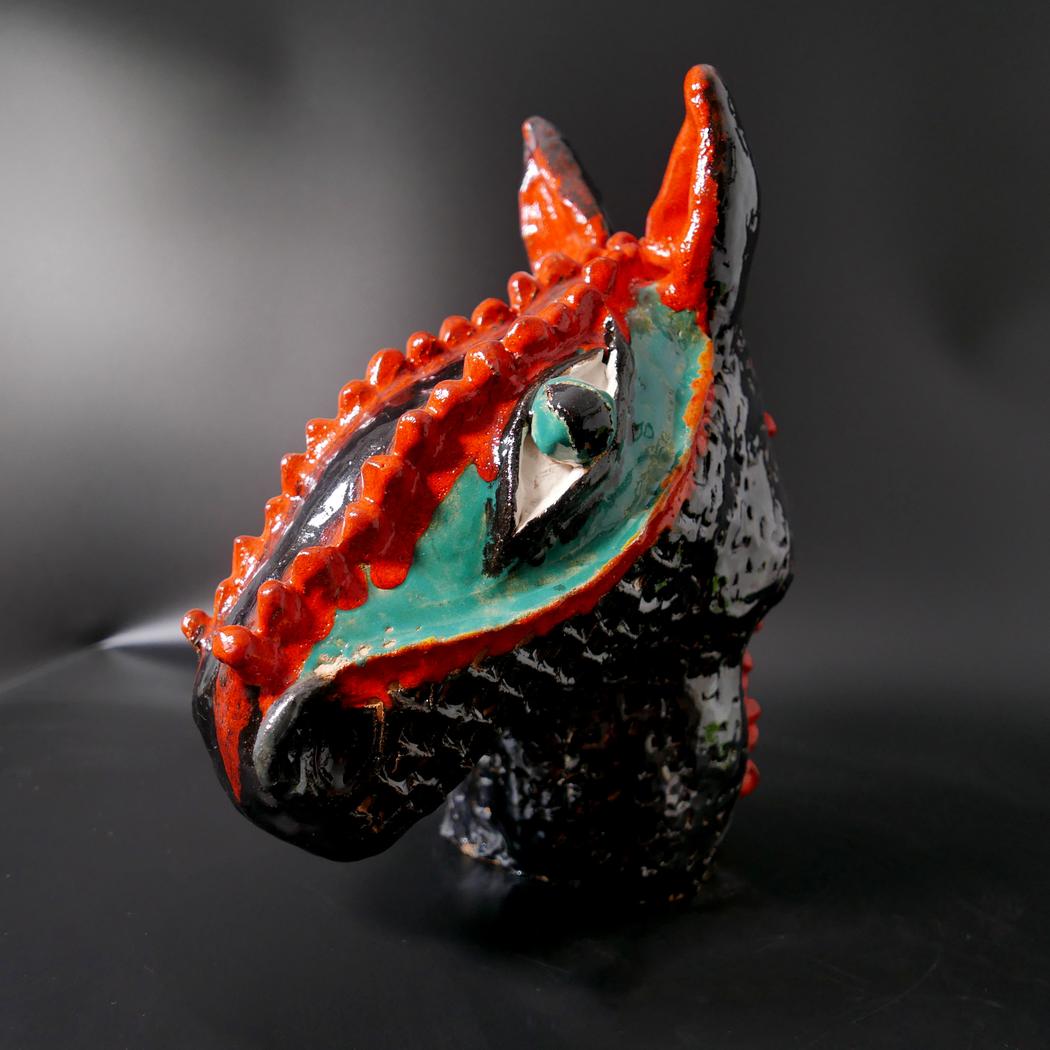 Barbara Luckyman | Horse
Color and texture appear to play a crucial role in your ceramics. How do you approach the surface of a sculpture, and what does the glazing process mean within your creative language?
Glazing is very important to me. Above all, of course, colour is essential. It is what I was talking about earlier. Warm, energetic colours are, quite simply, energising 
Without the sun and light there is no life. When you observe the world, you can clearly see that in places where there is little sunlight, people tend to be quieter, more gloomy, and even prone to depression. In contrast, where there is plenty of sun, lush vegetation flourishes and people are more cheerful and happier. Even in cosmetology and medicine, colour therapy using laser or LED light is applied.
Where I live, there is sun in the summer, but winters can be long and sombre, and perhaps that is why I love strong, joyful, warm colours so much. In a sense, one can “warm oneself” in the colours of my sculptures. That is why I make a great effort to achieve solid, opaque colours. In my room I have several of my own sculptures, and when light falls on them they sometimes seem almost to glow. It is an effect that feels very soothing and relaxing to me.
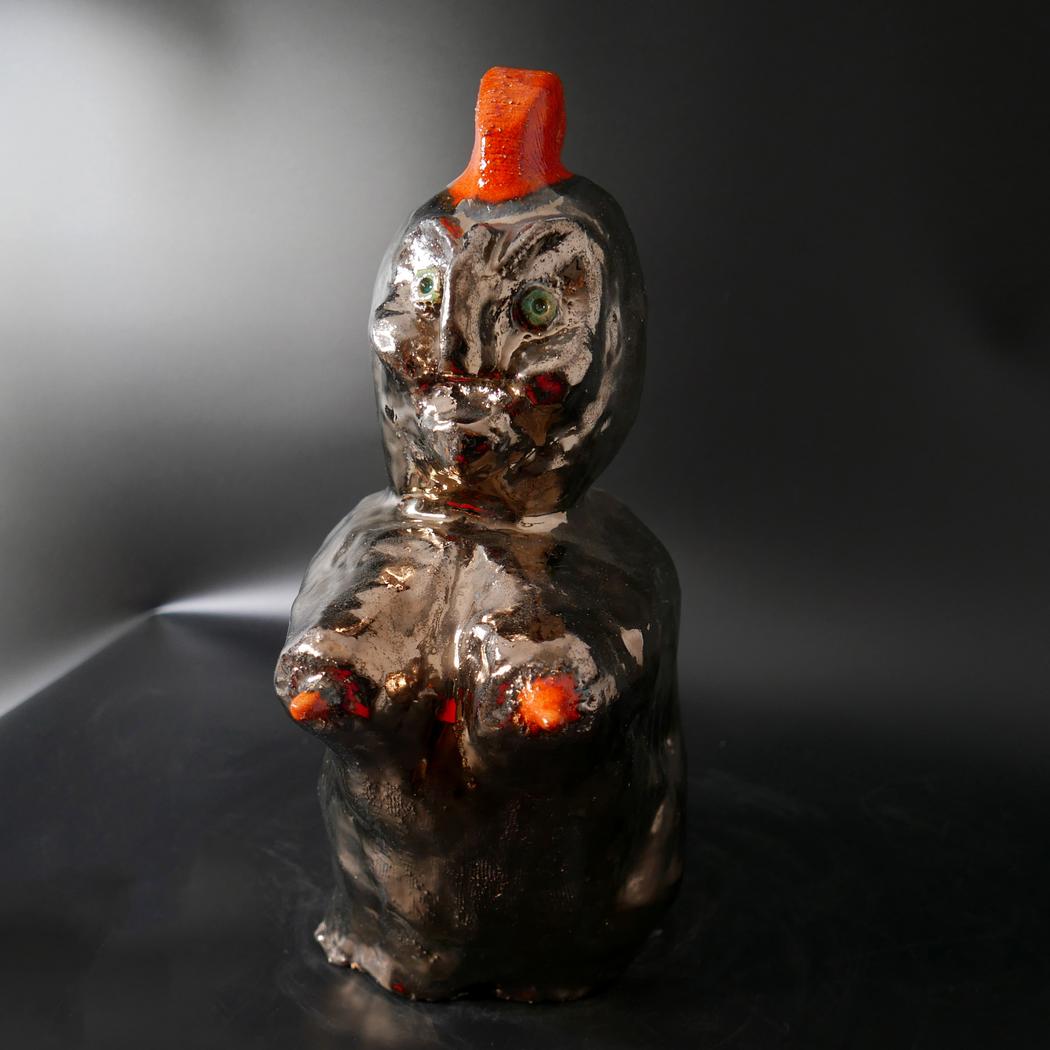 Barbara Luckyman | Punka
Your background includes both ceramics and photography. Has photography influenced the way you think about form, light, or composition in your sculptural work?
I would say that it is rather the other way around – sculpture has influenced the way I think about photography. Photographing art is quite a challenge
Sculpture, as a three-dimensional form, should be interesting from every angle, and the real difficulty is how to convey this in a photograph, which shows only one side of the work. Working with light, and especially with its intensity, is of course crucial. When documenting my pieces, I often wonder how far one can go. If a sculpture is photographed in very specific lighting conditions and then a viewer encounters it in “normal” light, will it still feel like the same sculpture?
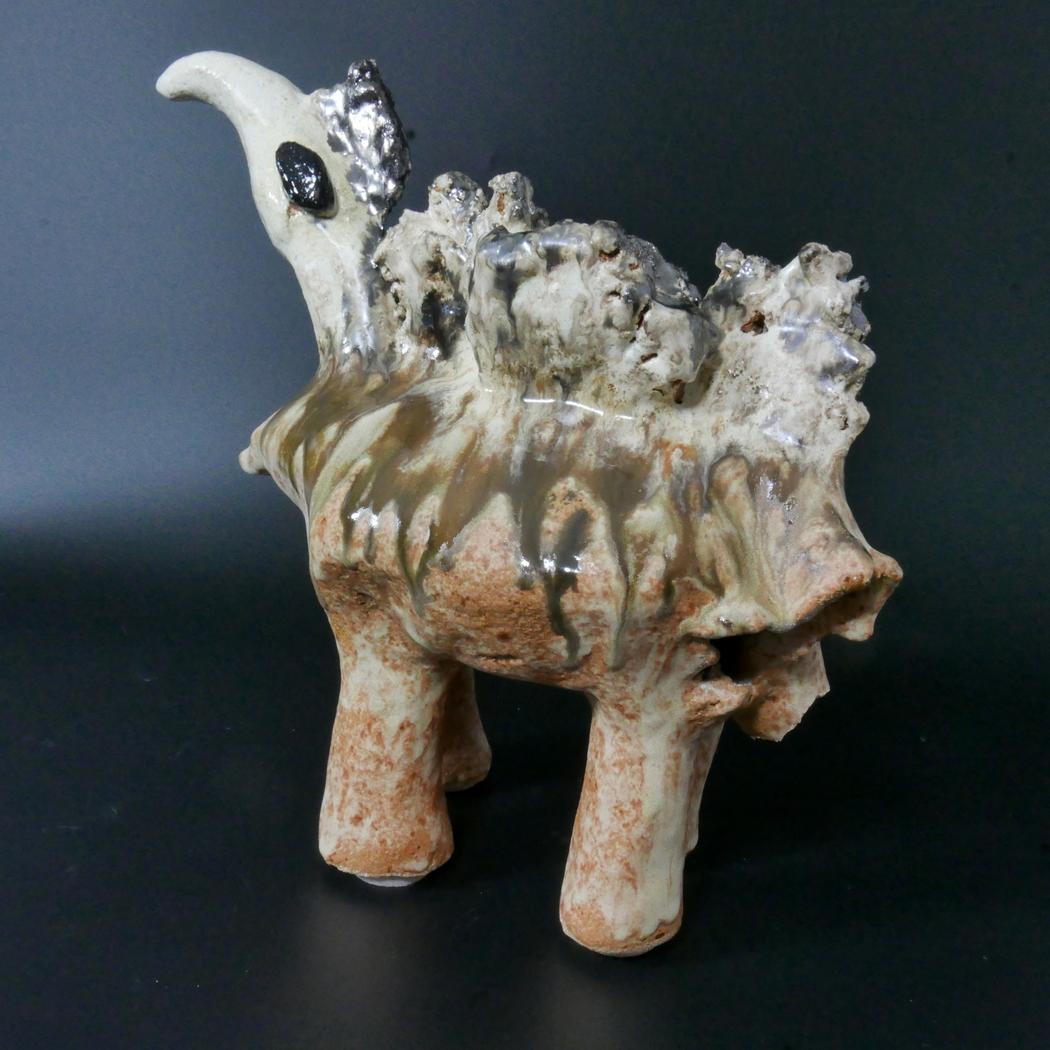 Barbara Luckyman | Sahara Up
When you begin a new piece, do you start with a clear vision of the creature, or does the form evolve intuitively during the process?
When I begin sculpting, I have an initial concept – a theme or a specific idea – but during the process I allow myself to be guided by the clay. I therefore combine conceptual thinking with intuition, the magic of the material, and the subconscious that directs the work of my hands.
Clay can sometimes be very surprising, and not everything can be predicted, especially in glazing, where you never fully know how the glazes will turn out. It is also important to me that my sculptures contain representational elements rather than being entirely abstract. I want the viewer to be able to recognize the figures I suggest, while at the same time leaving space for them to complete the image with what resonates with their own imagination.
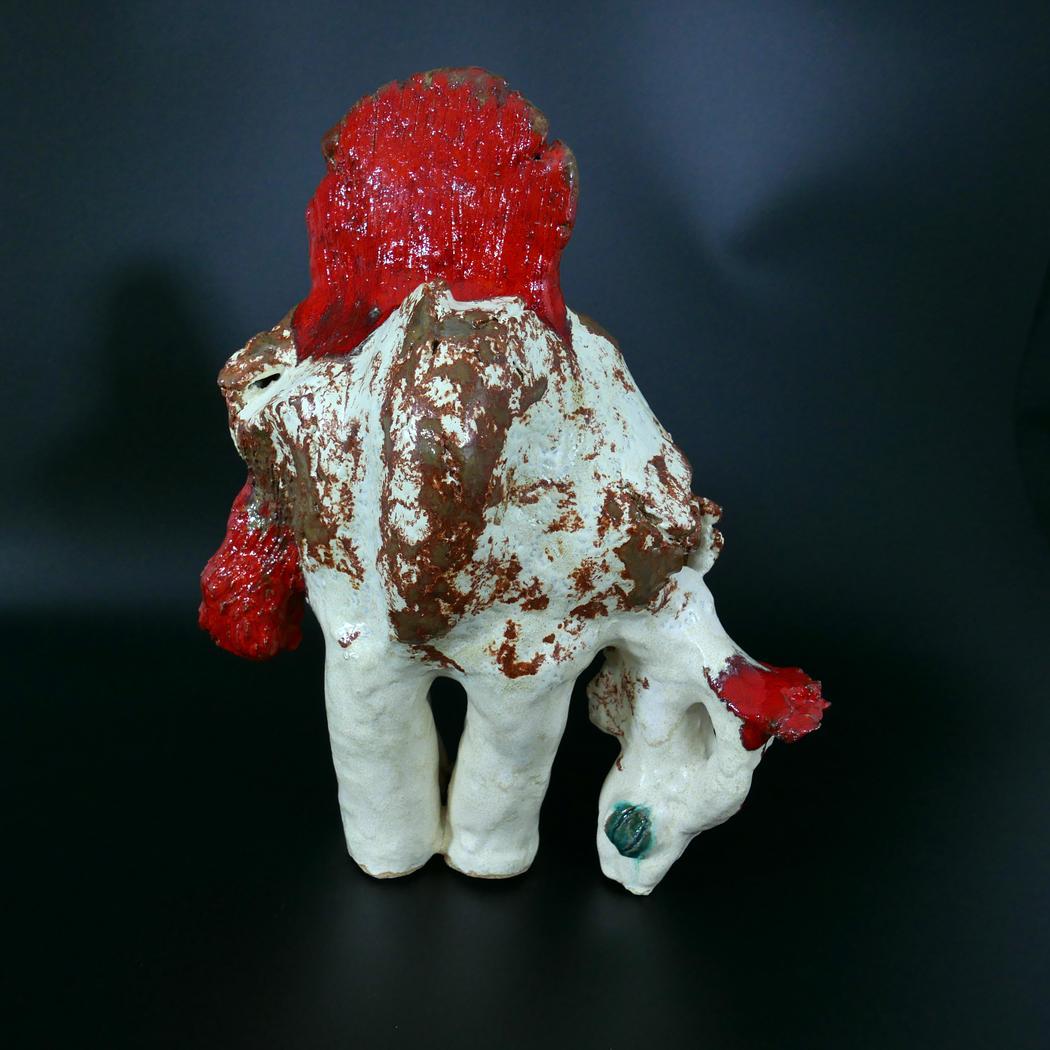 Barbara Luckyman | Sahara Boy
Your works feel like objects from an unknown mythology or a fictional culture. Do you imagine stories or worlds behind these beings?
Yes, I live somewhat in a different world. I consciously gave up watching television and reading news portals because I felt they contained a great deal of fear and deliberate manipulation. Instead, I moved into the realm of my own creatures, magic, and fantasy.
The bird motif in my work is connected with the symbolic meaning of birds as mythical beings that link the worlds of the living and the dead. Halloween themes also refer to the connection between these two realms. Cyclopes and two-headed figures draw on fantasy worlds.
At the moment I am working, among other things, on a series titled Moss Folks, in which humanoid-like characters and their animals are taking shape. Within this series I want to build a kind of miniature tribe. Later, I would like to present them in a green outdoor space and invite viewers to interact with the sculptures. I also plan to write a short story for each figure, explaining who they are and what they do in the World of Moss.
Another strong theme in my work is post-apocalyptic imagery, including machine-animals and visions of a future world deprived of plants and animals as we know them today. This is beginning to become a real problem for the world, and unfortunately it is no longer happening only within my soul.
Leave a Reply
You must be logged in to post a comment.