
Jordan Young
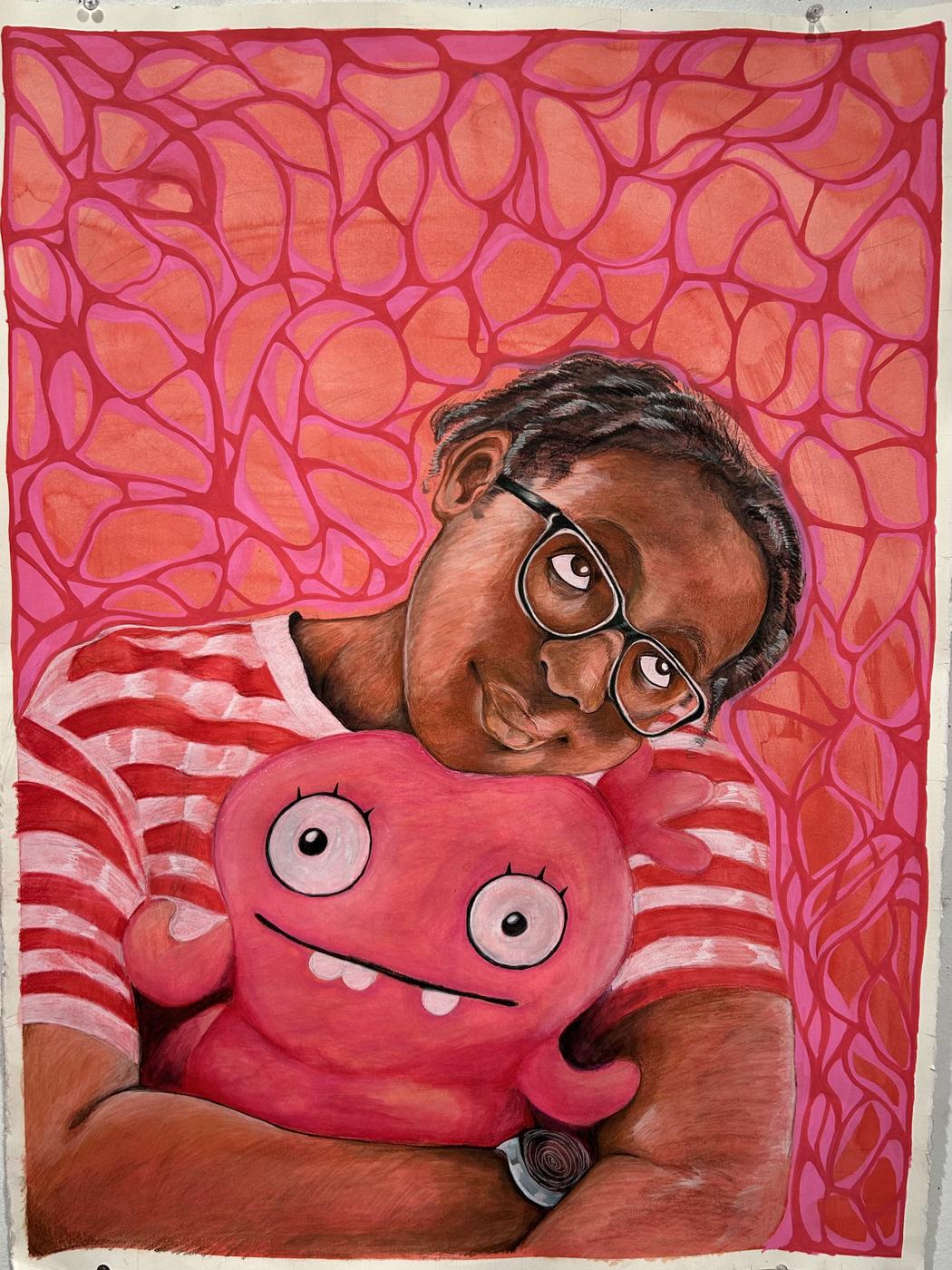 Jordan Young | My Friend and I
Your work blends pop aesthetics with cartoon, comic book, and anime influences. When did you first realize that these visual languages would become central to your artistic identity?
Ever since I was younger, I’ve always been drawn to stylized, over-the-top, and saturated aesthetics. Monster High, Littlest Pet Shop, and Lalaloopsy dolls were my favorites growing up, which I believe subtly laid the foundation for my artistic taste in kitschy, fun art/design. I watched a lot of cartoons growing up, and drawing inspiration from such media helped pinpoint my own visual language. Since high school, I have developed a stylized anime-esque art style that blends innocence with the grotesque. As I started to expand my skills and interests during my undergraduate career, I began to look at other visual pop culture sources as inspiration within an academic and creative context. Looking into how “low culture” like comics and anime have been integrated into high culture spaces, with Takashi Murakami and Roy Lichtenstein as examples, I wanted to base my own practice on the concept. With the elitist undertones that the modern art world can bring, I created work that spoke true to my pop-influenced tastes without compromising my creative vision.
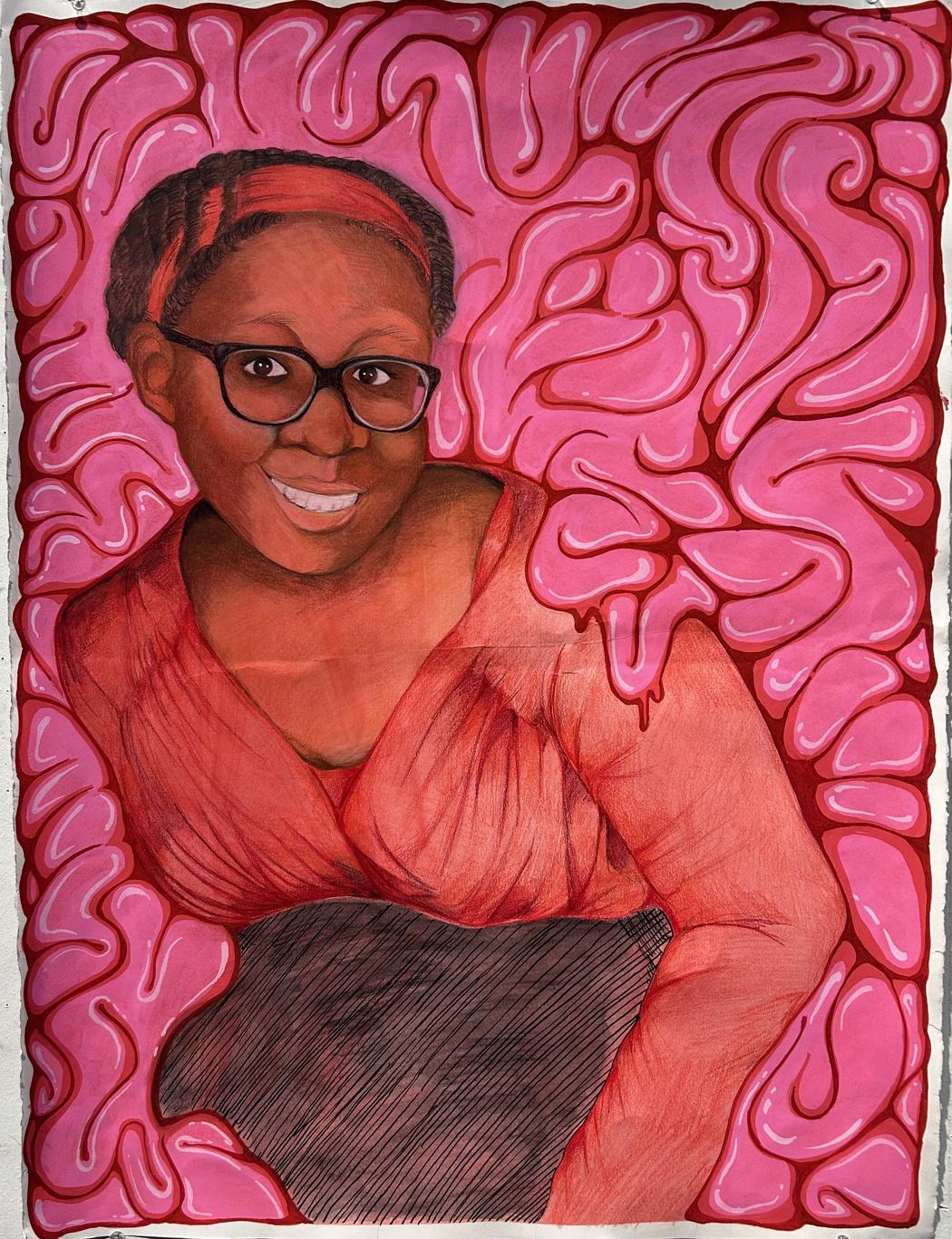 Jordan Young | Brainiac Jo
Many of your pieces feature nostalgic or toy-like characters alongside highly rendered portraits. How do you balance innocence and irony in your compositions?
When I first developed these series of illustrations, I initially used them to explore realism that deviated from my typical stylized work. The objects I depict, taken from my personal toy/trinket collection, are rendered via fine colored pencils and blending. The juxtaposition between the mass-produced plastic object and its sophisticated rendering elevates the subject to an artistic one, highlighting design elements that would be missed by the average viewer. My self-portraits also play on this, mixing highly rendered depictions of myself against stylized, near-grotesque imagery of veins and brain matter. My creative language balances the cutesy with the surreal/grotesque, sentimental objects with in-your-face saturation.
Bright, saturated color plays a major role in your work. What emotional or conceptual function does color serve for you?
In Pop art, bright colors are usually par for the course. Artists like Takashi Murakami and Andy Warhol utilize such palettes to draw on the loud and in-your-face nature of pop consumerism, especially when cartoon and anime aesthetics get involved. In my pieces, bright colors exist to highlight the playfulness of the objects I depict – to signal them as playthings, kitschy objects, and nostalgic memoirs. The colors are often associated with 80s/90s kitsch, bright neon colors with funky organic shapes. I wanted to use such visual language to emphasize the playfulness of my work.
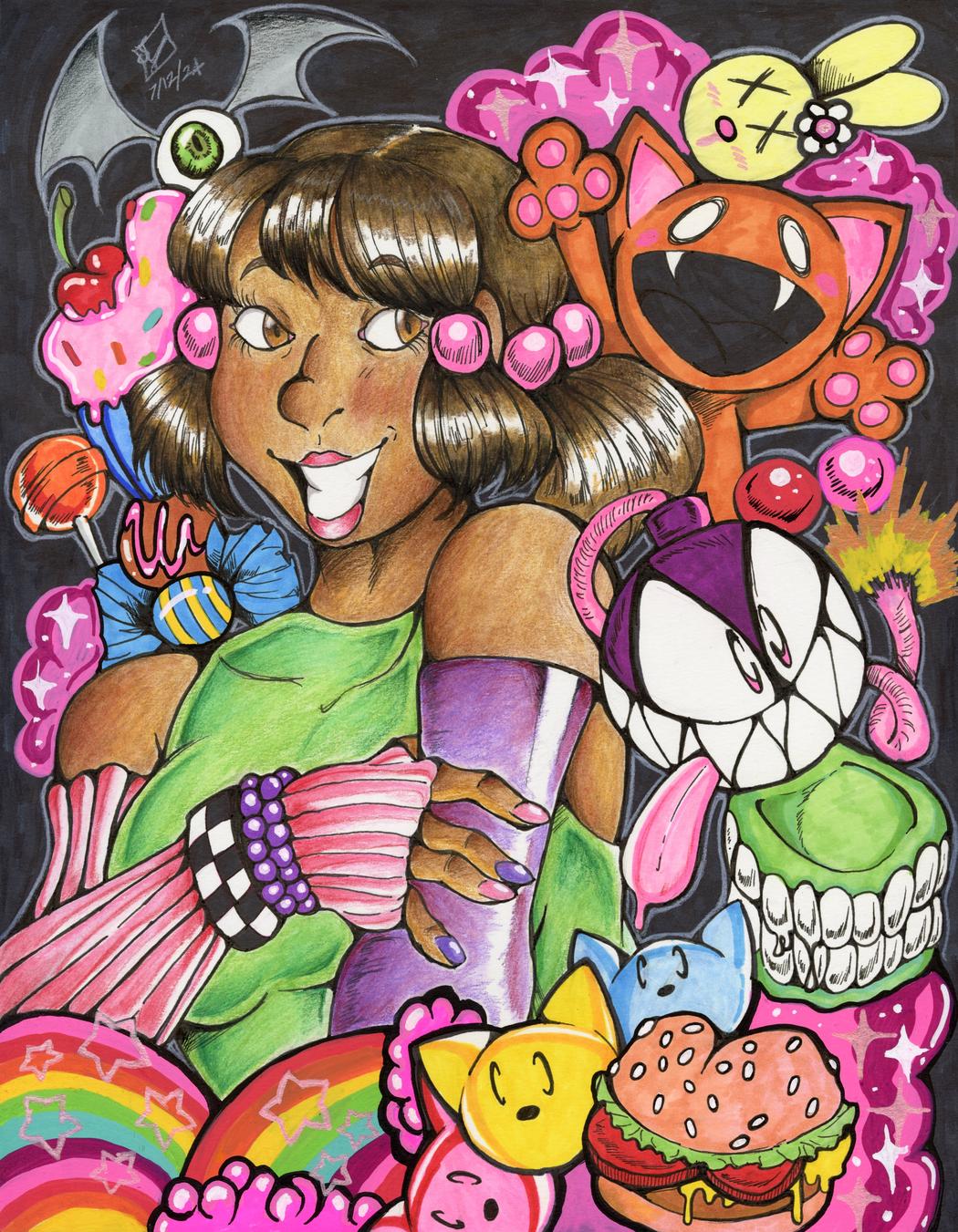 Jordan Young | Inner Machinations Redux
In your statement, you mention a personal attachment to consumerism and nerd culture. How does your work critique or celebrate these influences?
As I’ve mentioned earlier, I’ve been engaging with nerd and fandom culture for years – from watching Littlest Pet Shop videos to joining a comic book club in college. My pieces as well as my portfolio is a memoir of my experience as a pop culture nerd and collector. These pieces serve to explore my personal collection of objects, from vintage stuffed animals to kitschy souvenir trinkets. They are less about critiquing consumerism (though it’s not out there to suggest that in my work) and more about showing off my fandom-related interests and collections.
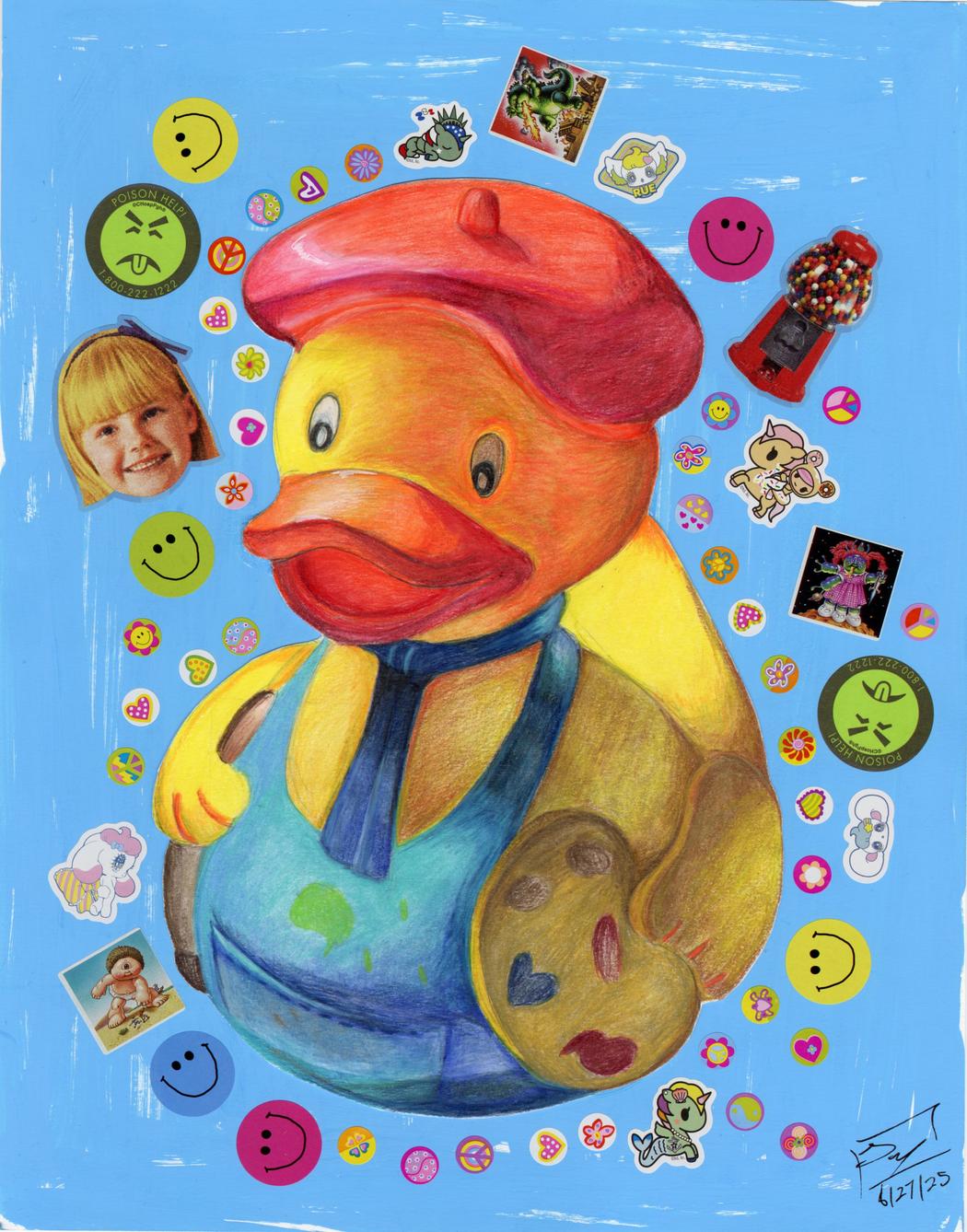 Jordan Young | Quack!
Some of your portraits are framed by highly stylized, almost “melting” or organic backgrounds. What draws you to these decorative, pattern-heavy spaces?
Since I was creating art based on collectible objects, I wanted to frame them via a composition that highlighted their decorative purpose. I based the framing on sticker and postage stamp designs because, like the toys I draw, they are collected and exchanged within the pop culture memorabilia space. I also wanted to create a cut-out feel to the pieces, like they would be actual stickers you can slap on a scrapbook. Whenever I start doing individual exhibitions, I plan to frame these pieces as if they belonged in a scrapbook.
Your characters often feel both playful and slightly uncanny. Are you intentionally exploring tension between comfort and discomfort?
I like to mix the grotesque with cutesy or innocuous subject matter, which is more apparent in my stylized anime, cartoon-esque pieces. This aspect of my art is meant to create a juxtaposition to explore blurring the lines between the saccharine and the disturbing. I explored this through my self-portraits, creating an air of child-like whimsy while including imagery reminiscent of bodily organs. I added these elements to explore my personal tensions with budding adulthood, holding on to the things that bring me joy while confronting the challenges of “growing up”.
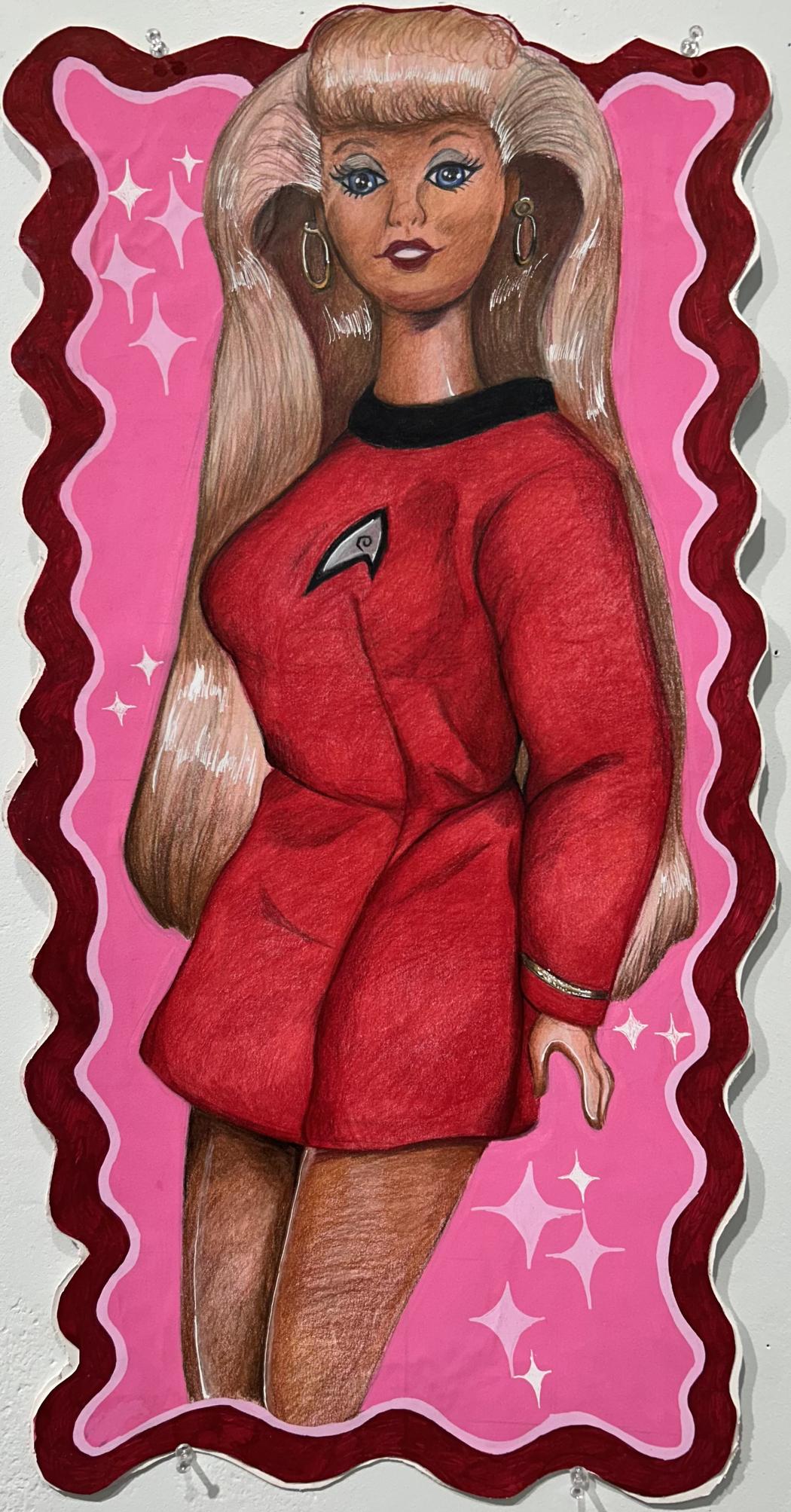 Jordan Young | Space Woman
As a student in a Drawing and Painting program, how does academic training influence – or challenge – your pop-inspired visual language?
When I started my undergraduate career, I had only been drawing stylized cartoon and anime characters as a creative practice. I knew that going into a more professional and academic setting and relying on only this kind of visual language could limit my potential as a studio artist. I took several classes that helped build my realism skills, such as oil painting and figure drawing. These practices trained my eye and hand to depict physical objects in realistic settings, opening new possibilities for my visual language. Since junior year, I have created more diverse work that blended my stylized sensibilities while realistic rendering. I found my undergraduate art career to be humbling as it was influential in maturing my creative practice.
Leave a Reply
You must be logged in to post a comment.