
Alana Palomo
Your work often revolves around light, renewal, and emotional healing. When did you first realize that art could become a personal tool for processing emotion?
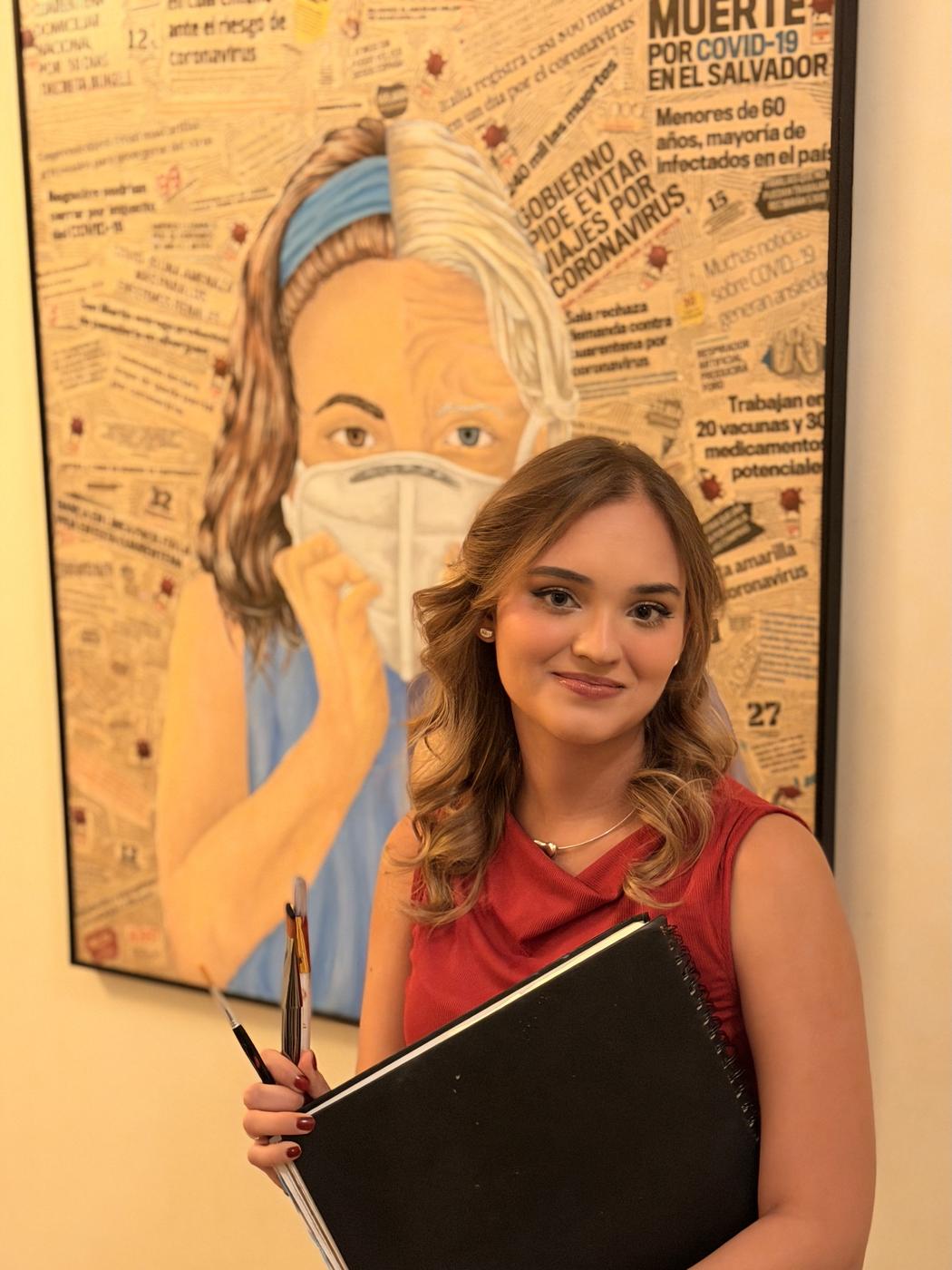
During the pandemic, I was completing my International Baccalaureate in high school back home in El Salvador, and it felt like everything around me was collapsing at once. There were fires, floods, earthquakes, gang violence, the pandemic itself, the Black Lives Matter movement, the Me Too movement — so many global and local crises unfolding simultaneously. It felt overwhelming, almost paralyzing.
That’s when I created Paralizante. I collected clippings of every mention of covid and the pandemic in the newspaper for a year, and then layered them around two figures with a huge age gap, showing how suffocating it all felt to everyone regardless of age. How headlines and fear can surround and immobilize us. I realized then that art wasn’t just something I enjoyed doing; it was something that allowed me to process chaos and generate awareness at the same time. It helped me transform anxiety into dialogue.
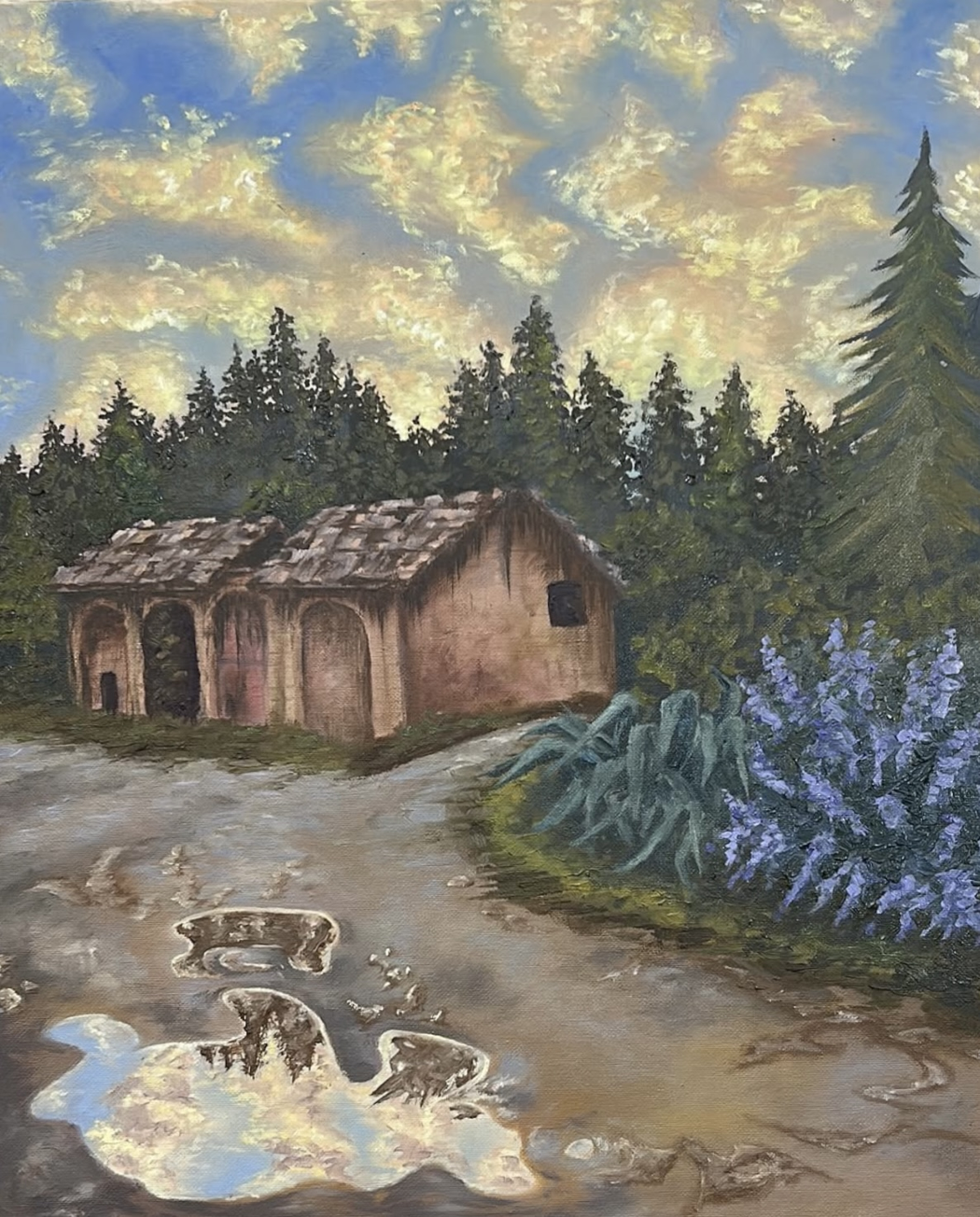
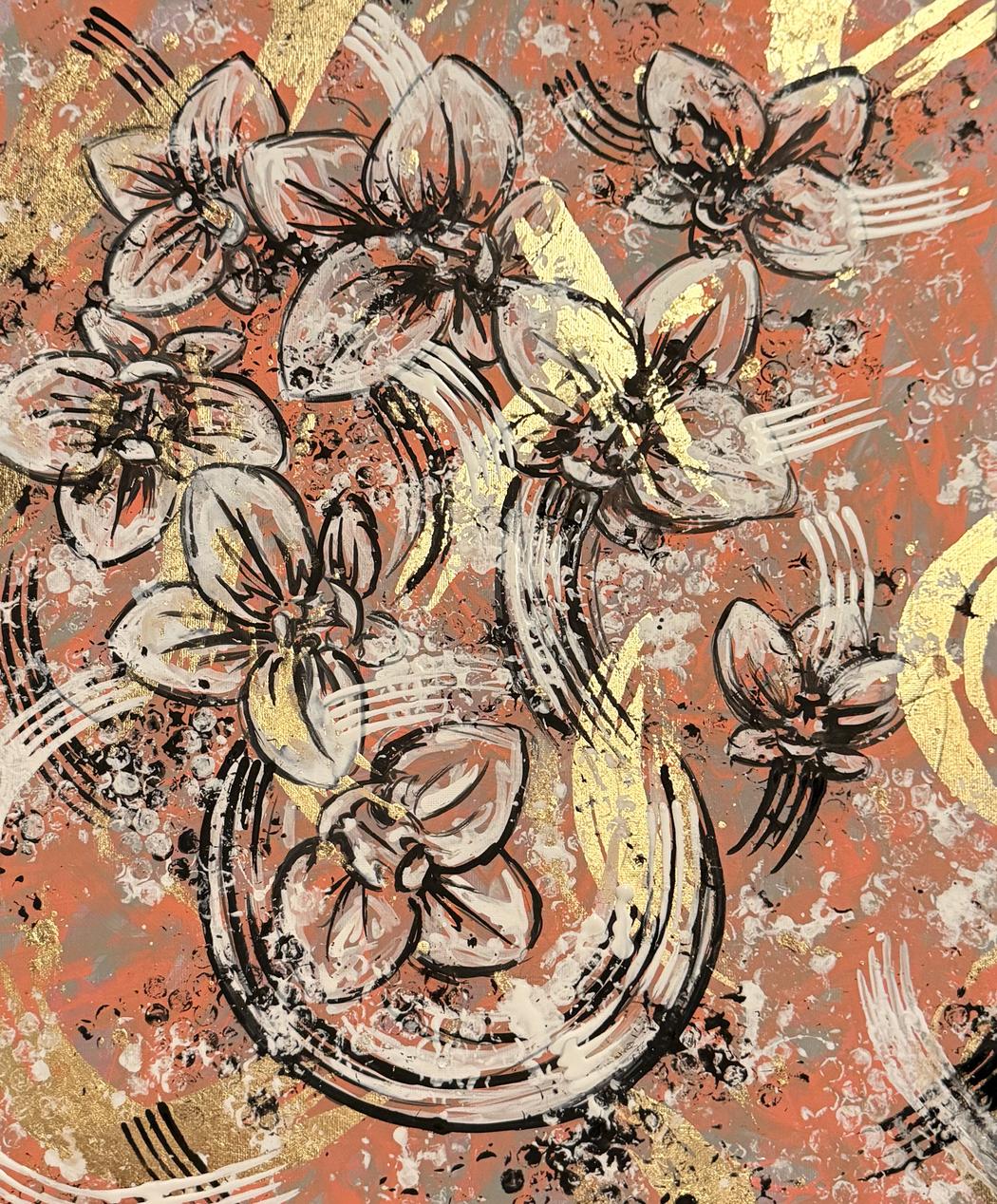
That impulse never left. You can see it evolve in From Ashes, where butterflies emerge from wildfire, unsure whether they are being consumed or reborn. In Il Avivamiento, gold leaf & imagery symbolize renewal and spiritual rebirth after rupture or rock bottom. In The Art of Giving, love becomes an act of quiet devotion, even when the world feels unstable. In Darkest of Moments, a stranded horrible day in Tuscany turns into a meditation on hope, light appearing exactly when you least expect it. Or in bollente, where emotional turmoil becomes visible through aggressive brushwork, yet the figure remains present and resilient, embodying strength through the chaos.
 Alana Palomo | Conundrum of Industralization
You frequently work with heavy texture and layered surfaces. What does the physical act of layering and building texture allow you to express that flat imagery cannot?
Texture allows me to embed the feeling and complexity of memory physically into the work.
In Soy Salvadoreña, there are literal coffee grains still attached to the surface, alongside newspaper collage from La Prensa Gráfica. Coffee is part of our culture, our economy, our daily rituals. I didn’t want to just paint it, I wanted it to exist materially on the canvas. The same goes for the newspaper. These aren’t just references; they are artifacts.
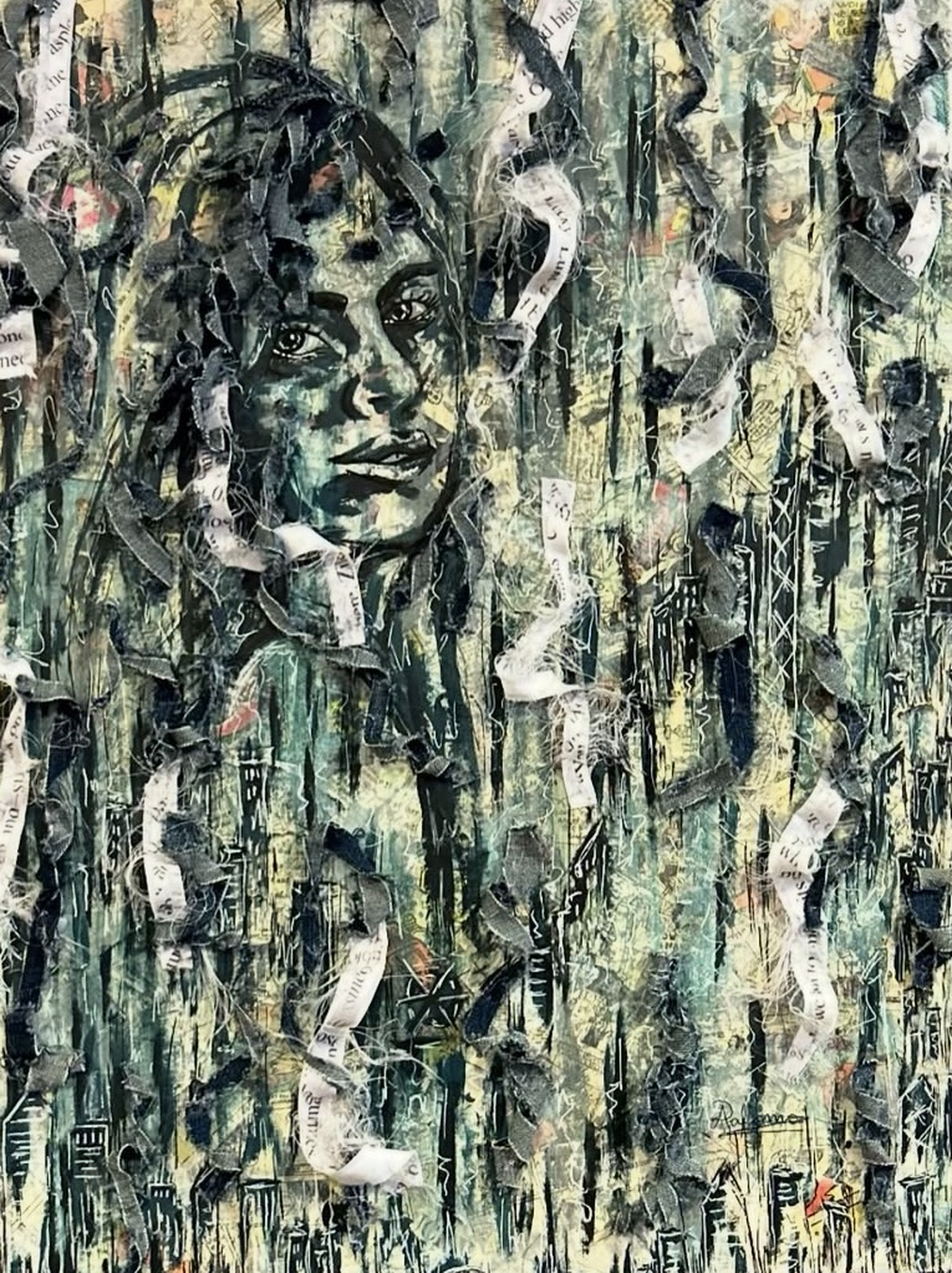
In The Conundrum of Industrialization, I used scraps of denim, printed words on fabric, layered them over newspaper, and sketched a city skyline before unifying it with acrylic paint and the human figure. The frayed edges of the jeans reflect urban development’s roughness and wear. The fabric text adds another voice. I was also intentionally trying to reduce waste, using materials I already had lying around. That desire to recycle and repurpose materials is what led me to experiment with bubble wrap and forks as tools. Instead of discarding them, I used them to create mark-making that feels raw and imperfect.
Flat imagery can be beautiful, but texture carries evidence. It carries time. It carries pressure. It carries the weight of what has happened. Not to mention the human mind, personality, trauma and way of thinking is complex and multi-layered, just like my way of painting.
As a multidisciplinary artist working across painting, design, collage, and functional objects, how do these different mediums influence one another in your practice?
They are constantly influencing each other. I believe that if someone truly connects with my work and desires to have it in their space, to make their troubles feel lighter, to feel joy, to feel completeness, they should be able to do that. That belief prompted me to create art across a wide variety of sizes and price points. From original paintings to smaller wooden works, prints, coasters, and tote bags, I want art to be accessible.
Functional objects also come from my cultural upbringing. In El Salvador, artists paint on anything, furniture, objects, walls… creating beauty in everyday life. That deeply influenced me. I want my art to live with people, not just in galleries. Functional objects remind me that art can be intimate and daily, not distant.
 Alana Palomo | Darkest of moments
Your background includes both fine art and graphic design. How has design thinking shaped the way you approach storytelling in your paintings?
Graphic design trained me to think before I paint. I almost always use Photoshop to plan my compositions digitally before turning to the canvas. I experiment with layout, placement, and color combinations beforehand so that when I approach the canvas, I already understand the structure. That planning allows me to take more confident emotional risks in the painting itself while still maintaining a structural balance to its composition. Design also taught me hierarchy, balance, and visual pacing, how the eye moves across a surface. Even in chaotic works like Enough, there is structure underneath the emotion.
Beyond composition, graphic design gave me marketing skills, like social media, video editing and website creation. These have helped me build my practice independently. But the influence goes both ways. My painting and illustration practice deeply inform my graphic design work. I often create custom illustrated imagery for posters, patterns, and branding projects, making each design personal and specific to that client or event. The two disciplines are constantly interlinked, each giving voice to the other.
 Alana Palomo | Il Avviamiento
How do your roots in El Salvador and your life in Chicago inform your visual language, even when cultural references are not explicit?
My passion for landscapes is directly connected to El Salvador. My comfort zone was always the views I had back home; beaches, sand beneath my feet, waves breaking on the shore, birds at sunrise or city views from atop a volcano. Those landscapes felt like safety. When I moved away, I began painting them as a way to carry them with me.
Even in works like Darkest of Moments or other landscapes painted abroad, there is always a longing embedded in them. I paint places to preserve them, to escape gloominess, to hold onto beauty.
El Salvador’s art culture is also deeply colorful and emotional. There’s boldness in expression and a tradition of painting on any surface imaginable. That spirit shows in my work, the saturation of color, the willingness to use unconventional materials, the desire to make art functional and alive in daily spaces.
Chicago introduced me to industrial textures and contemporary gallery culture. El Salvador gave me emotional intensity and warmth. Florence gave me reverence for gold leaf and classical light. All of these places live in my visual language.
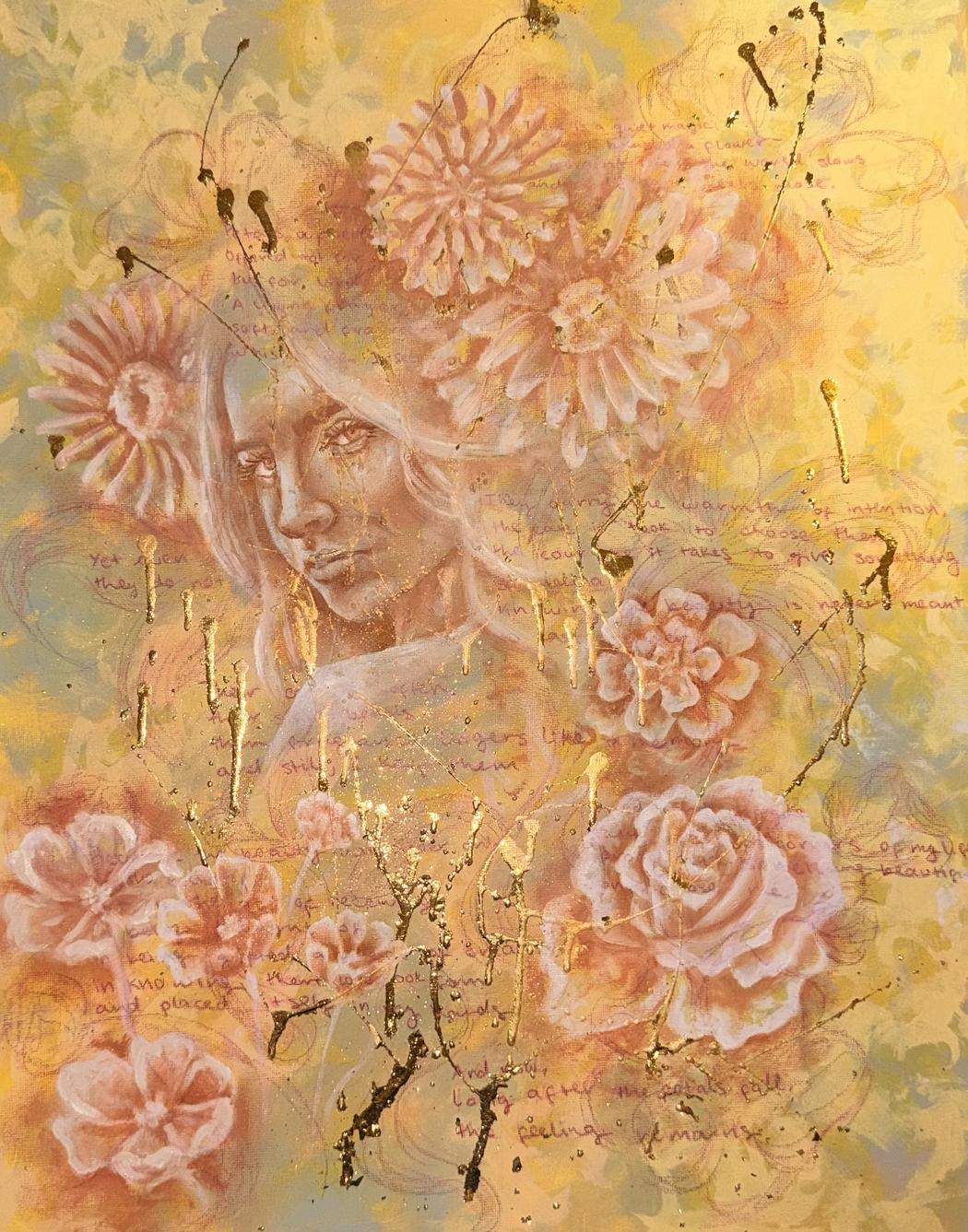 Alana Palomo | The Art of Giving
What do you hope viewers feel — or carry with them — after encountering your work?
I hope they feel relief. Joy. Tranquility. When someone looks at a landscape I’ve painted, I want them to remember a moment in their own life that was effortlessly beautiful, even if everything else around them feels lost. I want the painting to become something they can return to when they need to feel lighter. And when they look at the tension and mess in my more textured works, I hope they see that their own mess can also be beautiful. That struggle and waiting are not meaningless. That sticking through hard times is worth it. If my work can remind someone that renewal is possible, that light exists even in chaos, then it has done its job.
Leave a Reply
You must be logged in to post a comment.