
C Bangs
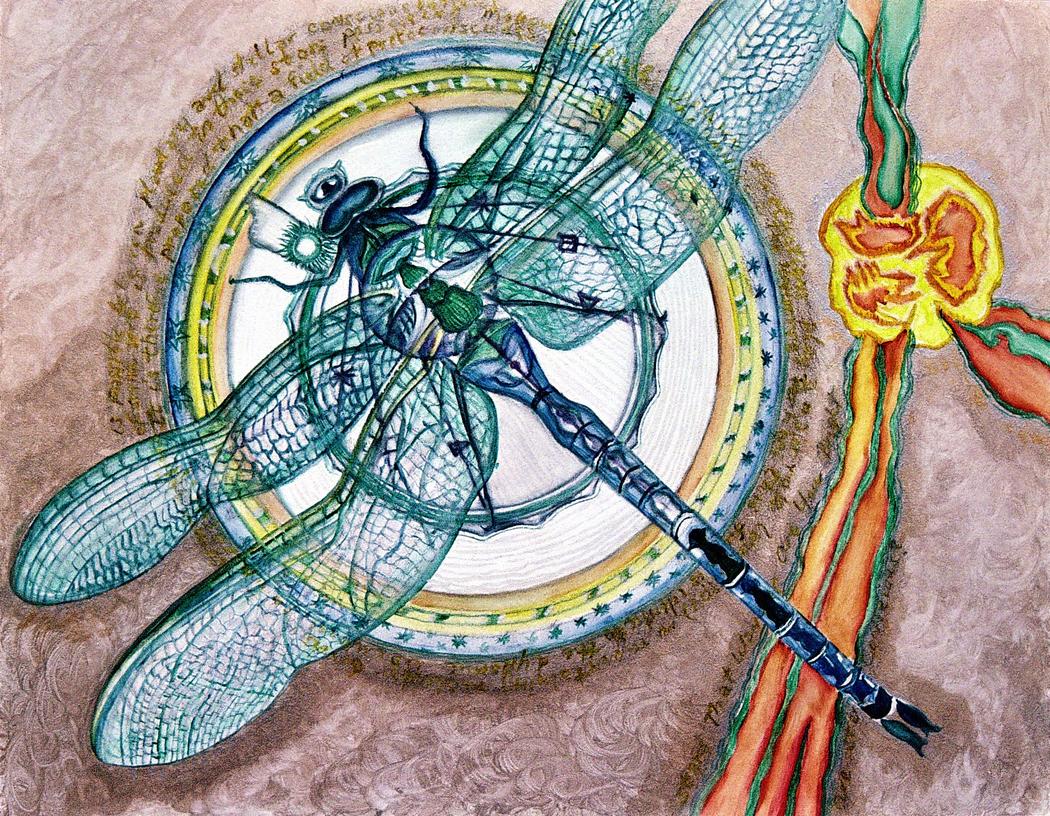 C Bangs | Dragonfly astrolabe star
Your practice brings together art, science, and space exploration. Do you remember the moment when these fields first merged for you personally?
This began when I entered graduate school and was asked to make a piece based on the Voyager Message Plaque. It became work I would continue to do when I met my husband, Dr. Gregory Matloff who is an astrophysicist. As well I had a 15 year dialogue with a quantum consciousness physicist, Dr. Evan Harris Walker whose equtions and key phrases I used in my paintings with his permission.
You work with both traditional media and highly experimental technologies like holography and retroreflective materials. How do you decide which medium is right for a particular idea?
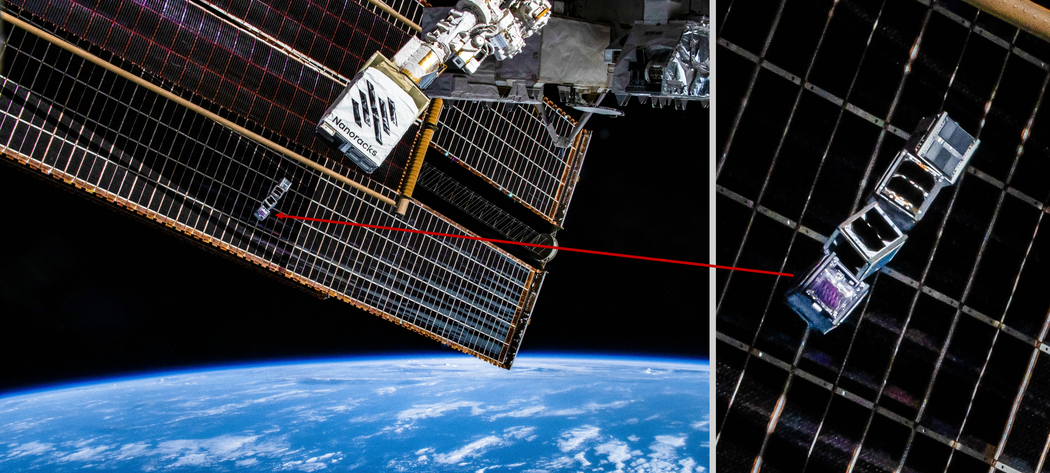
I began working with holography in 2000 when I was hired to construct a prototype holographic interstellar message plaque at NASA’s Marshall Spaceflight Center to demonstrate holographic application for solar sails. I worked with my husband to test holograms for use in space. All my holographic work has to do with applications for use in space. The retroflective materials were sent to me for use with Cornell’s Alpha CubeSat so it would increase the ability to view them in space.
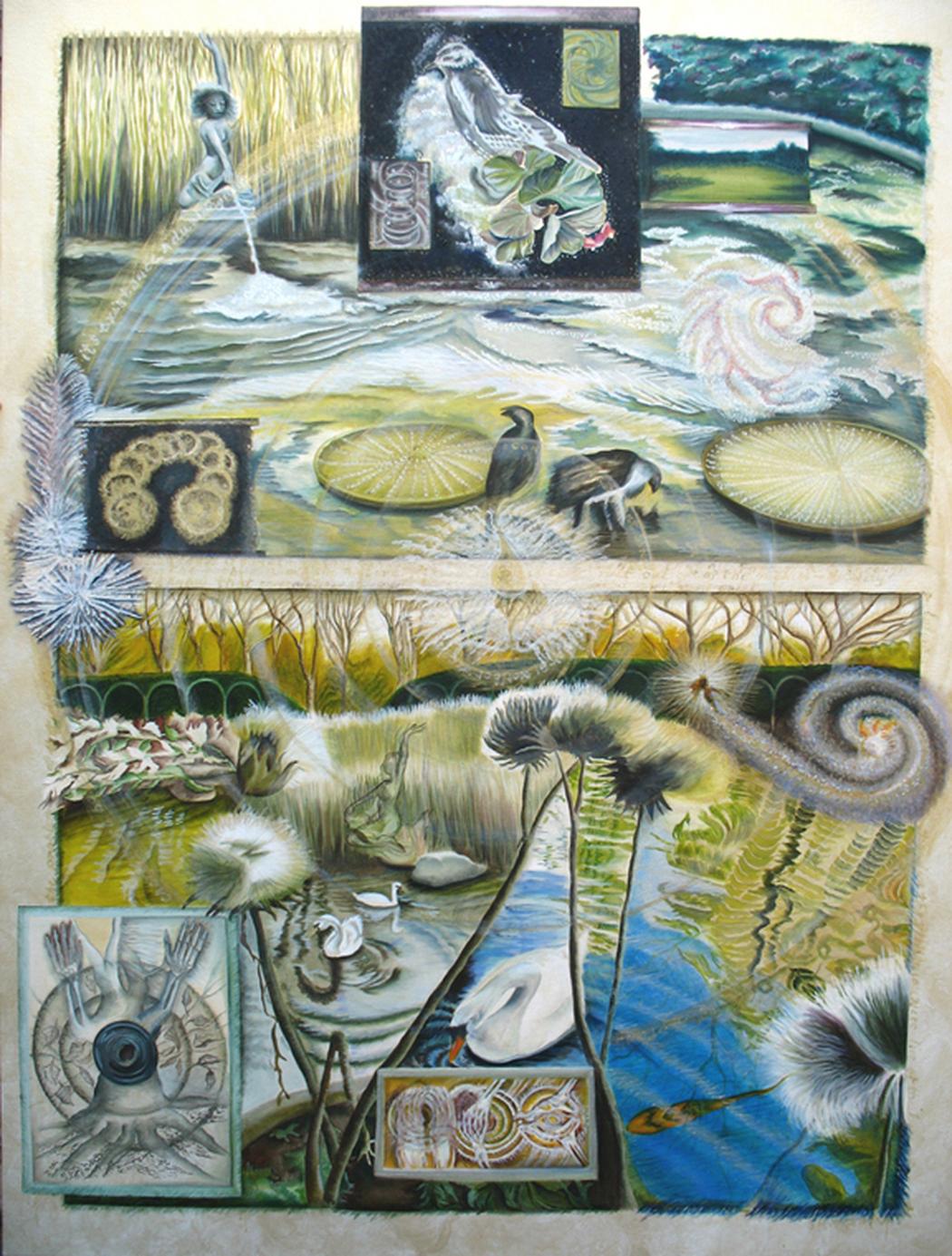 C Bangs | Bangs, Watersynapse
Many of your works are not just representations of space, but are physically connected to real space missions. How does knowing that your holograms are orbiting Earth change your relationship to the artwork?
It makes me very conscious on how to optimize them for the particular space mission they are planned for. The fact that my holograms are orbiting the Earth makes me very grateful to have the opportunity to be part of the important mission conceived by Cornell University’s Prof. Mason Peck and the current Program Manager, Dr. Josh Umansky-Castro titled Alpha CubeSat. This mission consisted of having my holograms affixed to Alpha CubeSat that contained a folded up solar sail with chipsats that communicated with Earth upon deployment.
The Holographic Messages project proposes art as a message carried beyond Earth. What do you think art can communicate to non-human or extraterrestrial intelligence that language cannot?
Visual images are a more universal language but we must also take into consideration how extraterrestrial intelligence could perceive an object which is why the Voyager message plaque consisted of the golden record.
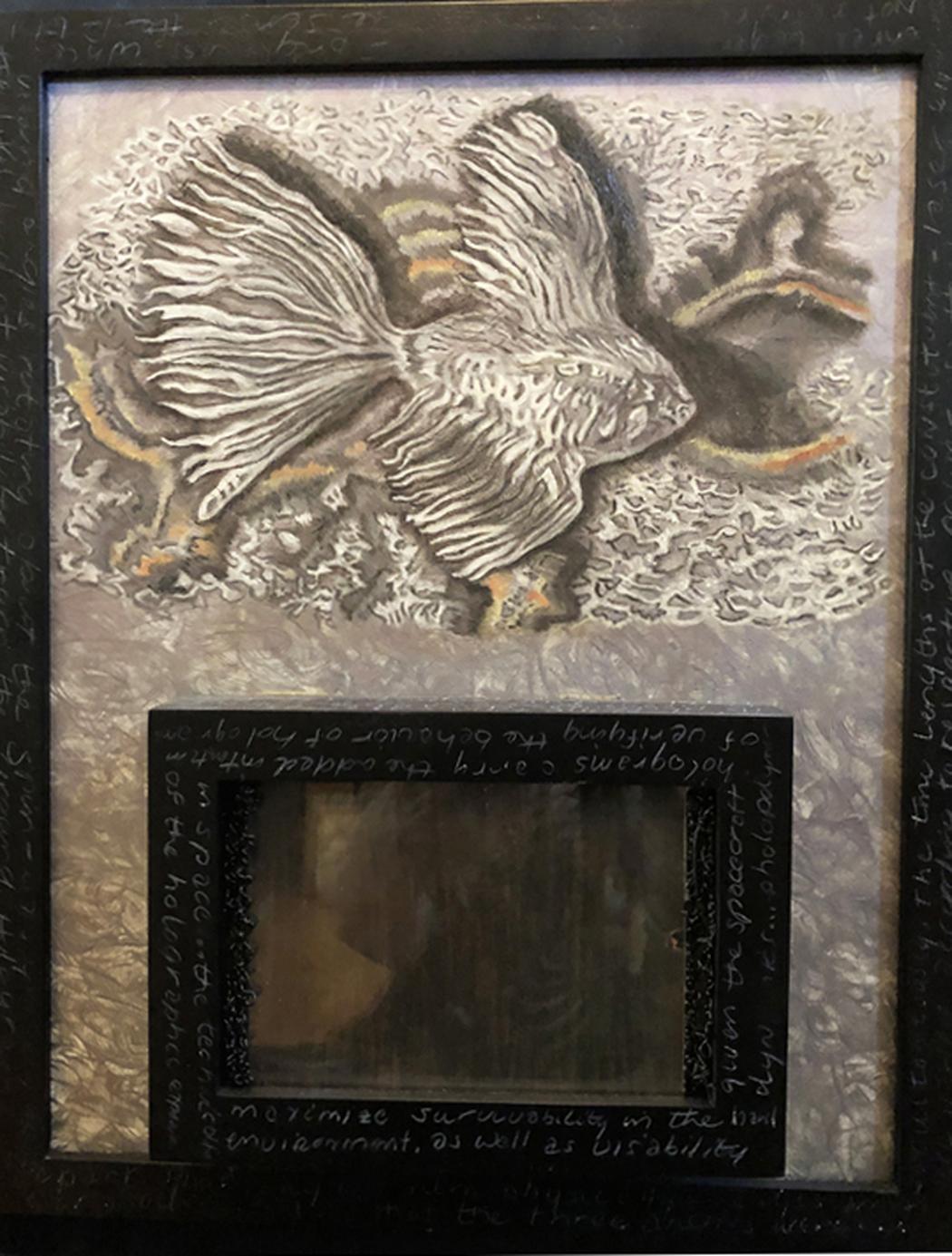 C Bangs | Fisholo
Your work often exists at the intersection of aesthetics and engineering. What kinds of challenges arise when collaborating with scientists and aerospace engineers, and what do you enjoy most about that dialogue?
During the Renaissance many artists were trained as engineers. My father was an engineer and so I was used to approaching problem solving in that way at an early age. I enjoy exchanges with scientists and aerospace engineers because it makes the most sense to me as a way of approaching a problem.
 C Bangs | Treeskeletonme
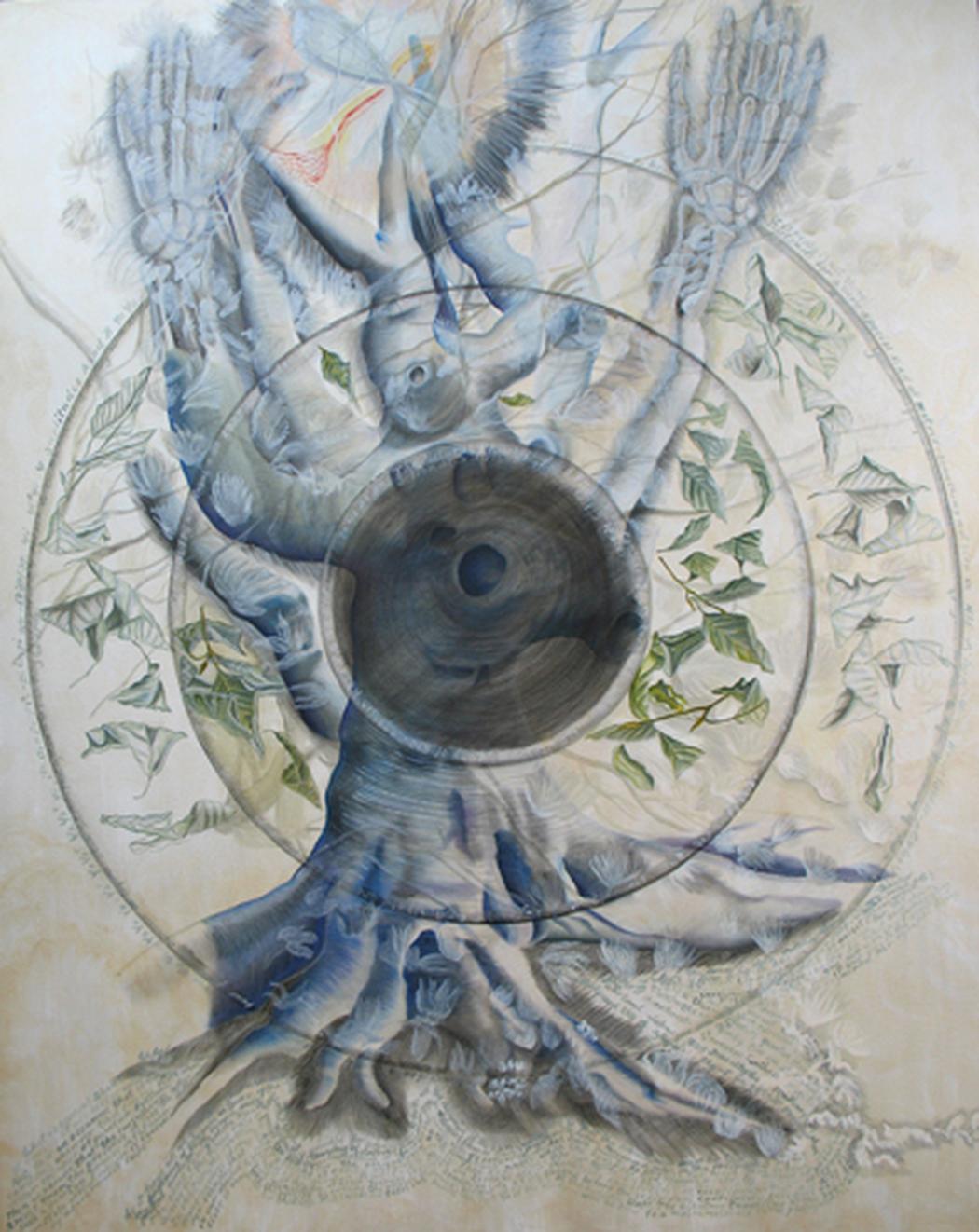
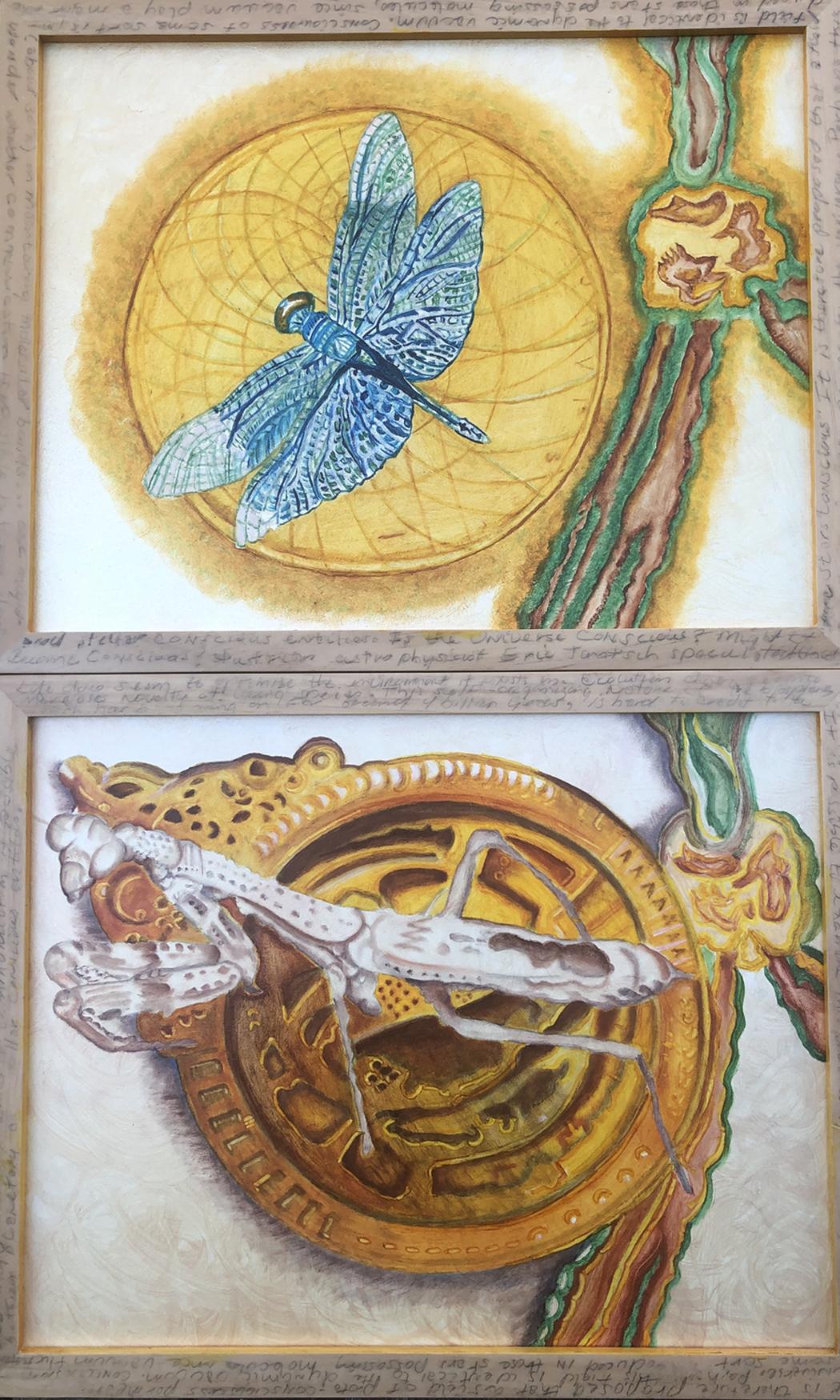
Nature, insects, and organic forms frequently appear in your imagery alongside cosmic and technological elements. What draws you to these biological motifs in relation to space?
As Carl Sagan said we are star-stuff and part of your understanding of the cosmos is grounded in the realization of this.
 C Bangs | Insectastrolabe | 2024
If one of your holographic messages were discovered far in the future, what question would you hope it might inspire rather than answer?
I would hope that it would make sense to whoever was viewing it.
Leave a Reply
You must be logged in to post a comment.