
Margaux Sion
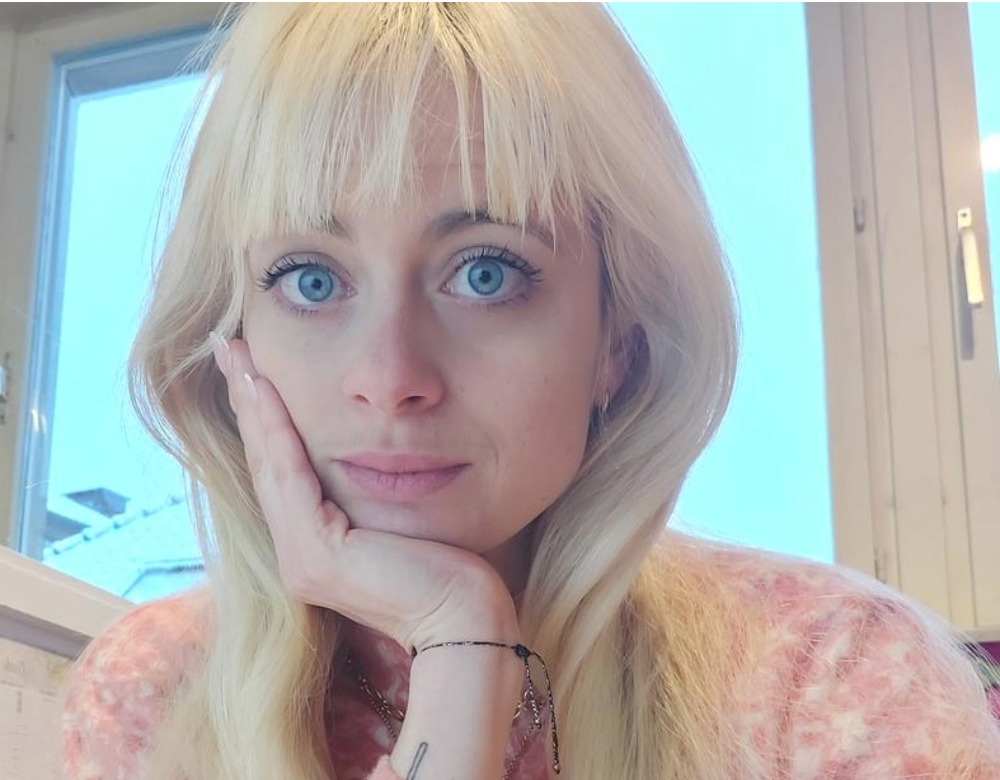
Your collages are instantly recognizable for their boldness and excess. When did you first realize that “too much” could become a strength in your visual language?
Probably the moment I stopped trying to be tasteful.
I realized that what I was instinctively drawn to — excess, accumulation, visual noise, pleasure — was exactly what I had been taught to tone down. Once I embraced “too much” as a position rather than a flaw, everything clicked. Excess became my grammar. It’s how I talk about desire, femininity, joy, overwhelm — all the things that refuse to stay quiet or minimal.
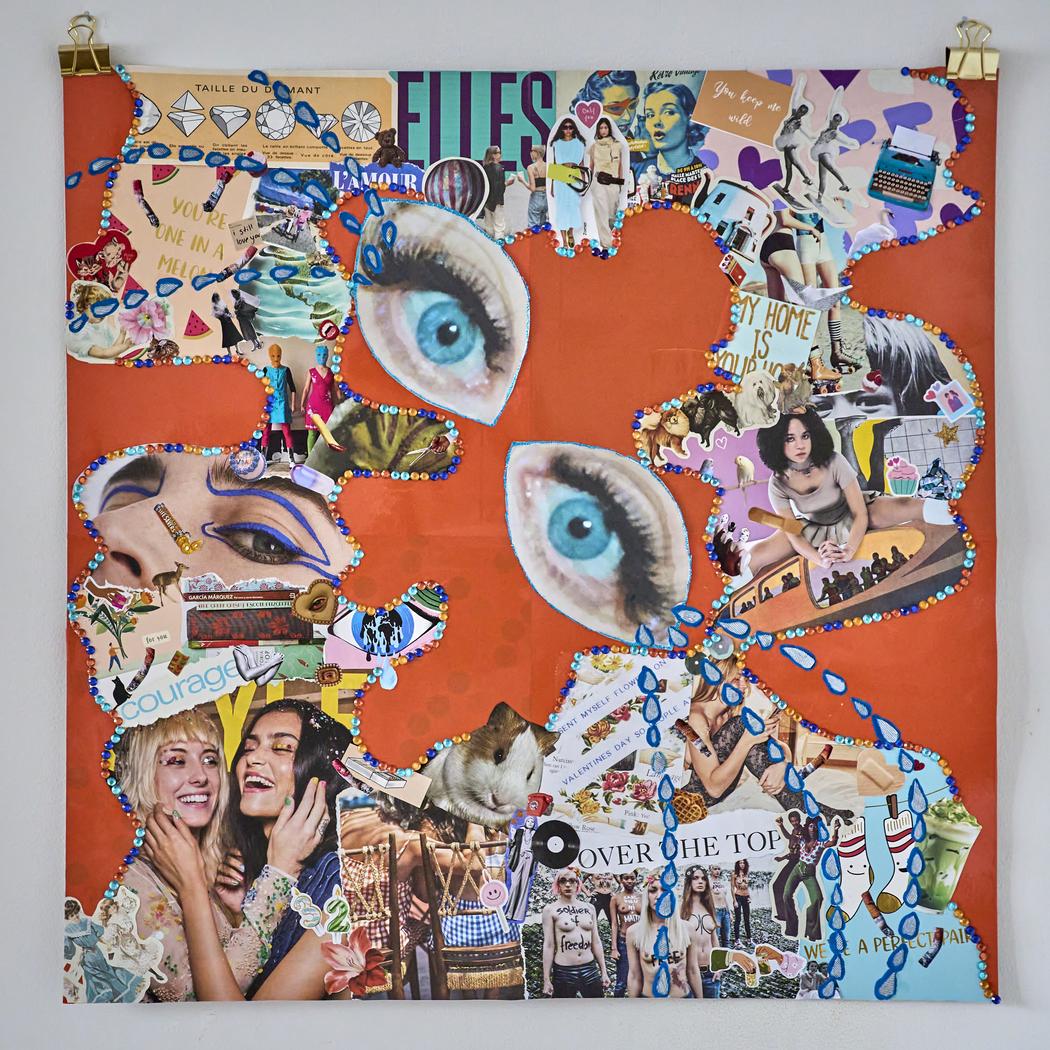 Margaux Sion | Amiti
You often speak about reclaiming femininity through a consciously female gaze. How would you describe the female gaze in your work, and how does it differ from traditional representations of women in visual culture?
The female gaze in my work is playful, self-aware, and unapologetic — and very often, it’s a female gaze on the male gaze. I frequently start from images originally created by men, for men, and reappropriate them through collage. By cutting, reframing and exaggerating, I turn these representations into something else entirely: a woman looking back at herself, on her own terms. These figures know they are being looked at — and they’re not trying to please anyone. They flirt, they pose, they enjoy themselves. Unlike traditional representations that frame women as passive or consumable, my figures are collaborators. They enjoy visibility, desire, and authorship.
Coming from a background in mental health and psychology, how does this training influence the way you construct images and narratives in your collages?
My background in mental health made me very interested in what we project onto images. I think in layers, contradictions, defense mechanisms. At the same time, I allow myself a very intuitive, almost childlike freedom. Bright colors, stickers, playful compositions — joy is not superficial to me, it’s psychological. My collages often mirror internal states: abundance, fragmentation, overstimulation, tenderness. I’m less interested in linear stories than in emotional landscapes — the kind that feel familiar before they make sense.
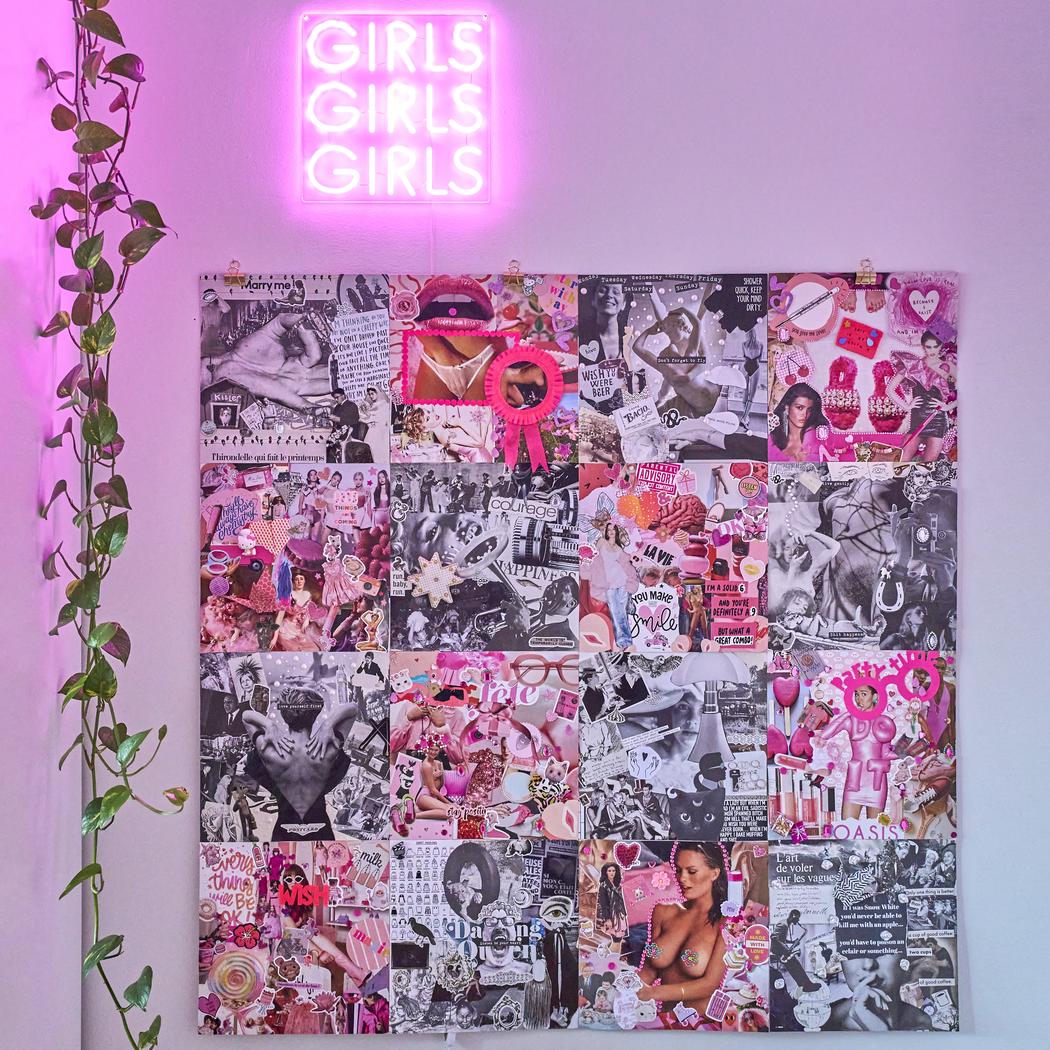 Margaux Sion | Girls Girls Girls | 2025
Many of your female figures appear confident, sensual, and fully aware of being seen. What does visibility mean to you – is it power, vulnerability, or both?
Definitely both.
Visibility can be empowering, but it’s never neutral. Choosing to be seen — especially as a woman — is always a negotiation. In my work, visibility becomes a conscious act rather than a passive condition. It’s saying: I know you’re looking, and I’m still in control.
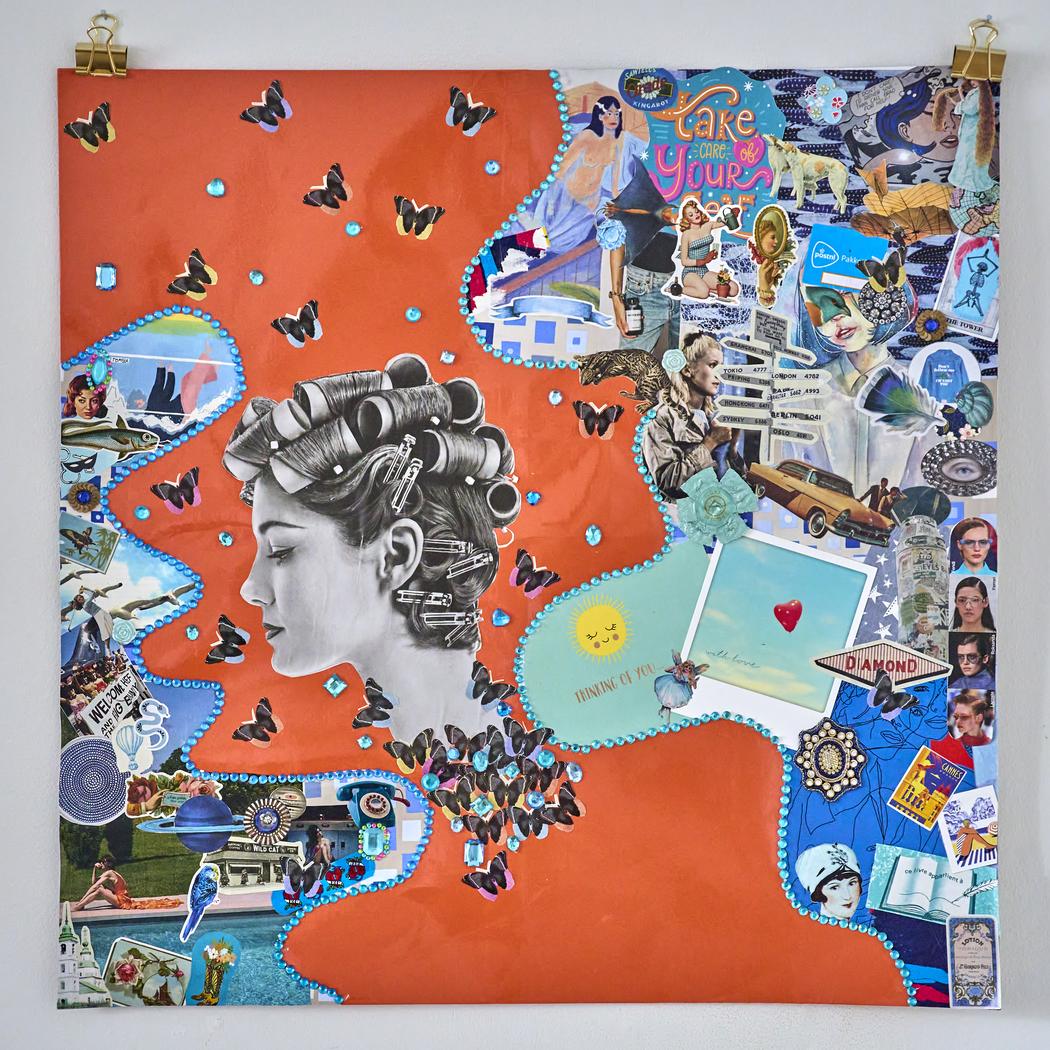 Margaux Sion | Healing | 2026
You use glamour and seduction not as decoration, but as strategy. What kinds of norms or expectations are you most interested in challenging through this approach?
The idea that seriousness must look serious. I’ve always loved fashion — its language, its excess, its ability to shape identity. I use glamour, beauty and seduction the same way fashion does: as a statement, not an ornament. I’m interested in challenging the suspicion toward pleasure, softness, and visual indulgence — especially when they’re associated with femininity. Glamour can be critical. Seduction can be intelligent. I like using what’s considered “too pretty” or “too much” as a Trojan horse.
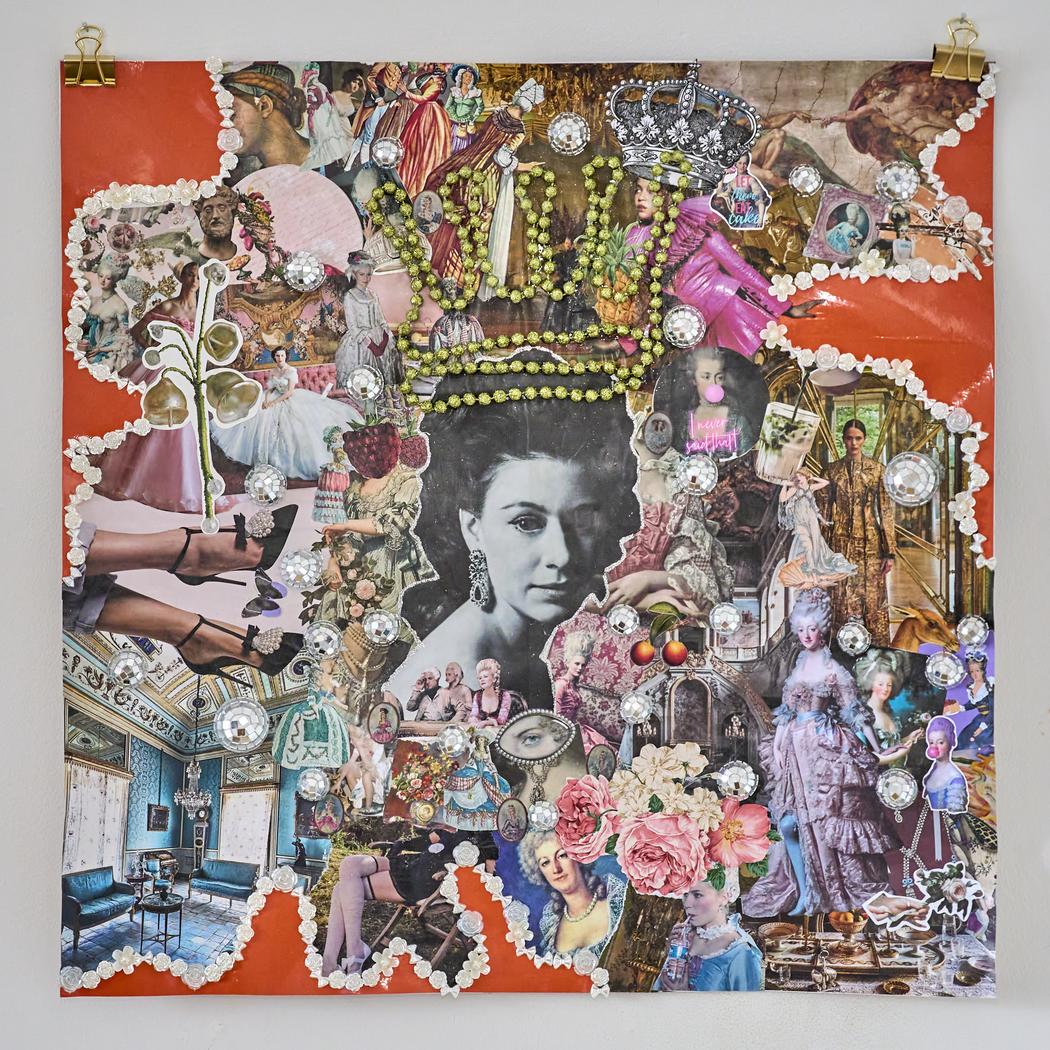 Margaux Sion | Killer Queen | 2025
Many of your compositions confront the viewer directly. What kind of dialogue or reaction do you hope to provoke in those who encounter your work?
I hope people feel slightly caught.
Like when something attracts you before you’ve had time to judge it. Ideally, the work pulls you in visually, then gently messes with your expectations. If it makes you smile first and think second — or the other way around — that’s even better.
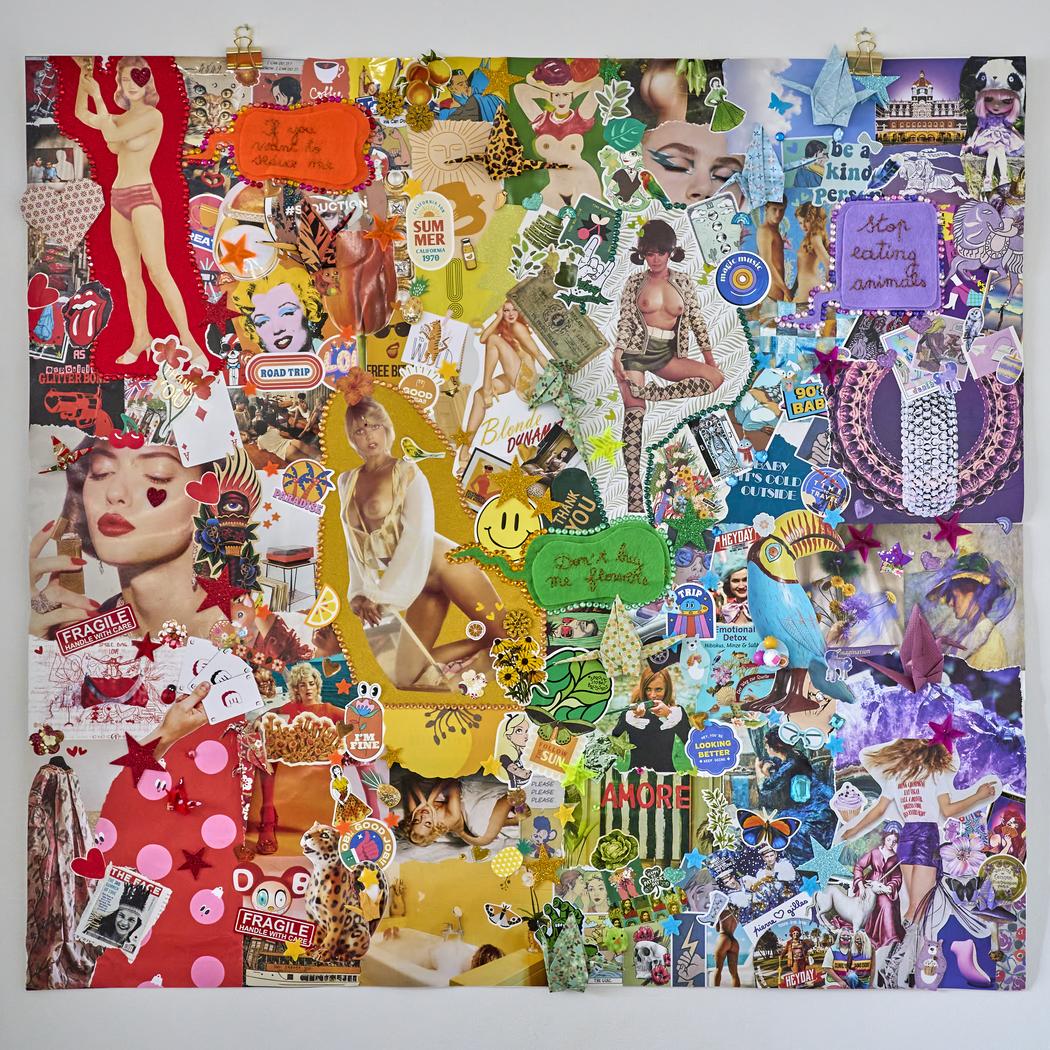 Margaux Sion | The Politics Of Joy | 2025
You are currently focused on expanding your international presence, particularly in the United States. How do you see your work resonating across different cultural contexts?
Themes like desire, visibility, excess, and femininity travel very well — they just speak with different accents.
In the U.S., I feel a strong resonance with pop culture, boldness, and unapologetic self-expression. My work doesn’t aim to explain itself culturally; it invites people to recognize themselves emotionally.

Leave a Reply
You must be logged in to post a comment.