
Ashraf Malek
Critical Review: Ashraf Malek
By Anna Gvozdeva

Ashraf Malek’s multidisciplinary practice emerges from a rigorous architectural foundation, yet consistently resists architecture’s traditional imperatives of stability, function, and closure. Trained within spatial systems and structural logic, Malek does not abandon architectural thinking; rather, he subjects it to continuous destabilization. Space, in his work, is never a neutral container but a contested and mutable construct – shaped by ideology, belief, memory, and technological mediation. His transition from architecture to an expanded artistic field marks not a rejection of structure, but a critical reprogramming of it.
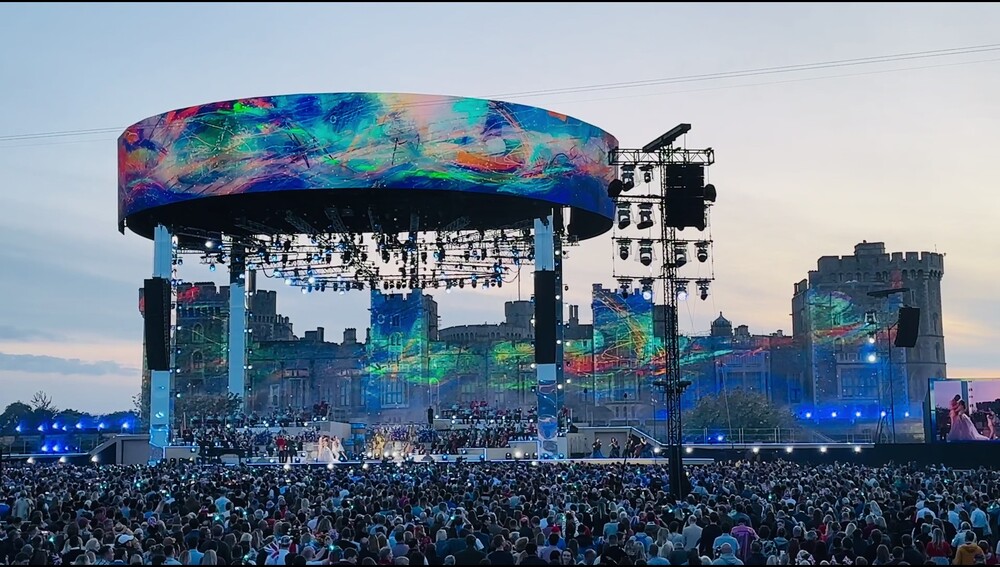 Until The Path Becomes | Digital Projection | 2023
A formative turning point in Malek’s trajectory occurred following his relocation to Vancouver, where his engagement with the Vancouver Art Gallery exposed him to institutional frameworks and contemporary curatorial discourse. This experience catalyzed a shift toward a practice that operates across digital projection, painting, 3D modeling, moving image, coding, and filmography. Rather than treating these media as discrete disciplines, Malek employs them as interoperable systems, allowing concepts to migrate fluidly between formats. This hybridity reflects his core concern with meta-locality: spaces that exist simultaneously across physical, digital, and psychological registers.
Central to Malek’s work is an investigation of space as a destabilized condition – one that resists fixed orientation and singular meaning. His speculative environments often evoke what might be described as hyperobjects: spatial entities that exceed direct comprehension, unfolding across multiple scales of time, perception, and technological mediation. These environments function as fragmented destinations, suspended between the real and the imagined. They are not places one arrives at, but states one passes through – constructed by the unconscious and activated through belief, ideology, and perception.
 Somewhere To Belong | Interactive Installation Screen | 2024
Digital distortion, glitches, and spatial deformation play a critical role in this process. In Malek’s practice, disruption is not a failure of the system but its primary mode of inquiry. Glitches operate as epistemological tools, exposing the instability of representation and the limits of perceptual certainty. By embracing distortion, Malek foregrounds the artificiality of spatial coherence and challenges the authority of dominant visual and ideological structures. Space becomes elastic, fractured, and contingent—mirroring the cognitive and political conditions of contemporary life.
The figure of the avatar recurs throughout Malek’s work as an abstract extension of the self. Detached from stable identity, the avatar functions as a proxy through which belief systems, faith, and ideological convictions are spatially encoded. These abstracted bodies and fragmented forms resist narrative closure, instead operating as carriers of affect and conviction. In this sense, Malek’s work does not merely depict ideology; it spatializes it, rendering belief as an inhabitable condition rather than a fixed doctrine.
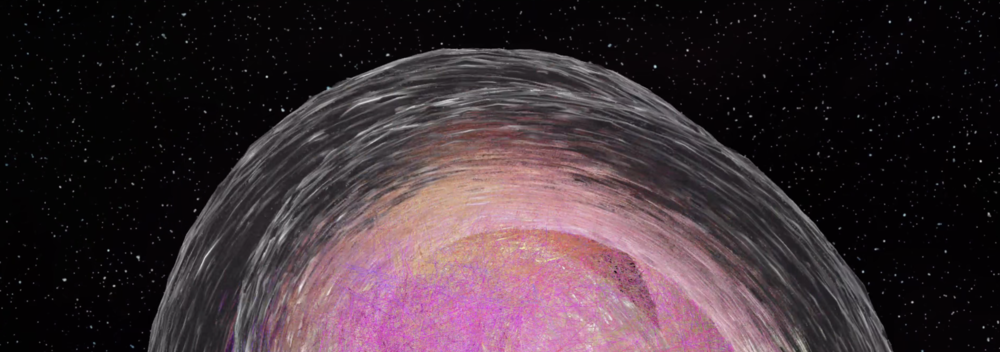 Viscous Horizon | 2023
Malek’s critical engagement with artificial intelligence and emerging technologies further complicates questions of agency and authorship. His work does not present technology as a neutral tool, nor does it adopt a purely dystopian stance. Instead, it interrogates how algorithmic systems reshape perception, decision-making, and spatial awareness. By situating AI within speculative environments, Malek highlights its capacity to reconfigure mental landscapes as much as physical ones, challenging viewers to reconsider their own positions within technologically mediated systems.
The presentation of Malek’s work across major cultural platforms – including Tate Modern, the Coronation Concert of King Charles III, and Genesis Cinema – underscores its resonance within both institutional and public contexts. The Royal College of Art’s selection of his work for a commemorative tote further situates Malek as a distinctive voice within contemporary practice, capable of translating complex spatial and conceptual inquiries into widely accessible yet critically rigorous forms.
 Ethereal Constellations
Ultimately, Ashraf Malek’s practice operates as an ongoing dismantling and reassembly of space itself. His work invites viewers to inhabit uncertainty, to navigate fractured environments where meaning is provisional and perception is continuously renegotiated. In an era defined by technological acceleration and ideological fragmentation, Malek constructs spaces not of resolution, but of critical suspension – spaces that demand awareness, reflection, and active participation.
Leave a Reply
You must be logged in to post a comment.